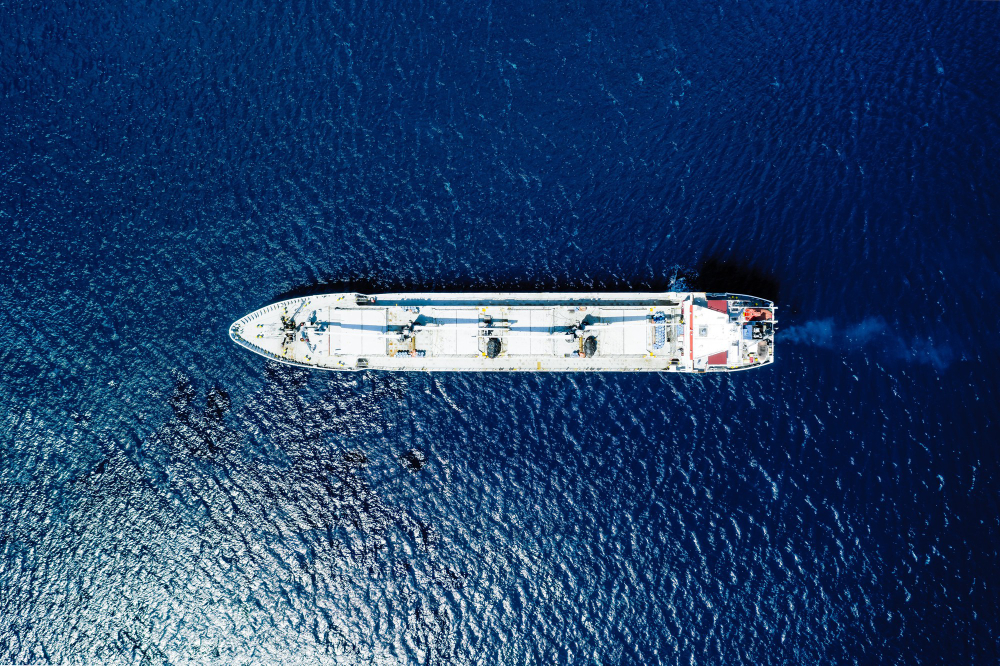
There is a constraint on ships that has no equivalent on land and that determines almost everything about how vessels are shaped and sized.
The constraint is that a vessel moving through water makes waves, that making waves takes energy, and that the energy required rises extremely steeply with speed.
Below a certain point the dominant resistance is friction — the water sliding along the hull surface. Above it, wave-making takes over and grows far faster, which means that pushing a conventional vessel past a certain speed becomes disproportionately expensive rather than simply harder.
Understanding where that point sits, and why it depends on length, explains the shape of ships, the economics of shipping and a number of design features that look decorative.
There is a third contributor worth mentioning. Air resistance acts on everything above the waterline, and on a vessel with a large superstructure it is not negligible, particularly in a headwind.
It is small relative to the water forces at most speeds, which is why the subject is usually treated as two components rather than three.
The Two Kinds of Resistance
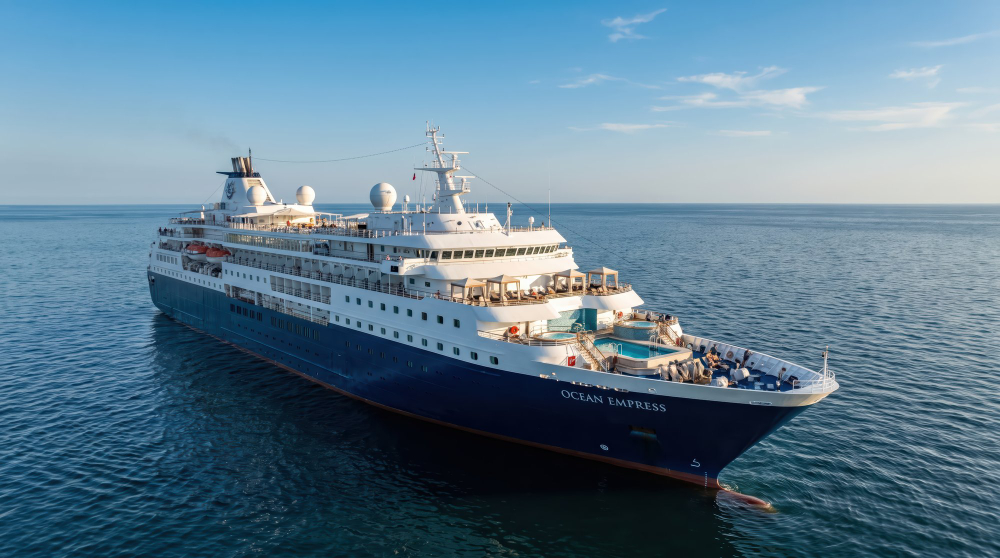
Separating them is the first step and it clarifies the whole subject.
Frictional resistance comes from water in contact with the hull. It depends on the wetted surface area and on how smooth that surface is, and it increases with speed in a fairly gentle way.
That is why hull cleanliness matters so much. Fouling increases roughness and surface area, and the effect on fuel consumption is substantial rather than marginal.
Wave-making resistance comes from the energy going into the waves the hull generates. It is small at low speed and rises very steeply, which means it is negligible in one regime and dominant in another.
The transition between those regimes is not a sharp line, and it occurs at a speed that depends on the length of the vessel — which is the key fact.
Like our content? Follow us for more.
Why Length Sets the Limit
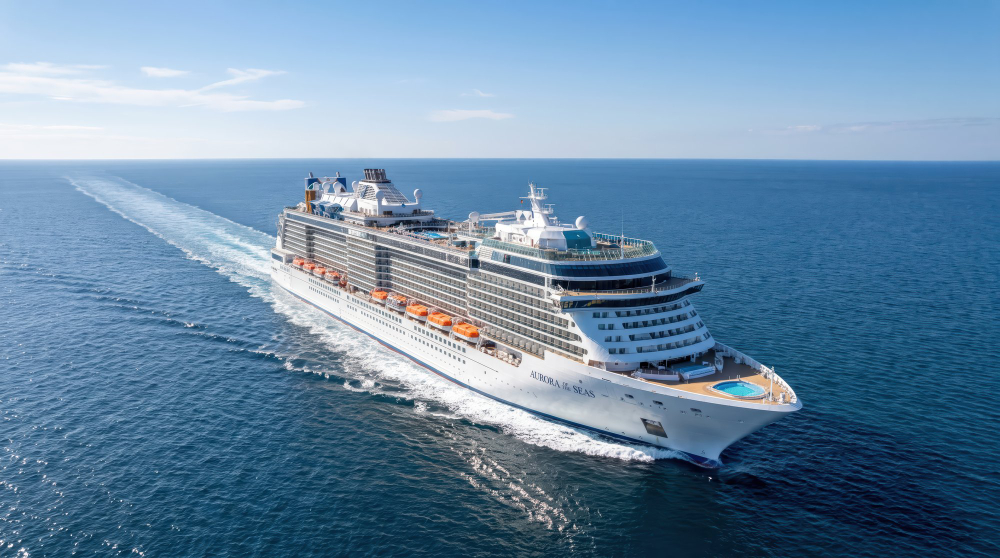
The relationship is worth explaining because it is the central point.
A vessel moving through water generates a wave system, and the length of those waves is determined by the speed — faster movement produces longer waves.
At low speeds the waves are short relative to the vessel, so several of them fit along the hull. As speed increases, the waves lengthen, and eventually the distance between crests approaches the length of the vessel itself.
At that point the vessel is effectively sitting in a trough of its own making, with a crest at the bow and another at the stern, and going faster means climbing its own bow wave.
The power required to do that rises enormously, which establishes a practical ceiling — and that ceiling is set by the length of the hull, because length determines what wavelength corresponds to the difficult condition.
A longer vessel reaches that point at a higher speed. That is the whole reason large ships are fast: not more power relative to size, but a longer hull that pushes the expensive regime further away.
What Can Be Done About It
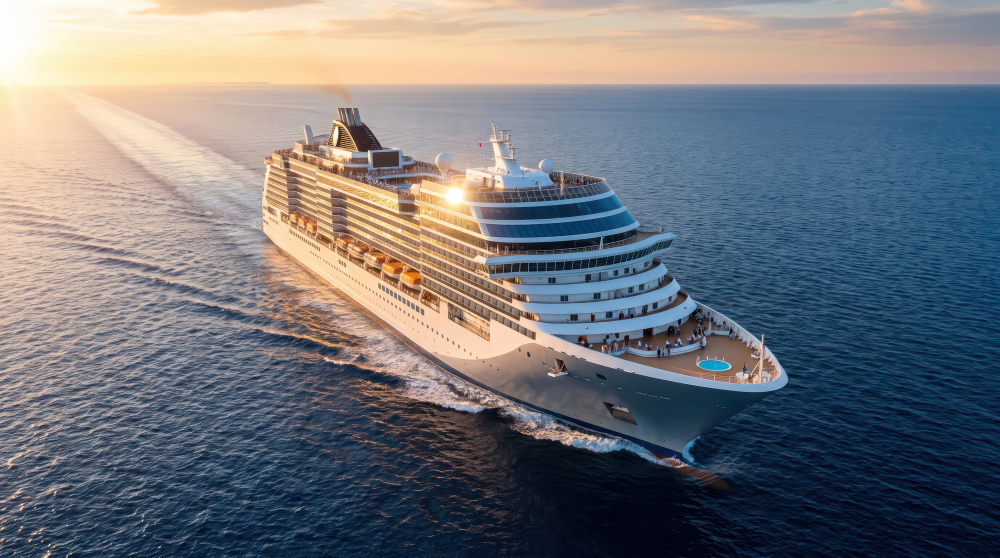
Several approaches address the problem and each has a cost.
Lengthening the vessel is the direct solution and is why ships have grown, though length is constrained by ports, canals, structural requirements and the fact that a long thin vessel carries less than a short wide one of the same length.
Fining the ends helps. A hull that changes cross-section gradually displaces water more gently and generates a smaller wave system than one with blunt ends — which is why fast vessels are sharp and slow ones are not.
Reducing displacement helps, since a lighter vessel makes smaller waves, which is why speed and carrying capacity oppose each other so directly.
And there is a solution that works by interference rather than by reduction, which is the interesting one.
There is a proportion worth stating. On a large vessel at service speed, wave-making can account for a substantial share of total resistance, with friction taking the remainder – and the balance shifts with speed, which is why a design optimised at one speed is not optimal at another.
That balance is what every hull-form decision is trying to shift.
The Bulb That Makes a Second Wave
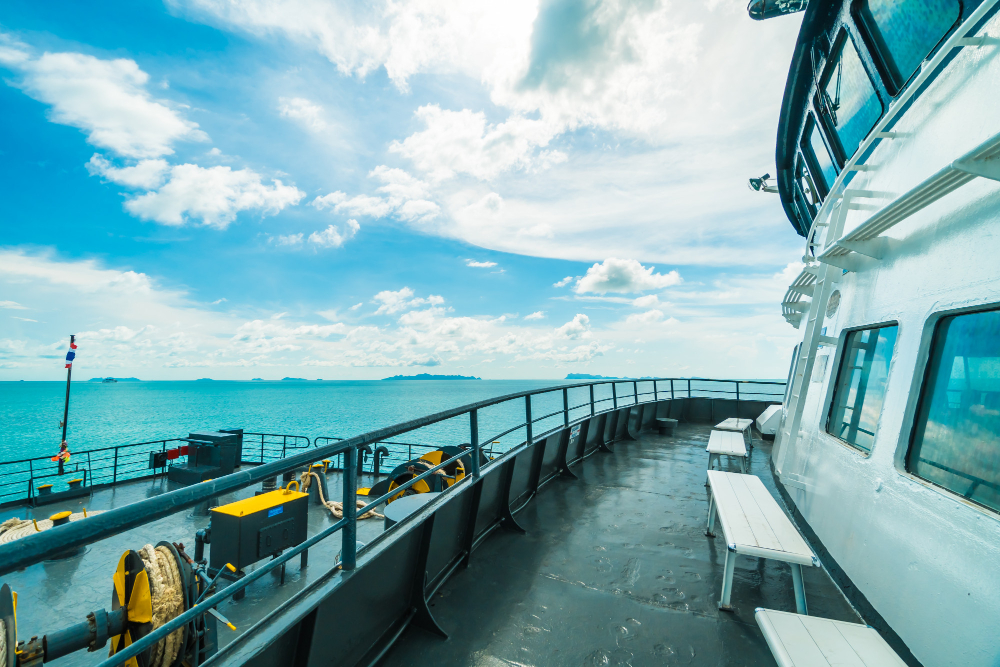
The protrusion below the waterline at the bow of many large vessels is the clearest example of using the physics rather than fighting it.
That bulb generates its own wave system as it moves, and it is positioned and shaped so that the wave it produces is out of step with the wave produced by the hull above it.
Where a crest from one coincides with a trough from the other, the two partially cancel, which reduces the size of the combined wave system and therefore the energy going into it.
The saving is substantial at the speed and loading the bulb was designed for.
It is also specific. A bulb tuned for one speed and one draught performs less well at others and can be actively worse outside its design range — which is why vessels operating at varying speeds and loads sometimes do not have one, and why a change in operating pattern can make an existing bulb unhelpful.
That is a nice illustration of an optimisation being a commitment rather than an improvement.
Escaping the Problem Entirely
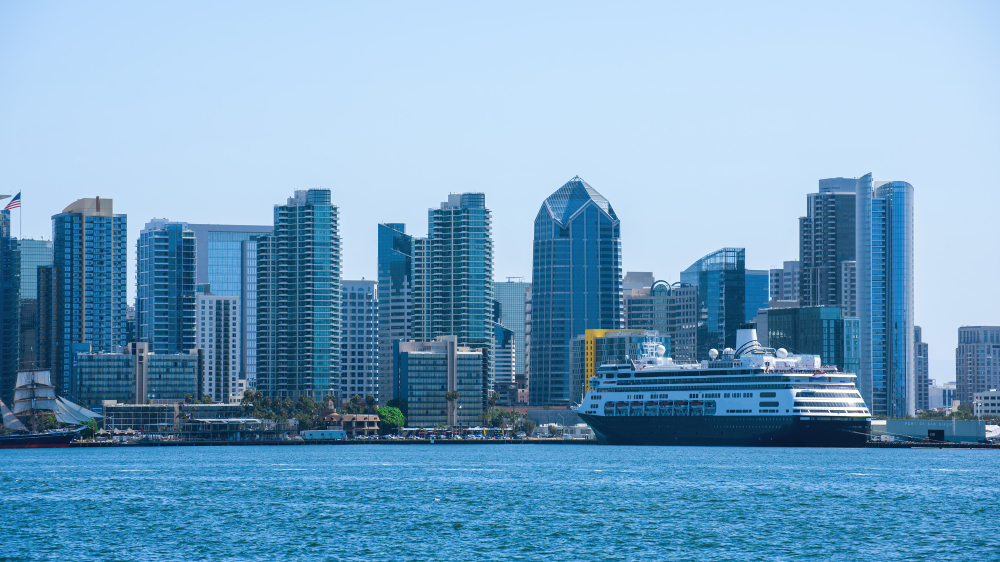
Some vessels avoid the constraint rather than working within it, and they do it by not floating in the ordinary sense.
A hull that generates enough lift to rise and travel on the water surface rather than through it stops making the wave system that causes the problem, which removes the ceiling — at the cost of requiring a great deal of power to get there and being limited to relatively small and light vessels.
Raising the hull clear of the water on submerged wings achieves the same by removing almost all of the surface from the water, leaving only the supports.
Trapping air beneath the vessel to reduce contact with the water is another approach.
And a hull that is very long and thin relative to its displacement pushes the limit far out by geometry alone, which is why such forms appear where speed matters more than capacity.
Each of those buys speed by giving up carrying capacity, seakeeping or efficiency at low speed, which is the same trade every time.
What Sets the Shape Below the Water
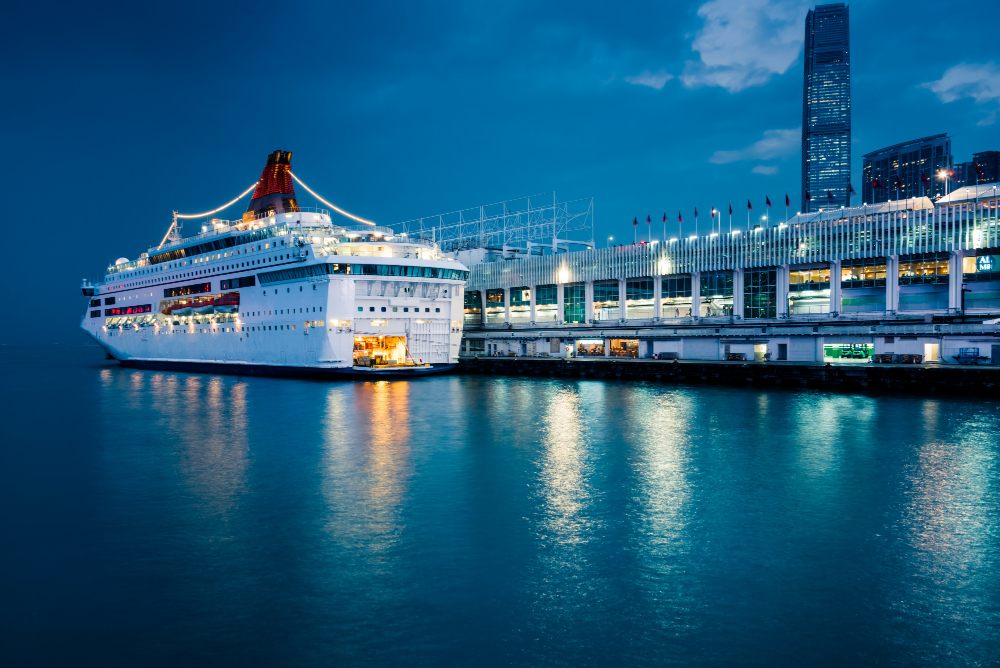
The underwater form is decided by a set of conflicting requirements and each leaves a visible mark.
Carrying capacity wants a full shape — a hull that is close to a rectangular box holds the most for a given length and width, which is why cargo vessels are so slab-sided below the waterline amidships.
Wave-making wants a fine shape, particularly at the ends, so the hull tapers over a substantial proportion of its length at bow and stern.
The compromise is visible in the proportion of the hull that is full-section versus tapered, and that proportion is essentially a statement of what speed the vessel was designed for.
Stability wants width, since a wider hull resists rolling, which conflicts with wave-making resistance directly.
Seakeeping wants a shape that handles waves rather than slamming into them, which affects the shape above the waterline at the bow and the amount of flare.
Draught is constrained by where the vessel must go, since ports and channels have depths, and a hull limited in draught must find its volume in width or length instead.
And propeller efficiency requires water arriving at it smoothly, which shapes the stern substantially and is why the aft sections of a hull are frequently more carefully formed than the bow.
Every one of those pulls in a different direction, which is why hull forms differ so much between vessel types doing different jobs — and why a hull shape is a fairly reliable indication of what a vessel was built to do.
Why Slow Is Usually the Answer
The commercial consequence is worth stating because it runs against intuition.
Since resistance rises so steeply with speed, fuel consumption rises much faster than speed, which means a modest reduction in speed produces a disproportionate reduction in fuel used.
That relationship is strong enough that operating vessels deliberately below their capable speed is a standard response to fuel costs, and the arithmetic is compelling rather than marginal.
The trade is time, and therefore the cost of capital tied up in a cargo and a vessel, so the optimal speed is a calculation rather than a fixed property of the ship.
Which is a reasonable place to end. A ship’s speed is not limited by its engine in any interesting sense. It is limited by the size of the waves it is obliged to make, the length of the hull determines when those waves become expensive, and almost every decision about how a vessel is shaped and operated is an argument with that one relationship.
Which is an unusual constraint to be governed by. A vessel is not fighting the water so much as fighting the disturbance it is obliged to make in it, and that disturbance is produced by the vessel itself.
Like our content? Follow us for more.