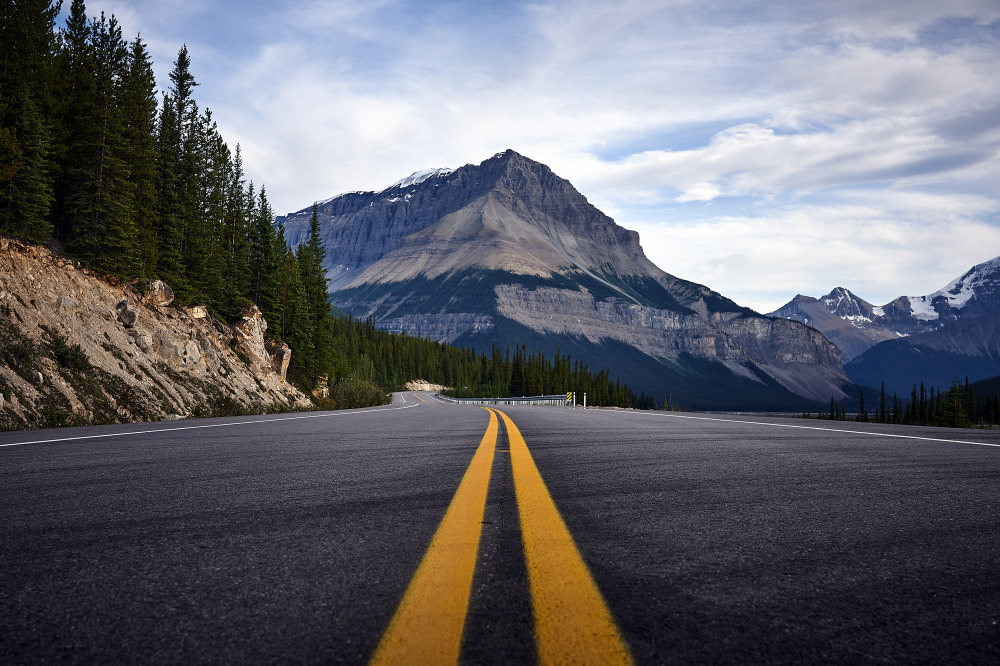
There is a widespread assumption about roads that is understandable and backwards.
The assumption is that the hard black surface is the road, and that what lies beneath it is simply the ground it was laid on.
The reverse is closer to true. The surface is a thin wearing layer whose main structural job is to be waterproof, and the actual load-bearing is done by a depth of carefully graded stone below it that nobody ever sees.
That inversion explains almost everything about how roads fail, why they are dug up so often, why potholes form where they do, and why the historical figure associated with road building was interested in drainage rather than in surfacing.
Why Water Is the Enemy
The central principle was understood before anything modern existed, and it has not changed.
Soil that is dry is comparatively strong. The same soil saturated is dramatically weaker — it deforms under load, flows when squeezed and loses the ability to support anything.
A road is a load applied repeatedly to the ground. If the ground beneath it is dry it carries that load indefinitely; if it is wet, it deforms, and the road above it deforms with it.
So the fundamental requirement is keeping water away from the foundation, and there are three ways water arrives: from above through the surface, from the sides, and from below through the water table.
Every element of road construction addresses one of those, and the historically important insight was that a road built on well-drained ground with modest materials outperforms an elaborate one built on wet ground.
That is why the earliest systematic road engineering concentrated on raising the road above the surrounding land, shaping it to shed water sideways, and providing ditches to take that water away — none of which concerns the surface at all.
Like our content? Follow us for more.
How the Stone Layers Work

The load-bearing mechanism is not obvious and repays explanation.
Beneath the surface are layers of crushed stone, and the important property is not the strength of the individual pieces but the way they interlock.
Crushed stone has angular faces. When compacted, the pieces wedge against one another, and a load applied at the top is transmitted outward and downward through the mass rather than being carried by any individual stone.
That spreads the concentrated pressure of a wheel over a progressively larger area with depth, so that by the time it reaches the soil beneath, the pressure is low enough for the soil to carry.
The layers are graded, with larger material lower and finer material above, which allows each layer to support the one above it without the finer material working down into the coarser.
That grading is what makes the structure a structure rather than a pile of rubble, and getting it wrong causes the layers to intermix and lose their capacity.
What the Surface Is Actually For
Once the structure is understood, the role of the visible layer becomes clear.
Its primary job is to be impermeable, sealing the stone beneath from rain. A road with a broken surface is not merely untidy; it is admitting water into the layer that must stay dry.
Its second job is to provide something durable to run on, resisting the abrasion of tyres and the mechanical stress of braking and turning, and providing enough texture to give grip in wet conditions.
Its third job is to distribute load slightly, which it does modestly.
It is deliberately flexible rather than rigid, because the structure beneath moves under load and a brittle surface would crack immediately. The material used is a binder that behaves as a viscous liquid over long periods and as a solid over short ones, which is why roads deform slowly under standing loads and do not shatter under moving ones.
That property also explains why the surface softens in heat and becomes brittle in severe cold, and why both extremes cause problems.
There is a loading point worth stating. Damage from a vehicle rises very steeply with axle weight rather than in proportion to it, which means a small number of heavy vehicles cause far more deterioration than an enormous number of light ones.
That relationship is why road wear is driven by freight and buses rather than by traffic volume in general.
How a Pothole Actually Forms
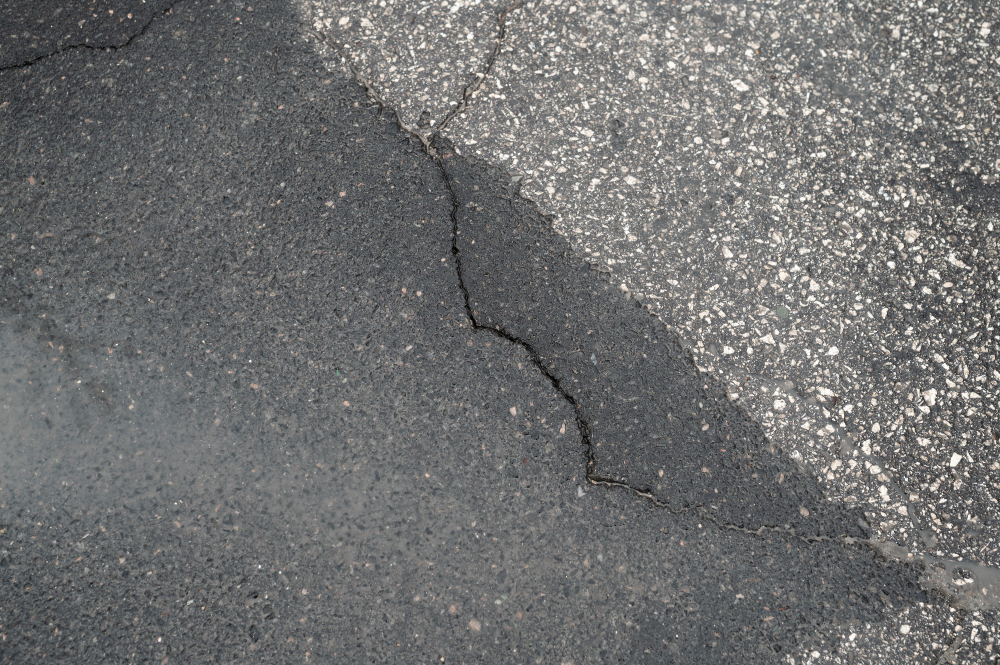
The failure sequence is worth describing because it is entirely a consequence of the above.
It begins with a crack. That may come from fatigue after many load cycles, from movement in the layers beneath, from a joint around something cut into the surface, or from the surface becoming brittle with age.
Water enters the crack and reaches the stone layers, which begin to lose their interlock as fine material is washed about and the confining dryness is lost.
Traffic passing over the weakened area flexes the surface, and each passing wheel pumps water down into the crack and back out, which erodes the material around it.
In cold conditions, water in the crack freezes and expands, widening it directly.
Eventually a piece of the surface loses support entirely and is displaced by a wheel, which exposes the layers beneath to the full force of traffic and to weather — at which point the failure accelerates rapidly, because the protection is gone.
That sequence explains why potholes appear suddenly after a wet winter, why they grow so fast once started, and why filling one without addressing what is beneath it produces a repair that fails again.
Why the Repairs Look Like That
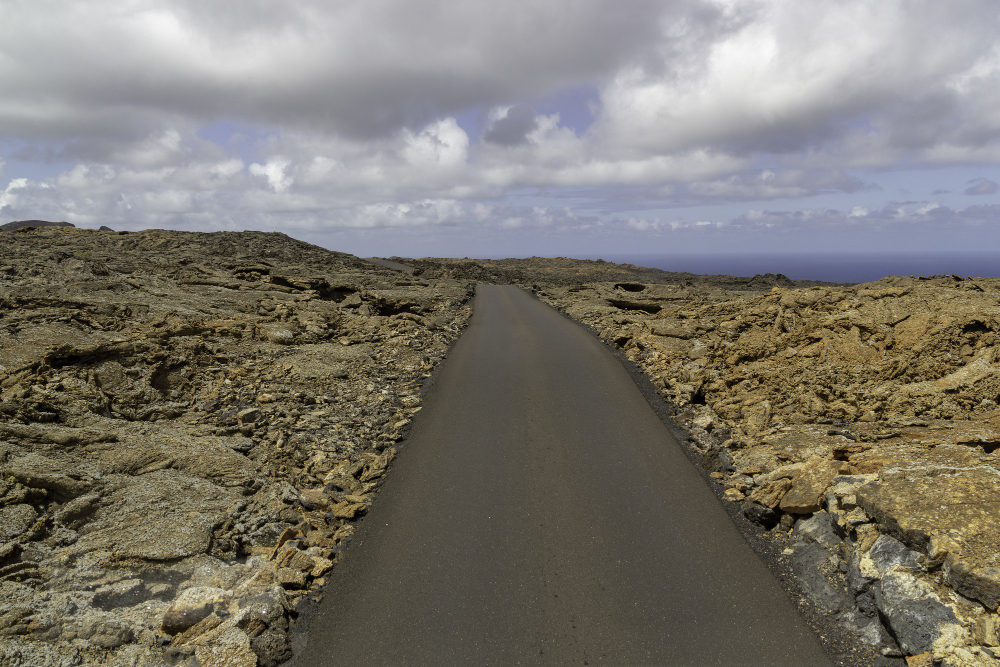
The visible patchwork of a typical road is a record of the above and of something else.
Anything buried under a road eventually needs attention, and reaching it means cutting the surface, excavating the structure, working, and reinstating all of it.
A reinstatement is a new piece of road inside an old one, with a joint all the way around it — and joints are where water enters, which is why the edges of old patches are where cracking reappears.
Because different services are at different depths and are attended to at different times, the same stretch is opened repeatedly, each time creating more joints, which is why a road can become a mosaic of patches long before the original surface has worn out.
That is a coordination problem rather than an engineering one, and it is the reason arrangements exist in many places to require notice, coordination and reinstatement standards.
Why the Camber and the Kerb Are Structural
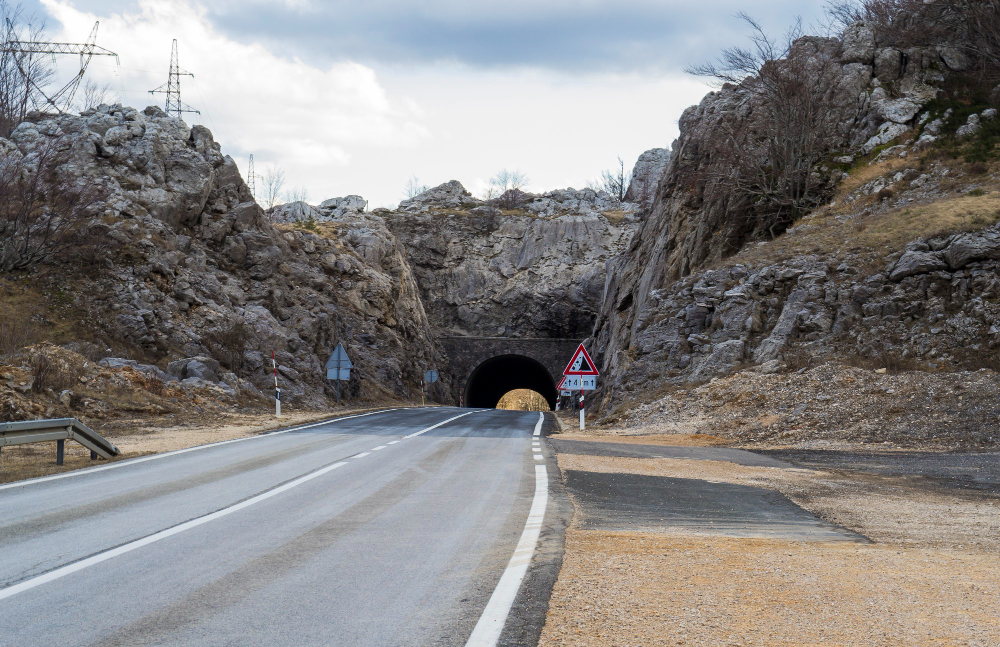
Two features that look like finishing details are doing structural work, which is worth pointing out.
The camber — the slight arch across the width — exists so that water runs off sideways rather than standing. Standing water finds cracks, and a surface that drains in seconds admits far less than one that holds a film.
That is why a flat road is a badly built road, and why worn ruts are worse than they look: a rut holds water along its length, directly over the wheel path where the loading is heaviest.
Kerbs and edge details are doing something less obvious. The granular layers rely on confinement — the stones interlock because they are pressed against their neighbours on all sides, and a layer with an unsupported edge can spread sideways under load.
An edge that is restrained keeps that confinement, which is why road edges are formed rather than simply left, and why the edges of a road without them fail first.
That also explains why the worst deterioration on many roads is at the sides rather than in the middle. The edge has less confinement, receives the water running off the camber, and is where heavy vehicles run when passing each other.
And it explains why a road that has been widened frequently fails along the join, since the original edge is now in the middle of the carriageway with a boundary between two structures built at different times to different standards running directly under the wheels.
Why Roman Roads Are Not the Comparison People Think
A closing correction is worth making because it comes up constantly.
The surviving stretches of very old road are frequently cited as evidence that ancient construction outlasts modern work, and the comparison is unfair in both directions.
Such roads were built with an enormous depth of material, by a workforce whose cost was not accounted for as it would be now, to carry loads that are a small fraction of a modern vehicle axle.
The stretches that survive are also a selection. Roads on good ground, in dry places, that nothing was built over, subject to no traffic for a very long period — which is not a representative sample of what was built.
What the old work does demonstrate is the principle at the top of this article. Those roads were built with deep, well-drained, well-graded foundations, and that is why the ones that survive have survived.
Which is the same conclusion modern practice reaches. The road is not the black stuff. The road is the drainage and the stone, and the surface is a lid that keeps the rain off the part that matters.
Which is why the visible complaints and the actual problem so rarely coincide. Everybody looks at the surface, the surface is the cheapest and thinnest part of the structure, and what has failed is almost always something underneath it that nobody has seen.
Like our content? Follow us for more.