There is a question about corrosion that people rarely ask and that turns out to be the whole subject.
The question is not why metals corrode. Almost all of them do, because most metals are found in nature as compounds rather than as metal, and turning them into metal requires energy — so returning to a compound is the direction things naturally go.
The question is why some of them stop and one particularly important one does not.
That difference determines which metals can be left outdoors, which need protecting, and why an entire industry exists around preventing one specific reaction.
Why Some Metals Protect Themselves
The mechanism is called passivation and it is the reason a great many things survive.
When certain metals corrode, the product forms a layer that is thin, dense, chemically stable and — critically — occupies very nearly the same volume as the metal it replaced.
That layer adheres tightly, has no gaps, and physically separates the metal beneath from the air and water.
Once it forms, corrosion effectively stops, because the reactants can no longer reach the metal.
That is why aluminium does not visibly corrode despite being highly reactive, why certain alloys are described as stainless, and why some copper structures survive outdoors for centuries beneath a stable surface layer.
It is also why those layers are protective rather than damaging. The visible discolouration is not the material failing; it is the material having sealed itself.
Like our content? Follow us for more.
Why Iron Does Not
The failure is mechanical rather than chemical, which is the surprising part.
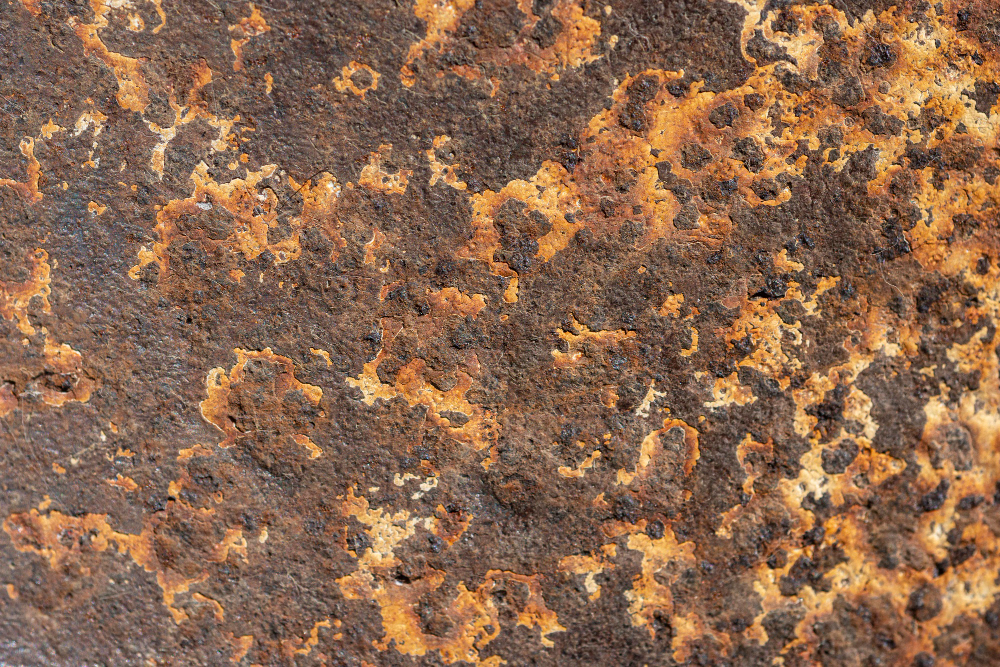
Iron’s corrosion product occupies substantially more volume than the iron it formed from — a considerable expansion.
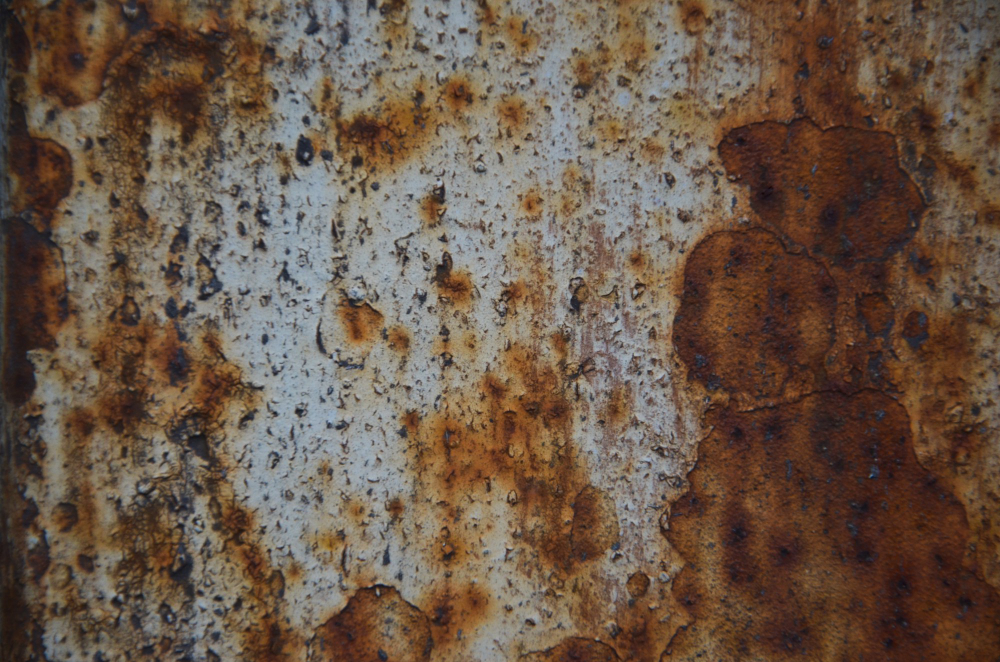
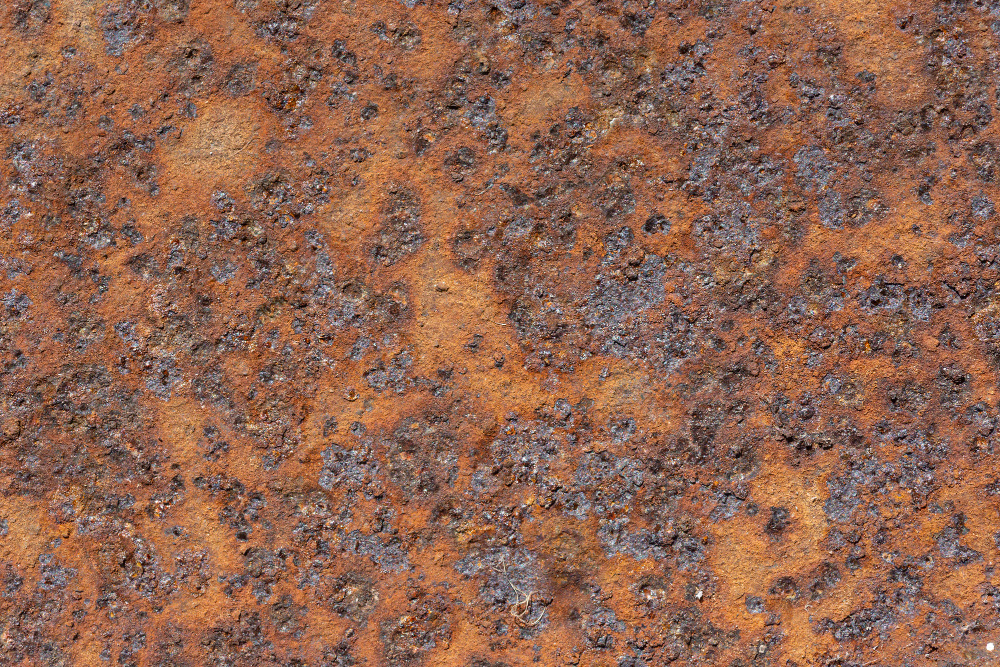
That expansion means the layer cannot stay attached. It builds up, stresses itself against the surface it is growing on, cracks, and flakes away.
Fresh metal is then exposed, the process begins again, and the cycle continues until there is no metal left.
So rust is not a protective layer that happens to look bad. It is a layer that structurally cannot protect, because the geometry is wrong.
The expansion also causes damage beyond the metal itself. Iron corroding inside concrete, inside stonework or within a joint generates enough pressure to crack the surrounding material, which is a substantial cause of failure in structures where the metal was never visible.
What the Reaction Needs
Understanding the requirements explains every prevention method.
The process requires iron, oxygen and water, all three present together. Remove any one and it does not proceed.
Dry air alone does very little, which is why iron objects survive indefinitely in truly dry conditions and why ancient ironwork from arid environments can be remarkably intact.
Pure water alone does little either, since the oxygen must be dissolved in it or available at the surface.
What accelerates it enormously is anything that makes the water conductive, because the reaction involves electrical current flowing through the moisture between different points on the surface.
Dissolved salts do exactly that, which is why coastal environments and roads treated in winter are so destructive, and why the same object in the same weather corrodes at completely different rates depending on what is dissolved in the water sitting on it.
Two Metals Touching
A specific and frequently overlooked mechanism deserves its own explanation.
When two different metals are in contact with moisture present, one of them corrodes preferentially and the other is protected, because the pair behaves as a small battery.
Which one suffers depends on the metals involved, and the effect can be dramatic — a component that would have lasted decades alone failing in a year because of what it was bolted to.
That explains a category of failure that looks inexplicable: a fastener corroding away while the panel around it is untouched, or the reverse.
The same effect is used deliberately. Attaching a more reactive metal to a structure means that metal corrodes instead, and replacing it periodically protects everything else — which is a standard protection method on ships, pipelines and tanks.
And galvanising works on exactly that principle, with a coating that protects both by covering the surface and by corroding in preference to the iron wherever the covering is broken.
That second property is why a scratched galvanised surface does not rust from the scratch, while a scratched painted surface does.
The Layer That Is Wanted
One case inverts the whole subject and is worth including.
Certain weathering steels are formulated so that their corrosion product does adhere and does seal — producing a dense stable layer that slows further attack substantially rather than flaking away.
That material is used deliberately unpainted, developing a deep orange-brown surface over the first few years and then stabilising, which is the appearance many people read as neglect and which is the material working as specified.
The behaviour depends on conditions. It requires cycles of wetting and drying to develop the stable layer, and in constantly damp locations, in sheltered positions that never dry, or where salts are present, the protective layer does not form properly and the material corrodes conventionally.
It also stains. Material washed off the surface during the first years discolours anything beneath, which is a known consequence and one that has to be designed around rather than prevented.
So it is not a maintenance-free material in general. It is a material that is maintenance-free in specific conditions and problematic outside them, which is a narrower claim than it is usually given.
That narrowness is the point worth extracting. A material that protects itself does so under the conditions it was designed for, and the entire practice of using it consists of establishing whether those conditions apply.
The Ways of Stopping It
The methods sort into a small number of approaches.
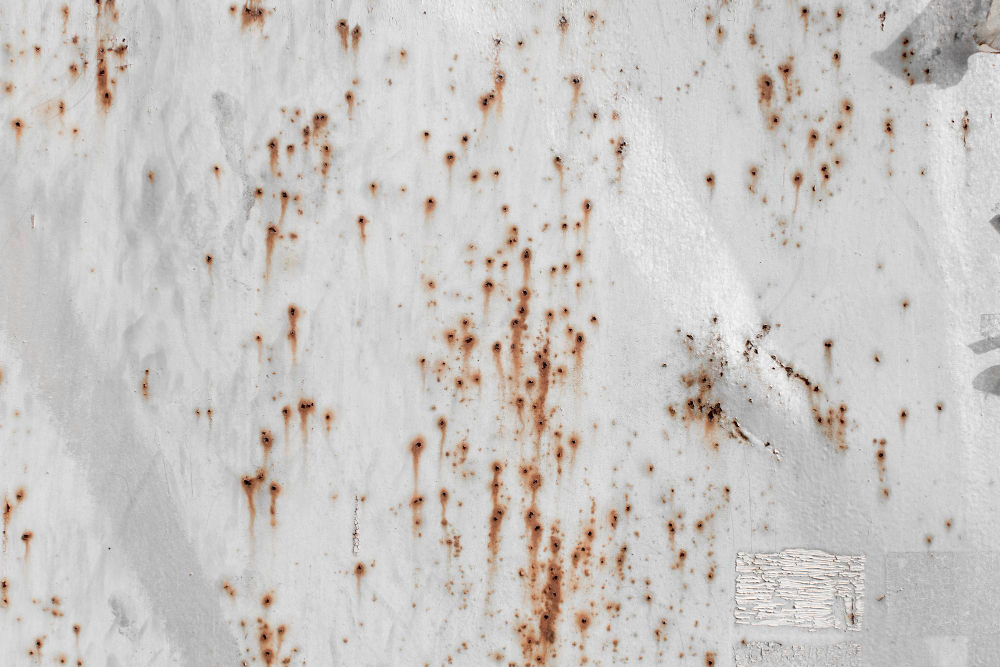
Barriers keep water and oxygen away: paint, plating, plastic coating, oil. They work while intact and fail at any break, which is why coating condition matters more than coating thickness.
Sacrificial protection uses a more reactive metal, as above, and continues working where the barrier is damaged.
Alloying changes the metal so that it passivates — adding elements that form the dense adherent layer iron cannot form alone, which is what stainless alloys do.
Environmental control removes one of the three requirements, by keeping things dry, by excluding oxygen, or by removing the salts that accelerate everything.
And design matters more than people expect. Shapes that hold water, joints that trap moisture, crevices that stay damp and places that cannot be inspected or maintained all produce failure regardless of how well the material was specified.
That last point is the one that catches structures out. The material choice is frequently correct and the detail that traps water is not.
Why Some Old Ironwork Survives
Several exceptions are worth explaining, because they look like contradictions and are not.
Iron worked by hand contains slag inclusions distributed through it, a residue of the process, and those affect how corrosion proceeds — producing a surface layer that is more adherent and more protective than that on modern material.
Bulk matters enormously. A thick section can lose a substantial surface layer and remain structurally sound, while a thin one of the same material is consumed entirely — which is why heavy historic ironwork survives where light modern work does not.
Environment dominates everything. The same metal in dry air, in salt air, buried in clay, immersed in fresh water or in contact with damp masonry corrodes at rates that differ by orders of magnitude.
Continuity of exposure matters more than severity. Alternating wet and dry cycles are substantially more destructive than constant immersion, because each drying phase concentrates whatever was dissolved and each wetting phase restarts the process with the layer already cracked.
And maintenance is invisible in the record. A structure that survives may have been painted twenty times, and a comparable one that failed may have been painted once — which means survival frequently records attention rather than material.
That last point is the one most often missed when old work is compared favourably with new. The surviving examples are the ones somebody looked after.
Why It Is Worth Understanding
The general observation is about what makes a material durable.
Durability is not a property of a substance in isolation. It is a property of a substance in a specific environment, in a specific shape, in contact with specific other materials.
Iron is not a poor material. It is an excellent one with a specific vulnerability, and the entire practice of using it consists of managing that vulnerability rather than avoiding it.
Which is why the same metal appears in structures that have stood for centuries and in objects that fell apart in a decade, with the difference lying in the coating, the detailing, the environment and whether anybody maintained it.
And it explains why the most useful question about any metal object outdoors is not what it is made of, but where the water goes.
Which is a reasonable question to carry into any building or structure. Almost every material failure outdoors begins with water arriving somewhere it was not meant to sit, and the material is generally blamed for something the detailing did.
Like our content? Follow us for more.