

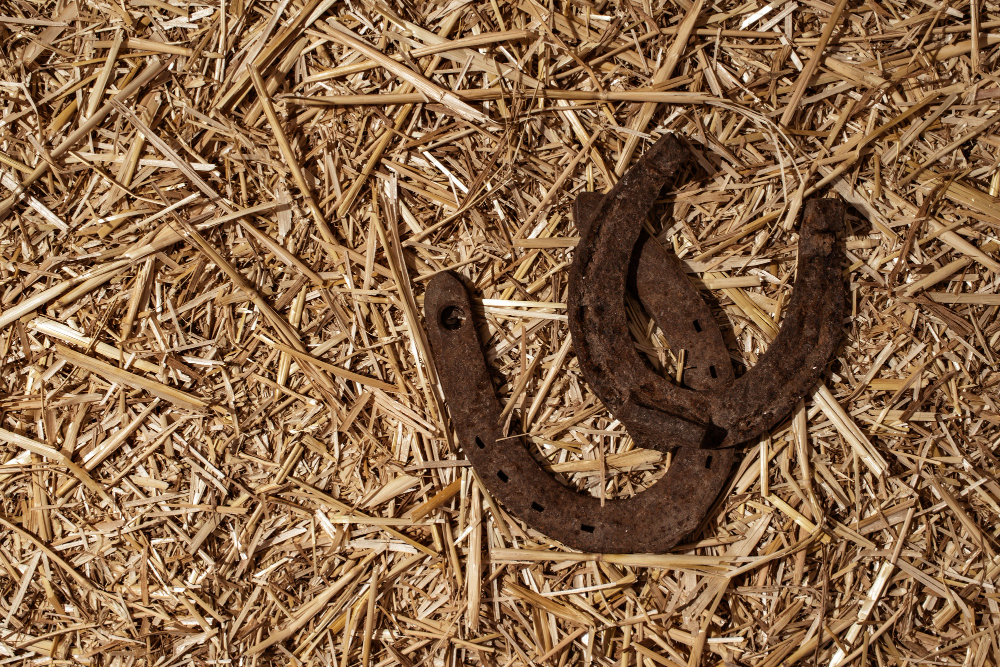
There is an image that makes most people wince the first time they see it: a hammer driving nails into a horse’s foot.
The reaction is reasonable, and it rests on a misunderstanding of what a hoof is. The outer part of the hoof wall is not living tissue in the sense that skin is. It is a thick, dense layer of keratin — the same protein that makes up fingernails, hair and horn — and like a fingernail it has no nerves in the part that is visible.
Nails placed correctly pass through that insensitive layer and emerge from the outside of the wall, well away from the sensitive structures within.
Placed incorrectly, they do reach them, and the consequence is lameness and pain. Everything about shoeing turns on the difference between those two, and it is why the work has always required training.
What a Hoof Actually Is

The structure explains both the need for shoes and the way they are fitted.
The hoof wall grows downward continuously from a band at the top, in the same way a fingernail grows from its base, taking many months to grow from top to bottom.
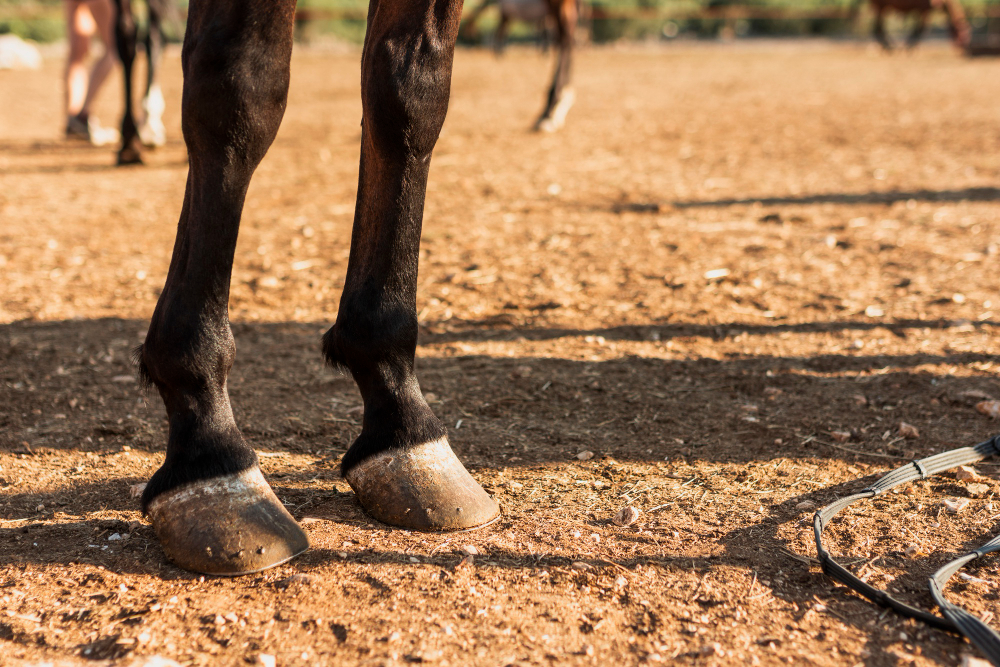
Inside the wall are the sensitive tissues and the bones of the foot, connected to the wall by interlocking layers that hold the whole structure together and carry the horse’s weight.
On the underside is a sole, somewhat softer, and a wedge-shaped structure toward the back that helps absorb impact and circulate blood.
A horse living on open ground wears its hooves down at roughly the rate they grow, and the wall stays at a workable length without any intervention.
The problems begin when that balance is disturbed — by hard roads, heavy work, wet ground or confinement — because the rate of wear no longer matches the rate of growth.
Like our content? Follow us for more.
Why Shoes Became Necessary
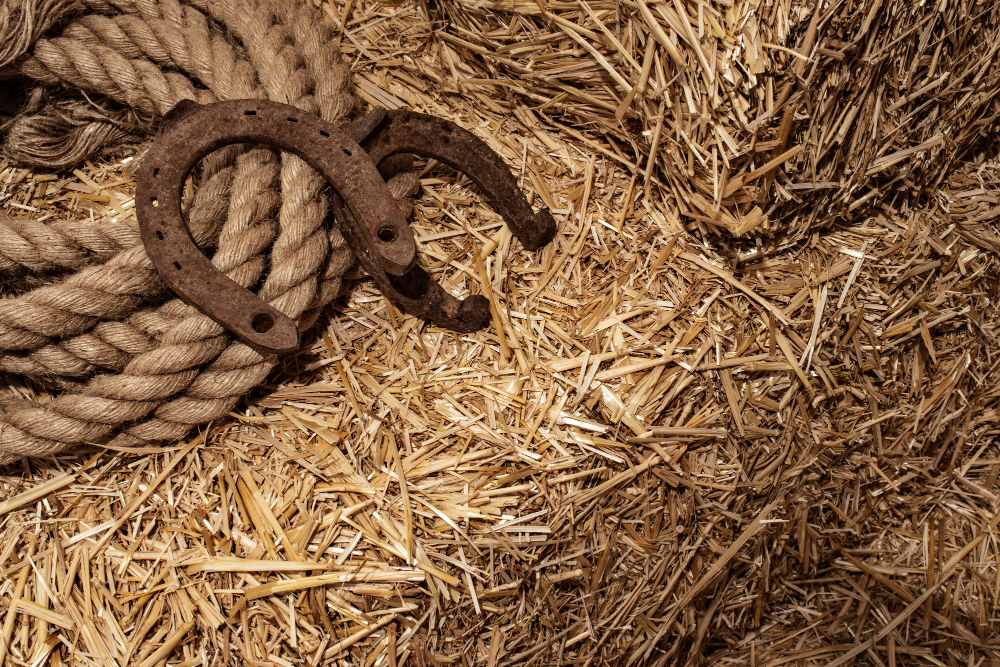
The need arose from the ways people used horses rather than from anything inherently wrong with the hoof.
Working horses on hard surfaces wore their hooves faster than they could grow, and a hoof worn too short becomes sore and cannot be worked.
Wet conditions softened hooves and made them more vulnerable to wear and splitting.
Heavy draught work and long distances increased the load and the wear beyond what the foot could sustain.
Various early solutions existed — protective boots of leather or woven material tied around the foot, and metal plates held on with straps — but these tended to slip, rub or come off.
A shoe nailed directly to the wall solved the retention problem: it stayed in place under heavy use, protected the foot from wear, and could be removed and replaced as the hoof grew.
That is why the nailed shoe became standard wherever horses did heavy work on hard ground, and why it persisted for so long.
There is a materials point worth adding. Shoes have been made of iron and later steel for most of their history, with lighter metals and synthetic materials used for particular purposes, each chosen for how it wears, grips and holds its shape.
How a Shoe Is Fitted
The process is a sequence of judgements rather than a mechanical routine.
The old shoe is removed and the hoof is inspected, since the condition of the foot and the wear pattern on the old shoe say a great deal about how the horse moves.
The hoof is trimmed back to the correct length and balanced, so that it bears weight evenly and sits at the right angle to the leg — which matters more than the shoe itself.
The shoe is shaped to match the individual foot, traditionally by heating it in a forge and hammering it to fit, and frequently checked against the hoof more than once.
Nails are driven at an angle so that they enter the insensitive outer wall and turn outward to exit through its side, a short distance up.
The protruding ends are bent over and finished flat against the wall, which locks the shoe in place.
Each of those stages requires judgement about the particular horse, which is why no two fittings are identical.
There is a variation point worth adding. Shoes are shaped differently for different work – lighter for speed, heavier or with grips for traction on slippery ground, wider or with extra support where the foot needs it – so a farrier chooses and adapts the shoe to the horse and its job.
The shoe is part of the fitting rather than a standard component.
Why the Hot Fitting Hisses
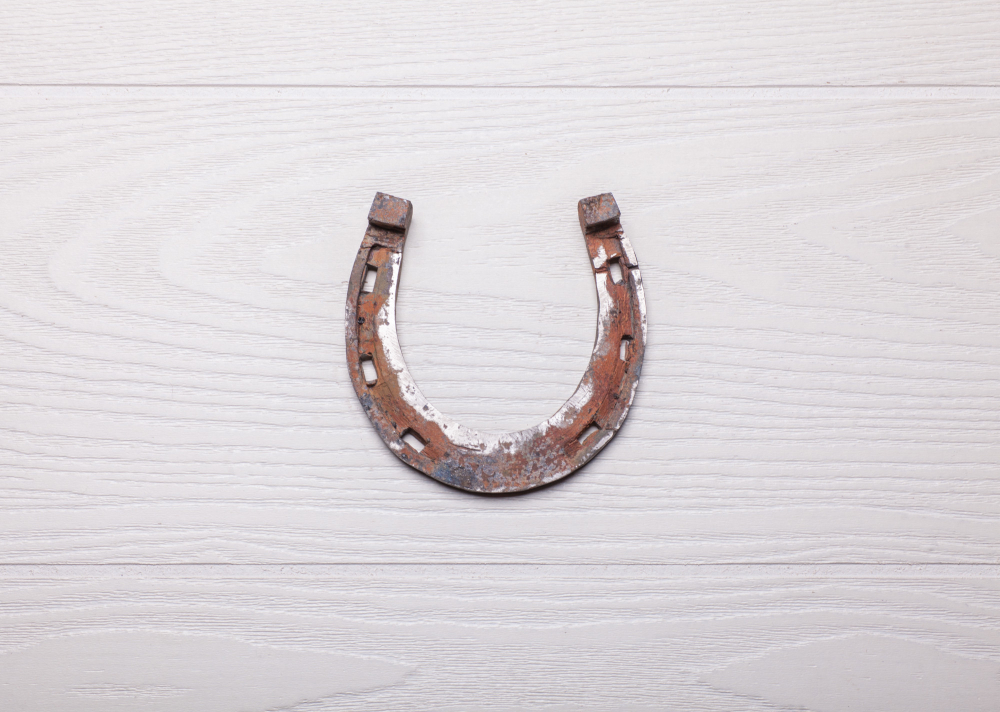
The dramatic moment of pressing a hot shoe against the hoof is functional rather than theatrical.
Pressing a heated shoe briefly against the trimmed hoof marks the surface, showing exactly where the shoe makes contact and where it does not.
That allows gaps and high spots to be seen and corrected, producing a precise match between shoe and foot.
It also seals the surface of the horn slightly where the shoe will sit.
The smoke and smell are from the keratin being scorched at the very surface, and because the outer wall has no nerves in that layer, the horse feels no pain from it when it is done correctly.
The technique requires care: too hot or held too long, and heat can reach deeper tissues, which is why it is done briefly and by somebody trained.
Why It Has to Be Done Regularly
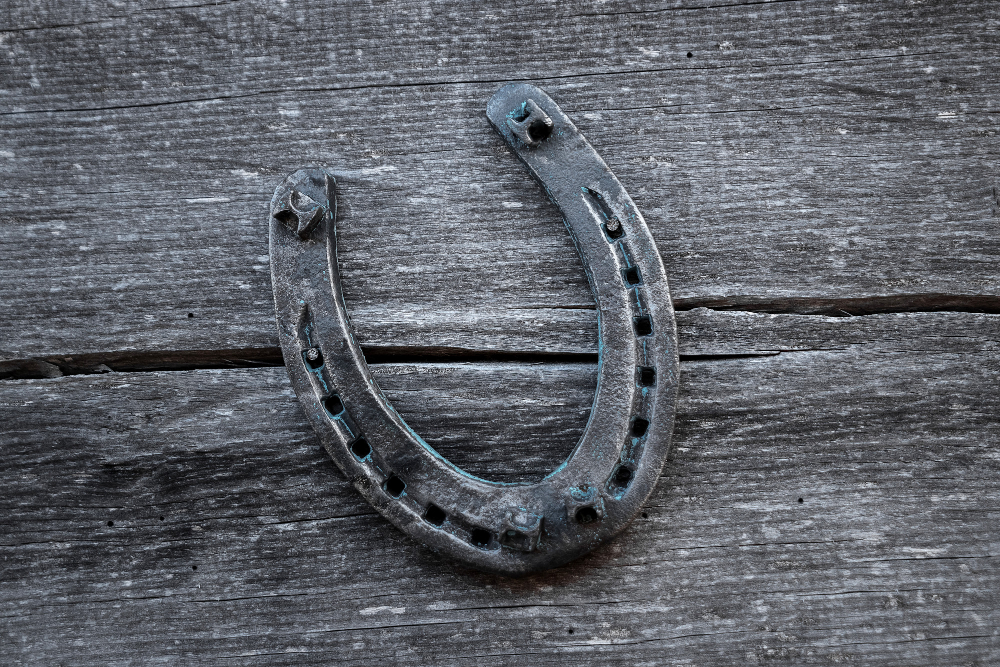
A shoe is not a permanent fixture, because the hoof keeps growing beneath it.
With the shoe preventing normal wear, the hoof grows longer and the shoe is carried forward with it, gradually changing the angle and balance of the foot.
After some weeks, the foot is out of balance, the shoe may loosen, and the whole process must be repeated — removing the shoe, trimming the growth and refitting.
That regular cycle is why farriery was a continuous trade in any community with working horses, and why the farrier’s forge was a fixture of villages and towns.
A shoe left on too long causes problems of its own, so the interval is set by growth rather than by wear on the shoe.
There is a history point worth including. Before motor transport, a horse without shoes in working condition could not work, and a community without a farrier could not function – which made the trade one of the most important in any town or village.
The forge was frequently a meeting place as well as a workshop.
Shod or Barefoot
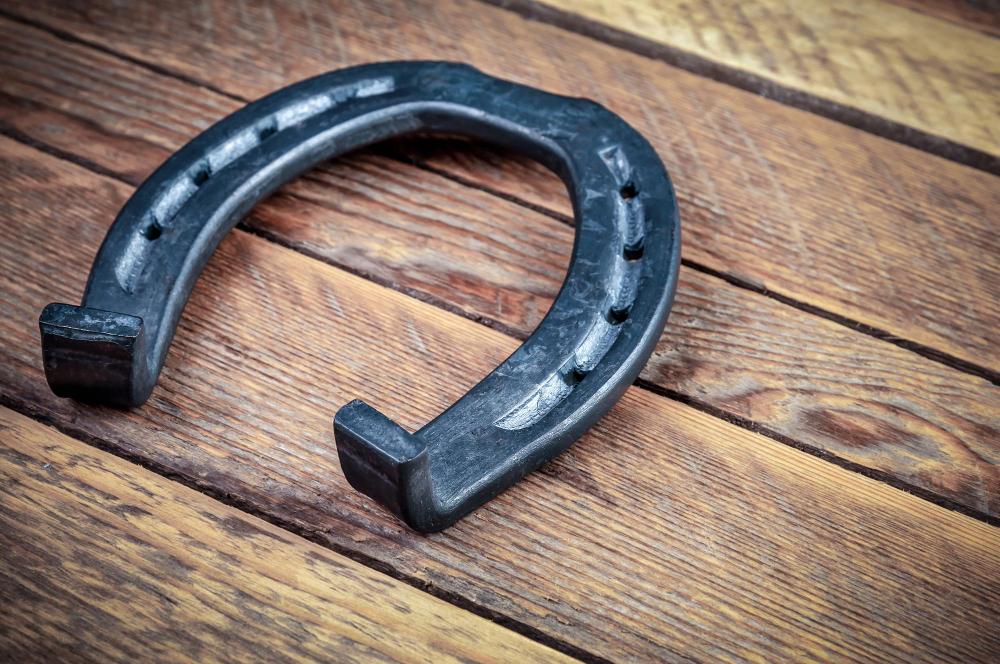
The question of whether horses should be shod at all has been debated, and the evidence depends heavily on circumstances.
Many horses kept on suitable ground and doing light work manage well without shoes, and some owners prefer to avoid them where possible.
Others working on hard or abrasive surfaces, carrying heavy loads, or with particular hoof problems benefit from the protection and support shoes provide.
Alternatives exist, including removable protective boots and shoes attached with adhesive rather than nails.
The appropriate choice depends on the individual horse, its work, its environment and the condition of its feet, and is a matter for the people who look after it and the professionals who advise them rather than a general rule.
There is a noise point worth including. The ring of shod hooves on hard roads was once one of the most familiar sounds of any town, and its disappearance is one of the quieter changes that came with motor transport.
The Superstition and the Practical Object
The horseshoe carries a set of associations that far outgrew its function.
It became a symbol of luck across many cultures, hung above doors and incorporated into decoration, and there is longstanding disagreement about which way up it should be hung.
Some of the association is attributed to iron’s traditional protective reputation, some to the shape, and some to the value of a lost shoe as a useful piece of metal.
That symbolic life outlasted the everyday presence of working horses in most places, which is why far more people now recognise the shape than have ever seen one fitted.
Which is a reasonable thing to reflect on the next time one is seen nailed above a door. The object began as a practical answer to hard roads and heavy work, fitted by a skilled trade with a precise understanding of where a nail can and cannot go — and it became a charm largely after most people stopped needing to know how it worked.
And the nail-and-hoof image that makes people wince is, in the end, a demonstration of precise knowledge: a skilled hand placing a nail through the one layer of the foot that cannot feel it, stopping exactly where the living tissue begins.
Like our content? Follow us for more.
