
There was a specific phrase for it, and anybody who was a child in America in that period knew whether or not it applied to them. A latchkey kid was one who carried a house key, came home to an empty house, and was responsible for themselves for two or three hours until a parent got back.
The phrase carried weight. It appeared in news segments and magazine features and school board discussions. It implied something slightly sad and faintly scandalous. And then at some point in the 1990s it simply stopped being said, which is a strange fate for a term describing a situation that is now almost universal.
What happened to it is more interesting than the panic was.
Where the Phrase Came From

The term is older than most people assume. It long predates the era it is associated with, and its original reference was wartime: children whose fathers were away in service and whose mothers had gone into industrial work, who consequently had a key and an empty house.
That origin matters, because it fixes the meaning. The phrase was coined to describe a temporary emergency arrangement produced by an extraordinary national circumstance. It carried, from birth, the implication that this was not how things were supposed to be and would be corrected when normal conditions resumed.
When the term was revived decades later and applied to a peacetime situation produced by ordinary economic change, it brought that implication with it. A latchkey kid was definitionally an anomaly – a child in a situation that was understood to be a deviation. The word did the moral work before anybody made an argument.
That is the first thing to notice about the panic. It was partly constructed by the vocabulary available to describe the thing.
Like our content? Follow us for more.
What Was Actually Changing
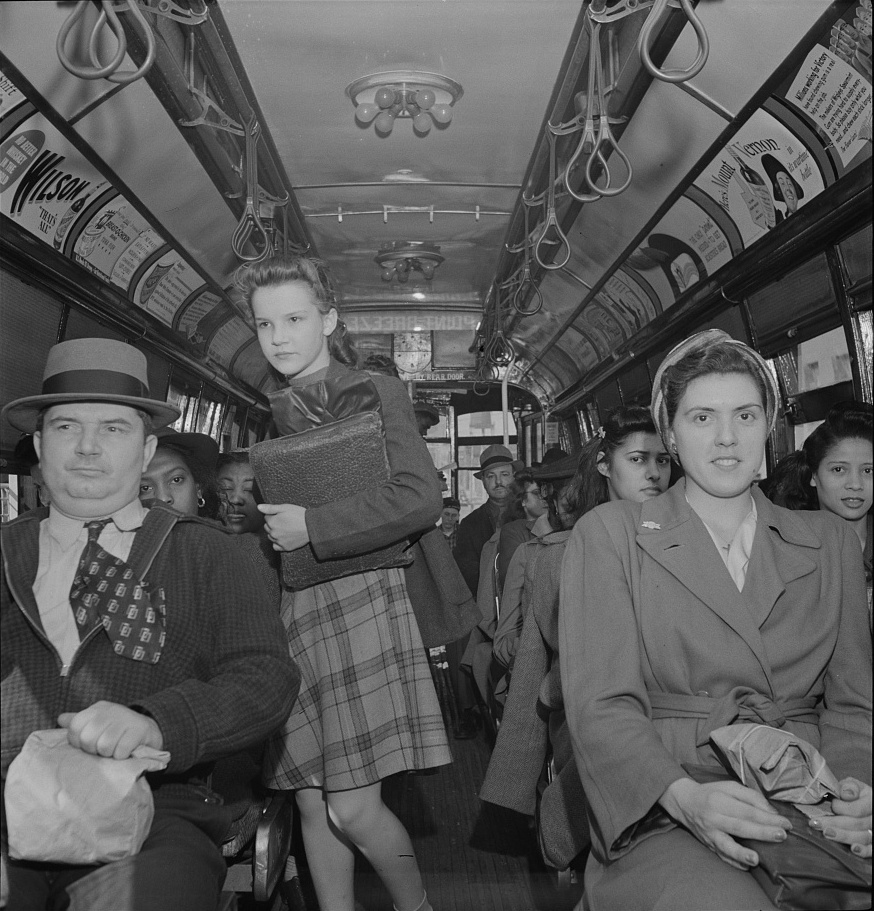
The underlying shift was not mysterious and it was not about parenting philosophy.
Across the postwar decades, the share of American mothers in paid employment rose steadily and substantially, driven by a combination of forces that had nothing to do with attitudes toward childcare: expanding employment in sectors that hired women, rising educational attainment, changes in household economics that made a single income insufficient for the standard of living families were trying to maintain, and rising rates of divorce and single-parent households.
At the same time, the school day stayed where it was. American schools let out in the early-to-middle afternoon, a schedule inherited from an era when the assumption was that somebody would be home. Nobody adjusted it. The result was a structural gap of two to three hours, five days a week, between the end of supervision and the end of the working day, with no institution responsible for it.
That gap is the whole story. It was not created by mothers working. It was created by the school day and the workday being mismatched, and by the absence of any public or private system to bridge the difference. A child with a key was the household’s own improvised solution to an institutional failure of scheduling.
Why It Became a Panic Rather Than a Logistics Problem

A mismatch between two timetables is a boring problem with boring solutions. The reason it became a moral question instead is worth examining, because the mechanism recurs.
First, the change coincided with an intense and contested public argument about mothers working, and the latchkey child was an unusually effective rhetorical object in that argument. A child alone in a house is a vivid image. It could be deployed as evidence of harm without anybody having to establish harm, and it placed the cost of the economic shift on the most sympathetic possible party.
Second, it coincided with the stranger-danger era. The same decade that produced the latchkey discussion produced a handful of extremely heavily covered child abduction cases and a national campaign apparatus around them. The two anxieties fused. An empty house stopped being a scheduling inconvenience and became a scene.
Third, the research available at the time was thin and easy to characterize badly. Early work on self-care children produced mixed findings that varied enormously depending on neighborhood, age, duration, whether the child had instructions and contact, and whether they stayed inside. Those are large moderating variables, and a mixed literature with large moderators is exactly the kind of evidence base that supports whatever conclusion a feature writer needs.
What the better-designed later work tended to find was unsurprising and much less dramatic: that the outcome depends almost entirely on the circumstances rather than on the arrangement itself. Age, how long, what neighborhood, whether there is a plan, whether an adult is reachable, whether the child is indoors or roaming unsupervised. The bare fact of a key turned out to predict very little on its own.
Why the Phrase Died

So why did the term vanish while the arrangement spread?
The simplest answer is that a word for an anomaly cannot survive the anomaly becoming the norm. By the 1990s, households with all adults in paid work were not a deviation from the American pattern; they were the American pattern. A phrase whose entire function was to mark a child out as unusual becomes useless when it describes the majority. Nobody needs a special word for the ordinary.
But there is a second and more interesting reason, which is that the gap finally got institutions.
Over roughly the same period, after-school care became an actual sector. Formal programs run out of the school building. Extended-day arrangements. Latch-key programs, often called exactly that at first, run by school districts and municipalities and community organizations. Sports and activities deliberately scheduled into the dead hours. Paid care arranged through networks that did not exist a generation earlier.
That institutional layer did two things at once. It absorbed a large share of the children who would previously have gone home alone, and, more to the point, it gave the remaining arrangement a respectable name. A child in an after-school program is not a latchkey kid. They are enrolled in something. The vocabulary moved from describing a deficiency to describing a service.
So the phrase did not die because the children stopped coming home to empty houses. It died because the situation stopped being remarkable, and because the part of it that got solved was renamed on the way out.
What Replaced the Panic

The anxiety did not dissipate. It relocated, and the direction it went is instructive.
The latchkey discussion had been about children having too little supervision. What followed, from roughly the 1990s onward, was a sustained movement in the opposite direction: a steady ratcheting up of the expected level of adult oversight, to the point where the unsupervised time that the latchkey panic had treated as dangerously long came to look generous.
A child walking home alone, playing in a park alone, or waiting in a house alone moved from being a sign of a household under economic strain to being, in some places, a matter that could attract official attention. The threshold shifted so far that the latchkey kid of 1983, with a key and three hours and a note on the refrigerator, is now in some jurisdictions describing an arrangement a parent might have to justify.
That is a remarkable inversion over a single generation, and it happened without the underlying evidence changing much. What changed was the default assumption about how much supervision a child requires, which drifted upward continuously while the economic pressure pushing in the other direction also increased.
The Thing the Panic Got Right

It is worth giving the era its due on one point, because it was not all noise.
The latchkey discussion correctly identified that the United States had a structural hole in its day and no plan for it. That was true, and it remains partly true. The school day still ends hours before the workday. There is still no universal system bridging the gap, and what exists is patchy, varies enormously by district and income, and is frequently the first thing cut.
The panic’s error was not noticing the hole. It was in locating the problem in the household rather than in the timetable, and in treating a key as a moral fact about a family rather than as a workaround for an institution that let out at three o’clock.
Which is why the solutions that actually worked were scheduling solutions. Not reassurance, not advice, not a campaign about family values. A room that stays open until six, with somebody in it.
The Honest Summary
The latchkey kid was a real arrangement, driven by a real mismatch between when school ends and when work ends, that arrived at a moment when American public discussion was primed to read it as a verdict on mothers rather than as a problem with a calendar.
The phrase disappeared for the least satisfying reason imaginable. Not because it was solved, and not because it was debunked, but because it became too common to be worth naming, and because the better-funded version of it got a nicer word.
There is a generation of Americans who were told, more or less directly, that something was wrong with their afternoons. For most of them nothing was, and the evidence has been fairly clear about that for some time. What was wrong was that nobody had built anything to fill the three hours, and in a great many places nobody has yet.
Like our content? Follow us for more.