There are very few pieces of American folk knowledge as wrong as this one. Ask why the clocks change and you will be told it is for the farmers, with total confidence, by people who have no other opinions about agricultural policy.
The farmers hated it. They organized against it, they lobbied against it, and they won – the first national version of it was repealed, over a presidential veto, largely because of agricultural opposition. Understanding why they hated it is the fastest route to understanding what the clock change actually does, because the reason is structural and it has not changed.
Why Farming Is the Worst Possible Beneficiary

The misconception survives because it sounds plausible: farmers work with daylight, so more evening daylight must help them. That gets the relationship backwards.
A farm operates on solar time, not clock time. Cows need milking at an interval, not at an hour. Dew has to burn off before certain crops can be harvested or treated, and it burns off when the sun says so. Field work starts when there is light to see by. None of that is affected in the slightest by what the clock reads, because the farm is not consulting the clock.
What the clock controls is everybody the farm has to deal with. The creamery that collects the milk, the elevator that takes the grain, the market that sets the price, the bank, the feed store, the railroad and the hired hands who arrive at a time. Move the clock and every one of those moves relative to the sun, while the farm cannot.
The practical result for a dairy operation was that the milk was now expected an hour earlier in solar terms, which meant the whole chain of work ahead of it shifted into darkness. For harvest crops it meant a market deadline that no longer matched when the crop could be touched.
So the clock change does not give a farmer more light. It gives everybody else a different schedule and leaves the farm to absorb the mismatch. That is why the opposition was agricultural, and why it was effective.
Like our content? Follow us for more.
What It Was Actually For

The real origin is fuel, and it arrived with a war.
The argument was straightforward and, at the time, quite strong. Artificial light costs fuel. If the working day is aligned so that more of it falls within natural daylight, less lighting is needed in the evening. In a wartime economy where coal is rationed and every ton matters, an hour of national daylight shifted from the morning, when most people are asleep, to the evening, when they are awake and using lamps, is a measurable saving.
Several countries adopted it on exactly that basis during the First World War, and the United States followed. It was a fuel conservation measure, explicitly and openly, with no reference to agriculture at all.
It was repealed nationally soon after the war ended. It came back as a national measure during the Second World War – continuous, year-round, for the duration – and then lapsed again.
That is the whole origin: an energy argument, adopted twice under wartime conditions, abandoned twice when the conditions ended.
The Forty Years of Chaos

Between those wartime periods and the modern system there is a stretch of American history that deserves to be better known, because it is close to absurd.
With no national rule, the decision fell to states, counties, cities and in some cases individual institutions. Any of them could observe the clock change or not, and could choose their own start and end dates. And they did.
The results were remarkable. Neighboring towns ran an hour apart for part of the year. A single metropolitan area could have multiple regimes. One frequently cited case involved a long-distance bus route on which a passenger passed through seven separate time changes without leaving the region. Another involved an office building where different floors, occupied by businesses that had made different choices, ran on different time.
The cost of this fell on exactly the industries that need synchronized schedules: broadcasting, which had to publish listings that were wrong somewhere; railroads and bus lines, which had to print timetables that were unusable; and anybody running a business across a boundary.
It is worth stressing that nobody designed this. It is what you get when a question that requires coordination is answered locally. Everybody optimized for themselves and the aggregate was unusable.
Why Uniformity Finally Arrived

The modern arrangement came from the transportation and broadcasting industries, not from a public demand for more evening light.
In the mid-1960s federal legislation established a uniform national framework: the clock change would run on common start and end dates nationwide, and a state that did not want to observe it could exempt itself – but only as a whole state, and only by opting out entirely. It could not invent its own dates.
That structure is the key to everything that followed, and it is elegant. It does not force any state to change its clocks. It forces any state that does change them to change them at the same moment as everybody else. The coordination problem was solved by removing the ability to be idiosyncratic, while leaving the ability to abstain.
The start and end dates have been moved several times since, generally extending the period, and each extension has been justified on energy grounds following the original logic. A small number of states and territories do not observe it at all, which is exactly what the framework permits.
Whether It Saves Any Energy Now
This is where the honest answer is unsatisfying, and it is worth being precise about why.
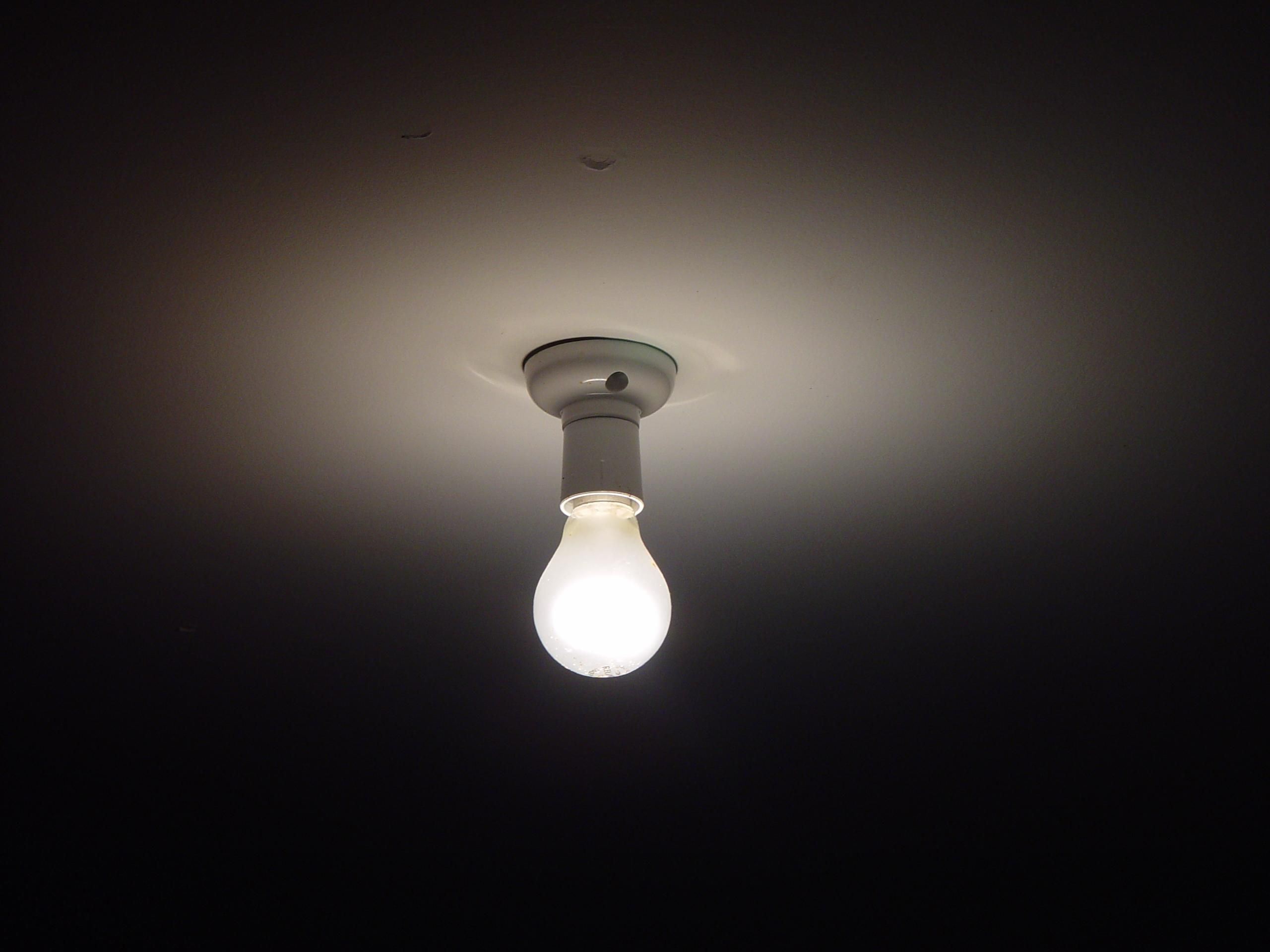
The original argument assumed a particular energy profile: lighting is a large share of household consumption, lighting is incandescent and therefore expensive, and cooling is not a major factor. Under those assumptions the saving is real and reasonably easy to estimate.
Every one of those assumptions has weakened. Lighting is a much smaller share of household energy use than it was, and modern lighting uses a fraction of the power. Air conditioning, which is driven by afternoon heat rather than by darkness, is now a large load – and an extra hour of waking time in the late afternoon can increase cooling demand. Transport, heating and electronics dominate household consumption in ways they did not.
Studies of the modern effect find results that are small, that go in both directions depending on climate and region, and that frequently fall within the uncertainty of the measurement. The reasonable summary is that the energy case, which was once the entire justification, is now close to neutral and cannot carry the policy by itself.
What has replaced it in public argument is a mixture of retail and recreation interests, who favor evening daylight, and a body of work on the effects of the transition itself – the sleep disruption around the changeover and the acute consequences in the days immediately following – which argues for stopping the change rather than for one setting or the other.
The Argument Nobody Expected

The current debate has an interesting shape, and it is not the one the folk explanation would predict.
Almost nobody argues for keeping the twice-yearly change. The disagreement is between making the summer setting permanent and making the winter setting permanent, and it divides along a line that has nothing to do with agriculture.
Permanent summer time means light later in the evening all year, which retail, hospitality and outdoor recreation favor. Its cost is very late winter sunrises in the western parts of time zones and at higher latitudes – children going to school in the dark for months.
Permanent winter time means earlier sunrises, which aligns better with the body’s clock and is what sleep researchers generally favor, at the cost of early summer evenings.
That is a real trade-off with no free answer, and it is the reason the question has stayed open for so long despite near-universal agreement that the change itself should stop. The United States has in fact tried permanent summer time once before, briefly, and abandoned it – which is the single most relevant piece of evidence available and the one least often mentioned.
The Honest Summary
Daylight saving time was a wartime fuel conservation measure, adopted twice under emergency conditions and repealed twice. Farmers were its most effective opponents, for the entirely rational reason that a farm runs on the sun while everybody it trades with runs on the clock, so moving the clock shifts the mismatch onto the farm.
For about forty years America had no national rule and the result was a patchwork so impractical that a bus could cross seven time changes in a single run. The uniform system that fixed it came from broadcasters and transport operators, and its clever feature is that it does not require anybody to change their clocks – only to change them simultaneously if they change them at all.
The energy argument that started the whole thing has largely dissolved, which leaves a twice-yearly disruption that almost nobody defends, maintained because the two available replacements each have a real cost and neither has been able to win.
Like our content? Follow us for more.