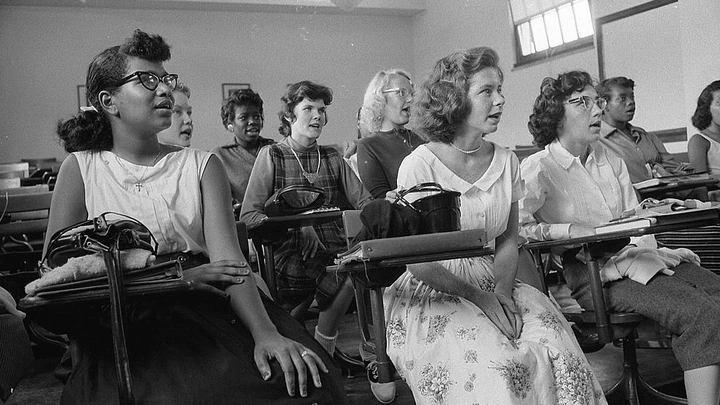
Ask an American over fifty why cursive went away and you will hear that children type now. Ask a teacher and you will hear something more specific and much more interesting: that nobody voted on it.
Cursive was not debated and rejected. It was left off a list. What happened next is a useful lesson in how American education actually changes – not through argument about what matters, but through the quiet mechanics of what gets measured and what gets paid for.
How Much Time It Used to Take
To understand the size of the change it helps to know how large a subject this was.
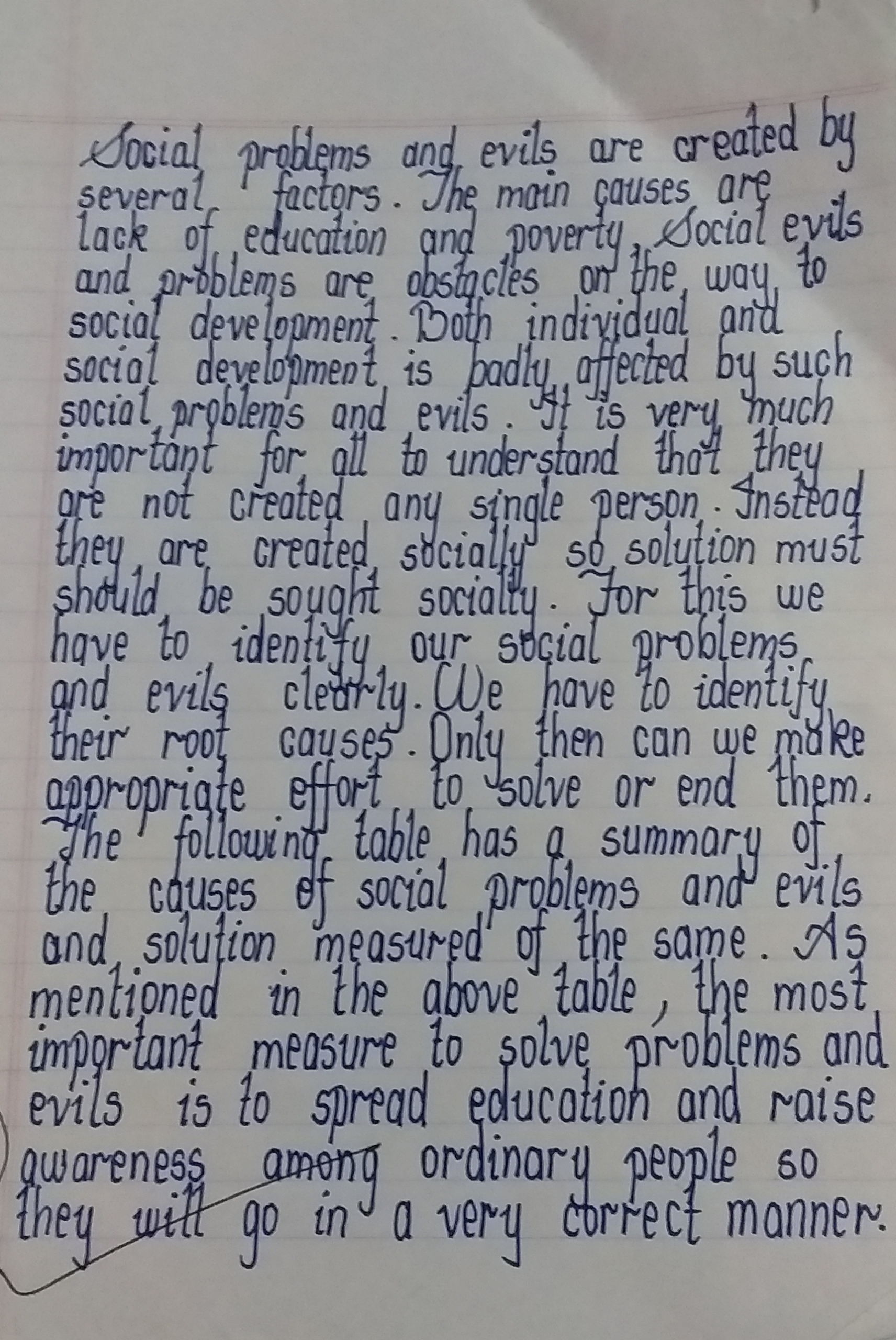
In a mid-century American elementary classroom, penmanship was a daily period with its own grade on the report card. Children spent years on it: first manuscript printing in the earliest grades, then a transition to a connected script somewhere around the third year, then several more years of refinement. There were commercial systems with their own copybooks and their own characteristic letterforms, and a school generally adopted one and stayed with it.
The assessment was real. Legibility, slant, spacing and letter formation were marked, and a child could do badly at it in a way that appeared on a permanent record. Teachers were trained in it as a distinct instructional skill, and in some teacher preparation programs they had to demonstrate competence in the script themselves.
So this was not a minor classroom activity that quietly fell out of fashion. It was a graded subject consuming a meaningful share of the instructional day for roughly five years of every American childhood.
Like our content? Follow us for more.
The Document That Did Not Mention It
Here is the mechanism.
In the early 2010s a widely adopted set of common academic standards was published for American English language arts and mathematics. Those standards specified what students should be able to do at each grade level, and they were deliberately written as outcomes rather than as a list of activities.
In the earliest grades the standards addressed handwriting directly: children were expected to print legibly. Beyond that, for the later elementary grades, the writing expectations shifted toward composition, revision and – explicitly – the use of technology to produce and publish writing, including keyboarding.
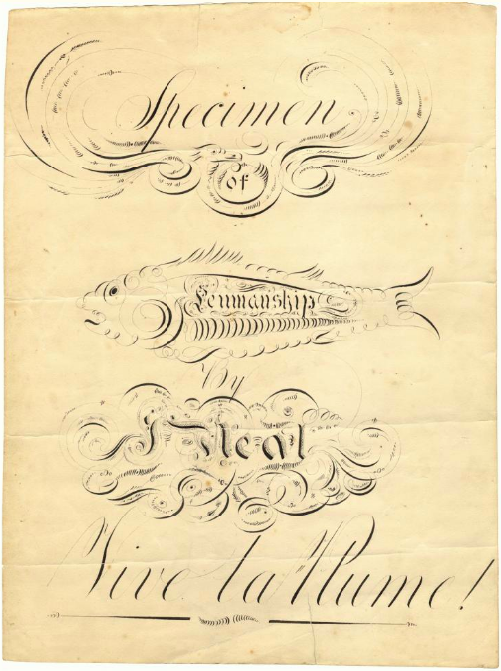
Connected script is not mentioned. Not prohibited, not discouraged, not discussed. Simply absent.
That absence was not an accident of drafting, and the people who wrote the standards have said as much: the view taken was that the standards should specify the outcomes that every student needs, and that a particular letterform is a local instructional choice rather than a national outcome. Reasonable people can disagree with that, but it was a position rather than an oversight.
What the authors arguably did not anticipate was what the omission would do once it met the budget.
Why an Omission Behaves Like a Ban
This is the part that explains everything, and it has nothing to do with anybody’s view on handwriting.
American school districts operate under intense pressure to demonstrate performance on assessed standards. Funding, accreditation, school ratings, administrator evaluation and in many cases teacher evaluation are tied to measured outcomes on the tested subjects. The instructional day is finite and oversubscribed.
In that environment, a subject that is not in the standards is not merely optional. It is actively expensive. Every minute spent on it is a minute not spent on something that is measured, and a principal who protects a daily unassessed period has to justify it to a superintendent who has to justify it to a board.
So the sequence ran like this: the standards omitted connected script, the adopted curricula and textbook packages were rewritten to align with the standards and therefore omitted it too, the purchased materials stopped including copybooks, the teacher professional development stopped covering it, and within a few years a new teacher arriving in a classroom had never been taught to teach it.
Nobody in that chain decided cursive did not matter. Each link made a locally rational decision about alignment, and the aggregate was removal.
The Argument That Was Actually Being Had

It is worth setting out the substantive case on both sides, because it is more interesting than the usual framing of tradition versus progress.
The case for dropping it is straightforward. The instructional day is a zero-sum resource. Nearly all adult writing is now produced on a keyboard. Legible printing accomplishes everything that handwriting needs to accomplish for a child who will type everything else. The hours freed up go to reading and composition, which are measurably more consequential. And the specific skill of producing a particular joined letterform has no obvious application outside itself.
The case for keeping it rests on a different claim, and it is not primarily about documents. It is that the act of forming letters by hand engages motor planning and visual processing in a way that typing does not, and that this has downstream effects on letter recognition, on reading, and on retention of what is written. There is a body of work in this area suggesting that handwriting and typing are not interchangeable for learning purposes, and that the difference is largest for the youngest learners.
The honest position is that the evidence supports handwriting generally against typing for certain learning tasks, and is much thinner on the specific question of whether connected script is better than careful printing. That distinction got lost almost immediately in public discussion, where the research on handwriting was frequently presented as research on cursive, which it mostly was not.
The Practical Consequences Nobody Planned For
Two concrete problems emerged, and both were predictable and unanticipated.
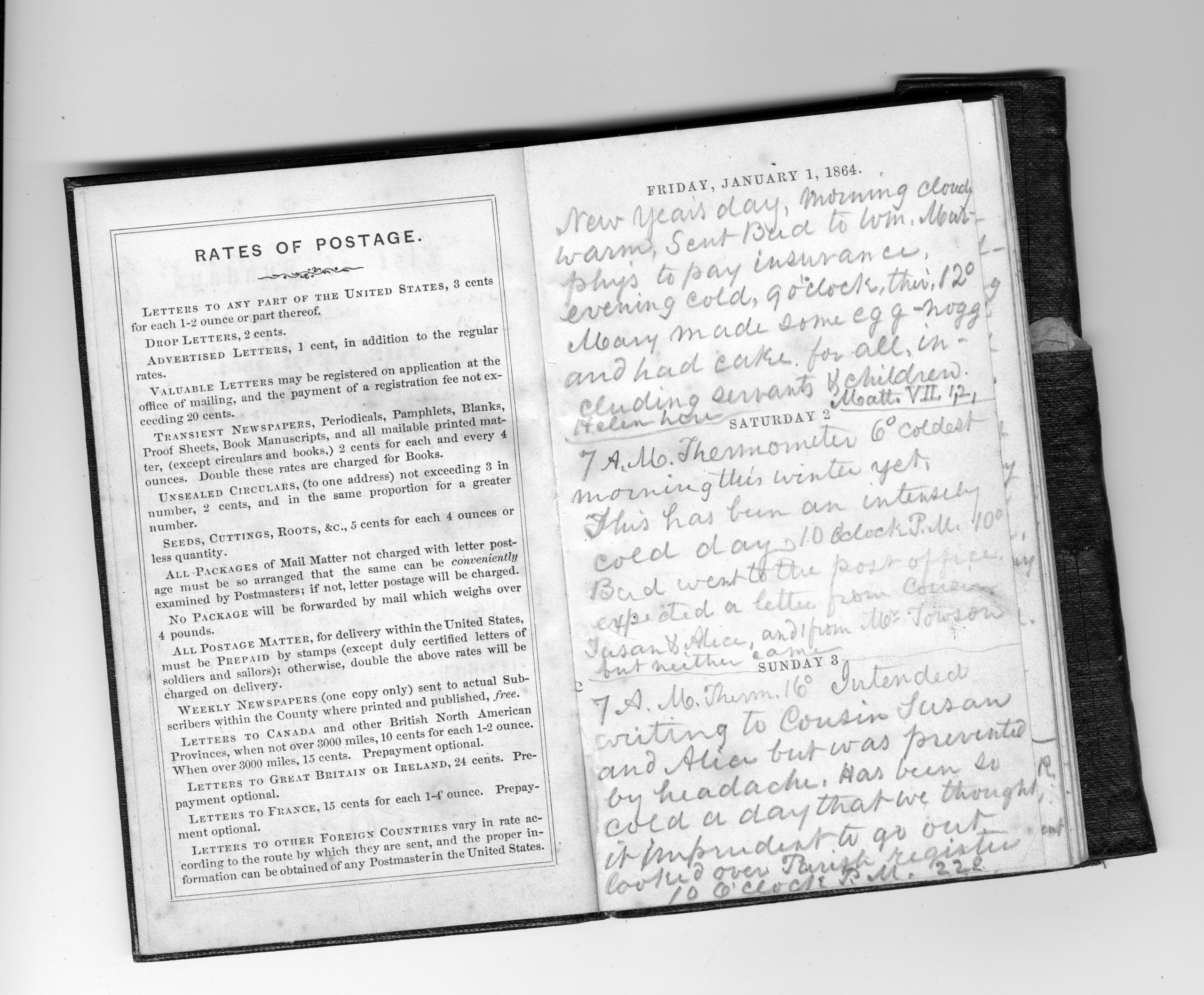
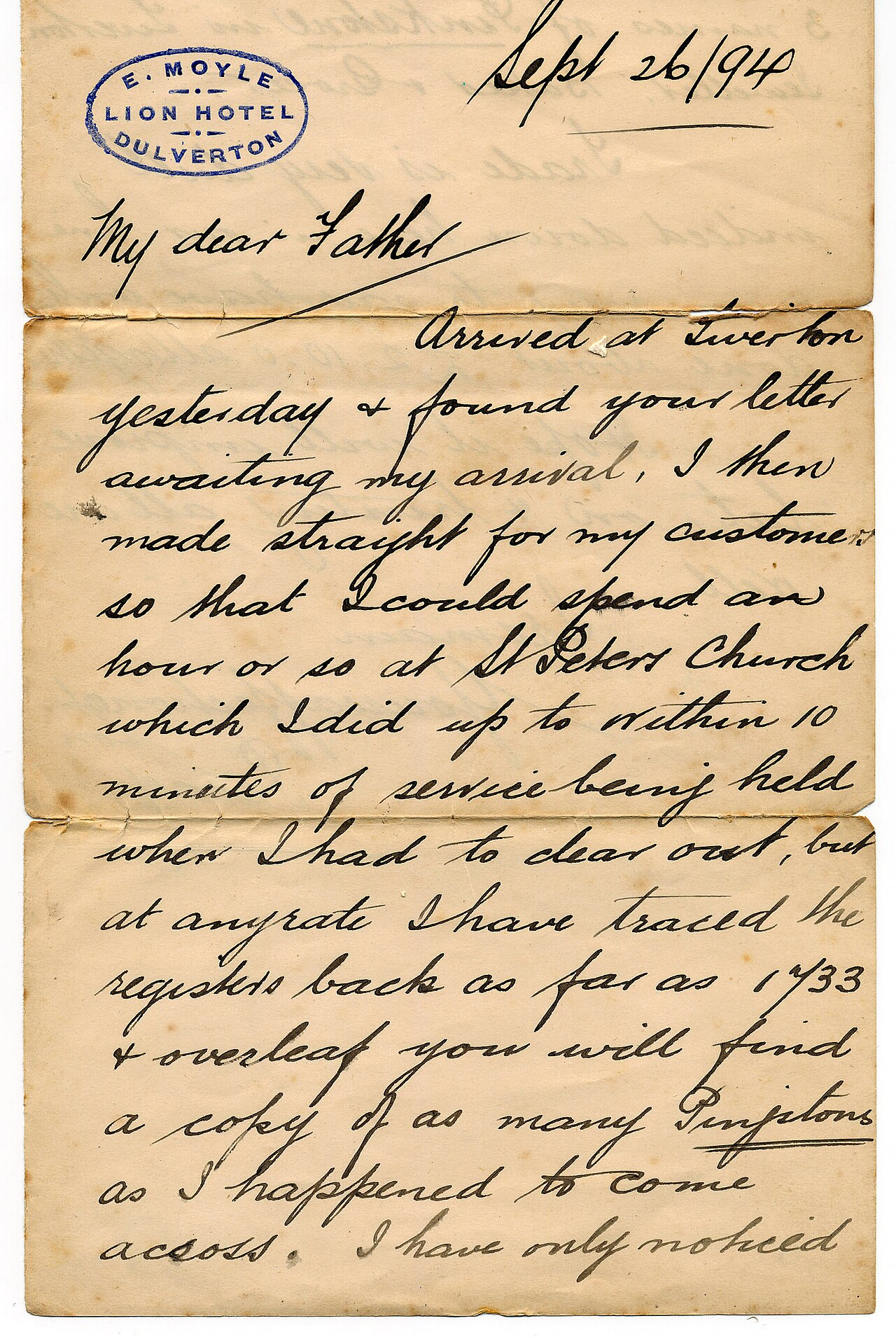
The first is reading rather than writing. A person who has never been taught the script can often not read it either, and a great deal of material that students and adults need to read is written in it: family letters, archival documents, older records, annotations in the margins of inherited books, and the primary sources used in the study of American history. A high school student working with a scanned nineteenth-century document is in the position of needing a transcription, which changes what can be assigned.
The second is the signature, which turns out to have been carried along as a by-product of the cursive curriculum rather than taught on purpose. A signature is not legally required to be in any particular form – a mark will do, and printing is a signature if the person intends it as one. But the convention that an adult has a fluent personal signature was maintained entirely by the fact that everybody had spent years learning a connected hand. Remove that and the convention has no instructional source.
Neither of these appears in any standards document, because neither is an outcome anybody thought to specify.
The Reversal, Which Is Well Underway
What has happened since is the most informative part, and it is not widely known.
A substantial and growing number of American states have passed legislation or adopted regulation specifically requiring cursive instruction, generally at a named grade level. This is a notable thing for a legislature to do: it is a direct instruction to districts about an instructional method, which is precisely the kind of decision standards were designed to leave local.
The pattern of the reversal is telling. It did not come from the education research community, which remains divided and which mostly regards this as a low-priority question. It came through state politics, driven by a combination of public sentiment, the reading-the-documents argument, and the signature problem.
And it illustrates the point the whole episode is really about. The subject was removed by an omission in a technical document and restored by statute, with very little argument about the merits at either end. The mechanism did the work both times.
The Honest Summary
So the short answer is that American schools did not decide to stop teaching cursive. A set of standards specified printing and keyboarding and said nothing about connected script, the curricula and materials aligned to those standards, the unassessed daily period became indefensible against the assessed ones, and the teacher training followed. Within a few years the capacity to teach it had quietly left the building.
The longer answer is that this is how a great deal of change in American education happens. Not through a debate that somebody wins, but through what appears on a list that becomes attached to money.
The states writing cursive back into law are doing something unusual in response: they are using the bluntest available instrument to restore something that was never actually voted away. Whether it should come back is a real argument with real evidence on both sides. That it left without one is not in much doubt.
Like our content? Follow us for more.