
Almost everybody calls it a headrest and uses it as one, which is understandable, because it is a padded block positioned exactly where a head would like to rest.
It is a head restraint. The distinction is not pedantry – it is in the regulations and in the engineering, and the two words describe opposite purposes. A rest supports you while you are comfortable. A restraint stops you moving when something hits you. Set one up for the first job and it cannot do the second.
What It Is Stopping
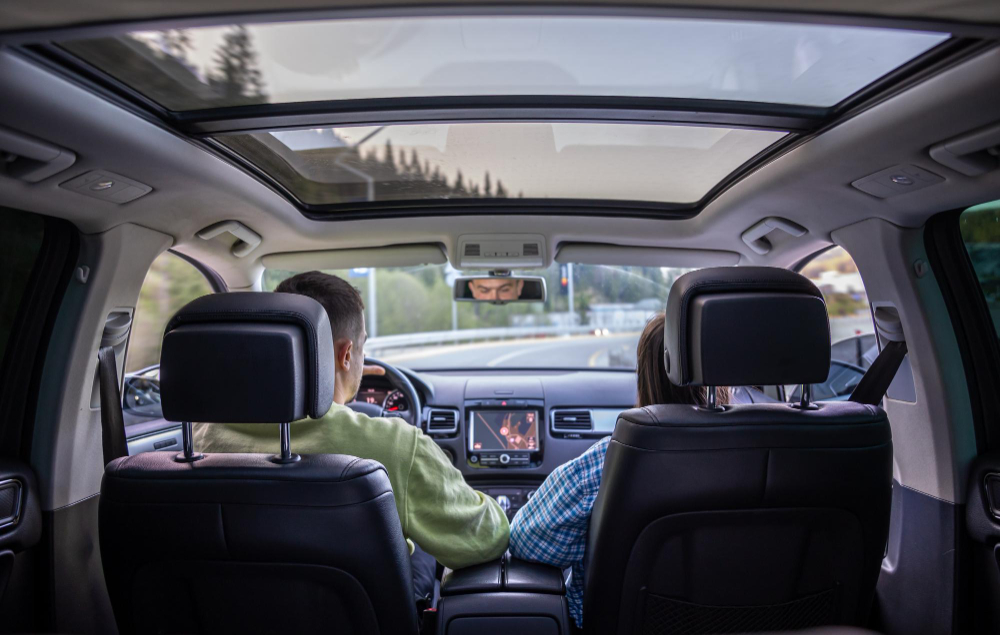
The injury it exists to prevent is whiplash, and the mechanism is worth understanding because it explains the whole design.
In a rear-end collision the car is pushed forward abruptly. The seat is attached to the car, so the seat goes forward too, taking your torso with it. Your head is not attached to anything. It stays where it was for a fraction of a second while your shoulders move out from under it, which forces the neck into a rapid S-shaped bend, and then the head snaps forward as the neck catches up.
The whole event is over in well under a quarter of a second. The damage is done to the soft tissue of the neck by the speed and the shape of that movement, and it can happen at impact speeds low enough that the car is barely marked.
The restraint’s job is to be in the way. If there is something solid immediately behind the head, the head travels with the torso instead of lagging behind it, and the S-bend never forms.
Like our content? Follow us for more.
Which Is Why Height and Distance Both Matter

Two measurements decide whether it works, and almost nobody checks either.
The top of the restraint should be at least level with the top of your head, and certainly no lower than the top of your ears. A restraint set at neck height does not catch the head – it becomes a pivot for it, which is worse than nothing, because the head rotates over the top of it.
The gap between the back of your head and the front of the restraint should be as small as you can tolerate – a few centimetres at most. Every centimetre of gap is distance the head travels, and the longer it travels the faster it is moving when it arrives.
This is where the comfort instinct causes the problem. Leaning back against a restraint set low is comfortable. Sitting upright with a correctly positioned restraint close behind feels slightly intrusive, and people lower it or push it forward out of the way, which is the one adjustment that defeats it entirely.
Reclining the Seat Undoes It
A reclined seat looks relaxing and it moves the restraint backwards away from the head, which reopens exactly the gap the device exists to close.
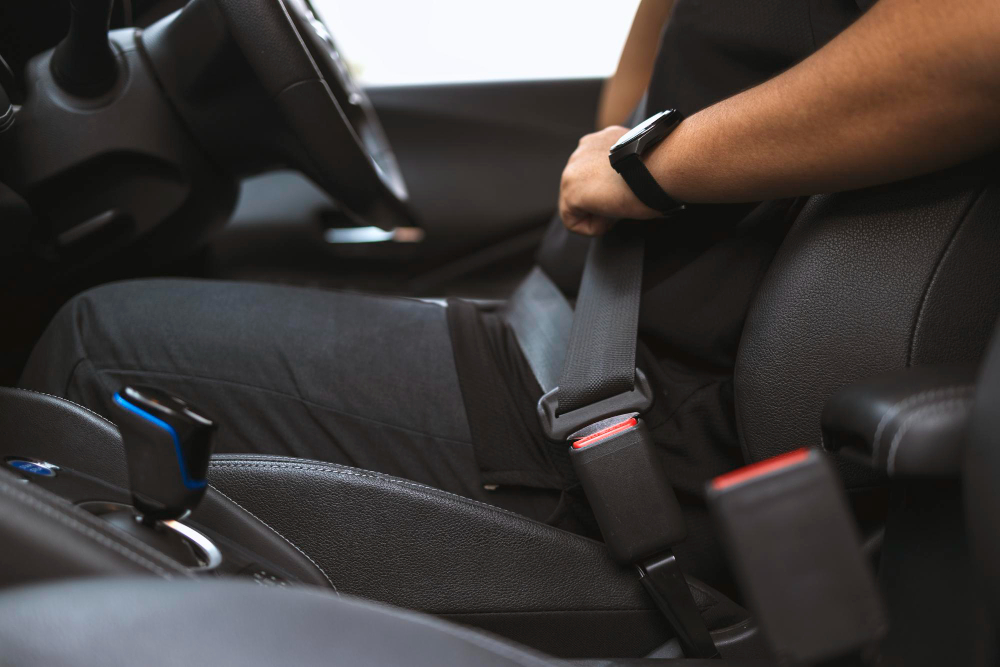
It also affects the belt. A seat belt works by loading the strong parts of the skeleton – the pelvis and the rib cage. In a reclined seat the lap belt sits across the abdomen rather than the pelvis, and the torso can slide forward underneath the belt in a frontal impact, which has a name in crash research and is a serious injury pattern.
This matters most for passengers, who recline far more often than drivers, and for anybody sleeping on a long journey. The safest sleeping position in a car is upright with the restraint close, which is less comfortable, which is why almost nobody does it.
Most of Them Are Set Wrong

Studies of vehicles on the road have consistently found that a large proportion of head restraints are positioned too low, and that drivers are generally unaware there is anything to adjust.
The reasons are straightforward. The adjustment is behind your head where you cannot see it. There is no warning light, no chime, and no mention of it in most handovers. The name says rest. And a restraint set correctly looks and feels slightly too high to somebody who has spent twenty years with theirs down.
Manufacturers responded with design rather than instruction, which is the usual outcome. Many modern seats have restraints that are fixed, or that cannot be lowered below a usable position, or that are integrated into the seat back entirely – which removes the adjustment and therefore removes the error. Some have active systems that move the restraint forward and up automatically during a rear impact, triggered by the occupant’s own body pressing into the seat back.
The Rear Seats Were Ignored for Decades

Front seats got restraints first and rear seats went without for a long time, which is why older cars frequently have nothing at all behind the rear passengers’ heads, or a low fixed lip that would act as a pivot.
Requirements extended to rear outboard seats over subsequent decades in most markets, and the centre rear seat – historically the worst position in the car for almost everything – was generally last. If you drive an older vehicle, the rear seats are worth looking at, because a child or an adult sitting behind you may have nothing behind their head at all.
This also affects how people use cars. The rear centre seat without a head restraint and with a lap-only belt was common for a very long time, and both of those are substantially worse than the outboard positions.
It Was Optional Equipment Before It Was Standard

The head restraint is younger than most people assume, and for its first years it was something you paid extra for.
Through the 1950s and into the 1960s the overwhelming majority of cars had seat backs that stopped at shoulder height. The bench seat in particular had nothing above the shoulders at all, which is why period photographs of car interiors look so strangely open – there is simply nothing in the way of the view.
Restraints appeared first as a dealer-fitted or factory option, bought by a minority of customers, and the take-up was poor for the reasons optional safety equipment always has poor take-up: it addressed a risk the buyer could not picture, on a car they had not yet crashed, for money they could spend on something visible instead.
What changed it was regulation. Requirements for front outboard head restraints were introduced in major markets around the end of the 1960s, and from that point the device went from a rarity to universal within a model cycle or two.
That sequence – available, ignored, mandated, universal, forgotten – is the standard life history of car safety equipment, and it has repeated for the belt, the laminated windscreen, the collapsible steering column, the third brake light and the airbag. In each case the engineering existed well before the uptake, and in each case what closed the gap was a rule rather than persuasion.
Whiplash Is Not a Minor Injury Category

It is worth being accurate about why this is taken seriously, because whiplash has a reputation problem.
Neck injuries from rear-end impacts are among the most frequently reported injuries in road collisions by volume, they occur at low speeds, and a proportion of cases involve symptoms that persist for months. They are also the most commonly disputed injury in insurance claims, which is where the reputation comes from and which has made the whole subject sound exaggerated.
The engineering community does not treat it as exaggerated. Head restraint geometry is independently rated and published for new vehicles by consumer safety organisations, seats are tested in rear-impact sled tests, and manufacturers compete on the ratings – none of which would happen for an invented problem.
Anybody who has actually been hurt in this way should be dealing with a doctor rather than an article, and nothing here is advice about diagnosis or treatment. The point is only that the thing behind your head was put there for a reason.
Two Minutes, Once, Per Car
The entire action this article is asking for takes less time than adjusting a mirror, costs nothing, and does not have to be repeated.
Sit the way you normally drive. Reach behind your head and raise the restraint until its top edge is level with the top of your head, or as close as the adjustment allows. If it tilts, bring it forward until the gap behind your head is small. Make sure it has clicked into a detent rather than resting between positions, because an unlatched restraint can drop under load.
Then do the passenger seat, because somebody will sit in it.
Then look at the rear seats and find out whether they have restraints at all and whether anybody has pushed them down to see out of the back window, which is the single most common reason a rear restraint is in the wrong place.
That is the whole thing. It is the cheapest safety improvement available to anybody who owns a car, it takes one go, and the reason almost nobody has done it is a word – because for sixty years the thing has been called a rest, and people have reasonably done what the name told them to.
Like our content? Follow us for more.