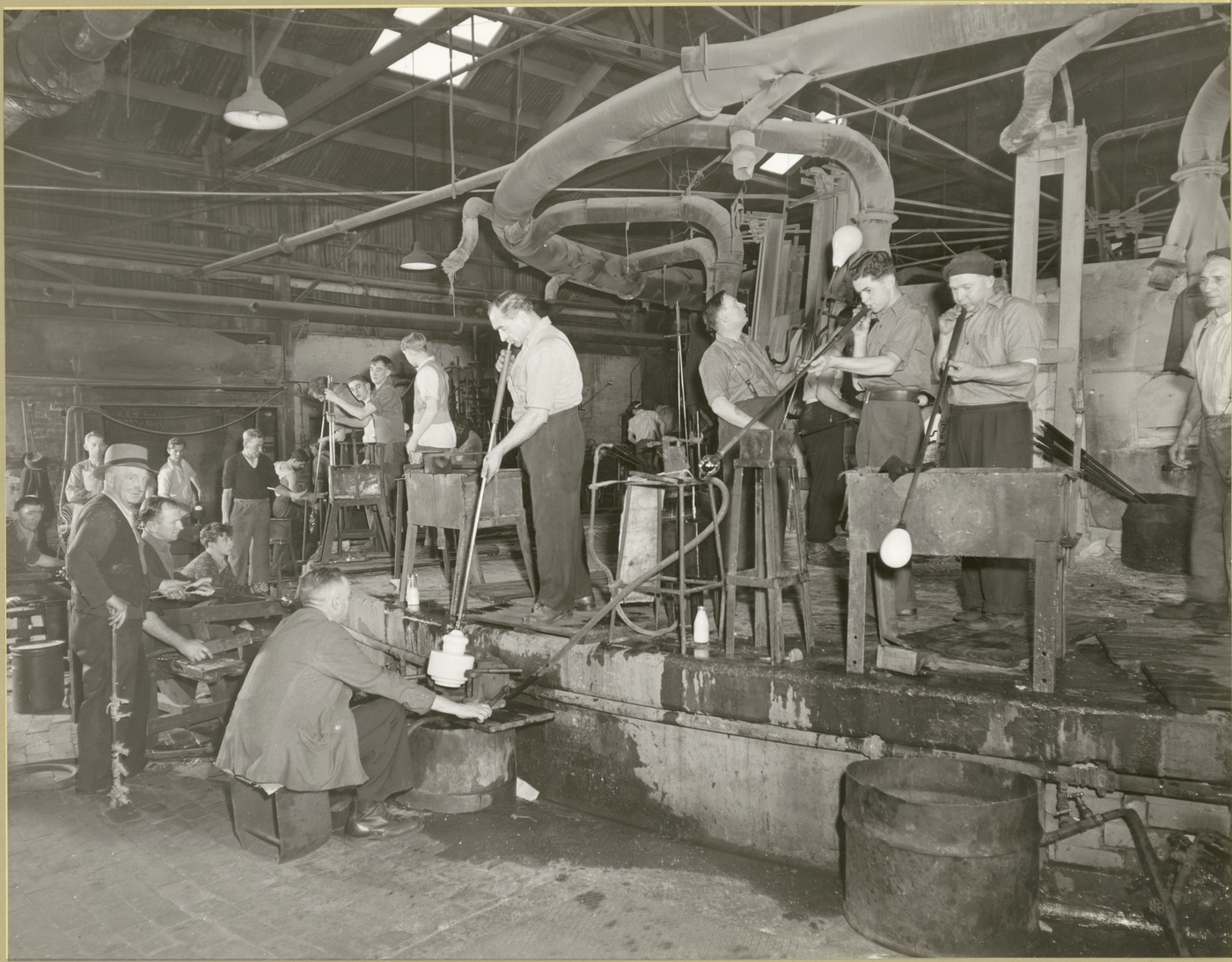
In 1960 a glassworks ran a furnace that had not been out for years, worked molten material at over a thousand degrees within a few feet of men in cotton shirts and leather aprons, and inflated a great deal of its product by lung power through shared iron pipes.
The teams were organised around how many seconds glass stays workable, the dust was swept rather than extracted, and every finished piece was checked by somebody looking at it against a light.
Here are twelve things that were ordinary in a glassworks in 1960, and what each one became.
1. The Furnace Never Went Out, for Years at a Time
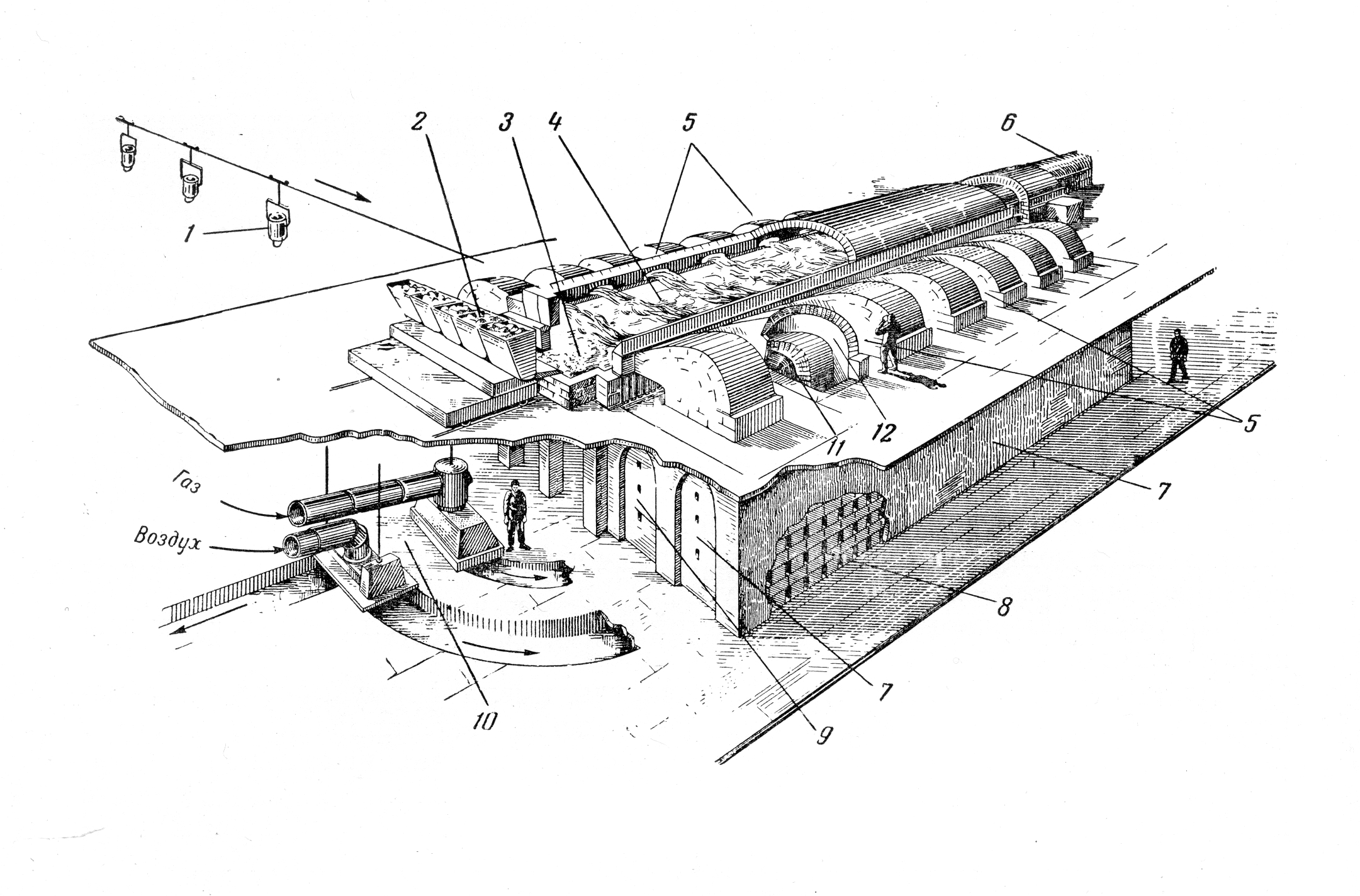
A glass furnace is lined with refractory brick that cracks if it is allowed to cool, so it was fired continuously – through nights, weekends, holidays and in some works for a decade between rebuilds. Shutting it down meant rebuilding it.
Continuous operation is still the rule and always will be, for the same reason. What has changed is everything around it: regenerative and oxy-fuel firing with far better efficiency, electric boosting, continuous monitoring, and campaign lengths extended by better refractories. The furnace that never stops is the single fact that shapes every working pattern in the industry.
Like our content? Follow us for more.
2. Men Worked in Radiant Heat That Burned Exposed Skin
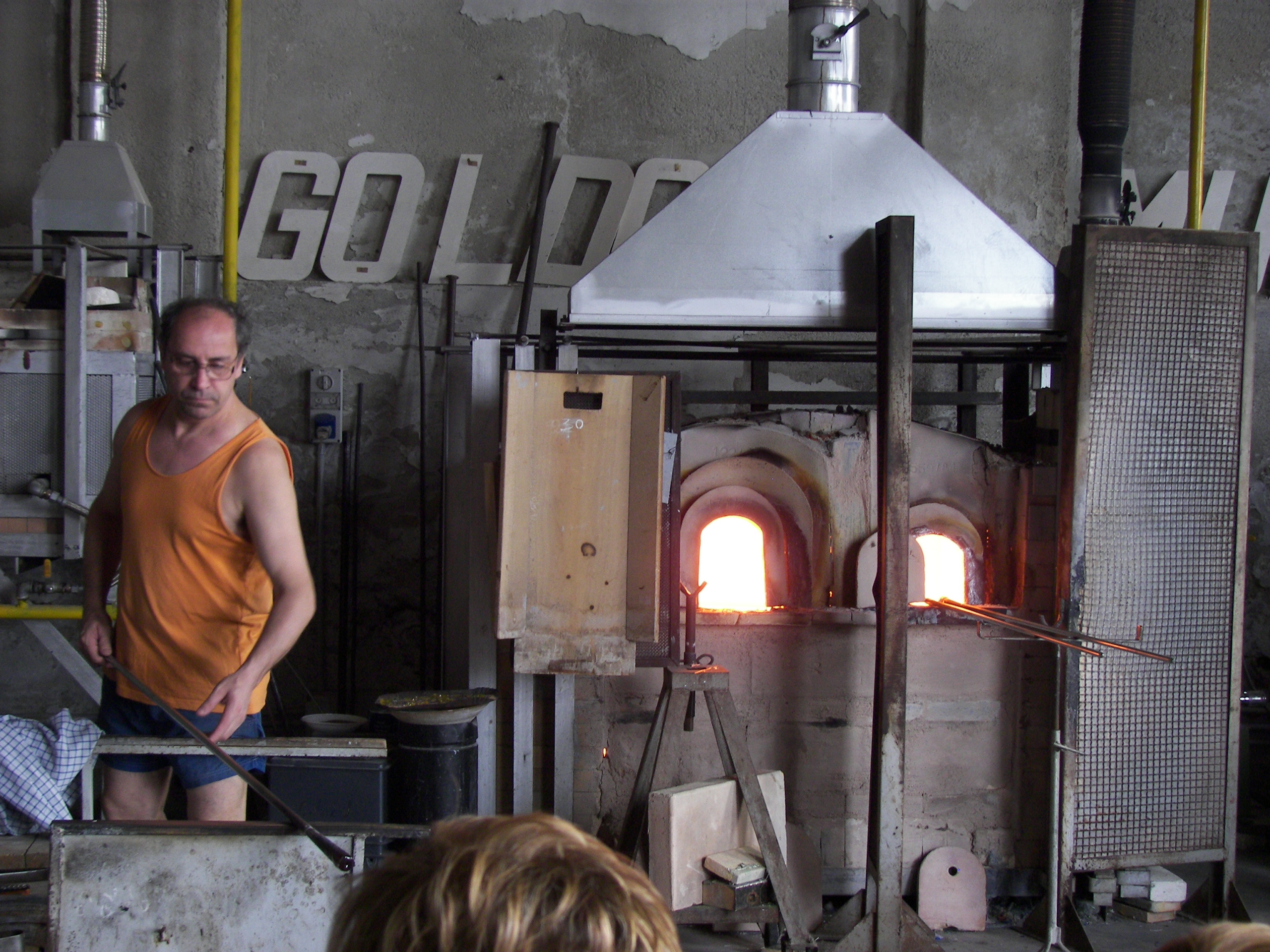
Molten glass is worked at well over a thousand degrees and radiates accordingly. Gatherers and blowers worked within a few feet of the furnace mouth, turning their faces away between operations, with cotton clothing, leather aprons and nothing resembling modern protection.
Automated gathering and forming removed most of the exposure, and where people still work hot glass they do so with aluminised clothing, face protection, screening, cooled workstations and managed work-rest cycles. Heat stress in that environment is now measured rather than endured, and the old practice of simply rotating out whoever could no longer take it is gone.
3. Blowing Was Done by Mouth, Through a Shared Iron
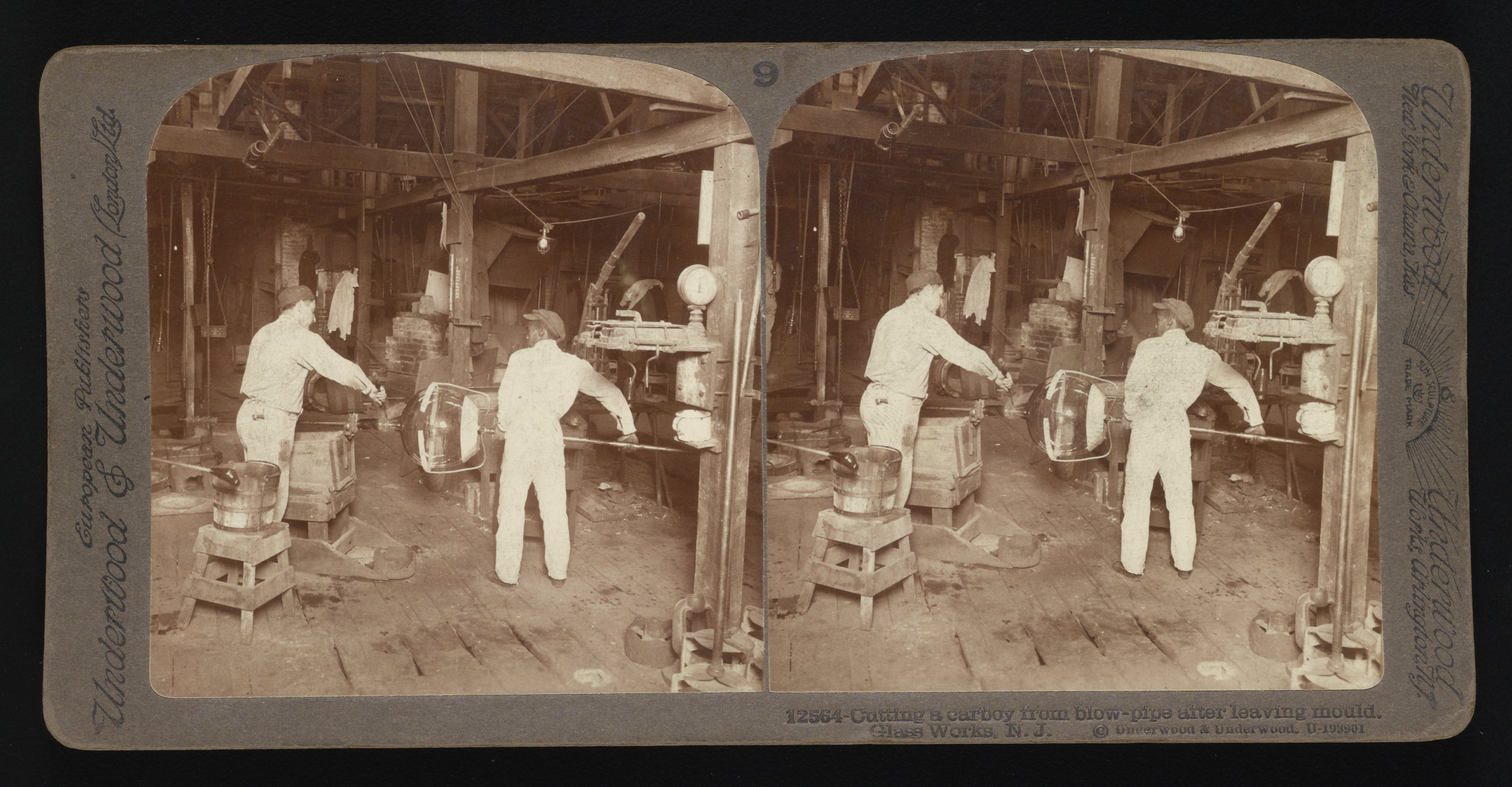
Hand-blown ware was made by gathering molten glass on an iron pipe and inflating it by lung power, with the pipe passing between members of a team through the shift. The pipes were shared and the mouthpiece was the same piece of iron everybody used.
Automated forming machines took over the overwhelming majority of container and flat glass production through the twentieth century, and hand blowing survives in studio and specialist work with individual equipment and proper hygiene. The shared mouthpiece is one of those details that nobody at the time thought about and that reads now as extraordinary.
4. Boys Worked the Hot End and Were Essential to It
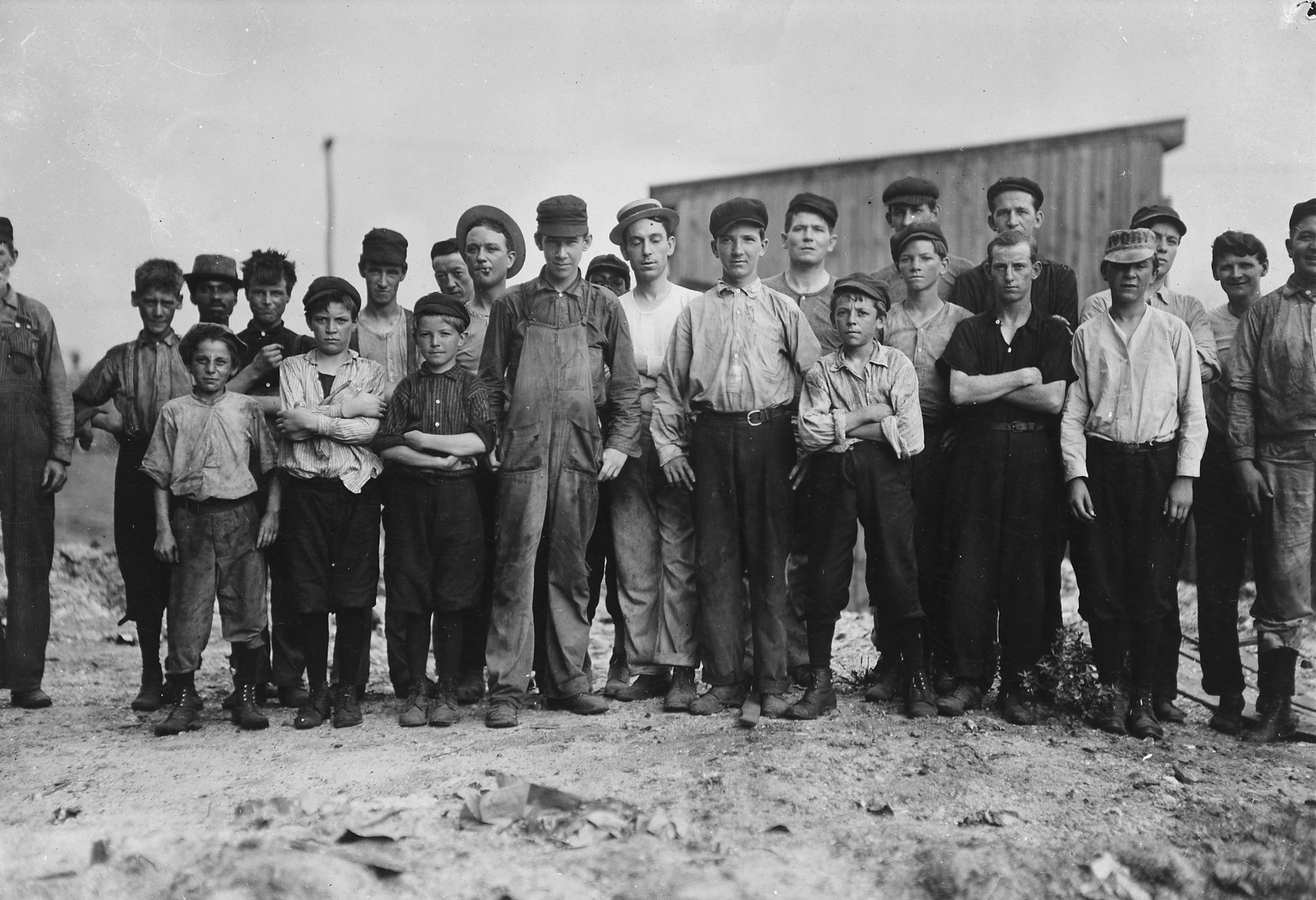
The traditional glasshouse team used boys to carry finished ware to the annealing oven, to open and close moulds, and to fetch and carry between the chair and the furnace. They worked beside molten glass through full shifts.
Child labour in glassmaking was one of the most photographed and campaigned-against abuses in industrial history, and the images from the trade did substantial political work. Legislation ended it well before 1960 in most countries, and by then the boys had been replaced by conveyors and mechanical handling – which is the uncomfortable detail: the machinery that displaced them arrived at roughly the same time as the law.
5. Everything Depended on a Team Called a Chair and Its Rhythm
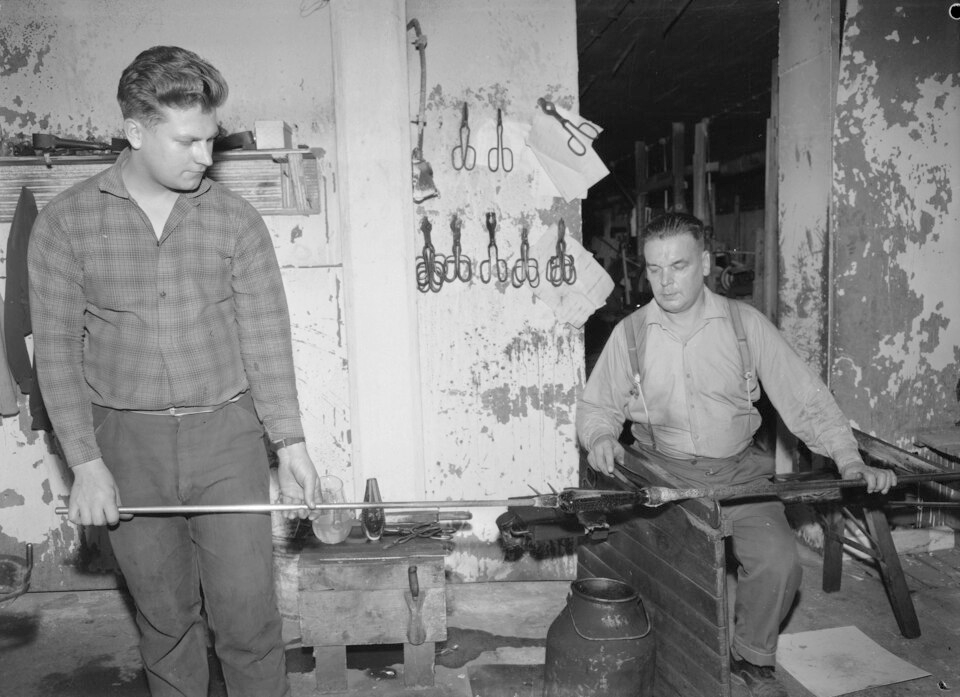
Hand production ran on a fixed team – the gaffer who shaped the piece, the servitor, the footmaker, the taker-in – working in a continuous rotation at a pace set by how long glass stays workable. Nobody could pause, because the glass was cooling.
The chair survives in studio glass and in the few remaining hand operations, and the division of labour within it is essentially unchanged because the physics has not changed – glass gives you a certain number of seconds and the team is organised around them. What ended was hand production at scale, not the method.
6. The Annealing Oven Was the Difference Between a Product and a Pile of Broken Glass
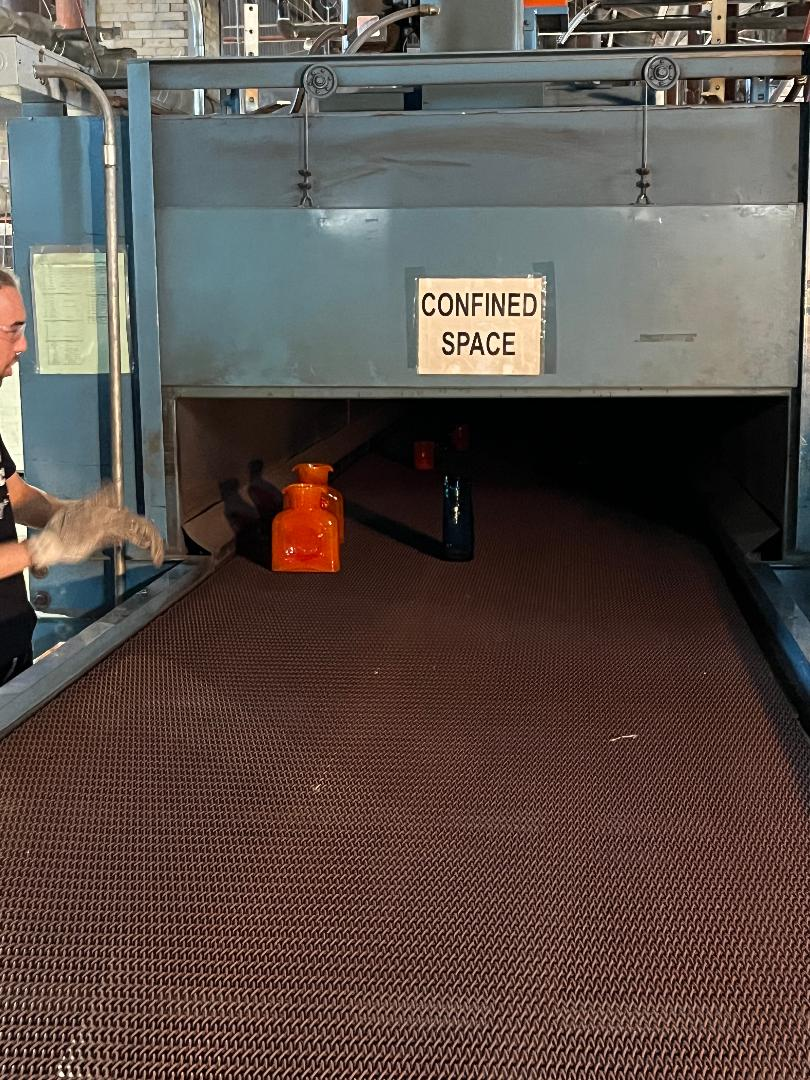
Glass cooled unevenly carries internal stress and will crack, sometimes days later, sometimes while being handled. Finished pieces went into a lehr to cool slowly over hours on a controlled schedule, and getting it wrong destroyed a shift’s work.
Continuous annealing lehrs with measured temperature profiles replaced judgement, and stress is now checked with polarised light as a routine quality step. The principle is identical – glass must cool slowly and evenly – and it is one of the oldest pieces of process knowledge in manufacturing, worked out long before anybody could explain why it was true.
7. Silica Dust Was Present and Was Not Controlled
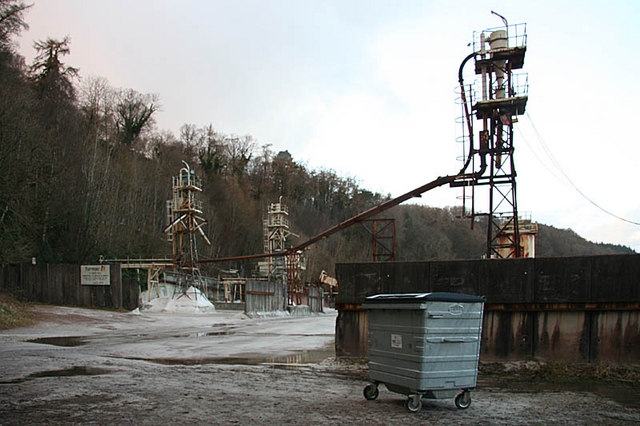
Batch mixing, cullet handling, mould dressing and refractory work all generate dust, and the raw material of glass is silica. In 1960 the dust in a glassworks was swept, breathed and largely ignored.
This is included as occupational history. Respirable crystalline silica is now a recognised occupational hazard with exposure limits, and control is through enclosure, extraction, wet methods and respiratory protection where needed. Anybody with that work history should raise it with their own doctor rather than with an article.
8. Cutting and Polishing Was Done on Open Wheels
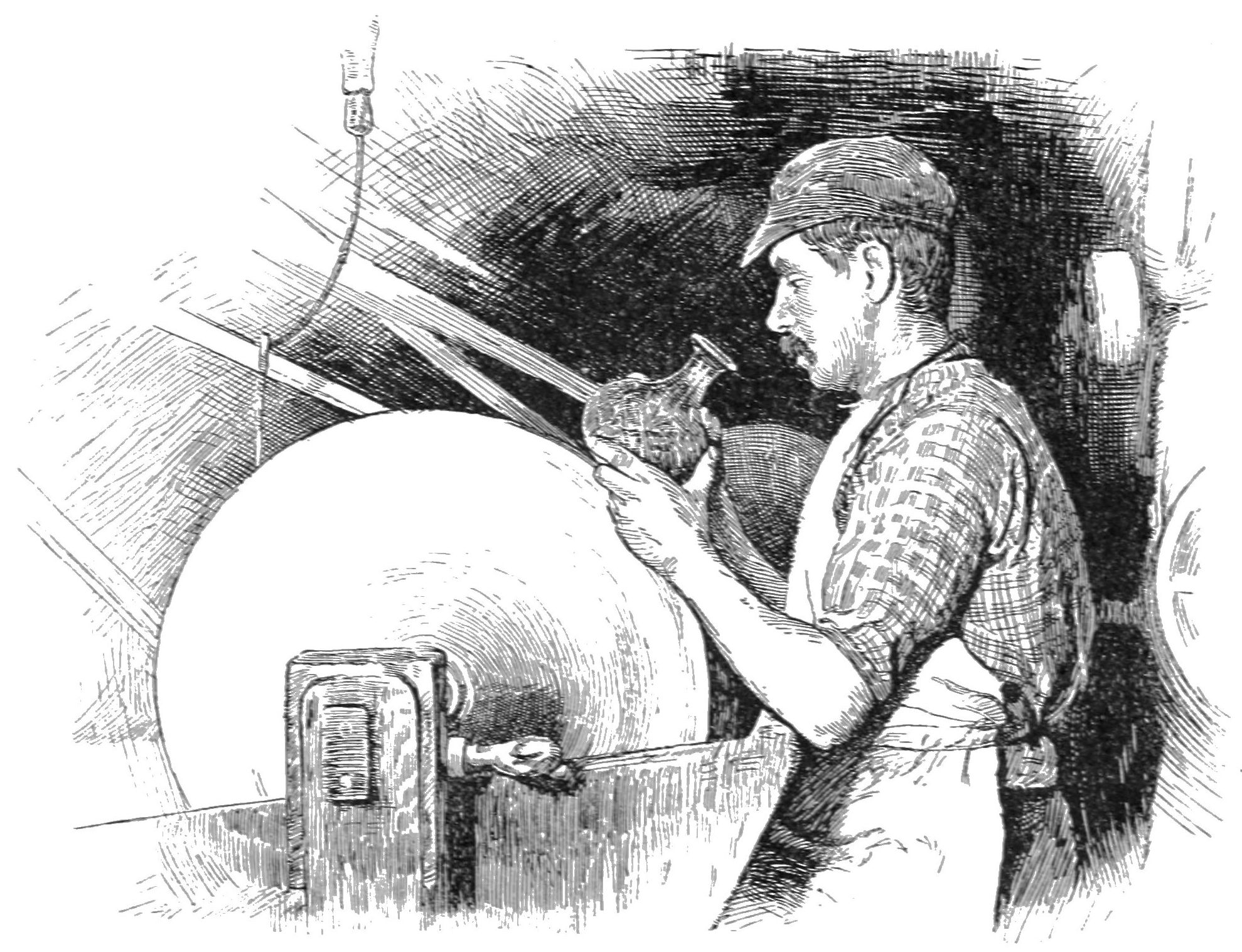
Decorative cut glass was made by pressing the piece against rotating stone and wood wheels fed with abrasive slurry, held by hand, with the cutter working by eye and feel against an unguarded wheel.
Guarding, automated cutting for volume work, and acid polishing replaced by mechanical and alternative processes in many operations have changed the hot and cold ends alike. Hand cutting survives as a craft and is now done with extraction, eye protection and guarded equipment, which the cutters will tell you makes very little difference to the skill and a great deal of difference to how long you can do it.
9. The Works Had Its Own Mould Shop and Its Own Pattern Makers
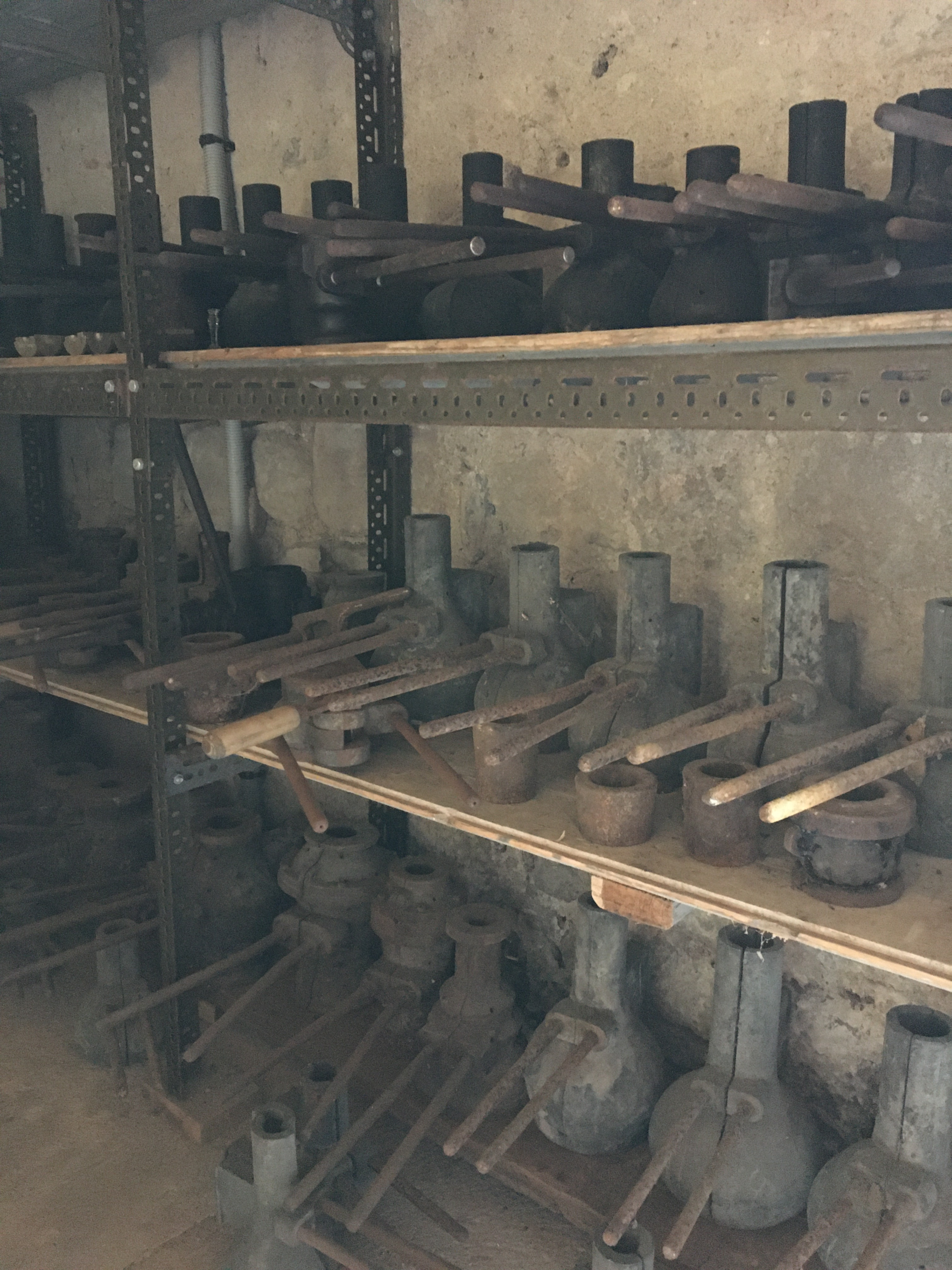
Moulds were cast iron, made and maintained on site by a dedicated shop, and designing a new bottle or jar meant a pattern maker, a foundry and a fitter. A mould that was slightly wrong produced thousands of defective pieces before anybody noticed.
Mould design is now computer modelled and machined, and performance is monitored by inspection equipment that rejects defective ware automatically at speed. The on-site mould shop with its own trades has largely gone to specialist suppliers, which is the same contracting-out pattern that removed the fire brigade from the steel mill and the workshop from the power station.
10. Inspection Was Somebody Looking at Every Piece
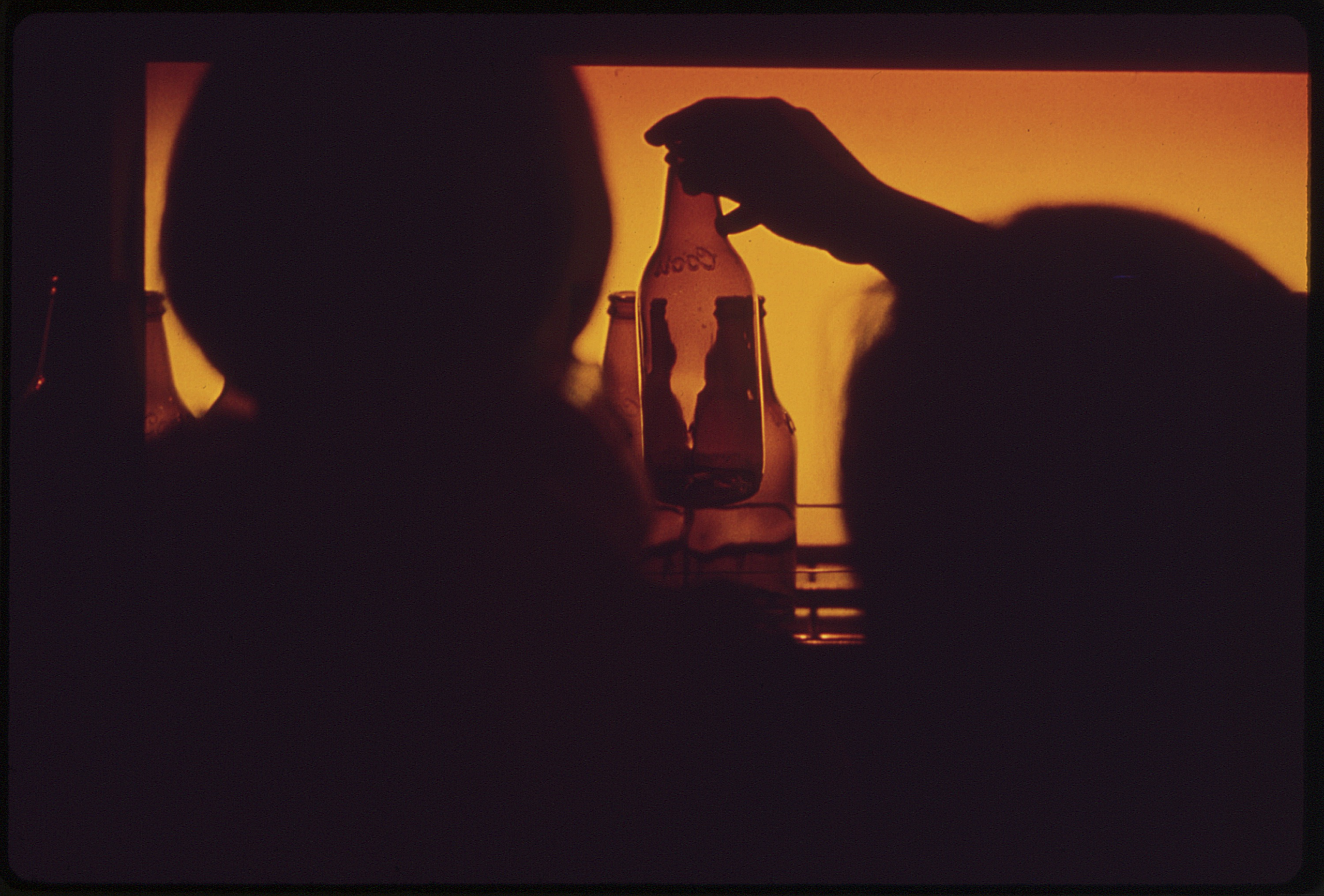
Finished ware passed in front of inspectors – overwhelmingly women in most works – who looked at each piece against a light for bubbles, stones, cords, checks and distortion, and pulled the defective ones by hand at speed.
Automated inspection using cameras and light now checks dimensions, wall thickness, stress and defects on every container at rates no person could match, and rejects are removed mechanically. The job has almost entirely gone. It was also one of the few positions in the works that women held in numbers, which is worth noting when counting what automation removed and from whom.
11. The Works Was Sited Where the Sand and the Fuel Were
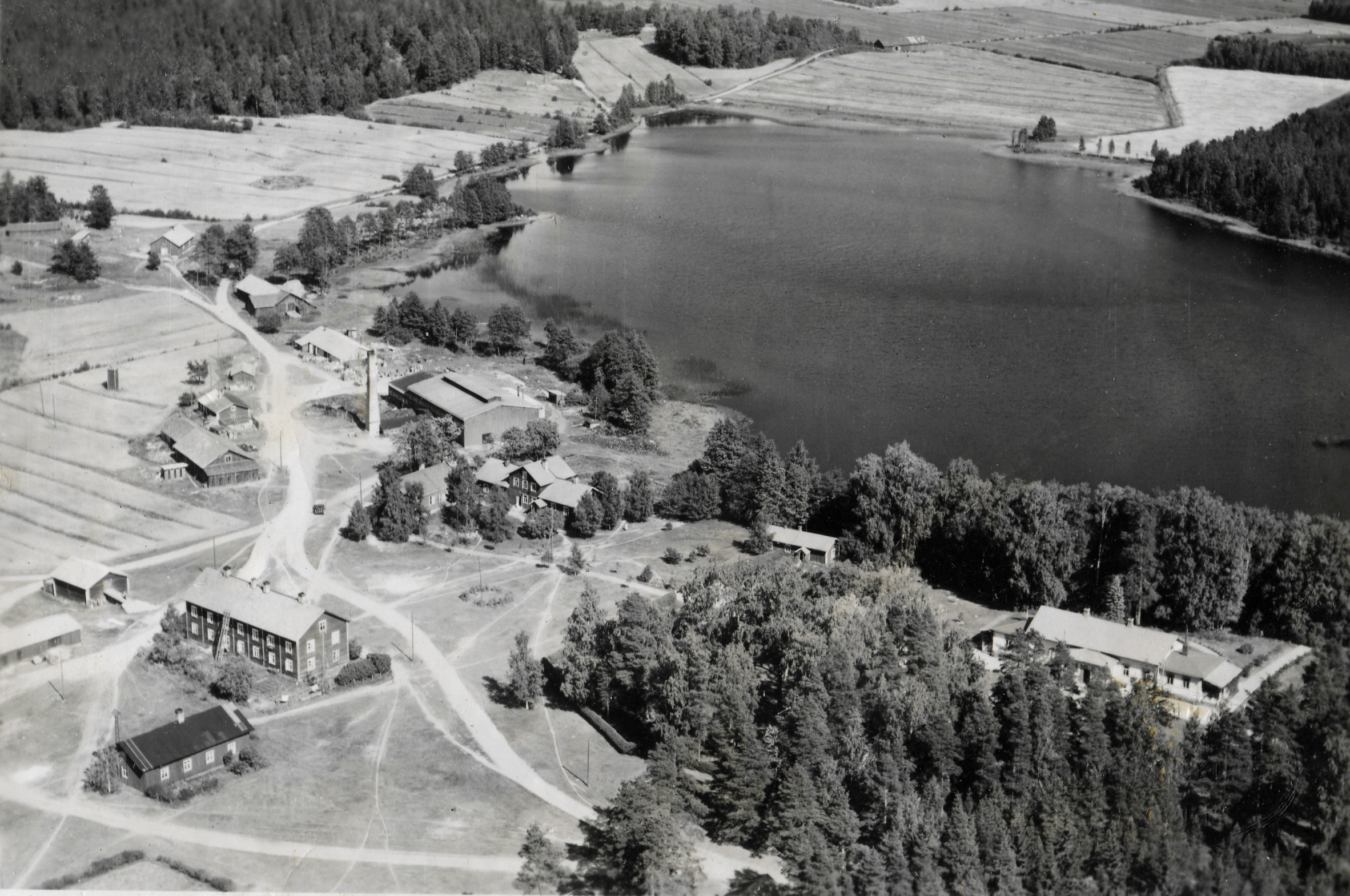
Glassmaking went where the raw materials and the energy were – silica sand, soda, limestone and a fuel supply – which is why glass towns cluster where they do and why some of them have been making glass for centuries.
Energy cost is still the dominant factor and still determines siting, which is why the industry is so exposed to fuel prices and why decarbonising it is genuinely difficult: melting glass requires very high temperatures and the process is not easily electrified at scale. Several of the historic glass districts have retained production for exactly this reason, long after other industries left them.
12. Recycling Was Called Cullet and Had Always Been Done
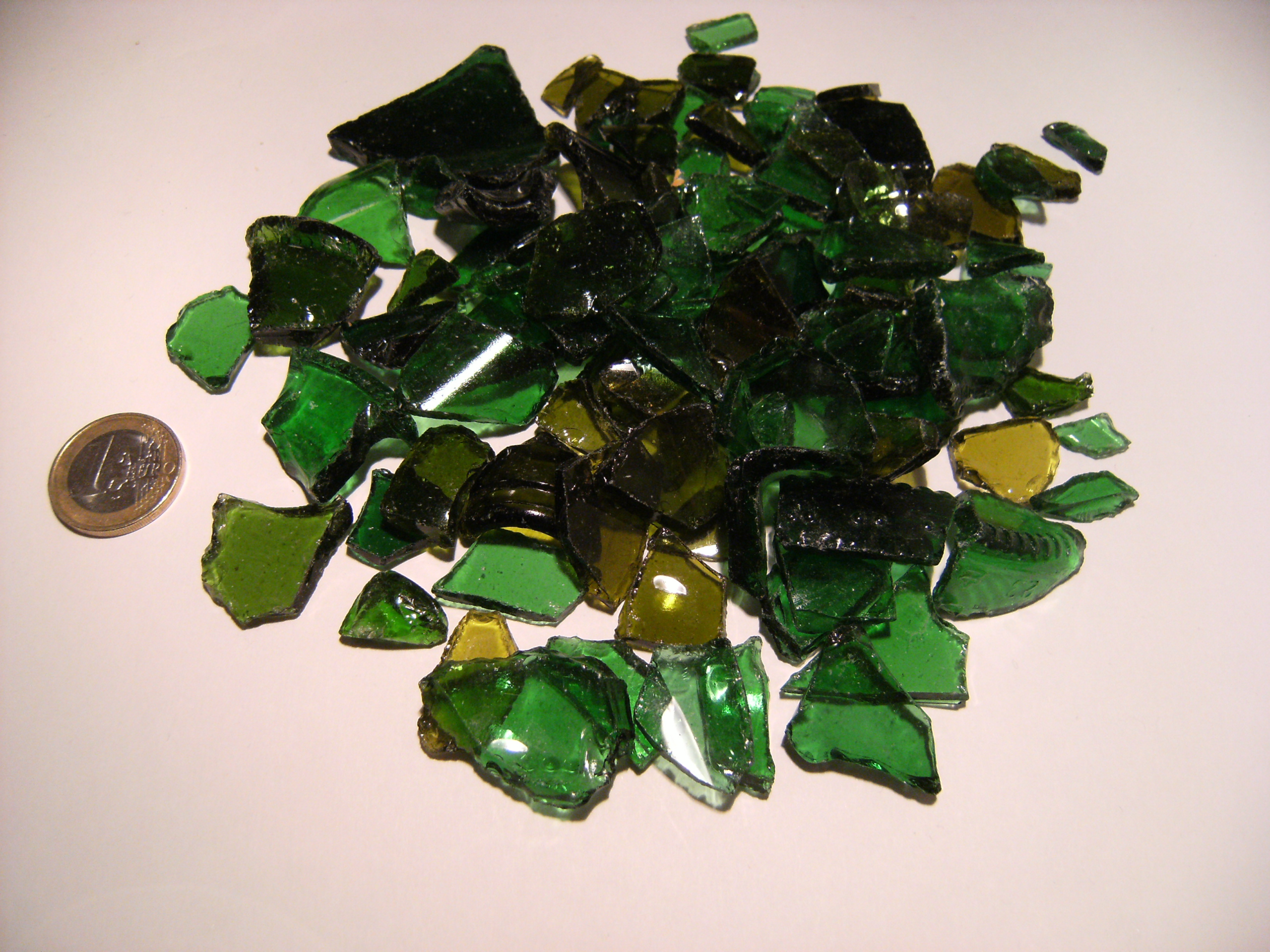
Broken and rejected glass was returned to the furnace as cullet, because it melts at a lower temperature than raw batch and saves fuel. This was not an environmental practice – it was straightforward economics and had been standard for as long as glass had been made.
Post-consumer recycling built on an industrial habit that already existed, which is why glass recycling works as well as it does: the industry wanted the material before anybody asked it to take it. Higher cullet content reduces energy use and emissions substantially, and the limiting factors are contamination and colour separation rather than any reluctance to use it.
The Furnace Explains the Industry
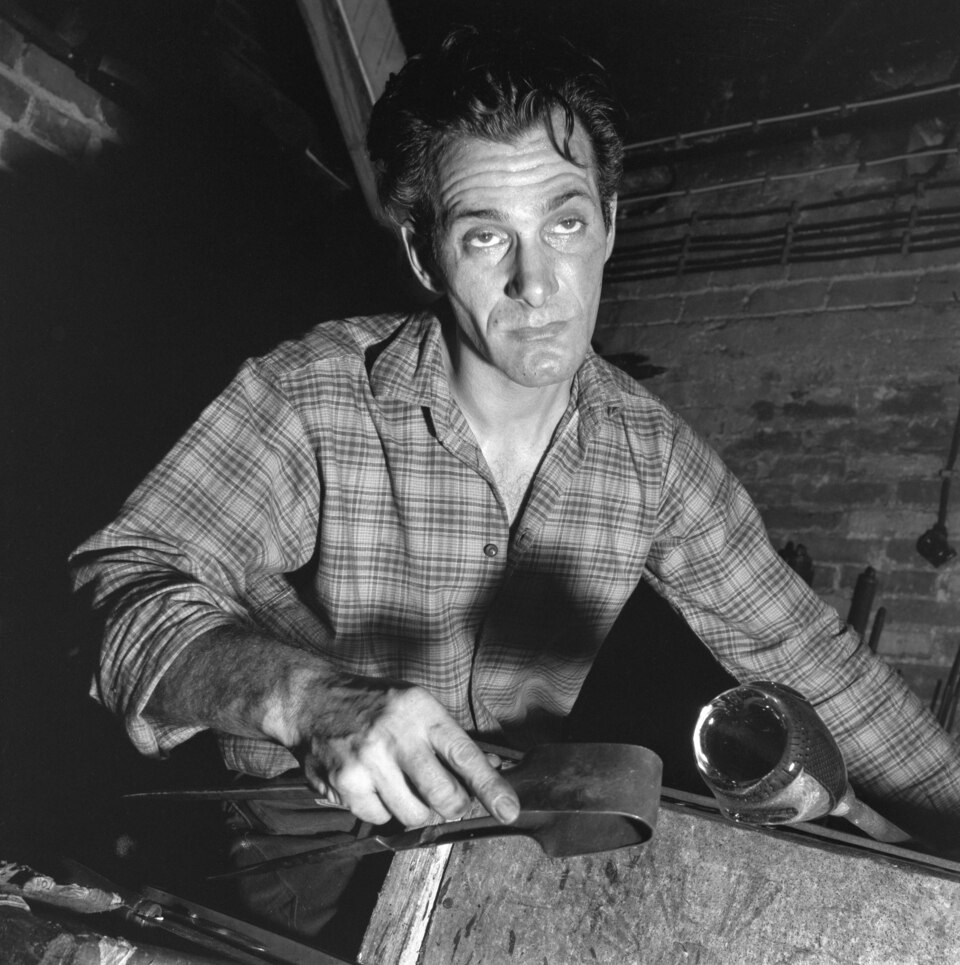
Almost everything distinctive about glassmaking follows from one constraint: the furnace cannot be turned off.
That is why the industry runs continuous shifts and always has, why glass towns developed the social patterns they did, and why a works closing is permanent in a way that a factory closing is not – once the furnace is cold and the lining has cracked, restarting means rebuilding, and nobody rebuilds a furnace for a market that has gone.
It is also why the industry is so exposed to energy prices. A business that must keep something at over a thousand degrees continuously, for years, has no ability to reduce consumption when fuel gets expensive and no ability to stop and wait. That exposure has closed more glassworks than any change in demand.
And it is why decarbonising the sector is a genuinely hard engineering problem rather than a matter of will. The temperatures required are at the limit of what can be delivered electrically at scale, hydrogen and oxy-fuel firing are being trialled, and higher cullet content helps because melted glass is cheaper to melt again than sand is to melt the first time.
Which is the quietly satisfying part. The oldest economy in the trade – throw the broken pieces back in the furnace, because they melt easier – turns out to be the most promising lever the industry has, and it has been doing it since before anybody knew why it worked.
If there was a glassworks in your town, the glow from it at night is what people remember.
Which works, and does anybody in the family still have a piece from it?
Like our content? Follow us for more.