

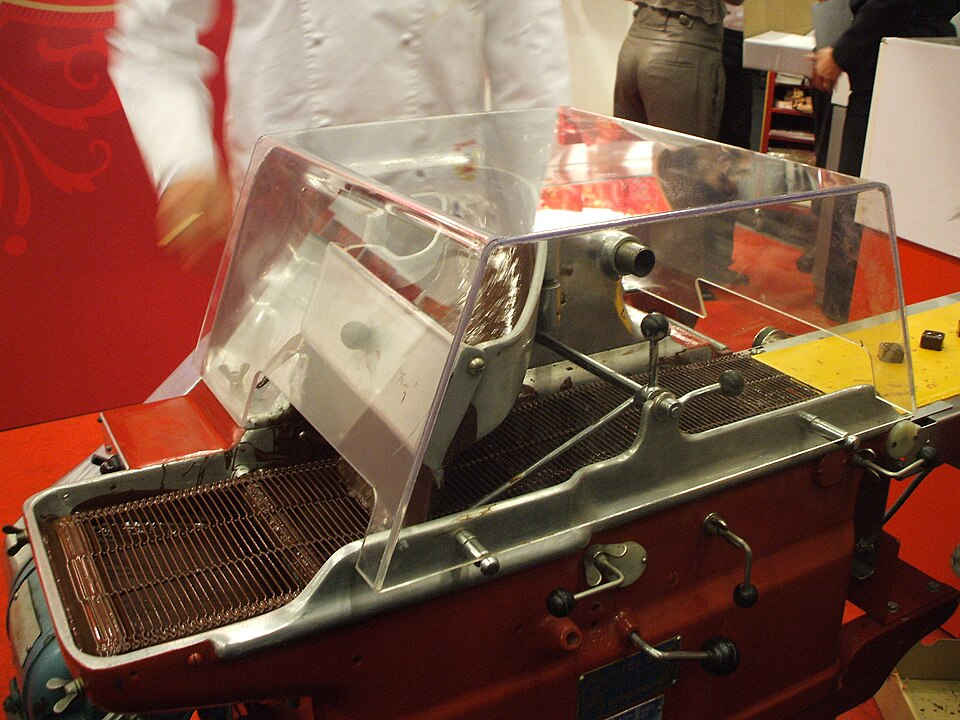
In 1960 a chocolate works took in raw beans by the sack, roasted them, cracked and winnowed them, ground the nib, ran the result in a conche for days, and tempered it through a precise temperature sequence judged by hand.
The decoration on top of each chocolate was piped by a woman working at several per second. The wrapping was done by hand. And the smell of the roasting covered the whole town.
Here are twelve things that were ordinary in a chocolate factory in 1960, and what became of each one.
1. The Beans Were Roasted, Cracked and Winnowed on Site
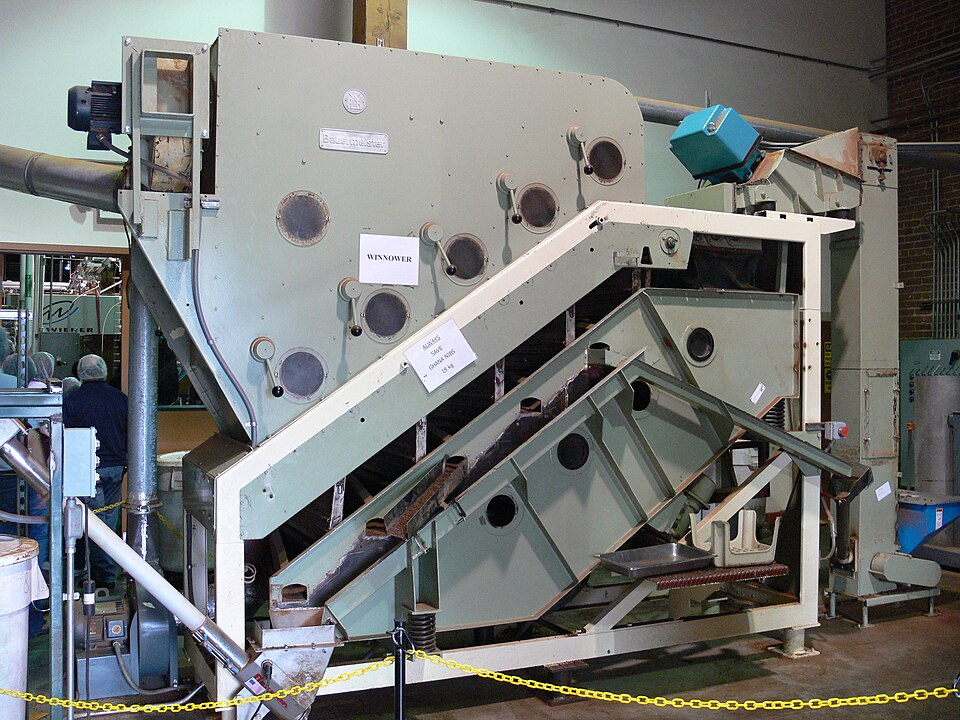
A chocolate works took in raw beans by the sackload, roasted them, cracked the shells and separated them from the nib by air, then ground the nib into a thick paste – all in the same building.
Large manufacturers increasingly buy in processed cocoa mass and butter from specialist processors, concentrating the first stages in fewer places. The integrated works that took a bean and produced a bar is now unusual, and the smell that defined a chocolate town came mostly from the roasting, which was the first stage to leave.
Like our content? Follow us for more.
2. The Conche Ran for Days and the Time Was the Recipe
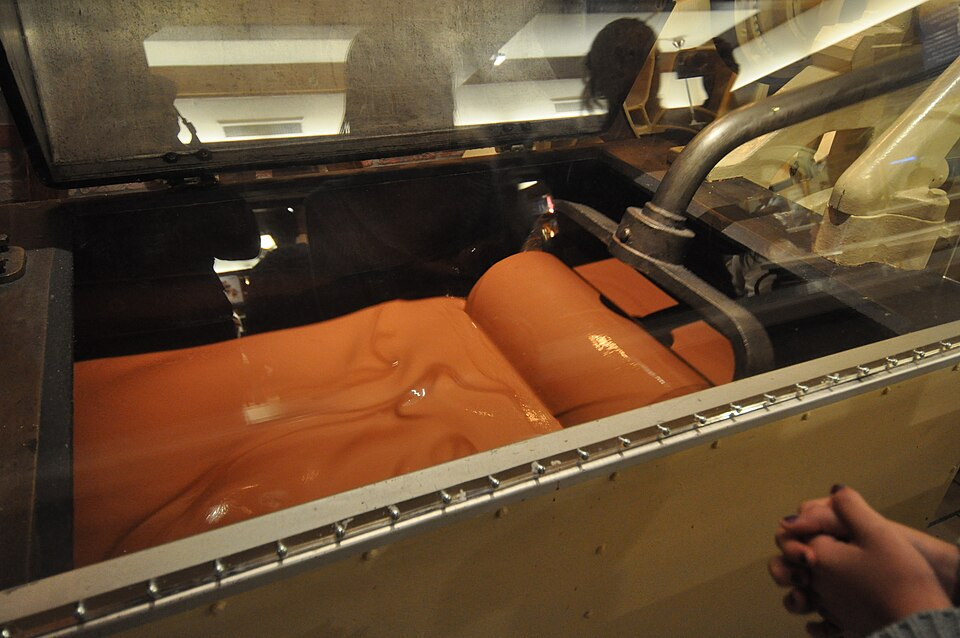
Refining chocolate meant running it in a conche – a machine that works the mass continuously – for anything up to several days, developing texture and driving off harsh volatile compounds.
Modern conching is faster and far better controlled, and the duration remains a genuine quality variable rather than a corner that can simply be cut. The conche is the single piece of equipment that most determines whether chocolate is pleasant, and the process was discovered by somebody leaving a machine running over a weekend.
3. Everything Was Weighed, Timed and Judged by People
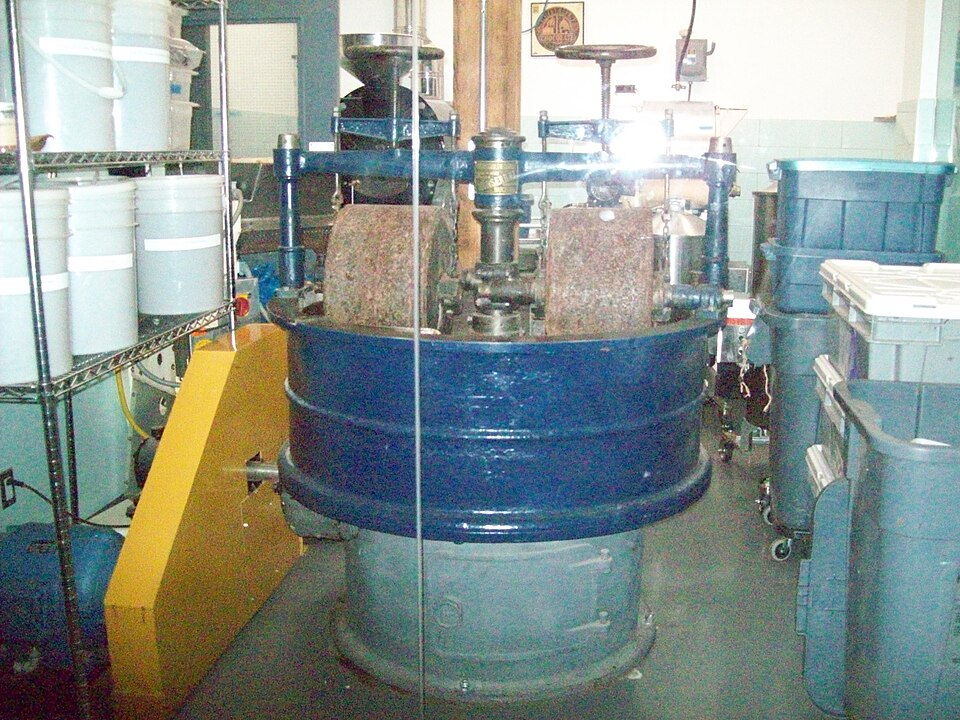
Roast degree, grind fineness, conche time, tempering temperature and moulding were all set and adjusted by operators working from experience and from tasting the product at each stage.
Instrumentation, particle size measurement and automated tempering replaced most of the judgement. Tasting at every stage was a formal part of the job rather than a perk, and the people who did it developed a genuinely discriminating palate that was the works’ main quality instrument.
4. Tempering Was the Difficult Part and Still Is
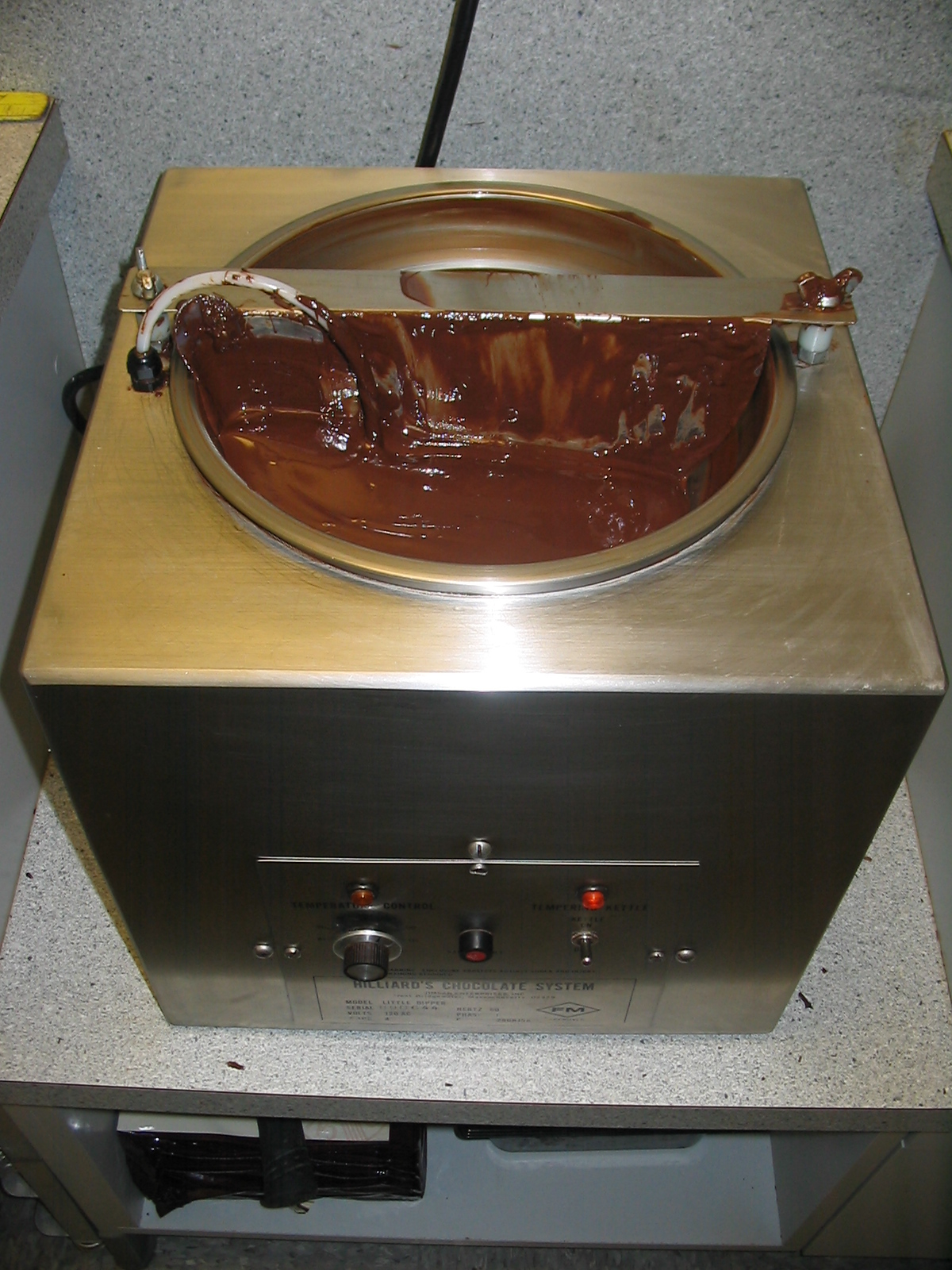
Chocolate’s cocoa butter can crystallise in several different forms, only one of which gives a glossy, snappy bar that does not bloom. Achieving it meant taking the chocolate through a precise sequence of temperatures, by hand, on a cooled table or in a jacketed vessel.
Automatic tempering machines control the sequence precisely and continuously. It is the most counterintuitive thing about chocolate – the same substance at the same final temperature is either excellent or ruined depending entirely on the path it took to get there – and it is why chocolate that has melted and reset looks wrong.
5. The Enrobing Line Was the Factory’s Centrepiece
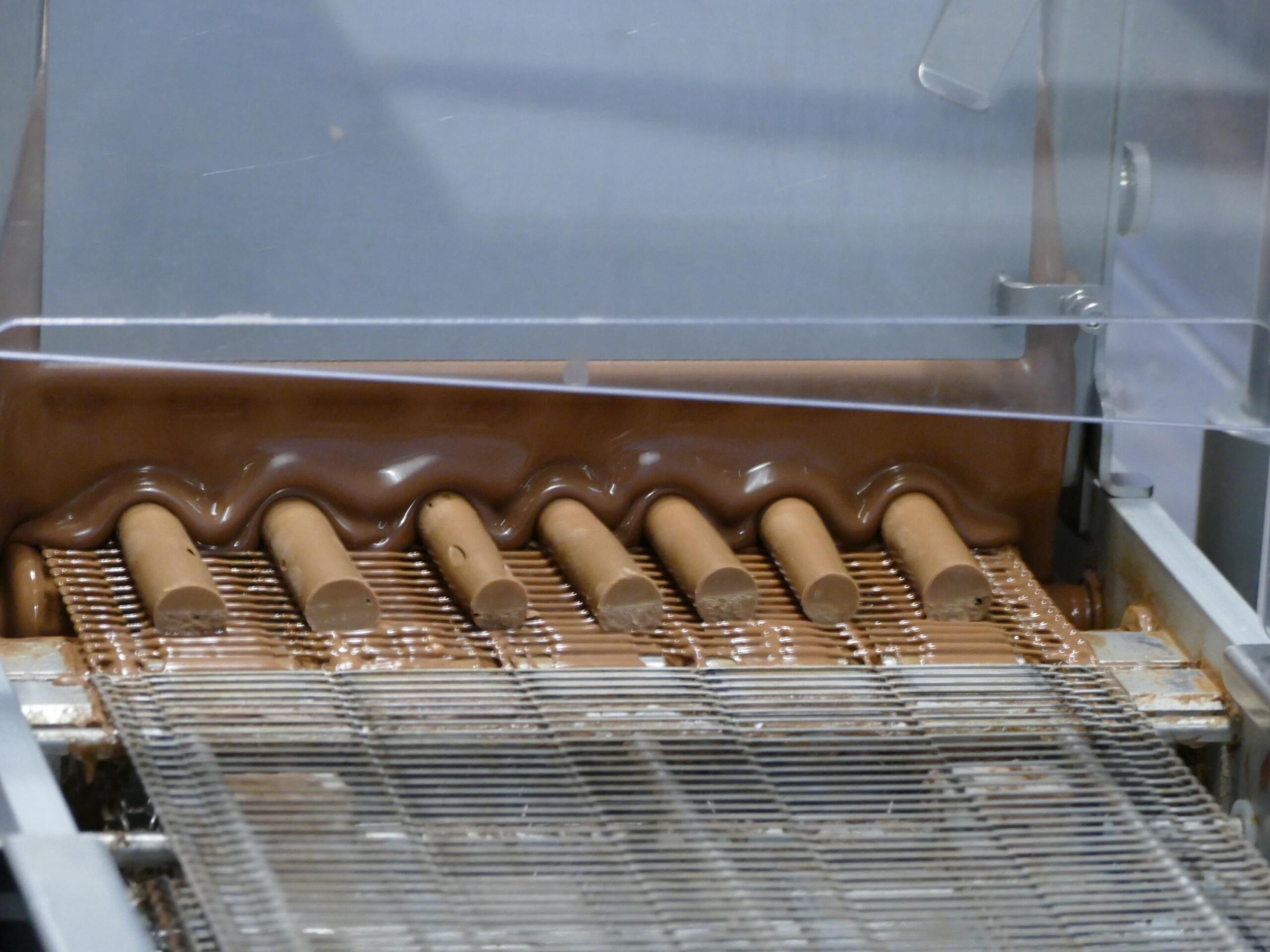
Centres passed on a belt under a continuous curtain of liquid chocolate, were vibrated to settle the coating, and ran into a cooling tunnel – and operators watched the curtain constantly to keep the coating even.
Still the method, with closed-loop control of flow, temperature and belt speed. The enrobing line is the image everybody has of a chocolate factory and it deserves to be, because it is genuinely the most satisfying machine in the building.
6. The Decoration on Top Was Applied by Hand at Speed
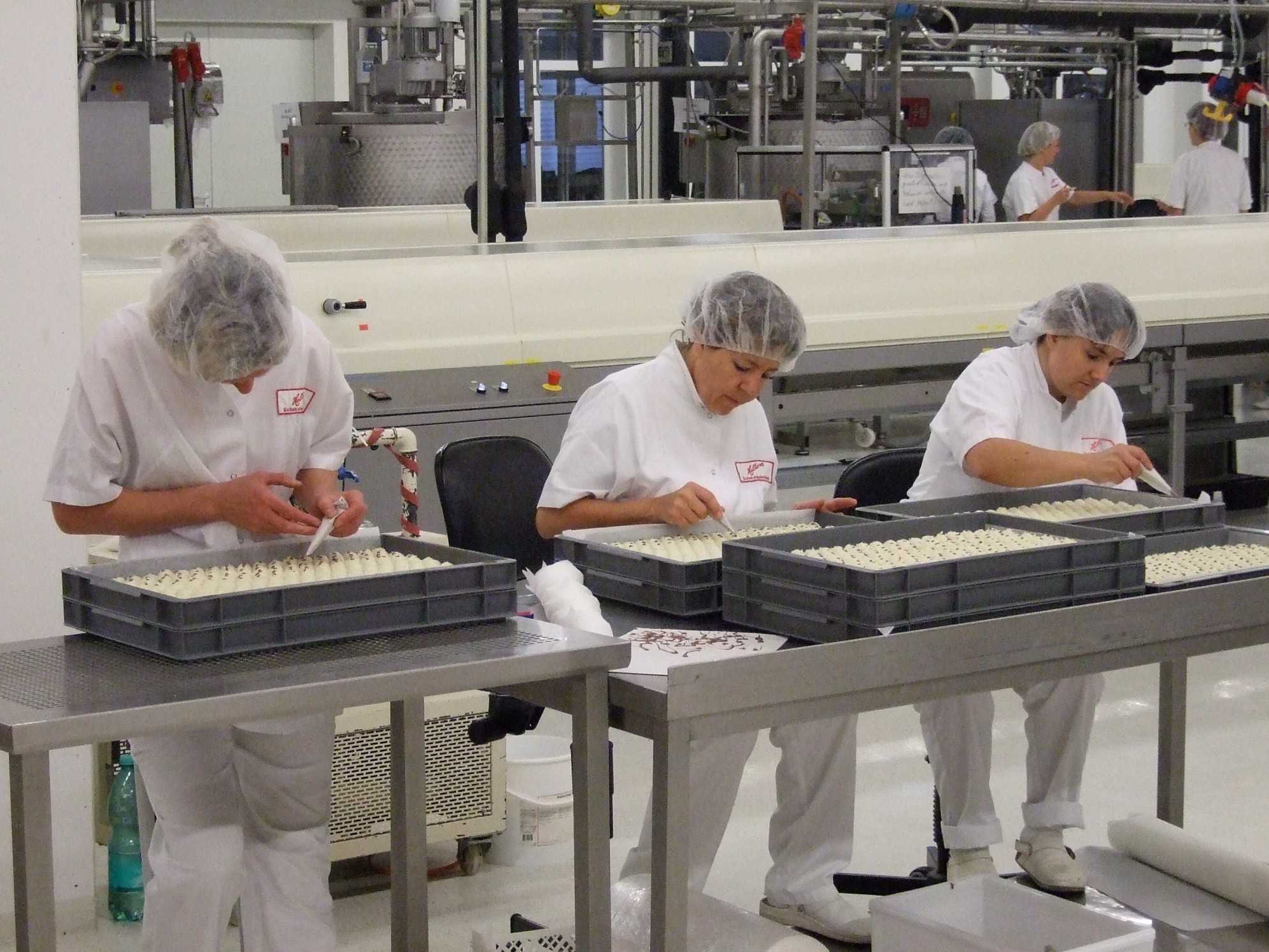
The squiggle, swirl or pattern on top of a chocolate was frequently a hand-piped mark identifying the centre, applied by women working at the line at a rate of several per second.
Automated depositing applies the marks now. The patterns were a code – a customer could identify the filling from the top of the chocolate – and that code was maintained by hand by people who could pipe a recognisable mark faster than most people can point at one.
7. The Workforce Was Overwhelmingly Female and the Factory Knew It
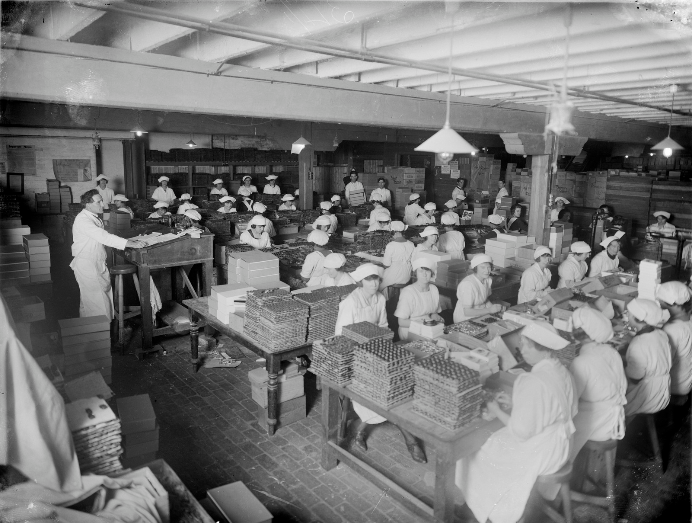
Chocolate manufacture employed very large numbers of women in wrapping, decorating, packing and line work, and the industry’s major employers were among the largest female employers in their regions.
Automation reduced the headcount enormously. Several of these companies were notable for welfare provision – housing, education, pensions, sports facilities – which was genuine and was also a management strategy, and both of those things were true at once in a way that is frequently flattened in one direction or the other.
8. Wrapping Was Hand Work and It Was Fast
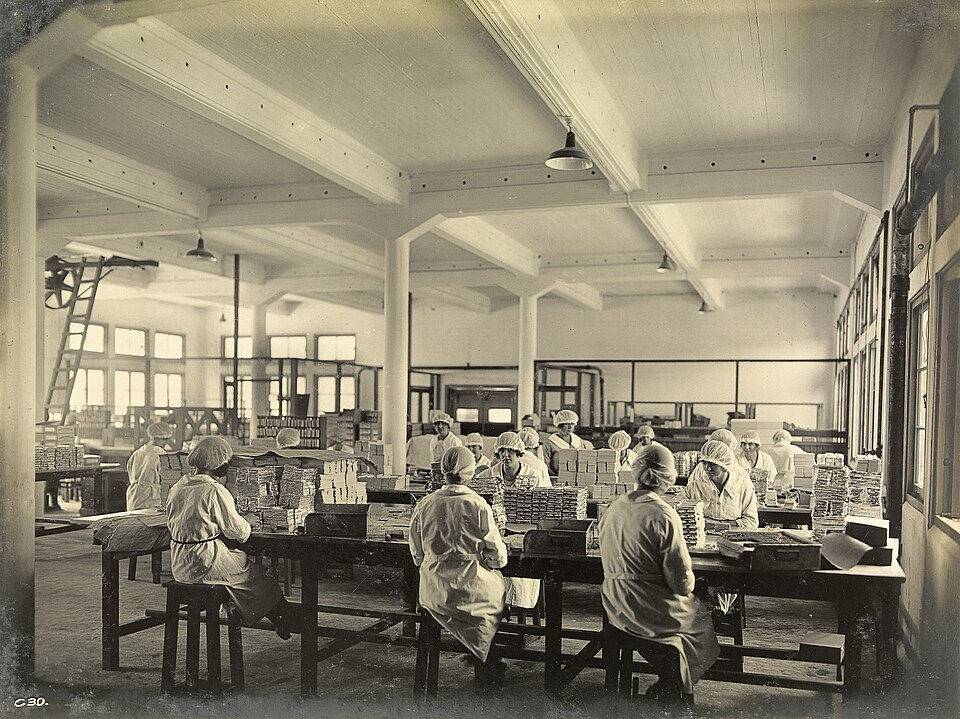
Foil and paper wrapping of individual items was done by hand, at speed, with the resulting rate measured and paid accordingly.
Wrapping machines took it entirely. Hand wrappers worked at rates that are difficult to credit, and the skill was in a consistent fold rather than in speed alone – a badly wrapped item looks cheap and a hand wrapper produced identical folds thousands of times a day.
9. The Smell Reached the Whole Town and People Loved It
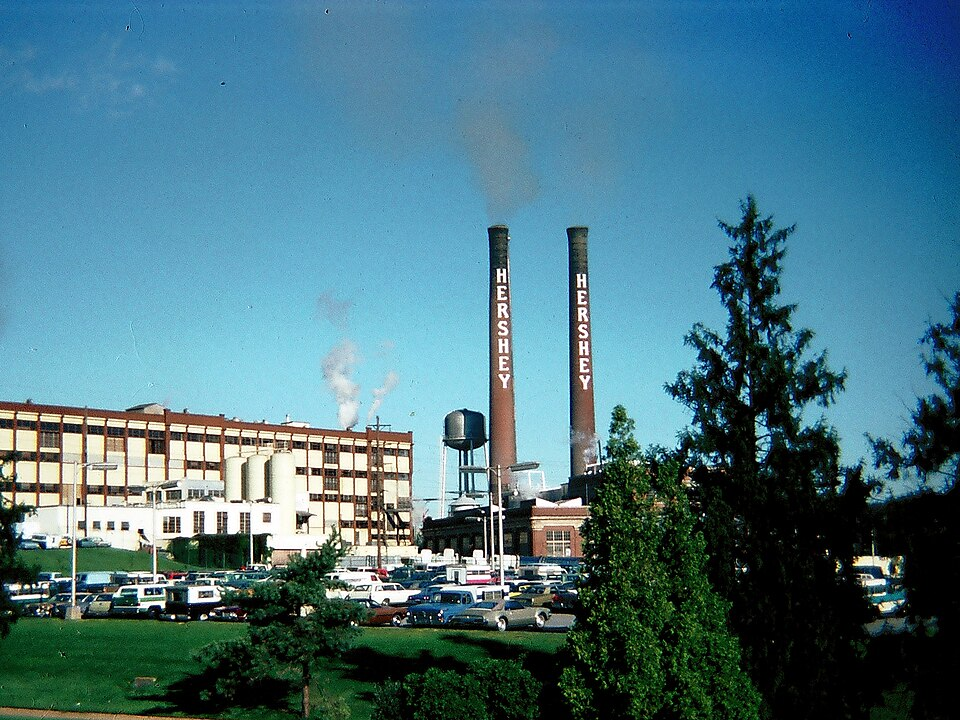
Roasting cocoa produces a powerful and distinctive smell that carried for a considerable distance, and in chocolate towns it was a constant presence.
Extraction and the relocation of roasting removed it from most places. It is the one industrial smell in this entire series that people remember fondly and campaign to keep, which is a useful corrective to the assumption that industrial towns simply smelled bad.
10. The Recipe Was a Secret and the Secrecy Was Real
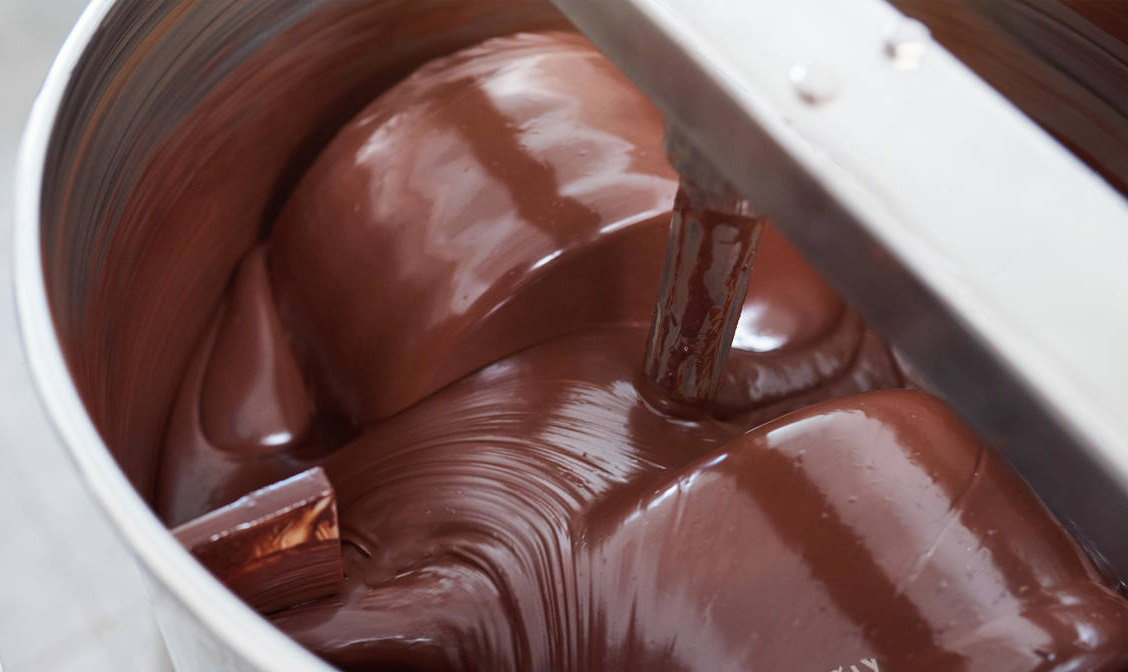
Formulations were genuinely confidential, known to very few people, with ingredients sometimes disguised in internal documentation and access to certain parts of the works restricted.
Still the case, and chocolate recipes remain among the better-kept commercial secrets, protected by secrecy rather than by patent because a patent would publish them. The secrecy is not theatre – small differences in formulation and process produce products customers can distinguish instantly and are loyal to.
11. Nobody Was Asking Where the Beans Came From
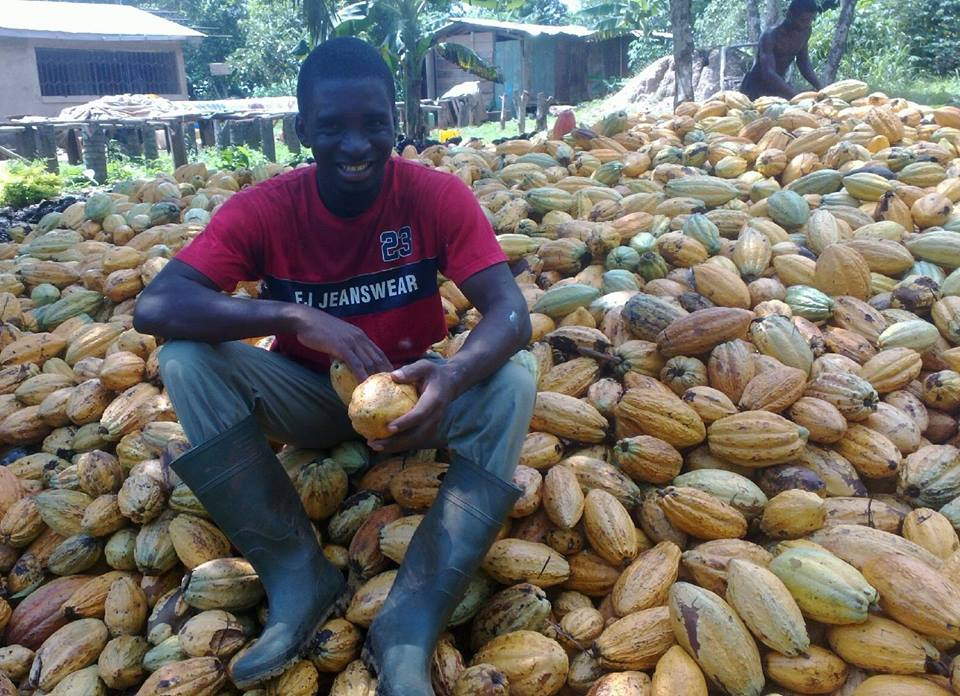
Cocoa arrived through commodity markets from producing countries, and conditions on the farms supplying it were not a question that purchasers in consuming countries engaged with.
Certification schemes, supply chain mapping, direct sourcing and legal due diligence requirements have made it a central issue, and it is one where the honest position is that serious problems persist, that the certification schemes are themselves contested, and that nobody involved claims it is resolved. It is included because it is the most significant change in the industry since 1960 and because presenting this subject without it would be misleading.
12. Nobody Expected the Bar to Get Smaller
In 1960 a product had a size, and the size was part of what it was.
Reducing pack size while holding price – which the industry does and which customers notice and resent – became a standard response to input cost increases, particularly as cocoa prices moved. It is defended as preferable to a visible price rise and is reliably the thing that generates the most public anger of anything in this list, which says something about what people actually care about.
The Path Matters More Than the Destination
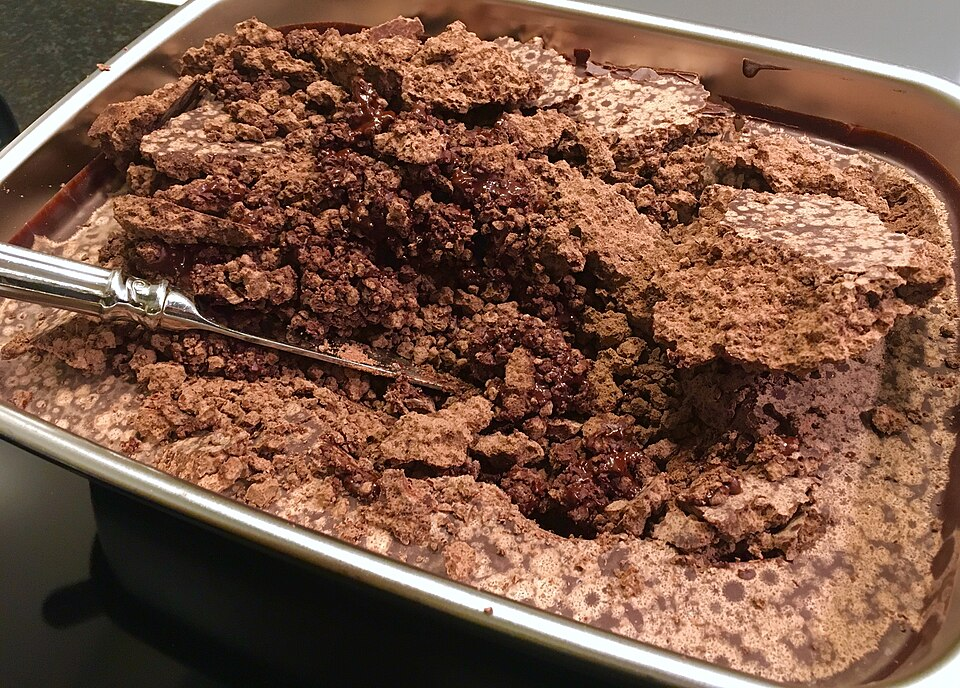
The piece of science in this list worth taking away is tempering, because it is genuinely strange and it explains something you have seen.
Cocoa butter is a fat that can solidify into several different crystal structures. They are all the same chemical substance, arranged differently, and they have different properties – different melting points, different appearance, different texture in the mouth.
Only one of those forms is any good. It gives a bar that is glossy, that snaps cleanly, that contracts slightly on setting so it releases from the mould, and that melts at close to body temperature, which is why chocolate behaves the way it does on the tongue.
The others produce a dull, soft, crumbly material that melts in the hand and develops a pale bloom on the surface.
Here is the strange part: which one you get is not determined by the final temperature. It is determined by the sequence of temperatures the chocolate passed through on the way. Cool it carelessly and the wrong crystals form. Take it down, let the right crystals seed, warm it slightly to melt off the unstable forms, hold it there, and the good structure propagates through the whole mass.
Same ingredients, same final temperature, completely different product, decided entirely by the route.
Which is why a bar that has been left in a warm car and allowed to reset looks and tastes wrong. Nothing has been lost from it and no ingredient has changed. It has simply crystallised the other way, and that is the whole difference between chocolate that works and chocolate that does not.
If you worked in a chocolate factory, you will know which line and whether you could still pipe the mark.
And if your town had one, you will remember exactly what the air smelled like on a roasting day.
Like our content? Follow us for more.

