

The Assumption Everybody Makes
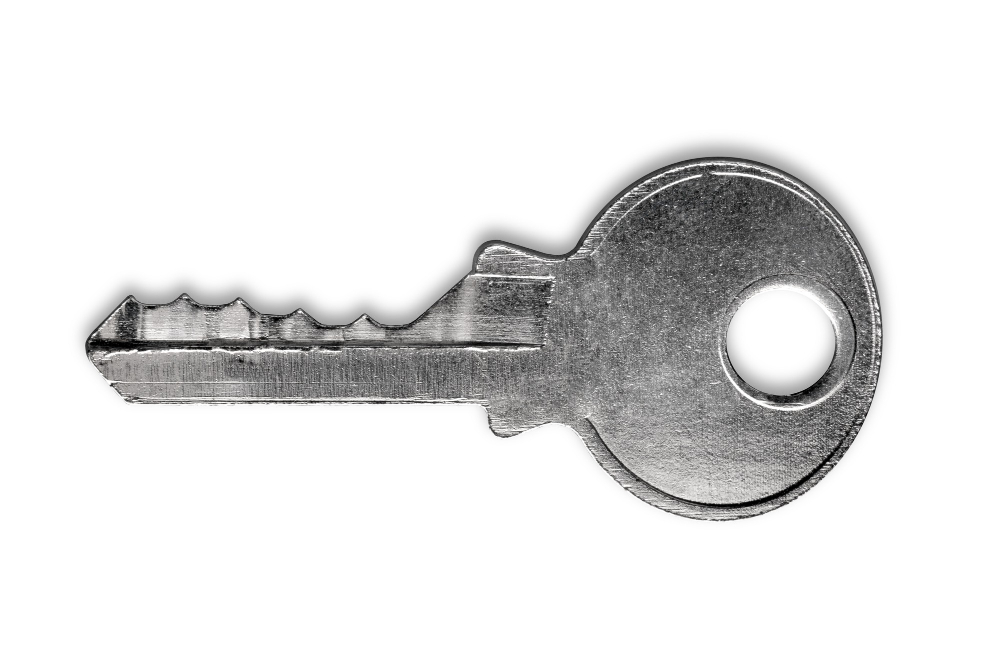
Every key in your pocket has a hole punched through the wide flat part at the top. Ask anybody what it is for and they will say the keyring, which is a reasonable answer because that is what it gets used for.
It is not why the hole exists. The hole is a product of how keys are made, and it does several jobs inside the factory and the key-cutting shop before anybody threads a ring through it.
Keys are made from blanks – uncut keys with the correct profile and the correct bow for a given lock family, stamped out in quantity and then cut to a specific combination when somebody needs one. The hole is punched into the blank at the moment it is blanked out of the strip, in the same press stroke, and from that point on it is the feature everything else references.
The keyring came later, and it works because the hole happens to be in the right place and the right size. That is a convenience, not a purpose.
Like our content? Follow us for more.
What the Hole Does in Manufacturing
The main function is handling and location.
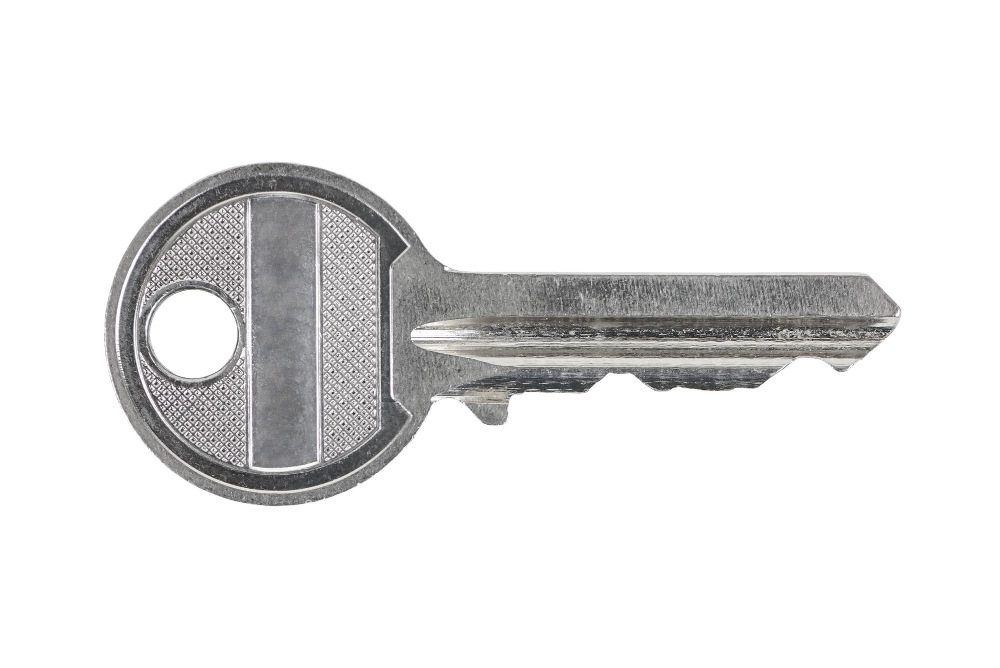
A key blank passes through several operations – blanking, milling or broaching the profile, deburring, polishing, plating or coating, stamping the manufacturer’s code – and in each one it has to be held in a known position. A hole is the easiest datum there is. A pin through it locates the blank absolutely, in a way that clamping on a thin irregular piece of metal does not.
For plating, the hole is how the blanks are carried. Hundreds are strung on a wire or loaded onto racks through their holes and lowered into the tanks as a batch, which means the whole surface gets coated with no clamp marks and nothing has to be handled individually.
And for storage and display, the hole is how blanks hang. Walk into a key-cutting shop and the wall is covered in blanks hanging on pegs, sorted by profile, each one on a hook through its hole. That is not a retail fixture – that is the working inventory system, and it exists because the hole is there.
It Is Also How the Key Gets Cut
The hole matters again at the cutting stage, though less directly than people assume.
A key is cut on a machine that clamps the blank alongside an existing key or a code bar, and the depths are cut by a wheel traversing along it. The clamping is done on the blade, not the bow, because the blade is what needs to be positioned accurately relative to the cutter.
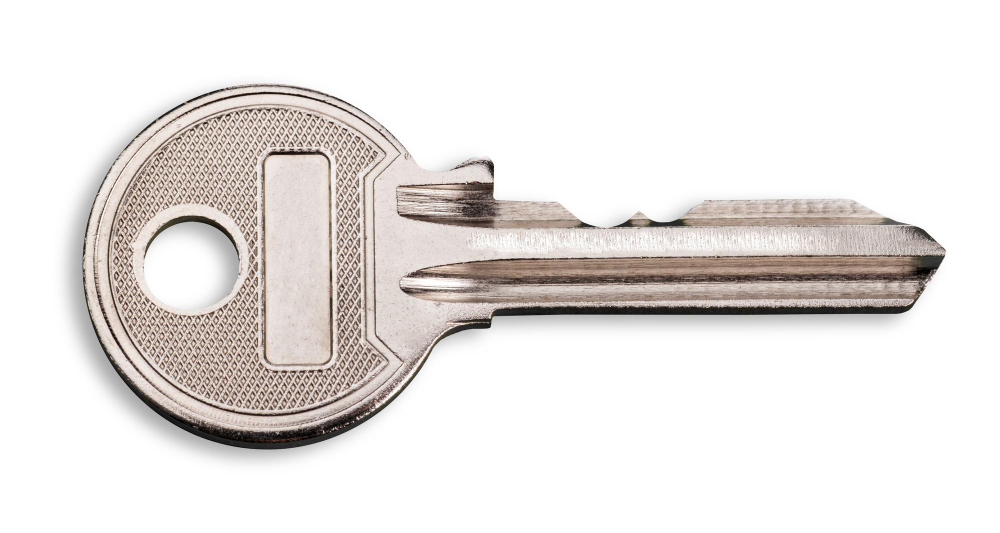
But the bow and its hole are what the operator holds, what the key hangs from while it is being deburred, and what identifies it. The code stamped near the hole tells the cutter which blank it is, which determines which clamp jaw and which cutting data to use. Pick the wrong blank and the key will not enter the lock, however accurately it is cut.
This is the part of key cutting that goes wrong. The cutting itself is mechanical and quick. Identifying the correct blank out of several hundred near-identical profiles is the skill, and getting it wrong is the commonest reason a freshly cut key does not work.
The Bow Is Shaped to Tell You Things
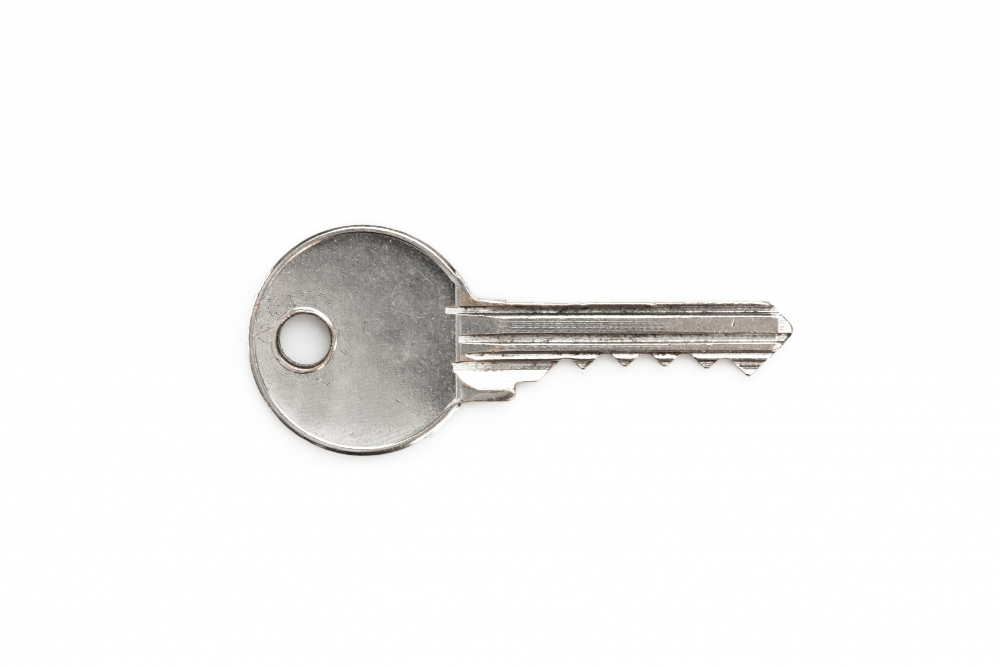
The wide flat top of a key is called the bow, and its outline is not decorative either.
Bow shapes are to a significant extent proprietary and identifying. A particular manufacturer and lock family will use a distinctive bow outline, so somebody who works with locks can tell at a glance roughly what a key fits before looking at the blade at all. This is why a handful of keys from different locks look so visibly unlike each other even when the blades are similar.
The bow also has to be big enough to grip and to transmit torque. A lock cylinder needs a certain amount of turning force, particularly a stiff or dirty one, and that force has to come from two fingers on a piece of flat metal. Too small a bow and the key is painful to turn; too large and it fouls the door, the surround or the next key on the ring.
And the bow is where the information goes – the manufacturer’s name, the blank code, sometimes a key number for reordering – because it is the only part with room for it and the only part that is not inside the lock when the key is in use.
The Blade Is Where All the Information Is
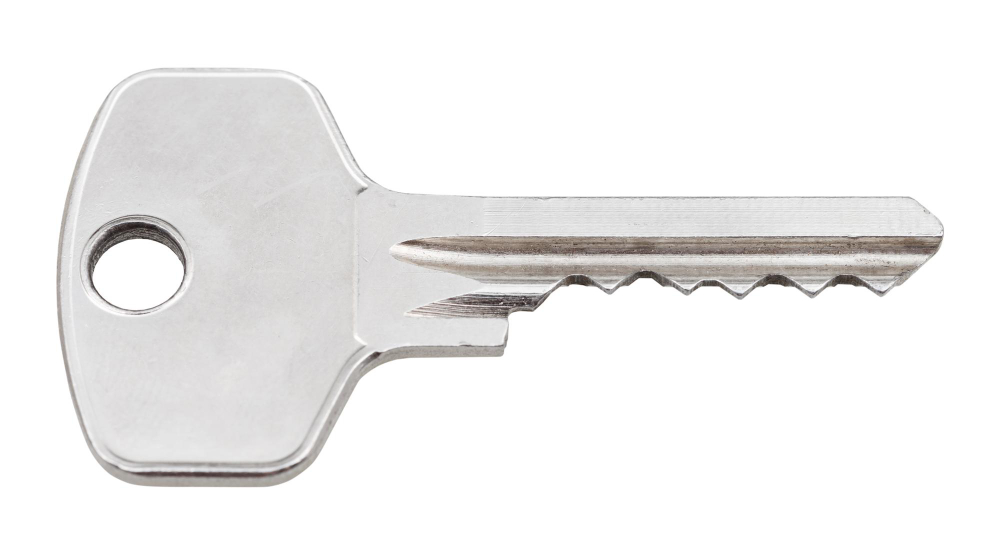
If the bow is the handle, the blade is the actual key, and almost everything on it means something.
The ridges and grooves running along its length are the profile or keyway, and they do not open anything – they determine whether the key will physically enter the cylinder at all. A lock’s keyway is a shaped slot, and only a blade milled to match will go in. This is the first line of security and the reason a key that looks right can refuse to enter a lock.
The notches cut into the edge are the combination, and these are what actually operate the mechanism. Each notch lifts a pin or a wafer to a specific height, and the lock turns only when every one of them is lifted to exactly the right level – not higher, not lower. A key cut one step too deep in one position will not work, which is why key cutting is a precision job rather than an approximate one.
The number of notch positions and the number of available depths together set how many different keys a lock family can have. That figure is smaller than most people assume, which is why two unrelated keys occasionally open the same cheap padlock, and why serious locks use more positions, more depths and additional features such as side milling or sprung elements in the blade.
Why Keys Wear Out, and What Fails First
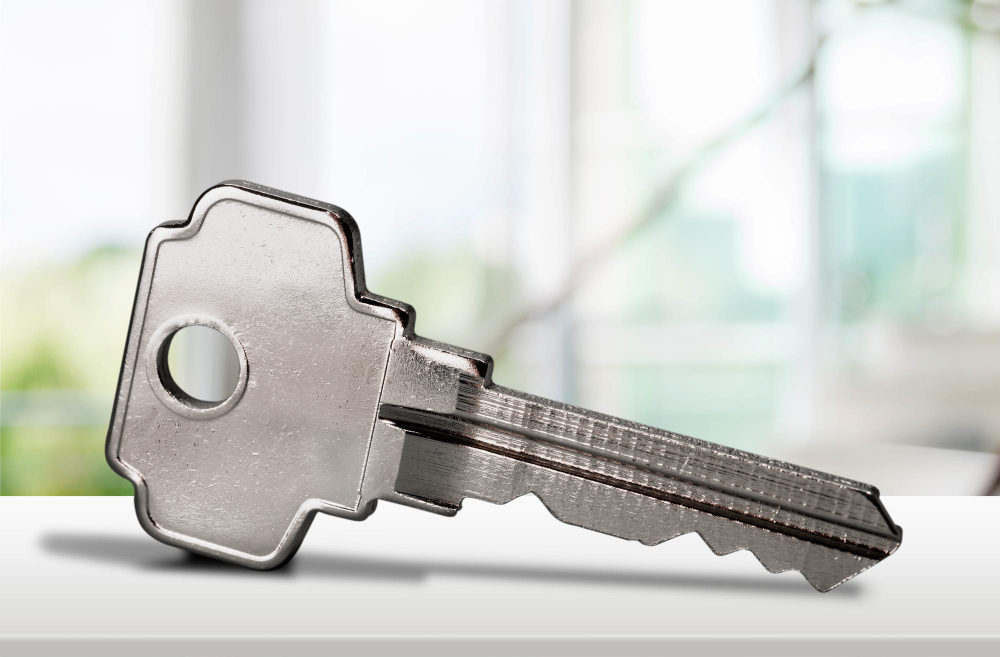
Keys do wear, and knowing where tells you when to replace one before you are locked out.
The notch edges wear first, because they are the surfaces doing work – each one slides against a spring-loaded pin thousands of times, and the sharp corners round off. A rounded notch lifts its pin slightly less than the cut depth intends, and once several notches have worn the key becomes one that has to be jiggled. That stage is a warning, not a quirk.
The second failure is the bow snapping at the shoulder, where the wide flat bow narrows into the blade. That is the point of highest stress every time the key is turned, and it is made worse by a heavy bunch of keys hanging off it, by using the key to turn a stiff lock rather than servicing the lock, and by the stress concentration of the hole itself if it sits close to the shoulder.
The practical advice is short. Cut a spare from a new key rather than from a worn one, because a copy of a worn key is a worse key. Take the weight off by carrying fewer keys on one ring. And if a lock has become stiff, deal with the lock, because the alternative is that the key eventually deals with it by breaking off inside.
Why Some Keys Have No Hole at All
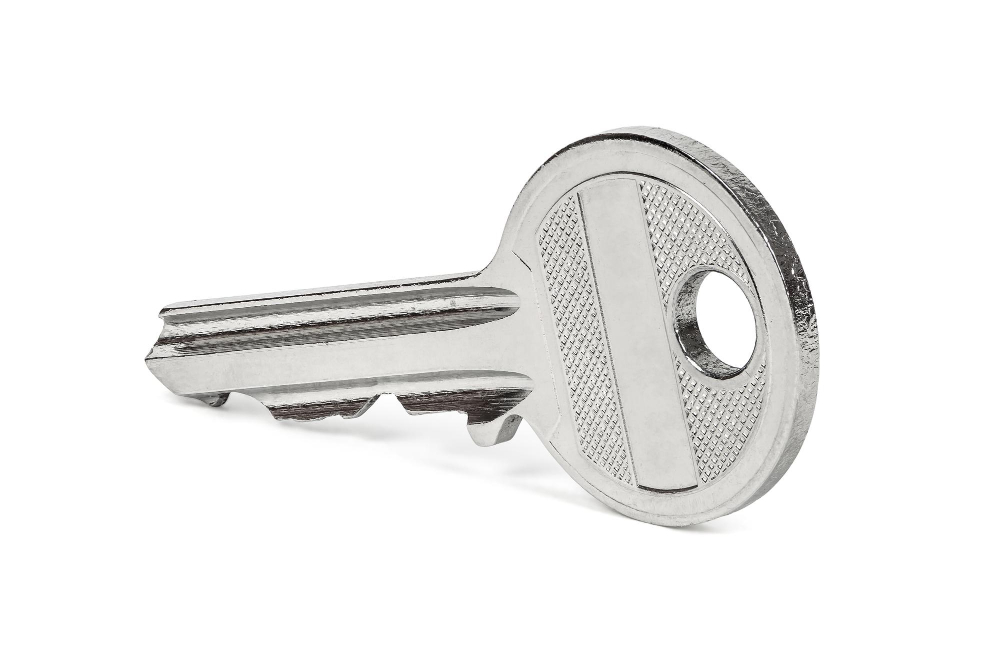
The exceptions prove the point, because the keys without holes are the ones not made this way.
A key with a moulded plastic head – a car key, a bicycle lock key, many padlock keys – frequently has no hole, because the plastic was moulded around the blade and the head is not a punched piece of flat metal at all. The handling and plating problems the hole solved do not arise.
Keys with a plastic sleeve pressed over a metal bow often do have a hole, hidden under the plastic, because the underlying blank was made conventionally.
High-security keys and some restricted profiles sometimes dispense with the hole or move it, because the bow is thicker, differently shaped, or carries an electronic component.
And transponder car keys are a different object entirely: a plastic case containing a circuit, with a blade attached, where the metal part is a minor component. The hole has gone because the manufacturing route has gone, which confirms that the hole was never about the keyring in the first place – if it had been, the car key would still have one.
The Keyring Is a Genuine Design Problem Nobody Solved
The hole being an accident rather than a feature explains something irritating: keyrings are bad, and they have stayed bad.
The split ring – a flat spiral of spring steel – is the standard, and it works by being forced open against its own springiness. It is cheap, almost indestructible and impossible to open without either a fingernail you are about to damage or a tool. It also wears the holes in keys, and it wears a groove into itself.
Better mechanisms exist and none has displaced it. Hinged clips, screw links, bayonet fittings and quick-release systems are all easier to use and all less reliable, more expensive, or bulkier. The split ring survives on the same grounds as the crown cap: nothing else is this cheap and this unlikely to fail.
So the situation is that a hole made for a press tool is being used to carry keys on a device nobody likes, and both halves of that arrangement are too cheap and too adequate to replace.
Next time you are standing at a door with a fingernail bent back on a split ring, that is the reason. Nobody designed this. It accumulated.
Like our content? Follow us for more.

