It Looked Like a Piano and Had a Machine Inside It
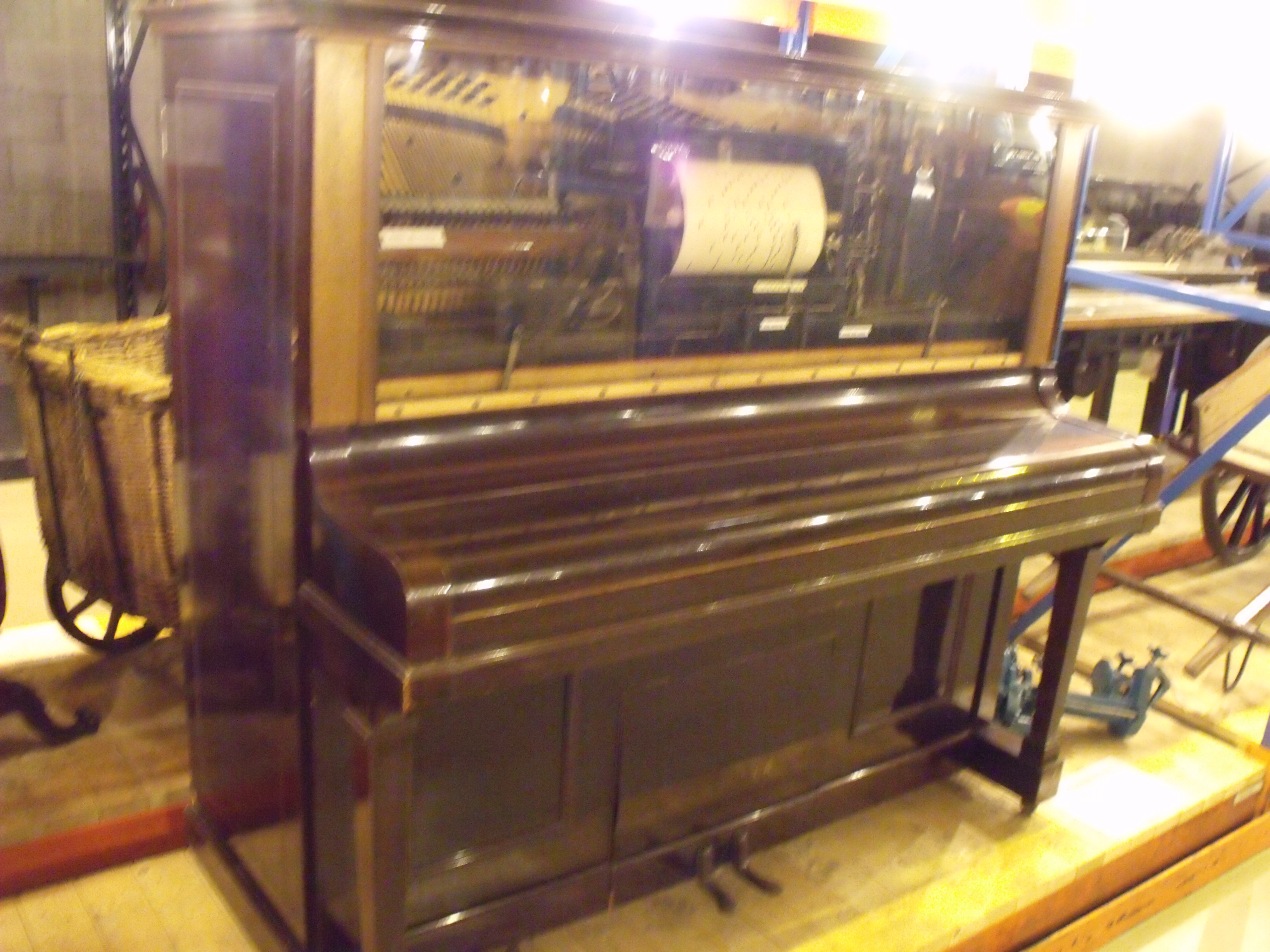
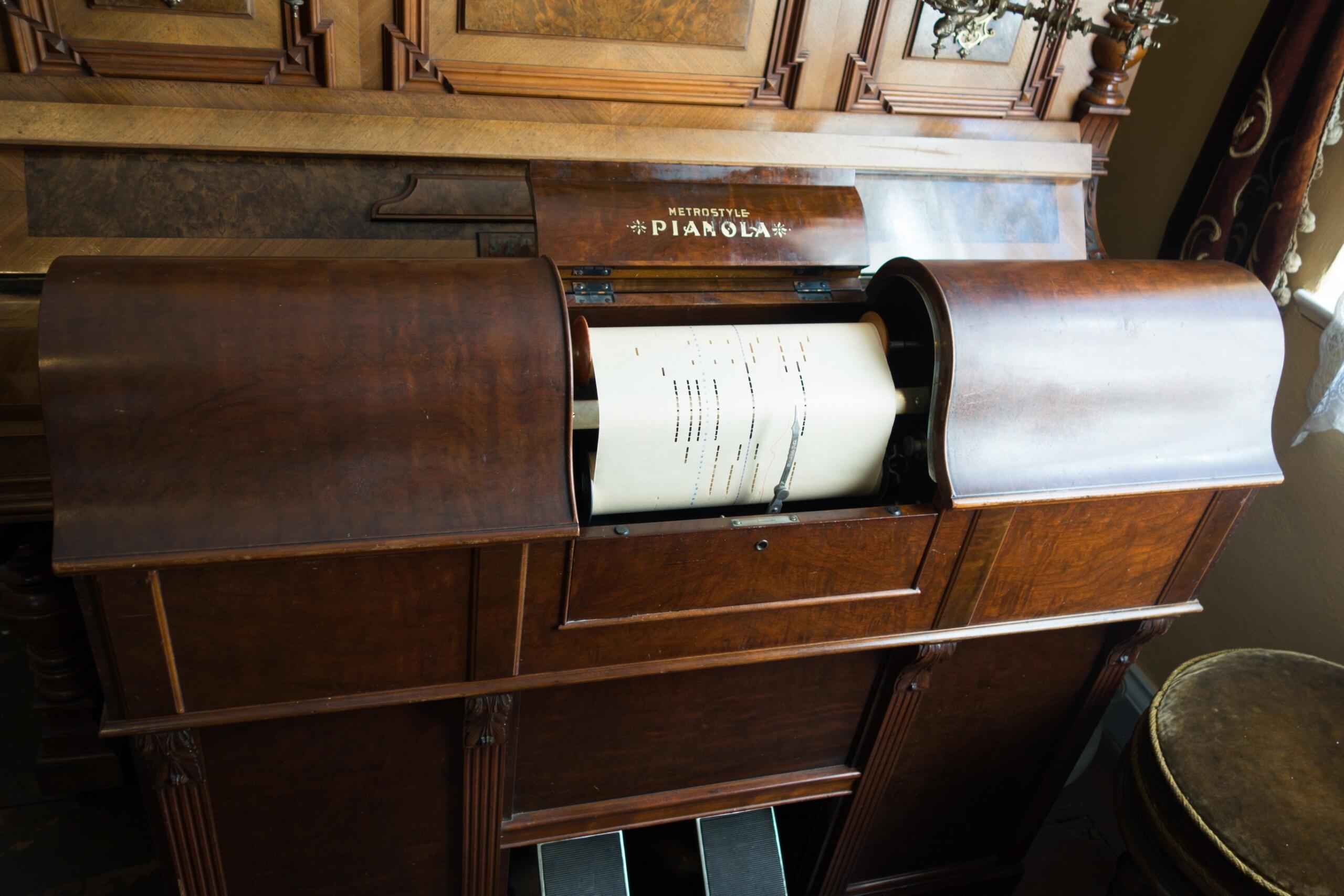
From the front it was an upright piano, a little deeper than usual, with a hinged panel above the keyboard. Open the panel and there was a spool box with a paper roll in it and a row of controls along the front.
Below the keyboard, instead of the usual two pedals, were two large flat treadles – the kind on a treadle sewing machine – which folded out and were pumped with the feet.
You loaded the roll, hooked its paper tab onto the take-up spool, and pumped. The roll began to turn, the keys went down by themselves, and the piano played.
Like our content? Follow us for more.
The Roll Is a Digital Medium and That Is Not a Stretch
Here is the thing that makes the player piano genuinely remarkable, and it is usually described in the wrong terms.
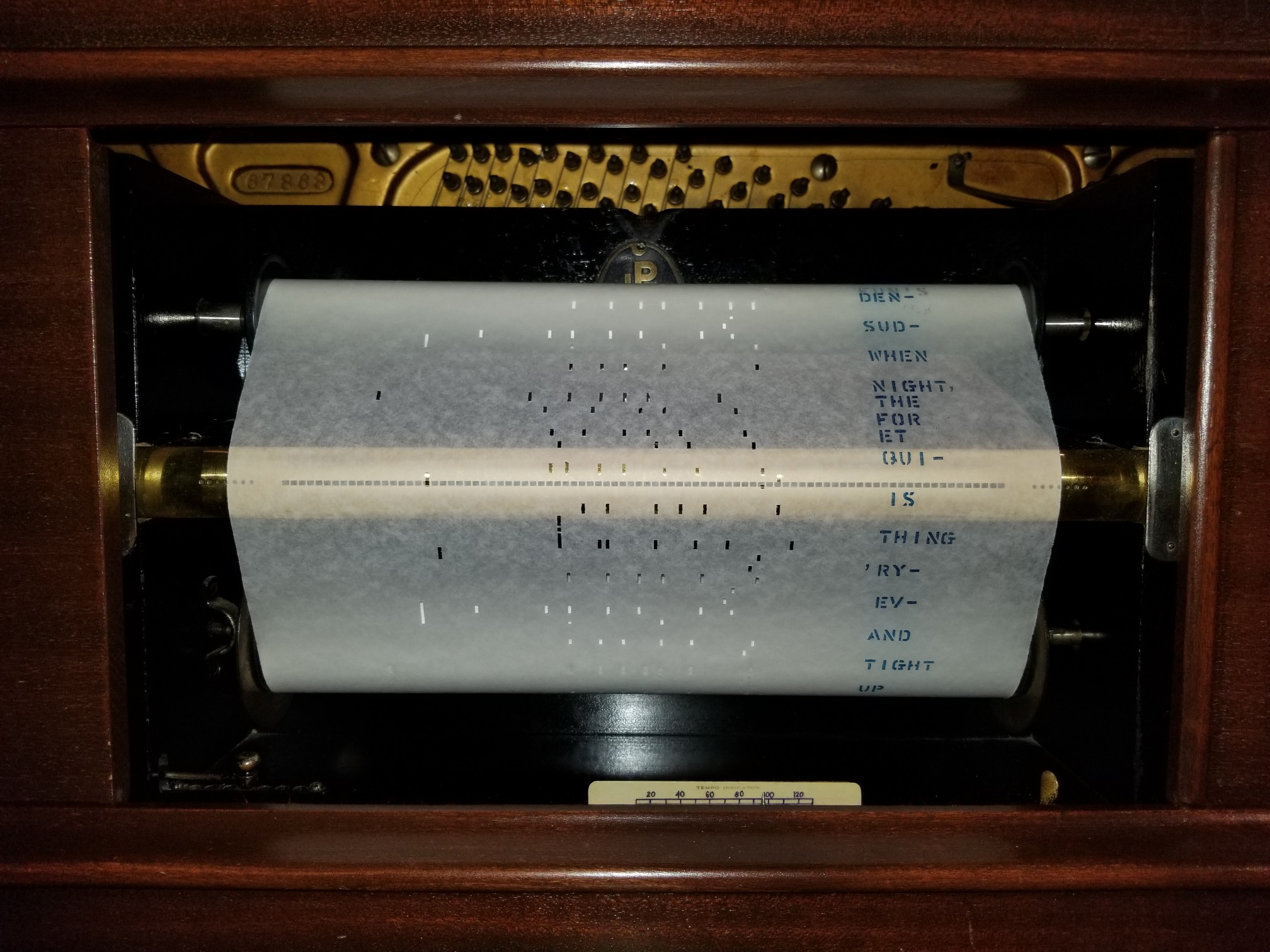
A piano roll is a long strip of paper perforated with rectangular holes. A hole, or no hole, at a given position across the width of the paper, at a given point along its length. There is no gradation: the paper is either open or it is not.
That is a binary encoding of discrete events – which note, when it starts, how long it lasts – stored on a physical medium and read mechanically. It is not a recording of sound in any sense. There is no waveform anywhere in the system, nothing is captured acoustically, and the paper contains no trace of how anything actually sounded.
Which means the player piano is a note-event sequencer with removable storage, built out of paper and air, decades before electronics. And the resemblance to what came much later is not a coincidence of appearance – the editing view in every piece of music software on earth is called the piano roll, because that is literally what it is a picture of.
The Mechanism Runs on Vacuum, Not Pressure
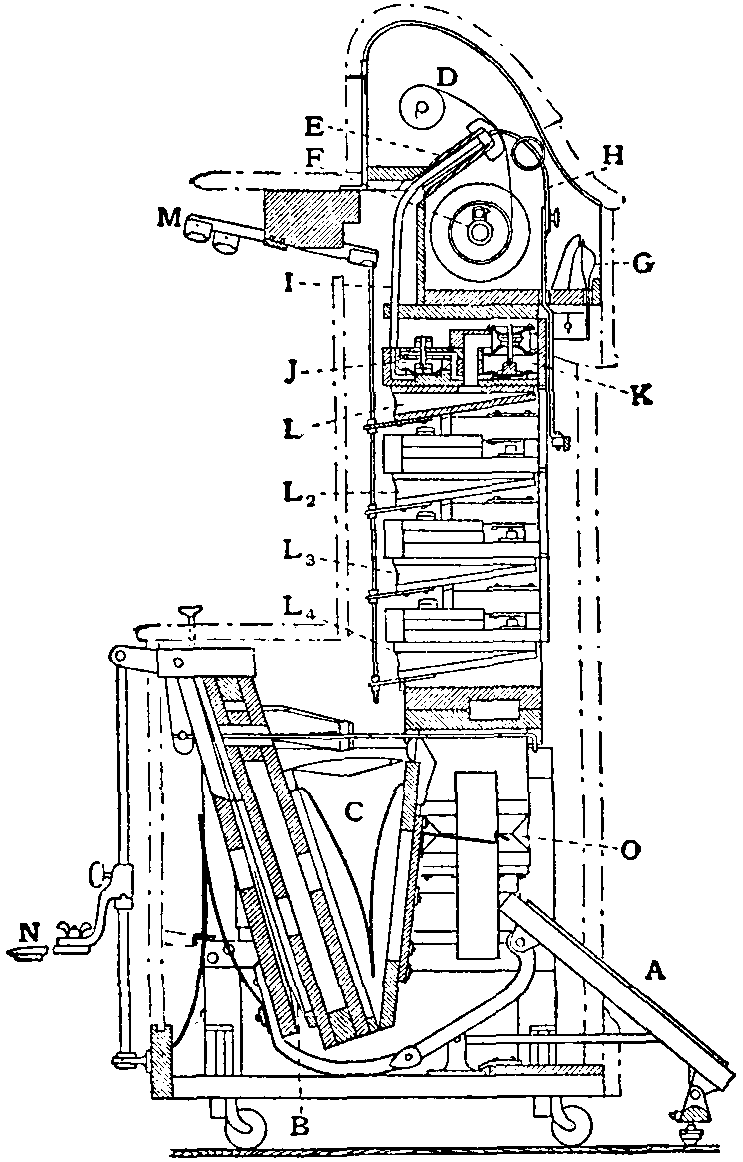
The engineering is worth setting out because almost everybody guesses it backwards.
Pumping the treadles does not blow air into the mechanism. It works a pair of large bellows that pull air out, creating a partial vacuum in the system – and the whole machine is driven by suction.
Across the paper’s path sits a tracker bar: a brass bar with a row of small holes in it, one for each note, all connected to that vacuum. As the paper slides over the bar, every hole is covered and nothing happens.
When a perforation in the paper passes over one of those holes, outside air is admitted. That tiny puff of air is the signal. It travels down a lead tube to a small bellows called a pneumatic, which collapses under the vacuum and – through a simple linkage – drives that note’s hammer at the string.
So the paper is not operating the keys mechanically. It is opening and closing valves, and the vacuum does the work. One hole, one tube, one pneumatic, one note, eighty-eight times over, with a few more channels for the pedals and the controls.
The Player Supplied the Energy, Which Means They Supplied the Dynamics
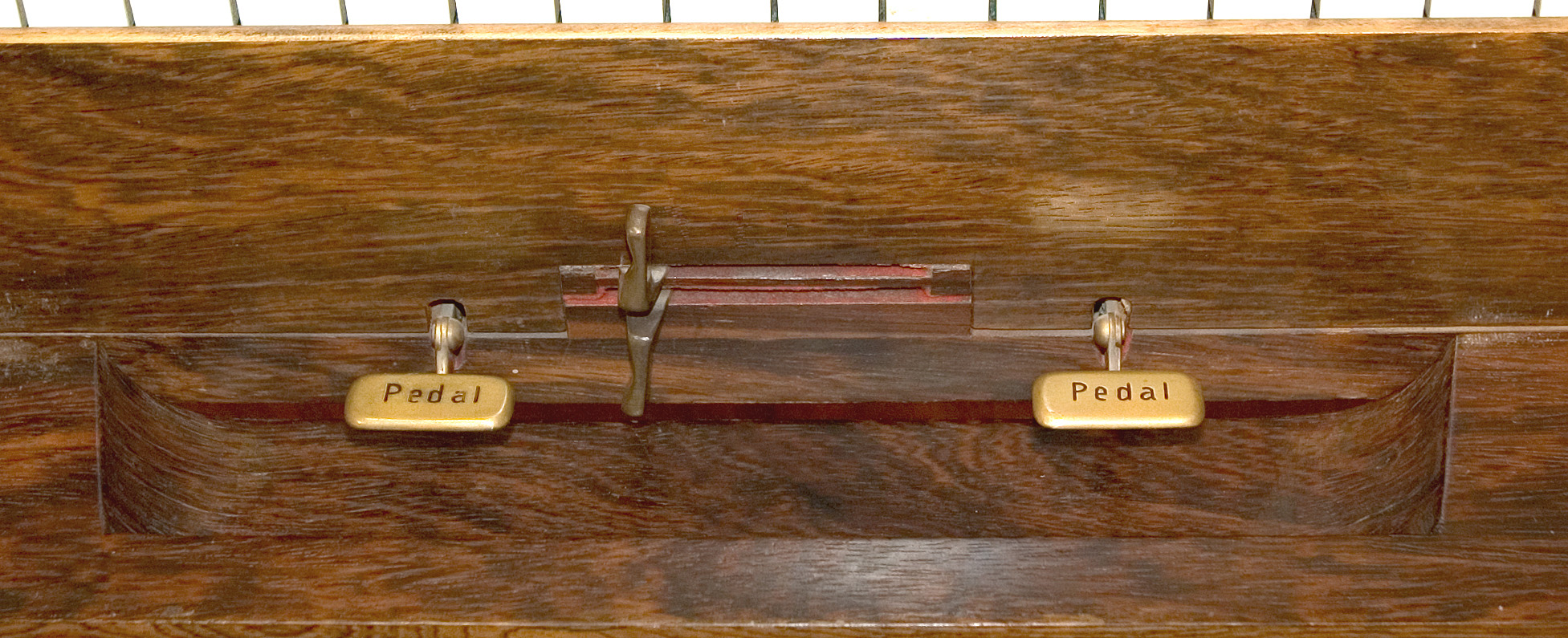
This is the fact that most completely separates a player piano from a record player, and it is the reason the instrument was taken seriously.
The vacuum comes from the feet. Pump harder and the vacuum is stronger, the pneumatics collapse faster and harder, and the hammers strike the strings with more force – so the music gets louder. Ease off and it gets softer.
Which makes the person at the instrument a performer. They control the volume continuously, throughout the piece, with their legs, and they can swell a phrase, drop back, and build to an ending.
Add to that the row of levers along the spool box: a tempo control that changes the speed of the roll, a sustain lever that works the damper pedal, a soft lever, and on better machines separate controls for the bass and treble halves of the keyboard, so the melody could be brought forward against the accompaniment.
A competent operator was genuinely interpreting. Two people could pump the same roll on the same piano and produce recognisably different performances, and people had opinions about who was good at it.
The Reproducing Piano Was a Different Class of Machine
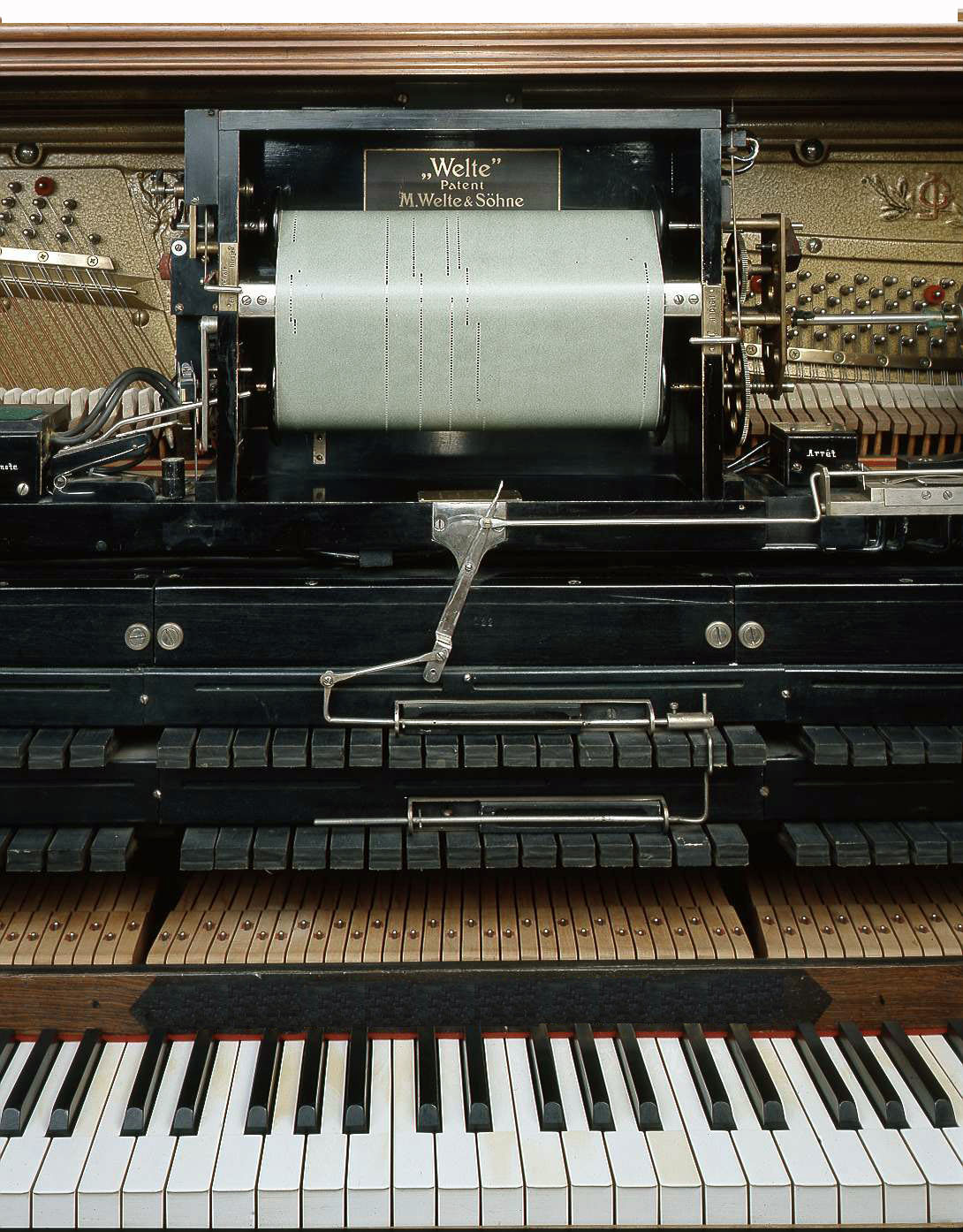
At the top of the market sat something more ambitious, and it is one of the most underappreciated technologies of the century.
A reproducing piano added extra channels of perforations that encoded the dynamics themselves – the force of each note and the pedalling – captured from an actual pianist playing on a recording apparatus. The machine then regulated its own vacuum automatically to reproduce them, with an electric pump rather than treadles, requiring nothing from the person in the room.
The significance is that a great many of the major pianists of the early twentieth century recorded on these systems, frequently in preference to the acoustic discs of the period, because the discs of the day could not reproduce a piano well at all – too little dynamic range, too much surface noise, and a frequency response that flattered almost nothing.
So for a period of about twenty years, the most faithful record of how the great pianists actually played was a roll of perforated paper, and some of those rolls are the only documents of particular performers at their peak.
The Rolls Were a Mass Medium With Lyrics Printed On Them
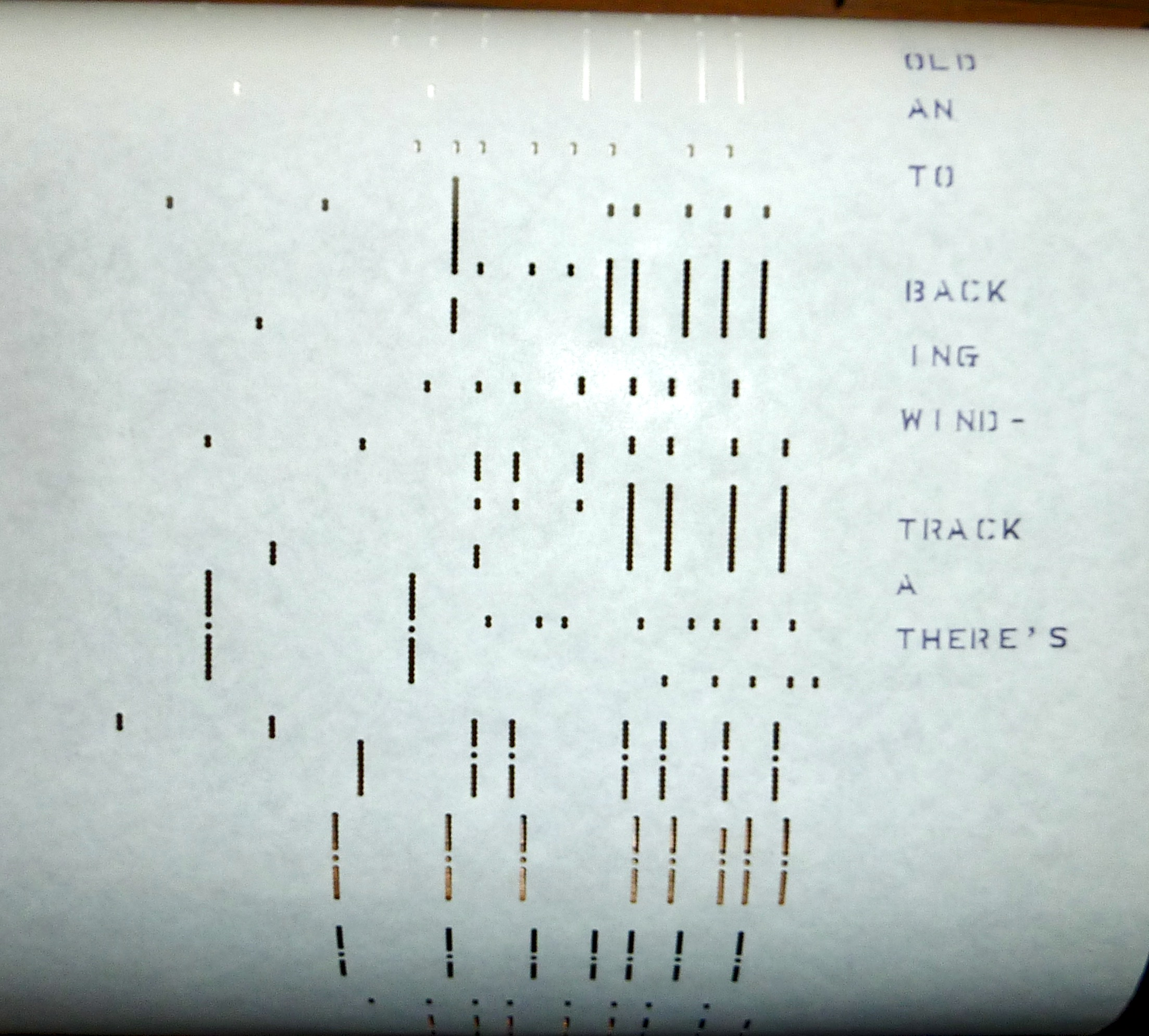
The commercial product was popular music, sold by the roll in boxes, from racks in music stores and by mail, with new titles issued constantly.
And a large share of them had the words printed down the margin of the paper – the lyric, line by line, arriving in front of the operator at exactly the moment it was to be sung.
Which tells you precisely what these machines were for. Somebody pumped, everybody else stood round the piano and sang, and the roll supplied both the accompaniment and the words. The player piano was karaoke, in the parlour, in 1922, and the whole American popular song industry of the period was substantially built on selling the thing people would gather round and sing.
It Was Expensive and It Was a Major Household Decision
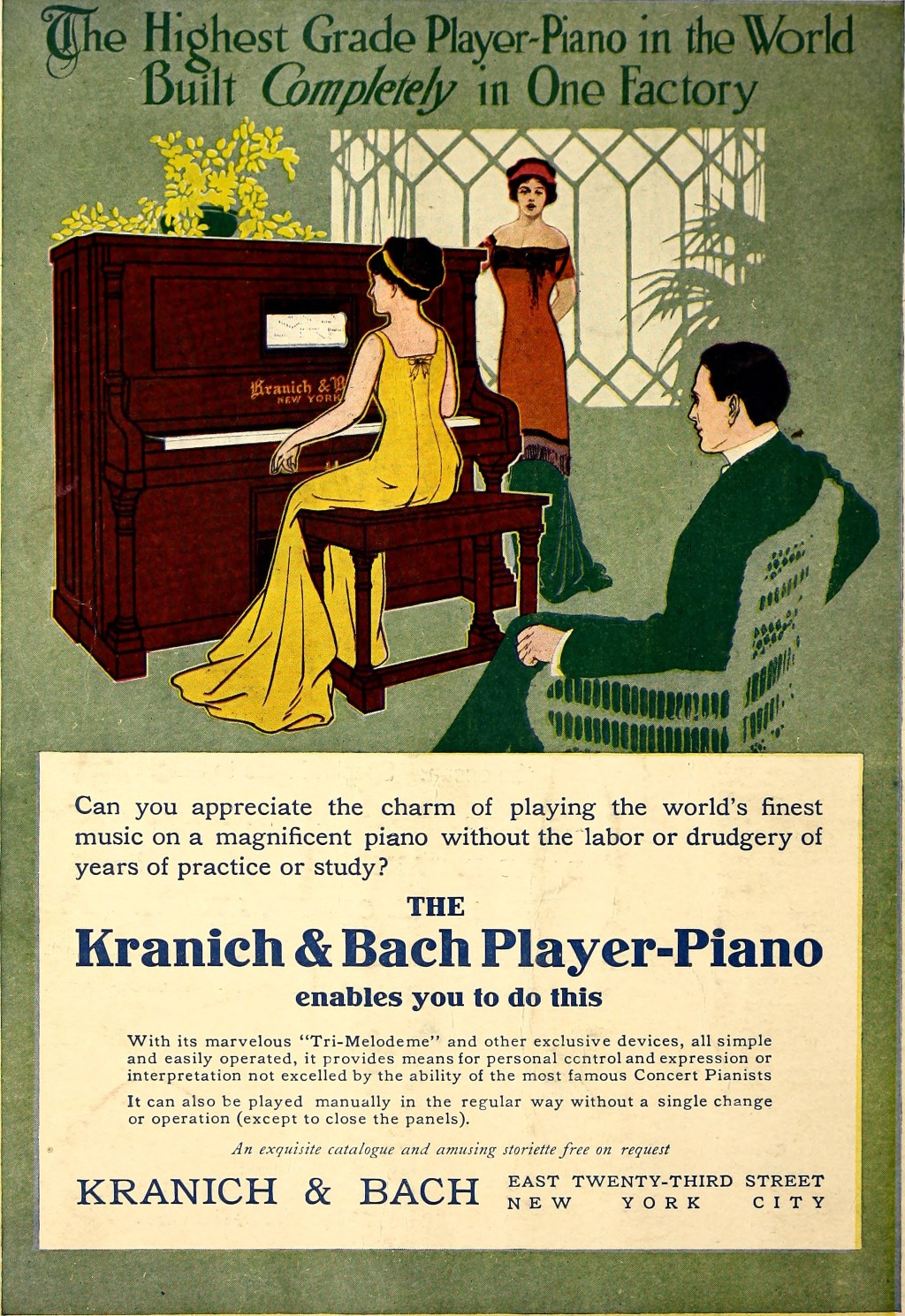
These were not cheap. A player piano cost a significant multiple of a plain upright, and a reproducing piano cost a great deal more than that – comparable, at the top of the range, to a car.
So it was bought on time, over years, as a serious household investment, and its arrival was an event. It went in the front room, it was the most valuable object in most of the houses that had one, and it was expected to last a lifetime and be inherited.
At the peak, somewhere around the end of the First World War and into the early twenties, players accounted for a very large share – in some years a clear majority – of all pianos sold in the United States. This was not a novelty on the edge of the market. For a while it was the market.
Then Two Things Arrived Within Five Years
The collapse was one of the fastest in the history of American consumer goods, and it had two causes that landed almost simultaneously.
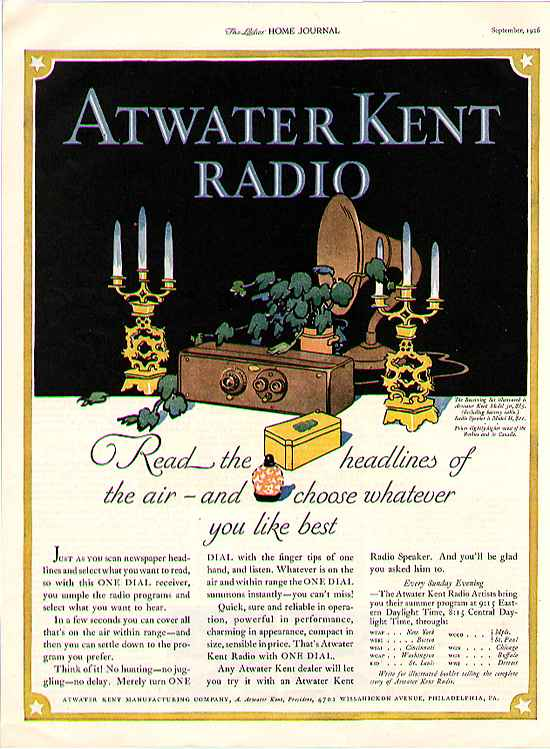
Radio came first and it was devastating, for a reason that has nothing to do with sound quality. Radio was free. Once the set was bought there was no further purchase, no roll to buy, nothing to load, and the music was continuous, varied, current and professionally performed. Against a machine that required a purchase for each piece of music and somebody’s legs to make it work, that is an overwhelming proposition.
Electrical recording came second and closed the other door. The arrival of microphone-based recording in the middle of the twenties transformed the phonograph from a device that reproduced a piano badly into one that reproduced it well – which removed the reproducing piano’s single technical advantage overnight.
Then the economy collapsed, and a discretionary purchase costing as much as a car disappeared completely. Production of players in America fell by well over ninety per cent within a few years of the peak and never came back.
The Twist: Domestic Music Stopped Being Something You Did
The player piano is usually filed as a dead end – an ingenious machine made obsolete by better technology. That is true and it misses what actually changed, which is far bigger than the instrument.
Look at what the thing required of the people in the room. Somebody had to pump, continuously, with their legs, for the whole piece. That person was controlling the volume and shaping the phrases. Somebody had to choose and load the roll. Everybody else stood round and sang, from words printed on the paper as it went past.
That is a room full of people participating in music. Not performing it in the sense of having studied an instrument – the whole point of the player was that it required no keyboard skill – but supplying the energy, making the decisions and producing the singing.
Radio required none of that. You turned it on. The music was better played than anything your household could manage, it was free, it was continuous, and the correct response to it was to sit down and listen.
That transition happened in about ten years, in the middle of the 1920s, and it has never reversed. Every domestic music technology since – the phonograph, the record player, the tape, the disc, the stream – has made the music better and the listener more passive, and each one has required less of the room than the last. The player piano is the last mass domestic music machine that could not work unless somebody in the house was actively doing something.
And the mechanism’s descendant is everywhere, which is the part that would please the people who built it. Open any music software and look at the main editing window: a scrolling grid, time running one way, pitch running the other, each note a rectangle of a particular length at a particular position.
It is called a piano roll. It is drawn to look like one. And it is doing exactly what a strip of perforated paper did in an American front room a hundred years ago – storing which note, when, and for how long, as discrete marks on a moving medium.
Like our content? Follow us for more.