

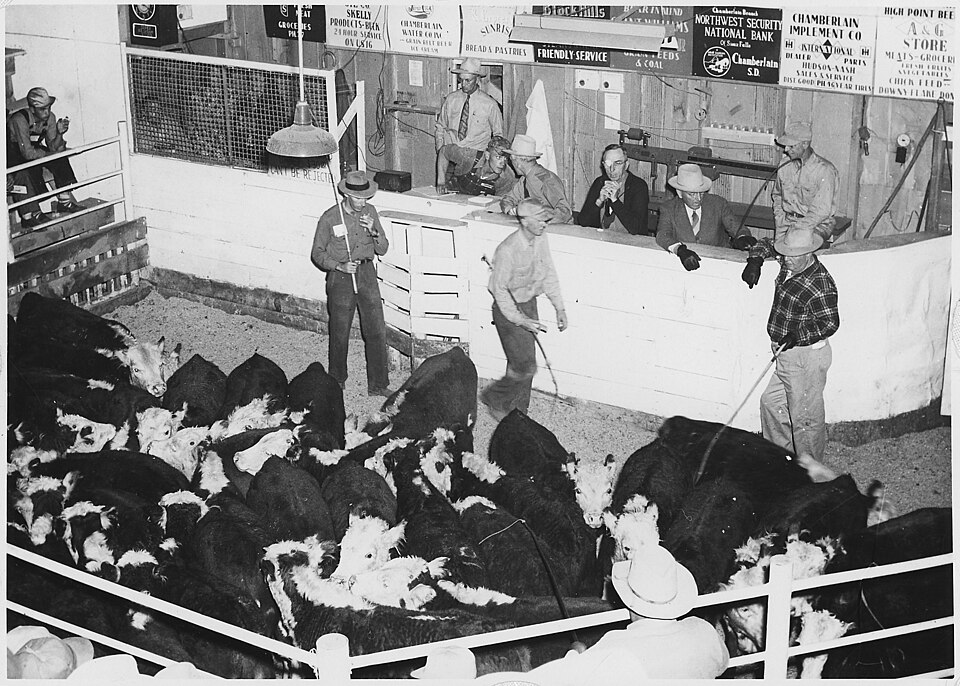
In 1974 a small American producer with six calves hauled them to a sale barn on its fixed weekly day – Tuesday in one town, Thursday in the next – and watched the whole transaction happen in front of him.
The barn’s crew unloaded, inspected, weighed and sorted them into lots with comparable stock from other farms. They went through a thirty-foot ring with steep bleachers on two sides. An auctioneer chanted the price in an unbroken stream that never left a silence anybody could think in. Order buyers working for distant feedlots bid with a nod or a tilt of a hat brim.
And every price was called out loud, in a room full of producers. Here are sixteen things every farmer knew.
1. It Happened on the Same Day Every Week
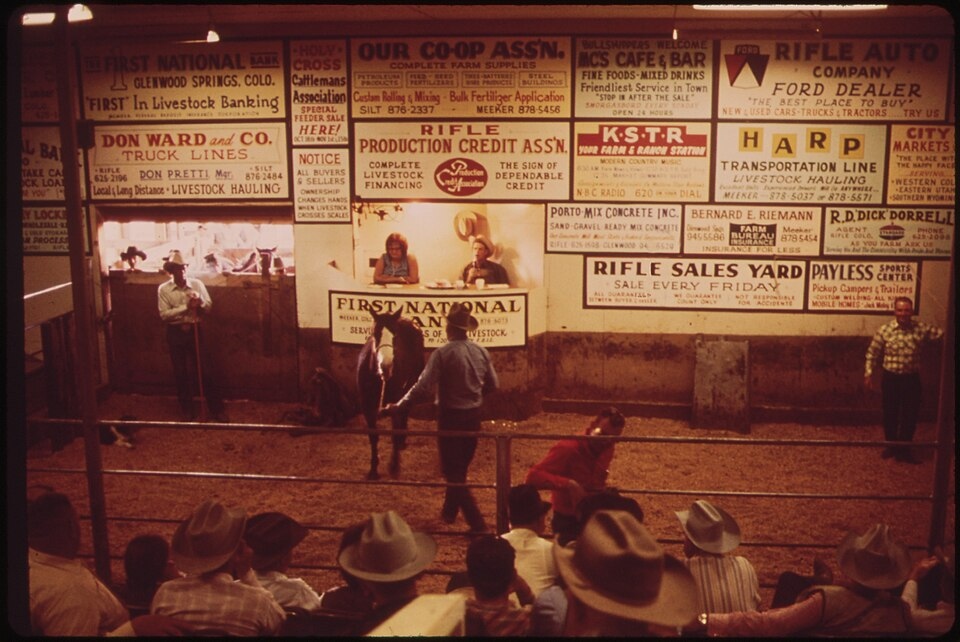
The sale barn ran on a fixed weekly schedule – Tuesday in one town, Thursday in the next – and the whole surrounding agricultural economy arranged itself around those days.
Far fewer barns on far fewer days, with a large share of American livestock now moving through direct arrangements, electronic auctions and video sales that have no day and no place.
The fixity is what made it an institution rather than a transaction. Everybody knew which day was which barn, planned around it, and could count on the same people being there – which turned a market into a weekly appointment.
Like our content? Follow us for more.
2. The Ring Was Small and Everybody Could See It
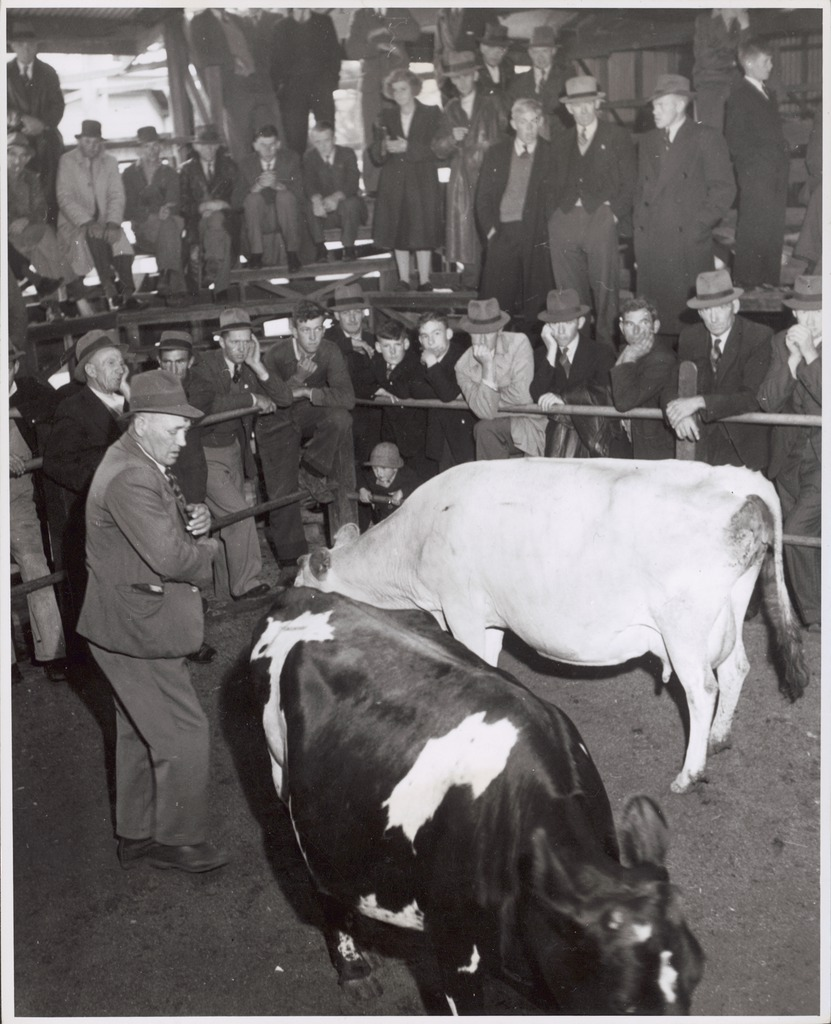
A circular or octagonal pen with a dirt or sand floor, maybe thirty feet across, with tiered wooden bleachers rising steeply on one or two sides and the auctioneer’s box set above the gate.
The surviving barns look much the same, with better lighting and safer walkways, and many of the closed ones have been demolished or converted.
The design is pure function and every element earns its place. Steep bleachers put every buyer within sight of the animal and within earshot of the auctioneer, the small ring forces the stock to turn so they can be seen from all sides, and the raised box lets one man see every bidder at once.
3. The Chant Was a Working Instrument
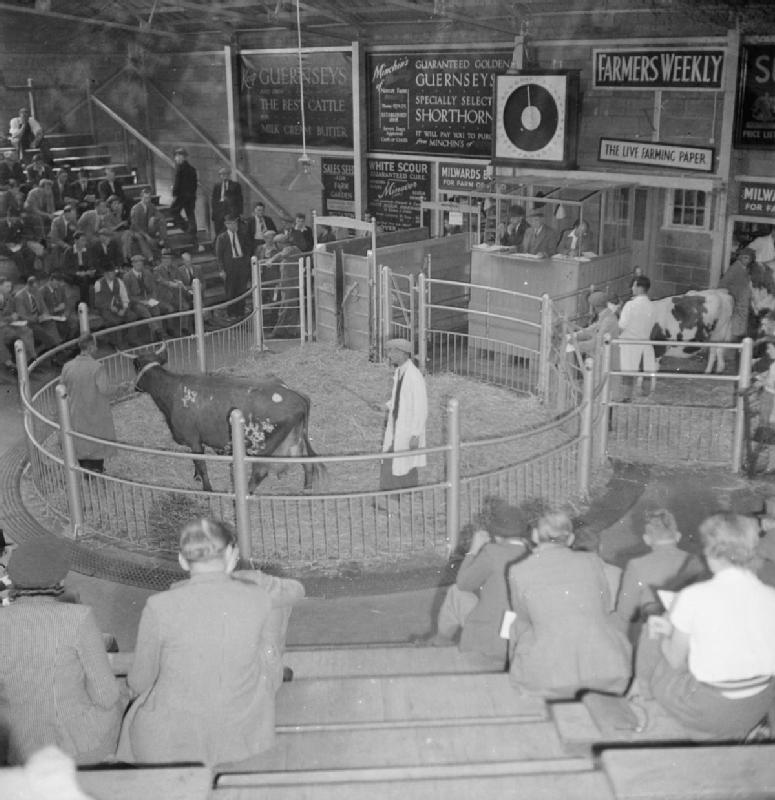
The auctioneer’s rapid rhythmic delivery – numbers interleaved with filler syllables in an unbroken stream – was not showmanship. It was a method for stating a price, inviting the next one, and maintaining urgency without ever leaving a silence a bidder could think in.
Still used, still taught at auction schools, and still the single most recognisable sound of American livestock marketing.
The chant does three things at once and does them well. It communicates the current bid continuously so nobody is ever unsure, it fills the gaps so hesitation becomes conspicuous, and it sets a tempo that keeps a sale of several hundred lots moving through an afternoon.
4. The Bids Were Invisible to Everybody Except the Auctioneer
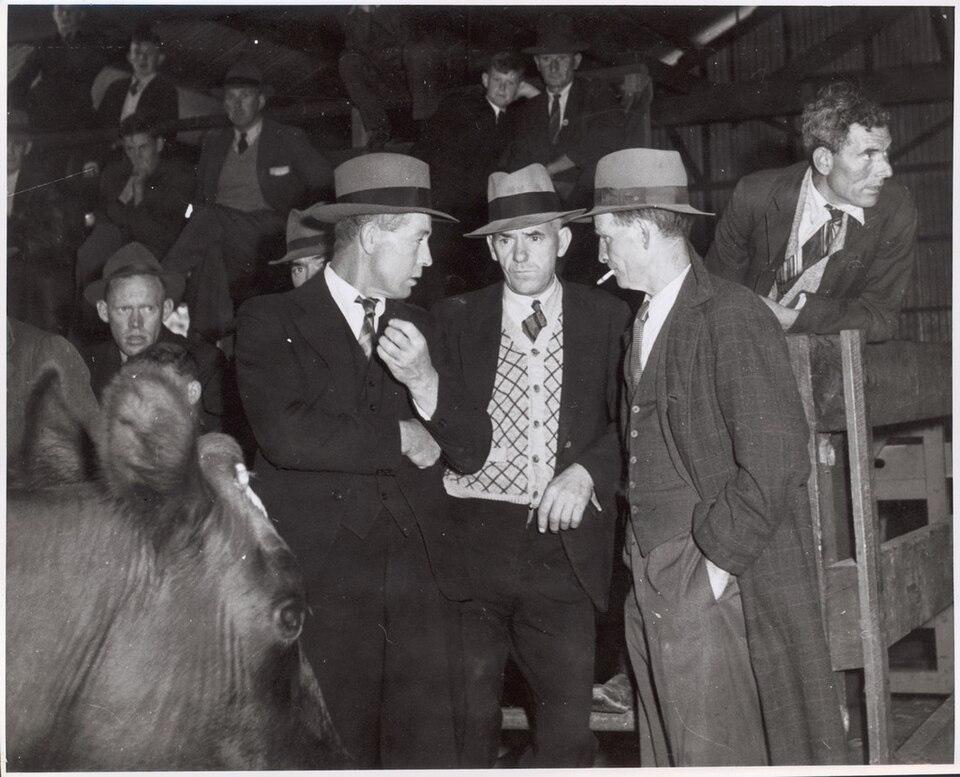
Buyers bid with a nod, a raised finger, a tilt of a hat brim, a tap on the rail or a look – deliberately small signals, read by the auctioneer and by his ring men and by almost nobody else in the building.
The same practice where live auctions survive, alongside electronic bidding where a bid is a click and the register is public.
The subtlety was strategic rather than theatrical. A buyer who does not want competitors to know what he is chasing or when he has stopped keeps his signals small – so the ring men standing at the rail existed specifically to catch what the auctioneer might miss.
5. The Sort Happened Before Anybody Bid
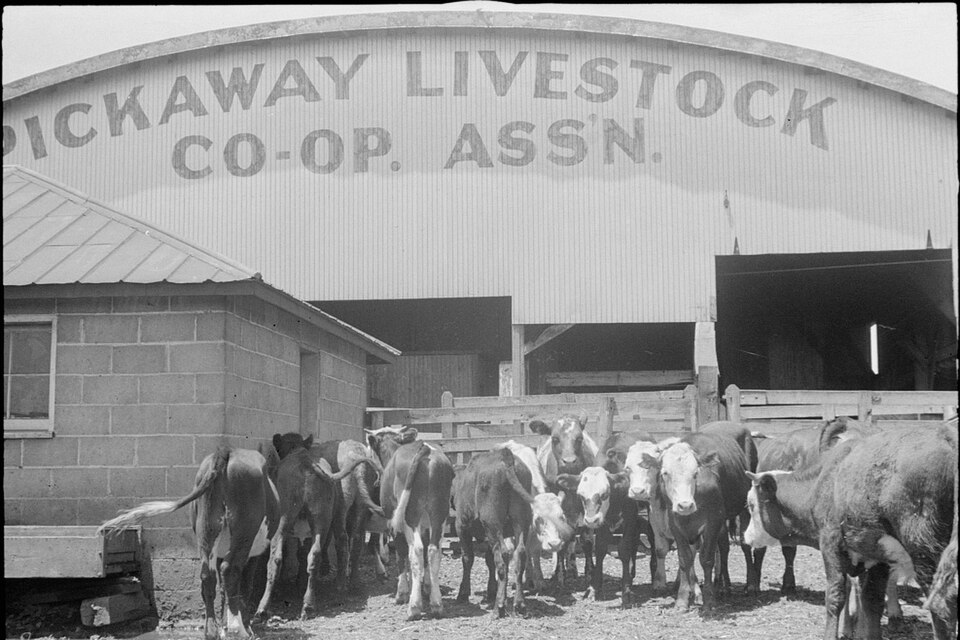
Animals delivered in the morning were unloaded, inspected, weighed and sorted into lots by the barn’s own crew – grouping comparable stock together, because a uniform lot sells for more than the same animals sold as a mixed bunch.
The same practice, with more formal grading, electronic identification and recorded weights.
Sorting is where the barn earned its commission and where it could genuinely help a small producer. A farmer bringing six animals of varying size got them grouped with similar stock from other farms, which put them into a lot that order buyers wanted – something no individual could achieve alone.
6. The Scales Were the One Thing Nobody Argued About
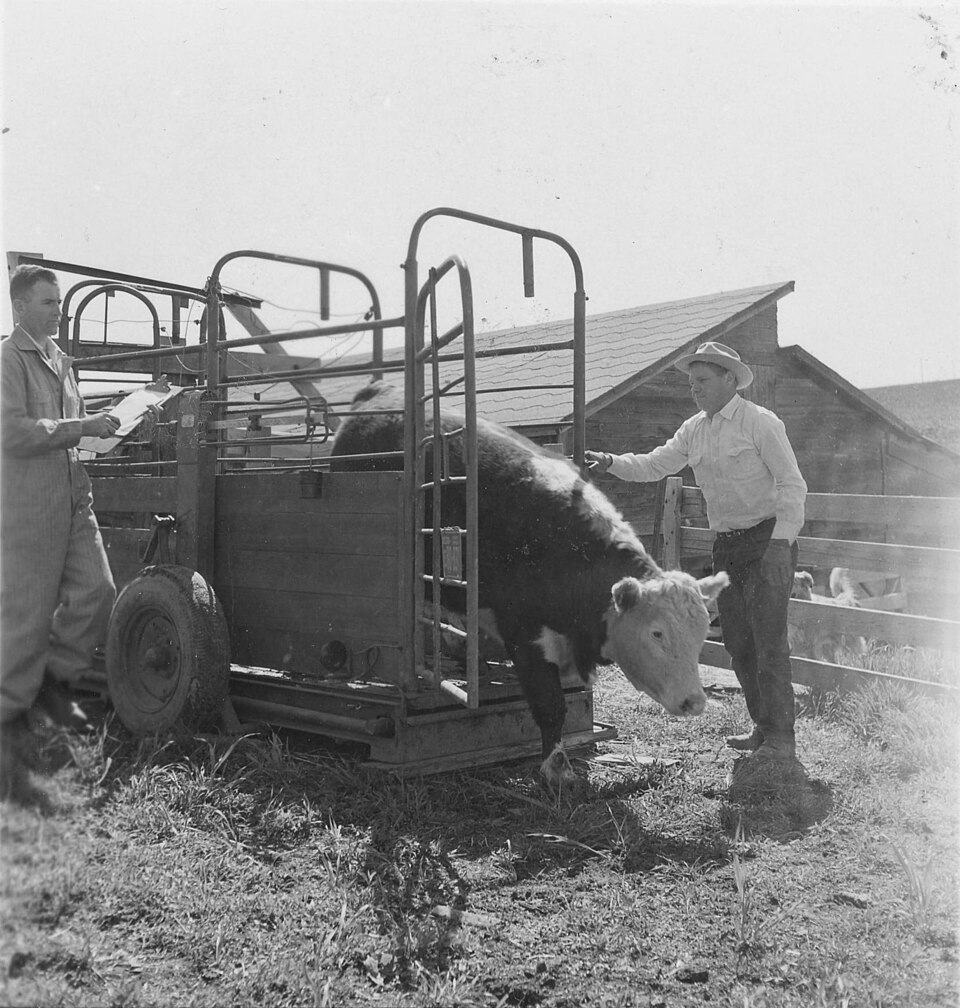
Stock were weighed on a platform scale as they moved through, and the weight was called out and recorded, because almost everything in the building was sold by the pound.
Electronic scales with printed tickets, under the same inspection regime, still the undisputed number in the transaction.
A sale barn is a place where people disagree about value all day and never about weight, and that is because the scales were inspected and certified by the state. Public confidence in one number is what allowed argument about everything else.
7. The Order Buyers Were the Real Market
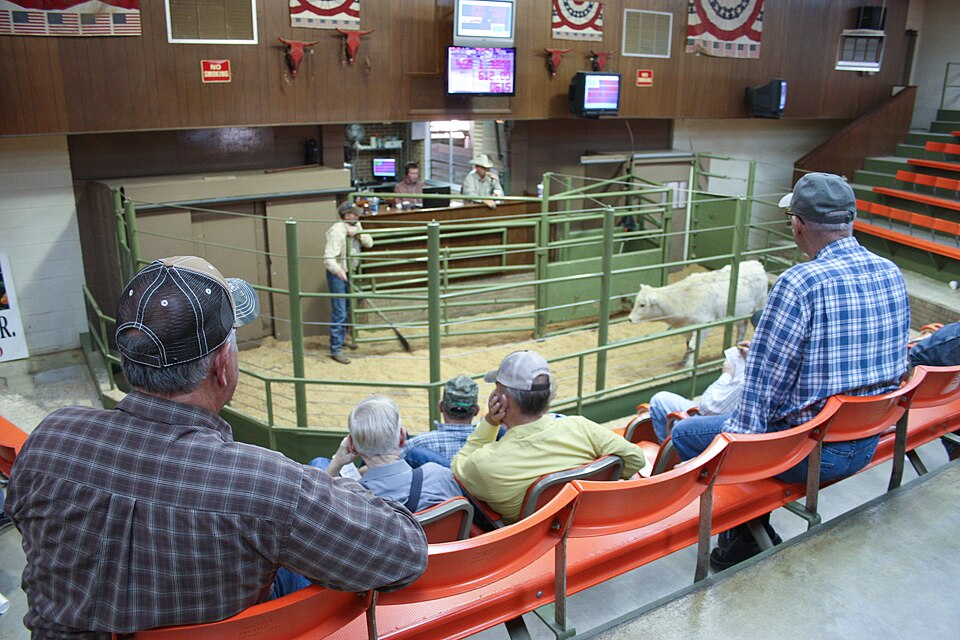
Much of the serious bidding came from order buyers – men purchasing on commission for feedlots, packers and distant operations, working to a specification and a budget, attending barn after barn across a circuit.
Direct procurement, contracts and electronic sales have absorbed most of that function, with far fewer independent order buyers working a circuit.
The order buyers were the connection between a small farm and the national market, and they were professionals. A producer selling six calves in a small-town ring was in fact selling into a continental supply chain, through a man who knew exactly what those calves were worth two states away.
8. The Price Was Public and That Was the Point
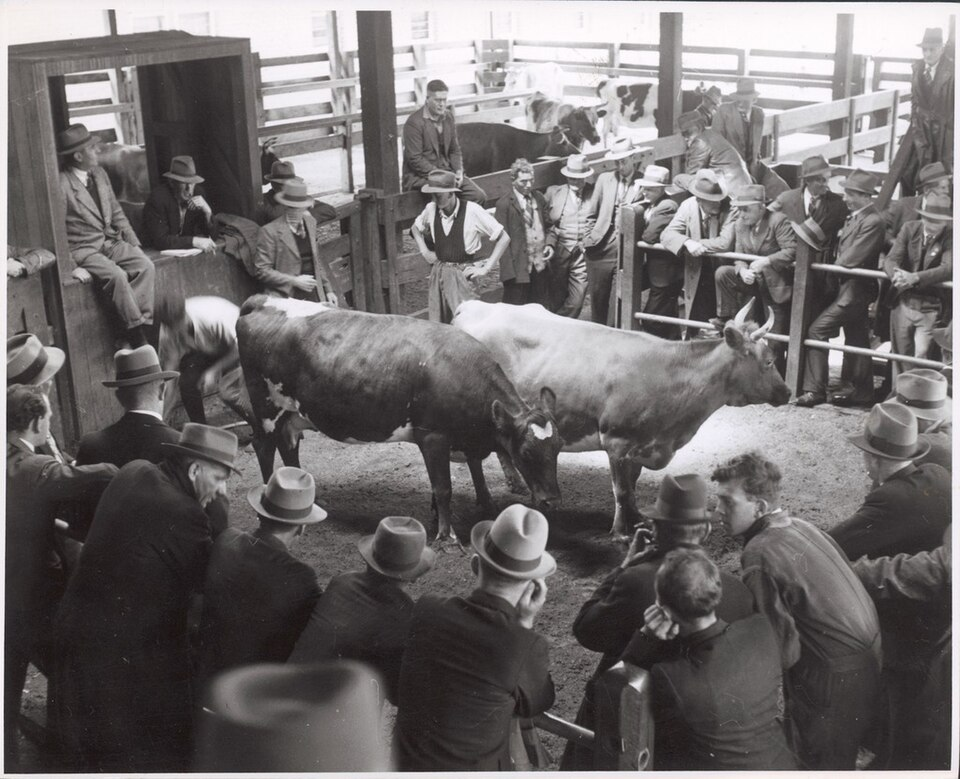
Every bid and every final price was called out loud in a room full of producers, which meant that anybody present knew what stock of a given kind and weight had sold for that day.
Much livestock now moves under private arrangements whose terms are not disclosed, with public auction prices covering a smaller share of the market.
This is the function of a sale barn that gets least attention and matters most. An open auction is a price discovery mechanism – it produces a public number, established by competition, that every seller and buyer in the room can see – and a producer who knows the market price is in a completely different negotiating position from one who does not.
9. The Commission Structure Was Known and Fixed
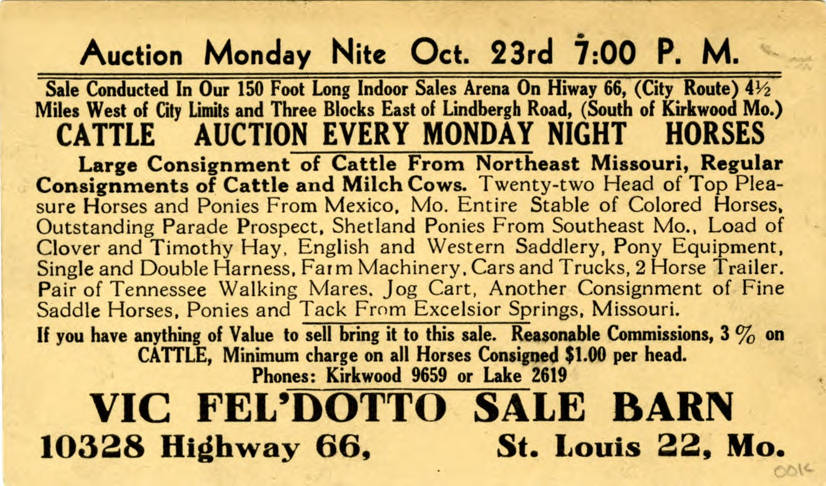
The barn took a stated commission plus yardage, feed and insurance charges, deducted from the proceeds, with a printed settlement sheet showing exactly what had been taken and why.
Broadly the same structure where barns operate, with electronic settlement.
Transparency about the barn’s own cut was essential to its standing. A producer who believed he was being handled fairly came back every week, and a barn with a reputation for unclear deductions lost its consignors to the next town.
10. The Bleachers Were Where the Information Was
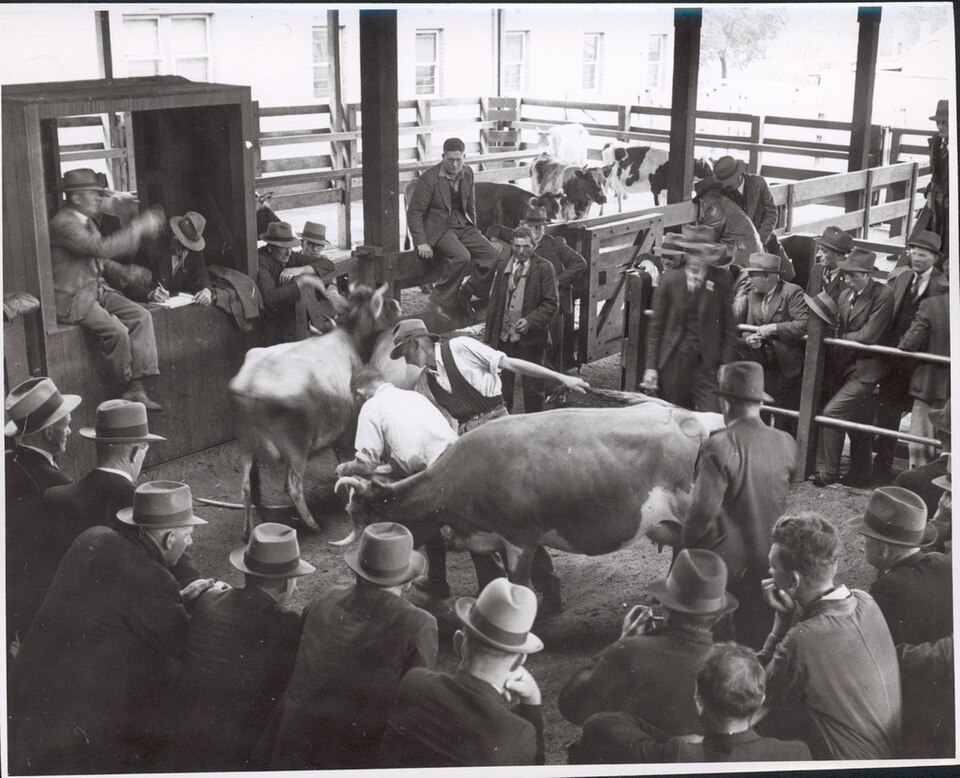
Producers sat for hours watching stock they had no intention of buying, because the bleachers were where you learned what things were selling for, who was buying, what the feed situation was, which bank was lending and what everybody thought about the season.
Market reports, newsletters, market applications and online data that deliver far more numbers and none of the conversation.
The bleachers were an agricultural intelligence service and nobody called them one. A farmer leaving a sale barn had the week’s prices, the local credit climate, three opinions about the weather and the news of four townships, which is a briefing no data feed supplies.
11. The Cafe Was a Serious Part of the Operation
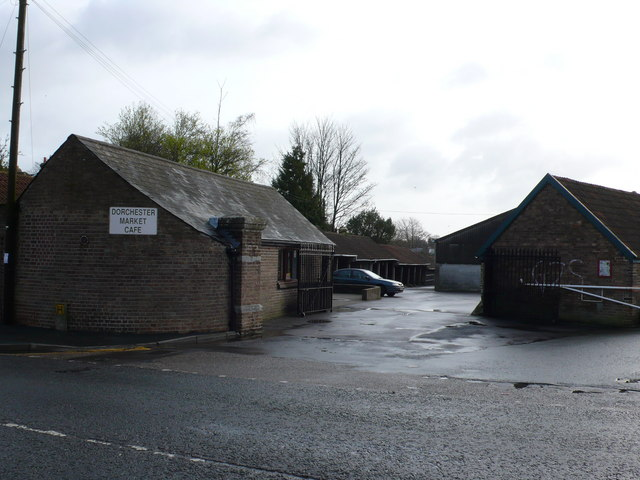
Almost every sale barn had a cafe – a counter and a few tables inside the building, open on sale day, serving a hot plate lunch, pie and coffee to producers, buyers and the barn crew.
Surviving at the remaining barns, frequently with the same menu and the same clientele, and gone entirely where the barns have closed.
The cafe was where the deals around the edges happened. Private sales, trucking arrangements, land talk, hired help and borrowed equipment were all negotiated over coffee at those tables while the sale ran on the other side of the wall.
12. Children Were There and It Was Their Education
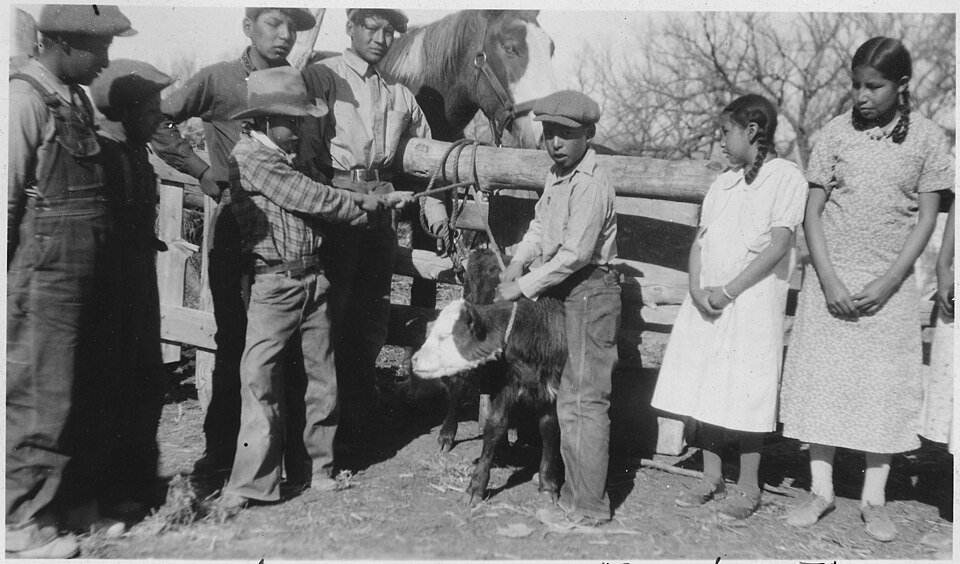
Farm children came along, sat in the bleachers, learned to read the ring, learned what the chant meant, learned what an animal was worth by watching several hundred of them sold – and were allowed to be bored.
Far fewer children present, and the ones who come are more likely to be there for a specific youth programme than for a general working day.
Watching a livestock auction is a remarkably efficient way to learn how a market works. A child who has sat through four hours of bidding has seen supply, demand, quality premiums, buyer competition and price formation demonstrated several hundred times without anybody explaining a thing.
13. Everything Finished Up in a Truck
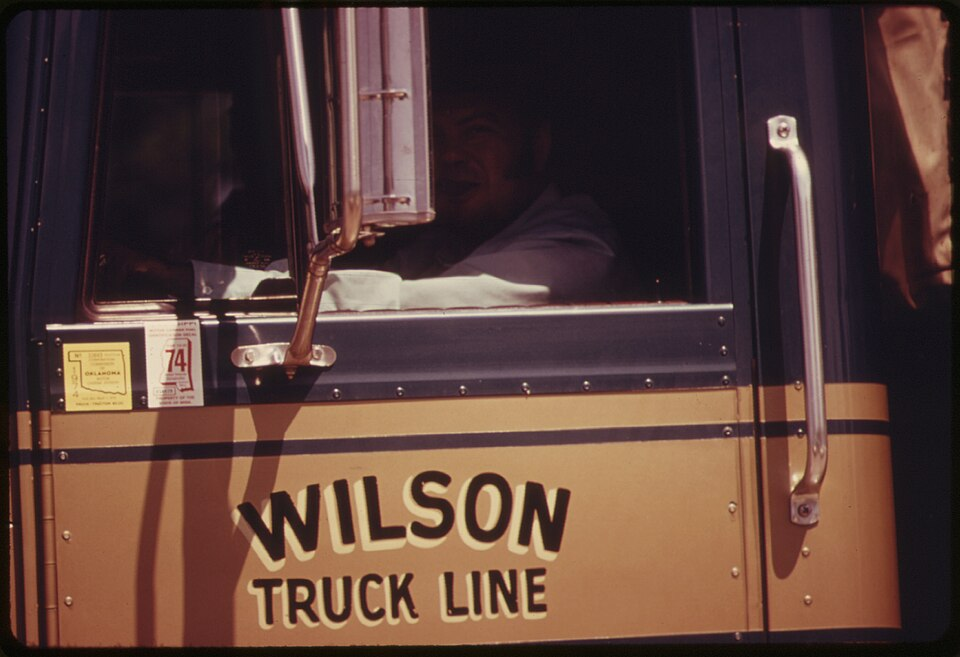
Stock sold through the ring were held in pens, settled for, loaded onto trucks and hauled out that same day – and a sizeable portion of them were going into the food supply, which nobody in the building needed to be told.
The same logistics, considerably more regulated, with more documentation and better transport standards.
Nobody in a sale barn was sentimental and nobody was callous either. It was a market in animals that were being produced for a purpose, conducted by people who had raised them and knew exactly what the sale meant, and the plainness of that was simply the register of the room.
14. A Bad Sale Was a Family Event
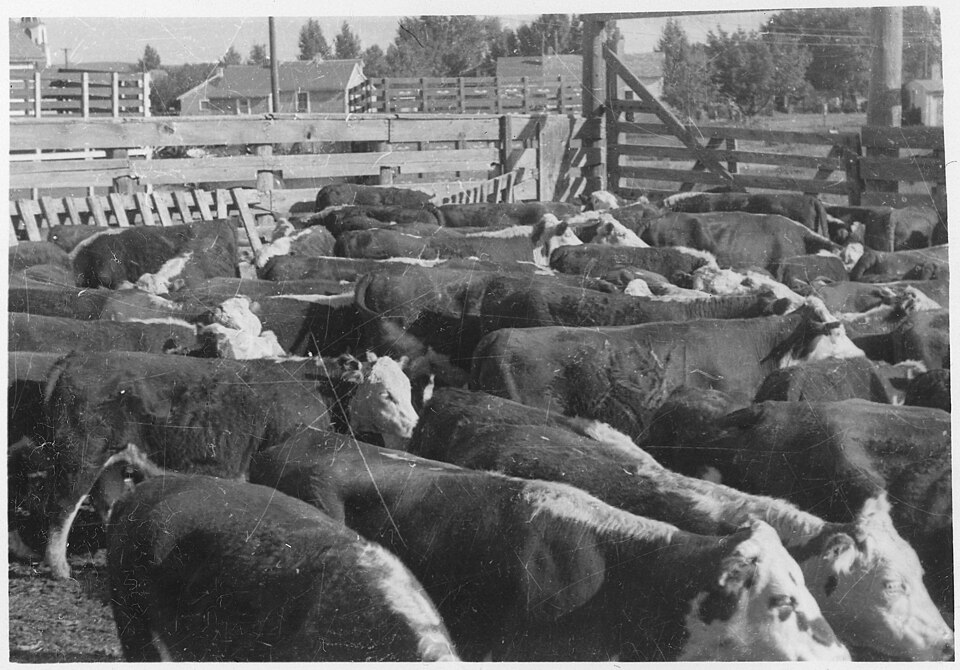
A producer who brought stock on a week when prices were down took the loss, in public, with everybody watching – and walked out through a room full of people who had seen exactly what his animals brought.
Private sale terms mean a poor price is now a private matter, known only to the parties.
That public exposure cut both ways and it is one of the real costs of an open market. A good sale was a visible success and a bad one was a visible setback, in front of neighbours, with no privacy available – which people accepted as the price of being able to see everybody else’s numbers too.
15. The Barn Was Owned by Somebody Local
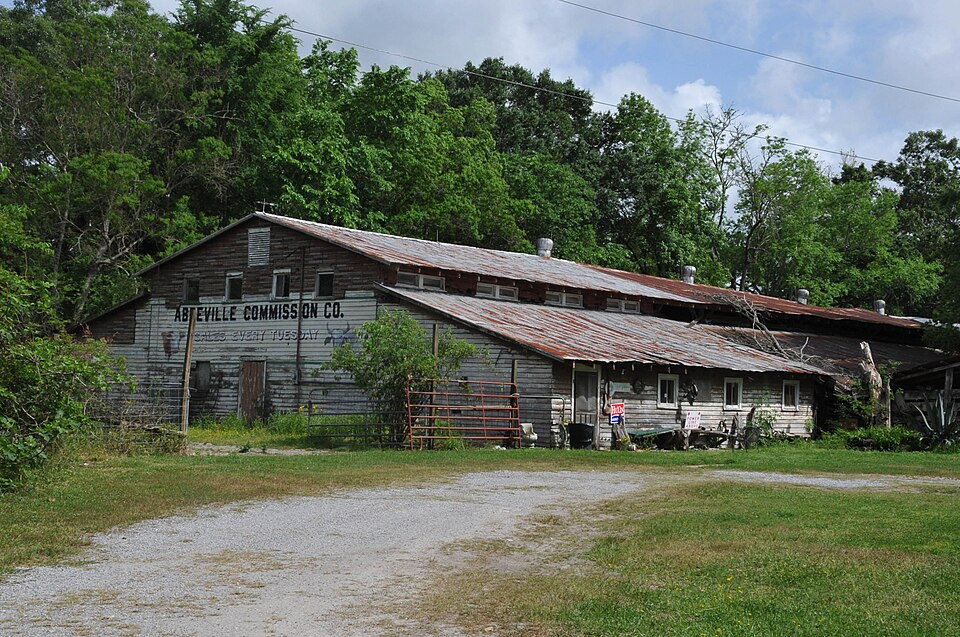
Most sale barns were independent businesses owned by a local family or a partnership, who did the sorting, ran the ring, employed the crew, carried the risk and were personally known to every consignor.
Consolidation into larger operations and chains, alongside the closure of a great many independent barns.
Local ownership mattered because the owner’s reputation was the barn’s only asset. A man who sorted your stock unfairly or settled slowly would be known throughout four counties by the following week, which is a more effective regulatory mechanism than most.
16. Then the Price Stopped Being Public
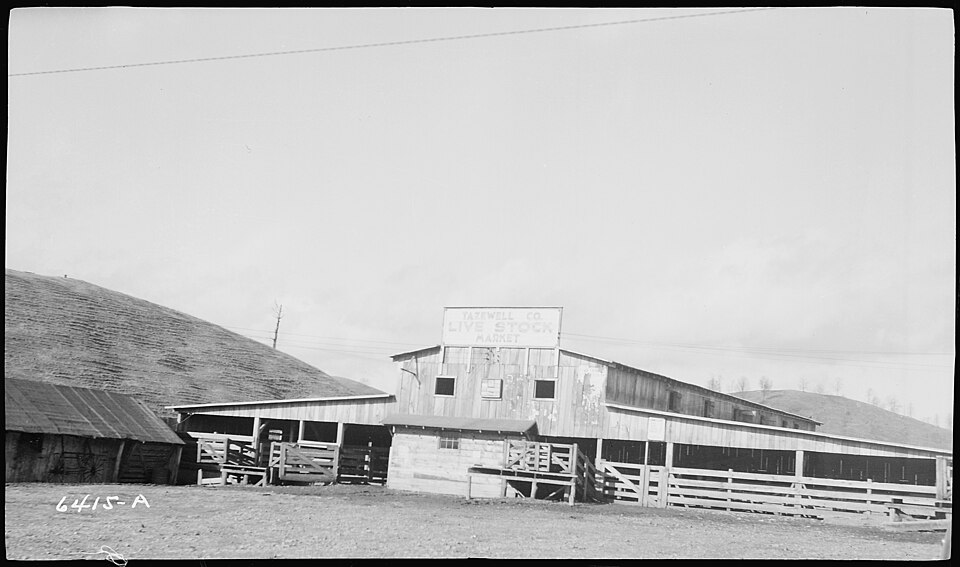
In 1974 a small American producer with six calves loaded them onto a trailer, hauled them to a barn on its fixed day, watched them sorted, weighed and sold in an open ring to competing buyers, and walked out knowing exactly what his animals and everybody else’s had brought.
A large share of American livestock now moves under direct arrangements, contracts, electronic auctions and video sales whose terms are not publicly disclosed, with far fewer barns operating and the open ring covering a smaller portion of the trade.
And the consequence of that is the thing worth understanding, because it is genuinely consequential and not merely nostalgic. The modern system is more efficient by almost every measure. Hauling animals to a ring is hard on the stock, costly in fuel and labour, and electronic and video marketing lets a buyer see cattle without moving them at all, which is better for the animals and cheaper for everybody. Direct arrangements give a producer certainty about price and delivery that an auction cannot, which matters enormously when a year’s income depends on one sale. Nobody should pretend the sale barn was a superior mechanism for moving livestock. But the open ring was doing a second job that the efficient replacements do not do, and that job was producing a public number. An auction in a room full of producers generates a price set by competition, in the open, that every seller present can see and use – and a producer who knows the going rate negotiates from a completely different position than one who does not. As more of the trade moved into private arrangements, the public price covered less of the market, which means the number a small producer uses to judge whether an offer is fair is derived from a shrinking and less representative sample. That is a live and genuinely contested question in American agriculture, with serious people on several sides of it, and this piece takes no position on it and names no party. What it can say is narrower and not in dispute: the building where a farmer could watch the whole local market set its own price out loud, in front of everybody, mostly is not there any more – and neither is the bleacher conversation, the cafe table, the child learning economics by watching, or the man who owned the place and had to look you in the eye next Tuesday.
The Efficient Replacement Does Not Produce a Public Number
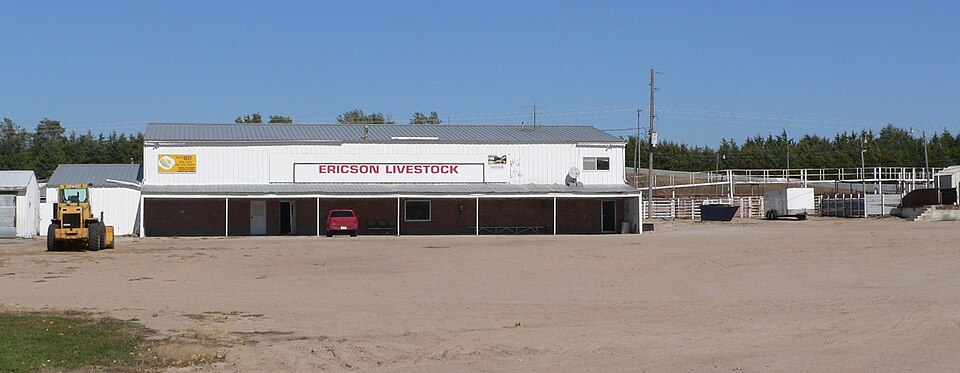
It would be easy to write this as a lament for a disappearing institution, and that would miss the actual argument.
The modern system genuinely is better at moving livestock, and it is worth being specific about why.
Hauling animals to a ring is hard on the stock. It means loading, transport, unloading, mixing with strangers’ animals, standing in pens, moving through a ring and loading again – all of which is stressful, costs weight, and carries real risk of injury and disease transmission. Video and electronic marketing lets a buyer evaluate cattle where they stand and buy them without any of that, which is better for the animals and cheaper in fuel, labour and shrink for everybody involved.
Direct arrangements and contracts also give a producer something an auction structurally cannot: certainty. Knowing in advance what you will be paid and when you will deliver is enormously valuable when a year’s income depends on a handful of sales, and a producer who has locked in a price is insulated from the week his animals happen to be ready coinciding with a bad market.
So nobody should pretend that the weekly sale barn was a superior way to market livestock. On the narrow question of getting animals from a farm to a buyer, it has been improved on.
The complication is that the open ring was doing a second job, and the improvements do not do it.
An auction conducted out loud in a room full of producers generates a price. Not an estimate or a report – an actual transaction price, set by competition between buyers who all want the animal, witnessed by everybody present. And once that number exists in public, every seller in the room can use it. A producer who has just watched forty lots of comparable stock sell knows precisely what his own are worth, knows what a fair offer looks like, and knows immediately if somebody is trying it on.
That is called price discovery, and it is a public good produced as a by-product of a private transaction.
As a growing share of American livestock moved into direct arrangements whose terms are not disclosed, the proportion of the trade visible in public auction prices got smaller. Which means the number a small producer reaches for when deciding whether an offer is reasonable is now derived from a narrower slice of the market than it used to be.
Whether that matters a great deal or only a little, and what if anything ought to be done about it, is a live and sharply contested question in American agriculture with serious people on several sides. This piece takes no position on it, names no company, no organisation, no official and no proposal.
What is not in dispute is narrower and is enough.
The building is mostly gone. And the building was not only a market. It was the bleachers where a farmer picked up the week’s prices, the local credit climate, three opinions about the weather and the news of four townships in an afternoon. It was the cafe where the trucking was arranged and the land talk happened. It was where farm children learned how a market works by watching several hundred demonstrations of it without anybody explaining anything. And it was owned by somebody who sorted your stock, took his stated commission, and had to see you again the following Tuesday.
None of that was the point of the barn. All of it came with the barn, and when the barn closed it went too.
If you ever sat in those bleachers, you can still hear the chant and you know the smell of the alley.
And you know whose barn in your county set a fair sort and whose did not, because everybody knew.
Like our content? Follow us for more.
