In 1964 the hatchery catalogue came in the January mail, and a farm household sat down and chose breeds – weighing laying ability against size, because most flocks were dual purpose and the farm wanted eggs and meat from the same birds.
The order named a week. Not a date for convenience, but a week worked backwards from when the household wanted eggs, through the months a pullet takes to come into lay.
Then the post office telephoned to say the box had arrived, and you could hear it from the lobby. Here are fifteen things every child knew.
1. The Catalogue Came in January
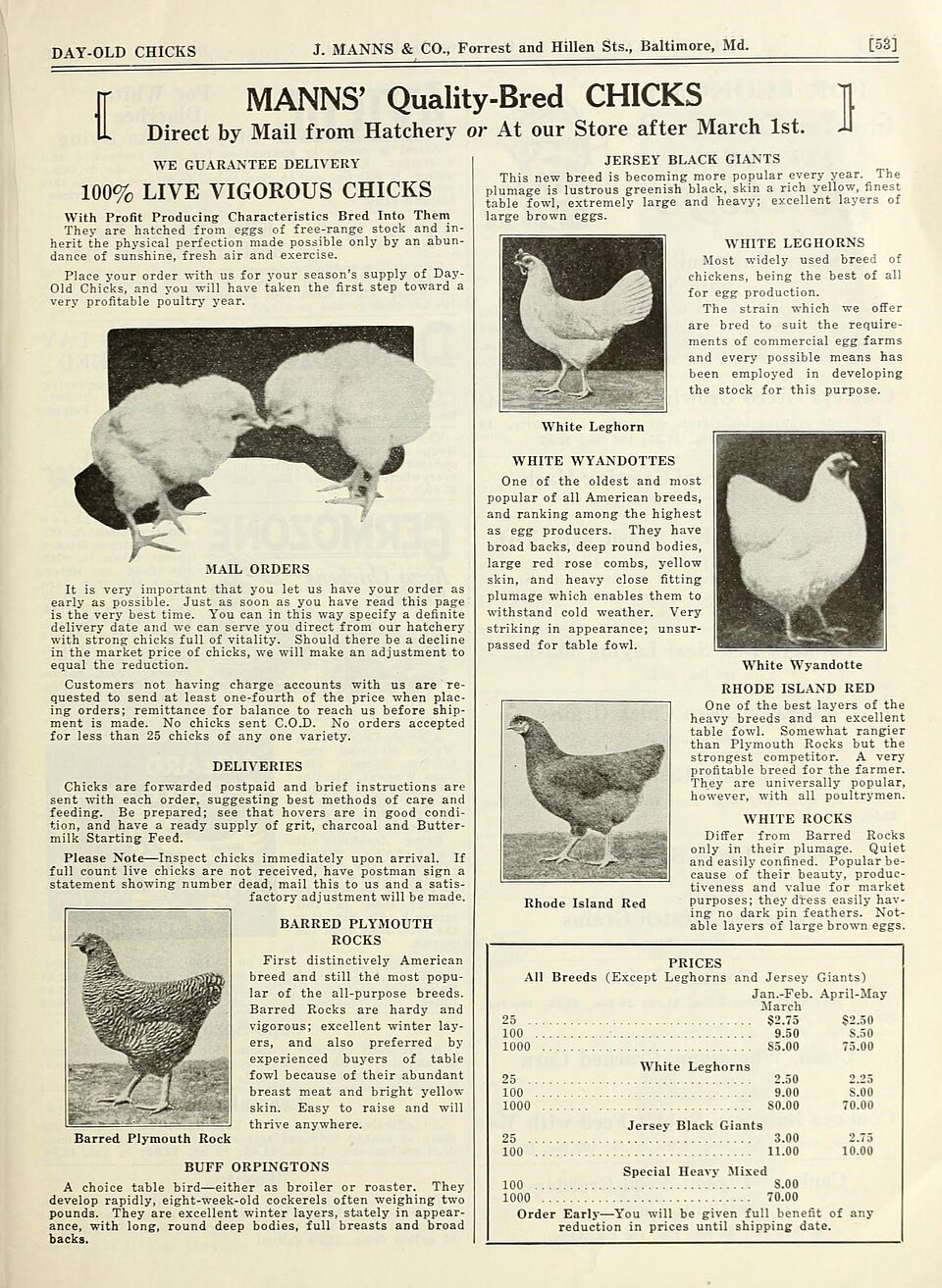
A hatchery catalogue arrived in the winter mail – printed in colour, listing breeds with descriptions of laying ability, temperament, hardiness and appearance, with prices by the hundred and an order blank in the back.
The same hatcheries, many of them the same businesses, selling the same way online with photographs and a shopping cart, plus a far larger catalogue of breeds.
The winter catalogue was a serious piece of household planning rather than light reading. Choosing breeds meant deciding what the flock would do for the next two years, and the comparison between a heavy dual-purpose bird and a light laying breed was a real economic judgement.
Like our content? Follow us for more.
2. You Ordered by Mail and Named a Week
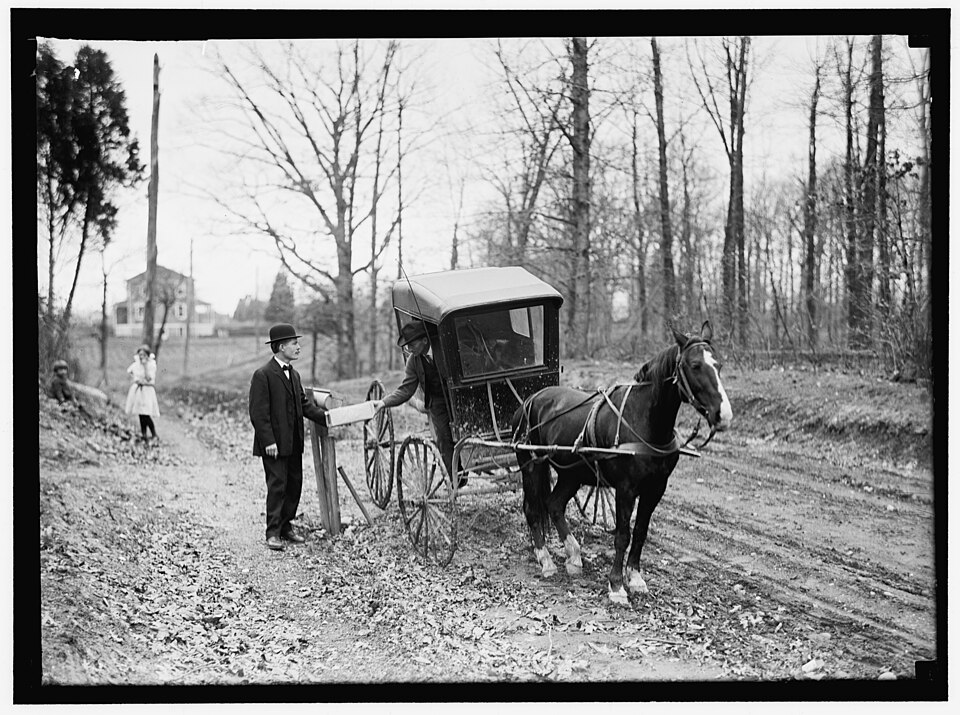
An order went off with a cheque, specifying quantity, breed, whether you wanted them sexed, and the week you wanted them to arrive – timed so that pullets would come into lay when you wanted eggs.
Online ordering with a selected hatch date, which is the same decision made on a screen.
Naming the arrival week is the part that reveals how deliberate the whole thing was. A household was working backwards from when it wanted eggs, through the months a pullet takes to start laying, to a hatch date in spring – which is planning a production cycle, not acquiring pets.
3. They Travelled as Ordinary Mail in a Cardboard Box
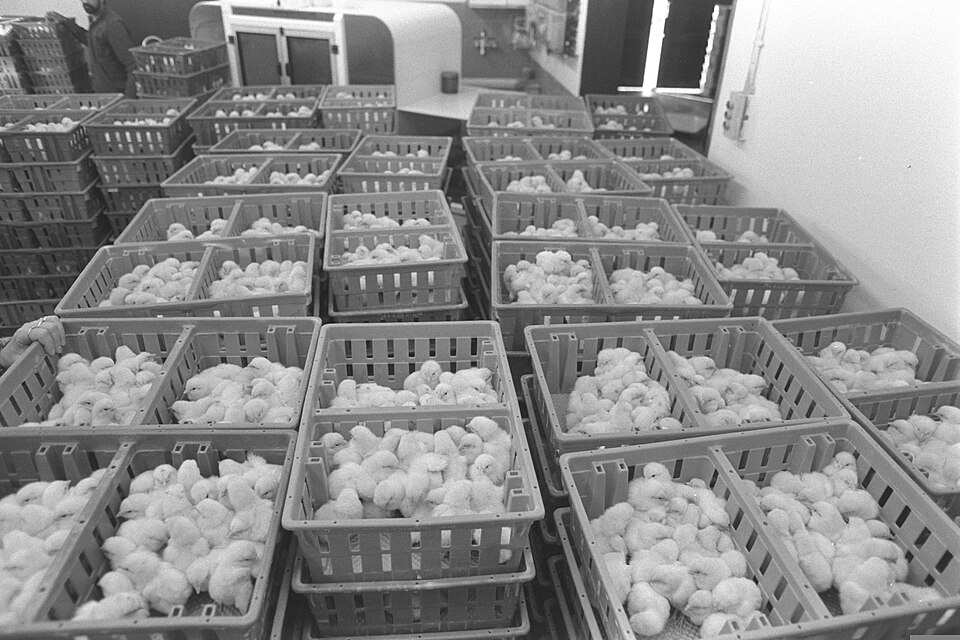
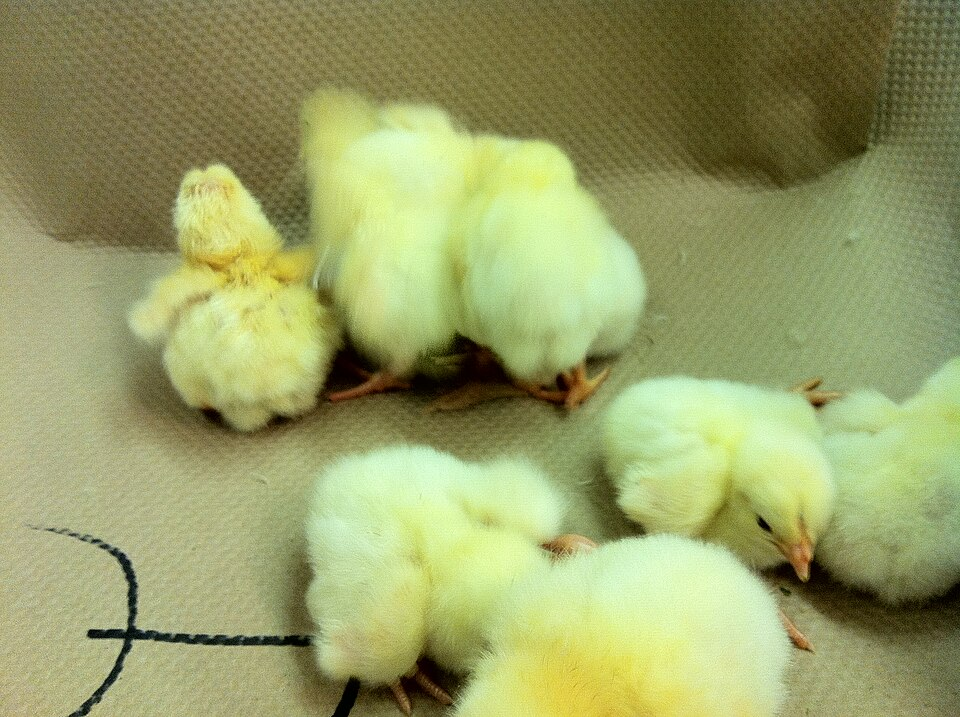
Day-old chicks shipped in a flat corrugated box with ventilation holes around the sides and a divided interior, carried as mail through the ordinary postal system alongside the letters and parcels.
Still shipped the same way, in much the same box, through the same postal system – one of the very few live animals the American mail has ever carried as routine freight.
This is genuinely remarkable and almost nobody finds it remarkable because it is so familiar. A national postal service carrying live birds as standard freight, for over a century, with the box essentially unchanged, is an unusual arrangement that exists because of one specific fact of biology.
4. The Reason It Works Is the Absorbed Yolk
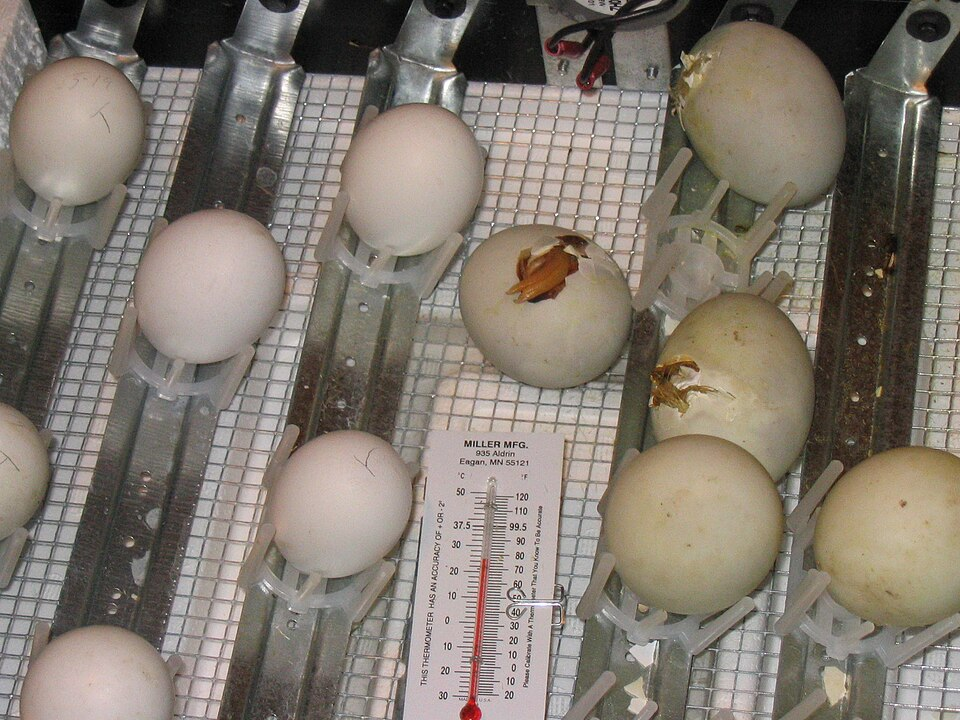
A chick absorbs the remainder of its yolk just before hatching, which gives it an internal food and water reserve sufficient for a couple of days – which is exactly long enough to be put in a box and delivered.
Identical biology, with the same window, and shipping schedules built around it.
The entire mail-order poultry industry rests on that reserve and would be impossible without it. A newly hatched chick is, briefly, a self-provisioned animal – and the postal system’s ability to move something a reasonable distance in that window is what makes the whole trade exist.
5. The Post Office Telephoned and You Went In
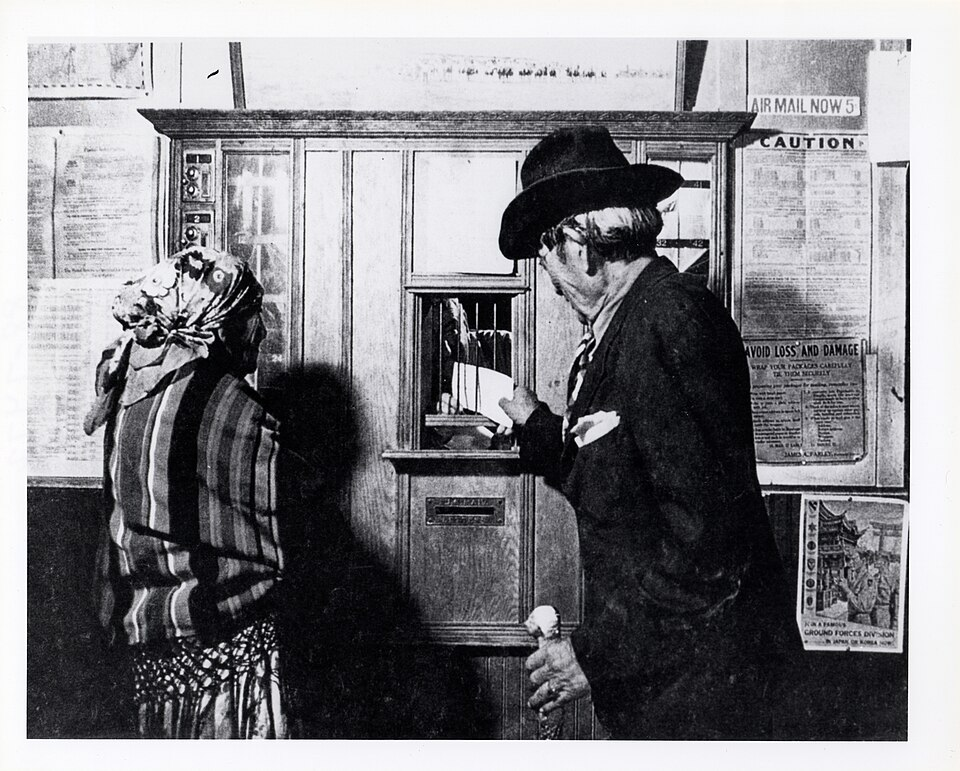
Chicks were not delivered to the farm. The post office called the household to say the box had arrived, and somebody drove into town immediately to collect it.
The same practice in most places, with the call now frequently a text message, and collection still expected promptly.
Prompt collection was the whole arrangement and everybody understood why. A box of chicks sitting in a post office is on a clock, and both the postal staff and the household treated it as the single most urgent item in the building.
6. You Could Hear Them From the Lobby
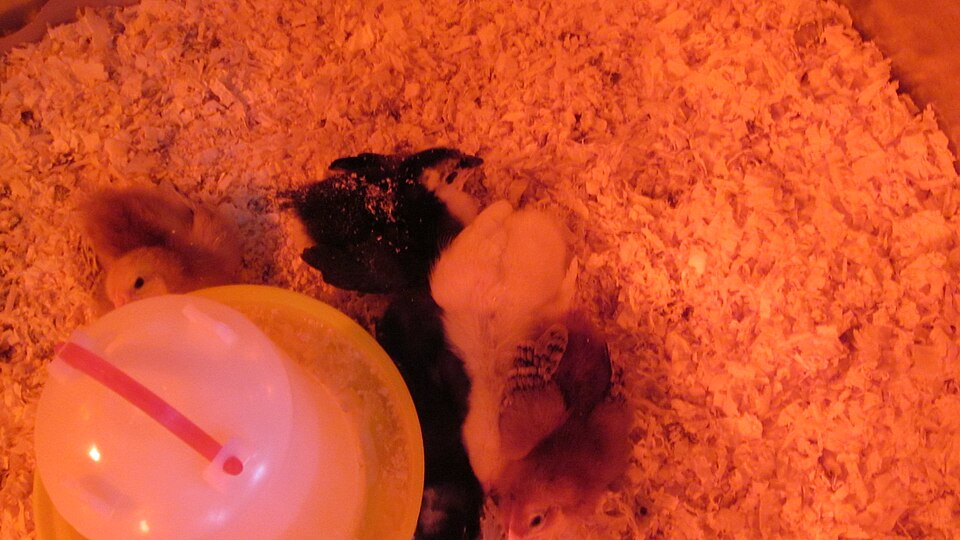
The sound of several hundred chicks in a box carried through a small post office, which meant everybody in the lobby knew what had come in and whose it was.
Still the case where small post offices survive.
That sound in a public building is one of the most specific sensory memories American farm children report, and it marked a date. Chicks arriving meant spring had started, in a way that no calendar did.
7. The Box Was Opened on the Kitchen Table
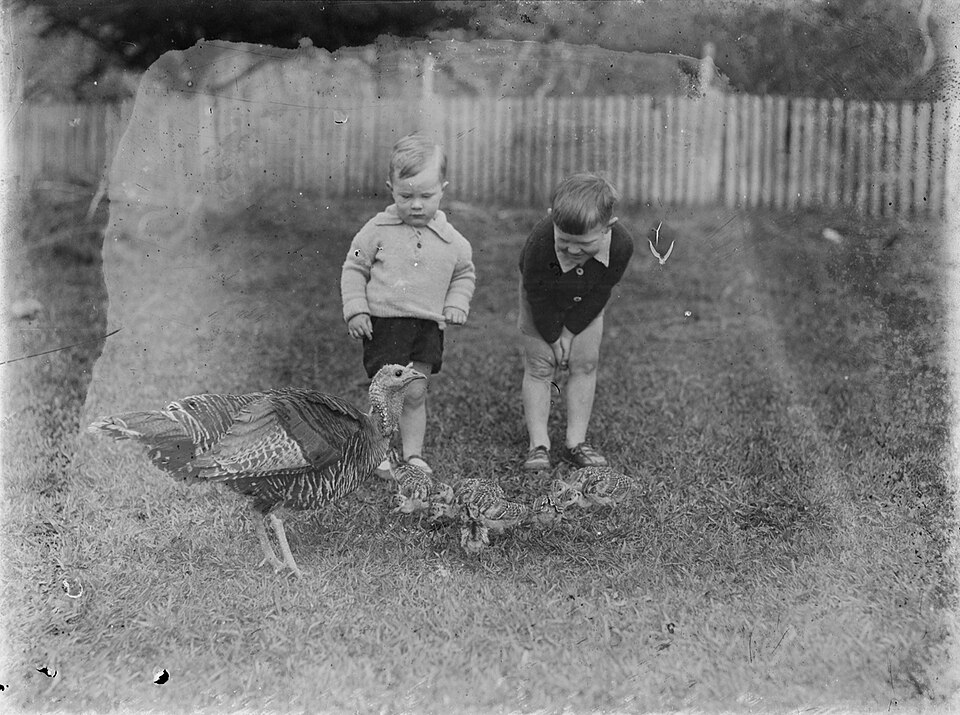
The lid came off indoors, in the warm, with the whole family around it – and the chicks were lifted out one at a time and counted into the prepared brooder.
The same, and now one of the most photographed moments in household poultry keeping.
Counting them out was both an inventory and an inspection, and it was done by the whole household because everybody wanted to. For children it was the single best day of the agricultural year, and a great many Americans can still describe the smell of that box.
8. The Hatchery Always Sent Extras
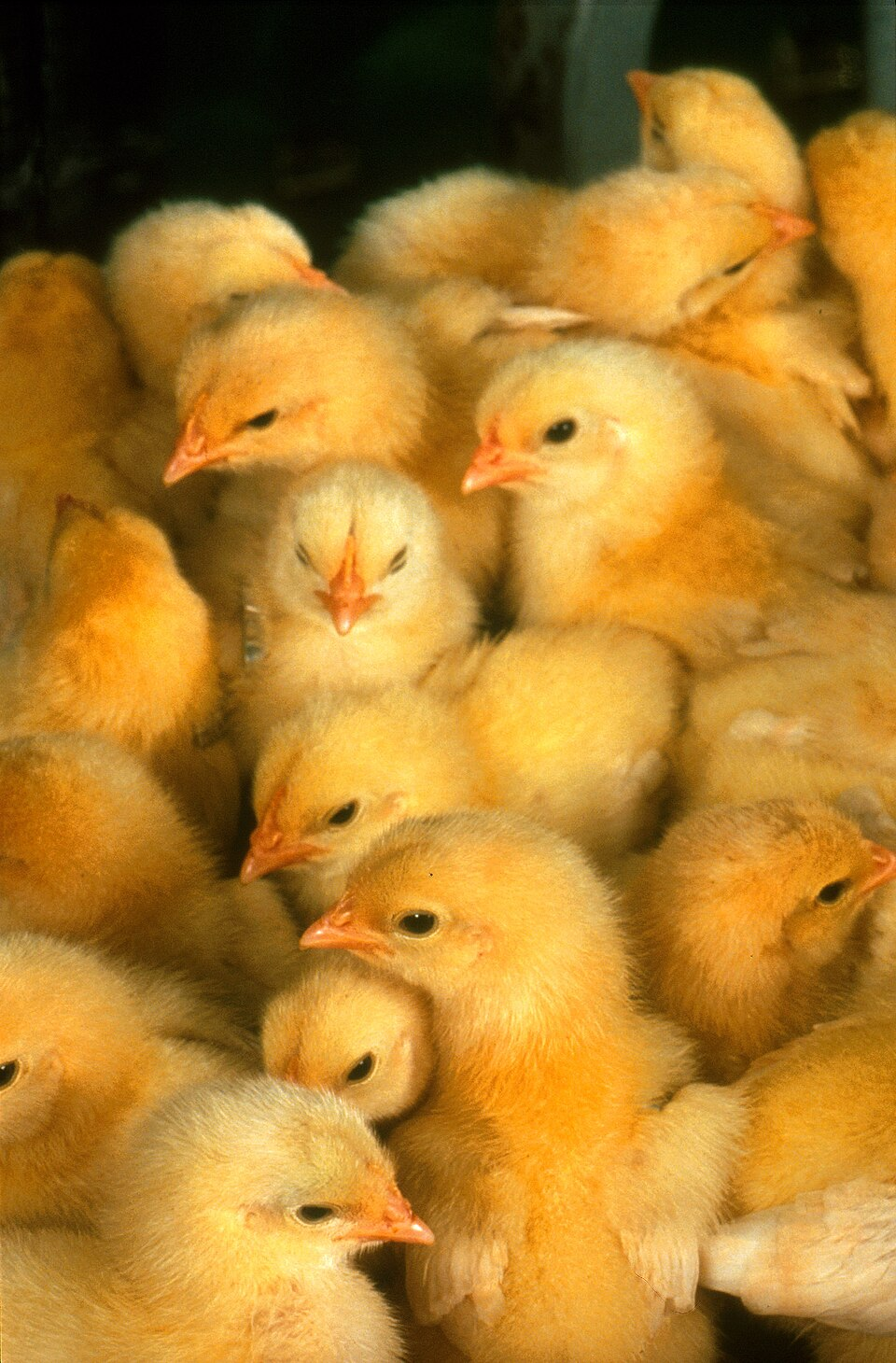
Orders routinely arrived with a few more chicks than had been paid for, included deliberately to cover losses in transit, and frequently with an unrequested bird of another breed thrown in.
The same practice continues, with order minimums and seasonal rules now explained up front.
The extras were commercial good sense rather than generosity and everybody knew it. A hatchery guaranteeing live arrival is cheaper sending two spare birds than processing a claim, and the odd unrequested breed was a sample intended to sell you something next year.
9. Sexing Was a Specialist Skill and You Paid for It
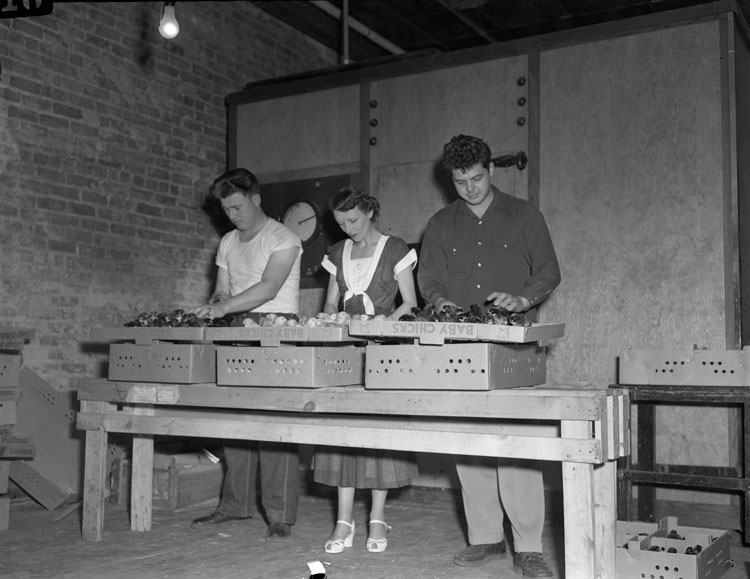
Orders came as straight run – whatever hatched – or as sexed pullets or cockerels, at a higher price, because determining the sex of a day-old chick requires trained examination that very few people can do.
The same options at the same price differential, with the work still done by trained specialists and increasingly supplemented by breeding that makes sex visible from colour at hatch.
Chick sexing is one of the most genuinely difficult manual skills in any industry and it has an unusual history. It was developed to a high standard in Japan, taught through formal schools, and practised internationally by specialists who travelled between hatcheries – a small, highly paid, almost invisible profession.
10. The Brooder Had to Be Ready Before They Came
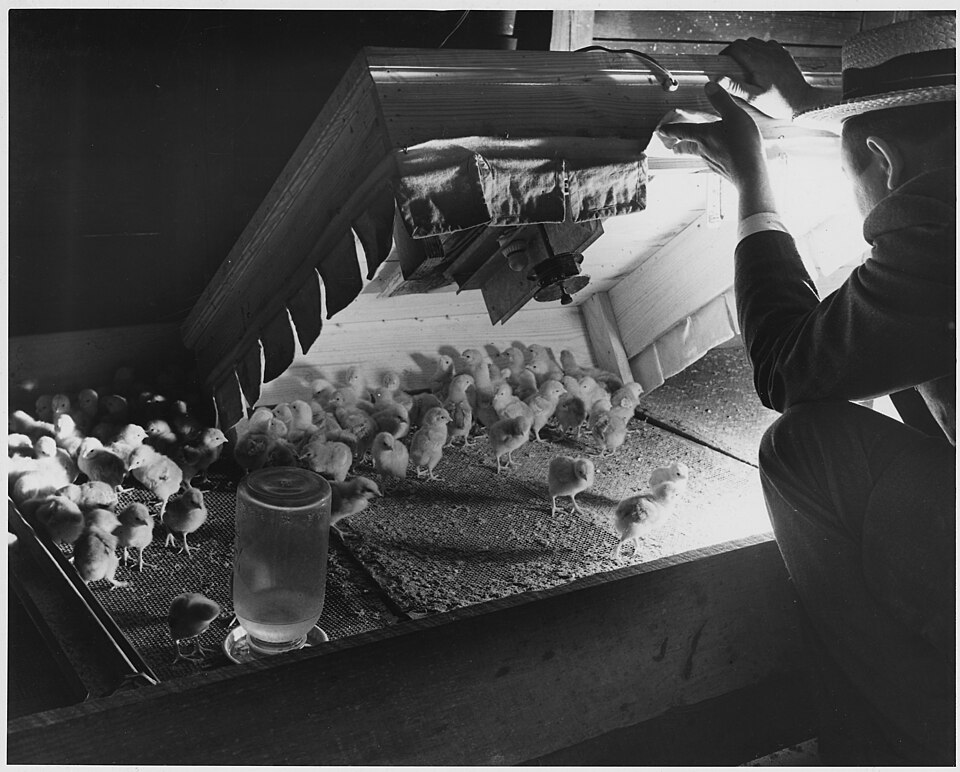
A heated space – under a lamp, a hover, a stove or a purpose-built brooder – had to be set up, warm and working before the box arrived, with a surrounding ring to keep the chicks near the heat.
The same requirement with better equipment, and a great deal of current authoritative guidance on temperatures, space and management.
This piece names no temperature, space allowance, feed, water arrangement or management practice, because raising poultry is properly a matter for current authoritative guidance from extension and veterinary sources. The historical point is only that the preparation had to be complete before the mail arrived, which made the ordered arrival week a deadline.
11. Fifty to a Hundred Was a Household Order
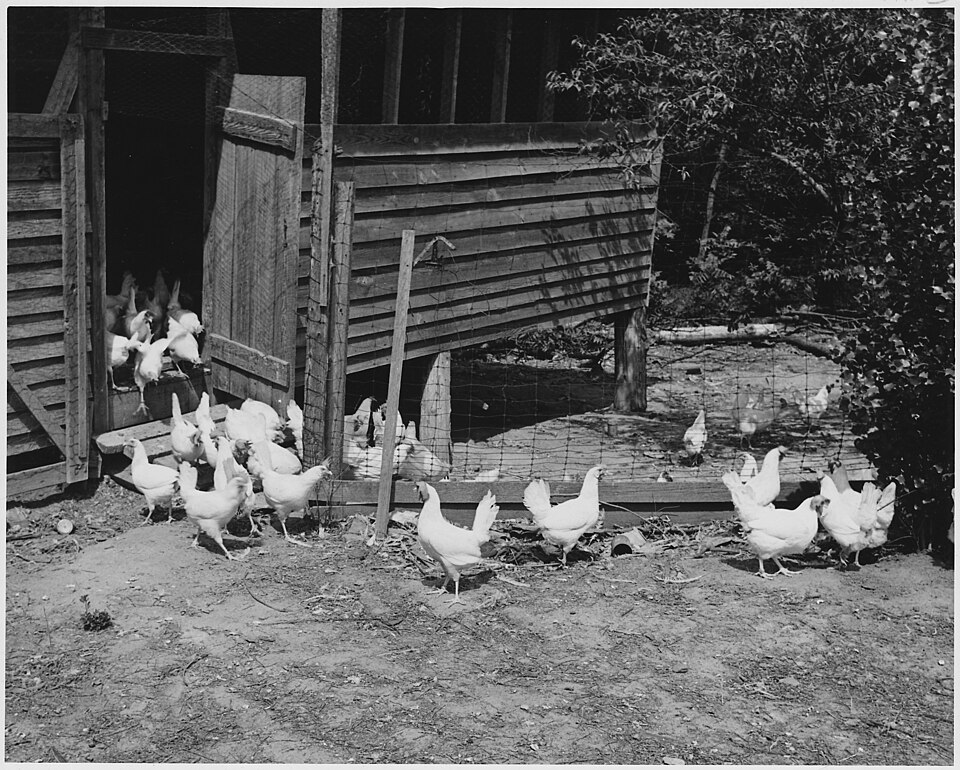
A farm household ordered on a scale matched to its own needs – enough pullets to supply the family’s eggs and a surplus to sell, plus cockerels to be raised for the table.
Hatcheries now serve two markets at opposite extremes: commercial operations ordering in enormous volumes, and backyard keepers ordering a handful.
That middle scale is the thing that has gone, and it was the standard case. A flock sized to feed a family and produce a saleable surplus is neither a hobby nor an industry, and it was the most common form of American poultry keeping for generations.
12. The Catalogue Breeds Were Dual Purpose
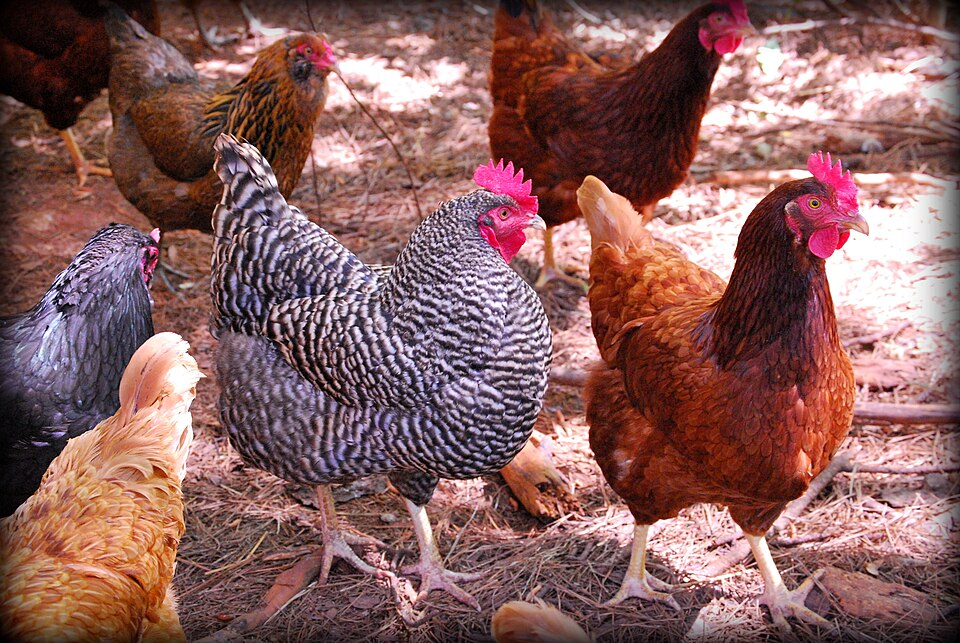
Most of what a 1964 household ordered were breeds that laid reasonably well and also grew into a bird worth eating – a compromise chosen deliberately, because a farm wanted both outputs from one flock.
Commercial production uses highly specialised strains, with laying birds and meat birds developed along entirely separate lines and neither suited to the other purpose.
The specialisation is a genuine efficiency gain and it also explains why the old breeds became heritage stock. A bird that is good at two things is beaten at each of them by a bird designed for one, and once production split, the compromise breeds had no commercial role left.
13. Losses Happened and Were Covered
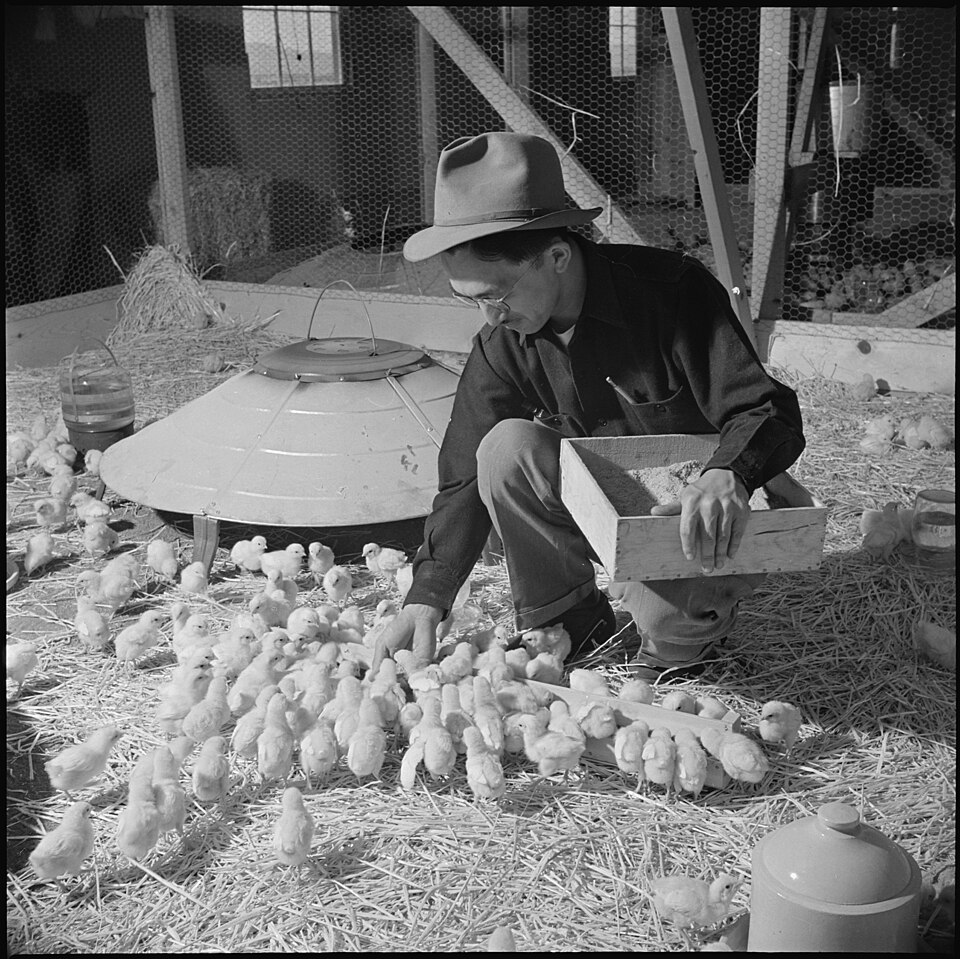
Some chicks arrived dead, and hatcheries guaranteed live delivery – replacing or crediting losses on a reported count, which was part of the standard terms.
The same guarantees, with the same reporting requirement and the same standard terms.
The guarantee is what made ordering live animals by post a reasonable thing for a household to do. Without it the risk sits entirely with a customer who has no control over anything that happens between the hatchery and the post office.
14. The Whole Thing Was Timed to the Egg Cheque
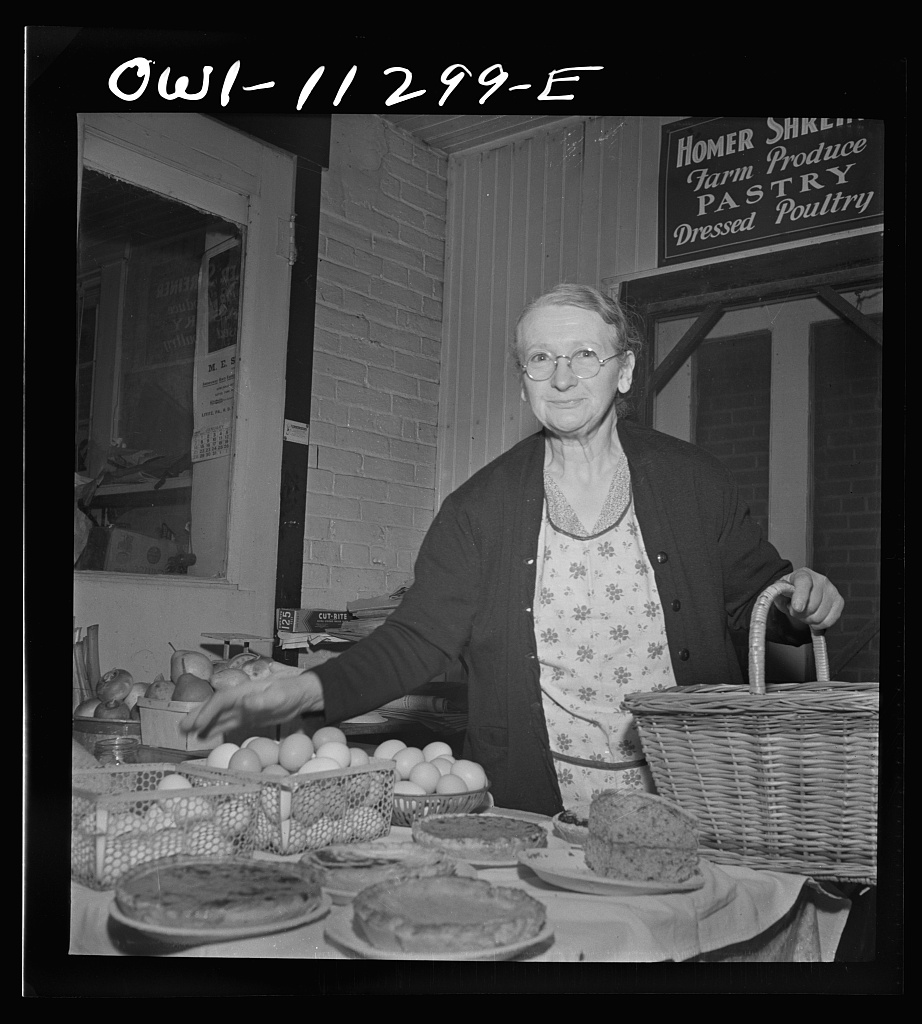
The point of a spring order was a flock coming into production by late summer, so that eggs were being sold through the autumn and winter when prices were better and the household needed income.
Not applicable at household scale, with commercial production running continuously and backyard flocks producing no income.
The seasonal economics are the reason the arrival week mattered so much. A household flock was an income schedule as much as a food supply, and getting the timing wrong meant missing the part of the year when eggs were worth the most.
15. Then the Boxes Kept Coming and the Middle Disappeared
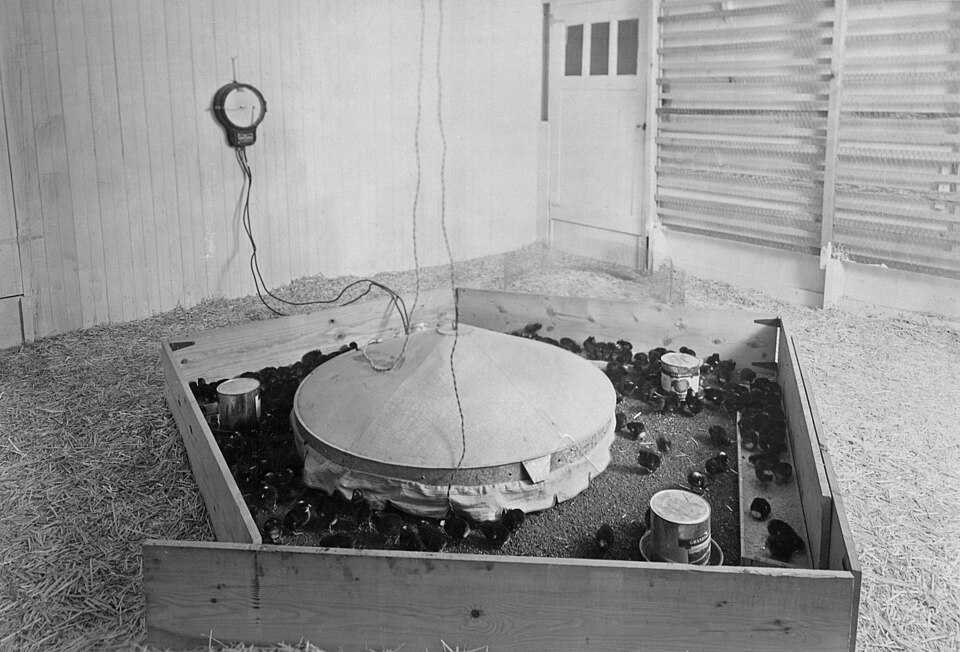
In 1964 the chick box arriving at an American post office in spring was the start of a working flock – fifty to a hundred dual-purpose birds, ordered from a winter catalogue, timed to come into lay for the autumn egg trade, raised in a brooder prepared before the mail came.
The identical box still travels through the identical postal system by the identical biological window, going either to commercial operations ordering by the tens of thousands or to backyard keepers ordering six – with nothing in between.
And that is a strange shape for an industry to end up in, which is worth looking at directly. The remarkable part of this story is how little the mechanism changed. The hatcheries are frequently the same companies. The box is substantially the same box. The postal system still carries live chicks as routine freight. The biology that allows it – a chick absorbing its yolk before hatching and carrying a couple of days of internal reserves – has obviously not changed at all. Even the practices survive: the extras in the box to cover transit losses, the live arrival guarantee, the straight run or sexed option, the telephone call from the post office. What changed is who is at the other end. The household flock of fifty to a hundred dual-purpose birds, sized to feed a family and produce a saleable surplus, was for generations the standard form of American poultry keeping – and it is simply gone, squeezed out from both directions. Specialised commercial production made eggs so cheap that the surplus had no market worth bothering with, which removed the economic reason for the flock. And the specialised strains that made eggs cheap are not available to a household in any useful form, so the dual-purpose breeds a household would keep became heritage stock with no commercial role. What is left at the small end is the hobby version, which is genuinely enjoyable and produces no income at all – and what is left at the large end is an industry that orders chicks by the truckload. The box on the post office counter is the same box. The thing it used to start no longer exists.
The Box Did Not Change. The Household Did.
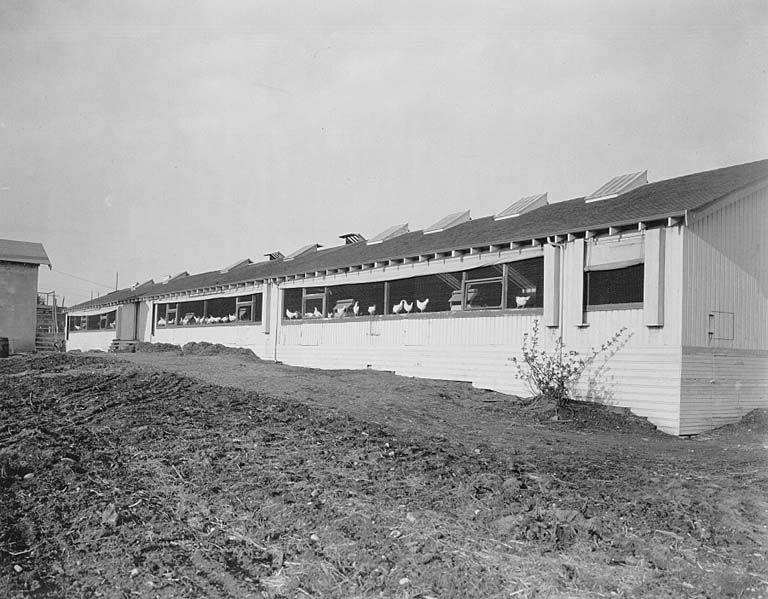
The most surprising thing about mail-order chicks is how much of it is still exactly the same.
The hatcheries are frequently the same businesses, in the same towns, under the same names. The box is substantially the same object – flat corrugated card, ventilation holes around the sides, a divided interior. The American postal system still carries live day-old poultry as routine freight, which it has done for well over a century, and which remains one of the very few cases of live animals moving as standard mail anywhere.
The practices survived too. Hatcheries still send a few extra birds to cover transit losses, because two spare chicks cost less than processing a claim. They still guarantee live arrival against a reported count. You can still order straight run or pay more for sexed pullets, and the sexing is still done by trained specialists performing one of the genuinely difficult manual skills in any industry. The post office still calls, and collection is still expected immediately.
And the biology has certainly not changed. The entire trade exists because of one fact: a chick absorbs the remainder of its yolk just before hatching, which leaves it with an internal food and water reserve good for roughly a couple of days. That window – and nothing else – is what makes it possible to put a live bird in a cardboard box and hand it to a postal clerk. Without it there would be no mail-order poultry and never would have been.
So the mechanism is intact. What has changed is who opens the box.
In 1964 the standard customer was a farm household ordering fifty to a hundred dual-purpose chicks. Not a hobbyist and not an industry – a working flock, sized to supply a family’s eggs with a surplus to sell, plus cockerels to raise for the table. The order was timed so that pullets came into lay by late summer and eggs were going to market through the autumn and winter, when prices were better and the household wanted income.
That was the most common form of American poultry keeping for generations, and it has been squeezed out of existence from both ends.
From above: specialised commercial production, using strains developed exclusively for laying, brought the price of an egg down so far that a household’s saleable surplus stopped being worth the trouble. The economic reason for the flock evaporated. And that cheapness is a real gain for every household in the country, so this is not a complaint.
From below: those commercial strains are not available to a household in any useful form, and the dual-purpose breeds a household would actually keep are now heritage stock with no production role. A bird that lays reasonably and also grows into something worth eating is beaten at each job by a bird designed for one of them, which is why the compromise breeds became a conservation concern rather than a commercial product.
What is left is a barbell. At one end, commercial operations ordering chicks by the tens of thousands. At the other, backyard keepers ordering six, who enjoy it enormously and earn nothing from it. In between, where the great majority of those boxes used to go, there is nothing.
The catalogue still arrives, in a different form. The box still comes to the post office. You can still hear it from the lobby.
It just no longer starts anything.
If your family ordered chicks, you remember the sound in the post office and the smell when the lid came off.
And you remember being allowed to lift them out one at a time, and being told to be careful, and counting.
Like our content? Follow us for more.