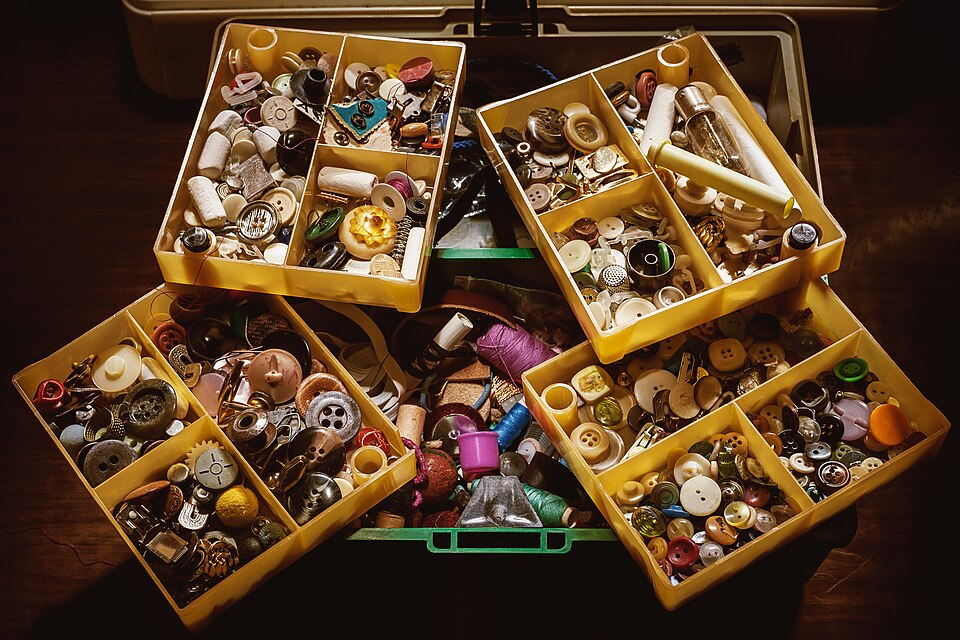
It was a tin. A shortbread tin, a tobacco tin, a coffee can, a cigar box, a glass jar – and inside it, several hundred buttons, loose, mixed, unsorted, in every size and colour and material a household had ever encountered.
Children played with it. Pouring buttons out on a table, sorting them by colour, finding the biggest, finding the pair, is one of the most widely shared memories of an American childhood in the middle of the twentieth century – and it was not a toy, it was somebody’s working inventory.
Because here is what that tin actually was.
Before a garment was thrown out, torn up for rags, or cut down for a smaller child, somebody went over it with a pair of scissors and removed every button, every hook, every buckle and every usable fastener. Those went in the tin. The cloth went wherever cloth went.
Which means the button box in a family’s kitchen drawer was a physical record of every coat, dress, shirt, uniform and work jacket that household had worn out over two or three generations – and the reason it existed is that the buttons were the most valuable reusable part of the garment.
Buttons Used to Be Worth Something
This is the fact the whole practice rests on, and it has become invisible.
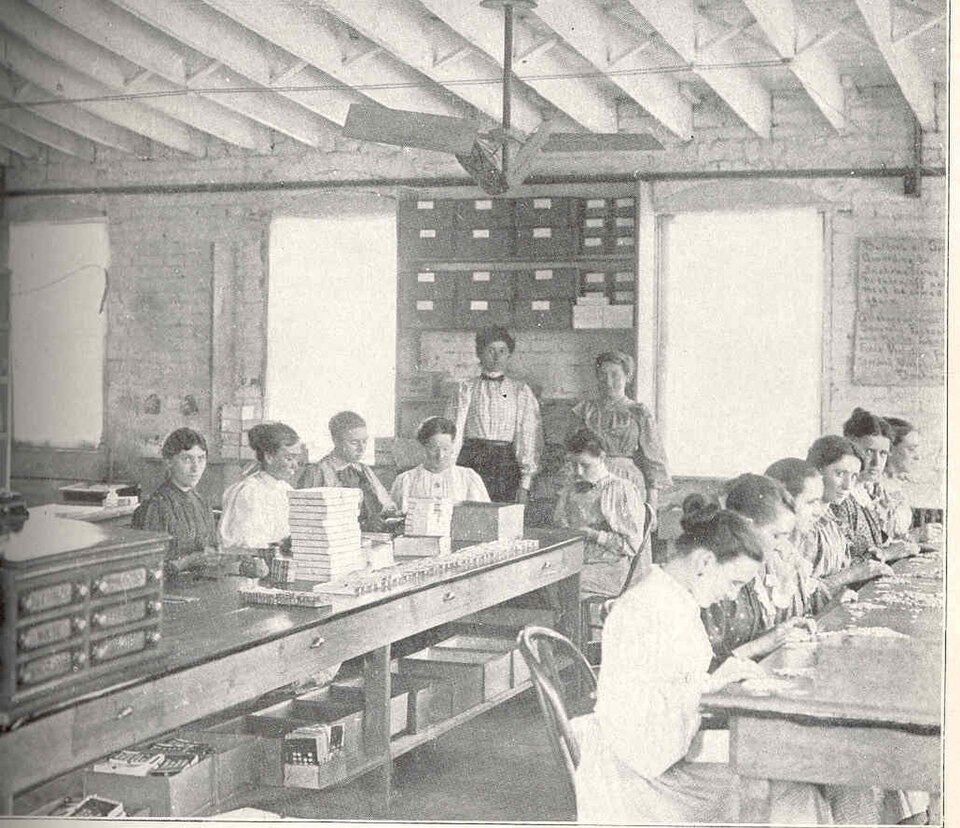
A button in the first half of the twentieth century was a manufactured object made from a material that cost money and took work. Buttons were made of bone, horn, shell, vegetable ivory from a palm nut, glass, metal, wood, and – very commonly in the American case – freshwater mussel shell cut from river beds and ground into blanks.
Every one of those involves a material that had to be obtained, cut, drilled, finished and polished. A shell button is a small piece of machining. A glass button is a moulded and finished object. A metal button is a stamped assembly.
So buttons had a price that was meaningful relative to the price of cloth, and a coat with twelve good buttons on it carried a genuine amount of recoverable value. Cutting them off was not thrift in the sense of pinching pennies; it was the recovery of a component that would otherwise be thrown away with the thing it was attached to.
The modern equivalent is stripping the fittings off something before you scrap it, which nobody considers eccentric.
Like our content? Follow us for more.
The Box Was Organised by Nobody and That Was Deliberate
Button boxes are famously, almost universally unsorted, and the reason is practical rather than lazy.
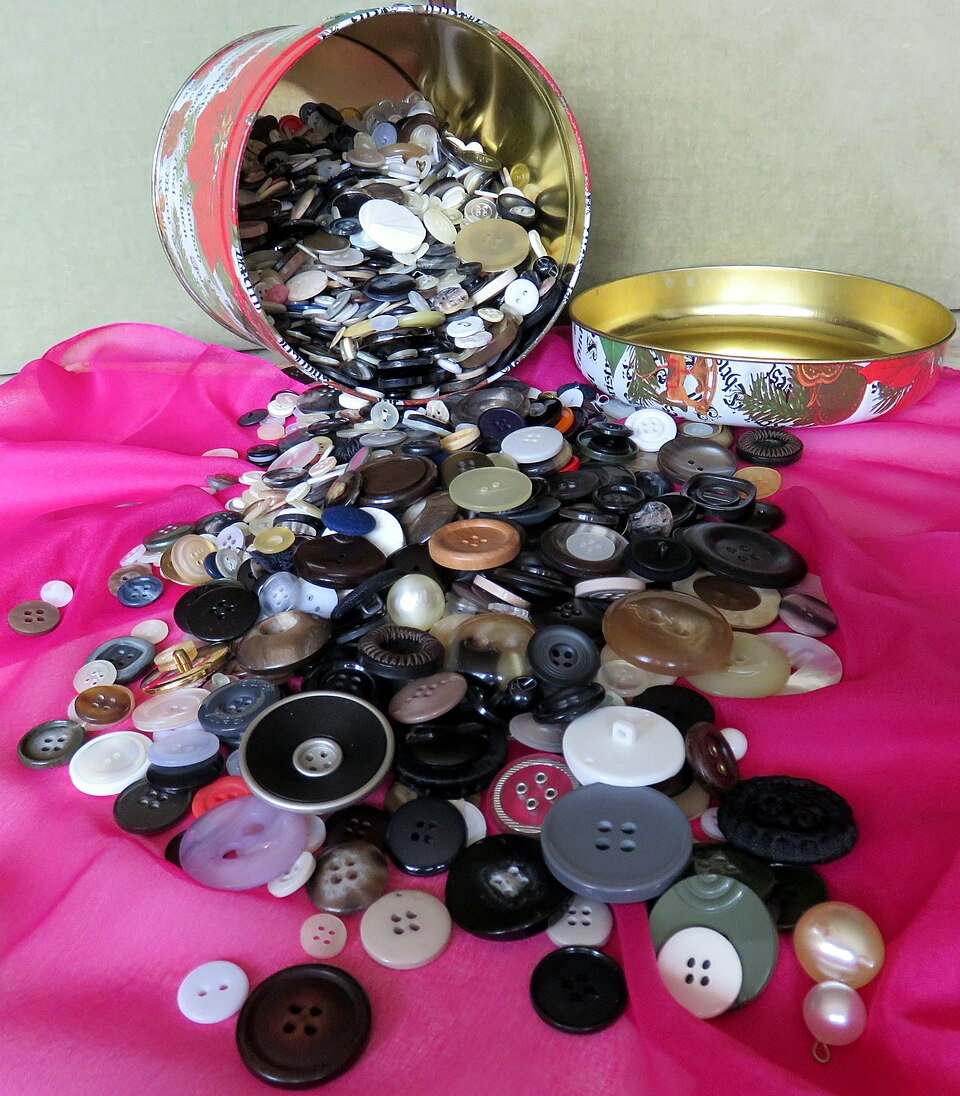
Sorting buttons by size or colour is useless, because the thing you need when you need a button is a match – and a match means the right size, the right number of holes, the right colour, the right material and ideally four more exactly like it. No sorting system delivers that. You have to pour the box out and look.
Which is why every account of using a button box describes exactly the same procedure: the tin comes out, the contents go onto a table or a spread cloth, and somebody goes through them by hand, pushing them around, holding candidates against the garment.
It is a search problem with no index, and the only method is visual scanning of the whole set. The children who played at sorting buttons were doing the same operation as the adults, for fun, with no target.
Matching Sets Were Kept Together and That Mattered
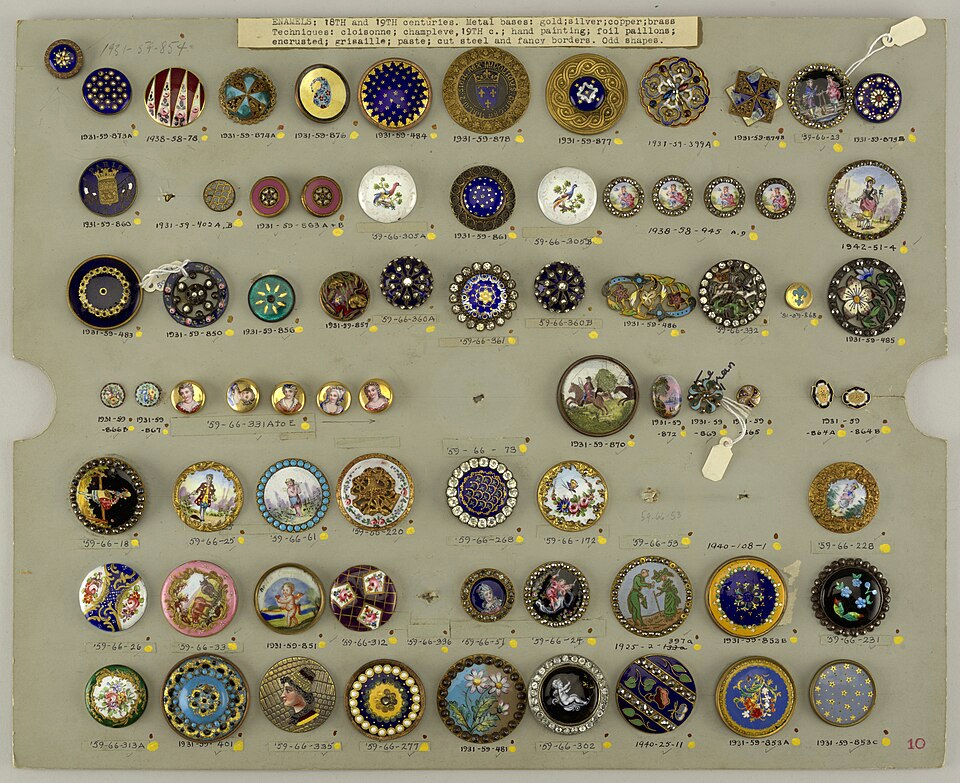
The exception to the general disorder was the good sets.
A complete matching run of buttons off a coat – six or eight or twelve identical items in good condition – was frequently kept strung on a thread, or safety-pinned together, or in its own smaller container inside the box, because a matching set is worth far more than the same buttons separated.
A garment needs all its buttons to match. One odd button on a cuff is acceptable; one odd button on a coat front announces that the household could not find a match, which was exactly the sort of thing people noticed and judged.
So the box had a hierarchy. Loose buttons for repairs and for ordinary replacement. Strung sets held back for a new garment. And somewhere in it, almost always, a small number of buttons nobody would ever use that were kept anyway because they had come off something that mattered.
It Was Also a Family Archive Nobody Intended
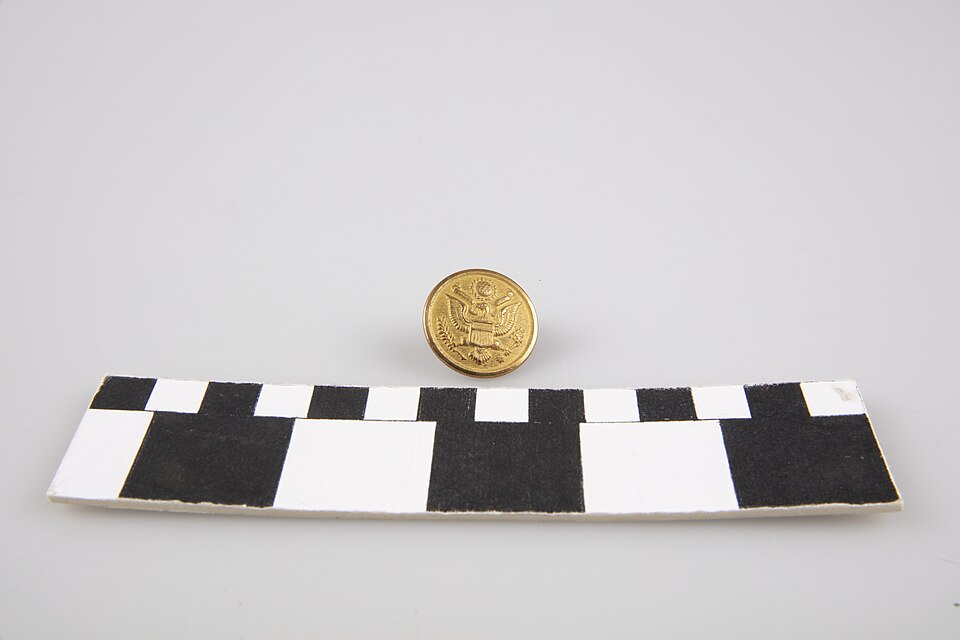
The accidental consequence of the practice is that these boxes are historical documents.
A button box assembled over fifty years contains, physically, the fastenings of everything the family wore. The brass buttons off a uniform. The jet buttons off a mourning dress. The tiny pearl buttons off a christening gown. The heavy leather-look buttons off a work coat. The cheap painted ones off a child’s dress bought in a hard year. The shell buttons off a good shirt.
Nobody set out to assemble that. It accumulated as a by-product of not throwing away useful things, which is how most genuine archives come into existence.
And a great many American families still have one, sitting in a drawer, unexamined – because the practice of adding to it stopped but nobody threw the tin out. It is one of the most common surviving domestic artefacts of the period and one of the least examined.
The Box Did Several Other Jobs
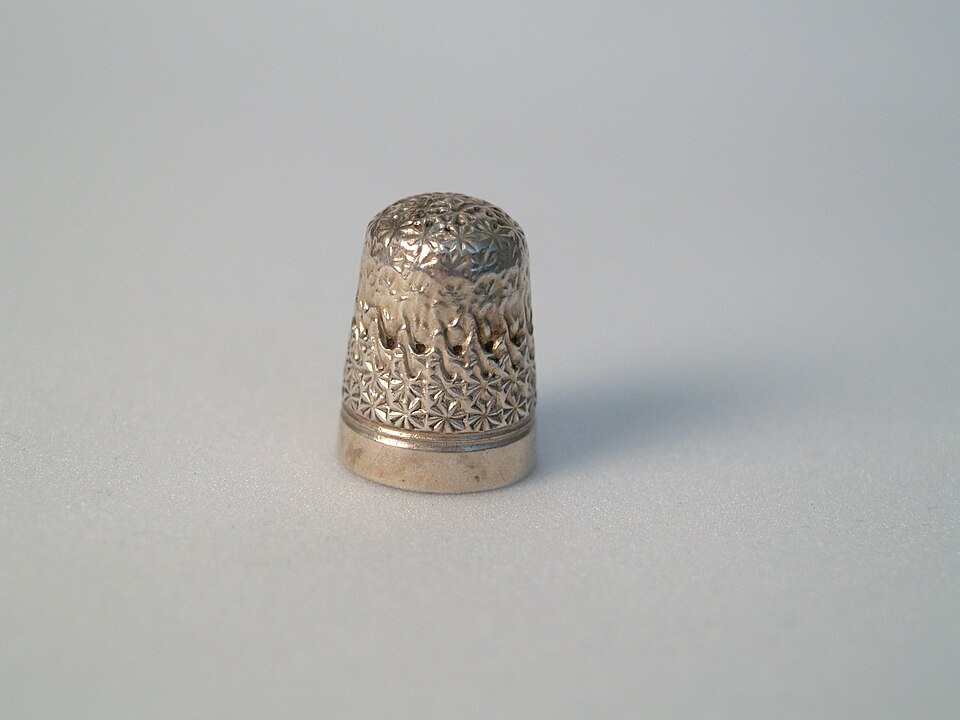
Buttons were the bulk of it, but a button box was never only buttons, and what else turns up in one is informative.
Hooks and eyes, snap fasteners, buckles off belts and shoes, shoe buttons from an earlier era, collar studs, cuff links, safety pins in quantity, hat pins, a few needles stuck into a scrap of cloth, press studs, suspender clips, corset fittings, and the little metal slides and rings off garment straps. All of it was salvaged on the same principle for the same reason.
There were also items that had drifted in because the tin was the household’s container of last resort for small metal things: a spare key, foreign coins, a medal, a thimble, a broken brooch, a watch crown, somebody’s lost earring.
That drift is worth noticing because it tells you where the box sat in the household’s organisation. It was the designated home for any object that was too small to store properly, too potentially useful to throw away, and too miscellaneous to belong anywhere else – which is a category every house has and almost no house has a plan for.
The modern version of that category is a kitchen drawer, and it works considerably less well, because a drawer is flat and open and a tin can be shaken.
Children Learned to Sew on It
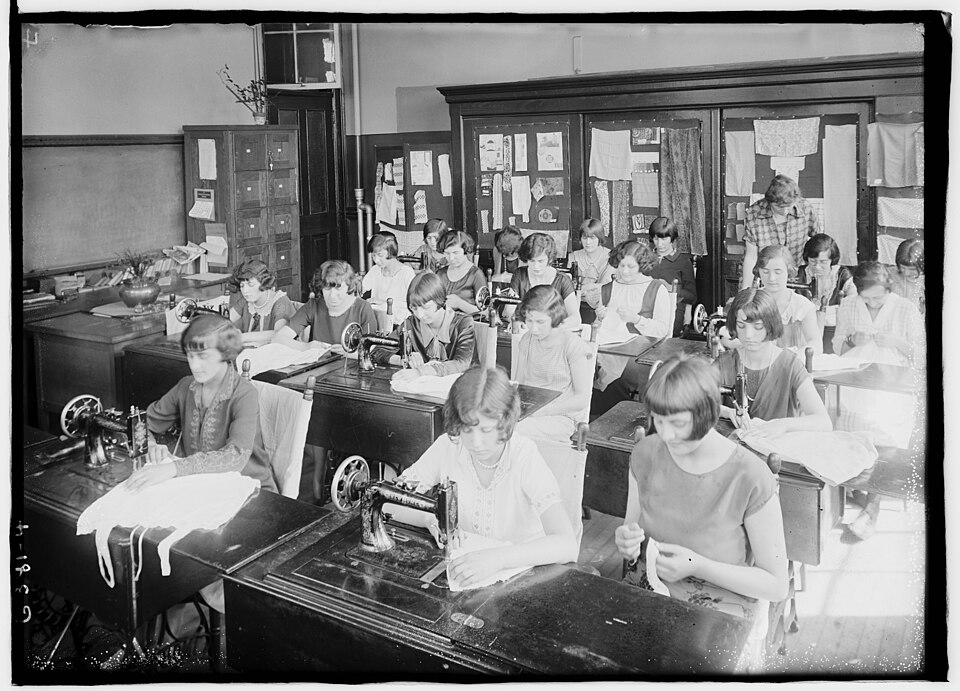
The box had a teaching function that nobody arranged.
A child being taught to sew was given a needle, a thread and a button, and told to attach the button to a scrap of cloth – because sewing on a button is the simplest useful stitching job that exists, it has a clear right answer, the result can be tested by pulling on it, and the materials are free.
So an enormous number of Americans learned their first and in many cases only sewing skill directly out of that tin, on buttons that had come off clothes worn by people they knew. And sewing on a button remains, for a great many adults, the single garment repair they can perform – which traces directly back to a box of salvaged fastenings and somebody’s spare afternoon.
Then Buttons Became Worthless
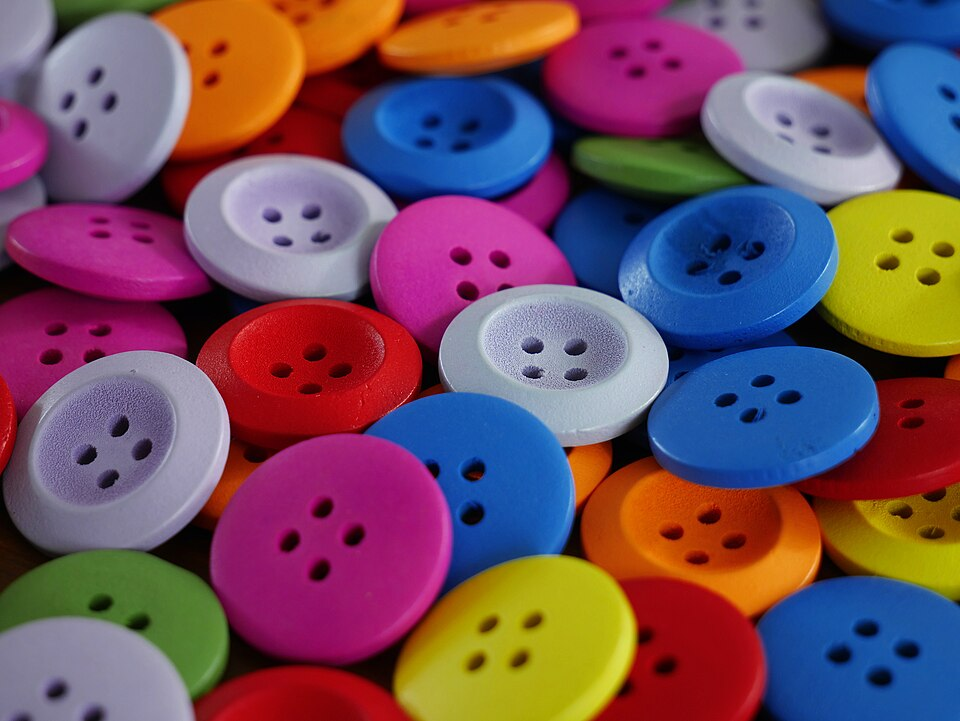
The practice did not end because people got rich or careless. It ended because the object stopped having value, for a specific and traceable reason.
Injection-moulded plastic changed what a button is. A moulded polyester or nylon button is produced in enormous quantity, at essentially negligible unit cost, in any shape and colour, with no material to obtain and no finishing to speak of. The shell button industry, which had been a substantial American business cutting blanks from river mussels, collapsed almost completely in the face of it.
Once a button costs a fraction of a cent to make, the calculation inverts. The thirty seconds it takes to cut six buttons off a worn-out shirt is worth more than the buttons, and a card of new ones costs almost nothing.
At the same time two other things happened. Garments themselves got cheaper in real terms, so the whole business of extracting value from a worn-out one stopped being worthwhile. And home sewing declined, which removed the main use for a stock of buttons – because a household that is not making or substantially altering clothes needs a button only when one falls off.
The modern survival of the practice is the little paper envelope of spare buttons that comes attached to a new garment, which is the manufacturer doing the household’s old job for it. Most people lose them.
What the Tin Is Worth Now
There is an odd final turn, which is that old buttons have become valuable again – just not as buttons.
Collectors buy them. Shell, glass, jet, bone, vegetable ivory, early plastics and metal buttons from identifiable periods have a real market, and a well-stocked old button box can contain items worth considerably more than anybody in the family would guess. Dealers go through boxes exactly the way the original owner did: pour them out, scan, pick.
Which means the object has come full circle in a slightly comic way. It was assembled because buttons had value. The practice stopped because buttons lost their value. And the accumulated result is now worth something again because the buttons in it are old, scarce and made of materials nobody uses.
The cloth is all gone. The garments are gone, every one of them. The people who wore them are mostly gone. And the fastenings are in a tin in a drawer, in excellent condition, because a button made of shell or horn does not deteriorate and because somebody in every generation took thirty seconds with a pair of scissors before throwing a coat away.
Like our content? Follow us for more.