There is a complaint that gets made constantly and is usually dismissed as nostalgia: nobody can sharpen anything any more.
It happens to be true, and the reason has nothing to do with people becoming less capable or less patient. It is a direct consequence of a change in metallurgy, and once you know what changed, the whole thing becomes obvious.
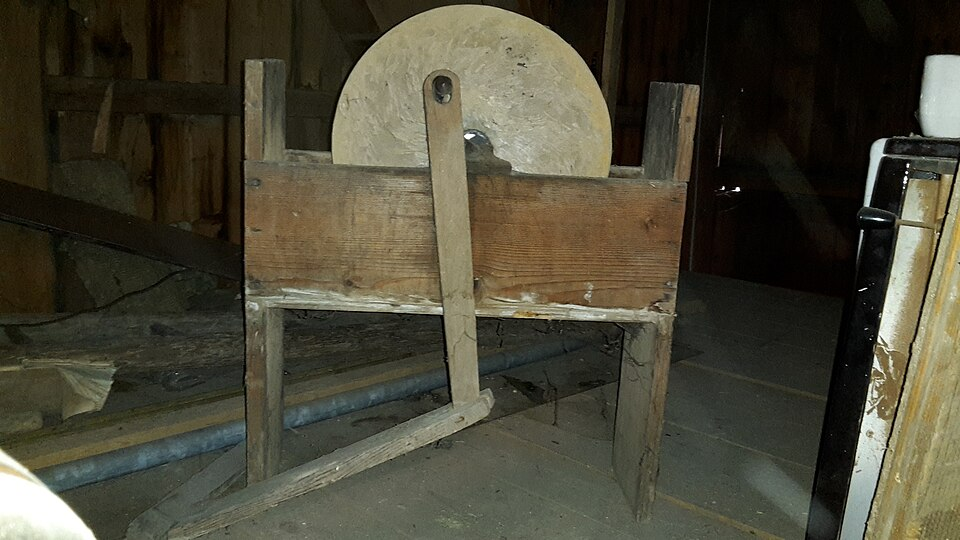
In 1964 a great many American households still had a sharpening setup. A large grindstone on a frame, turned by a crank or a foot treadle, with a trough underneath to keep the wheel wet. A flat oilstone or whetstone in a wooden box. A butcher’s steel hanging in the kitchen. A small carborundum stone in the shop for axes and chisels. A strop for a razor.
Somebody in the house knew how to use all of it, and knowing how was not a hobby or a specialism. It was a basic requirement of living, in the same category as being able to light a fire.
Everything Was Carbon Steel and Carbon Steel Goes Dull
Here is the fact that explains the entire practice.
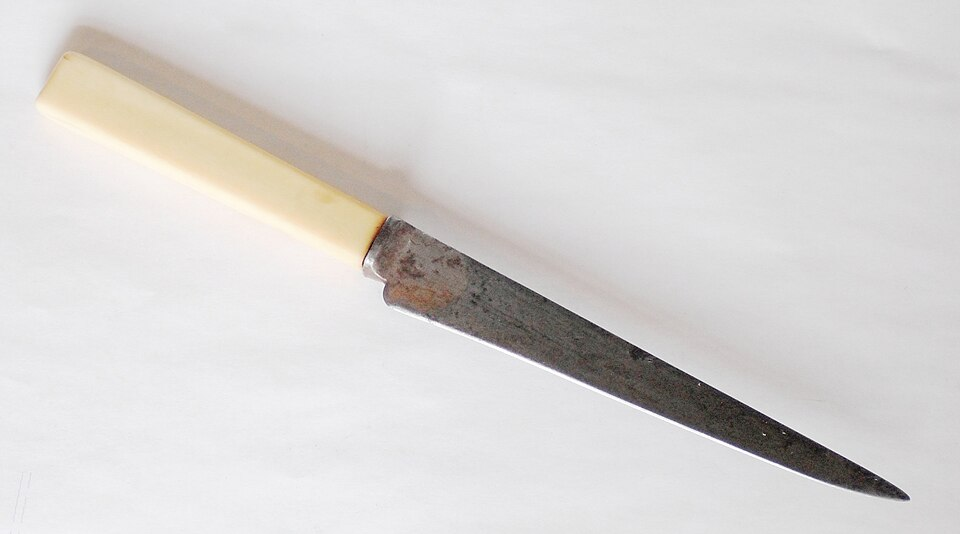
Before stainless alloys became cheap and widespread for ordinary cutting tools, the steel in a kitchen knife, a pocket knife, an axe, a chisel, a scythe, a plane iron, a razor and a pair of scissors was plain carbon steel.
Carbon steel has two properties that matter enormously here. It can be hardened to take a genuinely excellent edge – finer and sharper than most stainless of the period could hold. And it dulls comparatively quickly, corrodes if left wet, stains on contact with acidic food, and will rust overnight on a damp cloth.
So a household’s cutting tools were simultaneously very good when sharp and in constant need of attention. A carbon steel kitchen knife used daily needed touching up every few days and a proper sharpening regularly. A razor was stropped before every single use. An axe was filed whenever it had been in anything hard.
That is the whole explanation. The skill existed because the maintenance was compulsory. Nobody learned to sharpen because sharpening was a virtue; they learned because an unsharpened carbon steel knife is a useless object within a week.
Like our content? Follow us for more.
The Grindstone Was for Shaping, Not Finishing
One of the commonest misunderstandings about old sharpening equipment is what each piece was for, and the hierarchy was strict.
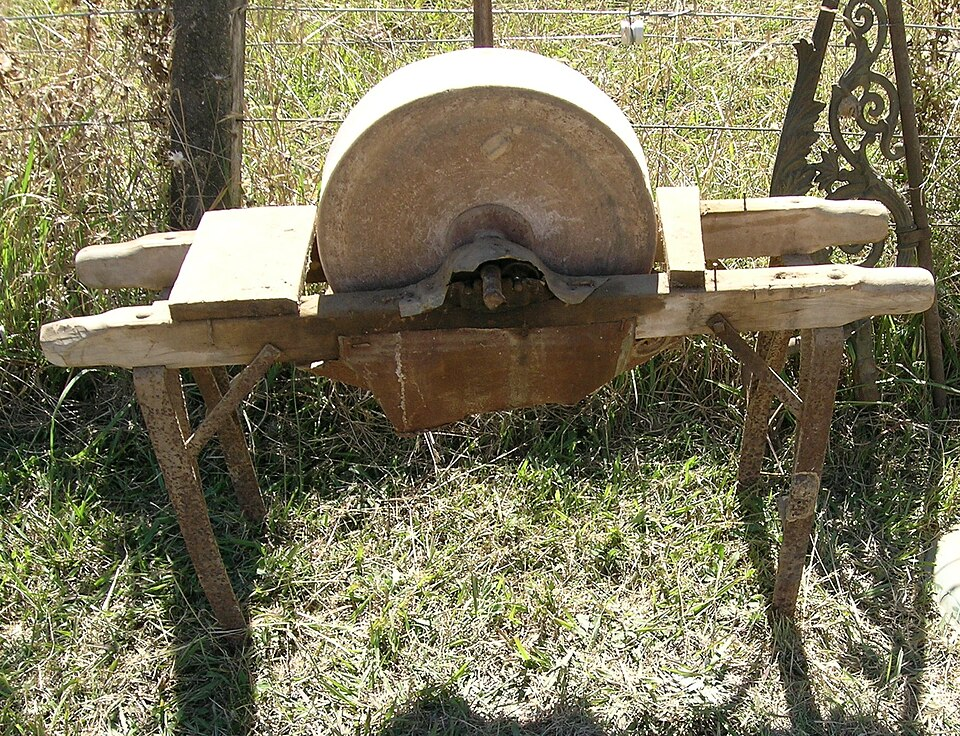
The big wet grindstone removed metal. It was used to reshape a damaged edge, take out a nick, re-establish an angle on an axe or a hoe, or thin a blade that had been sharpened crooked for years. It is a coarse, aggressive tool, and using it on a kitchen knife that merely needed touching up would have been considered a waste of a knife.
The water was not a courtesy. A dry stone running fast heats the steel, and heating hardened steel past a certain point softens it permanently – which ruins the edge-holding of the tool you are trying to improve. So the trough kept the wheel wet and the metal cool, and anybody who let a grindstone run dry on good steel got told about it.
The oilstone or whetstone did the actual sharpening – producing the edge at a consistent angle, working from a coarse face to a fine one.
And the steel hanging in the kitchen did neither. A butcher’s steel does not remove meaningful metal; it realigns an edge that has rolled over microscopically through use. That is a maintenance operation performed in seconds, several times a week, and it is the single most useful sharpening skill there has ever been.
The Angle Was the Whole Skill
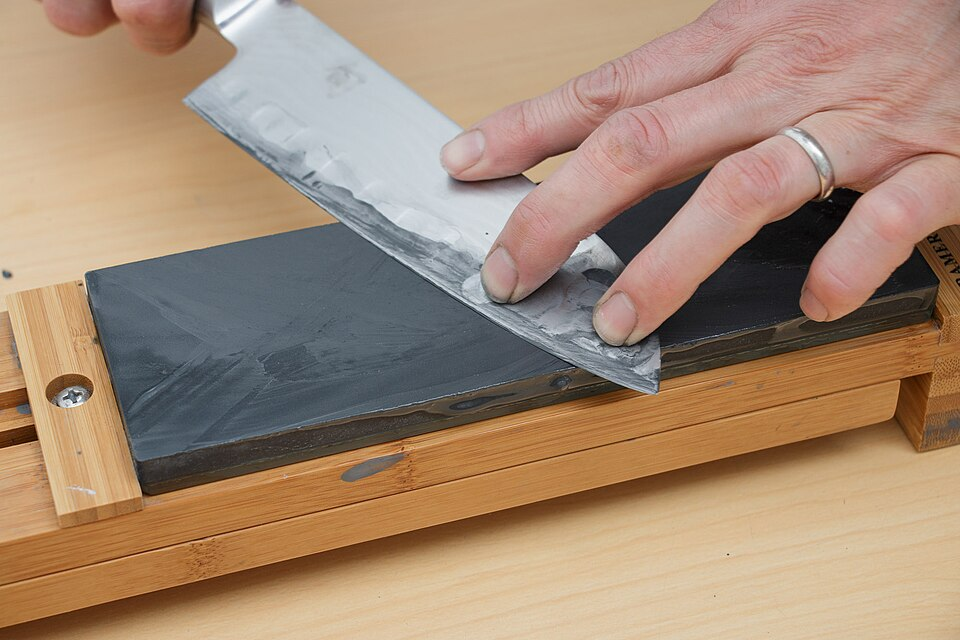
What made sharpening difficult was not strength or equipment. It was holding one consistent angle.
An edge is the intersection of two surfaces. If you grind at twenty degrees on one stroke and twenty-five on the next, you are not sharpening – you are rounding the edge over, which makes the tool worse. The entire craft consists of presenting the blade to the stone at the same angle, stroke after stroke, by feel, without a jig.
Different tools wanted different angles, and that knowledge was held as a set of rules of thumb rather than as numbers: steeper for an axe, which has to survive impact, shallower for a razor, which only has to cut. A chisel at one angle, a plane iron at another, a scythe different again.
That is a trainable physical skill, like throwing accurately. It takes practice, it degrades without practice, and it cannot be acquired by reading. Which is why it was taught by hand, by somebody standing next to you, and why it transmitted perfectly well through households that could not have explained a single thing about metallurgy.
Turning the Stone Was a Child’s Job
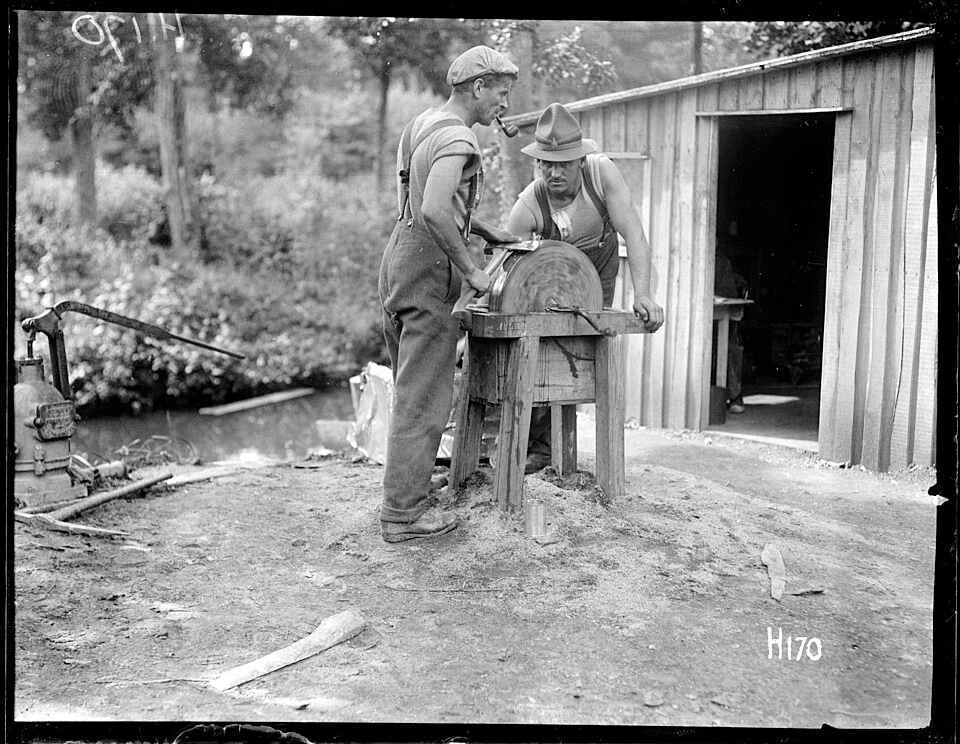
The large grindstone needed two people, and that arrangement is one of the most consistently reported things about it.
A wheel of that size turned by a crank requires somebody on the handle at a steady speed while somebody else holds the tool against the stone and watches the edge. The person holding the tool has to concentrate; the person turning simply has to keep going, evenly, without speeding up or slowing down.
So the turning went to whoever was available, which meant children. It is dull, it is tiring on the arm, it goes on for longer than anybody wants, and the operator cannot see what is being accomplished – which is exactly the recipe for a chore that gets remembered with resentment and recounted for sixty years afterwards.
Foot-treadle stones removed the second person and were correspondingly prized, because a treadle leaves both hands free and lets one person control the speed and the tool at once.
The Equipment Lasted Longer Than the Knowledge
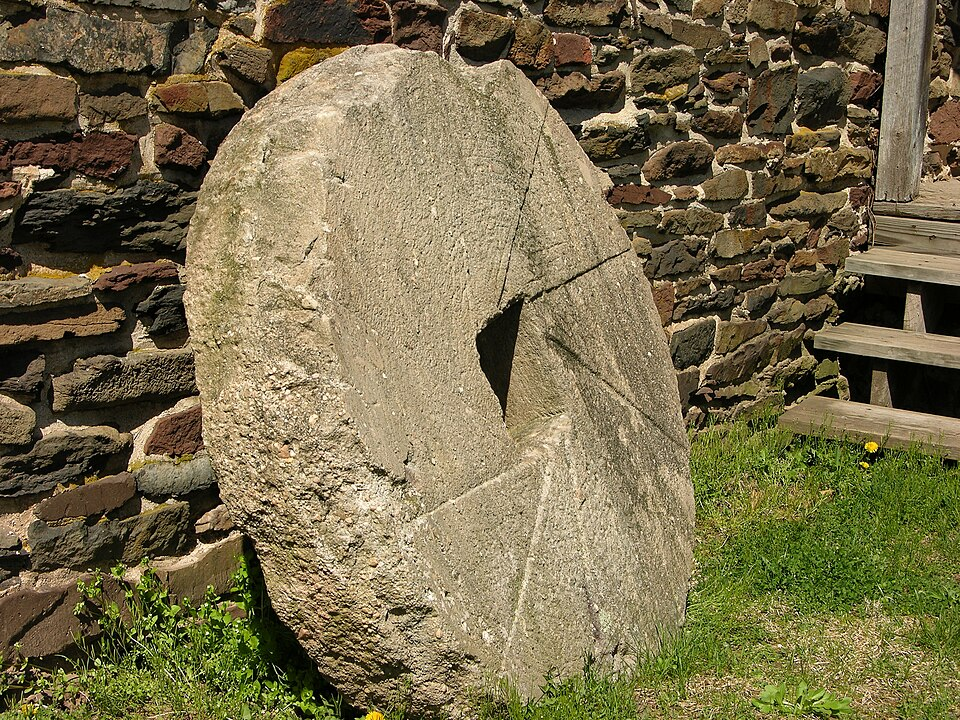
Grindstones are extremely durable objects and that has produced an odd situation.
A sandstone wheel on an iron frame has essentially nothing to fail. The stone wears slowly and unevenly, the bearings can be replaced, the frame is wood or cast iron, and a stone that was in use in 1900 will still cut if somebody sets it up and wets it.
Which means an enormous number of them survive, in barns, in sheds, at the back of garages, and above all in gardens – where a large round stone with a hole in the middle has become a standard ornamental object, frequently set flat as a stepping stone or propped against a wall.
Almost nobody who owns one has ever used it. The stone outlasted the practice by several generations, which is the usual pattern with durable tools: the object is the last thing to go, long after the knowledge that made it useful.
Then Stainless Arrived and Changed the Bargain
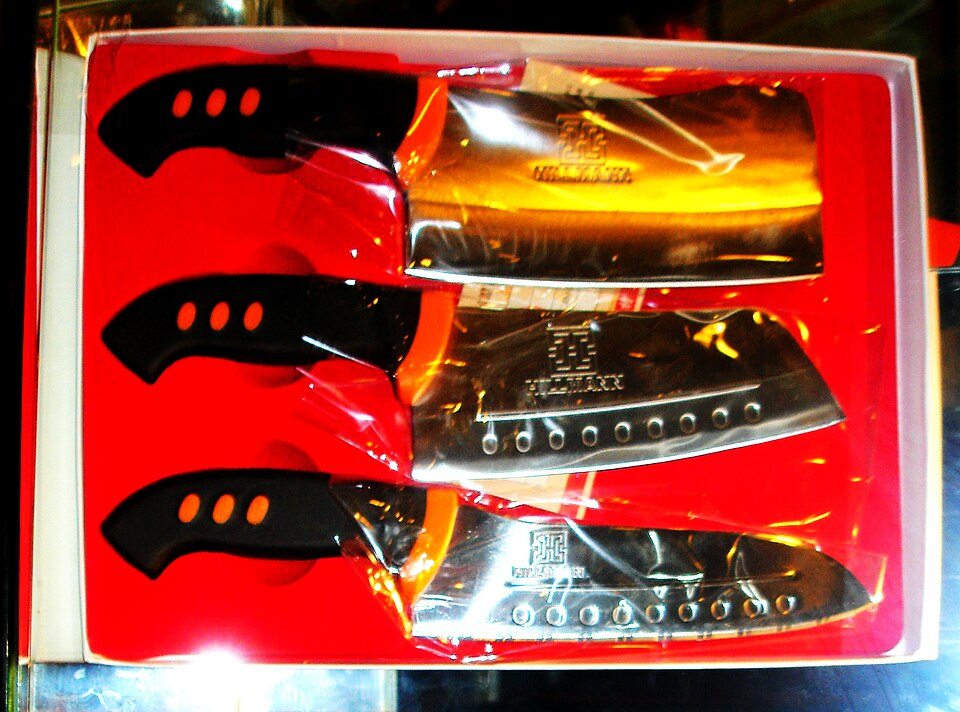
The great majority of cutting tools in an ordinary American home are now stainless, and that single substitution dismantled the whole practice.
Stainless steel resists corrosion, which is an enormous practical gain. It does not rust in a sink, does not stain on a tomato, survives a dishwasher and does not need wiping dry the moment it is used. For a kitchen that is transformative, and nobody should want carbon steel kitchen knives back as a general proposition.
The trade-off, with the alloys and heat treatments used in ordinary consumer goods, is that the edge is typically less fine and the steel is frequently harder to sharpen when it eventually does go dull. So the owner gets a knife that is permanently adequate instead of a knife that is periodically excellent.
And that is exactly the bargain most households want. A permanently adequate knife requires nothing. A periodically excellent one requires a stone, a steel, a skill and a habit.
Once the maintenance stopped being compulsory, the skill stopped transmitting – because it was never transmitted for its own sake.
Replaceable Blades Finished the Job
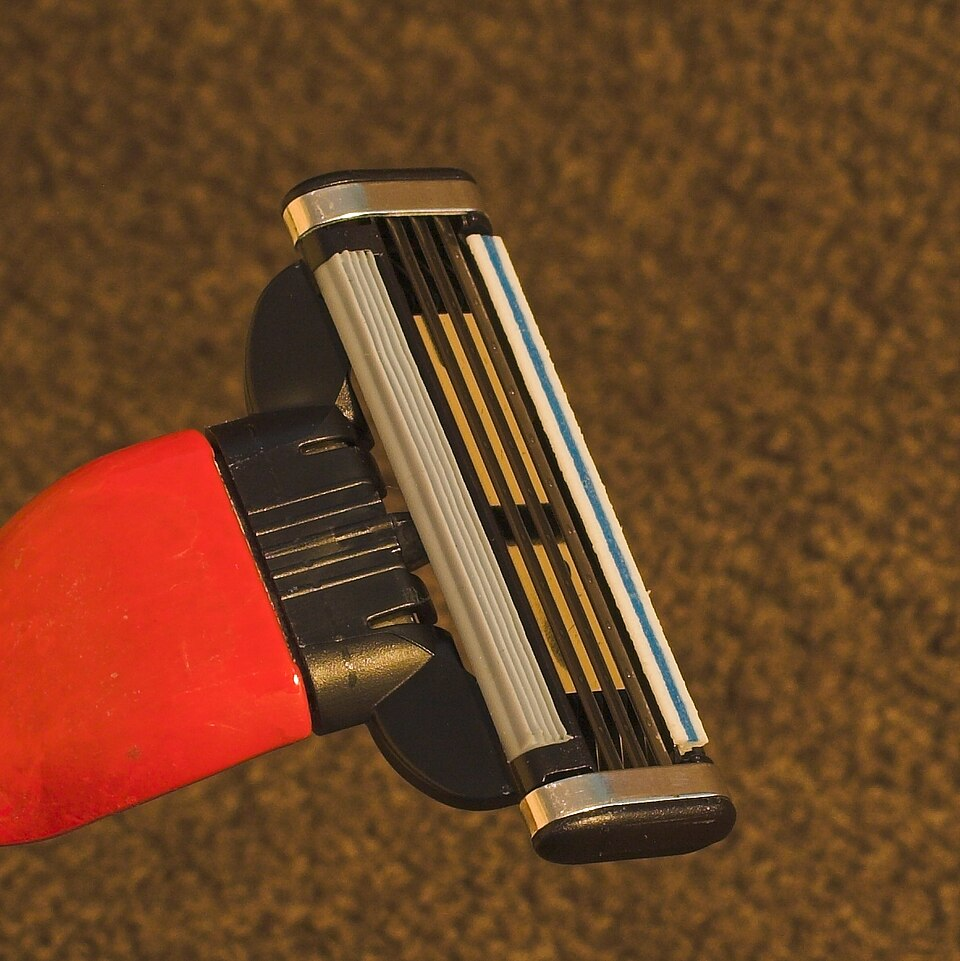
The second blow came from a different direction and it was decisive.
An entire category of tools moved to disposable or replaceable cutting edges. The safety razor and then the cartridge razor eliminated the strop and the straight razor from nearly every American bathroom. The utility knife with snap-off or replaceable blades replaced the sharpened shop knife. Saw blades became hardened at the teeth and designed to be thrown away rather than filed, which eliminated saw sharpening – once a common paid trade – almost entirely. Scissors became cheap enough to replace. Lawn mower blades get swapped. Even chisels and plane irons became specialist items as power tools took over the work.
Each of those removed one more occasion on which somebody in a household had to sharpen something.
Add it up and the result is a house in which there is essentially nothing that must be sharpened in order to continue functioning. Which means there is no reason for anybody to learn, no occasion on which to be taught, and nobody in the previous generation who still practises it.
The Skill Did Not Die, It Relocated
The interesting final turn is that sharpening is in considerably better health than the complaint suggests – it has simply moved out of the house and into specialist hands.
Woodworkers sharpen constantly and argue about it in enormous technical detail. Chefs and butchers sharpen as a professional requirement. Barbers who use a straight razor still strop. Knife enthusiasts have driven a substantial market in modern abrasives, guided systems, diamond plates and ceramic rods. Sharpening services exist in most cities. And the body of knowledge available on the subject is vastly larger and more accurate than anything a household in 1964 possessed, because it is now written down and tested rather than held as rules of thumb.
So the honest version is not that a skill was lost. It is that a skill which had been universal because it was compulsory became specialised once it became optional, which is the ordinary fate of every compulsory skill that technology makes unnecessary.
What genuinely went is the grindstone in the yard and the person who could put an edge on anything you handed them without being asked twice – and the particular competence of a household in which every cutting tool was slightly dangerous, slightly rusty, and considerably sharper than anything in a modern kitchen drawer.
Like our content? Follow us for more.