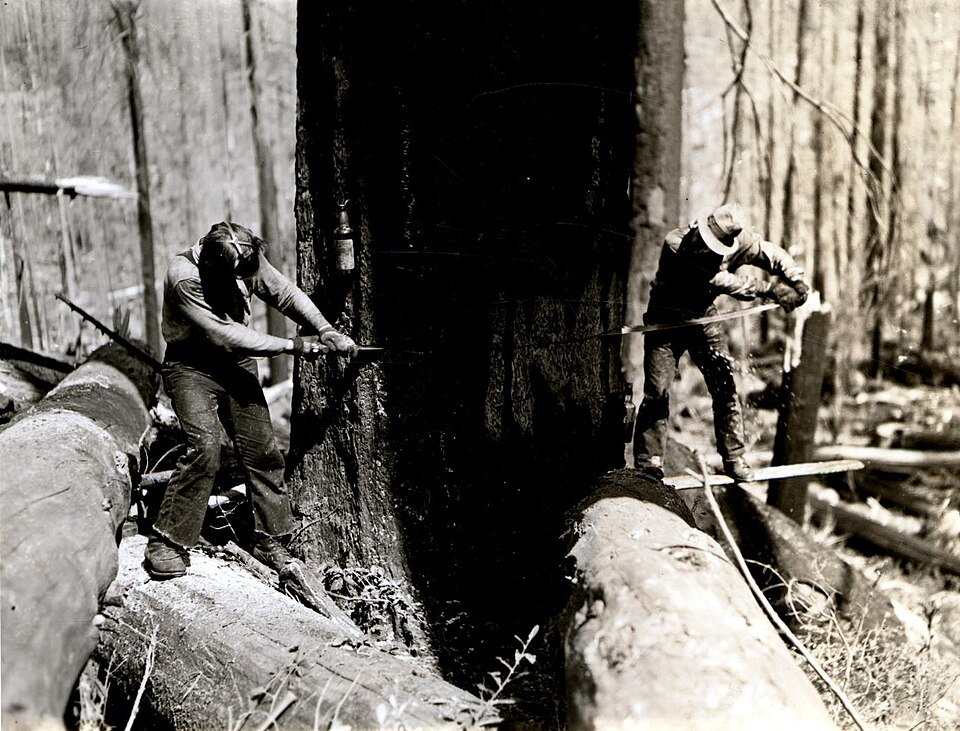
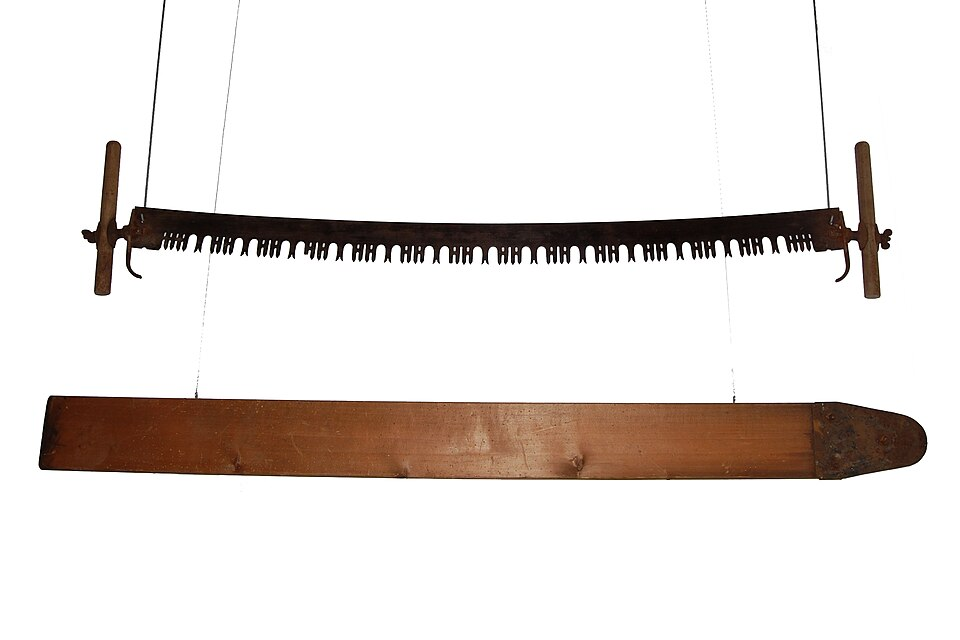
There is a tool hanging in a great many American barns and garages that looks like it ought to be simple and is not. A long flexible steel blade, four or five or six feet of it, with large raked teeth and a wooden handle at each end.
A two-man crosscut saw. Also called a misery whip, by the people who used it most.
It gets displayed now as a decoration, frequently painted with a winter scene and hung over a fireplace, which is a slightly comic fate for an object that represents more physical labour than almost anything else a household owned.
And the thing almost nobody knows about it is that using one properly is a skill with a single central rule, and that the rule is counterintuitive.
You Pull and You Never Push
Here is the rule, and it is the whole craft.
A two-man crosscut is pulled, not pushed. Each man pulls the saw toward himself through the cut and then lets go of the effort entirely while his partner pulls it back. On your partner’s stroke you do nothing except keep your hand on the handle and let the blade come to you.
The reason is in the blade. A crosscut saw blade is thin and long and deliberately flexible, and the teeth are set to cut on the pull. Push on it and the blade buckles – it bows sideways in the cut, binds against the sides of the kerf, and jams. Push on it hard and you can kink it permanently, which ruins the saw.
Which produces a specific social problem, and it is the one every account of this work mentions. A man who pushes makes the work impossible for the man at the other end. He cannot be reasoned with mid-cut because the saw is between you. And you will be standing there with him for several hours.
So the phrase for a bad partner was that he was riding the saw, and being known as somebody who rode the saw was a genuine reputational matter in a community where firewood had to be got in.
Like our content? Follow us for more.
The Rhythm Had to Be Found and Then Kept
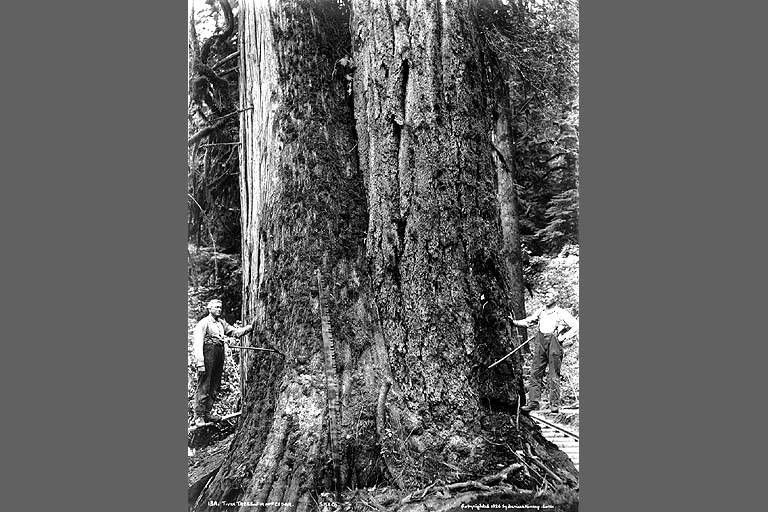
Beyond the pull, the skill is entirely about matching another person.
Two men on a crosscut have to settle into one tempo – not fast, because the work goes on for hours, and not uneven, because every hesitation stalls the blade in the cut and has to be overcome again. The stroke should run the full length of the blade so that all the teeth do work and none of them heat up in one spot.
That tempo gets established in the first minute of a cut and then held, without speaking, by two people who may not be able to see each other past the log. It is the same coordination problem as rowing or as two people carrying something heavy, and it is learned by doing it rather than by being told.
A pair who had worked together for years could cut faster than two stronger men who had not, by a wide margin, and everybody involved in the work knew it. Which is why brothers, fathers and sons, and long-standing neighbours tended to saw with the same partner year after year.
The Woodpile Was a Measured Quantity
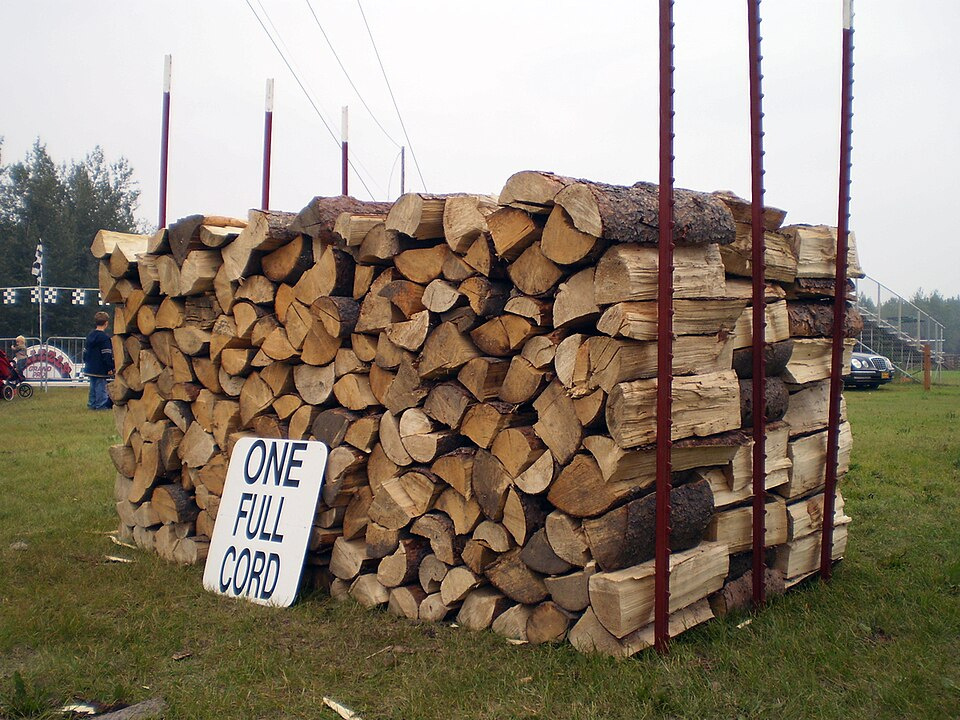
The reason any of this had to be done is that a house heated with wood consumes a specific and alarming amount of it, and the amount was known.
A household worked out roughly how much it burned in a winter and cut that much, plus a margin. That quantity was measured in cords – a stacked volume – and a family’s annual requirement ran to several of them, which is a very large pile of wood. It had to be cut, split, hauled, stacked and left to dry, because unseasoned wood burns badly and gives less heat.
Which makes the woodpile a public document, and people read it as one. A full, well-stacked, properly seasoned woodpile in October said that a household was in order and had its affairs in hand. A thin one said the opposite, visibly, to anybody driving past – and a household cutting wood in January was cutting green wood, which everybody could tell from the smoke.
So getting the wood in was not only labour. It was the most visible annual demonstration a rural household made of its own competence.
The Work Had a Season and an Order
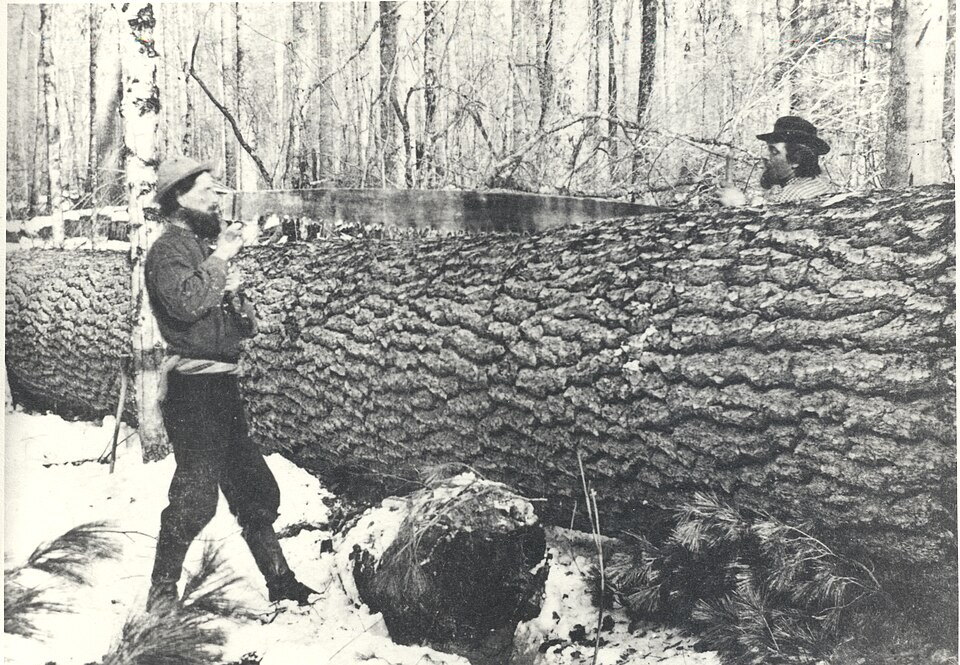
Firewood work was winter work, and that was deliberate rather than incidental.
Trees were felled in the cold months because there is less sap in the wood, the leaves are off so the tree can be seen and dropped accurately, the ground is hard enough to haul over, and there is no field work competing for the time. Cutting in summer means working in heat, in insects, in standing crops, in a tree full of leaves.
Then the order of operations: fell, limb, buck into stove lengths, haul, split, stack. Bucking – cutting the trunk into lengths – is what the crosscut did most of, and it is the most repetitive part, because a tree yields a great many cuts. Splitting followed with a maul and wedges, and stacking was frequently the children’s job.
The whole sequence took weeks of a winter, spread across whatever days the weather allowed, and it ran alongside everything else that still had to be done.
The Chainsaw Changed the Labour Immediately
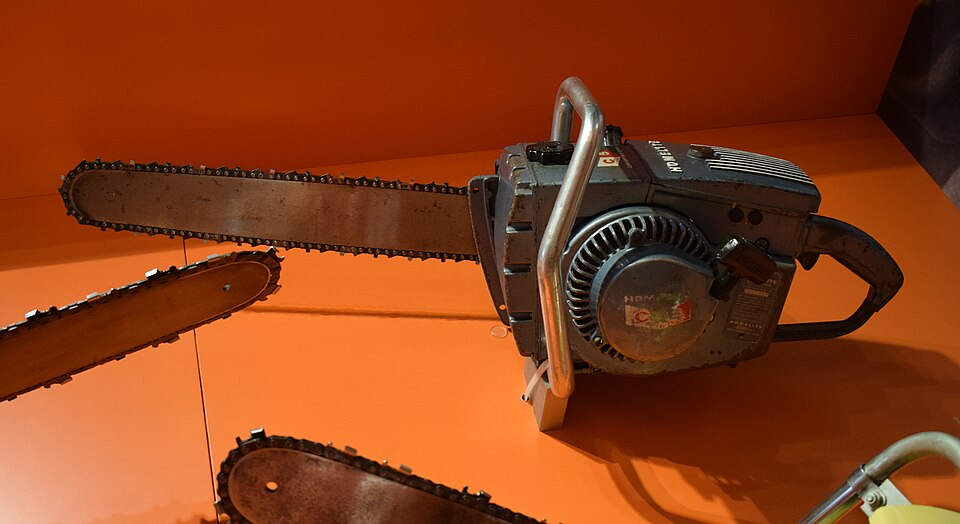
The arrival of a practical one-man chainsaw is one of the fastest and most complete displacements of a hand tool in the twentieth century, and the reason is that it is simply not a close contest.
A chainsaw cuts through a log in seconds rather than minutes, requires one person instead of two, does not depend on a matched rhythm, does not care whether the operator is strong, and makes a cut of a quality that does not matter because the wood is going in a stove.
So the crosscut went out of use almost at once wherever a chainsaw could be afforded, and the skill went with it within a generation. The saws came off the sawbuck and went onto the barn wall.
The honest note is that the chainsaw is dangerous in ways the crosscut was not, which is a real trade and not a small one. This piece gives no operating, maintenance or safety instruction for any saw of either kind, because cutting wood is genuinely hazardous work and the appropriate sources are current authoritative guidance and proper training rather than a nostalgia article.
The Wood Itself Was Chosen and Ranked
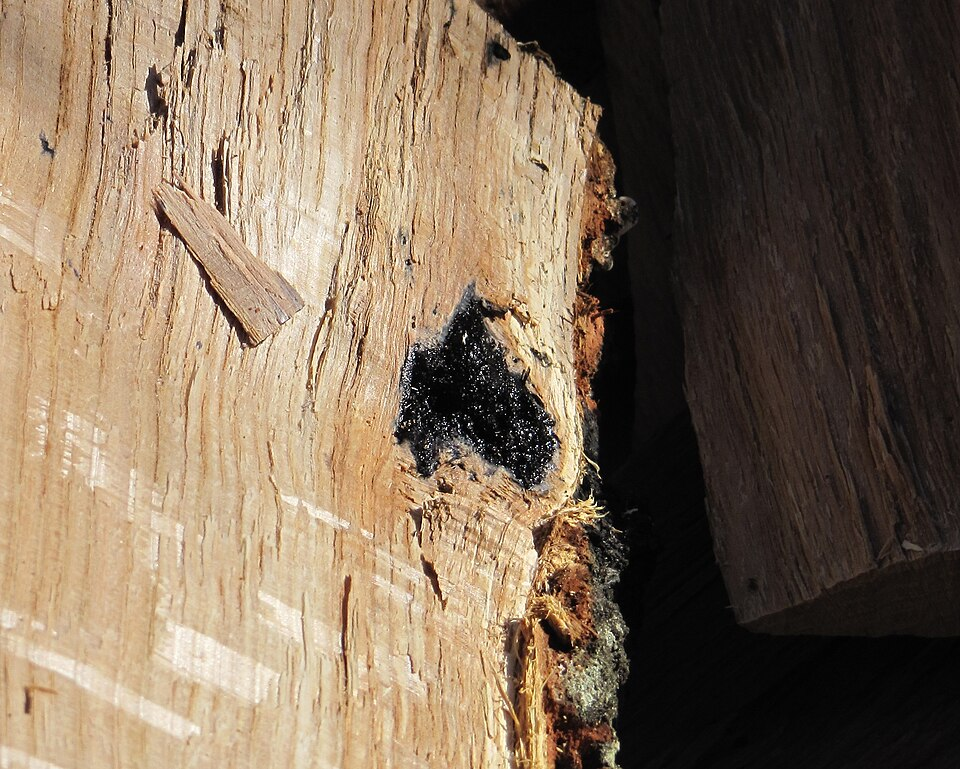
Firewood was not simply wood, and households held firm and largely correct opinions about which trees were worth cutting.
Dense hardwoods burn longer and give more heat for the same volume, which matters enormously when the measure of your winter is a stacked pile of a fixed size. A cord of heavy wood and a cord of light wood occupy identical space and do not deliver identical heat, so a household cutting its own fuel was effectively choosing how much work it would have to do.
So the preferred trees were ranked, the rankings were local, and everybody knew them. Some species were cut for the main supply. Some were cut for kindling because they split easily and lit fast. Some were avoided because they smoked, spat, smelled or threw sparks. Some were considered barely worth the hauling.
Those preferences also shaped the woodlot itself over decades. A farm that repeatedly cut its best fuel species and left the others changed the composition of its own timber, which is a slow unintended consequence of a purely practical annual decision.
This piece names no species and gives no recommendation, because what burns well depends on local trees, local drying conditions and the appliance it is burned in, all of which are matters for current authoritative guidance.
Then the Heating Left the Property Altogether
The deeper change was not the tool. It was that the whole activity stopped being necessary.
A house heated by gas, oil or electricity obtains its heat through a pipe or a wire from somewhere else, and the quantity involved never appears as a physical object on the property. There is no pile, no cutting, no hauling, no stacking, no seasoning, no measurement and no public display of whether a household has enough.
That is an enormous reduction in labour and nobody sensible regrets it. A winter’s heat arriving invisibly, continuously, without anybody felling a tree, is a straightforwardly better arrangement than several weeks of heavy outdoor work in cold weather.
But it also means the modern equivalent of a woodpile is a figure on a bill, which nobody can see from the road. The household’s provision against winter went from being the most conspicuous thing in the yard to being completely private – and with it went the thing everybody in the neighbourhood could read at a glance.
The Saw on the Wall Is a Record of Two People
Which brings the object back into focus.
A two-man crosscut is the only common hand tool that physically cannot be used alone. Everything else in a shop – an axe, a maul, a plane, a hammer, a spade – is a single person’s implement. This one requires a second human being at the far end, pulling when you are not, at a tempo you have agreed without discussing it, for several hours, in the cold.
Which means that every one of those saws hanging on a wall is a record of a partnership. Somebody held the other handle, every time it was used, for as long as it was used – and the quality of the work depended less on either man’s strength than on how well the two of them could match each other.
That is an unusual property for a tool to have. The chainsaw that replaced it is better in every measurable respect and requires nobody at all.
Like our content? Follow us for more.