In a great many American families there is one photograph that is older than all the others and physically different from them. It is small, it is on a thin sheet of dark metal rather than paper, it is slightly scratched, and the image sits on the surface with a strange depth to it – frequently with a little hand-applied colour on the cheeks.
Everybody in the family knows roughly who it is. Nobody is quite certain. It has no name on the back, no date and no studio mark.
That is a tintype, and the reason your family has exactly one of them is the reason it matters. For an enormous number of ordinary Americans, a tintype is the only photograph ever taken of them in their entire lives – and the people who made those pictures were not studio photographers. They were travelling operators working out of wagons, tents and rented rooms, charging almost nothing, at country fairs and on town squares.
It Was Not Tin and It Was Not Expensive
The name is wrong twice over, which is worth clearing up.
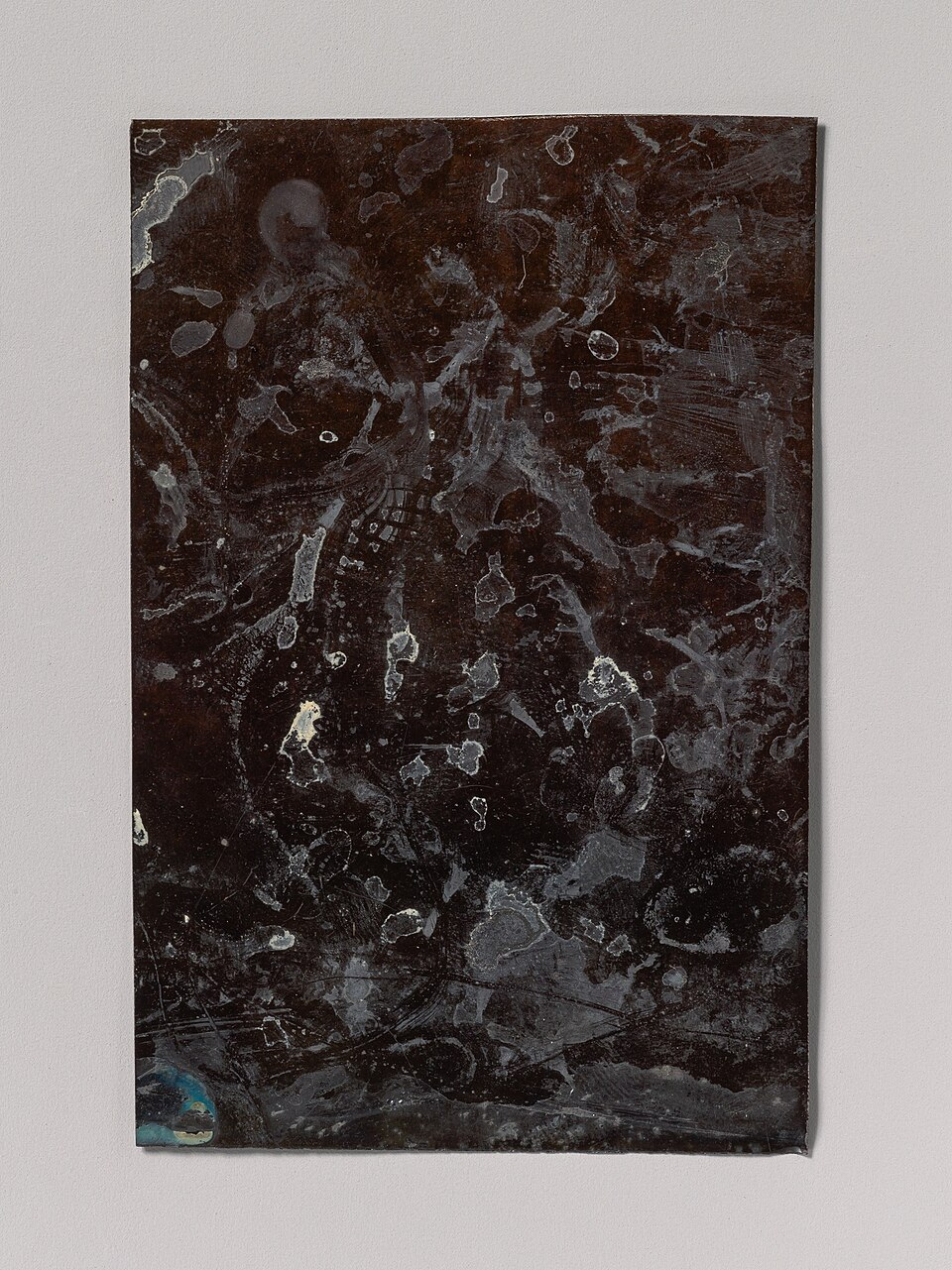
There is no tin in a tintype. The support is a thin sheet of iron, blackened with lacquer or enamel, onto which the photographic chemistry was applied. The name came from the trade and stuck, in the same way that corrugated galvanised roofing is universally called tin.
And it was cheap – the cheapest photographic process that had ever been available to the public at the point it arrived. That cheapness came from three things working together. The support was a piece of coated sheet iron rather than glass or fine paper. The process produced a finished, viewable picture directly, with no negative and therefore no printing stage. And it could be done quickly, which meant an operator could handle a queue of people in an afternoon.
Everything about the medium was organised around volume at low cost, which is precisely what made it the first photographic process that ordinary working people could actually use.
Like our content? Follow us for more.
Direct Positive Means One Picture and No Copies
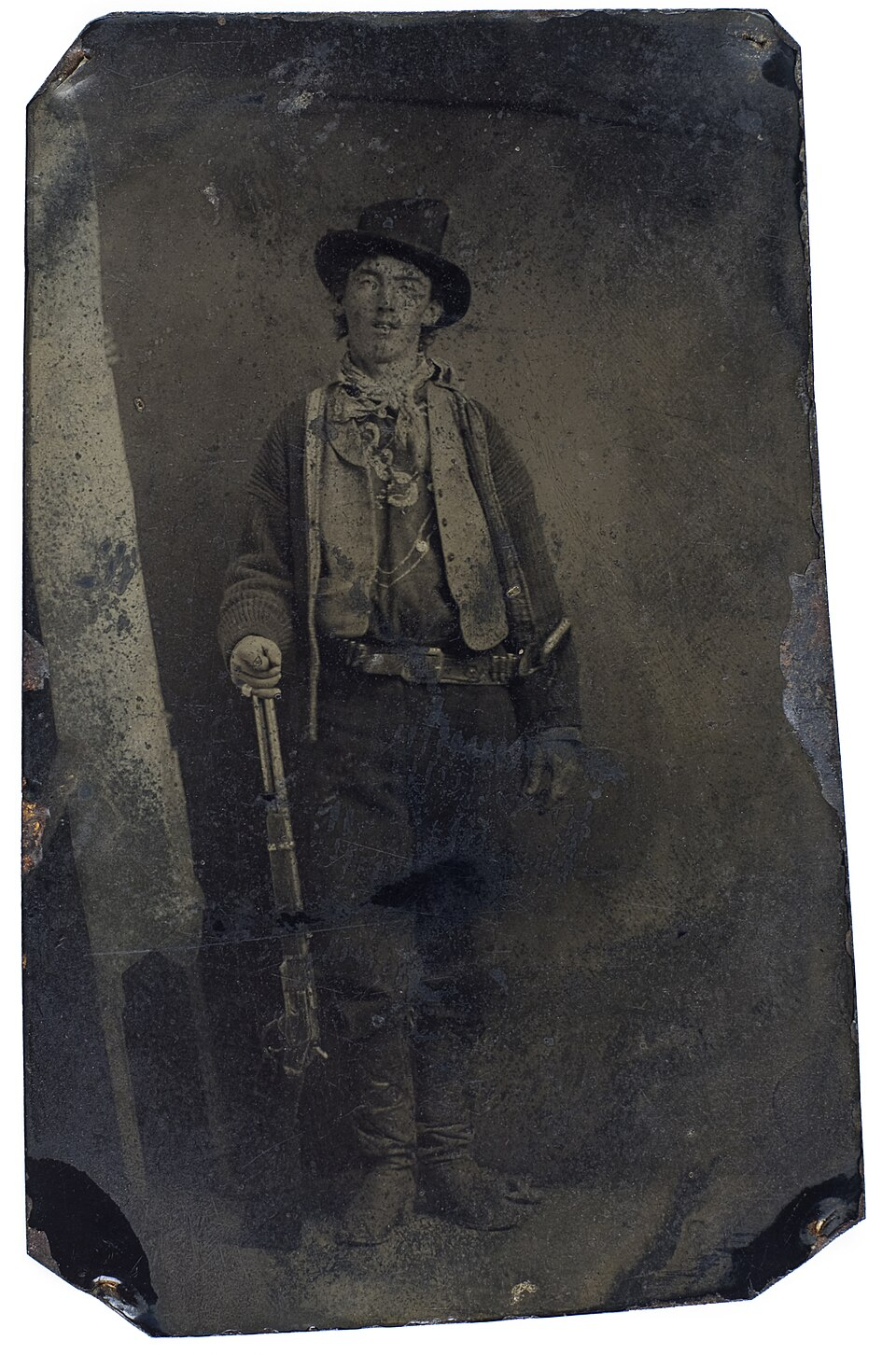
The technical point that defines the whole thing is this: a tintype is a direct positive.
Most photographic processes make a negative, from which any number of positive prints can be made. A tintype skips that. The exposure in the camera produces the final image directly on the metal plate, which is then the picture – the only one.
Which has consequences that run through everything else. There are no copies, so every tintype is unique and there is no second one somewhere else. If a family had three sons and wanted a picture for each, the operator had to make three separate exposures. And because there is no negative, nothing survives if the plate is lost.
It also means the image is laterally reversed in most cases, which is why the buttons and the parting are frequently on the wrong side, and why reading any lettering in a tintype requires a mirror.
And it made the object intensely personal. A tintype was not a print from a file; it was the actual plate that had been inside the camera while the person sat there, handed over a few minutes later. There was precisely one, and the person who got it had the only one in existence.
The Photographer Came to You
The distribution model is the reason these pictures reached the people they reached.
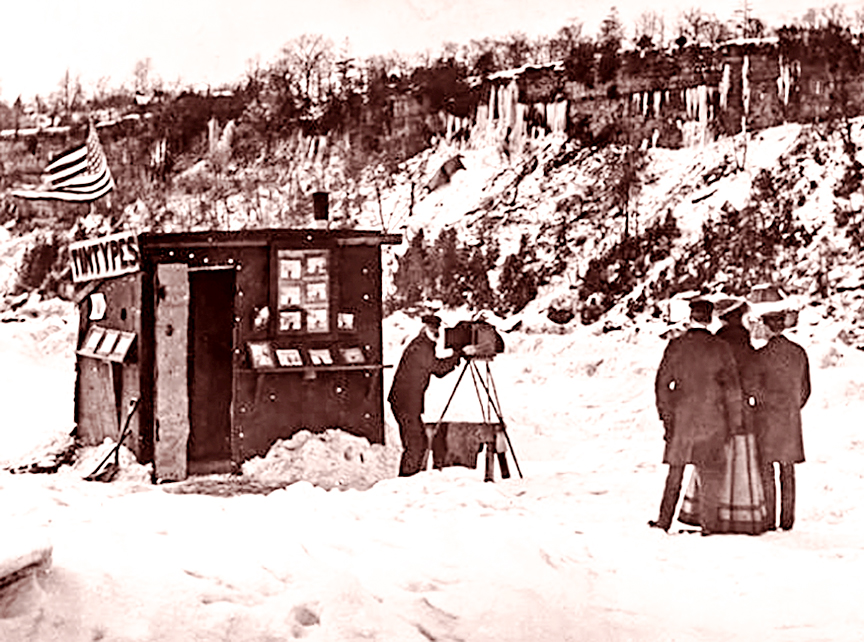
A tintype operation did not need a permanent studio. It needed a camera, a supply of plates, a chemical setup, something to work in out of the light, and a backdrop. All of that fits in a wagon, a railway car, a tent or a rented room over a shop.
So operators travelled. They worked county fairs, carnivals, market days, circuses, resorts, piers, encampments and town squares, and they moved on. In a rural county that had no photographer at all, the arrival of a travelling operator was the only opportunity anybody would get, and people arrived in their best clothes, with their children, and in some cases with an animal, an instrument or a tool they wanted in the picture.
That mobility is the whole social significance of the medium. A studio photographer serves the people who can get to a studio and afford a sitting. A travelling operator with cheap plates serves agricultural labourers, servants, children, soldiers, farm families, factory hands and people in places with no photographer within forty miles – which is a vastly larger and almost completely unrecorded population.
Which Is Why the Pictures Look Like That
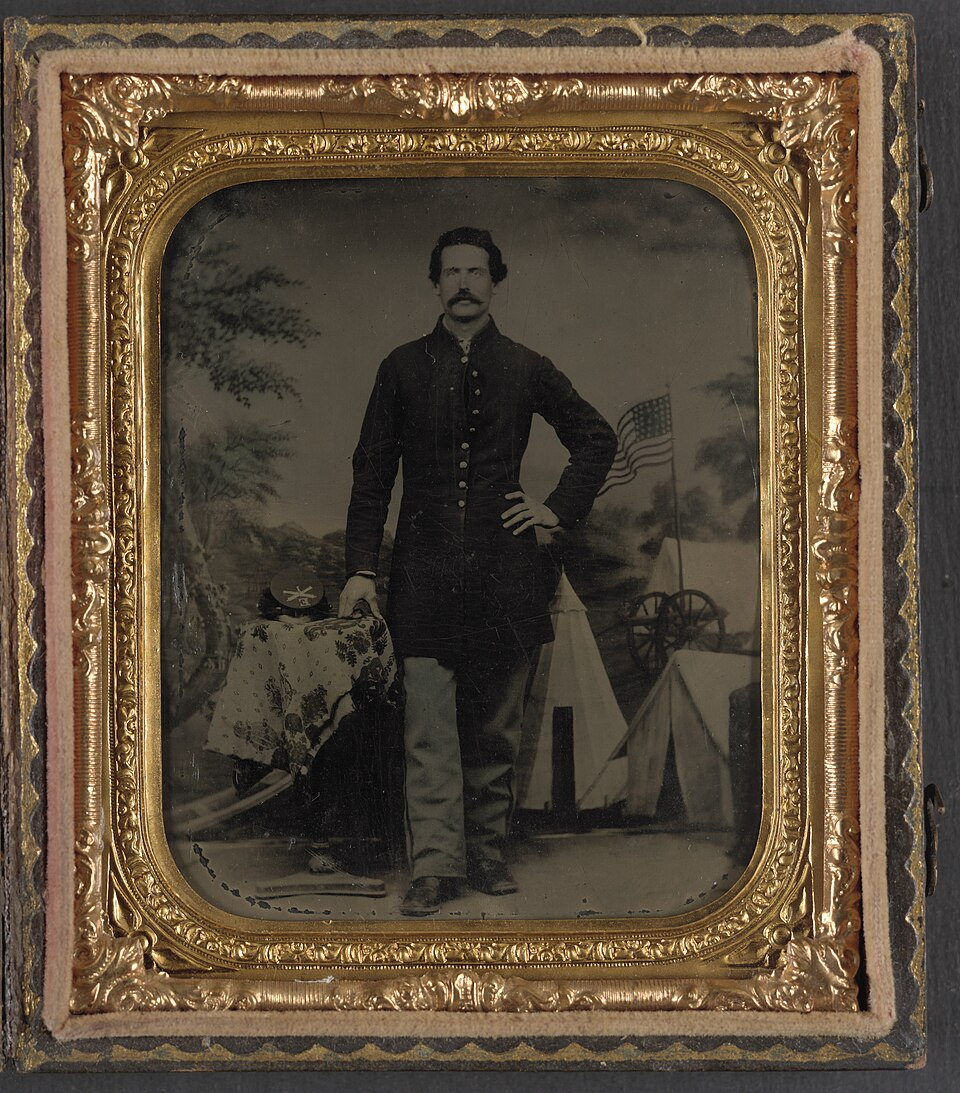
The characteristic qualities of a tintype are all consequences of the economics, and knowing that changes how you read one.
The expressions are solemn because the exposure took time and because being photographed was a serious and unfamiliar event rather than a casual one. The poses are stiff because people were arranged by an operator working fast through a queue, frequently braced against a stand.
The backdrops are painted canvas, sometimes obviously so, with a studio chair and a scrap of carpet and perhaps a column – because the operator carried a portable set and used it for everybody, which is why pictures of unrelated people from the same county sometimes share the same backdrop.
The hand colour on the cheeks and occasionally on jewellery was an extra charged by the operator, applied with a tiny brush in seconds.
And the subjects are holding things, constantly. A fiddle, a tool, a book, a hat, a rifle, a baby, a dog. Given one photograph in a lifetime, people brought the object that said who they were – which makes a tintype a statement about identity rather than a snapshot, assembled deliberately by somebody who knew it was their only chance.
They Are Also Nearly All Anonymous
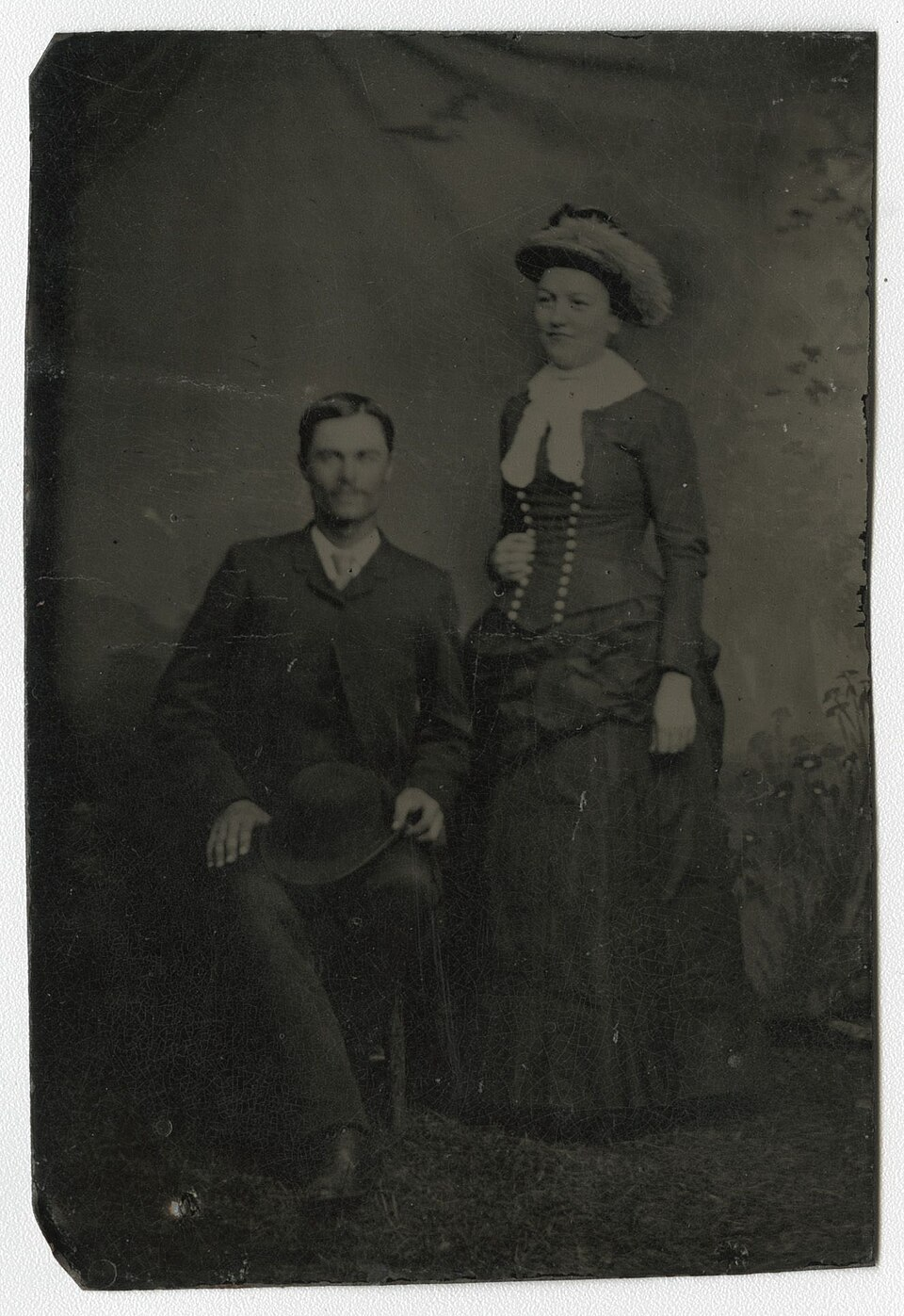
The tragedy of the medium is structural rather than careless.
A tintype has a blank back. There is no space designed for writing, the metal takes pencil badly, and most of them were handed over mounted in a thin paper mat or slipped into a small case with no label. The operator was moving on and kept no records that survived.
So the pictures outlived the knowledge of who was in them, almost universally. Antique dealers sell them by the box. There are enormous numbers of nineteenth-century American faces in circulation, in excellent condition, entirely unidentified, and essentially no way to connect them to anybody.
Which is why the one in your family is valuable in a way that has nothing to do with money. It is identified, approximately, because it stayed in the family and somebody passed down a name – and that chain is the only thing standing between that face and the anonymous box in a dealer’s shop.
The Image Is Physically Durable and That Is Why They Survive
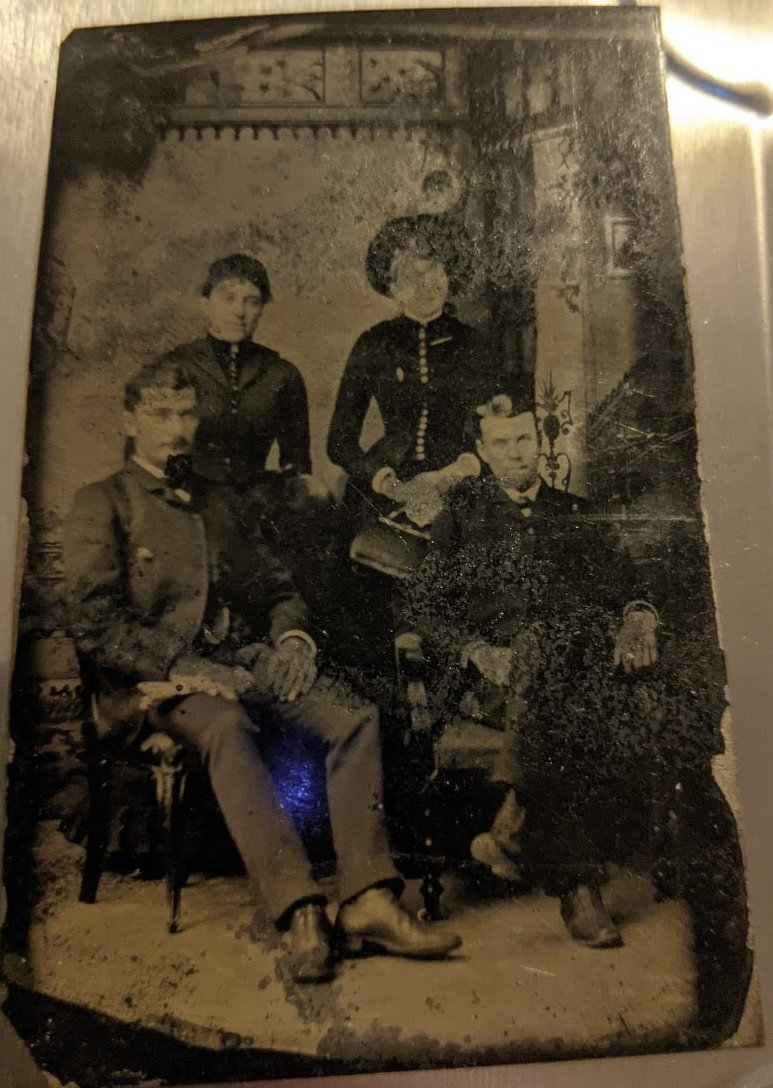
One reason these objects turn up so often is that they are tougher than almost anything that came after.
The image is embedded in a varnished layer on a metal plate. It does not tear, does not crease, does not go brittle, and does not fade in the way that some later paper processes fade badly. It can be bent, scratched, soaked and generally mistreated and still be legible.
Compare that with a twentieth-century colour snapshot, which fades and shifts colour within decades, or with a digital file, which is perfectly preserved until the moment the drive fails or the format becomes unreadable and then is entirely gone.
So the oldest photograph in a great many American families is also the most physically durable one, which is an odd and slightly uncomfortable fact about technological progress in image-making. The cheapest and crudest process produced the most durable object.
Then Photography Got Cheap Enough to Be Casual
The tintype faded out because something better arrived for the same money, and then something much better arrived for less.
Paper prints from glass negatives undercut it on quality and offered the enormous advantage of copies – one sitting, many prints, distributable to relatives. Then the simple roll-film hand camera put picture-taking into the hands of the subjects themselves, which eliminated the operator entirely.
And that is the real change, bigger than any chemistry. Photography went from an event, performed by a professional, costing money, happening once or a handful of times in a life, to an activity performed by anybody at any moment for almost nothing.
The consequence is that a modern person generates more images in a week than a nineteenth-century American generated in a lifetime, and the modern images are almost entirely unremarkable to their subjects. The tintype’s solemnity, its stiffness, its carefully chosen held object and its hand-tinted cheeks are all symptoms of scarcity – and scarcity is exactly what made it a considered statement rather than a casual record.
Which leaves the small dark plate in the family box doing something no photograph taken since can do. It is one person’s single deliberate account of themselves, made by a stranger in a tent, in the only few minutes they ever had in front of a camera.
Like our content? Follow us for more.