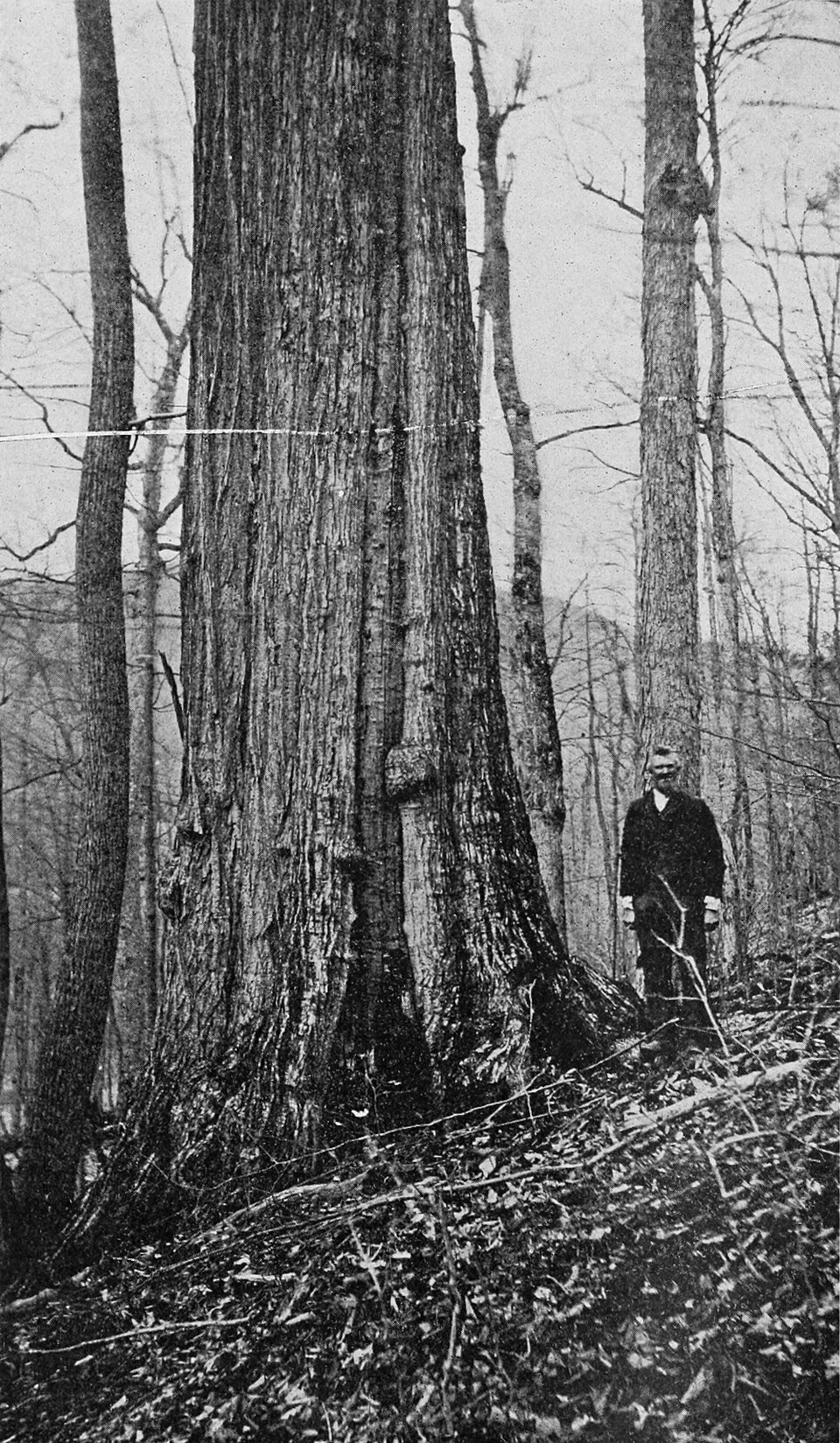
The American chestnut was one of the dominant trees of the eastern forest, and within a few decades essentially every mature one was dead.
The wood was exceptional – straight-grained, light, strong, easily split and extraordinarily rot-resistant, which made it the fence post, barn frame, shingle, railroad tie and telegraph pole of an entire region. A chestnut post in the ground lasted a working lifetime. And the trees produced enormous quantities of nuts every autumn, gathered by households, hauled to town by the wagonload, and fed to stock turned loose in the woods.
Then a fungus arrived on imported nursery stock, and nothing anybody tried would stop it. Here are fourteen things every mountain family knew.
1. A Tree That Had Been Everywhere Was Simply Gone
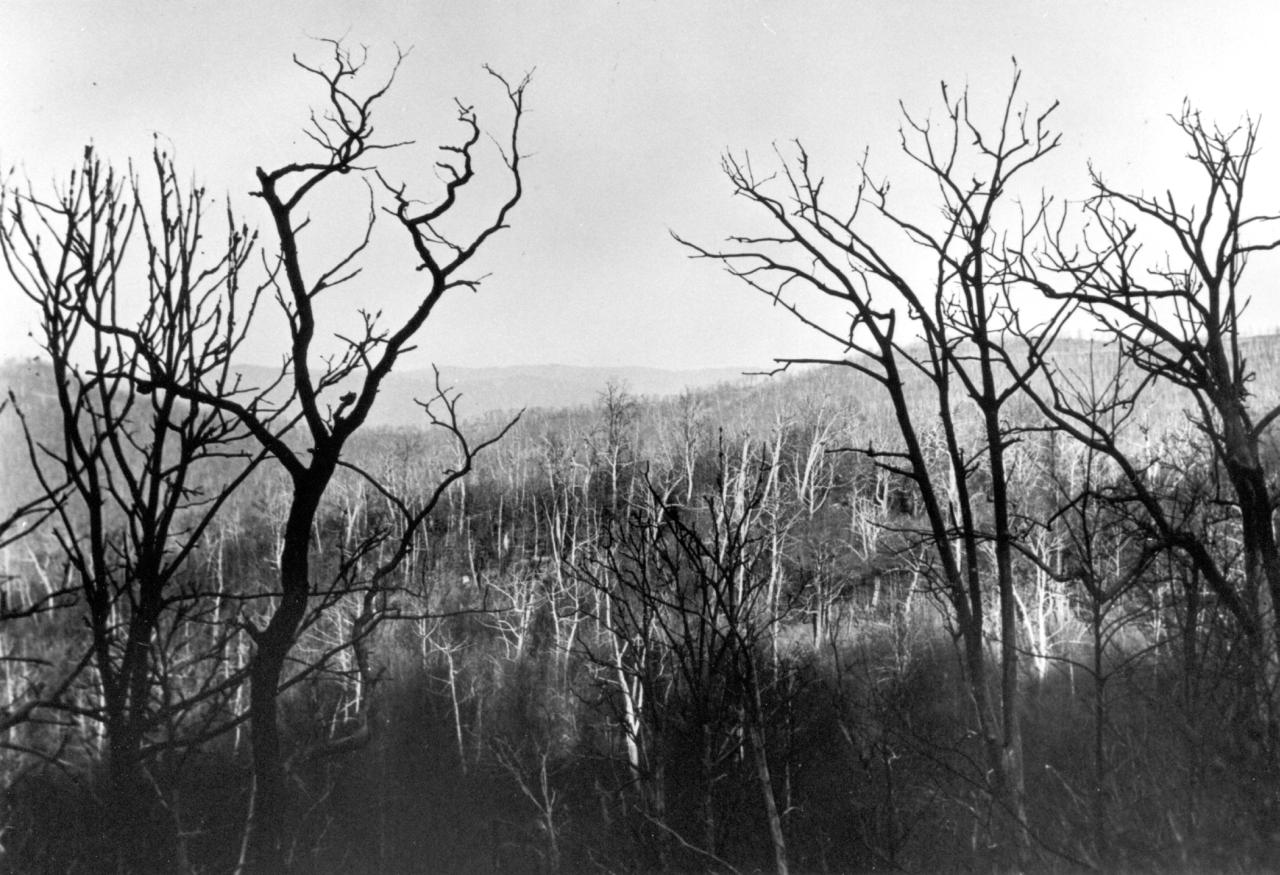
The American chestnut was one of the dominant trees of the eastern forest, and within a few decades of the early twentieth century essentially all the mature ones were dead.
The species survives as root sprouts that grow for a few years and then die back, plus a small number of surviving trees and an active breeding and restoration effort.
The scale of this is the thing that does not register until you look for it. This was not a decline or a reduction – a tree that made up a very large share of a whole region’s forest stopped existing as a mature tree inside the lifetime of people who were alive in 1974, and most Americans have never seen one.
Like our content? Follow us for more.
2. It Was the Most Useful Tree in the Forest
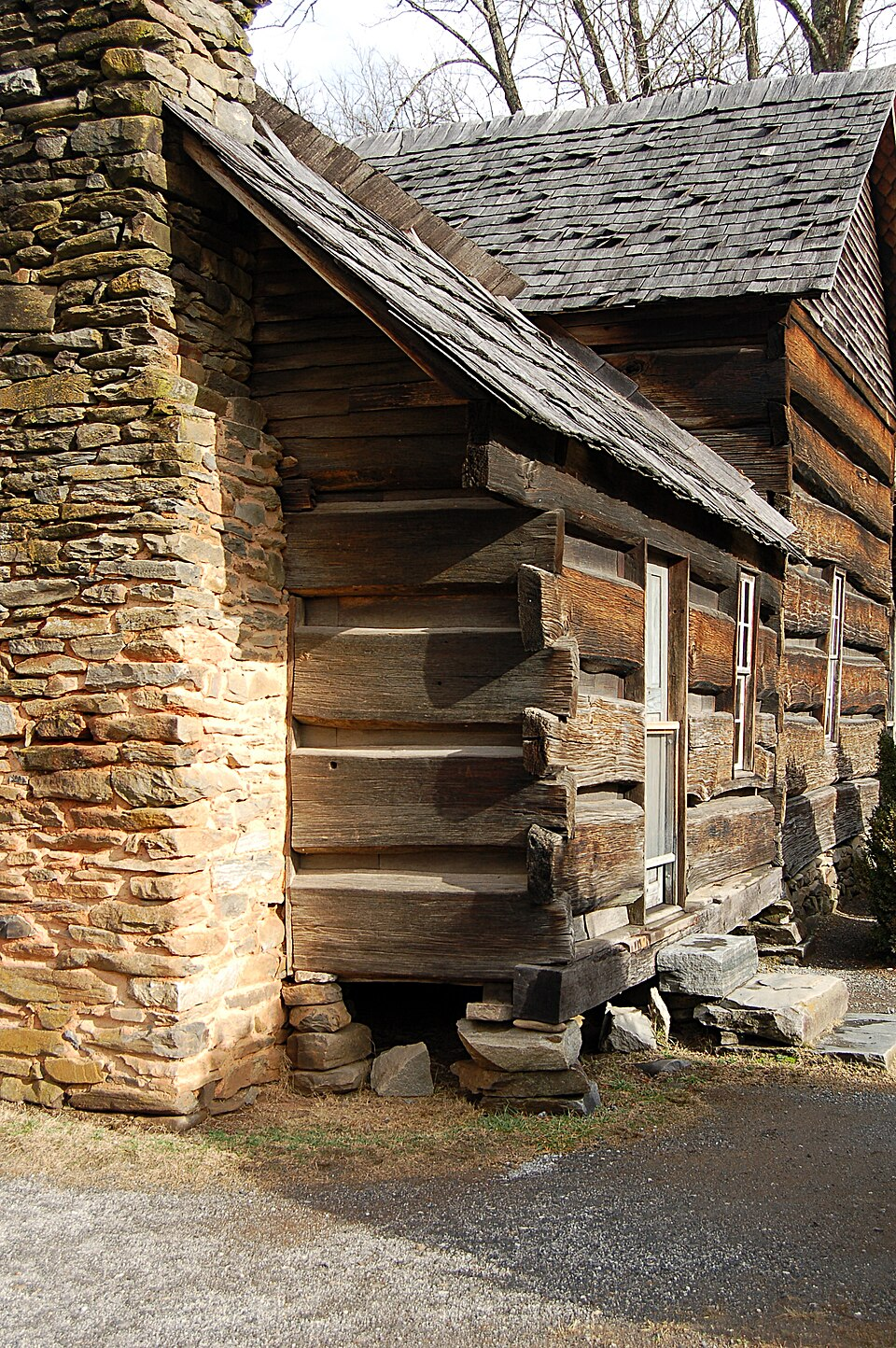
Chestnut wood was straight-grained, light, strong, easily split and extraordinarily resistant to rot, which made it the material of choice for an unusually wide range of uses.
Other timbers, pressure-treated wood, concrete and steel.
Rot resistance is what made it exceptional rather than merely good. A wood that can be put in the ground or left in the weather for decades without preservative treatment is enormously valuable, and before chemical treatment existed it had very few competitors.
3. It Built the Countryside
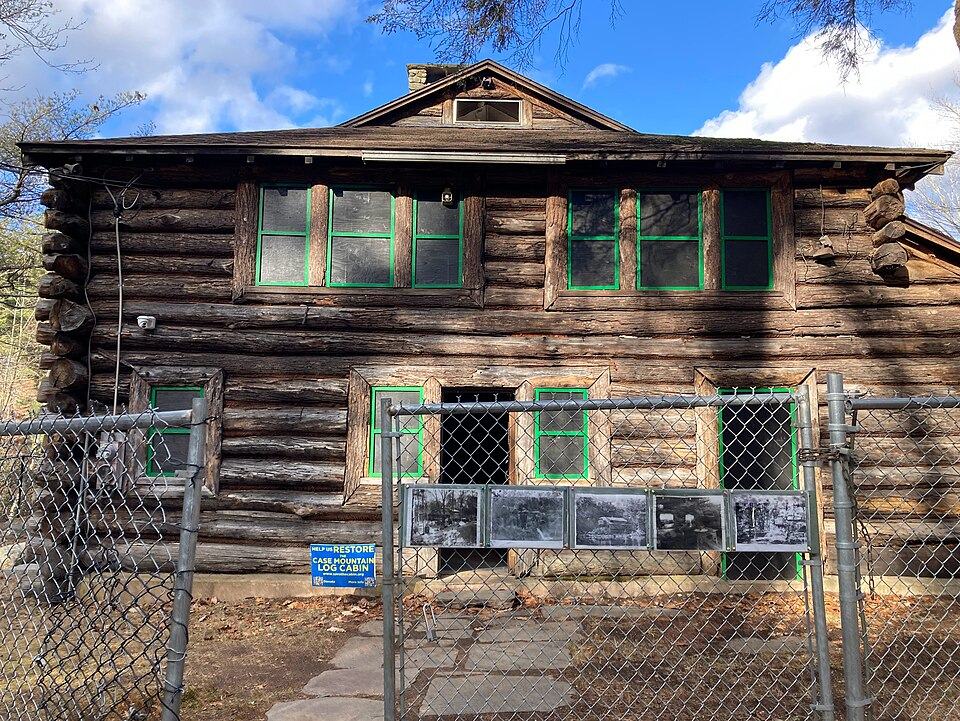
Fence posts, rails, barn framing, shingles, siding, telegraph poles, railroad ties, furniture and interior woodwork across a huge region were chestnut.
Treated pine, other hardwoods, metal and manufactured materials.
The fence post is the use that mattered most to ordinary people, and it is the one that explains the loss practically. A chestnut post in the ground lasted a working lifetime, which meant a farmer’s fences were a long-term asset rather than a recurring expense – and that changed when the tree did.
4. The Nuts Were a Crop Nobody Planted
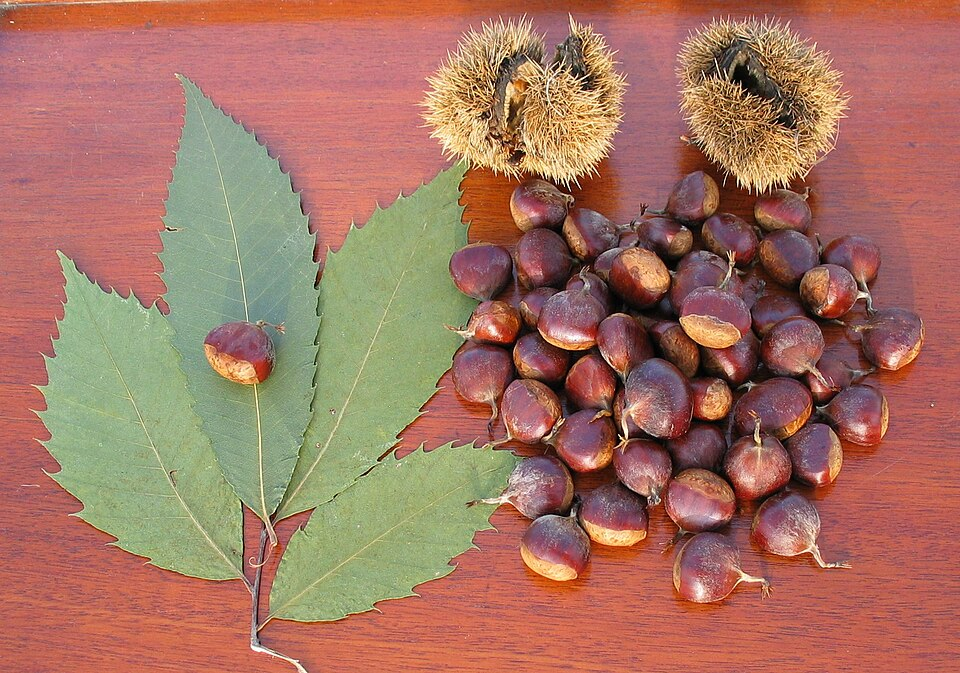
Mature chestnuts produced enormous quantities of nuts annually, which were gathered by households, sold in quantity in cities, and fed to stock.
Imported and cultivated chestnuts of other species, sold as a seasonal luxury.
A reliable free food crop falling out of the forest every autumn is a substantial resource, and it functioned as one. Households gathered them to eat and to sell, and the nuts were hauled to town by the wagonload – which makes this a loss of income as well as of a tree.
5. Stock Fattened on Them in the Woods
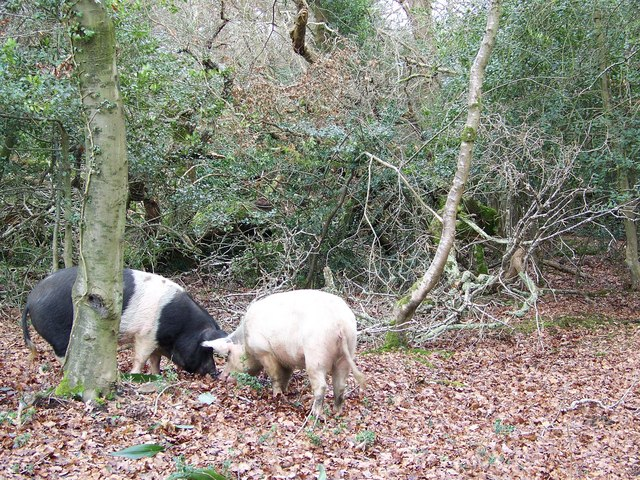
Animals were turned into chestnut woods in autumn to feed on the fallen nuts, which was a free and significant source of feed.
Purchased feed and managed pasture.
Using the forest as a feed resource is an arrangement that disappeared along with the tree, and it is worth understanding as agriculture rather than as foraging. A farm with chestnut woods had an autumn feed supply that cost nothing to produce and nothing to harvest, which is a real line in a household’s economy.
6. The Disease Arrived on Imported Plants
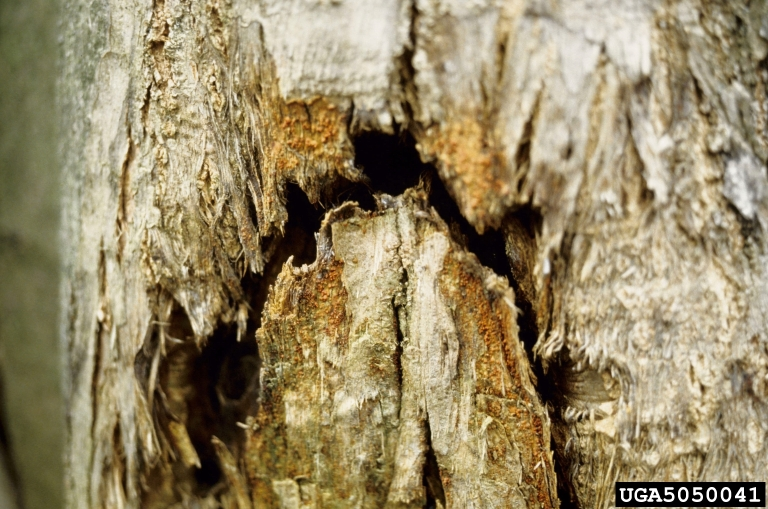
The blight is a fungus that reached North America on imported nursery stock from Asia around the turn of the twentieth century and spread from there.
Well understood, and the reason nursery stock is inspected at the border in its modern form.
The introduction is the part with a lesson attached. A pathogen that coexists with resistant trees in its native range encounters a related species with no resistance at all, and the result is not a disease but an extinction event in slow motion – which is exactly the pattern that has repeated several times since.
7. It Kills the Trunk and Spares the Roots
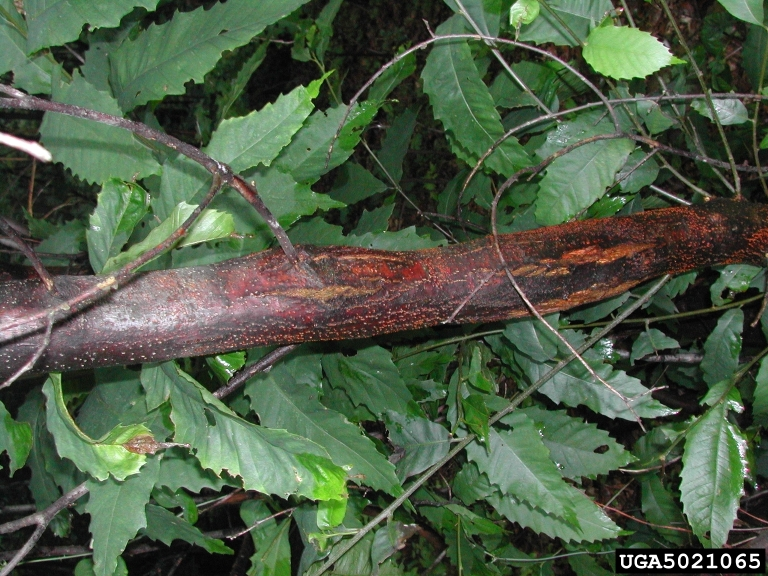
The fungus infects the bark and girdles the trunk, killing everything above the infection, while the root system survives and sends up new shoots.
Unchanged, which is why the species is not technically extinct.
This detail is the whole reason the story is still going. The roots live, so stumps keep producing sprouts that grow for a few years, reach a certain size, get infected and die back – an endless cycle that keeps the species alive as a shrub and prevents it from ever becoming a tree again.
8. Nothing Stopped It
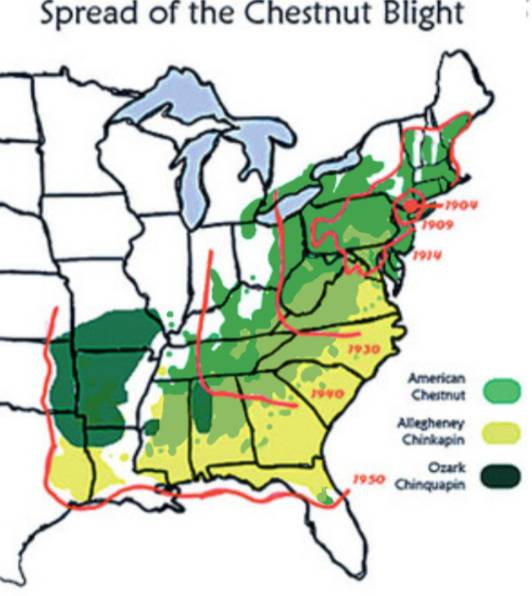
Quarantines, cutting ahead of the advance, and attempts at control were all tried across the affected states and none of them worked.
Management focuses on breeding resistance and on biological control rather than on halting spread.
The failure of containment is worth stating plainly because it was not for lack of effort. Very large resources were put into trying to stop this, by competent people, and the spread continued at a few dozen miles a year until the host range was exhausted.
9. The Salvage Logging Was Enormous
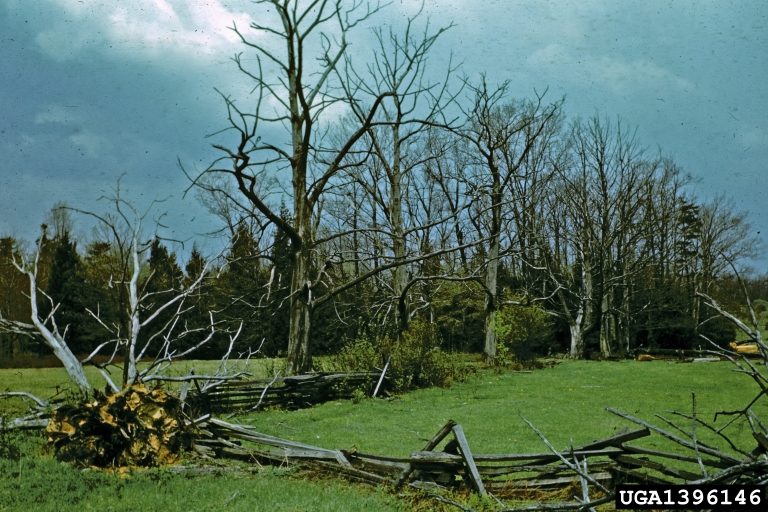
Dead and dying chestnut was cut and milled on a vast scale for decades, because the wood remained usable long after the tree died.
Not applicable.
Harvesting a dying species is a grim but rational response, and it had a strange consequence. A great deal of the chestnut lumber in American buildings was cut from trees already killed by the blight, which means the material arrived in quantity precisely because the tree was finished.
10. Wormy Chestnut Became a Product
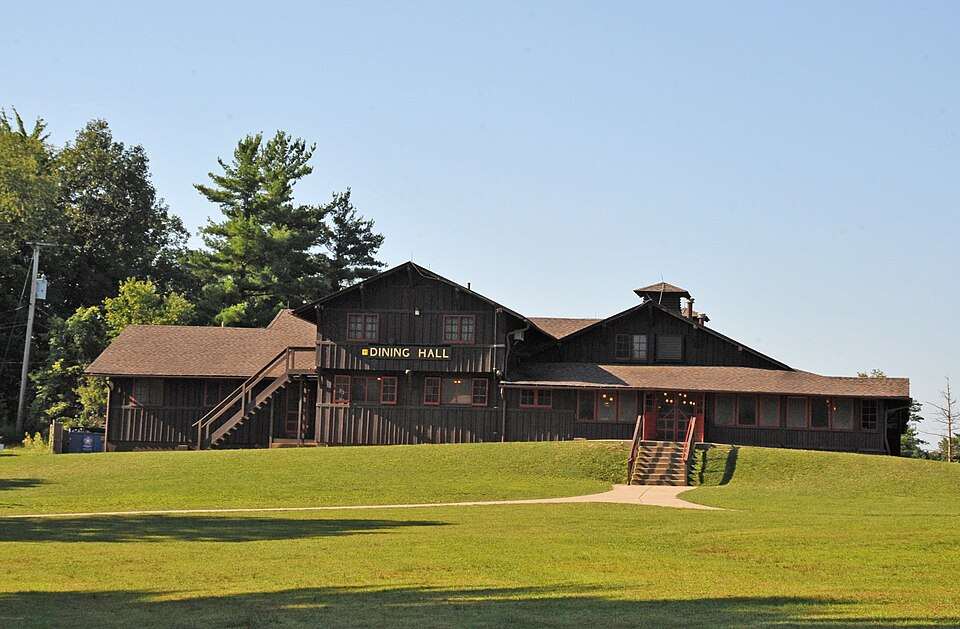
Timber salvaged years after death showed insect damage, and that pattern was eventually marketed as a desirable decorative wood.
A sought-after reclaimed material commanding high prices.
Selling the evidence of the disaster as a feature is one of the odder turns in this story. The holes in wormy chestnut are the marks of a tree that stood dead in the forest for years, and they are now the reason the wood is valuable.
11. Mountain Communities Lost an Economy
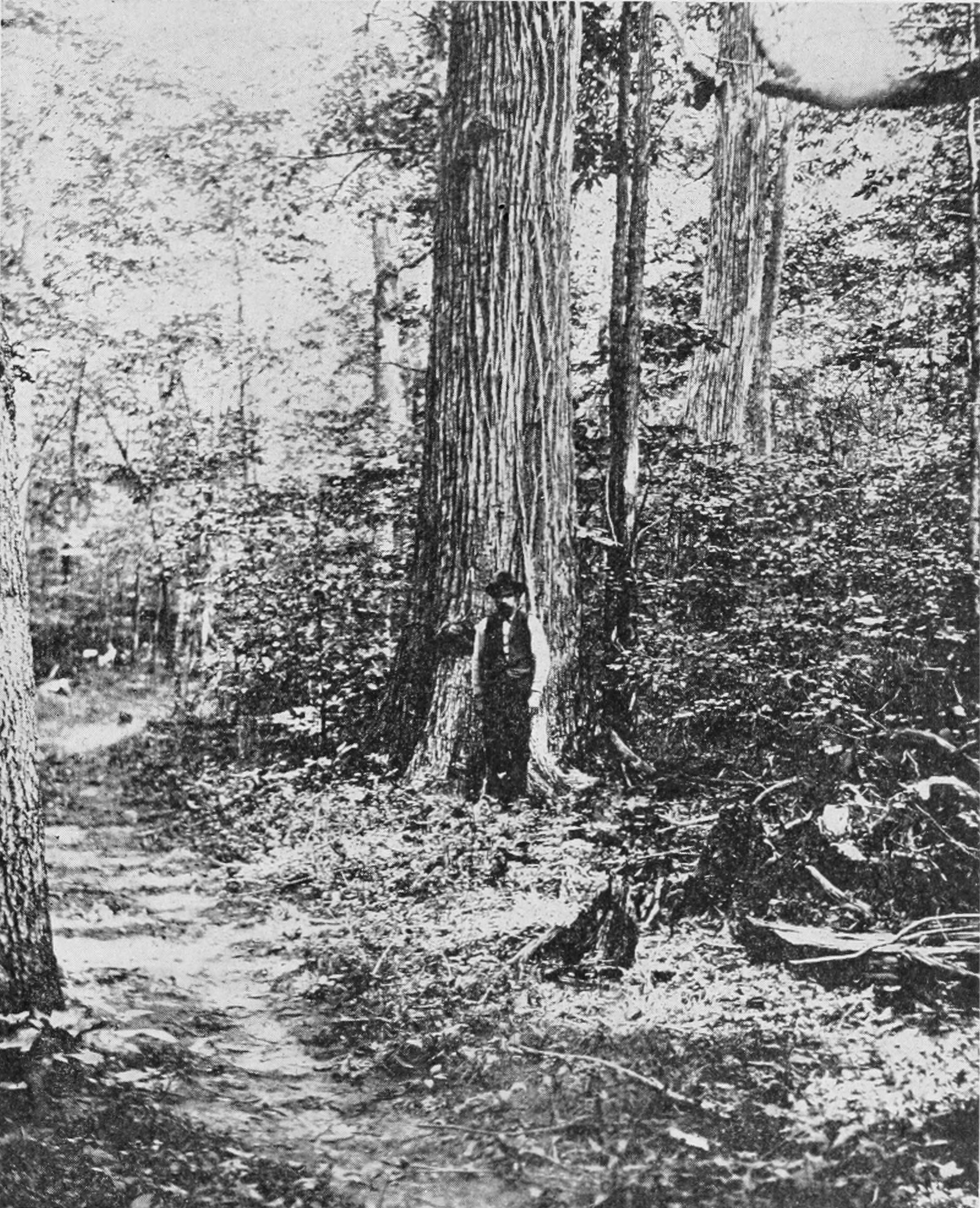
In regions where chestnut nuts, timber, tanbark and stock feeding were a substantial part of how households made a living, the blight removed several income sources at once.
Those economies reorganised long ago around other work.
This is the human cost and it deserves naming rather than being folded into a story about a tree. The loss was not aesthetic – it took the nut crop, the free stock feed, the fence material and a timber income away from the same households simultaneously, and in places with few alternatives.
12. Then the Memory Faded Fast
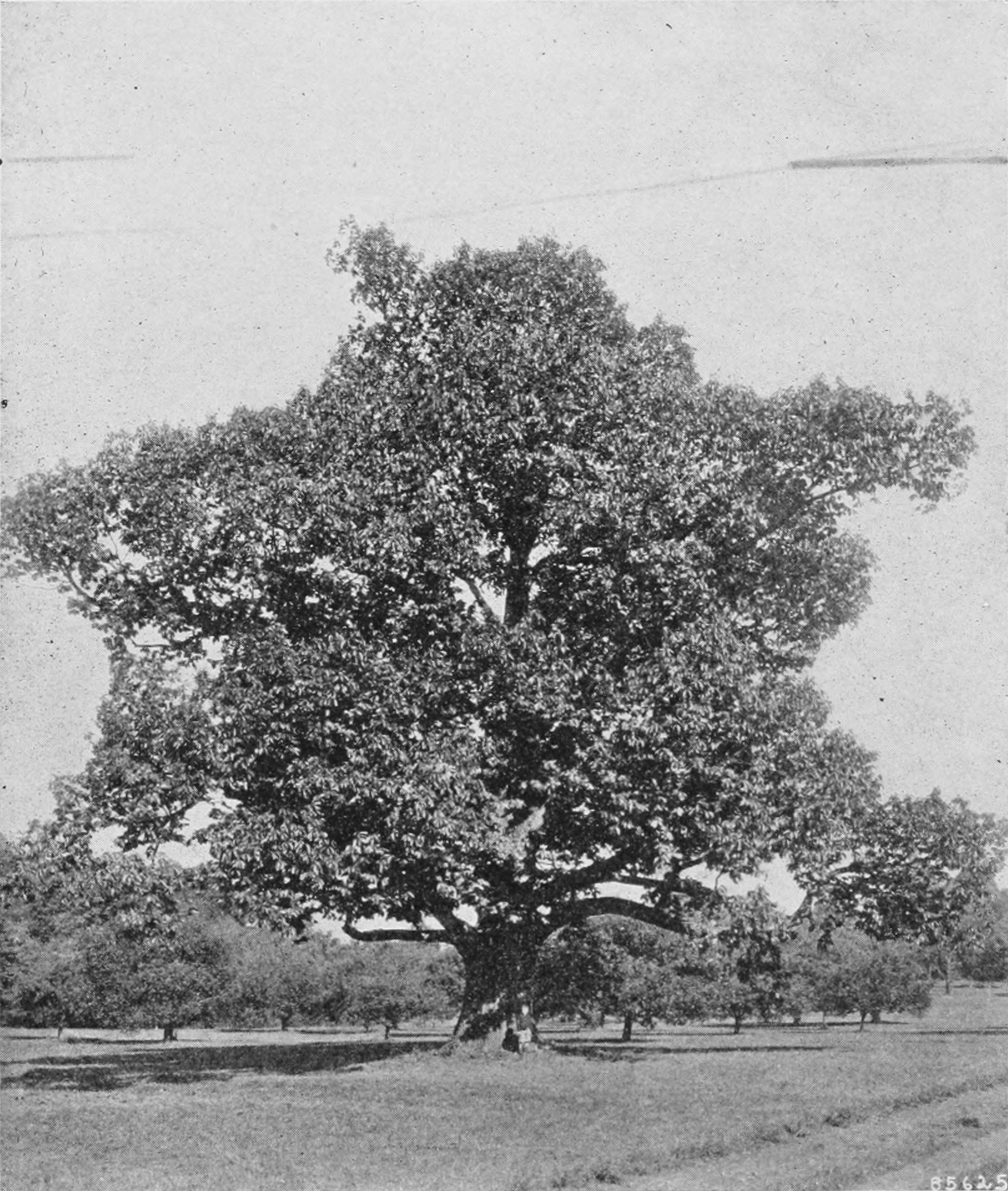
By 1974 the people who remembered mature chestnut woods were elderly, and the generations after them had no reference point for what the forest had been.
Essentially nobody alive remembers the tree in its natural state.
Losing the memory is the second extinction and it happened quickly. A forest that has been different for seventy years simply looks like a forest, which means the absence is invisible to everybody who did not see what was there before.
13. Then the Work Shifted to Bringing It Back
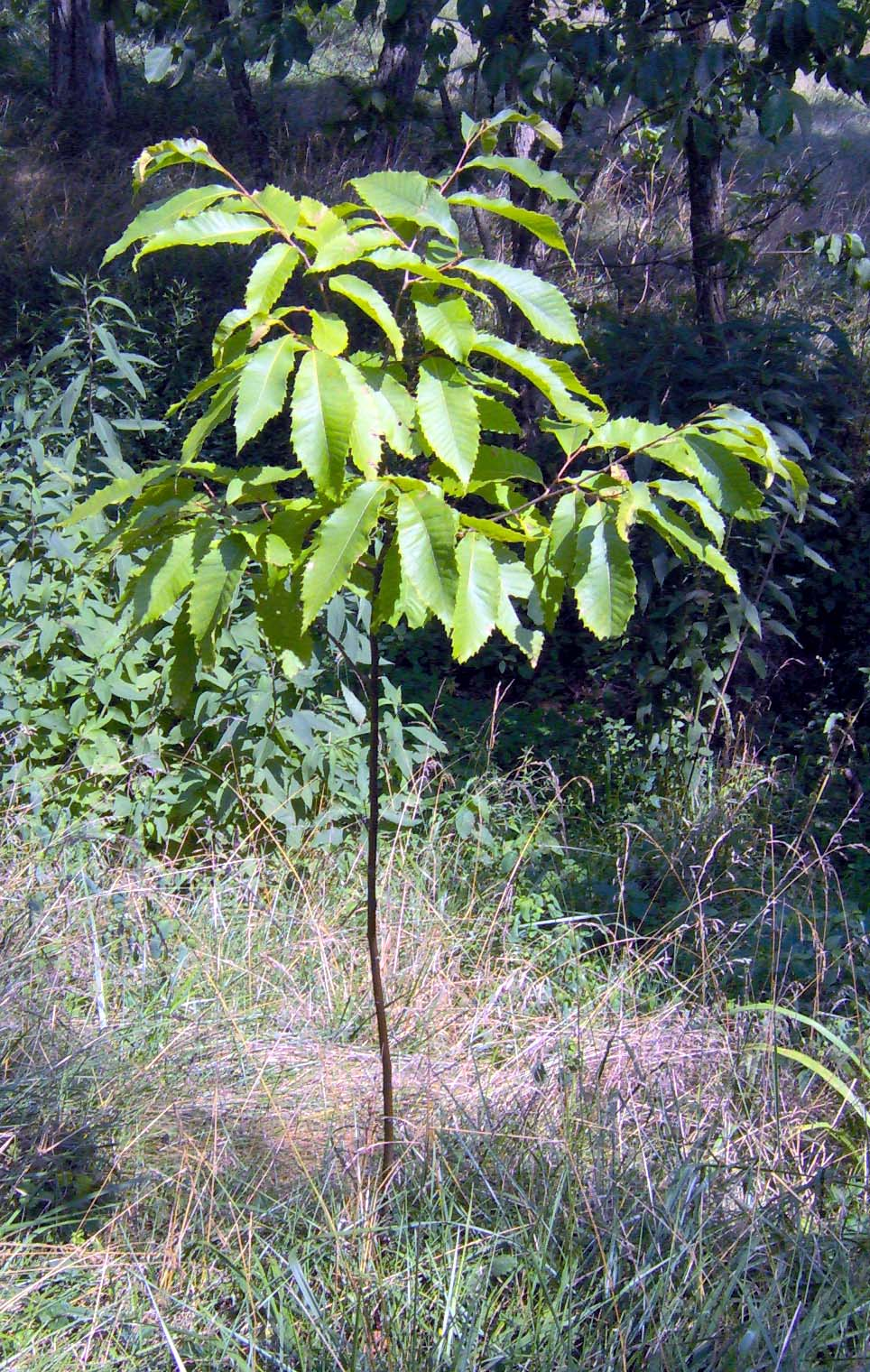
Breeding programmes crossing American chestnut with resistant species, backcrossing for resistance, biological control of the fungus and more recent genetic approaches have all been pursued for decades.
Ongoing, with slow and genuinely uncertain progress.
The restoration effort is real and it is long-term in a way that is hard to convey. Breeding a forest tree takes decades per generation, which means the people who started this work knew they would not see the result – and the people working on it now are continuing somebody else’s project.
14. Then the Stumps Kept Trying
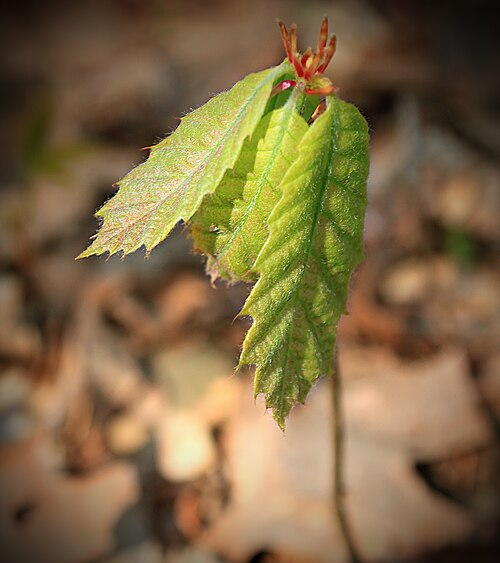
In 1974 chestnut sprouts were still coming up from century-old root systems throughout the old range, growing for a few years and dying back, exactly as they do today.
Unchanged. The roots are still alive and still trying.
And that is the detail that makes this different from an ordinary extinction, because the species has not actually stopped. Somewhere under the leaf litter of the eastern forest there are root systems that were already mature when the blight arrived, and they are still sending up shoots – every few years, for a century, each one growing until it reaches a size the fungus can exploit and then dying back to the ground. It is not survival in any useful sense and it is not quite death either. It is a tree that cannot complete its own life cycle, repeating the attempt indefinitely, in a forest that has rearranged itself around the hole where it used to be. What is worth taking from it is how fast and how completely a dominant species can be removed, and how little trace the removal leaves in anybody’s memory. The nuts, the free autumn feed, the fence posts that lasted a lifetime, the timber income, the woods themselves – all of that was ordinary knowledge in one generation and unimaginable two generations later. The wood is in the buildings. The roots are in the ground. And almost nobody who walks past either one knows what they are looking at.
The Roots Are Still Alive, Which Is Not the Same as Surviving
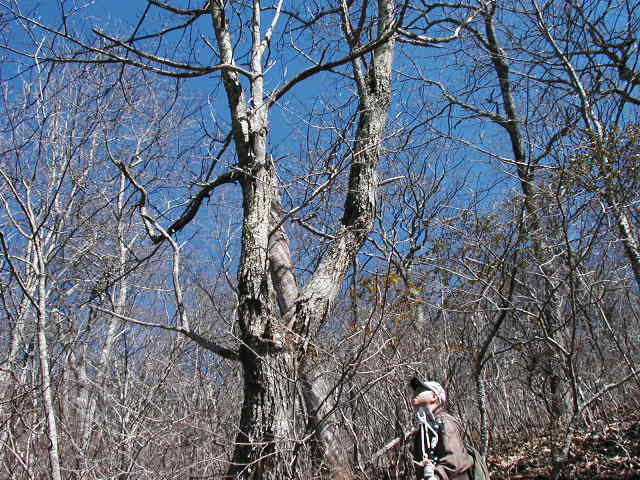
The strangest fact about the American chestnut is that it is not extinct, and that this is almost worse than if it were.
The blight is a fungus that infects the bark and girdles the trunk, killing everything above the infection. The root system is untouched. So the roots live, and they send up shoots – which grow for a few years, reach a certain size, get infected and die back to the ground.
That cycle has been running for a century. There are root systems under the leaf litter of the eastern forest that were already mature when the blight arrived, and they are still trying. Every few years, another shoot. Every few years, it fails.
It is not survival in any useful sense and it is not quite death either. It is a tree that cannot complete its own life cycle, repeating the attempt indefinitely.
To understand what that cost, you have to see what the tree had been doing.
It was the most useful timber in the forest, and the reason was rot resistance. A wood that can be set in the ground or left in the weather for decades with no preservative treatment is enormously valuable, and before chemical treatment existed it had almost no competitors. So an entire region’s fence posts, rails, barn framing, shingles, siding, poles, ties, furniture and interior woodwork were chestnut – and the fence post is the use that mattered most to ordinary people, because a post that lasted a working lifetime made a farm’s fences a long-term asset rather than a recurring bill.
It was also a food crop that nobody had to plant. Mature trees dropped enormous quantities of nuts annually, which households gathered to eat and to sell, hauling them to town by the wagonload. And stock was turned into the woods in autumn to fatten on what fell, which is a free feed supply that cost nothing to produce and nothing to harvest.
In mountain communities where nuts, timber, tanbark and woods feeding were a substantial part of how households lived, the blight removed several income sources simultaneously – in places with few alternatives. That is the human cost and it deserves naming rather than being folded into a story about a tree.
The introduction carries a lesson. A fungus that coexists with resistant trees in its native range met a related species with no resistance at all, and the result was not a disease but an extinction in slow motion. Quarantines, cutting ahead of the advance and every attempted control failed – not for want of effort, since large resources and competent people were applied to it, but because the spread simply continued until the host range was exhausted.
Then came the salvage, which produced one of the odder outcomes in the whole story. Dead and dying chestnut remained usable for years, so it was cut and milled on a vast scale for decades – which means a great deal of the chestnut lumber in American buildings came from trees the blight had already killed. The material arrived in quantity precisely because the tree was finished. And timber salvaged years after death carried insect damage, which was eventually marketed as wormy chestnut and is now a sought-after decorative wood.
The holes are the evidence of the disaster. They are the reason the wood is valuable.
The restoration work is real, long-running and genuinely uncertain – breeding crosses with resistant species, backcrossing, biological control of the fungus, and more recent genetic approaches. Forest trees take decades per generation, which means the people who began this knew they would never see the result, and the people doing it now are continuing somebody else’s project.
What is worth taking from it is how fast a dominant species can be removed and how little trace the removal leaves. The nuts, the autumn feed, the posts that lasted a lifetime, the timber income, the woods themselves – ordinary knowledge in one generation and unimaginable two generations later.
The wood is in the buildings. The roots are in the ground. And almost nobody walking past either one knows what they are looking at.
If your family was in the mountains, your great-grandparents gathered these by the sack.
And they watched the woods die.
Like our content? Follow us for more.