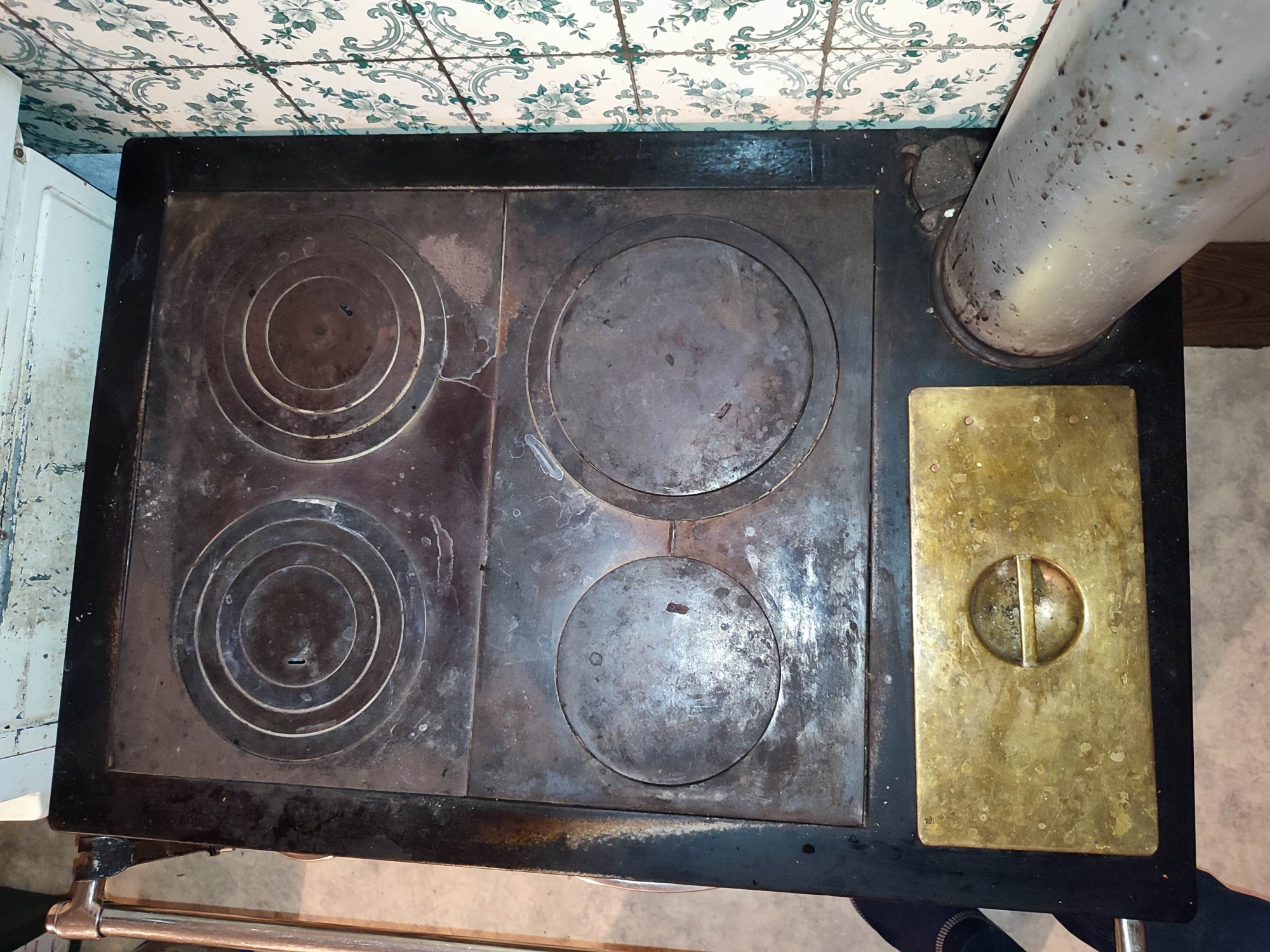
Look at a wood-burning kitchen range in a museum or an antique shop and there is a compartment at one end that most visitors cannot account for. A rectangular box, set into the end of the stove against the firebox, with a hinged lid on top. Usually lined in copper or galvanised iron. Sometimes with a small tap at the bottom.
People guess warming oven. It is not.
It is the reservoir, and it held somewhere between ten and twenty gallons of water that stayed hot all day without anybody doing a single thing about it. In a house with no water heater, no boiler and no plumbing, that tank was the entire hot water supply – and it is one of the most quietly intelligent pieces of domestic engineering of the period.
Hot Water Was the Scarce Resource, Not Heat
To see why this matters you have to grasp how much hot water a household needed and how hard it was to get.
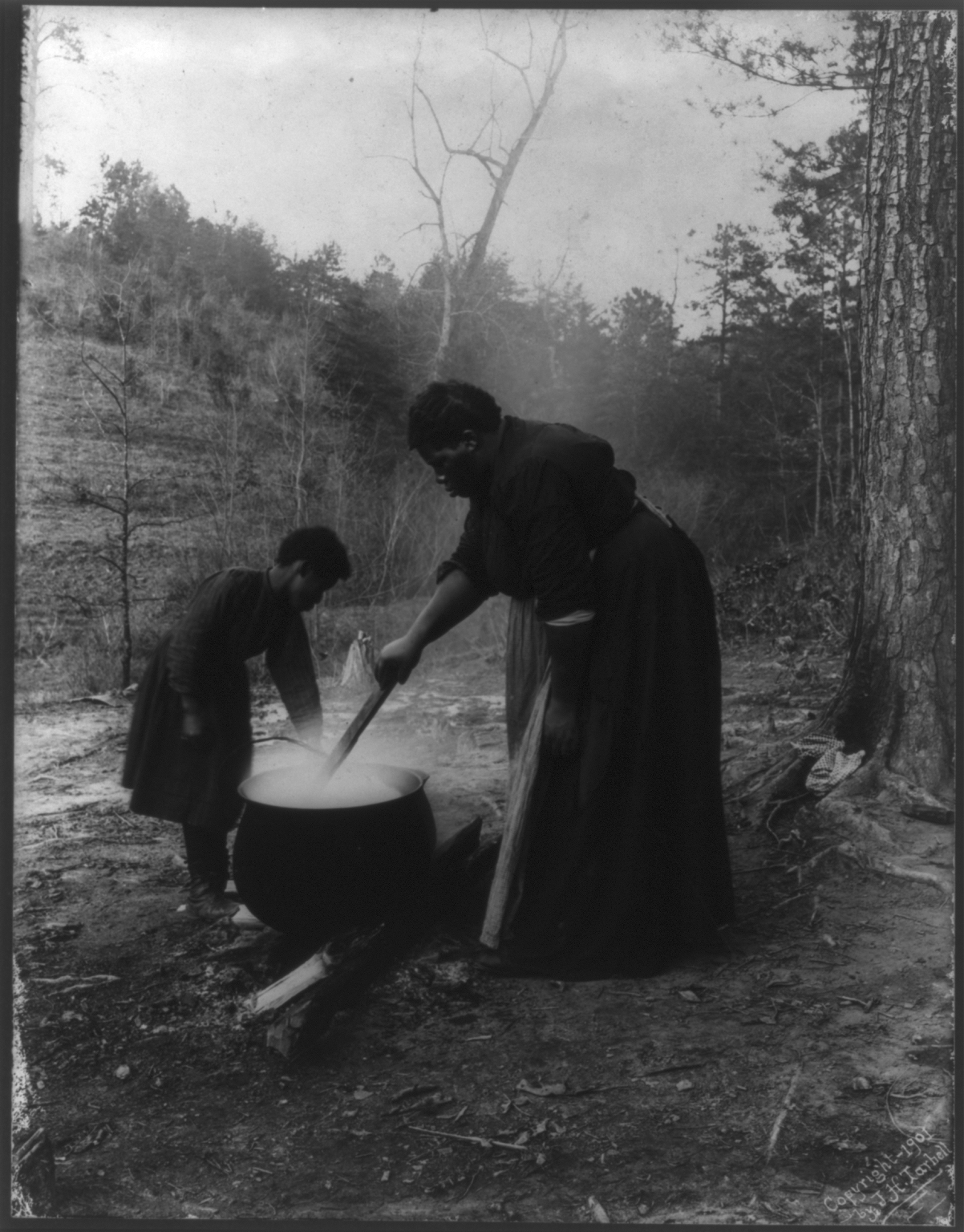
Dishes three times a day. Hands and faces, morning and evening, for everybody. A weekly bath, which at household scale is a great many gallons. Laundry, which is the largest single demand by a wide margin and which needs water genuinely hot rather than merely warm. Scrubbing floors. Scalding milk vessels, which had to be done daily and properly. Shaving. Cleaning anything greasy.
Without a reservoir, every drop of that was heated in a kettle or a boiler on the stove top. Which means somebody put a vessel on, waited, used it, and put it on again – occupying stove space that was needed for cooking, requiring attention, and producing hot water in small batches at the exact moments when the cook least wanted to be interrupted.
The fundamental problem is that hot water is needed continuously in small amounts and kettles deliver it discontinuously in small amounts, with a wait each time.
Like our content? Follow us for more.
The Insight: The Fire Was Burning Anyway
Here is the piece of thinking that makes the reservoir clever rather than merely convenient.
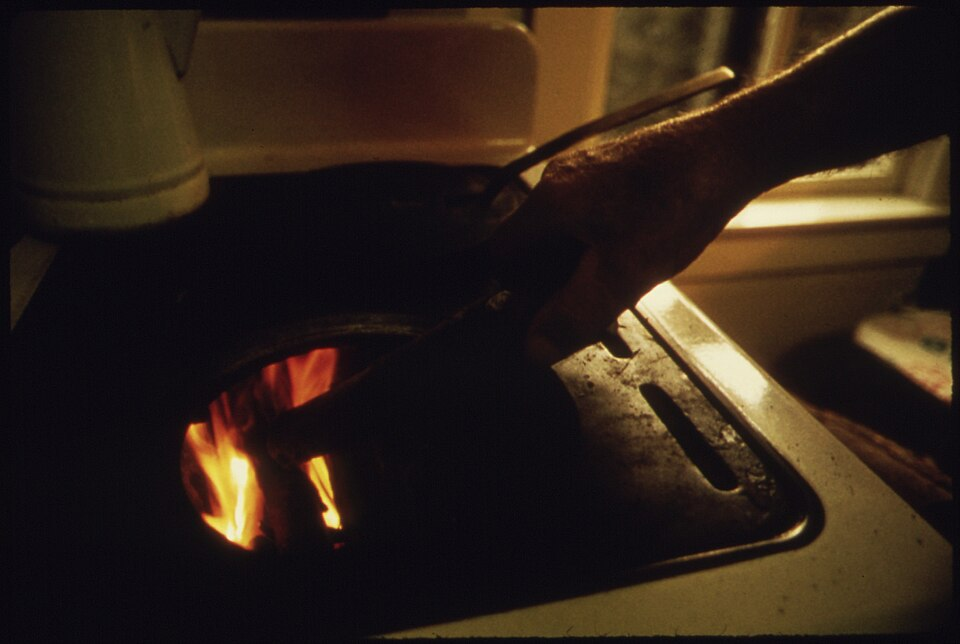
A wood or coal range in 1964 was not lit when somebody wanted to cook. It burned more or less continuously – from early morning until night in winter, and for most of the day even in summer, because it was also the kitchen’s heat source and because relighting a range is a job nobody wanted to do twice.
That means a large hot cast iron object was sitting in the kitchen for sixteen hours a day whether or not anything was being cooked on it. Most of that heat went up the chimney or into the room.
Put a water tank in direct contact with the hot end of that stove and the waste heat becomes a service. The water gets hot because the fire is burning for other reasons entirely, which means the hot water costs nothing – no extra fuel, no extra attention, no stove space, and no waiting. It is simply there, hot, all day, as a by-product.
And it is self-regulating in a useful way: the hotter the stove is being run, the more hot water the household gets, and a stove is run hottest on the days with the most cooking and laundry.
How It Was Built
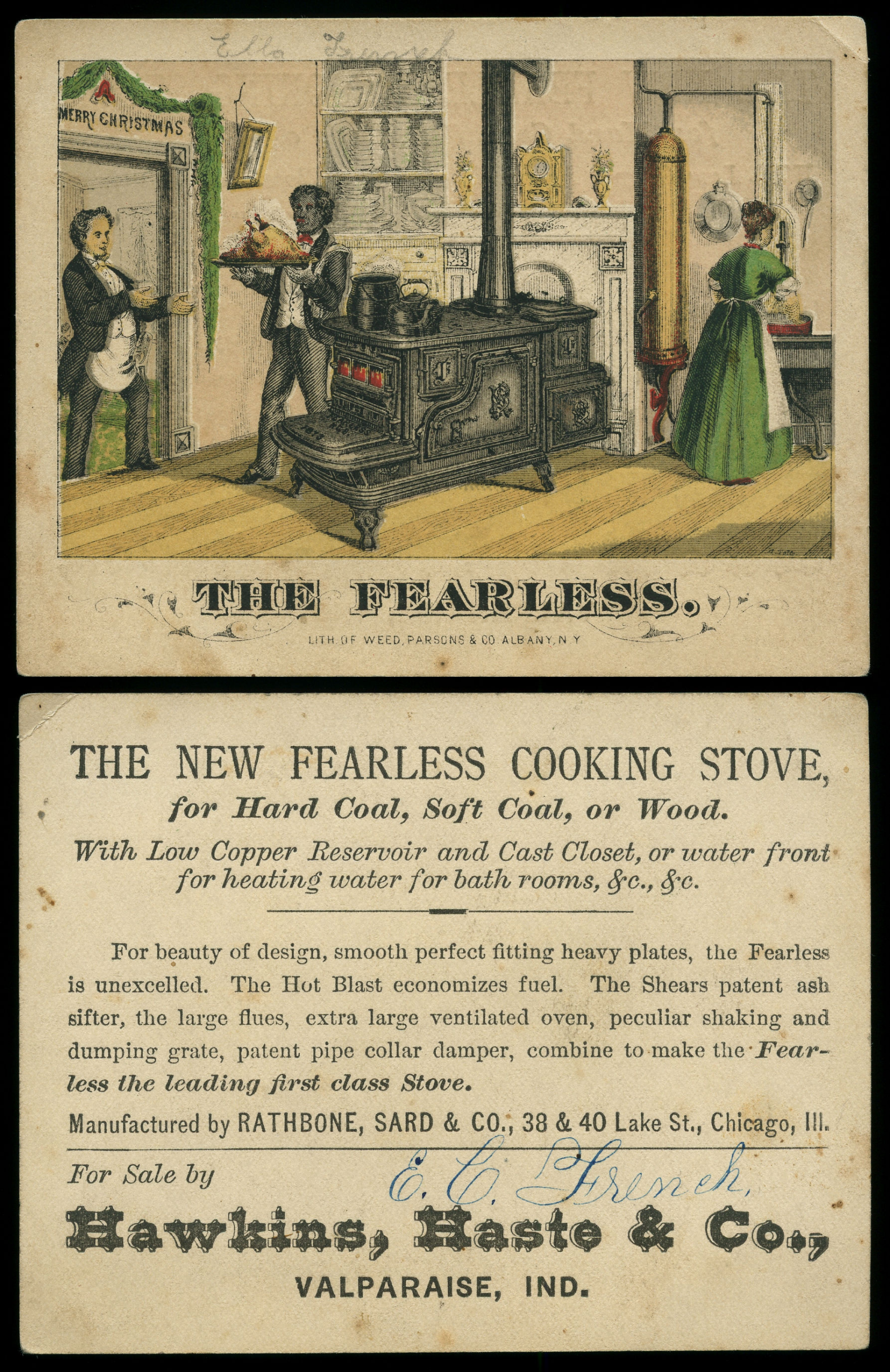
The tank sat at one end of the range, against the firebox or against a flue passage, so that one of its walls was effectively a heat exchanger.
Construction was copper or galvanised iron – copper on better stoves, because it conducts heat well and resists corrosion, and galvanised on cheaper ones. The lid lifted so water could be dipped out with a dipper or a saucepan, which is how most of it was taken, and some models also had a small tap near the bottom.
Filling was by hand, in a bucket, from the pump or the cistern. Somebody topped it up during the day as it was used, which was an ordinary small chore that children were given. A reservoir allowed to run low while the stove was hot would overheat, and one allowed to run dry could damage itself, so keeping it filled was a minor discipline the household observed.
On some ranges the reservoir was removable and on some it was integral. On a few it sat behind the stove as a separate tank connected by pipes, which is the beginning of the arrangement that eventually became a proper hot water system.
The Waterfront and the Range Boiler
Worth naming, because this is the direct ancestor of what every American house now has.
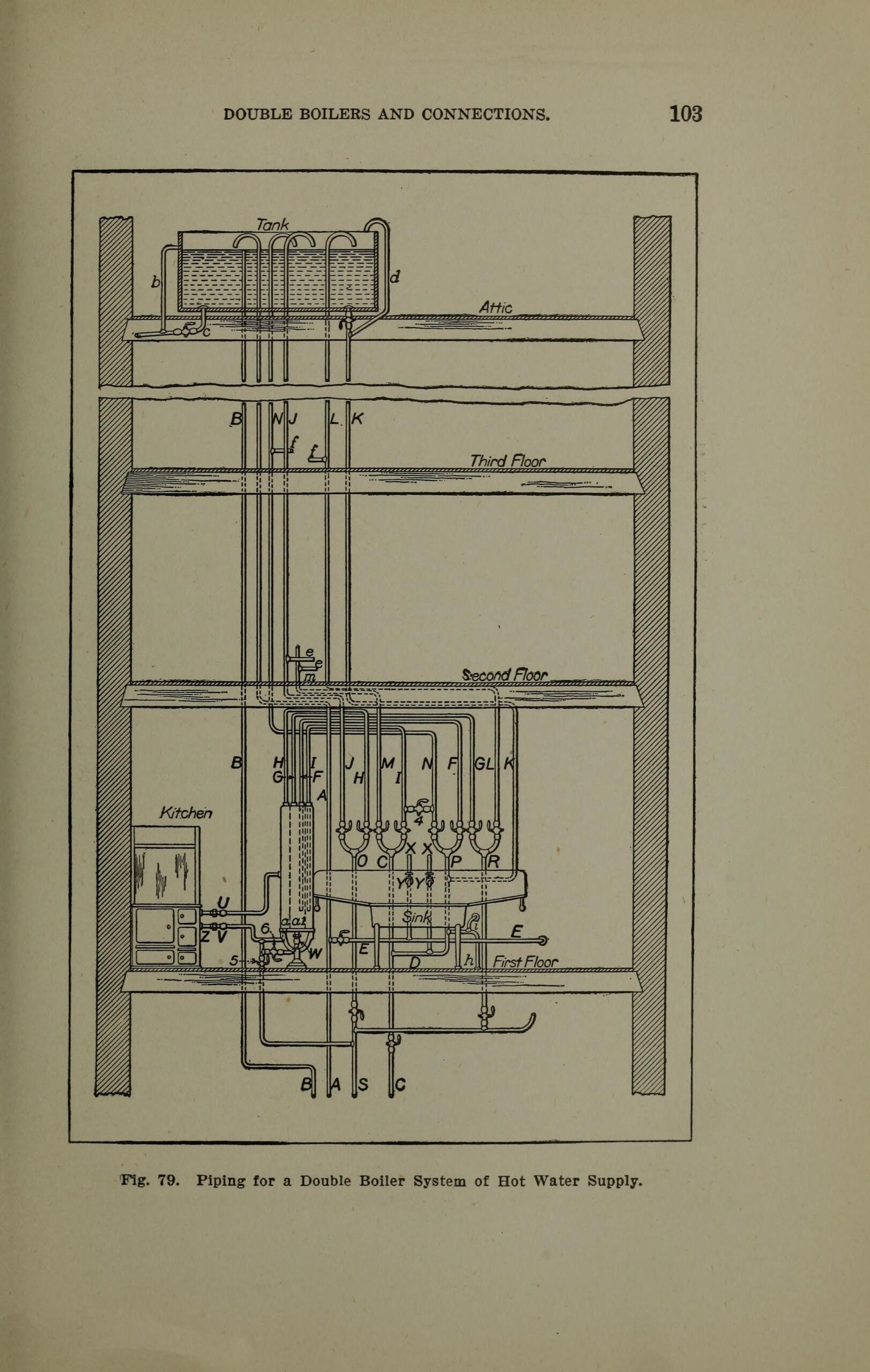
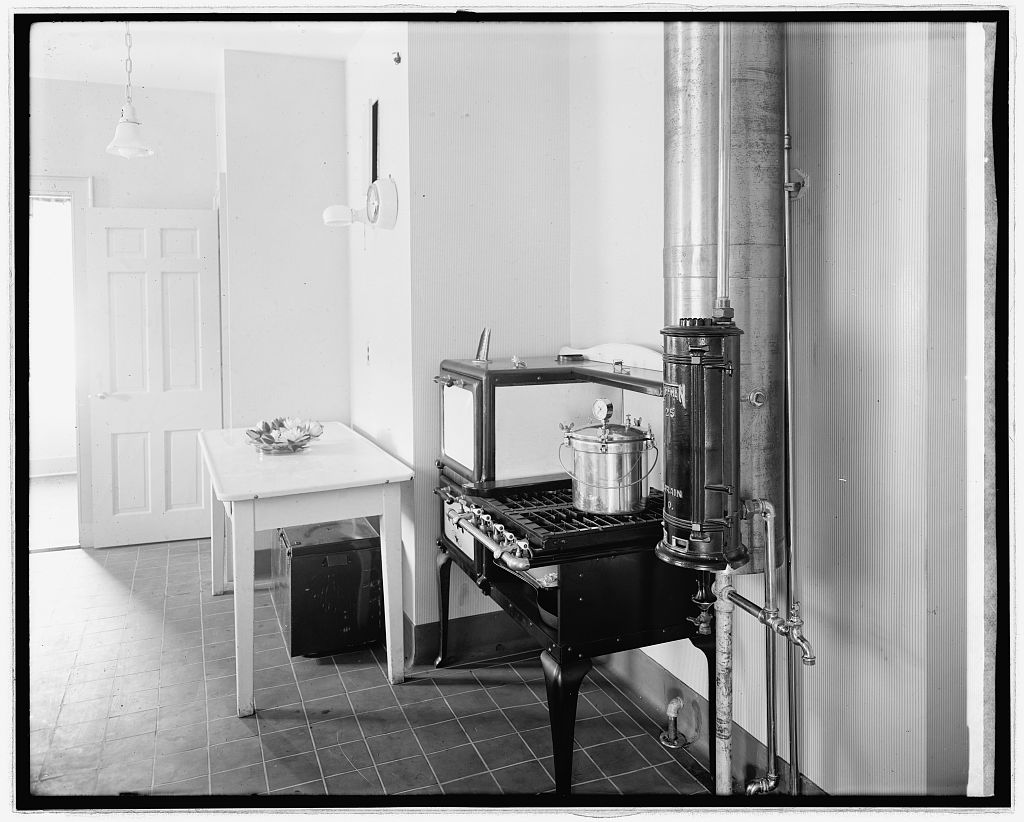
A step up from a reservoir was a waterfront or water back – a hollow cast iron or copper component built into the firebox itself, with water circulating through it. Pipe that to a tall insulated tank standing beside or behind the stove and you have a system: cold water in at the bottom, heat picked up as it passes through the firebox, hot water rising to the top of the tank by convection with no pump involved.
That tall tank is the range boiler, and it is recognisably a modern water heater. The only difference is where the heat comes from.
Which means the sequence is continuous rather than revolutionary. Reservoir, to waterfront and range boiler, to the same tank with a gas burner or an electric element underneath it instead of a stove. The tank in an American basement today is the direct descendant of a box bolted to the side of a kitchen range, and the convection principle it runs on has not changed at all.
What It Was Like to Live With
Two things people remember, and they pull in opposite directions.
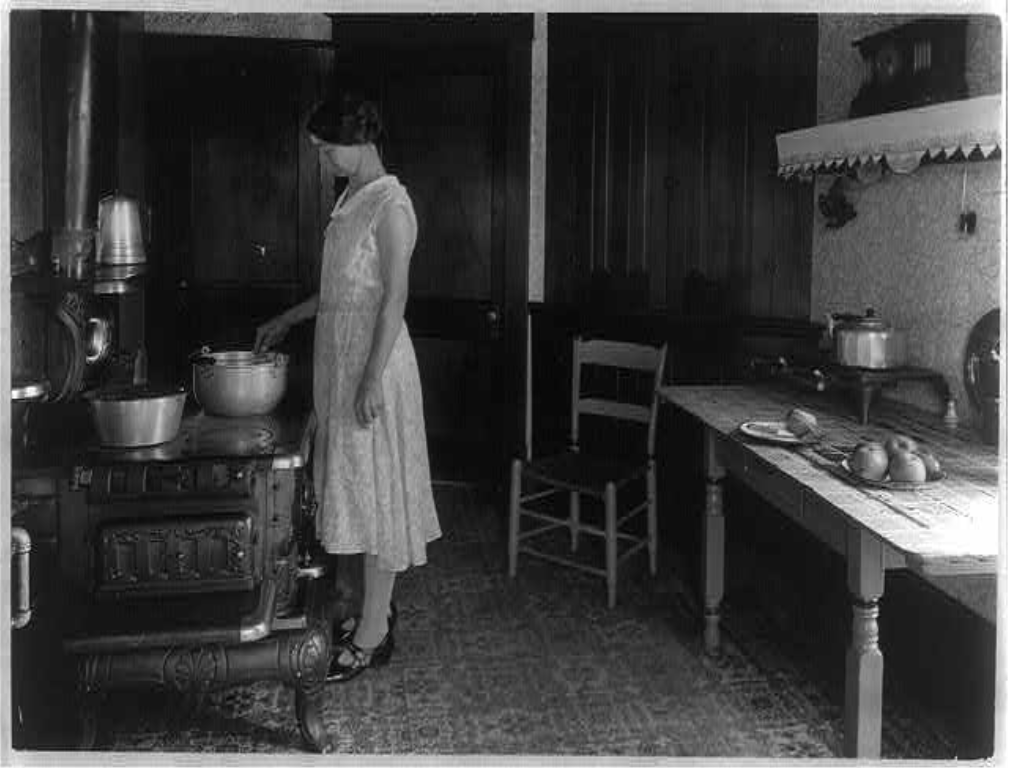
The first is that it was genuinely good. Hot water on tap, in the kitchen, all day, without planning. Anybody who has heated water in a kettle for a job that needs a gallon understands immediately why that mattered, and households that had a reservoir regarded it as a feature worth paying for when buying a stove.
The second is the smell and the state of the water. A tank of standing water held at warm temperature for days, filled by hand, open at the top in a kitchen, and never fully emptied, does not stay fresh. It picked up whatever was in the air. Households dipped from it with whatever dipper was to hand. And nobody drank from it – reservoir water was washing water, and the distinction was absolute and understood by children.
It also required periodic emptying and cleaning, which was an unpleasant job, and a reservoir that had been neglected was a genuinely nasty thing.
Saturday Night Was Reservoir Arithmetic
The clearest illustration of what the tank meant is bath night, because that is where the supply ran out.
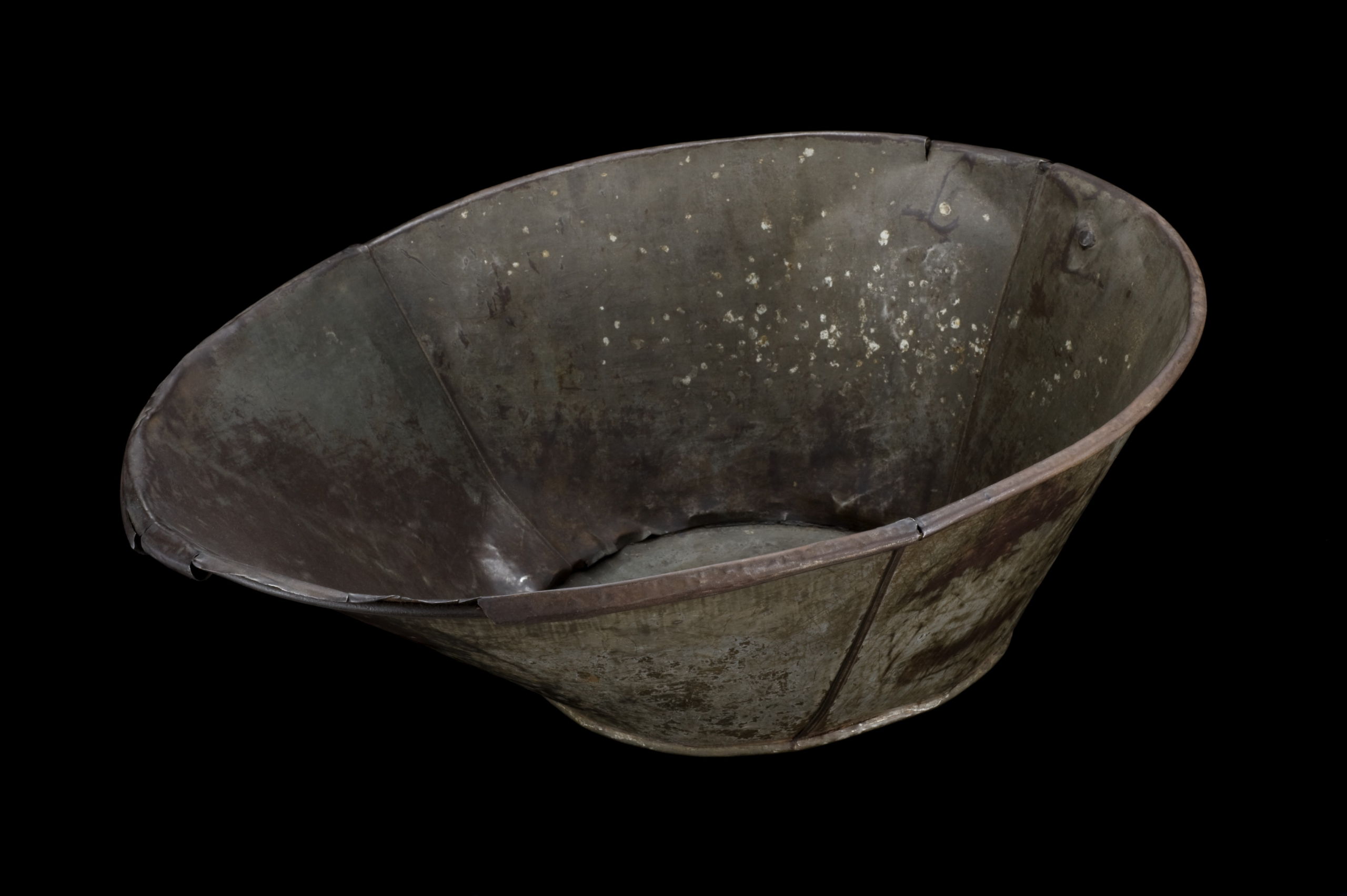
A weekly bath for a household of six or eight in a tub filled by hand needs a great deal of hot water, and the reservoir did not hold enough for all of it. So the tank was the starting point and the boiler on the stove top made up the difference, and somebody spent the evening carrying and topping up while people went through in order.
The order was not arbitrary and it is one of the small facts about these houses that people still mention. Cleanest first. Youngest children early, while the water was fresh and while somebody was available to manage them. Whoever had been doing the dirtiest work went last, into water that had been through several people already and had been warmed back up twice from the reservoir.
That is what a fixed hot water supply does to a household. It imposes a sequence, and the sequence was a small daily piece of hierarchy that everybody understood and nobody wrote down.
Then a tank with a gas burner under it arrived and the whole question evaporated, which is why bath night as an institution disappeared within about one generation of plumbing.
What Replaced It, in Order
The reservoir did not lose a competition. Its support structure was removed from underneath it.
First, the range itself went. Gas and then electric cooking arrived, and both are lit when you want to cook and off the rest of the time, which is the entire point of them. A stove that is not burning continuously cannot heat a tank of water, so the reservoir’s power supply disappeared as a side effect of a change nobody made for water-related reasons.
Then the dedicated water heater arrived, which did the job far better. A gas or electric heater holds more water, holds it hotter, holds it in a closed insulated tank where it stays clean, delivers it under pressure through a pipe to wherever it is needed, and runs whether or not anybody is cooking.
And plumbing finished it. Once a house had taps, the question of how water got from a tank to a basin stopped existing, and a system that required somebody to dip a saucepan into an open box was over.
The reservoir’s one advantage – that the heat was free because the fire was burning anyway – stopped being an advantage the moment the fire stopped burning anyway.
The Compartment Nobody Can Name
So it survives as a mystery feature on old stoves, with the lid usually missing and the copper usually sold off separately.
What it records is a way of thinking about a house that has largely gone: the assumption that the heat source was a continuous fact rather than an on-demand service, and that anything you could usefully bolt against it was free.
The same logic put a warming shelf above the stove, a bread-raising spot beside it, irons on top of it, wet mittens behind it and the dog underneath it. A continuously burning fire in a kitchen generates an entire economy of small adjacent uses, and a twenty-gallon tank of hot water was simply the largest and best of them.
Turn a modern stove off and all of that disappears at once, which is why nobody now looks at an appliance and asks what else they could run off it.
Like our content? Follow us for more.