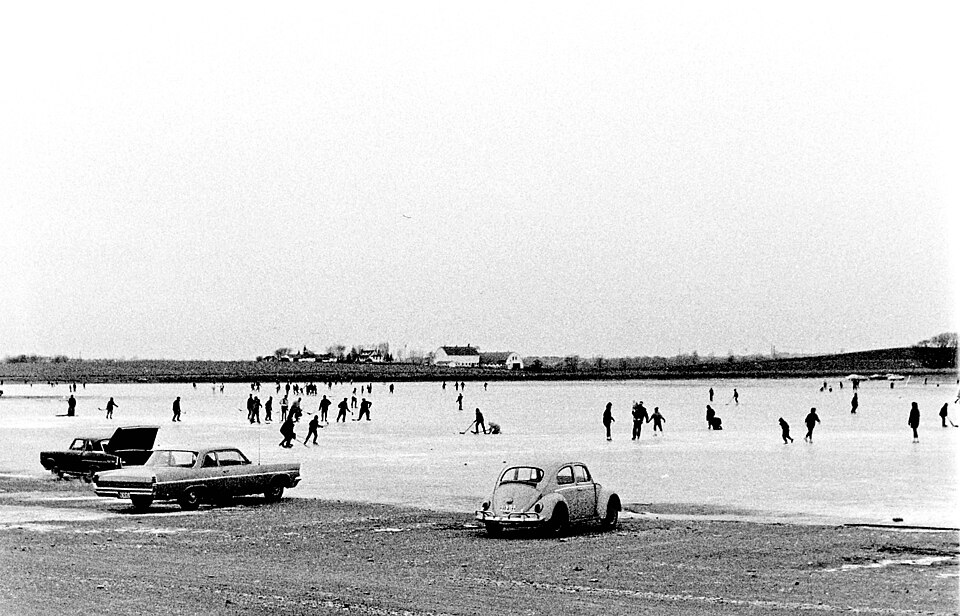
The rink was whatever water had frozen nearby, and everything about pond skating follows from the surface being found rather than made.
Ponds, flooded lots, creek backwaters and low fields that held water. Free, unbooked and available to anybody who could walk to them – and also uneven, unpredictable and completely at the mercy of the weather.
Which meant the first job was always work. Snow on ice has to be shovelled off before anybody can skate, so arriving meant picking up a shovel, and the size of the cleared patch was a direct function of how many people had turned up. The group had to cooperate before it could play, every single time. Here are sixteen things every kid knew.
1. The Rink Was Whatever Water Had Frozen Nearby
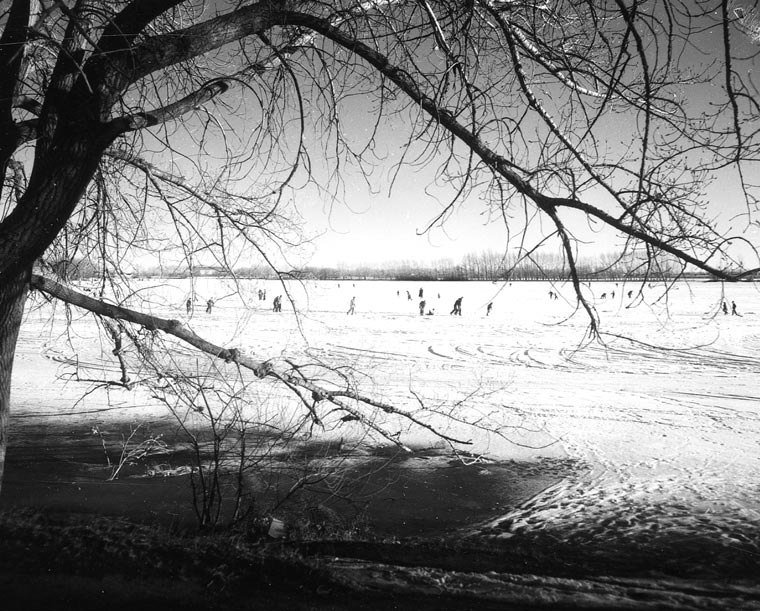
Skating happened on ponds, flooded lots, creek backwaters and low fields that held water – not on anything built for the purpose.
Indoor rinks, refrigerated and booked.
Start with the venue, because everything else follows from it being found rather than made. A natural surface is free, unbooked and available to anybody who can reach it, and it is also uneven, unpredictable and entirely dependent on the weather.
Like our content? Follow us for more.
2. Somebody Older Decided When It Was Ready
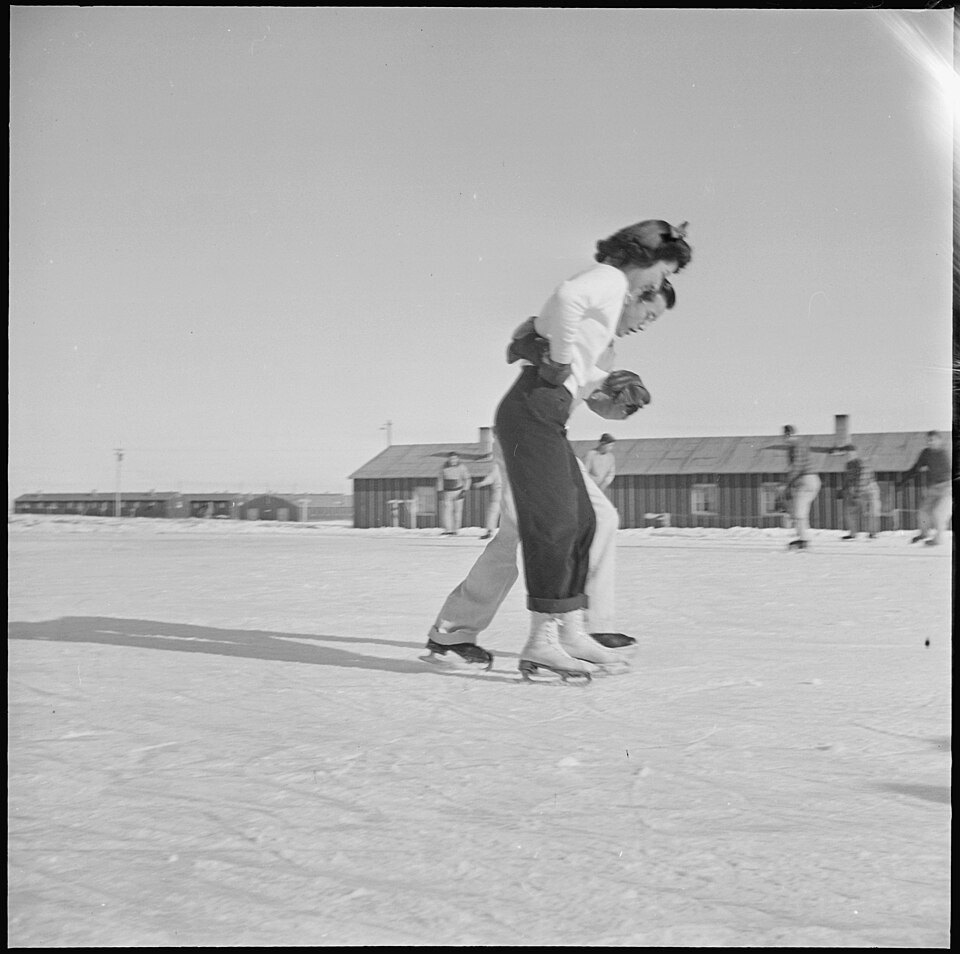
Whether the ice was fit to use was a judgement, usually made by an adult or an older child whose opinion the group accepted.
Posted and official.
The authority structure was informal and it functioned. In the absence of any signage or official, the group deferred to whoever had the most experience of that particular water – which is a sensible arrangement and also an entirely unaccountable one.
3. Everybody Knew the Ice Was Not the Same Everywhere
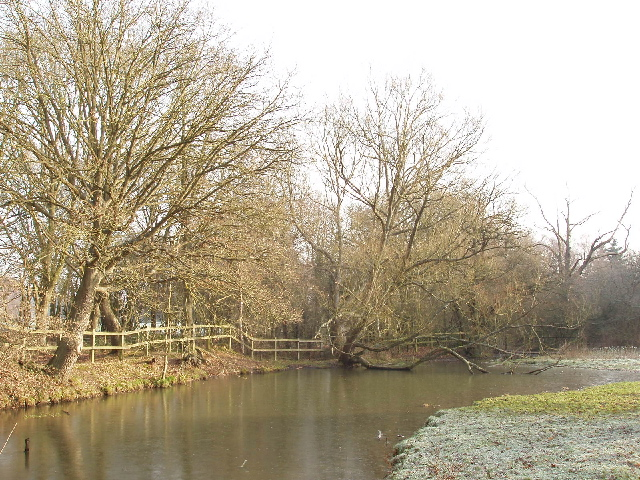
Thickness varied across a single pond, and the places it was thinnest were known and avoided – near inlets, over moving water, under snow cover.
Not applicable.
This is the single most important piece of knowledge the practice involved, and it was transmitted entirely by word of mouth. A pond is not a uniform surface, and the local understanding of which parts of which water were unreliable was specific, inherited and taken seriously.
4. Clearing the Snow Was the Price of Admission
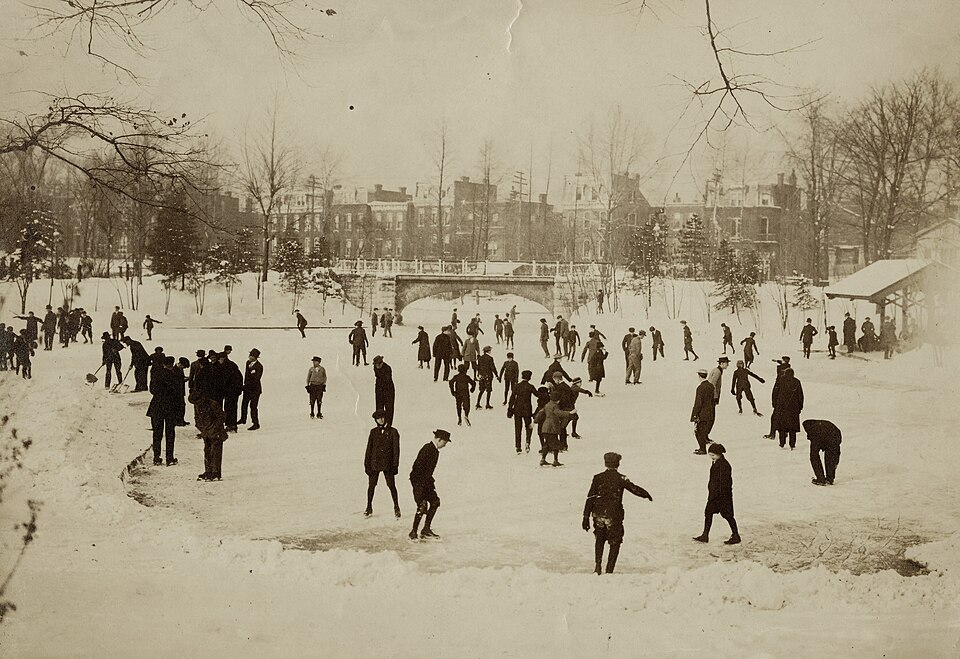
Snow on ice has to be shovelled off before anybody can skate, so the first hour of any session was work shared by whoever turned up.
Done by machine.
The clearing requirement is what made the group cooperate before it could play. Nobody skates until the surface is cleared, so arrival meant picking up a shovel – and the size of the cleared patch was a direct function of how many people had come.
5. The Cleared Patch Defined the Entire Session
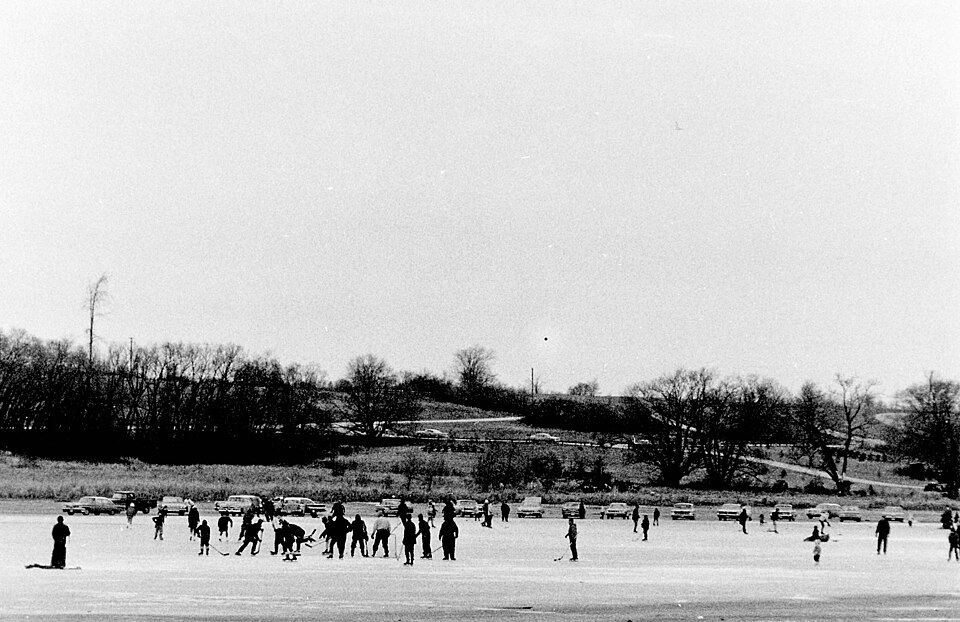
The shape and size of the area was whatever had been shovelled, which meant the playing field was different every time.
Standardised dimensions.
Having no fixed boundary changes the activity fundamentally. Games had to be adapted to a space that was a different shape each week, so rules were negotiated on the spot rather than inherited – and nobody ever argued about where a line was, because there were no lines.
6. Skates Were Hand-Me-Downs and Rarely Fitted
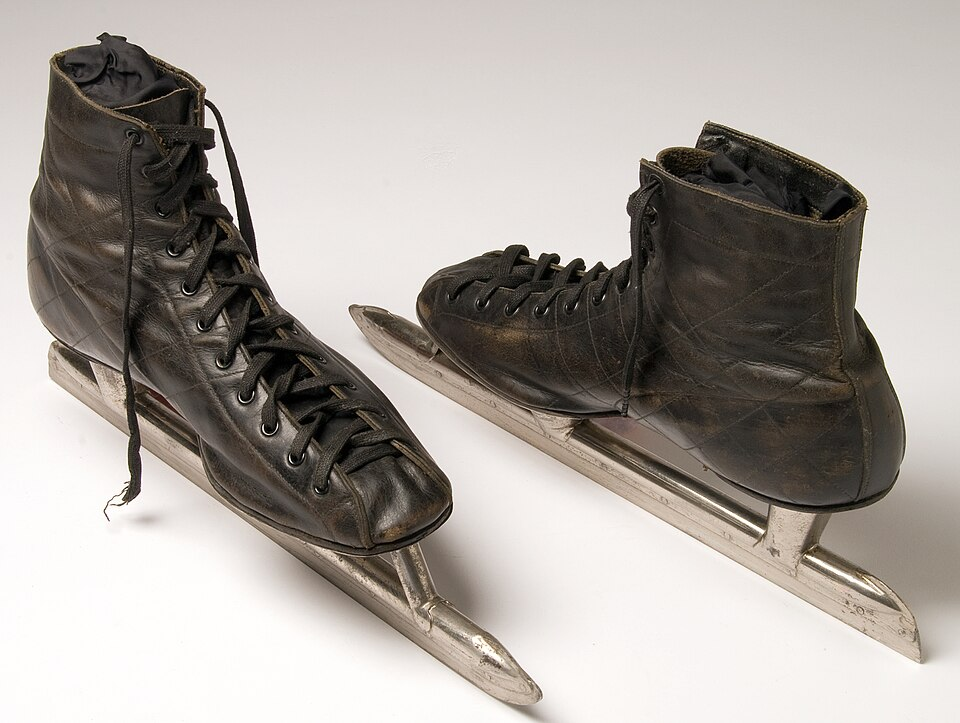
Children skated in whatever pair had come down to them, which meant boots too big, too small or simply the wrong shape.
Bought to fit, or rented.
Fit matters more in skating than in almost any other activity, and most children had none of it. A loose boot gives no ankle support, which is why so many people remember skating on their ankles rather than on their blades – that is a fitting problem rather than a skill problem.
7. Sharpening Was Improvised or Simply Not Done
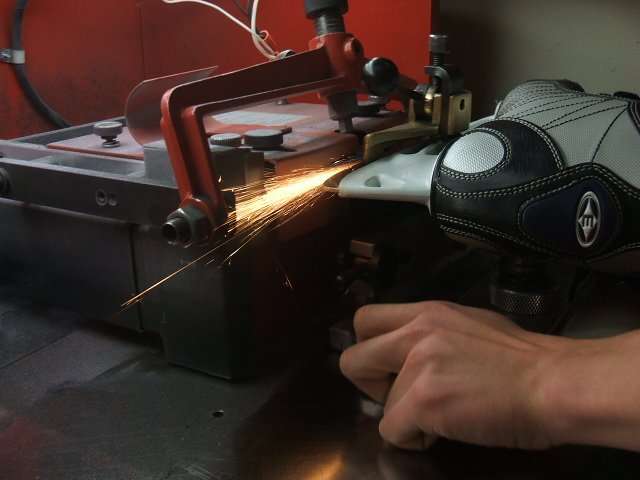
Blades went dull, and without access to proper sharpening a child skated on an edge that could not hold a turn.
Routine and available.
The equipment maintenance was the hidden limiter on everybody’s ability. A dull blade slides sideways out of a turn regardless of technique, so a great many children were being defeated by their skates rather than by the difficulty of skating.
8. Getting the Laces Right Was the Whole Morning
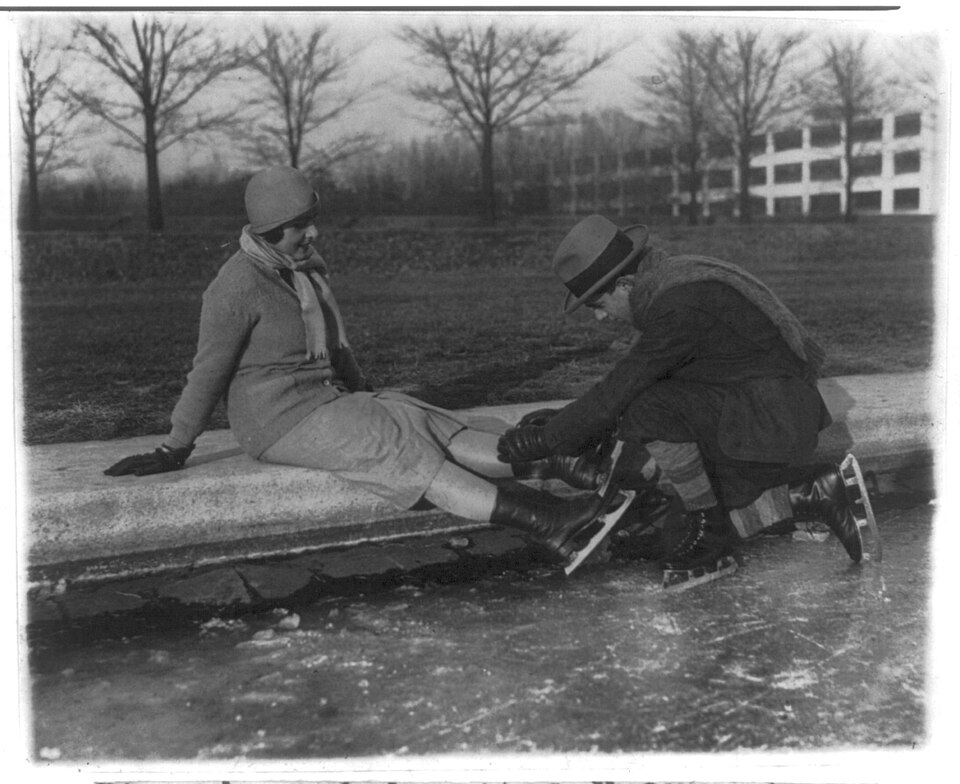
Lacing tight at the ankle and loose at the toe is the correct method, and learning it took repeated failure in the cold with numb fingers.
Still true.
Lacing is a real technique and nobody is born knowing it. Tight everywhere cuts off the foot and loose everywhere gives no support, and the correct distribution has to be learned – usually by somebody kneeling down and doing it for you until you could.
9. A Fire on the Bank Was Standard
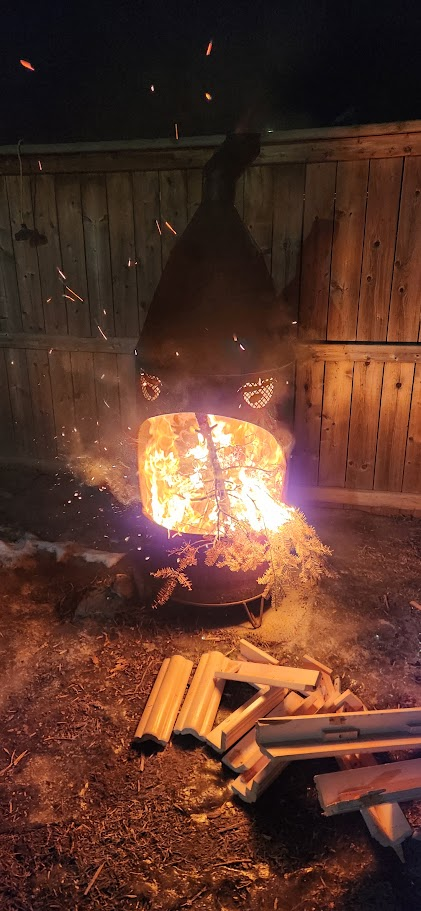
A bonfire or a burn barrel at the edge gave somewhere to warm up, change and leave things, and it defined the social centre of the session.
Warming rooms.
The fire was the infrastructure of the whole arrangement. A place to get feeling back into hands, to put boots on, to leave a coat and to stand and talk turns a frozen pond into something people could stay at for hours rather than minutes.
10. Skating After Dark Was the Best Part
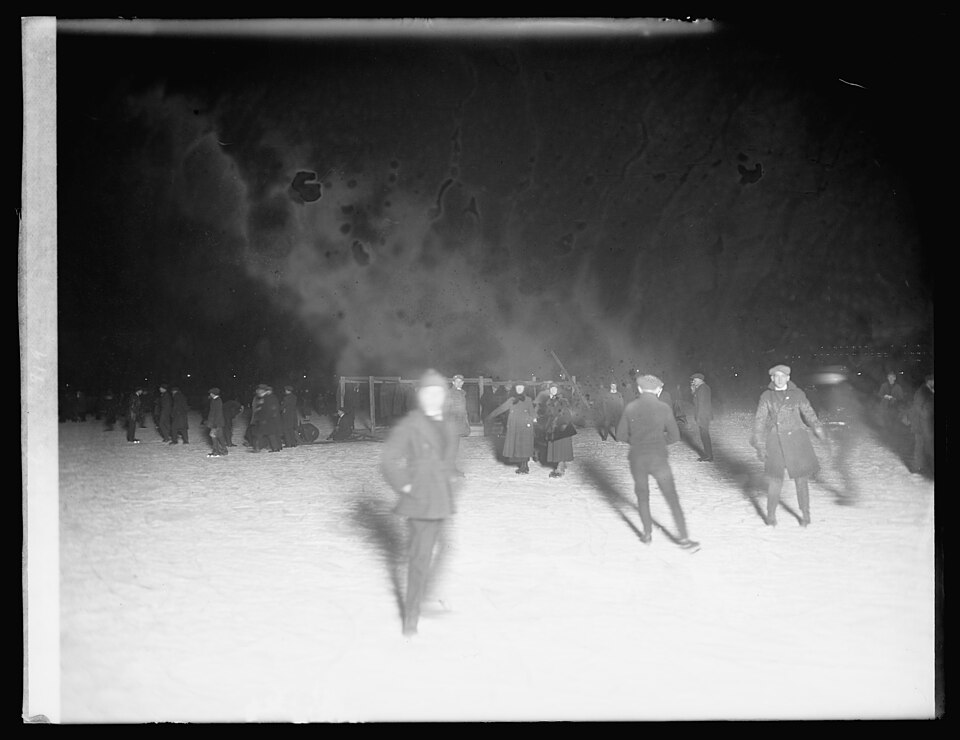
Winter afternoons end early, and a pond lit by a fire, a moon or a single borrowed light was where the older children stayed.
Floodlit.
Darkness changed the character completely and it was the main attraction for anybody over twelve. The surface you cannot quite see, the limited light and the absence of adults produced something closer to a social occasion than an activity.
11. Hockey Happened With Whatever Was to Hand
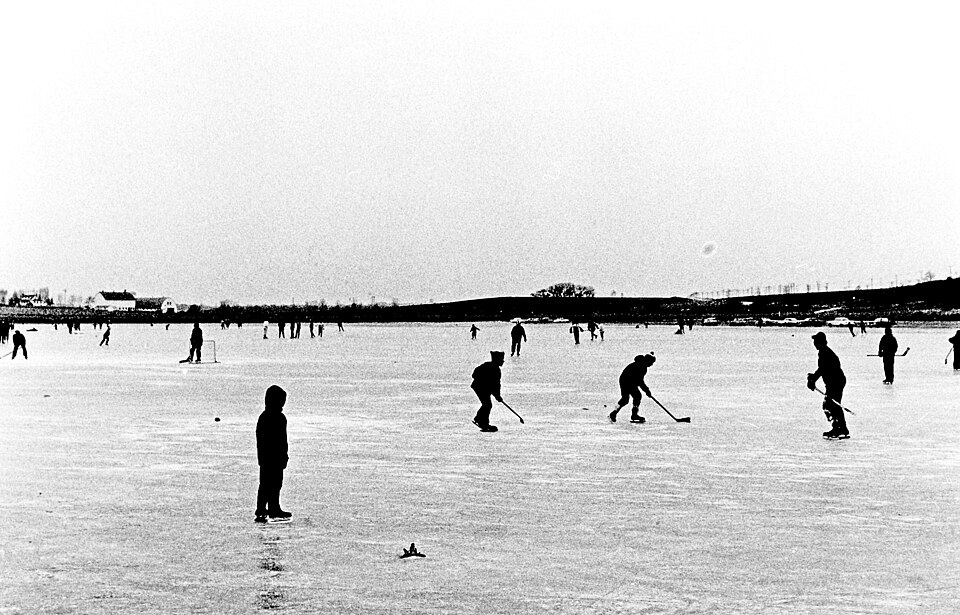
Sticks, a frozen object for a puck, boots or stones for goals, and teams picked on the spot – the game was improvised entirely.
Organised, equipped and officiated.
Improvised games have one great advantage, which is that they fit the people present. Teams were balanced by whoever was picking, the rules were adjusted to the number of players, and anybody could join mid-game because nothing had been formally constituted.
12. Figure Skating and Hockey Divided the Pond
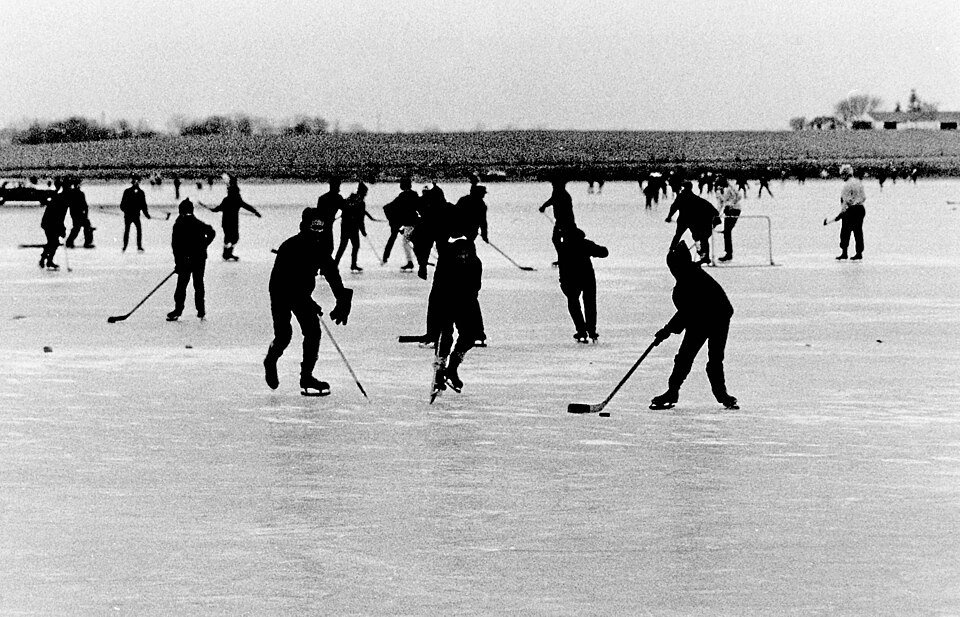
The same surface usually carried two completely different activities, with an informally negotiated boundary between them.
Separated by facility and schedule.
Sharing a single surface between incompatible uses required constant low-level negotiation. One group needs open space and the other needs a defined area, and the division between them was renegotiated every session by whoever was there.
13. The Season Was Short and Nobody Knew How Short
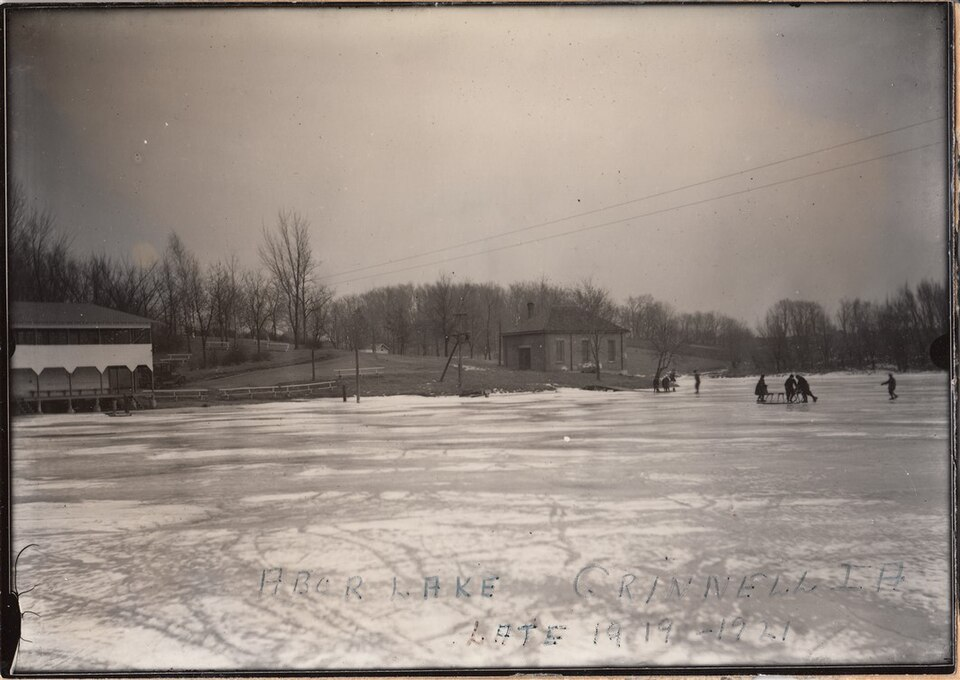
A thaw could end everything in two days, and a mild winter might give almost no skating at all.
Year-round.
The uncertainty is what made people go whenever conditions allowed. If the surface might be gone by Thursday, you went on Tuesday regardless of what else was happening – which is why skating in that period was intense and irregular rather than scheduled.
14. Everybody Went Home Soaked and Frozen
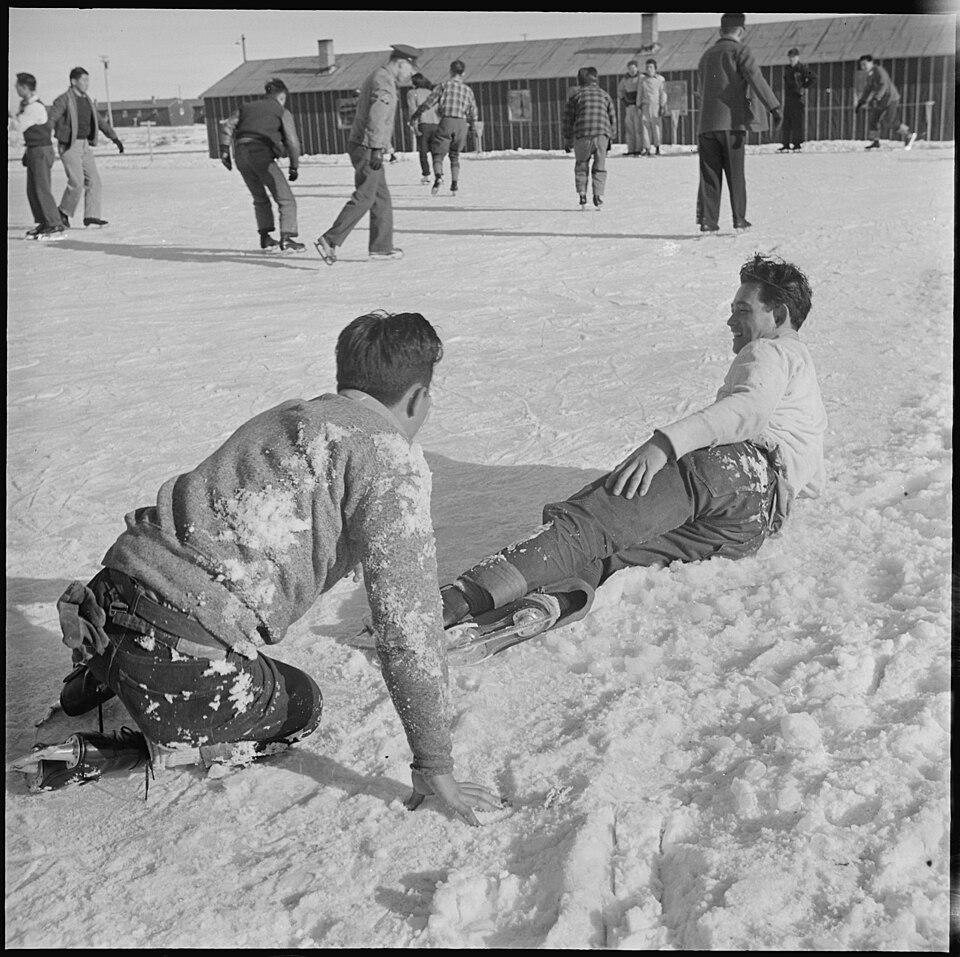
Falling is constant, snow gets into everything, and wool absorbs water – so the end of a session was always the same.
Better clothing.
The physical cost was simply accepted as the terms of the activity. There was no waterproof outer layer worth speaking of, so getting wet was not a mishap but the normal and expected outcome of an afternoon on the ice.
15. Then Indoor Rinks Took Everything Indoors
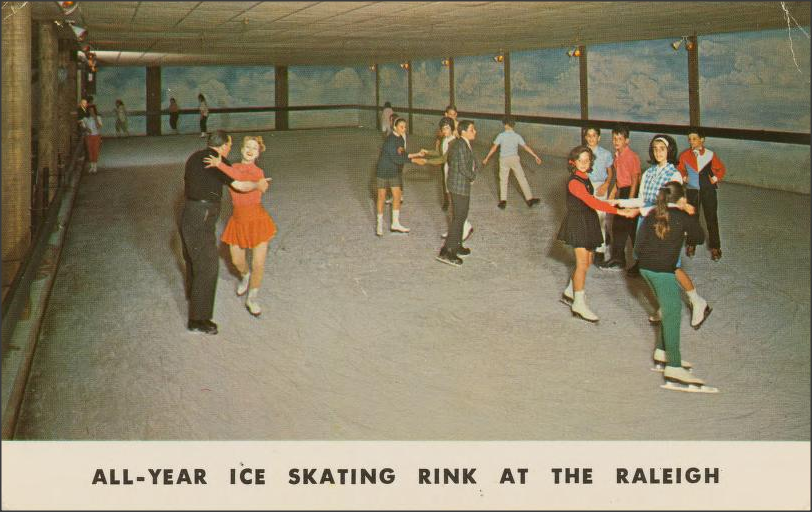
Refrigerated ice, available regardless of weather, with smooth surfaces, lighting, warm rooms and sharpening on site, replaced the pond entirely.
Universal.
The replacement is better in every measurable respect and it is worth being honest about that. Reliable ice, a flat surface, proper equipment, somewhere warm and a season that does not depend on the weather beat a frozen field comprehensively – at the cost of a schedule, a fee and a drive.
16. And by 1964 the Ponds Were Already Emptier Than They Had Been
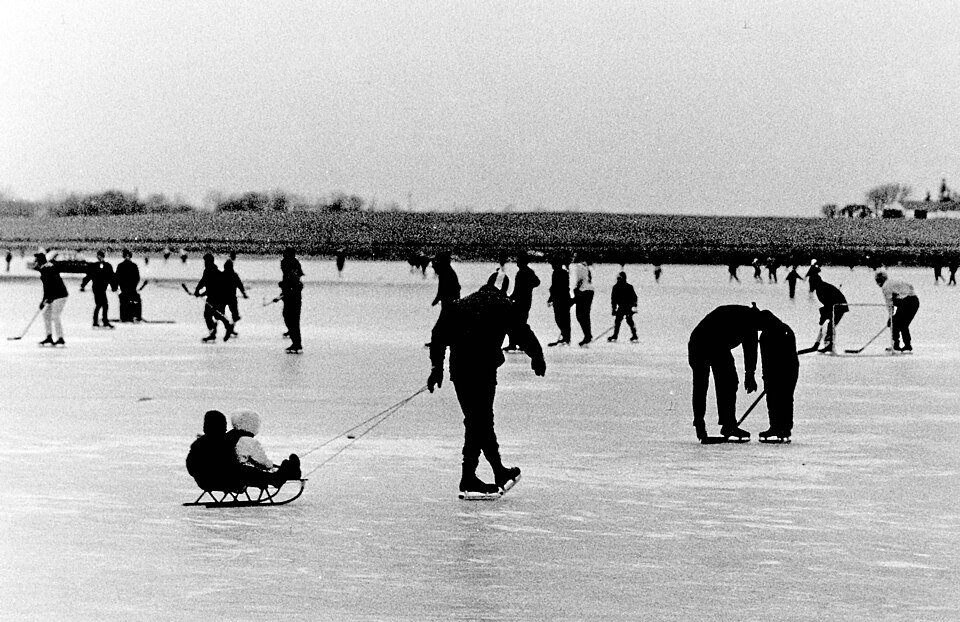
Organised programmes, indoor facilities and a growing unwillingness to let children onto unmonitored ice were all well underway.
Rare.
And what deserves the last word is that this was an entire activity assembled from nothing by the people doing it. The surface was found rather than built, so it had to be cleared by hand before anybody could use it and the cleared patch was the whole playing field, a different shape every week. The equipment was inherited and mostly ill-fitting, the blades were dull because nobody could sharpen them, and the lacing had to be taught by somebody kneeling in the snow. The group supplied its own authority about when the ice was fit, its own infrastructure in the form of a fire on the bank, its own games invented to fit whoever had turned up, and its own negotiated boundary between two incompatible uses of one surface. And the whole thing ran on a season that might last six weeks or might not arrive – which is exactly why everybody went the moment it did.
The Whole Thing Was Assembled From Nothing
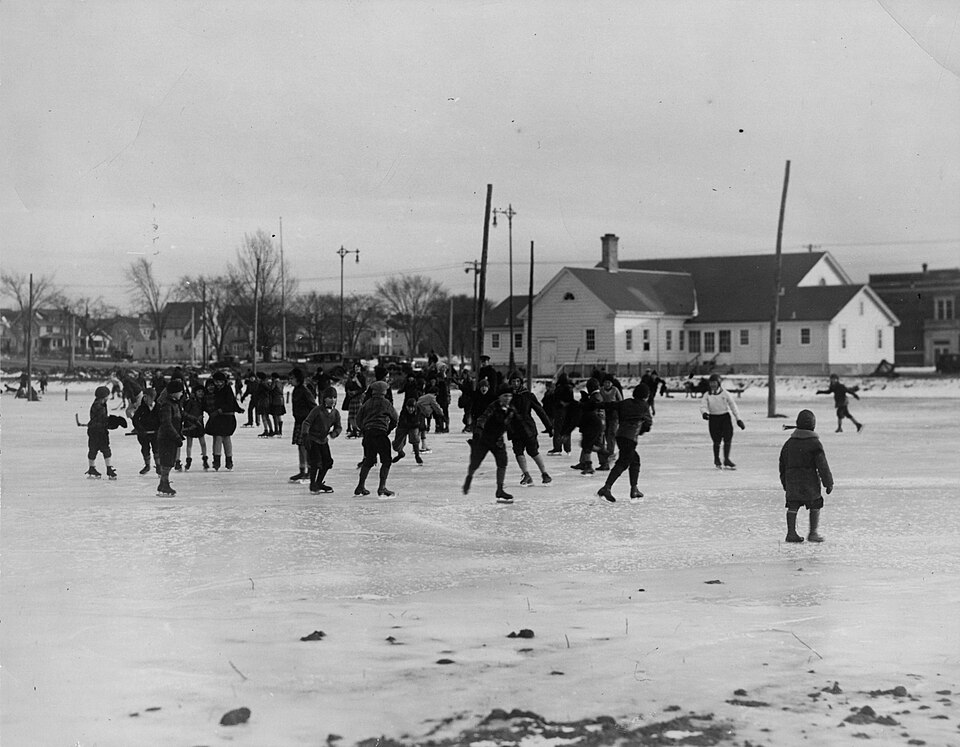
Pond skating is remembered as simpler than a modern rink, and it was not simpler at all – it was an entire activity that the people doing it had to construct from scratch, every time, with no equipment, no authority and no guarantee of a surface.
The surface was found. Ponds, flooded lots, creek backwaters, low fields – free and available, and also uneven and entirely dependent on the weather.
So it had to be made usable. Snow has to come off before anybody skates, which meant the first hour was shared work and the cleared patch was the whole playing field. That patch was a different shape every week, which changes the activity fundamentally: games were adapted on the spot to whatever area existed, rules were negotiated rather than inherited, and nobody argued about where a line was because there were no lines.
The equipment was inherited and mostly wrong. Skates came down from somebody else, so boots were too big, too small or the wrong shape – and fit matters more in skating than in almost anything else, because a loose boot gives no ankle support. Which is why so many people remember skating on their ankles: that is a fitting problem, not a skill problem.
Blades went dull and stayed dull, because sharpening was improvised or simply unavailable. A dull edge slides sideways out of a turn however good the technique, so a great many children were being beaten by their skates rather than by the difficulty of the sport.
And lacing is a genuine technique nobody is born knowing – tight at the ankle, loose at the toe, because tight everywhere cuts off the foot and loose everywhere supports nothing. It was learned through repeated failure in the cold with numb fingers, usually with somebody kneeling down and doing it for you until you could.
The group supplied everything else itself.
Authority: whether the ice was fit was a judgement made by an adult or an older child whose opinion the group accepted, which is sensible and entirely unaccountable.
Knowledge: everybody understood that a pond is not uniform, that thickness varies across one body of water, and that the unreliable places – near inlets, over moving water, under snow cover – were specific, known and avoided. That understanding was inherited by word of mouth and taken seriously.
Infrastructure: a fire on the bank, where hands got feeling back, boots went on, coats were left and people stood and talked. That is what turned a frozen field into somewhere you could stay for hours.
Games: sticks, a frozen object for a puck, boots or stones for goals, teams picked on the spot. Improvised games fit the people present – balanced by whoever was choosing, adjusted to the number playing, and open to anybody arriving mid-game because nothing was formally constituted.
And diplomacy: one surface usually carried both figure skating and hockey, which need completely different things from it, so the boundary between them was renegotiated by whoever was there that day.
Two conditions governed all of it. The season was short and nobody knew how short – a thaw could end everything in two days – which is why skating was intense and irregular rather than scheduled, and why people went the moment conditions allowed. And everybody went home soaked, because falling is constant, snow gets everywhere and wool absorbs water, with no waterproof layer worth speaking of.
Then indoor rinks replaced all of it, and they are better in every measurable respect: reliable ice, a flat surface, proper fitting, sharpening on site, somewhere warm, and a season that does not depend on the sky.
The cost is a schedule, a fee and a drive – and a surface somebody else cleared.
If you remember skating on your ankles, it probably was not you.
Loose boots give no support, and almost nobody had a pair that fitted.
Like our content? Follow us for more.