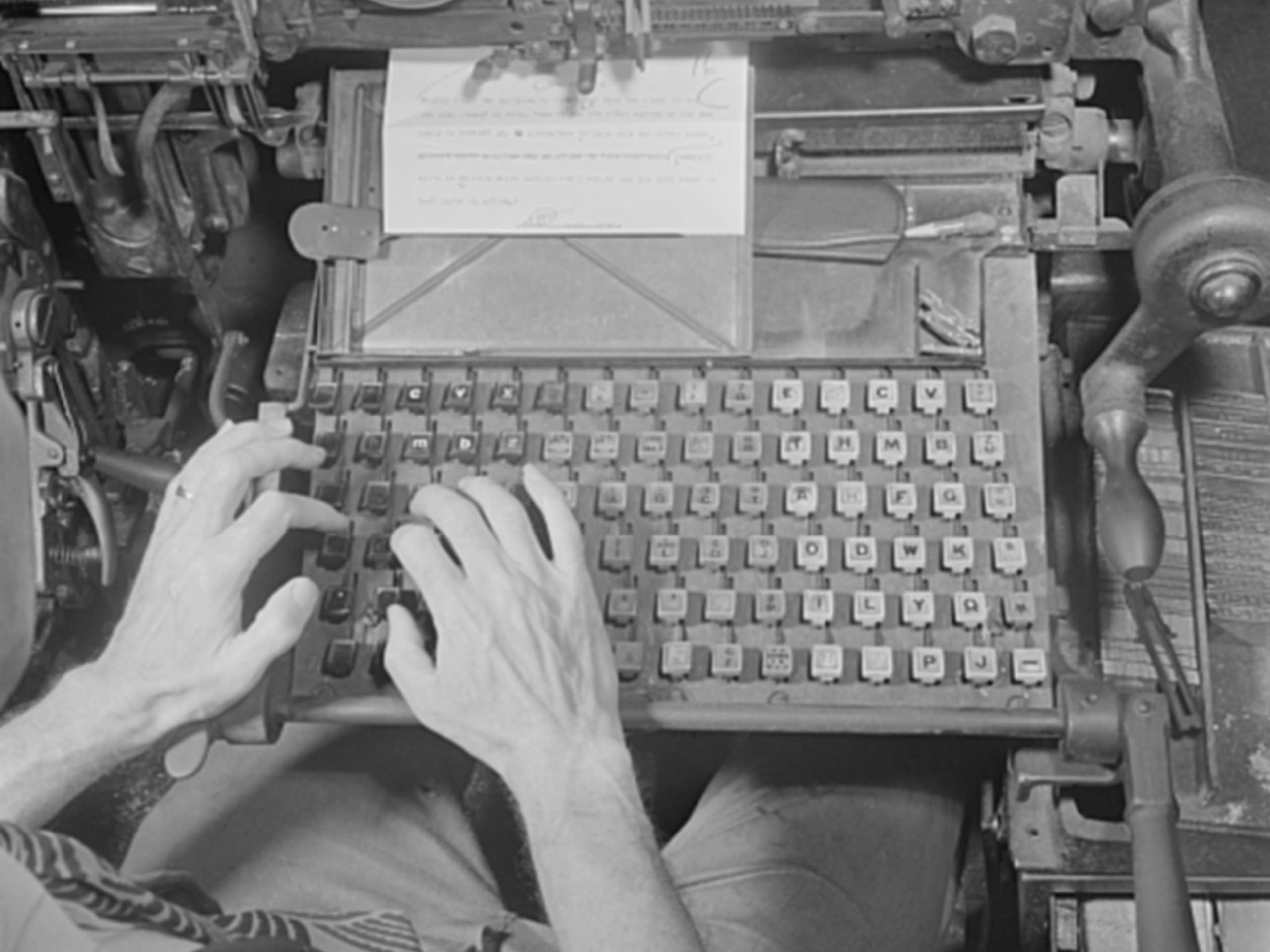
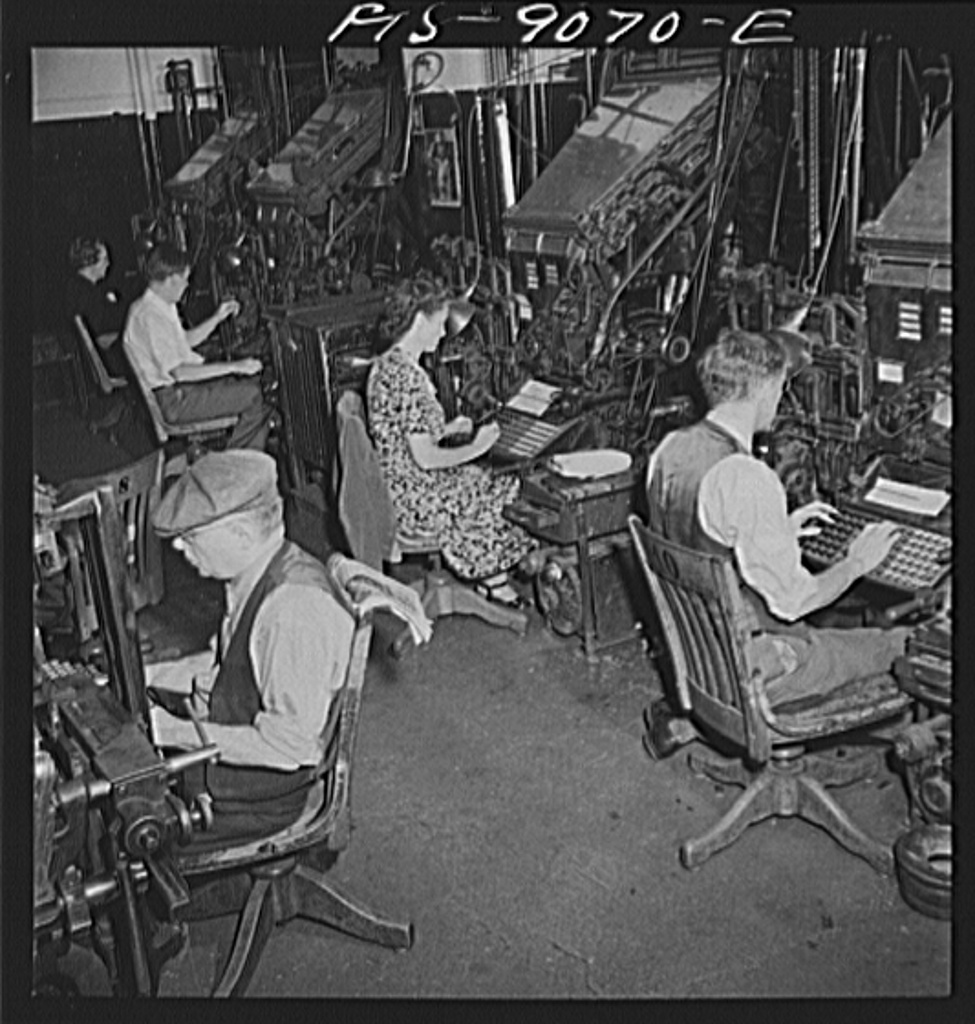
Every word in an American newspaper in 1965 existed, at some point in the afternoon, as a physical object made of lead. The composing room was where that happened: a long hot room behind the newsroom, full of machines the size of wardrobes, each with a keyboard, a magazine of brass moulds and a crucible of molten alloy at the back. The noise was continuous and so was the smell.
The trade was skilled, well paid by the standards of the building, fiercely organised and almost entirely male, and it disappeared inside about fifteen years. What ended it was photographic typesetting and offset printing, but what would end it today, if it had somehow survived, is that essentially no part of the process would satisfy a modern occupational hygiene inspection.
The pot at the back of every machine
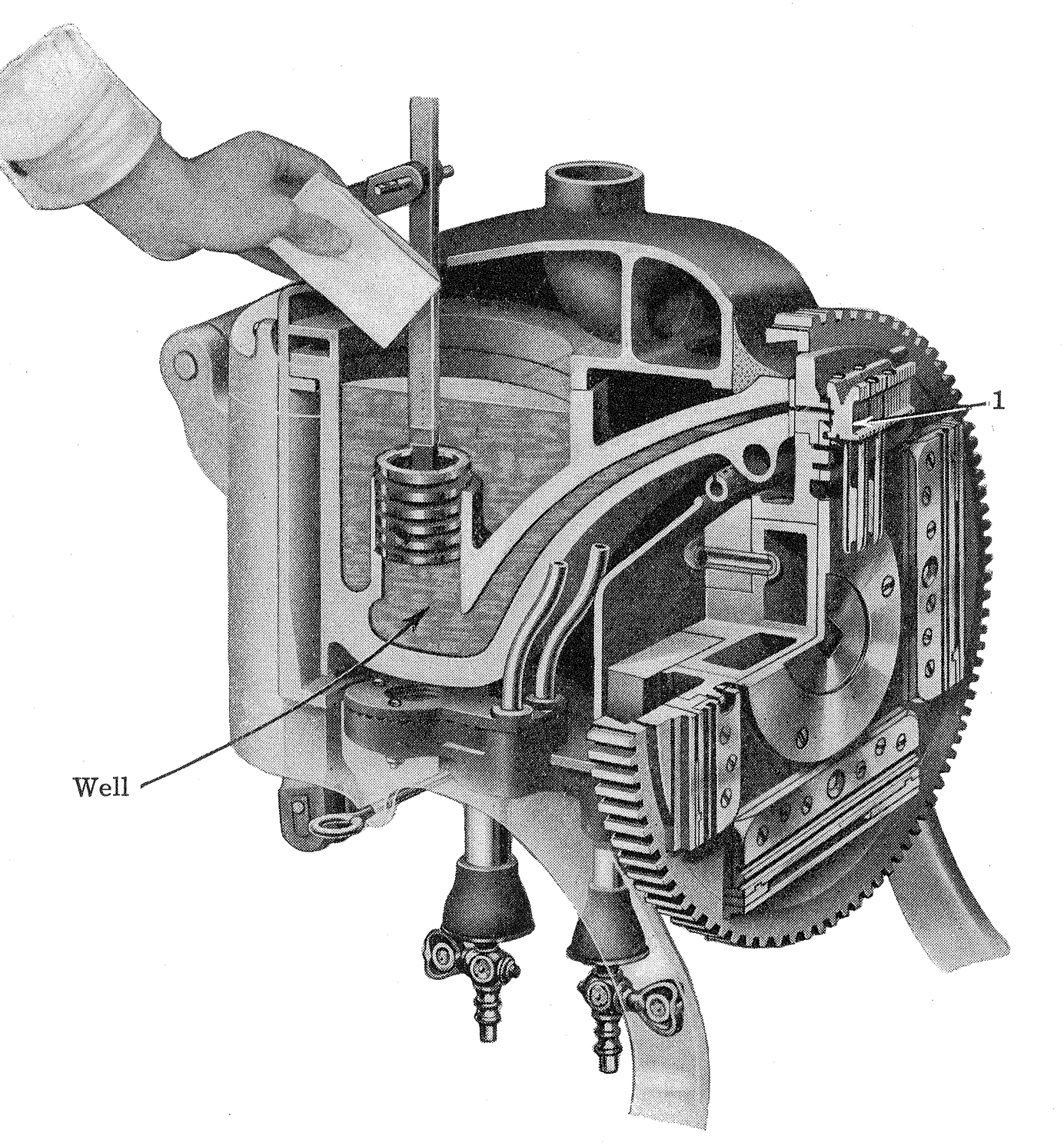
A typesetting machine cast its own type. The operator keyed a line, brass matrices dropped into place to form a mould, and molten alloy — lead with tin and antimony in it — was pumped into that mould to produce a solid slug of type, which was then ejected while still hot. The metal was held in a crucible at the back of the machine at working temperature throughout the shift.
A composing room running thirty machines therefore had thirty open pots of hot lead alloy in it, continuously, with no local extraction and usually no general ventilation beyond the windows. The slugs were handled by hand while warm, carried in galleys, assembled, broken up after printing and thrown back into a remelting pot to be used again, which meant the metal was turned over constantly and skimmed of dross by hand.
Lead’s occupational effects were not a mystery in 1965. They had been described in detail in the nineteenth century, printers were one of the trades in which the condition was classically recognised, and medical studies of compositors’ blood lead had been published well before the war. The knowledge existed and the practice had not changed to match it. Part of the reason is that the alloy was never thought of as a chemical. It was stock, the raw material of the trade, bought by the hundredweight and reused indefinitely, and a man who had handled it every working day for twenty years had no more reason to regard it as hazardous than a carpenter regards wood.
Like our content? Follow us for more.
Squirts, dross and the habits of the room
The specific event every operator knew about was a squirt, which happened when the mould did not seal and molten metal escaped sideways out of the machine instead of into the slug. Men worked with their faces and hands close to the casting mechanism, and a squirt threw hot alloy out at them. Burn scars on the forearms were routine enough that they were treated as a mark of experience.
The room’s habits made the exposure worse than it had to be. Men ate at the bench because there was nowhere else to go, smoked while working, and in many shops washed only at the end of the shift, which meant lead dust from the dross and from handling went from hands to food and cigarettes. Floors were swept dry, which put settled dust back into the air.
None of that was negligence by the standards of the time; it was simply how a hot-metal shop operated. The modern approach to the same hazard is built almost entirely on the things that room did not have — enclosed processes, local exhaust ventilation at the source, wet or vacuum cleaning instead of sweeping, separate eating facilities, washing before breaks and biological monitoring of the workforce.
The stone, the forme and the weight of a page
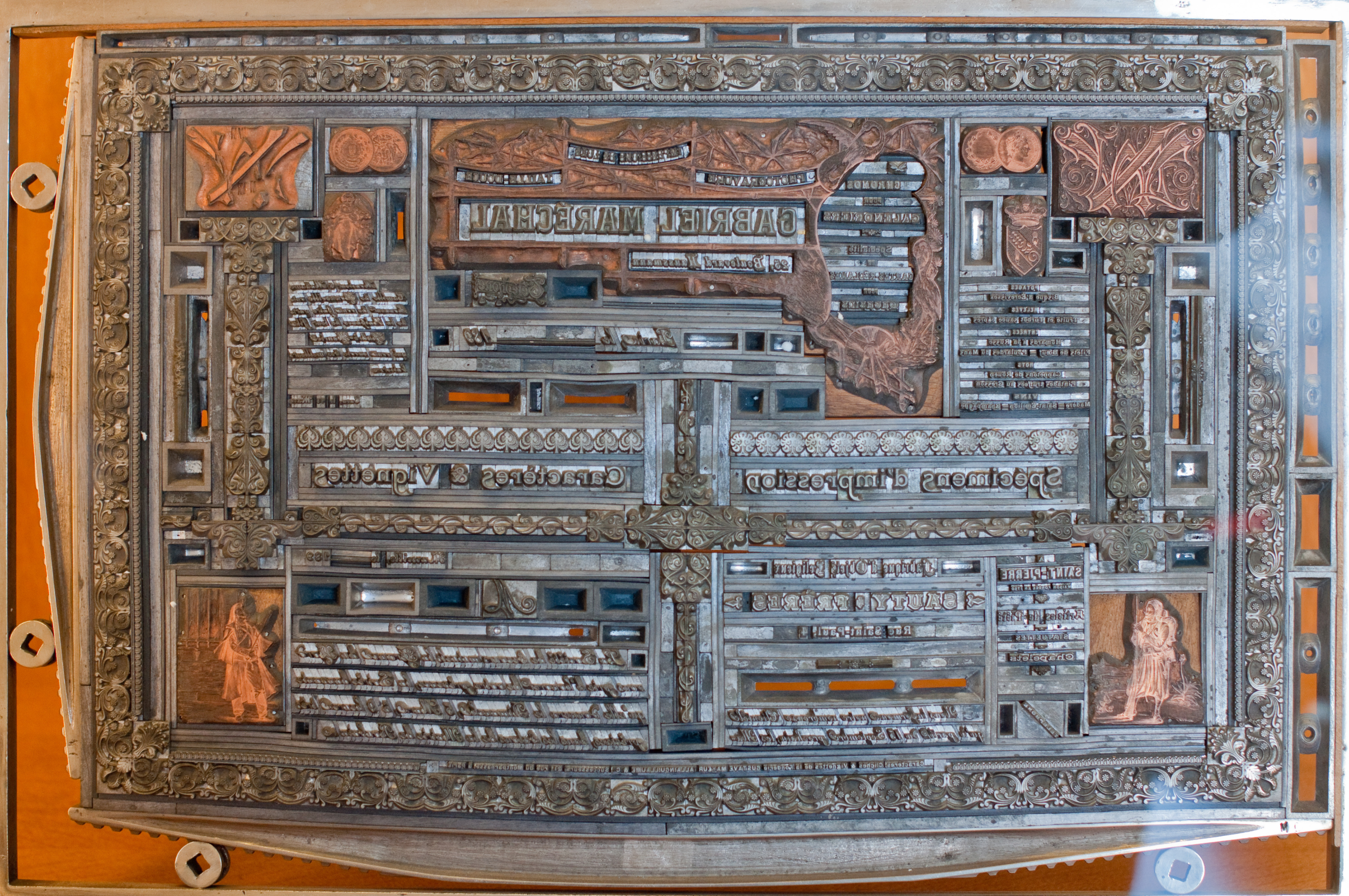
Once the type existed it had to be made into a page. That was done on the stone, a flat steel-topped bench where a compositor assembled slugs, headlines, rules and engraved blocks into a rectangular steel frame, packed them tight with wedges and locked the whole thing up into a forme. A full broadsheet page forme weighed enough that moving it was a two-man job and dropping one was the defining disaster of the trade.
A dropped forme came apart. What had been a page became a heap of loose metal on the floor, unreadable and unsortable, and it had to be set again from scratch against the edition deadline. The word for it was pie, and a compositor who caused one was not allowed to forget it.
The physical demands of the job are the part that modern readers underestimate. Men stood for an entire shift on concrete, lifted heavy metal repeatedly at awkward heights, and did fine assembly work under time pressure in poor light, reading type upside down and back to front as a basic professional skill. Musculoskeletal injury was simply part of being a printer and was not recorded as anything. A compositor in his fifties with a ruined back and ruined hearing was understood to have an old man’s complaints rather than an industrial injury, and no system existed that would have connected the two.
What the type was washed with
Type and rollers had to be cleaned, and the solvents used for it in 1965 were chosen for how well they cut ink rather than for anything else. Type wash was commonly a petroleum distillate or a chlorinated solvent, applied with a brush and a rag by hand, in the same unventilated room, with no gloves.
The two that matter most are benzene, used in printing and ink work and now recognised as a human carcinogen with no safe occupational level, and carbon tetrachloride, which was a general industrial cleaning solvent of the period and is now prohibited for such uses because of its effects on the liver and kidneys and its action on the ozone layer. Both were handled openly on a daily basis and neither was regarded as remarkable.
Solvent substitution is one of the real success stories of industrial hygiene and it happened largely after this trade had already ended. A modern printing operation uses lower-volatility washes, closed delivery, gloves and extraction, and the question asked first about any cleaning agent is whether a less hazardous one will do the job.
Noise, heat and the hours
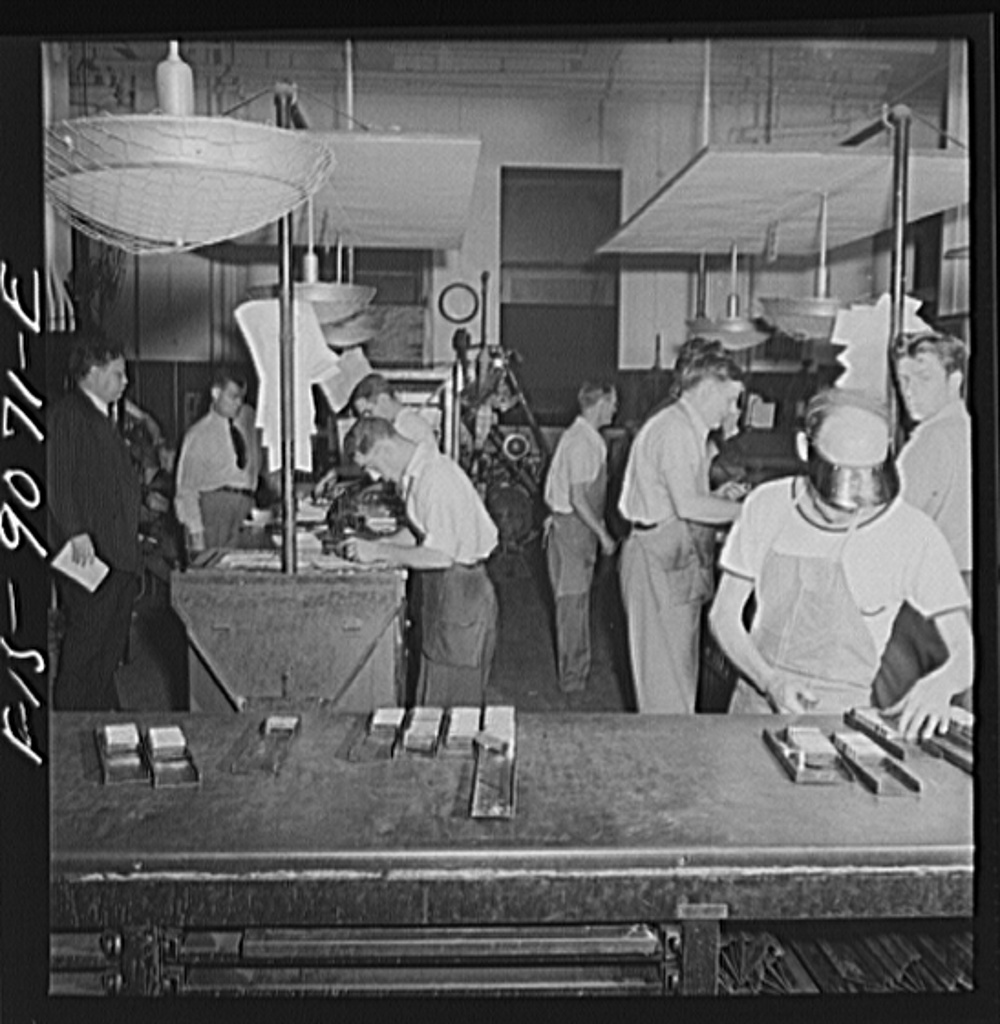
Thirty casting machines in one room produced a continuous mechanical clatter loud enough that compositors learned to read lips and shout. Hearing protection was not provided and was not asked for. Measured against modern exposure limits, a composing room would have required protection, monitoring and an audiometry programme, and a shop that failed to provide them would be shut down.
The heat was the other constant. Crucibles, gas burners and a roomful of men made the place hot year round, and a summer afternoon in a composing room under a flat roof was genuinely punishing. Salt tablets were handed out in some shops, which is a detail that places the period precisely.
The hours ran against the edition. Men worked nights and early mornings on a schedule set by when the paper had to be on the street, overtime was constant, and the social pattern of the trade — the drinking culture in particular — followed from finishing a shift at three in the morning with nothing else open. The union hall was the centre of a printer’s life as much as the shop was.
How fast it ended
Phototypesetting put the image of a character onto film instead of casting it in metal, and offset lithography printed from a thin plate made photographically from a pasted-up page. Together they removed the lead, the heat, the weight and most of the noise, and they also removed the skill that had taken six years of apprenticeship to acquire. A typist could operate the new equipment after a few weeks.
The transition through the 1970s was bitter and in places violent, because it was not simply a change of technology but the deletion of an entire craft and of the industrial power that went with it. American newspapers negotiated buyouts, lifetime job guarantees for existing compositors and attrition agreements, and in some cities the disputes were among the hardest of the decade. The men were not wrong about what was happening to them.
What is left is the vocabulary. Leading, upper and lower case, out of sort, stereotype, hot off the press, mind your p’s and q’s: all of it comes from a room that no longer exists, and most of it is now used by people working in software that renders type as outlines on a screen. The craft went and the words stayed, which is the usual order of things.
The other survival is the physical material itself. Type cases, galleys, Linotype matrices and whole working machines sit in museums and in the shops of letterpress printers, who now set by hand for art editions and wedding stationery at prices no newspaper could ever have paid. The trade’s apprentices today are hobbyists and designers, the metal is handled with gloves in ventilated rooms, and the thing that was once the fastest way to put words on paper is now among the slowest and most expensive. That inversion took about forty years.
Like our content? Follow us for more.