

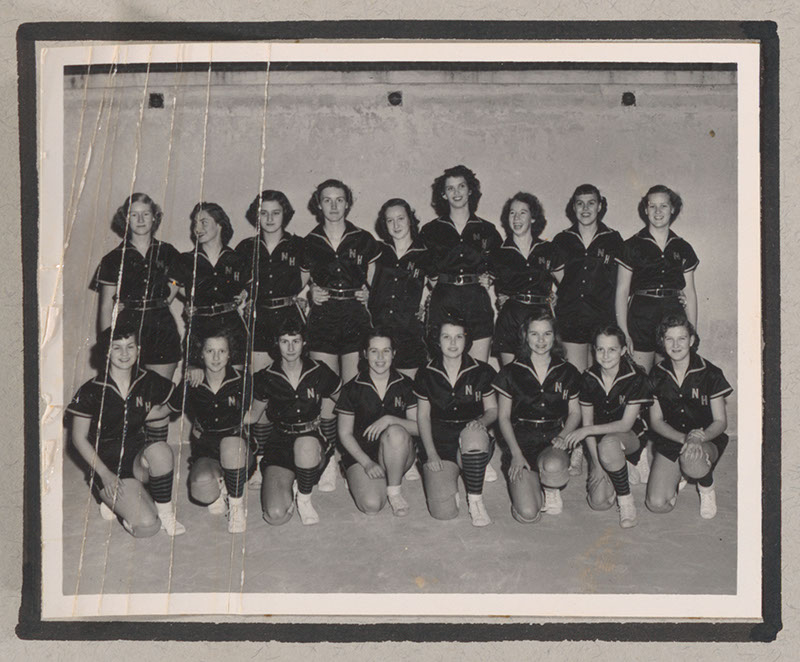
The advice given to American girls about physical exercise in 1965 was not a vague cultural attitude. It was written into the rules of the games they were allowed to play, into the length of the races they were permitted to enter, into the medical advice their mothers were given and into what a school was required to provide, and every part of it rested on claims about the female body that were not true.
It came apart within about fifteen years, and the mechanism was partly research and mainly law. This is an account of what was said and what replaced it; it is not medical advice, and anything about a particular person’s own exercise belongs with a doctor.
The rules of the games were written to restrict them
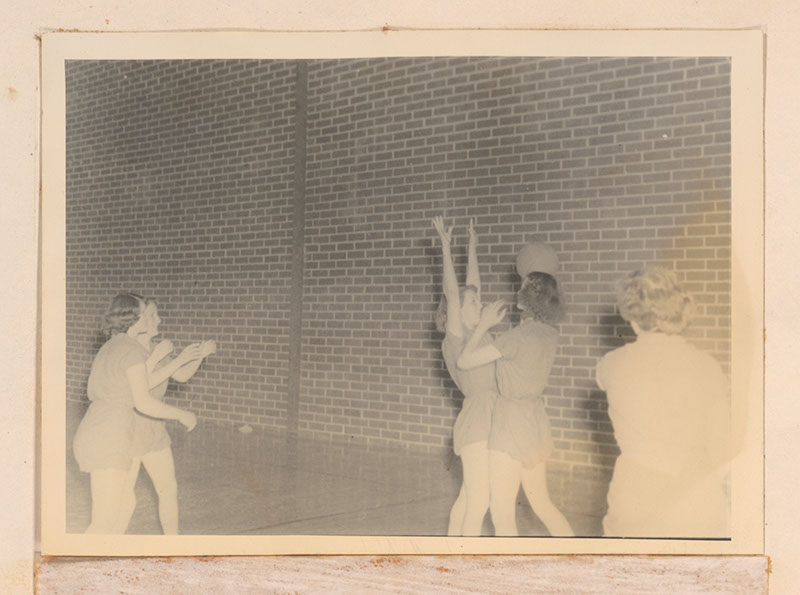
Girls’ basketball in much of the country was played six to a side on a court divided into zones, with players confined to their own half and restrictions on dribbling and on holding the ball. The game was deliberately constructed so that no player ran the full length of the court.
The stated justification was protective: that a full-court game was too strenuous, that girls would be exhausted or harmed by it, and that the modified version was the appropriate form of the sport for them. Five-player full-court rules were adopted for American high school girls at the start of the 1970s, and the six-player game persisted in a few states for years afterwards.
What makes this the clearest example in the whole subject is that the restriction was not advice anybody could ignore. A girl who wanted to play the actual game had nowhere to do it, because the rules of the only version available to her had the limitation built in. There was no unrestricted girls’ game to join, no league playing it and nobody coaching it, which means the claim about what girls could manage was never going to be tested by the system that made it.
Distance running was treated as physically unsuitable
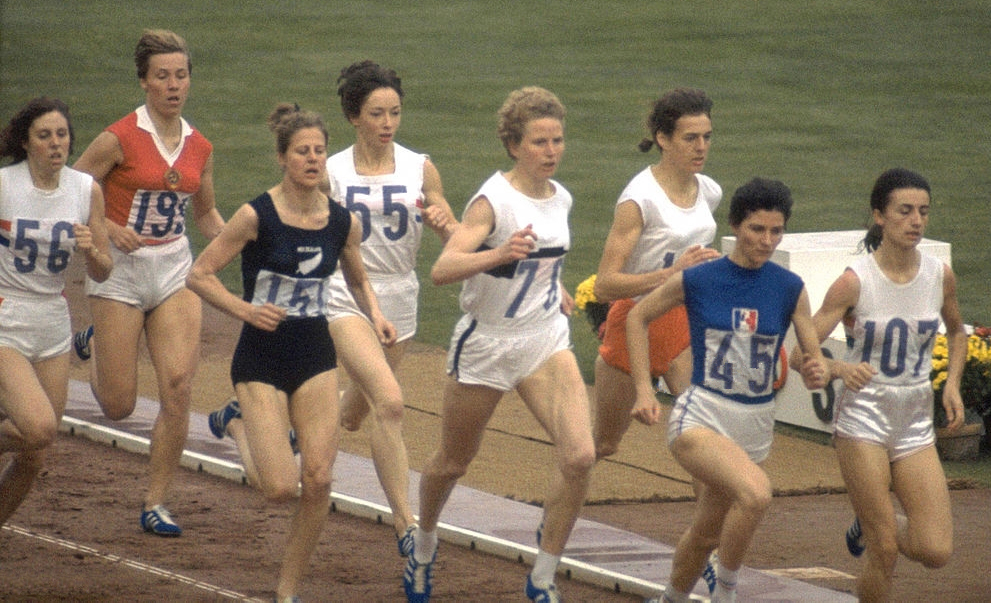
Women’s distance events were absent from international athletics for most of the century. The 800 metres was removed from the Olympic programme after 1928 on the basis of reports that the competitors had been distressed by the effort, and it was not restored until 1960. There was no Olympic women’s marathon until 1984.
The argument underneath was that endurance effort was damaging to women specifically, and the evidence offered for it was observation of tired athletes at the end of races. Male competitors in the same era finished races in a comparable state and were described as heroic.
The practical consequence for an ordinary girl was that distance running was not a thing she did. Women who entered road races in the 1960s did so against organisers’ rules in several well-documented cases, and the subsequent growth of women’s distance running — now a majority of finishers in many American road races — is the most straightforward refutation available of the original claim. The physiological position now is that women’s endurance performance differs from men’s in degree rather than in kind, and that the gap narrows as distances lengthen, which is close to the opposite of what the 1965 argument predicted.
The claim about reproductive harm
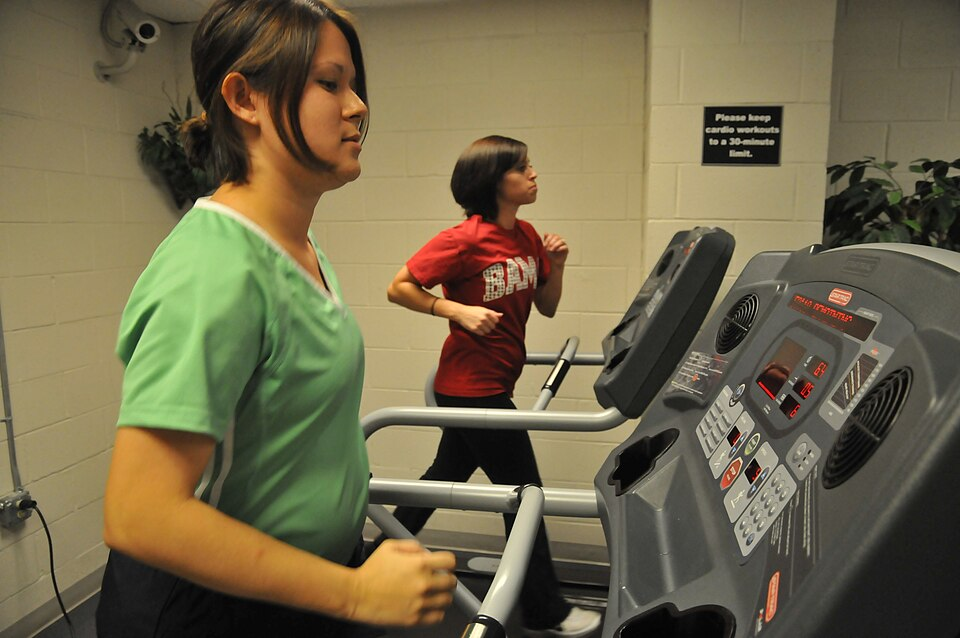
The central medical assertion was that strenuous exercise damaged the reproductive system, could cause injury to the uterus or displace it, and might affect a woman’s capacity to bear children later. It was stated in physical education texts and repeated by family doctors.
There is no evidence for it and there never was. The uterus is not displaced by running. Modern obstetric and sports medicine guidance encourages regular exercise in women of all ages including during pregnancy, with the recommendation being activity rather than rest and the caveats concerning specific conditions and contact or fall risk rather than exertion itself.
The reversal on pregnancy in particular is close to total. A 1965 pregnant woman was advised to rest, avoid exertion and in some guidance to avoid stairs; the current position is that regular moderate activity through pregnancy is beneficial for the mother and the baby, and the conversation with a clinician is about adapting it rather than stopping.
Menstruation and the medical note
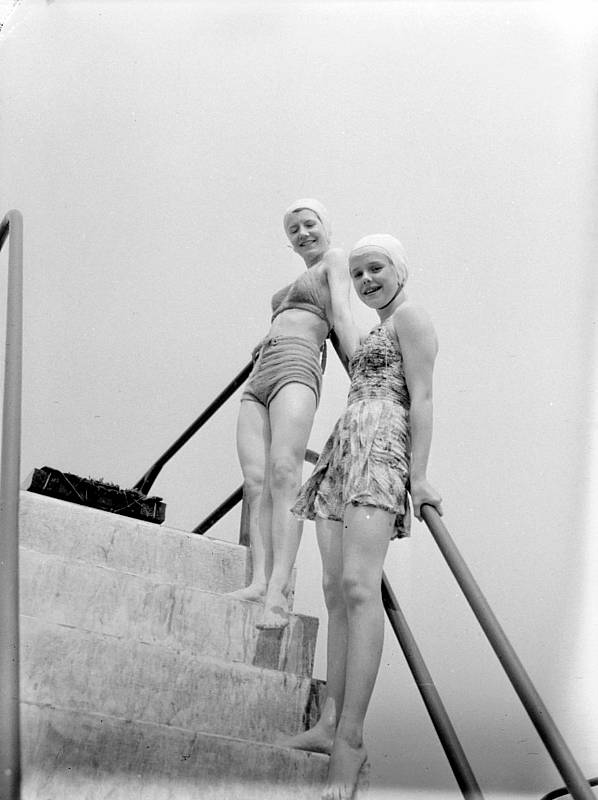
Girls were widely advised against swimming, bathing, washing their hair and taking part in physical education during menstruation, and the school medical excuse operated as a routine institution rather than an exception.
None of that is supported. Current guidance is that there is no physiological reason to avoid exercise, swimming or bathing, that exercise is associated with some relief of cramping for many people, and that participation is a matter of individual comfort rather than of restriction. The elite sport world has gone further and now studies cycle phases in relation to training and performance, which is a research field rather than a settled instruction.
The cost of the 1965 position was cumulative rather than dramatic. A girl who was excused physical education for a week every month, in a system that already offered her a restricted version of every sport, was being removed from physical activity at the age when habits form.
Weights, muscle and the appearance argument
The specific claim about resistance training was that it would make girls muscular and therefore unattractive, and it was effective because it was aimed at something adolescent girls cared about rather than at anything they could check.
The physiological answer is that the hormonal environment in most women does not produce large increases in muscle size from ordinary resistance training, that the adaptations are largely strength and bone density rather than bulk, and that resistance training is now recommended for women across the lifespan, with particular value for bone density in later life. The argument was wrong and, more to the point, it was not a medical argument at all.
This is the item that illustrates how the advice actually worked. Very little of it was enforced by anybody. It was enforced by girls themselves, having been told that the thing they might want to do would make them unappealing.
That mechanism is worth naming because it did not require anybody to be malicious or even to be paying attention. A claim about appearance, repeated by magazines, teachers, relatives and other girls, does not need an authority behind it and cannot be appealed against, and it outlasted the formal restrictions by a considerable margin.
What the schools actually provided
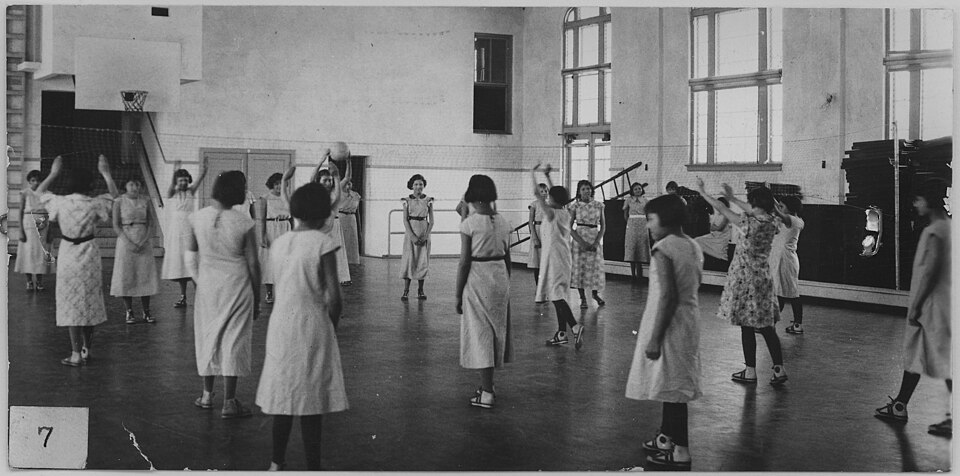
The physical reality of a 1965 girls’ physical education programme is part of the story: a one-piece gym suit that was widely disliked, inadequate or absent changing and washing facilities in many schools, teaching hours and facilities allocated well behind the boys’ programme, and no competitive pathway beyond school for most sports.
The item that changed this was not a research finding. Federal education legislation prohibiting sex discrimination in federally funded education programmes took effect in the United States in 1972, and its application to school and college athletics transformed participation: the number of American girls playing high school sport rose by an order of magnitude over the following decades and has stayed there.
It is worth being plain about the sequence. The claims about the female body were not refuted first and the rules changed afterwards. The rules were changed, girls played, and the claims collapsed because they were visibly untrue once anybody was allowed to test them.
One more piece of equipment that did not exist
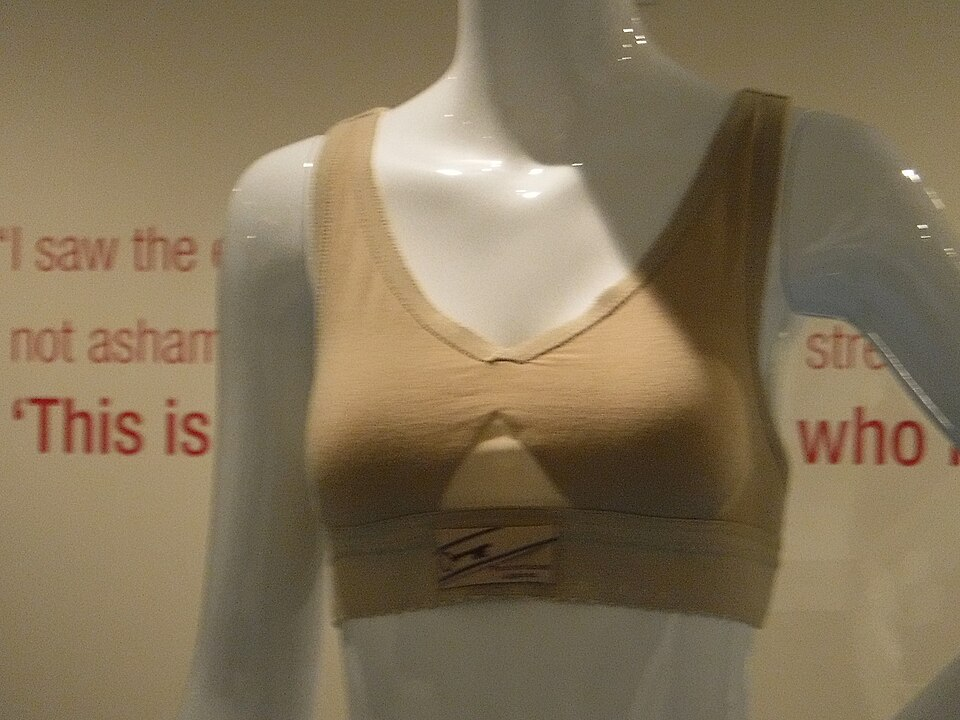
There was no purpose-made sports bra on the American market until the late 1970s, and the absence of it is a practical rather than a trivial point: breast movement during running is uncomfortable and is a documented reason women gave for not exercising, and the garment that addresses it was invented by women who wanted to run and could not buy anything suitable.
It belongs in this article because it is a reminder that the barriers were not all ideological. Some of them were simply that nobody had made the equipment, because the market was not understood to exist, because the activity was not expected.
The modern sports medicine concerns for girls and women in sport are different from the 1965 ones, are real, and concern adequate fuelling and training load rather than whether exercise is appropriate at all. They are clinical matters managed by professionals and are outside the scope of a history article.
What 1965 got right by accident
Two things. The gym suit, whatever else was wrong with it, meant girls changed into clothing designed for movement, and the daily or near-daily physical education period meant that every girl did something active in school hours, which is a level of universal participation a good many modern systems have lost.
And the games themselves, restricted as they were, were games. Girls who played six-player basketball played it seriously and remember it fondly, and the people who grew up in that system are often the ones who built what replaced it.
The honest summary is that the medical claims were false, the rules of the sports were written around them, the restriction was enforced largely through appearance rather than authority, and the thing that broke it was a law rather than a study. Anything about an individual’s own exercise, at any age or in any circumstance, is a question for a doctor rather than for an account of 1965.
The wider point this file illustrates is about how medical claims acquire authority. None of the assertions in it came from a study. They came from assumptions about what women were for, were given a physiological vocabulary by people who believed them, were printed in textbooks and taught to teachers, and then functioned as medicine for two generations. The research that eventually addressed them was mostly done after the law had already forced the question, which is an uncomfortable order of events and is the honest one.
Like our content? Follow us for more.
