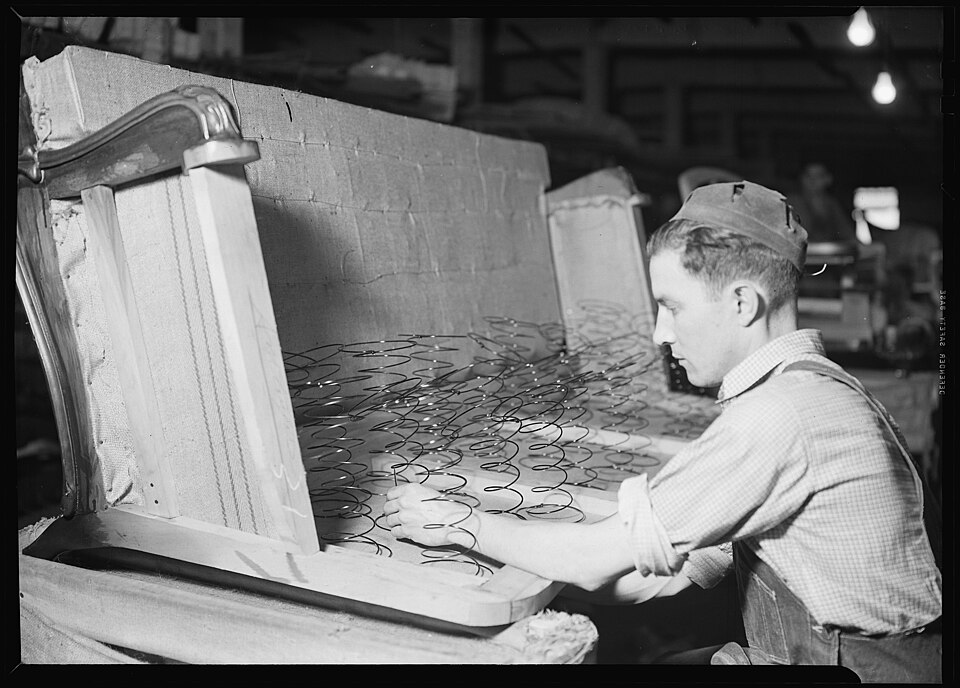
Upholstery in 1960 meant building a chair’s shape out of springs, hair and hessian rather than cutting it out of foam, with a mouthful of tacks and almost no machinery in the room. Here are sixteen things about it that have gone.
1. The springs were tied by hand, eight ways each
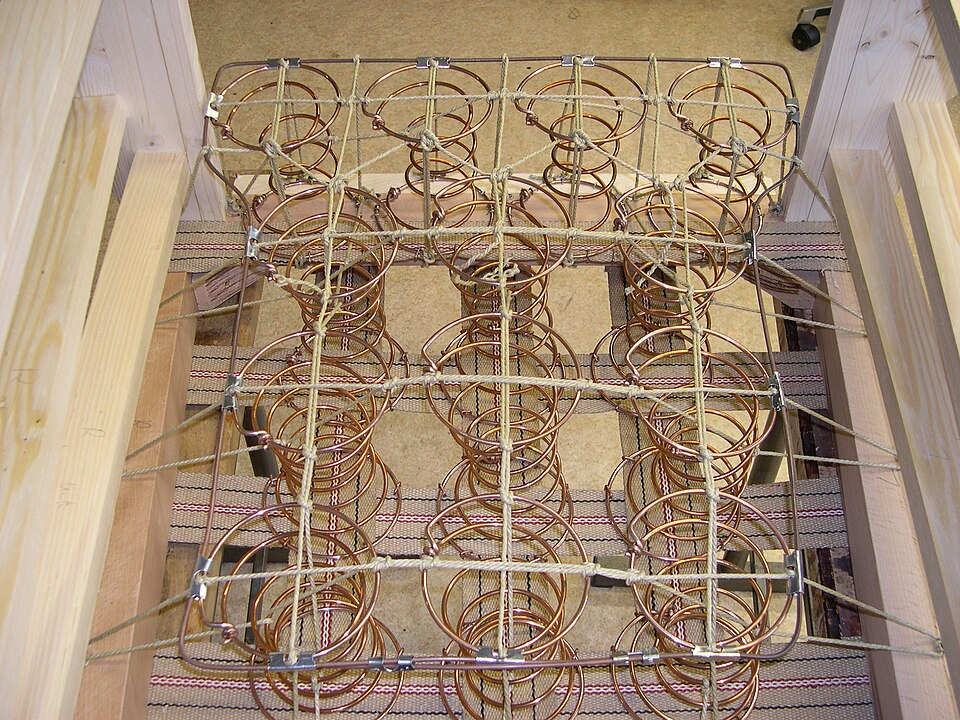
A traditional sprung seat in 1960 was built on coil springs stitched to a webbing base and then lashed together with twine in eight directions each, so the whole set moved as one unit rather than as individual springs.
That operation, called eight-way hand tying, took a long time, could not be mechanised and was the single clearest marker of a properly built seat.
Almost all modern upholstery uses serpentine or sinuous wire springs clipped to a frame, or a webbing and foam platform. Eight-way hand tying survives in high-end and restoration work and is sold on explicitly, which tells you how much labour it represents. The purpose of tying the springs together is to stop them working independently, because a seat whose springs move separately feels unstable and wears unevenly. Tying it in eight directions rather than four holds the set against sideways movement as well as vertical, which is why the method became standard rather than remaining an option.
Like our content? Follow us for more.
2. The stuffing was horsehair, and it had to be teased
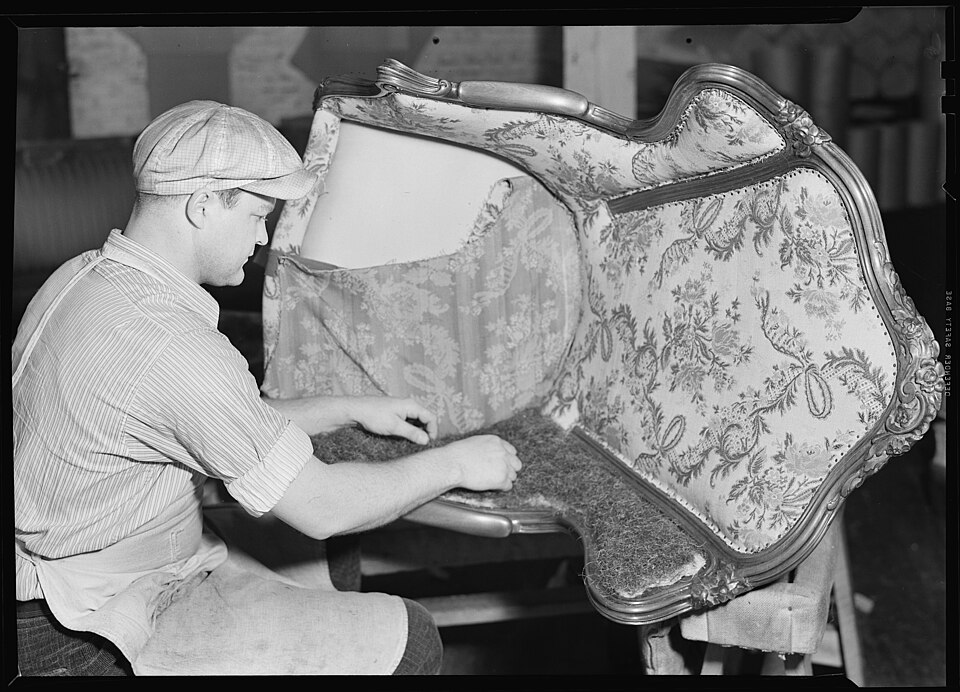
Traditional stuffing was animal hair, most often horsehair, supplied compressed and curled and requiring teasing out by hand before use to restore the spring in each fibre.
It was a filthy, dusty operation done at a bench or on the floor, and the quantity needed for a single armchair was considerable.
Foam, fibre and wrapped-foam constructions replaced it almost entirely from the 1950s and 1960s onward. Hair is still used in conservation and in a few traditional workshops, now supplied washed, sterilised and to a specification. Hair’s advantage over foam is that it does not take a permanent set in the way a cheap foam does, so a hair seat that has flattened can often be opened and brought back rather than replaced.
3. The shape was built, not cut out
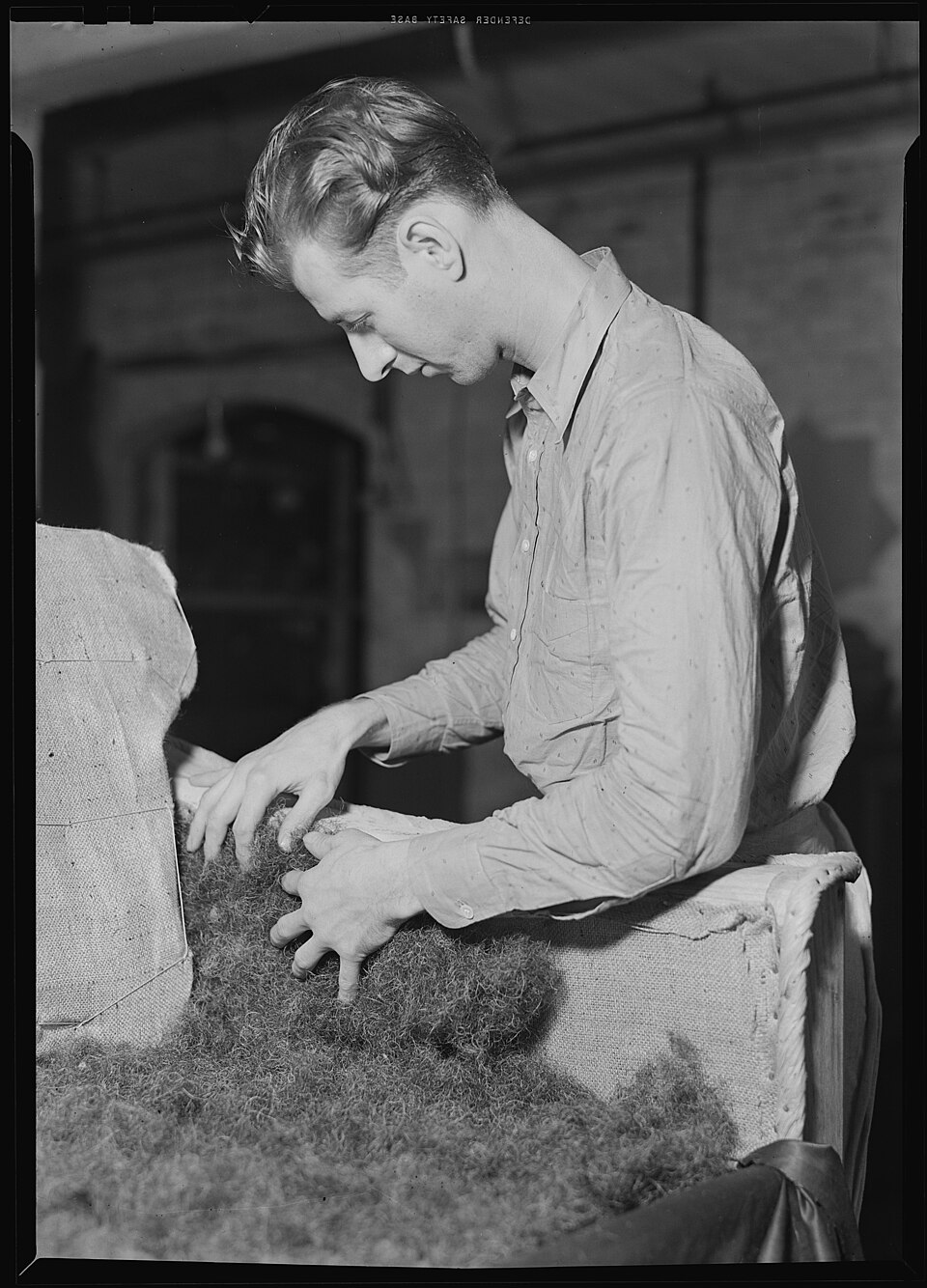
An upholsterer did not fit a cover over a shaped foam block. He built the shape itself out of springs, hessian, hair, calico and wadding, working it up to the line he wanted and checking it by eye and hand as he went.
That is why two upholsterers given the same frame produced chairs that sat differently, and why a good one could correct a frame’s shortcomings in the stuffing.
Modern production upholstery starts from cut and shaped foam, which is consistent, fast and gives the designer control of the form. The shape is now decided before anybody touches the chair rather than during the making. Both approaches are defensible and they produce genuinely different objects: one is the designer’s shape made accurately many times, the other is one craftsman’s shape made once.
4. Regulating was done with a long needle and a sense of touch
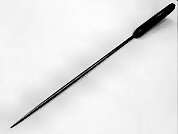
Once the first stuffing was in and stitched, the upholsterer pushed a long steel regulator through the covering to move hair about inside, filling hollows and thinning lumps without opening anything up.
It is a purely tactile operation: the hand on the outside finds the fault and the needle inside corrects it.
There is no modern equivalent because there is nothing to regulate in a foam seat. The tool is still made and still used by traditional upholsterers, and it is one of the few that would baffle a modern production worker entirely. It looks like nothing at all, which is part of why it survives: a long steel spike with a point at one end and a flattened end at the other, and no obvious purpose until somebody shows you.
5. Stitched edges were sewn through the whole thickness
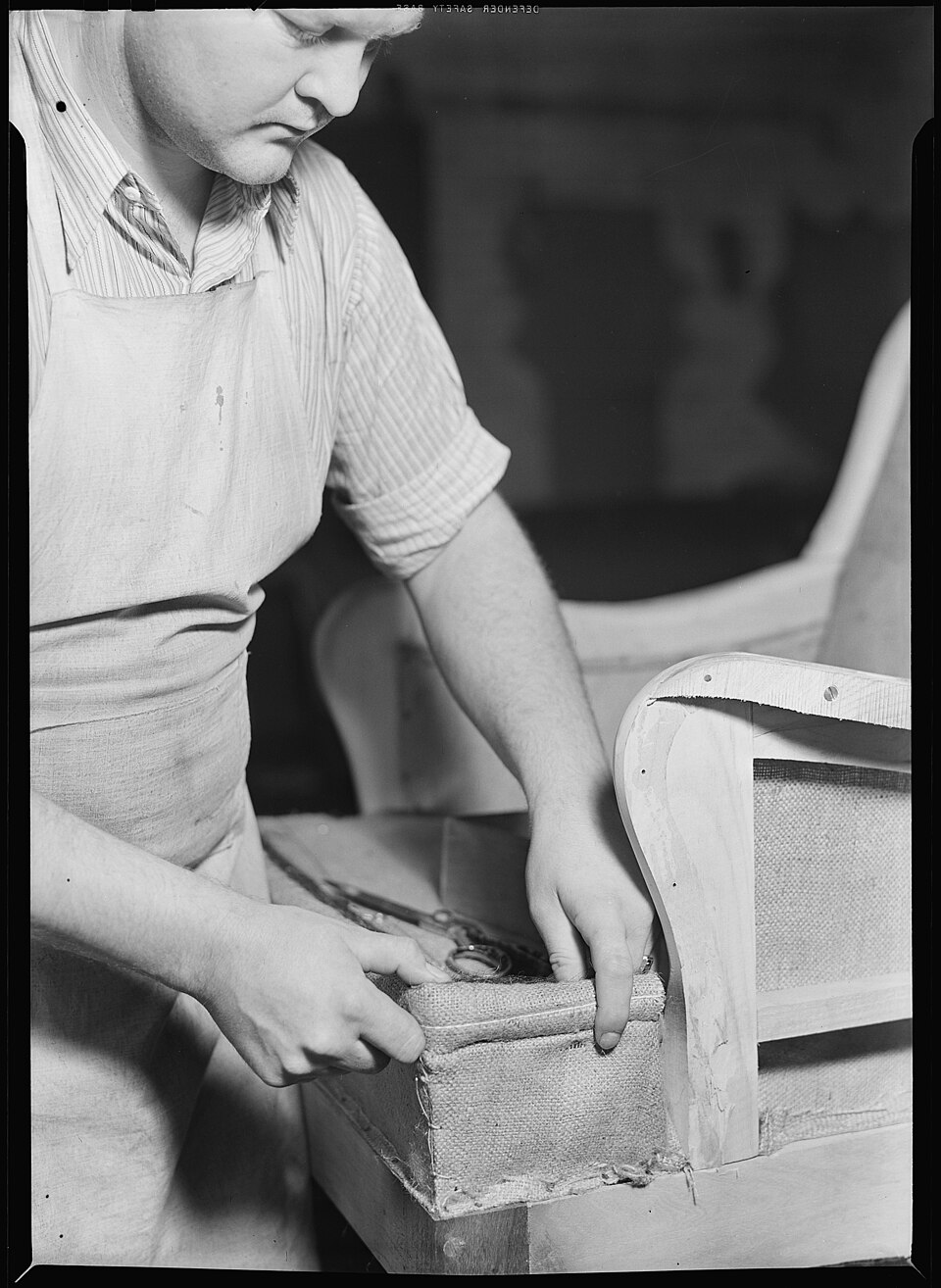
A traditional firm edge on a seat or arm was made by sewing rows of stitches through the stuffing with a long double-ended needle and twine, pulling the hair forward into a roll that holds its line under use.
Blind stitching and top stitching are separate operations with separate purposes, and getting them right is what stops a seat front collapsing after two years.
Foam constructions achieve the same result with a shaped block and a facing, which is faster and perfectly adequate. The stitched edge survives in restoration, where it has to be rebuilt because nothing else will fit the original frame. A collapsed seat front is the commonest failure on a chair of this age, and it is almost always the stitched edge that has gone rather than the springs.
6. Tacks were held in the mouth
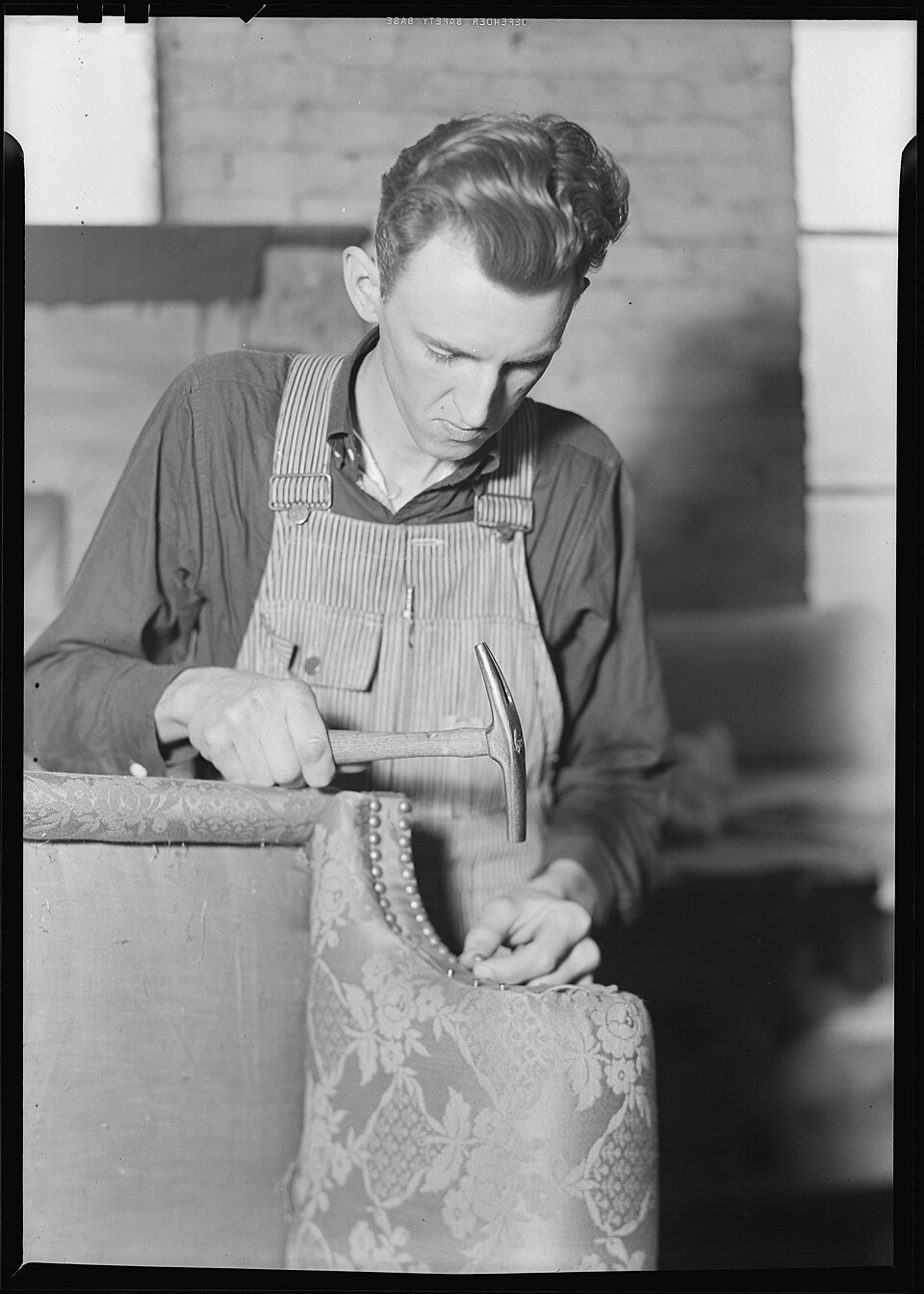
An upholsterer in 1960 worked with a mouthful of tacks, taking them out one at a time and placing them with a magnetic hammer, which is quicker than reaching for a box several thousand times a day.
It was universal practice, taught as part of the trade, and nobody regarded it as remarkable.
Staple guns replaced tacks for most work and the practice vanished with them. No workshop today would countenance it, and the tack-in-the-mouth habit is now the detail older upholsterers mention first when asked what has changed. The magnetic hammer survived the tack, incidentally, and is still a standard tool for traditional work.
7. Fire performance was not a consideration at all
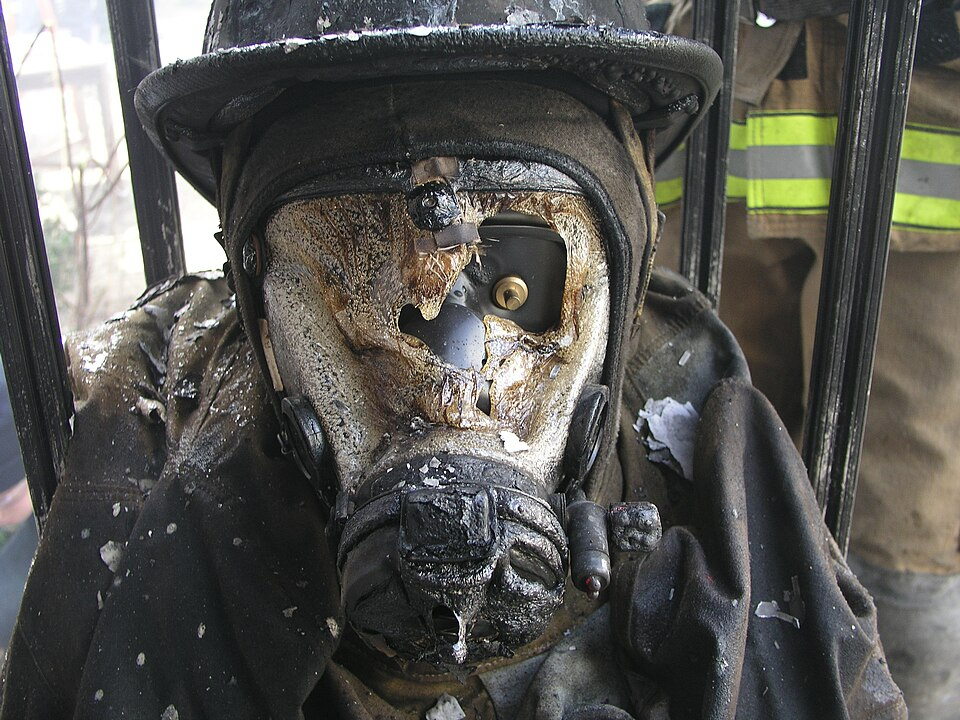
The materials of a 1960 chair — hessian, hair, calico, cotton wadding, wool and later early foams — were chosen for comfort, durability and cost, with no requirement of any kind about how they behaved in a fire.
Early polyurethane foam in particular was used widely before its fire behaviour was understood or regulated.
Upholstery filling and covering materials are now subject to strict fire performance requirements with specified tests, labelling and record-keeping, and the composition of a modern chair is substantially determined by them. It is the largest single regulatory change in the whole of furniture making. It also reshaped the industry commercially, because compliance costs fall unevenly on small makers and large ones.
8. Old upholstery is a job for a professional, not a weekend
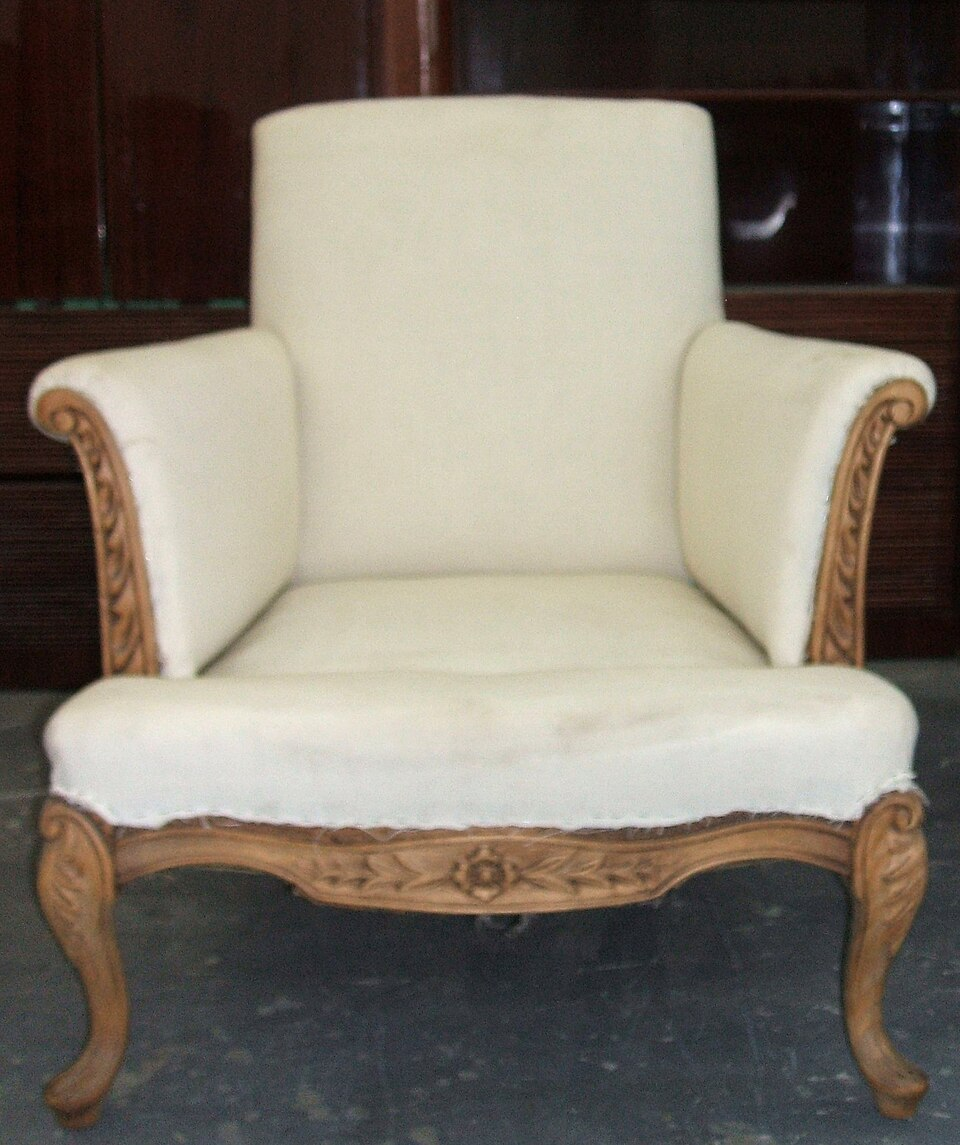
Stripping a chair made before the 1970s releases decades of accumulated dust from hair stuffing, along with whatever the original materials were, and early foams degrade into a fine crumbling dust of their own.
That is why reupholstering genuinely old furniture is work for a workshop with extraction and proper handling rather than a living-room project.
Modern workshops strip in extracted bays with respiratory protection and dispose of the material as waste. Anybody tempted by an old chair should get it looked at by somebody who does this for a living rather than start pulling tacks. A good workshop will also tell you whether the frame is worth the work, which is the question that actually decides it.
9. Everything was measured against the chair, not against a pattern
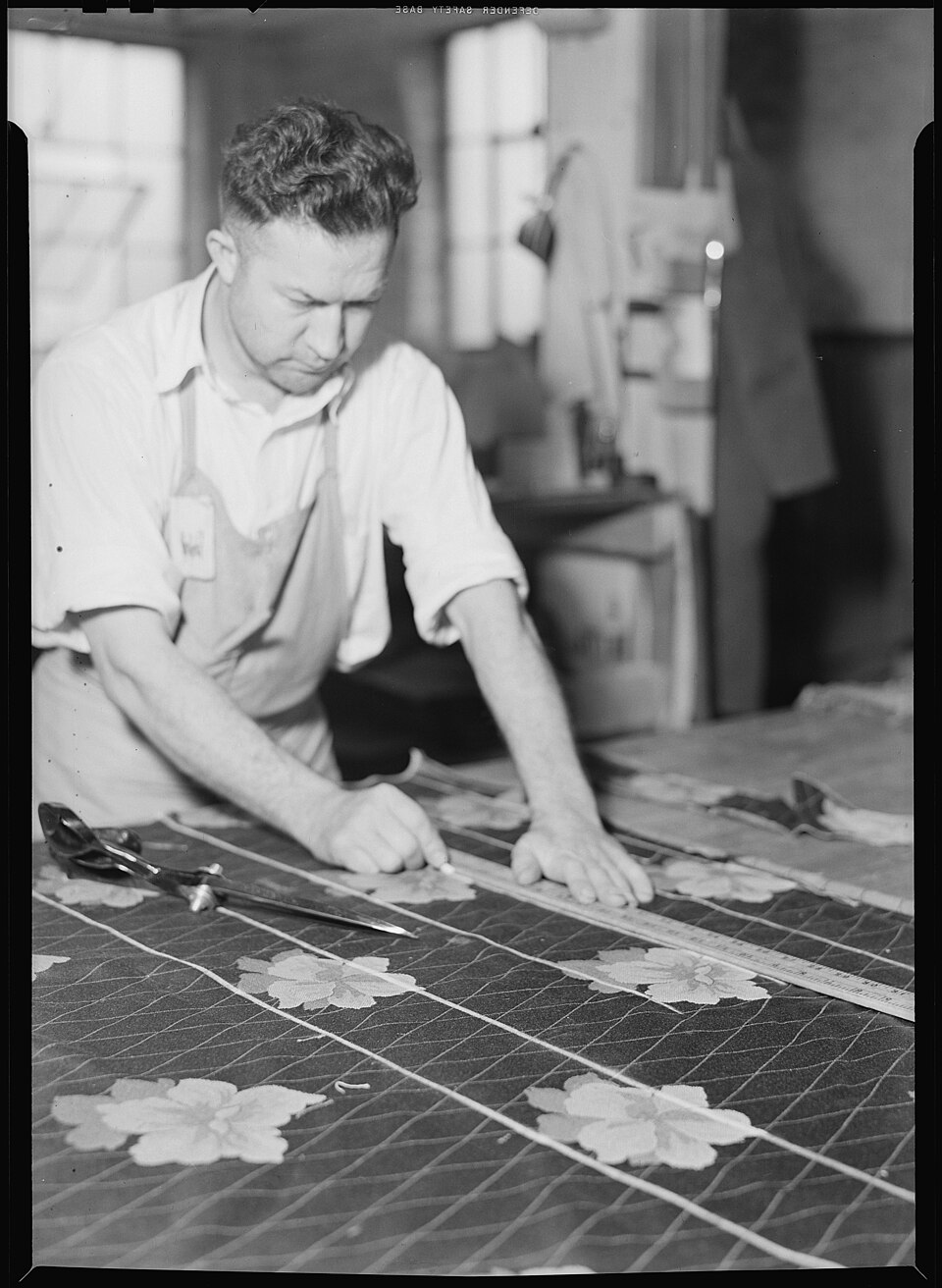
Covers were cut from cloth laid directly on the chair, marked, trimmed and fitted, with the upholsterer allowing for the way a particular fabric would behave as it was pulled in.
That is why a traditionally covered chair has no seams in awkward places and why the pattern runs correctly across the whole piece.
Production upholstery uses computer-cut panels from a digitised pattern, sewn into a cover and pulled on. It is extremely consistent and it has no capacity to respond to the individual chair at all. That is a reasonable trade when every chair coming down the line is identical, and a poor one when it is not.
10. The frame was expected to be repaired, not thrown away
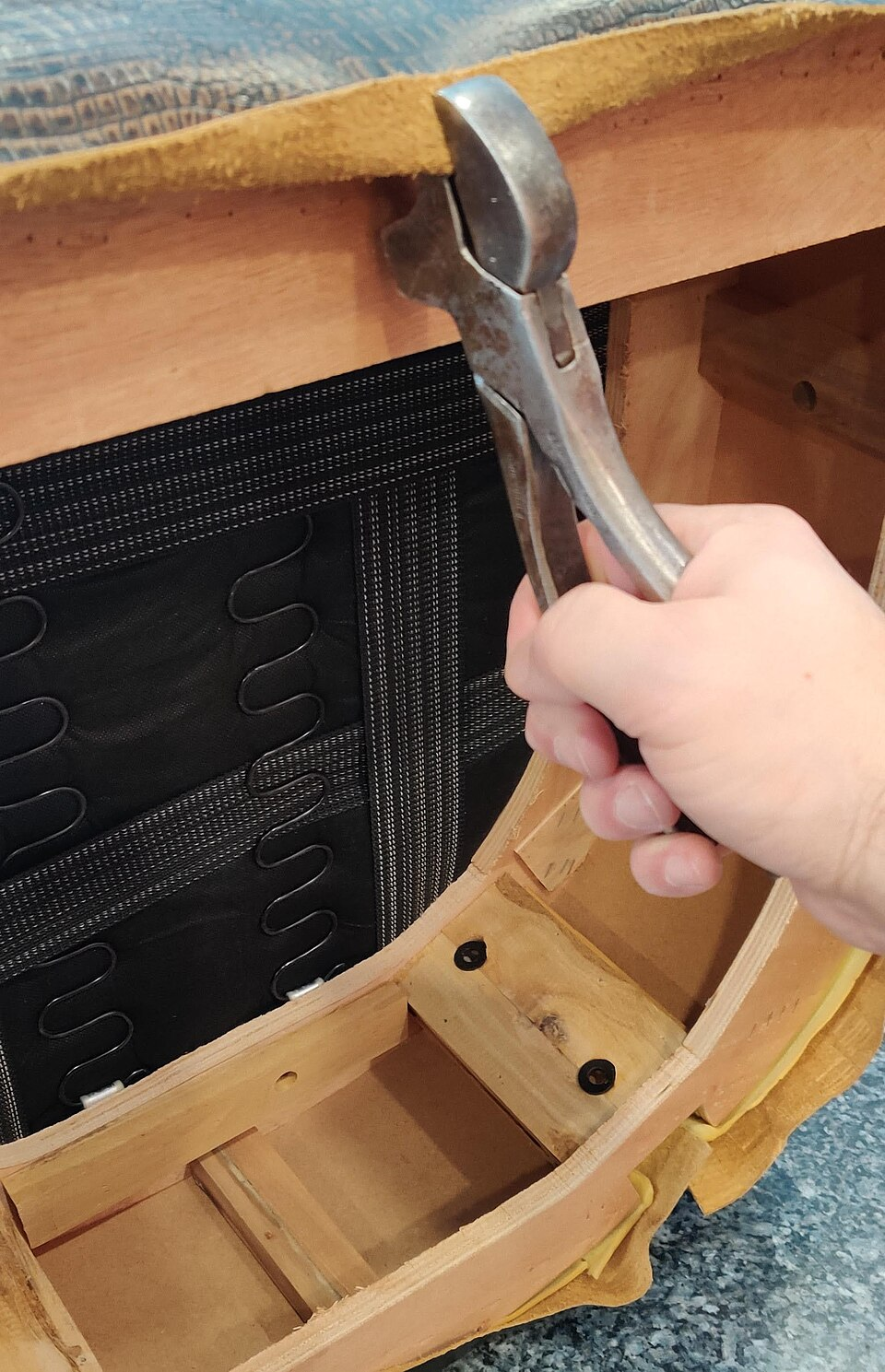
A 1960 upholsterer regularly stripped a chair back to its frame, re-glued and re-jointed it, and built it up again, because a good beech or birch frame outlasts several coverings.
That made reupholstery a normal household expense and a steady trade, rather than a luxury.
Most modern upholstered furniture is built on frames of engineered board and stapled construction that cannot usefully be re-covered. The repairable frame is now largely confined to traditional and high-end production, which is a quiet argument about waste. Upholsterers make the point more bluntly: a frame they cannot take apart is a frame they cannot save.
11. Webbing was stretched by hand with a wooden strainer
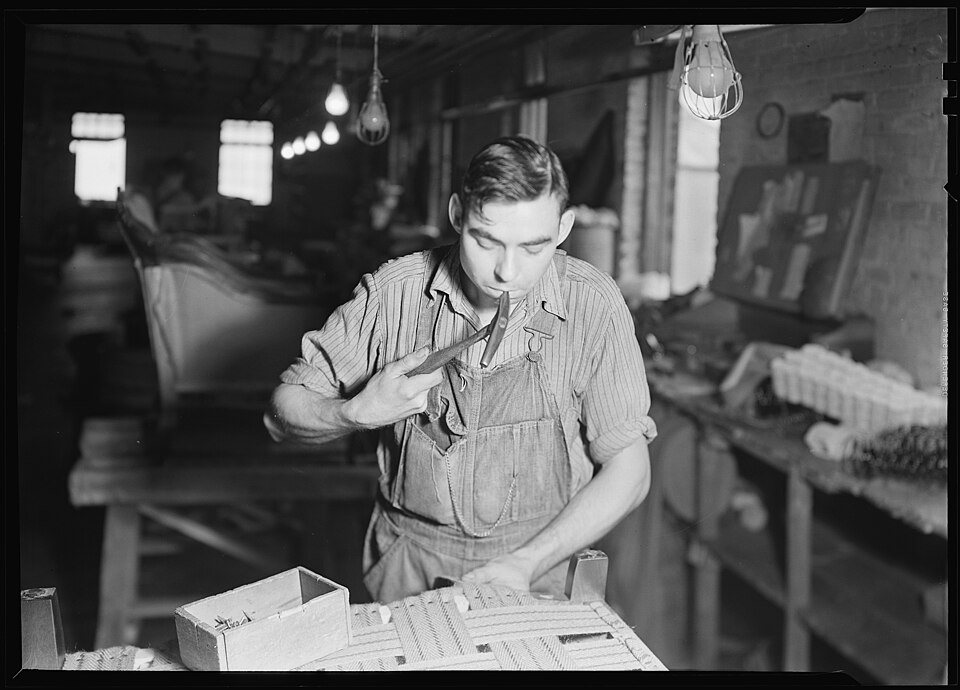
The base of a traditional seat is interlaced webbing strained tight across the frame with a wooden web strainer and tacked off, and the tension in it determines how the whole chair feels.
It is physical work and the tension is judged by feel and by the note the webbing gives when struck.
Elasticated webbing and sprung platforms replaced jute webbing in most construction, with tension set by the length of a cut strip rather than by a man’s judgement. The traditional method survives where the chair must be rebuilt as it was made. Webbing is also the part that fails first in an old chair and the easiest to see, because a sagging seat is almost always a webbing problem rather than anything deeper.
12. Buttoning was marked out with chalk and a tape, and set by pull
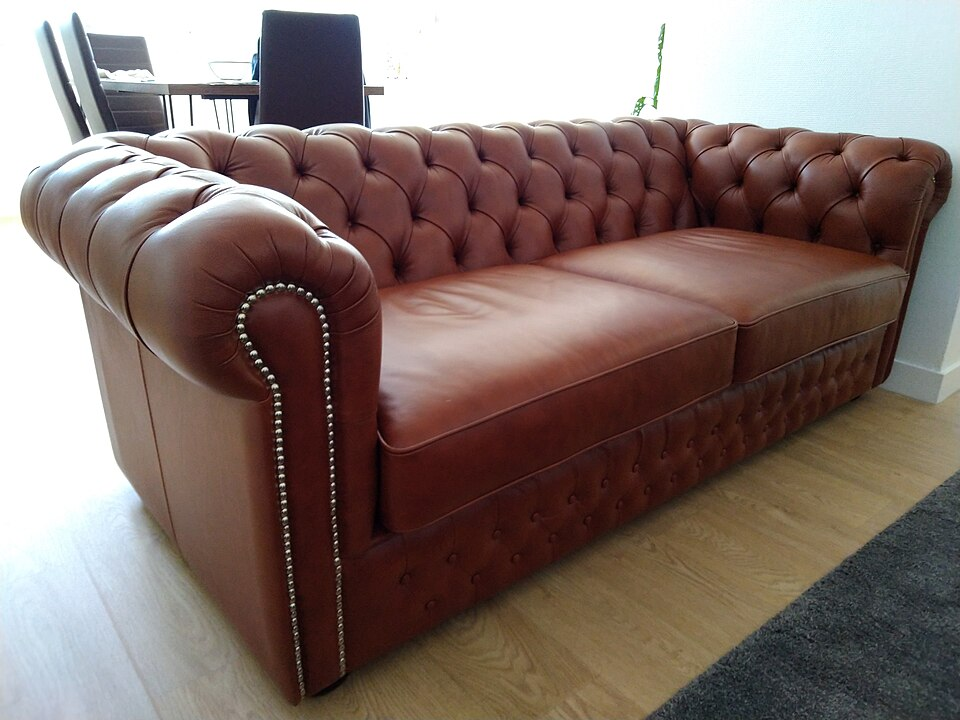
Deep buttoning was laid out on the cover and the base with chalk lines, and each button pulled through to a depth judged by the pattern wanted, tied off at the back and adjusted until the whole field read evenly.
A buttoned back is the most exacting thing in the trade because every button affects its neighbours and the whole arrangement has to be consistent.
Machine buttoning and foam buttoning produce a regular result quickly and are used on most volume work. Hand buttoning is a specialist operation sold as such. A hand-buttoned back also changes shape slightly with use in a way a foam one does not, which traditionalists consider a feature.
13. The trade was learned over several years at a bench
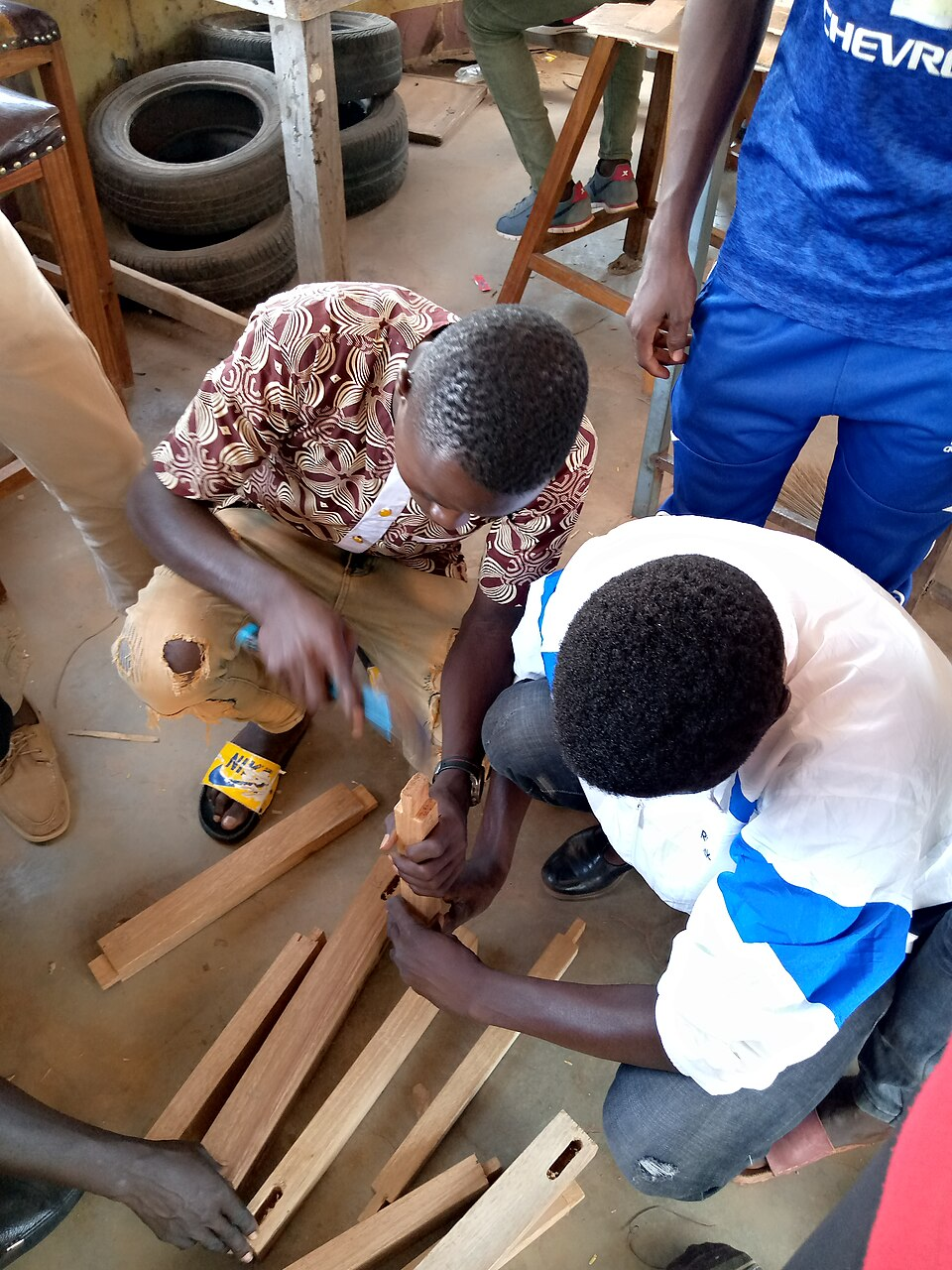
An upholstery apprenticeship in 1960 ran for years and progressed through the operations in sequence, starting with stripping, webbing and hessian and reaching cutting and finishing late.
That produced people who understood the whole construction from the frame outwards, because they had built it from the frame outwards many times.
Training is now shorter, more modular and far more often focused on a specific sector, with traditional skills taught as a distinct specialism. The breadth that came from years of sequence is the part that is hardest to reproduce. Nobody has worked out how to shorten that, because the knowledge comes from the number of times rather than from the explanation.
14. A workshop was a quiet place with no machines in it
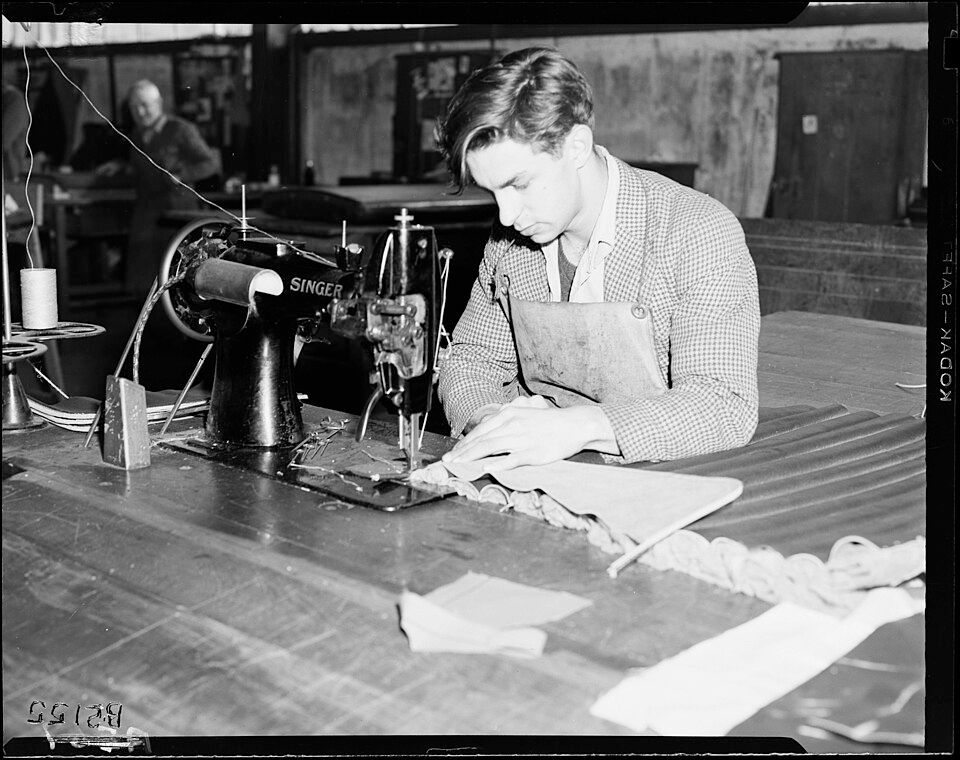
Beyond a sewing machine, a traditional upholstery workshop in 1960 contained almost no powered equipment: the work was hammers, needles, strainers, shears and hands.
That made it an unusually quiet trade and one that could be carried on in a small premises almost anywhere.
Modern production upholstery uses pneumatic staplers, powered cutting, automated sewing and foam-cutting machinery, and happens in a factory. The small town workshop survives, but it survives doing repairs rather than making new furniture. Quietness was a real working advantage too, since it is a trade where people talk to each other about what they are doing all day.
15. The customer chose from a book and waited weeks
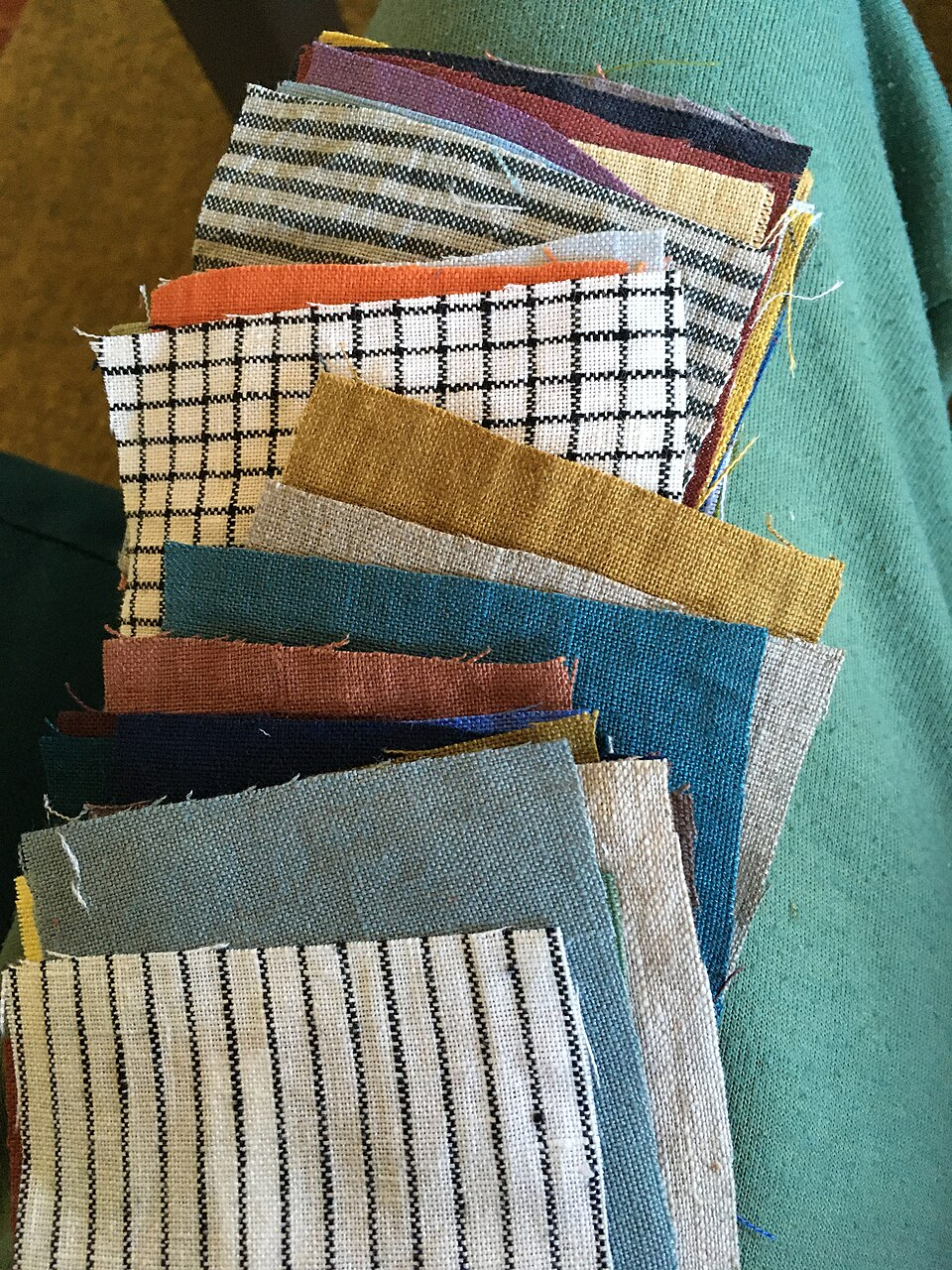
Reupholstery in 1960 meant a visit, a book of fabric samples, a measurement, and a wait of weeks while the work was done to order by hand.
That was normal for all furniture, and the expectation was that the result would last a very long time.
Most furniture is now bought finished, in stock, and delivered in days. Made-to-order upholstery still exists and the waiting time has not changed much, which is a useful indication of how little the hand process can be accelerated. Customers find the wait harder to accept than they used to, which has probably done as much to narrow the trade as any technical change.
16. Nobody wrote down what was inside
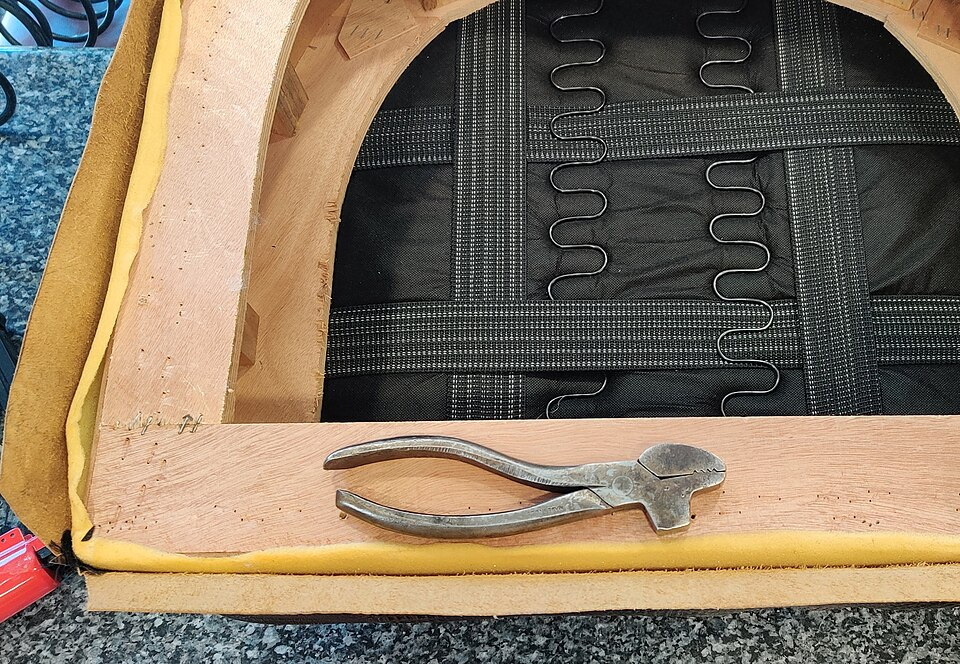
A 1960 chair left the workshop with no record of its construction, its materials or its maker, and the only way to know what is in an old chair is to open it.
That is why conservation upholstery begins with careful dismantling and recording, and why opening a historic chair is treated as a one-off opportunity to learn.
Modern upholstery carries labelling specifying filling materials, fire performance and manufacture. The information now travels with the chair, which will make the next generation’s restorers’ lives considerably easier. Restorers will still open chairs, though, because what a label says and what is actually inside are not always the same thing.
The two things that changed everything
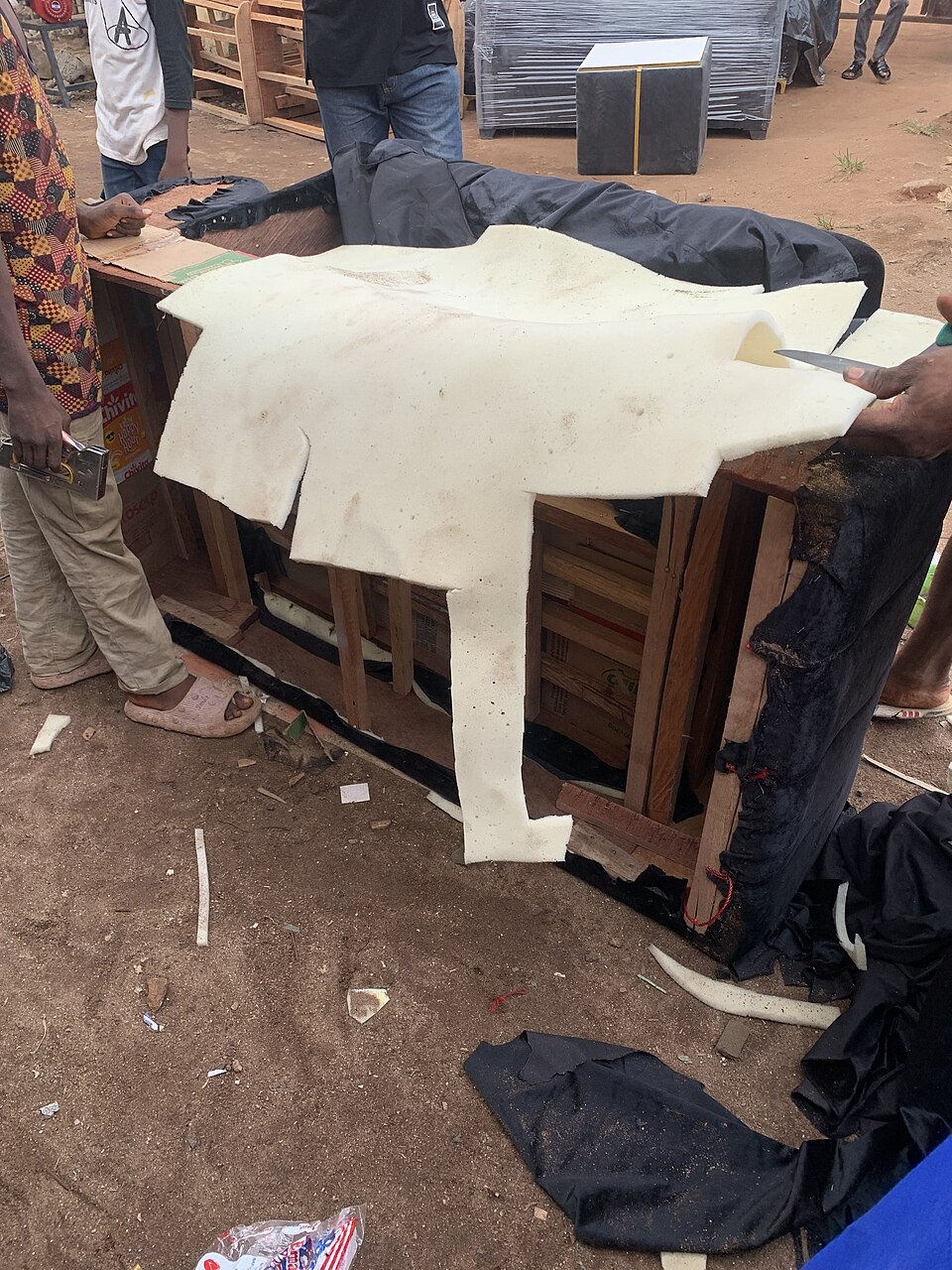
Foam and fire regulation. Shaped foam moved the decision about a chair’s form from the upholsterer’s hands to a designer’s drawing and made the result consistent, fast and cheap. Fire performance requirements then determined what a chair could be made of at all, which is why the materials list of a modern piece looks nothing like the materials list of a 1960 one. Everything else on this list follows from those two.
The traditional methods are not obsolete so much as expensive, which is a different thing. They survive wherever somebody is willing to pay for a chair that can be rebuilt rather than replaced.
Like our content? Follow us for more.