Imagine renovating your house — knocking down a wall in your basement to make a little more room — and finding, behind it, a hidden passage leading down into the earth. You follow it, and it opens into a room, then another, then a staircase descending deeper, then more rooms, more tunnels, more levels, until you realize you have stumbled into an entire city buried beneath your home, silent and empty and unimaginably old. This is not the opening of a fantasy novel. It is very close to what actually happened in the Turkish town of Derinkuyu in 1963.
The discovery revealed Derinkuyu, the largest excavated underground city in the world, a staggering feat of ancient engineering hollowed out of soft volcanic rock in the region of Cappadocia. Descending as much as 18 levels and some 280 feet into the earth, it was designed as a complete subterranean refuge where up to 20,000 people could live, work, worship, and shelter, sealed off from the dangers above. That it existed at all is remarkable; that it lay forgotten beneath an inhabited town, waiting to be rediscovered by a homeowner with a sledgehammer, makes it one of the most extraordinary stories in all of archaeology. Here is the tale of the city beneath the ground.
The Accidental Discovery
The story of Derinkuyu’s rediscovery has become the stuff of legend, and the essential facts are truly astonishing. In 1963, an anonymous resident of the town of Derinkuyu, in the Cappadocia region of central Turkey, was renovating his home. When he knocked down a wall in his basement, he found a mysterious room he had never known was there. Further exploration revealed that the room connected to a tunnel, and that tunnel opened onto an entire network of passages, chambers, and staircases descending deep into the earth.
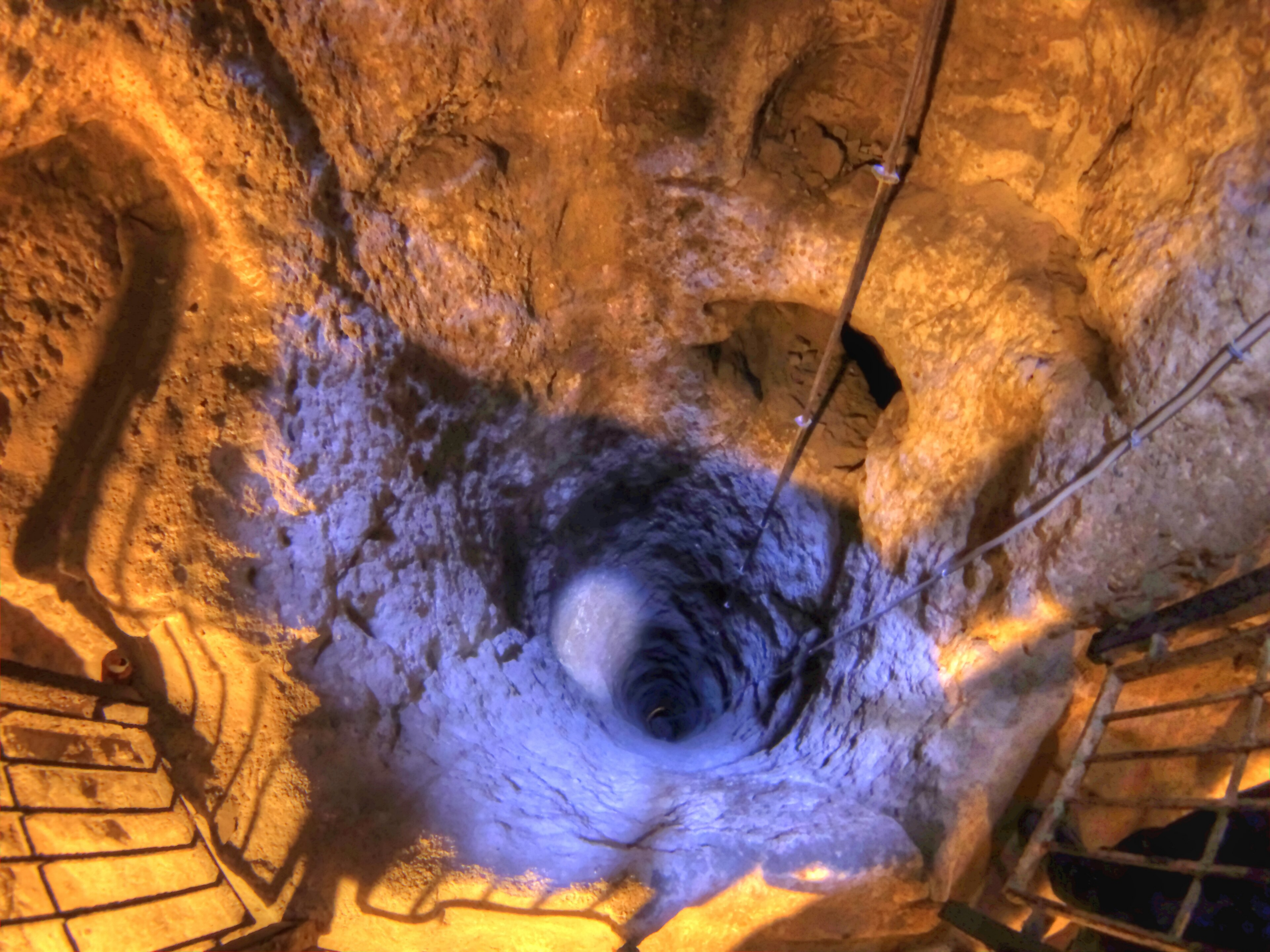
What he had breached was the sealed-off upper level of a vast underground city that had lain undisturbed for generations, hidden directly beneath the modern town whose residents went about their lives entirely unaware of the labyrinth below their feet. The name of the town and the city, “Derinkuyu,” even means “deep well” in Turkish, a reference to the deep shafts that the local people had, in fact, been drawing their water from for years without realizing those shafts passed through a hidden world. The discovery set off archaeological excavation, and by the end of the decade the city was opened to the public. Today it stands as one of Turkey’s most extraordinary attractions, though only a portion of the full complex has been excavated and made accessible.
Like our content? Follow us for more.
A City Built Downward
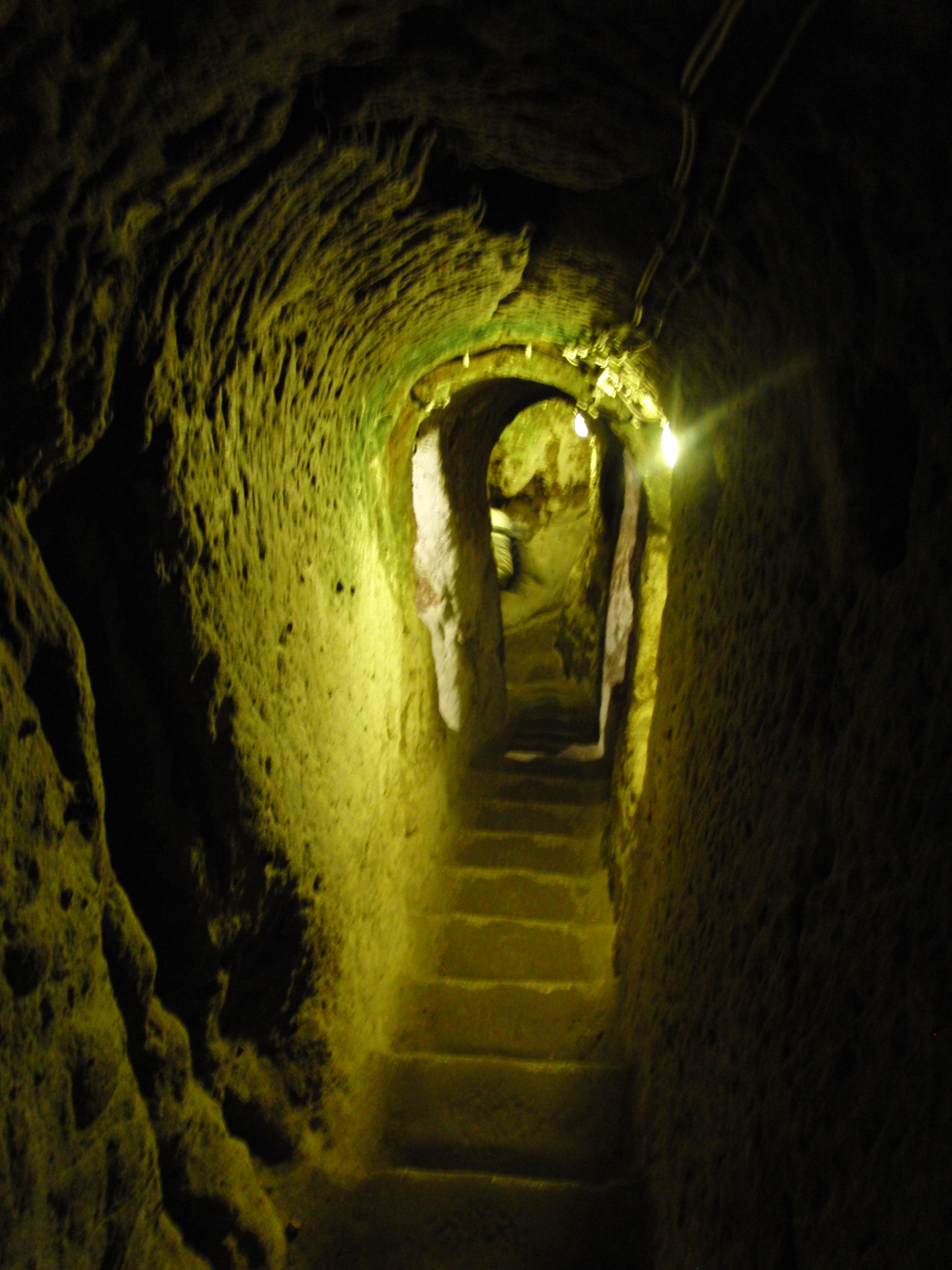
Everything about Derinkuyu inverts our normal sense of a city. Instead of rising into the sky, it plunges into the earth, level after level, to a depth of around 280 feet — roughly the height of a 25-story building, but going down instead of up. The whole thing was carved by hand out of the soft volcanic rock called tuff that defines the Cappadocian landscape, a stone soft enough to excavate with simple tools yet stable enough to hold its shape once exposed to air.
And it was no mere hiding hole. Derinkuyu was a fully functional city with everything a population needed to survive underground for extended periods. Archaeologists have identified living quarters, kitchens, stables for livestock, storerooms for food, wine and oil presses, communal dining halls, chapels and religious spaces, and even what appear to be schools. Deep wells provided fresh water, drawn from sources the enemy above couldn’t reach or poison. Most ingeniously of all, the city had an elaborate ventilation system, with dozens of air shafts channeling fresh air down through all the levels, so that even in the deepest chambers, far below the surface, the inhabitants could breathe. This was not improvised; it was a carefully engineered, self-contained environment, a triumph of ancient planning that allowed thousands of people to live comfortably in a place with no sunlight and no direct connection to the world above.
Engineered for Defense
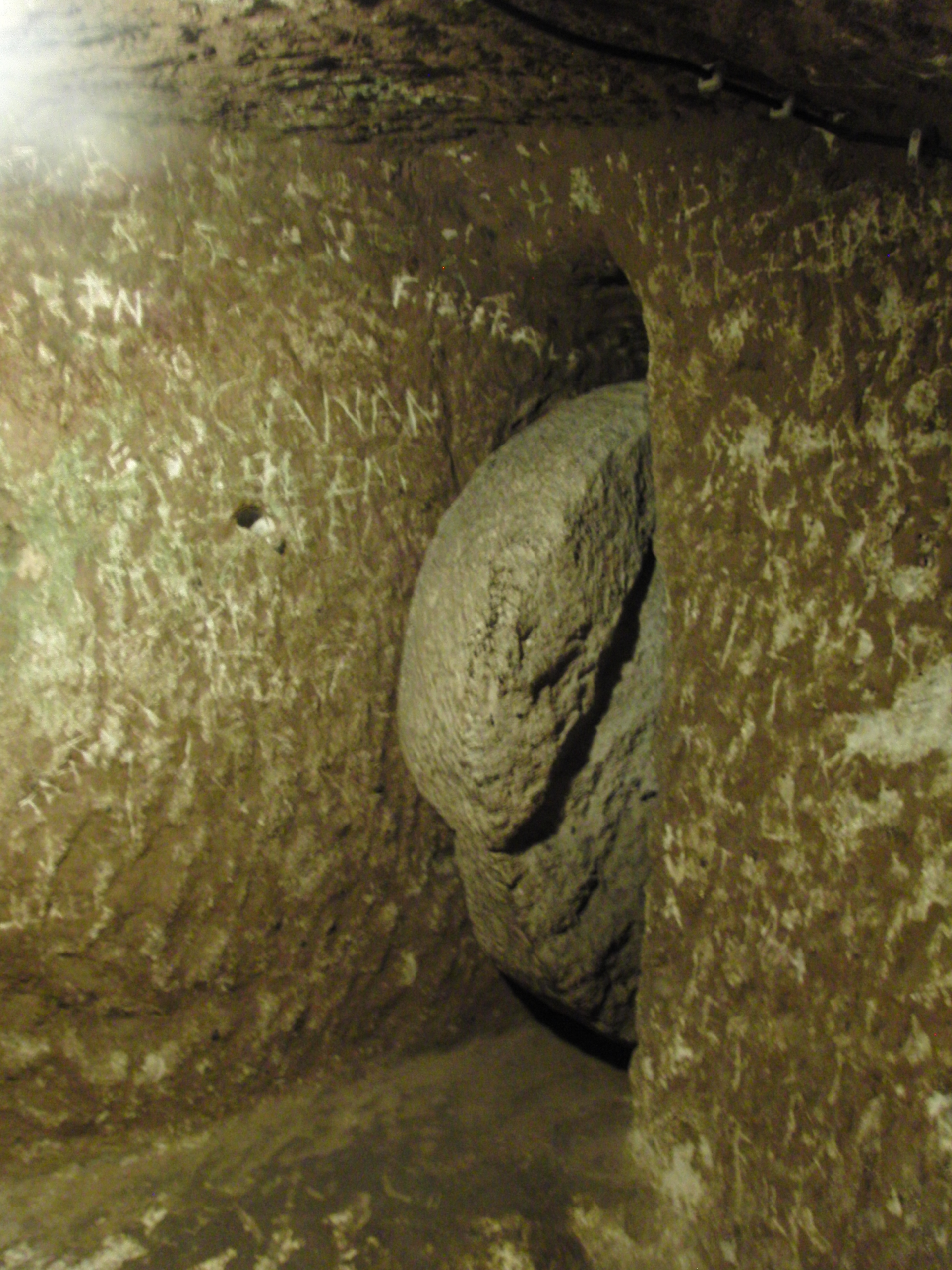
Derinkuyu was, above all, a refuge — a place to hide from danger — and its design reflects a sophisticated understanding of defense. The entire purpose of building a city underground was protection, and the builders thought carefully about how to keep intruders out and inhabitants safe.
The most striking defensive feature was a series of massive circular stone doors, like great millstones, that could be rolled across passageways to seal off sections of the city from the inside. These heavy stone wheels could only be moved from within, meaning defenders could close them against attackers who would be unable to shift them from the other side. Crucially, each level could be sealed off independently, so that even if invaders breached one section, the inhabitants could retreat deeper and close another stone door behind them, defending the city layer by layer. The narrow, low, winding passages between levels would have forced any attacker to move slowly, in single file, hunched over, at a terrible disadvantage against the defenders. Combined with hidden entrances, the whole design turned the city into a nearly impregnable fortress, one where a relatively small number of people could hold off a much larger force, or simply wait out a raid in safety far below ground.
Who Built It, and Why
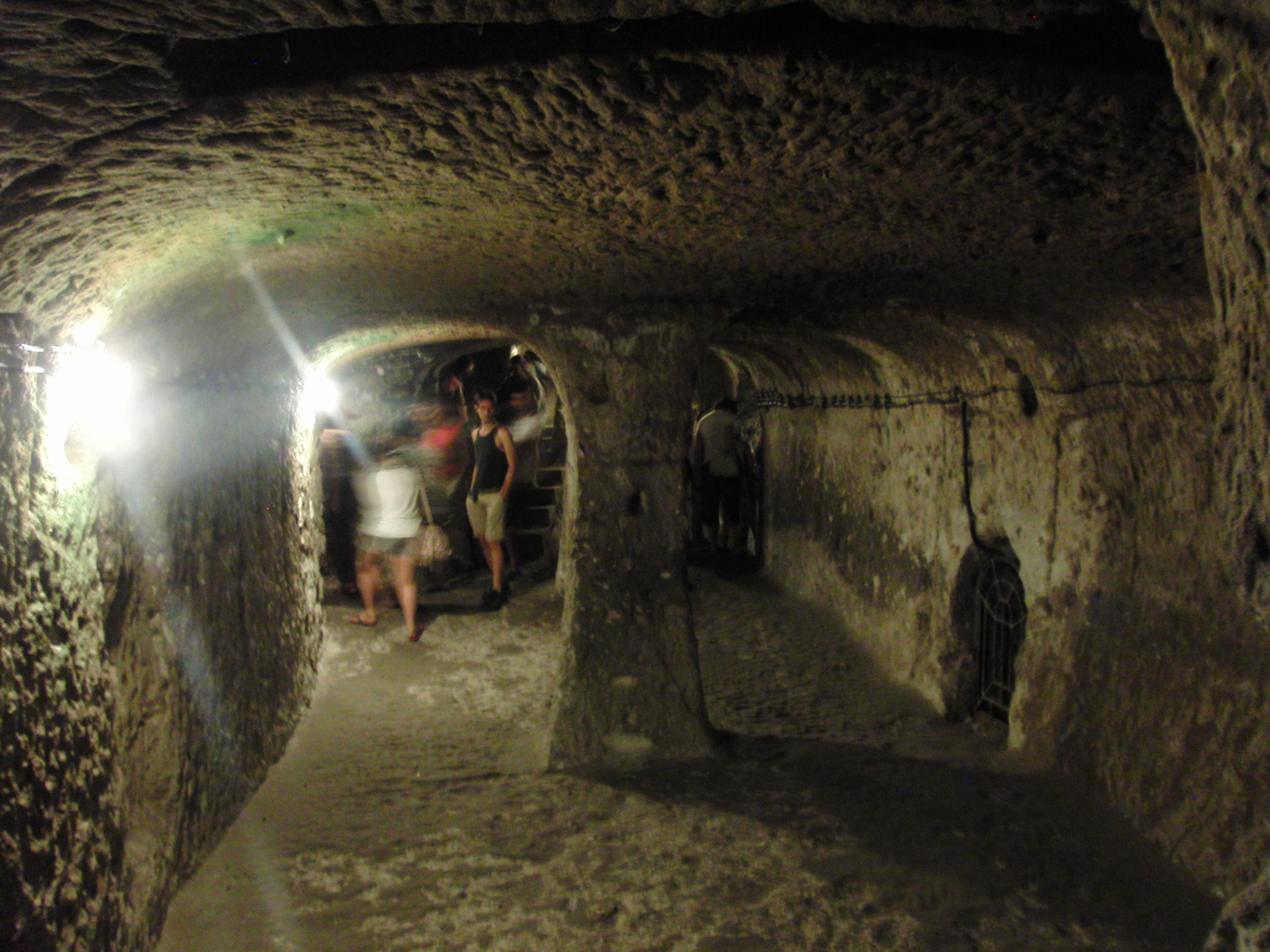
The question of exactly who first carved Derinkuyu, and precisely when, remains a matter of scholarly debate, which only adds to its mystery. The oldest portions of the complex may date back thousands of years, with some researchers suggesting origins with ancient Anatolian peoples such as the Phrygians, or even earlier, well over two and a half thousand years ago, though the dating is truly uncertain.
What is clearer is that the city was expanded and used across many centuries by successive populations, reaching its most developed form under the Byzantine Christians of the region. The Cappadocian Christians used Derinkuyu and the other underground cities of the region extensively as refuges during times of danger, retreating below ground to escape the waves of raids and invasions that swept through this contested crossroads of empires over the centuries. They added chapels and religious spaces and used the city to shelter entire communities during periods of persecution and warfare. The underlying reason for the whole enterprise was survival: Cappadocia sat on a dangerous frontier, repeatedly fought over and raided, and a population with nowhere safe to flee on the surface made a brilliant, if extreme, adaptation — they went down, carving safety out of the earth itself.
Not the Only One
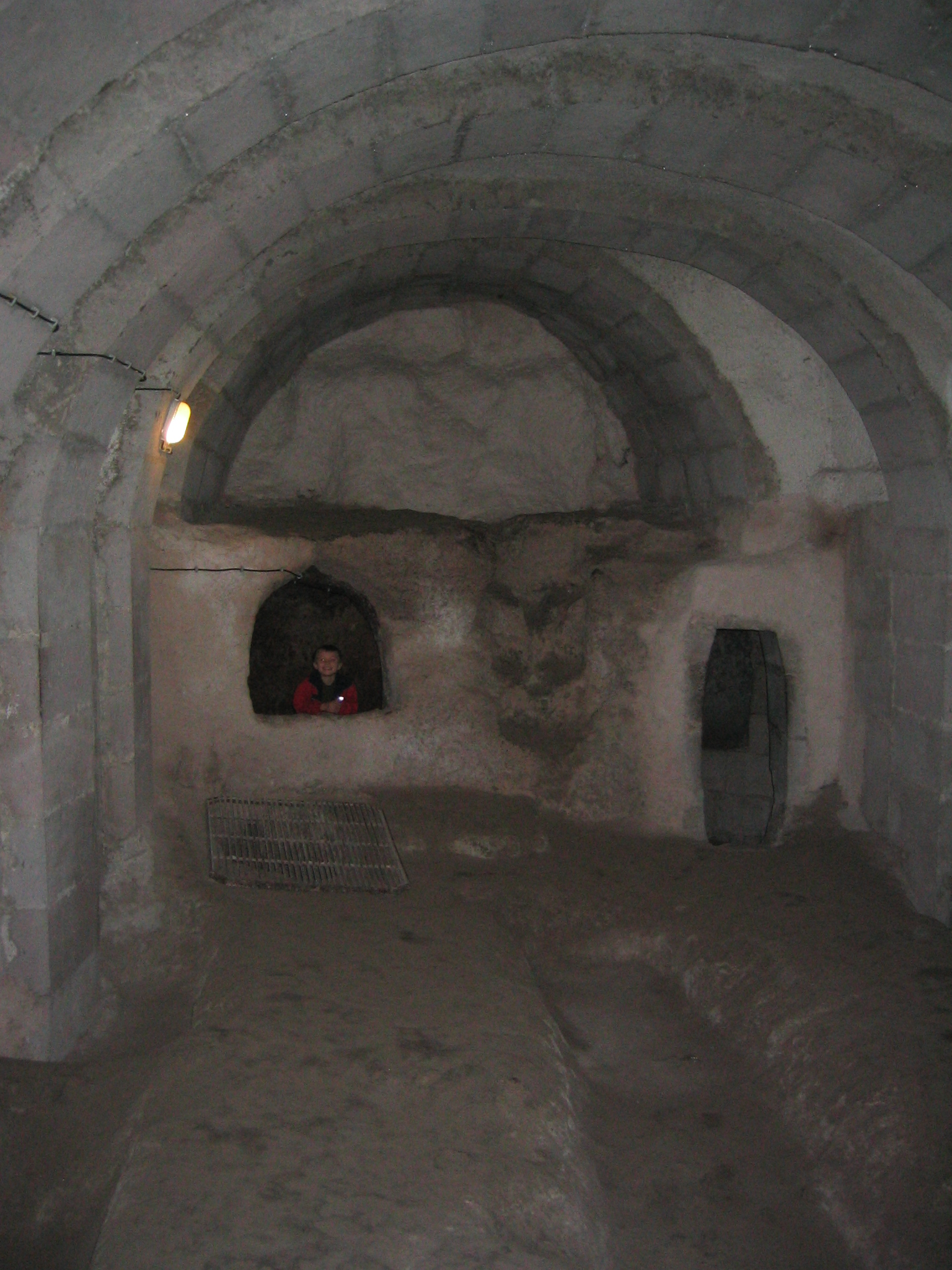
Perhaps the most mind-bending fact about Derinkuyu is that it is not unique. It is simply the largest and most famous of a whole network of underground cities and shelters honeycombed throughout the Cappadocia region. The area contains dozens of these subterranean complexes of varying sizes, and Derinkuyu was reportedly even connected to another nearby underground city, Kaymaklı, by a tunnel running several kilometers between them.
This transforms the story from a single remarkable structure into evidence of an entire underground civilization-in-waiting — a whole region whose people had, over generations, developed the extraordinary practice of carving refuges beneath their homes, ready to disappear below the surface whenever danger came. The soft volcanic rock made it possible, and the constant threat of raids made it necessary, and the result was one of the most unusual landscapes on Earth: a region where, beneath the fairy-chimney rock formations and the ordinary towns, lies a hidden world of tunnels and chambers capable of swallowing entire populations. Derinkuyu is the greatest of them, but it is one node in a vast, ancient, subterranean network.
Visiting the Underground City
Today, Derinkuyu is one of the highlights of a visit to Cappadocia, itself one of Turkey’s most spectacular and popular destinations. Visitors can descend into the excavated levels of the city, walking down the same narrow passages and through the same chambers that sheltered thousands, seeing the great rolling stone doors, the ventilation shafts, the wells, and the living spaces with their own eyes. It is an atmospheric and slightly eerie experience, this journey into the cool, dim, silent depths, and a profound one, standing in a place where whole communities once lived hidden from the world.
Cappadocia itself is famous for its otherworldly landscape of “fairy chimney” rock formations, its cave dwellings and rock-cut churches, and the hot-air balloons that drift over it at dawn, so Derinkuyu forms part of a broader trip through one of the planet’s most surreal and history-rich regions. But the underground city holds a special power precisely because of what it represents: not a monument built to impress, but a place built to survive, an entire hidden world carved from fear and ingenuity and the soft stone underfoot. To descend into Derinkuyu is to appreciate just how far human beings will go, quite literally, to protect themselves and endure. And it’s to marvel that all of it lay silent and forgotten beneath an ordinary town until one day in 1963, when someone swung a hammer at a basement wall and let the light back in.
Like our content? Follow us for more.