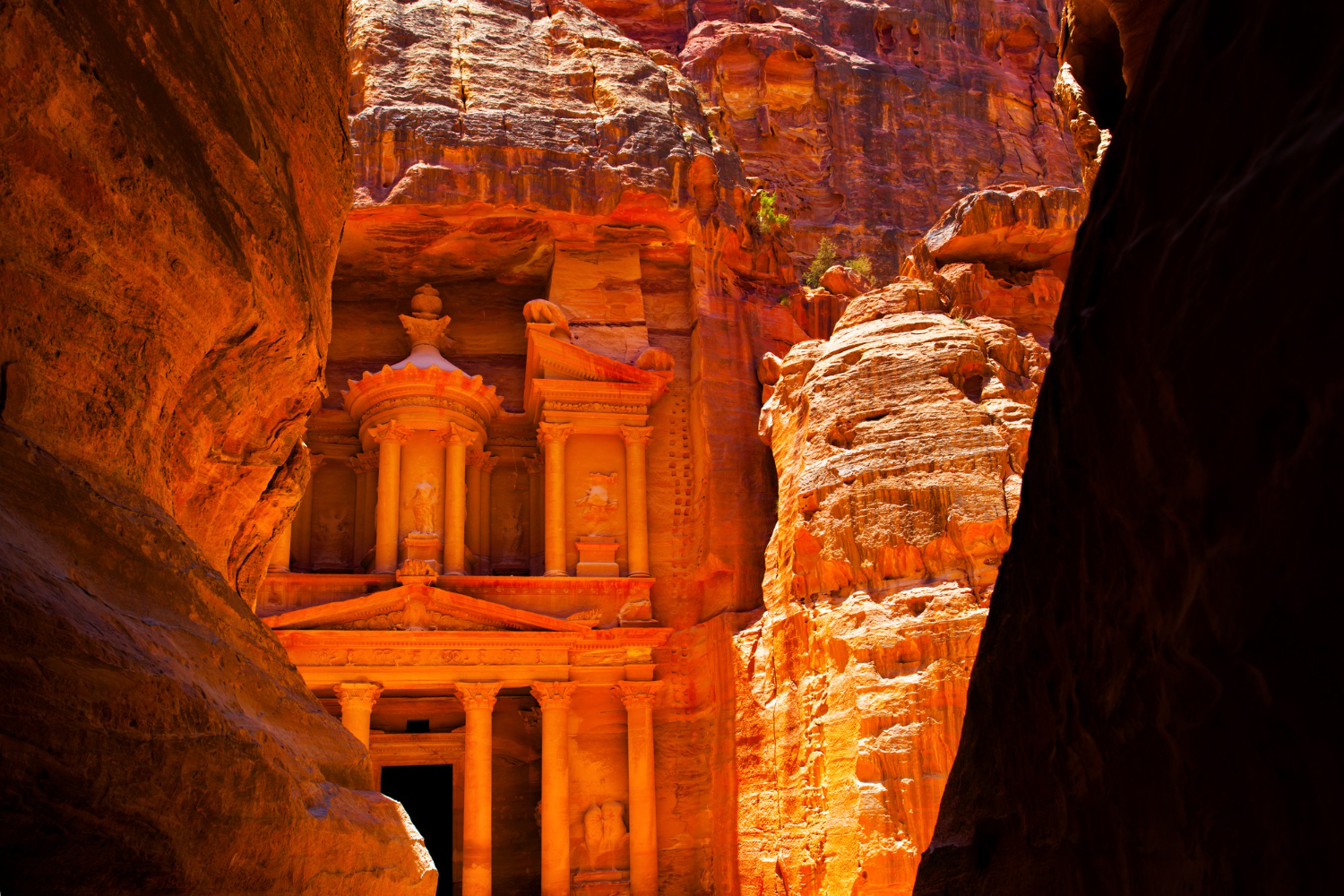
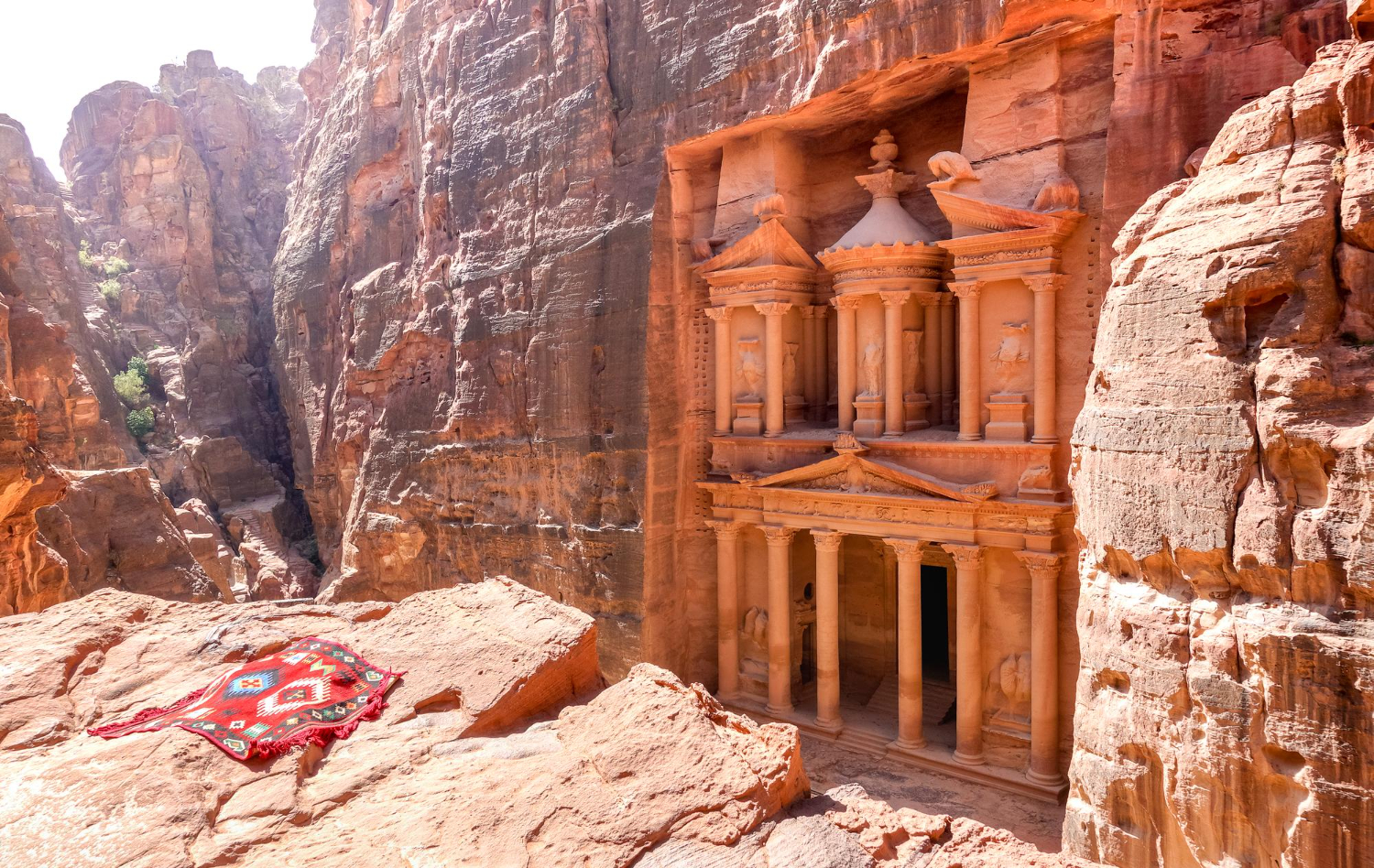
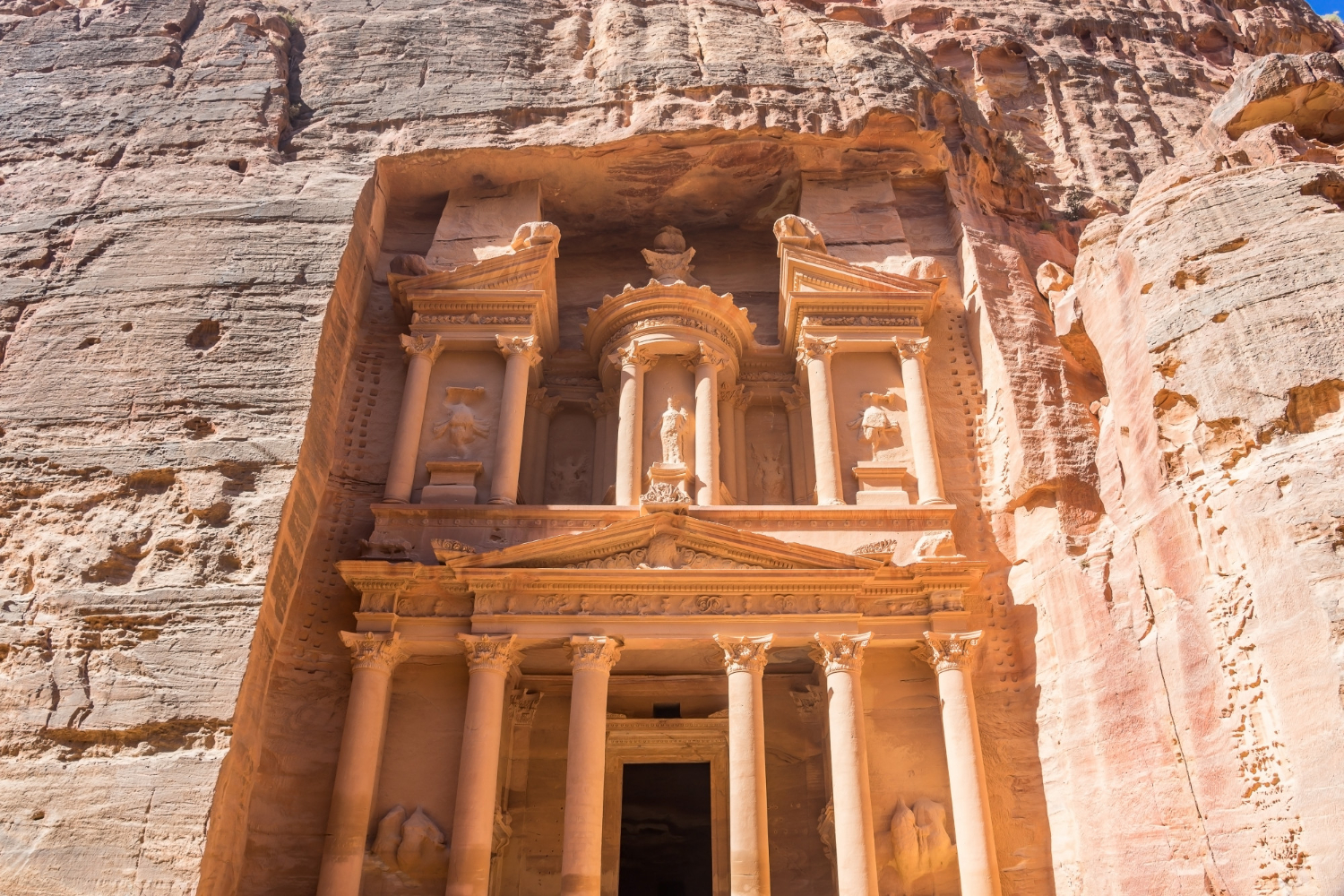
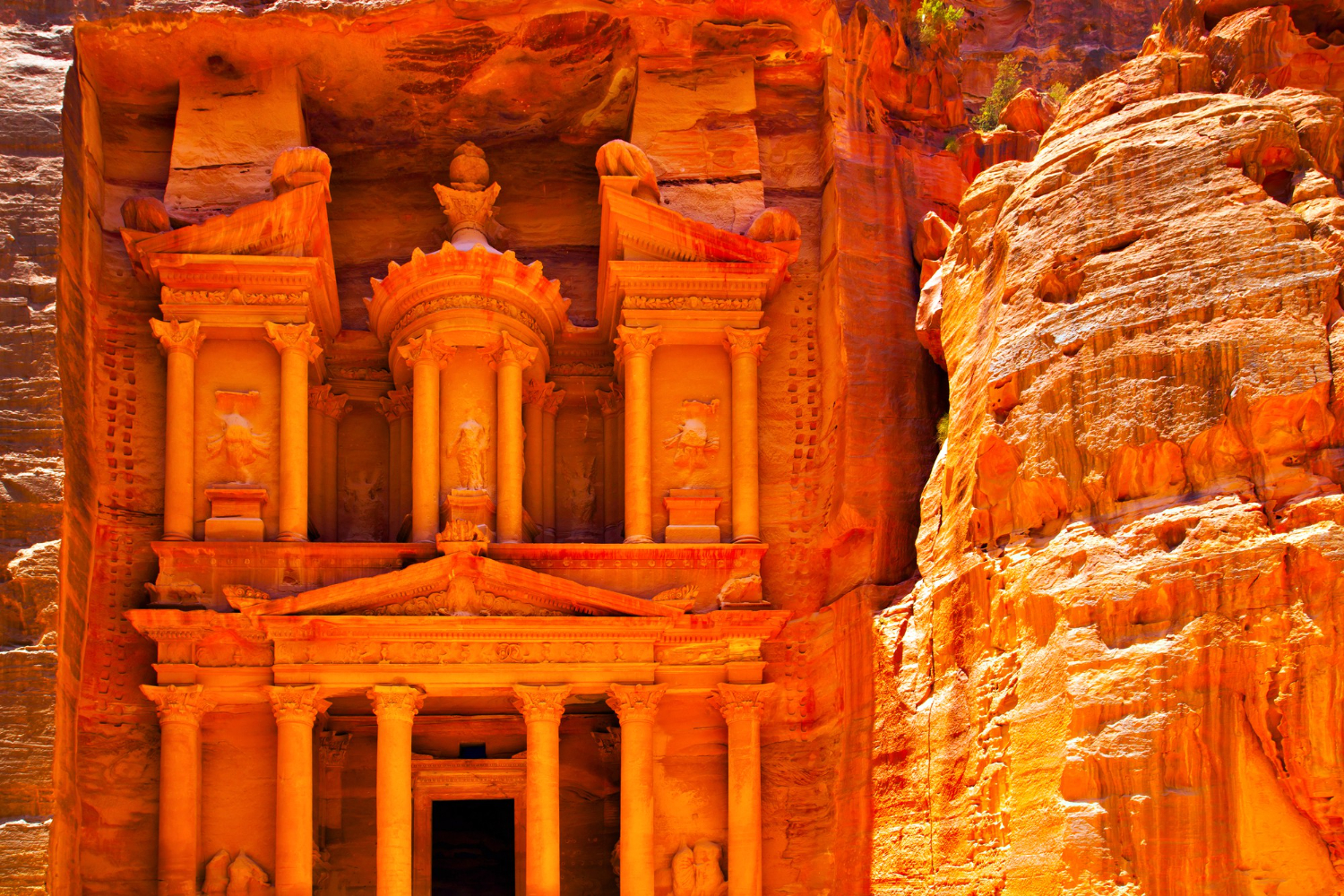
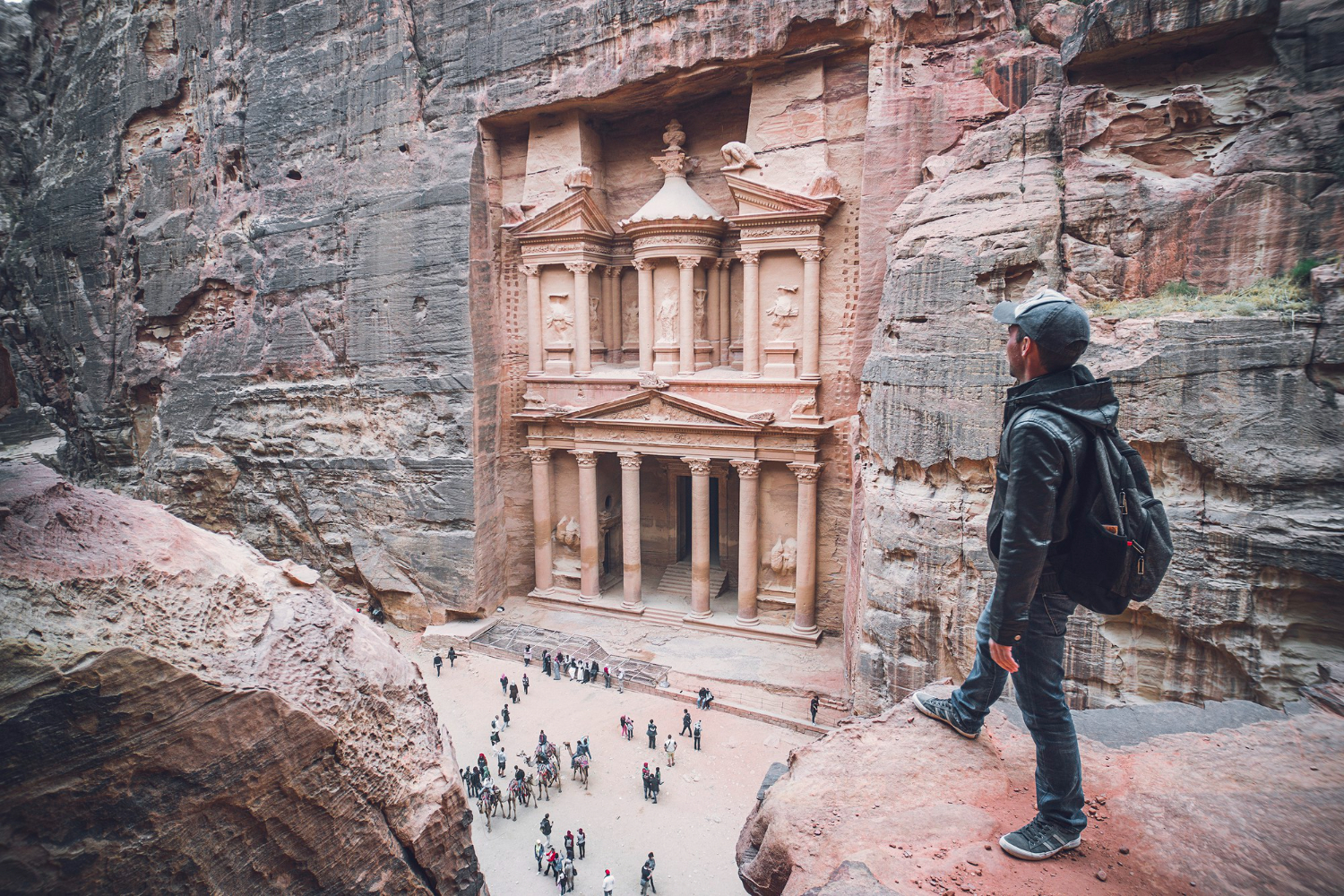
Petra, in southern Jordan, is not an obscure site. It was the capital of the Nabataeans, a trading people who carved and built a city into rose-coloured sandstone at a crossroads between Arabia and Egypt. It is a UNESCO World Heritage site, one of the New Seven Wonders of the World, and receives large numbers of visitors every year. Its most famous facade, the Treasury, is known worldwide partly through its appearance in a 1980s adventure film.
Scientific exploration there goes back roughly two centuries, to the Swiss traveller Johann Burckhardt in 1812. Generations of archaeologists have surveyed, mapped, excavated and published.
And in 2016 it turned out that something enormous had been sitting in the middle of it, unrecorded, the entire time. The discovery came not from digging but from looking down — first from orbit, then from a drone. Here is how a monument the size of a swimming pool hid in plain sight.
What They Found
The structure is a large rectangular platform, roughly 184 feet by 161 feet at its first level, situated about half a mile south of the city centre.
Inside that larger platform sits a smaller one, which at some point was paved with flagstones and fronted on one side by columns. Those columns crowned a monumental staircase. On top of the whole arrangement stands a small building, roughly 28 feet square.
The proportions are the striking part, and the researchers said so directly in their paper: the amount of effort required to construct the site was massive, yet the focal building itself is quite small. Someone went to enormous trouble to build a vast platform in order to elevate something modest.
They also stated that the monumental platform has no parallels at Petra or in its surrounding area at present, which is a strong claim at a site this thoroughly documented.
If it served a ceremonial function, as the researchers suspect, it would be the second largest display area of its kind at Petra, after the Monastery. And there is one further oddity: its staircase does not face the city centre, unlike the staircases of other buildings there. Whatever it was for, it was oriented away from the place everyone else was facing.
Like our content? Follow us for more.
How It Was Found
The work was done by Sarah Parcak, an archaeologist at the University of Alabama at Birmingham and a National Geographic fellow who specialises in what is often called space archaeology, and Christopher Tuttle, then executive director of the Council of American Overseas Research Centers.
Parcak analysed high-resolution satellite imagery, including material available through Google Earth, looking for the faint surface traces that buried structures leave behind. Tuttle led four ground surveys. Drone photography then captured detailed overhead images of the specific area.
The combination is what made it work. From the ground, the platform reads as unremarkable terrain. Tuttle put it plainly: it is a very large platform that many archaeologists have walked over for years, probably without realising they were walking on it. He had worked at Petra for two decades, knew something was there, and still described it as legitimate to call this a discovery.
The findings were published in the Bulletin of the American Schools of Oriental Research in May 2016, with the researchers describing the structure as hiding in plain sight.
Tuttle was careful about the claim, noting that over two centuries of research someone must have known the site was there, but that it had never been systematically studied or written up. That distinction matters: the discovery was of significance, not of existence.
Why Satellites See What People Cannot
The underlying principle is worth understanding, because it explains a great deal of recent archaeology.
Buried and eroded structures alter the surface above them in ways that are almost invisible at ground level but visible from altitude. Stone beneath the soil affects drainage, which affects vegetation growth and colour. Buried walls change how moisture is retained. Slight differences in elevation, imperceptible when you are standing on them, resolve into geometric shapes when viewed from directly overhead.
At ground level a person sees a slope, some rubble and some scrub. From above, the same area resolves into a rectangle with right angles — and right angles are rare in nature.
Multispectral satellite imagery extends this further, detecting differences in reflected light beyond the visible range that correlate with subsurface features. Drones then supply high-resolution detail over a specific target at low cost.
Parcak has applied these methods widely, including to identify potential sites elsewhere, and the approach has become standard practice. The Petra platform is a particularly clean demonstration because the site was already so intensively studied: the failure was not one of access or effort, but of perspective.
Still Unexcavated
An important caveat: nobody has dug it up.
The platform has not been excavated, and at the time of the announcement no excavation was planned. That means its function, its precise date, and its relationship to the rest of the city all remain inferences drawn from surface form.
The researchers speculate it was built when Petra was flourishing as the Nabataean capital, possibly as early as the mid-second century BCE. Tuttle noted that only excavation could shed real light on its original use.
This is standard archaeological caution and worth respecting. A platform with columns and a monumental staircase leading to a small building suggests ceremonial or public function, but suggestion is not demonstration. Excavation is expensive, destructive and irreversible, and there are good reasons not to rush it — a principle visible elsewhere, in decisions to leave other major sites sealed.
The Tomb Under the Treasury
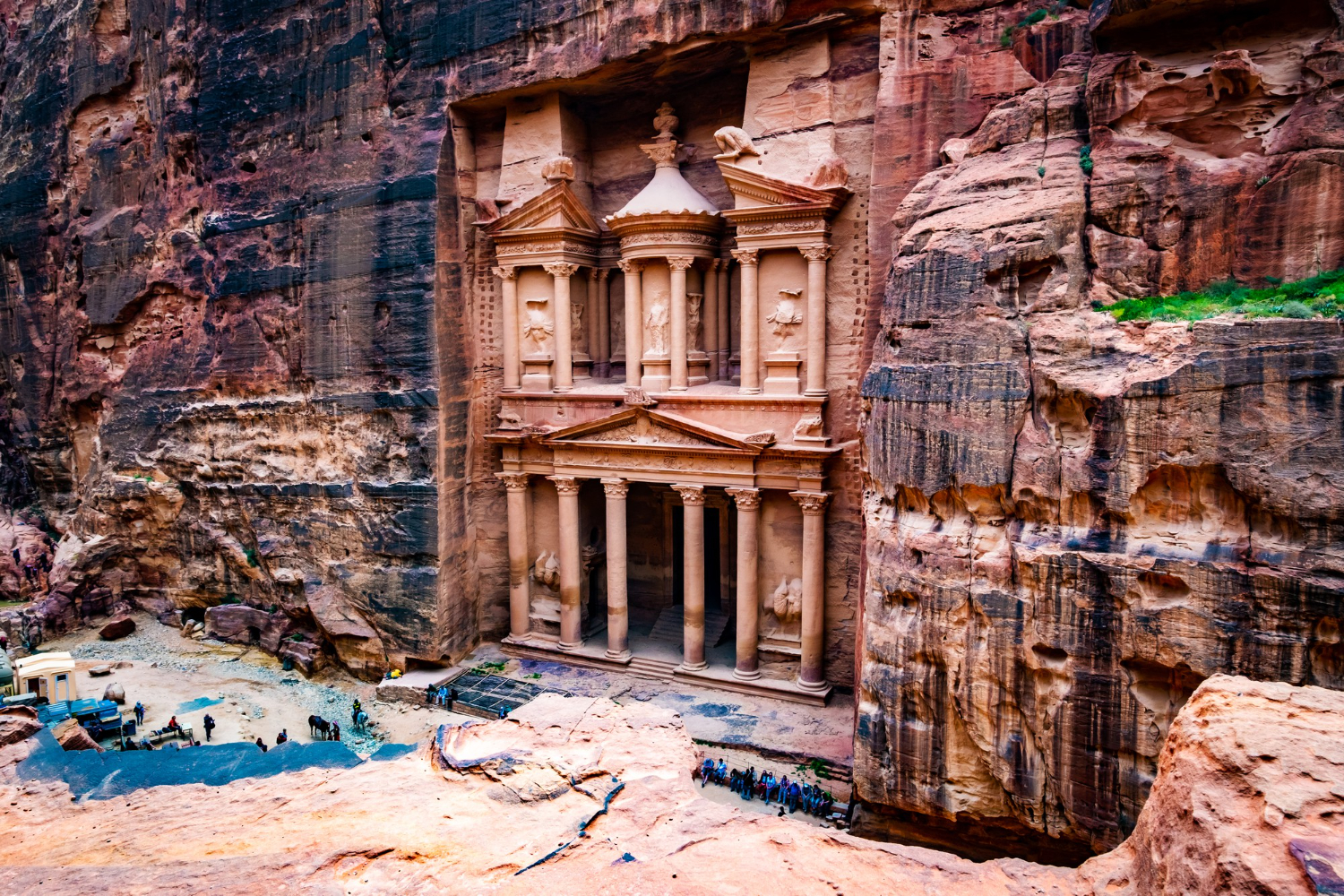
The Petra platform is not the site’s only recent surprise, and the second one arrived through a different technology.
In 2024, an international team including researchers from the University of St Andrews, the Jordanian Department of Antiquities and the American Center of Research used ground-penetrating radar to assess the condition of the Treasury and its surroundings. The radar detected probable chambers beneath it.
Excavation revealed a previously unknown tomb containing twelve skeletons along with artefacts. Richard Bates, the geophysicist from St Andrews who led the work, described the find as internationally significant, noting that very few complete early Nabataean burials had ever been recovered at Petra.
The material recovered has real scientific value beyond the drama. Pottery, sediments and organic remains offer the prospect of firmly dating the Treasury’s construction, which has previously rested on assumption and conjecture rather than evidence.
There was also a moment of pure coincidence. One of the individuals was found holding a ceramic vessel that, at first sight, resembled the grail prop from the film shot at that very location decades earlier. Detailed examination showed it to be the upper part of a broken jug, probably first century BC. The remains are handled here as what they are: an archaeological burial, treated with the seriousness that implies.
Who the Nabataeans Were
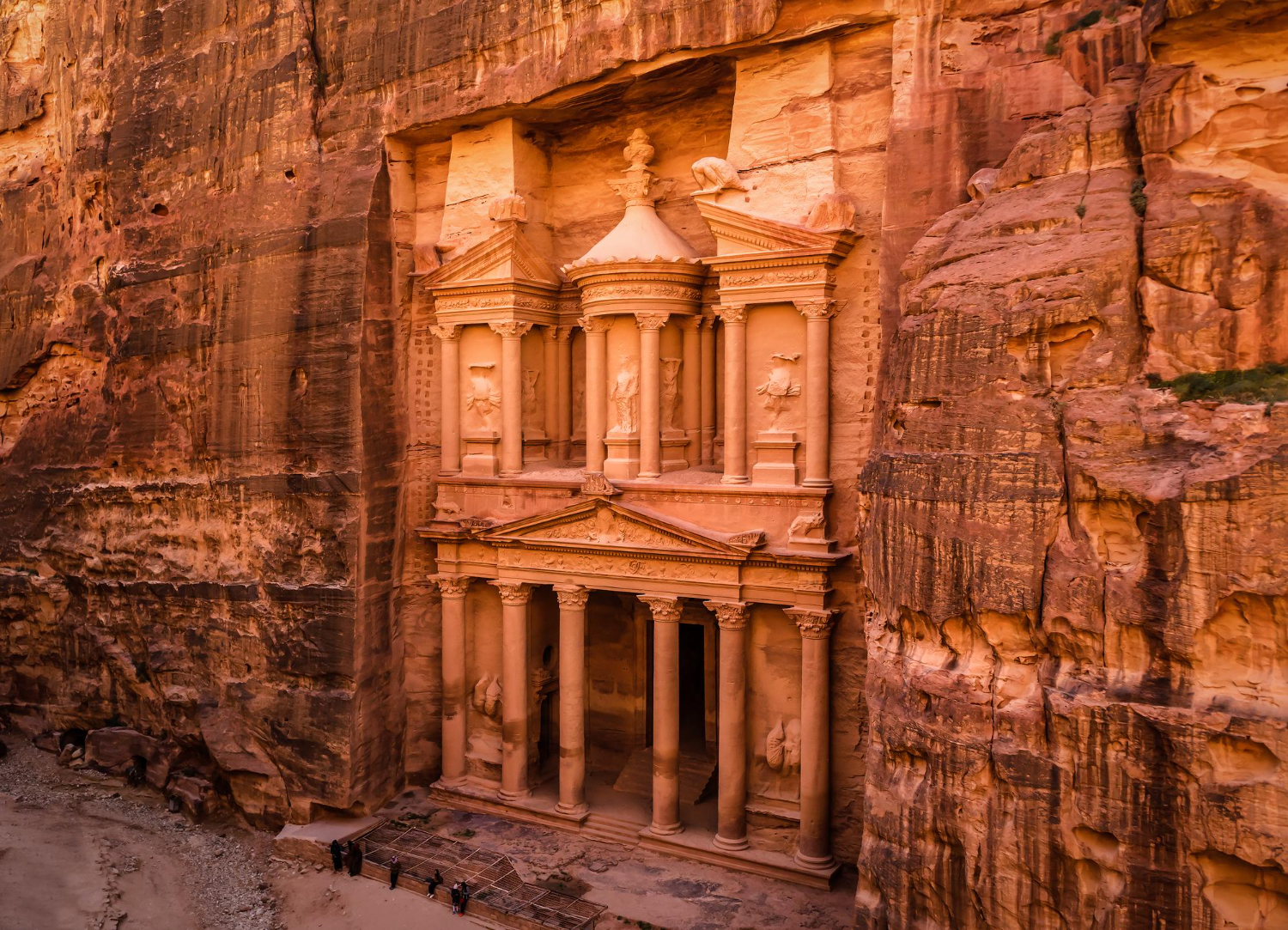
Understanding why the platform matters requires knowing something about the people who built it, because they are less familiar than their architecture.
The Nabataeans were an Arab people who established themselves in the region around the fourth century BC and grew wealthy controlling the caravan routes carrying incense, spices and silk between southern Arabia and the Mediterranean. Petra sat at the junction.
Their signature skill was water. They lived in a desert and engineered an elaborate system of dams, cisterns, channels and ceramic pipes that captured flash floods and stored them, allowing a substantial city to exist somewhere that should not have supported one. Control of water was as central to their power as control of trade.
Architecturally they were synthesists, combining Hellenistic facades with local rock-cut traditions to produce something that belongs to neither. The great carved fronts at Petra are tombs and monuments cut directly into sandstone cliffs rather than buildings assembled from blocks.
The city was eventually absorbed into the Roman empire and declined after the Byzantine period, largely abandoned to local Bedouin knowledge until European travellers arrived in the nineteenth century.
What Else Is Waiting
The lesson of both finds is the same, and it is slightly unsettling: even the most famous, most visited, most studied archaeological sites on the planet are not fully known.
Petra has had two hundred years of scholarly attention, a constant stream of visitors, and global fame. In one decade it has yielded a monumental platform nobody had recorded and a tomb directly beneath its signature building.
Neither required a new expedition to an unexplored region. They required looking at a known place with an instrument that sees differently — a satellite sensor above, radar below.
Most of the world’s archaeology has been assessed by people walking around at ground level, which is an extremely limited vantage point. As remote sensing gets cheaper and better, the reasonable expectation is that a great deal more will surface in places we assumed were finished.
The platform is still there, unexcavated, half a mile from one of the most photographed monuments on Earth, with visitors walking past it daily. Whatever it was built for, it has kept the secret for over two thousand years, and it is in no particular hurry.
Like our content? Follow us for more.