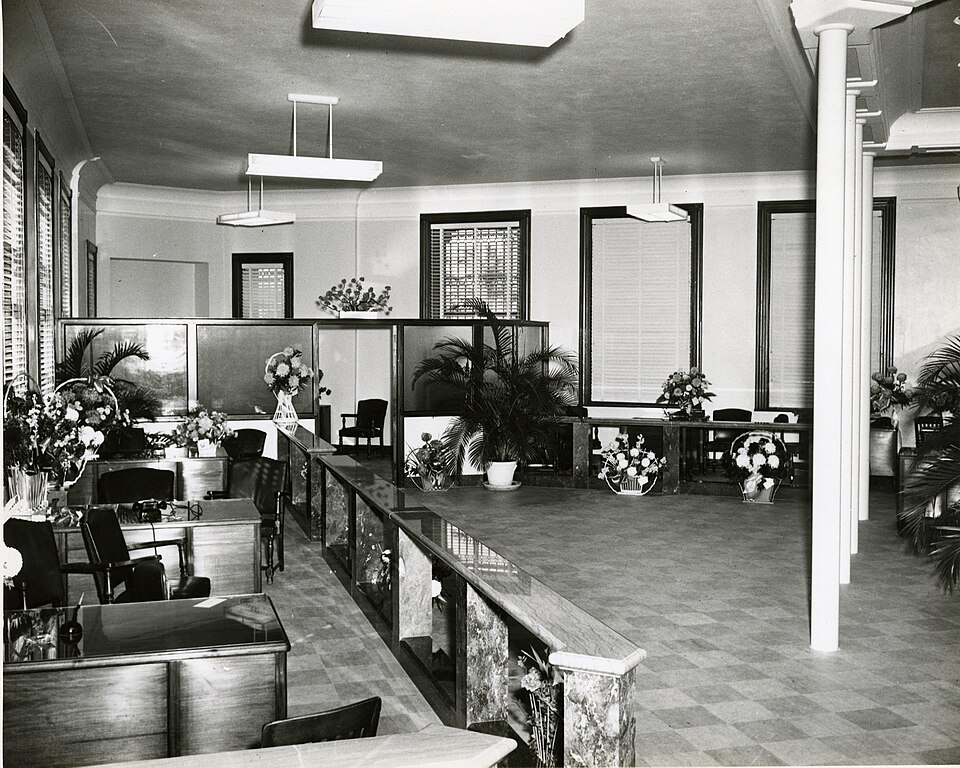
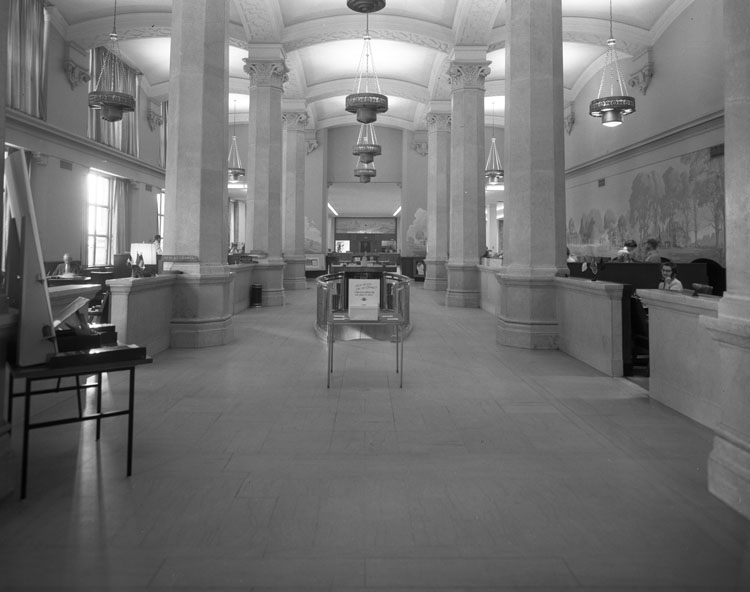
The mid-century American bank branch is one of the most deliberately impressive interiors of the period. Marble, brass, high ceilings, a clock, and a wall of cages with a person inside each one. The whole building was a piece of reassurance architecture, designed to say that money left here would still be here.
What the architecture concealed is how little of the apparatus a modern bank runs on actually existed. There were no cameras, no ballistic barriers, no silent alarms, no customer privacy law, no credit scoring, no anti-money-laundering reporting, no machines, and no rule stopping a branch from refusing a woman an account in her own name. Almost all of that arrived between 1968 and 1978, in a remarkable ten-year run of American banking legislation, and the branch of 1960 sits just before all of it.
The cage was decorative
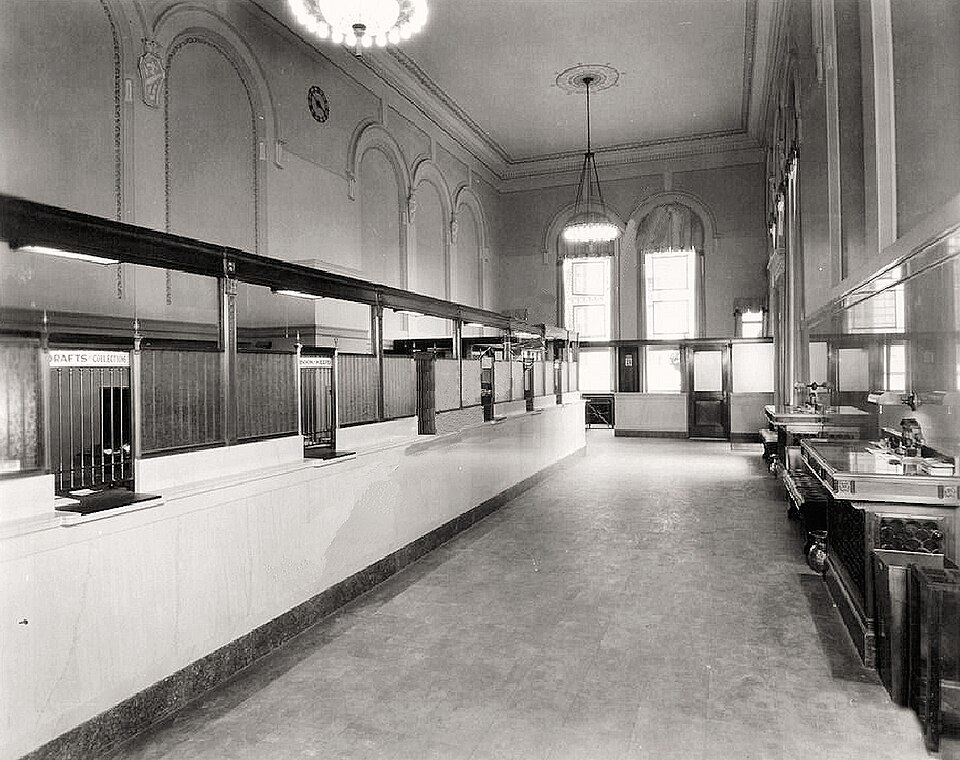
The grille was the oldest security idea in banking and by 1960 it was doing very little. Brass or bronze bars over a marble counter kept a customer from reaching across and no more. There was no bullet-resistant glazing, which spread through American branches from the 1970s onward, and in a great many banks there was nothing at all between the teller and the lobby except the counter.
There were also, usually, no cameras. Surveillance photography existed and was used by some institutions, and it was not standard. The change came with the Bank Protection Act of 1968, which required federally insured institutions to designate a security officer, adopt a written security programme, and install specified devices including surveillance systems, alarms and robbery-deterrent measures. That single statute is the origin of nearly everything a customer now sees on a branch wall, and before it the security arrangements of an American bank were whatever its directors thought sensible.
Like our content? Follow us for more.
Nobody had been trained for the worst day
A 1960 teller received no instruction on what to do in a robbery. There was no agreed protocol, no script, no guidance on compliance, no bait money, no dye pack, no tracking device in a cash bundle and no post-incident support of any kind. The expectation was that an employee would use her judgement.
All of that is now standard, and the standardisation came out of the same 1968 framework and the practice that developed under it. Modern procedure is built around a single principle — comply, observe, do not resist — precisely because the 1960 arrangement left the question to the person least equipped to answer it in the moment. The dye pack and the bait bundle exist to move the problem from the teller to the investigation, which is both safer for her and far more effective.
Cash was counted by hand, to the cent, by people who stayed until it balanced
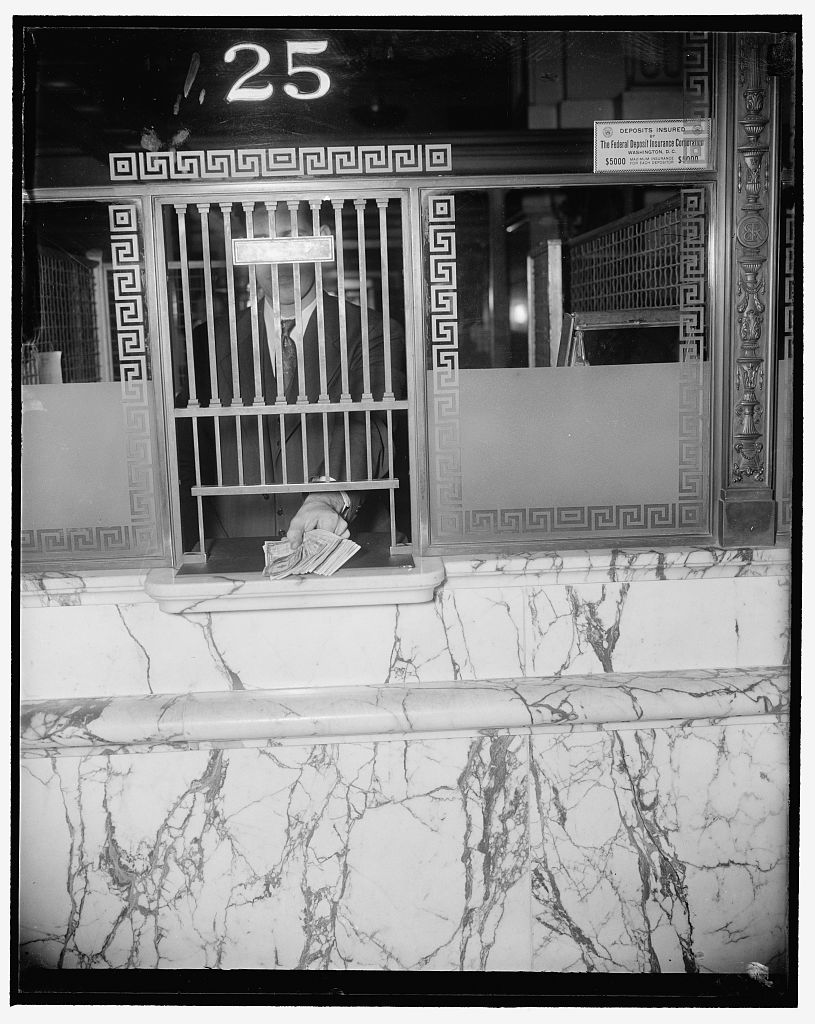
Every transaction was manual. Notes were counted twice, coin was weighed or sleeved, and at closing each teller balanced her drawer against her tickets and did not go home until the figure agreed. A discrepancy of a few cents could keep somebody at the counter for an hour.
The skill involved was real and the people who had it were proud of it. What has replaced it is the cash recycler and the automated count, which is faster and makes the error impossible rather than detectable. The accompanying change is that a 1960 teller was personally accountable for a physical sum in a way a modern one is not, and the culture of the job — the balancing, the staying late, the taking it personally — followed from that accountability rather than from anything about the people.
The manager decided who got a loan, and knew why
Consumer and small business lending in 1960 was character lending. The branch manager interviewed the applicant, formed a judgement about them, and made the decision. There was no credit score, because statistical consumer credit scoring in its modern American form dates to the late 1980s, and no standardised underwriting.
This is the part of the old bank that is remembered most warmly and it is the part that most needs examining. A system in which one man’s judgement decides credit works well for the people he recognises and badly for everybody else, and the record of who it worked badly for is not in dispute. It is the direct reason for the sequence of American statutes that followed: the Fair Housing Act in 1968, the Equal Credit Opportunity Act in 1974, the Home Mortgage Disclosure Act in 1975 and the Community Reinvestment Act in 1977. Each one exists because discretion at the branch counter had produced a pattern that could be measured once anybody was required to measure it.
A married woman could not necessarily have her own account
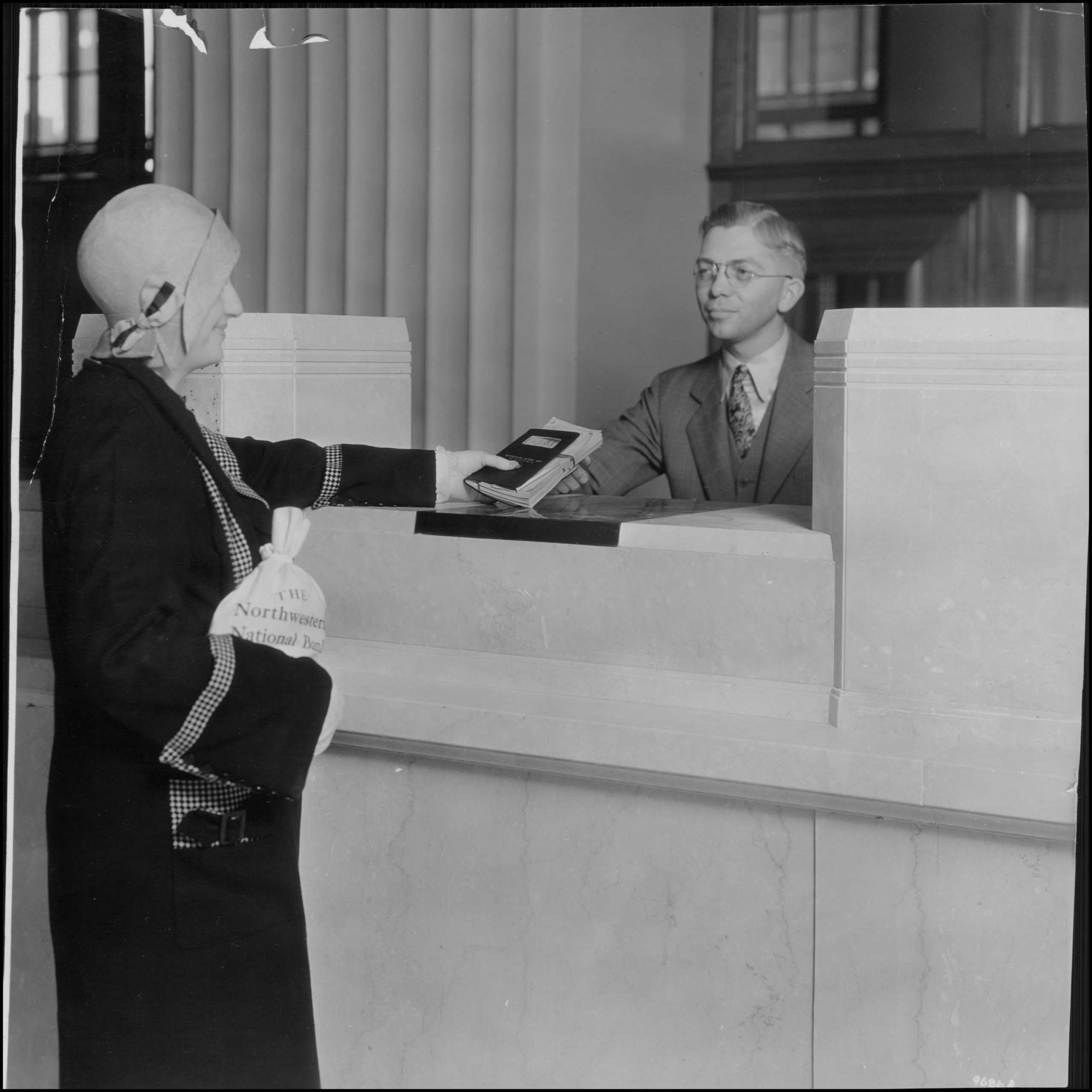
This belongs on its own. In 1960 a married American woman commonly could not open a charge or credit account in her own name, could be required to produce her husband’s signature, and if divorced or widowed often discovered she had no credit history at all. A single woman could be refused outright or asked for a male guarantor. Banks also discounted a woman’s income in mortgage underwriting as a matter of routine policy.
The Equal Credit Opportunity Act of 1974 prohibited discrimination in credit on the basis of sex and marital status, and a 1976 amendment extended the protected grounds. Within a few years the practices described above went from standard to unlawful. It is worth being plain that this was not an informal prejudice operating against the rules; it was the written policy of ordinary institutions, applied at the counter, and it ended because Congress ended it.
And in much of the country, the branch was segregated
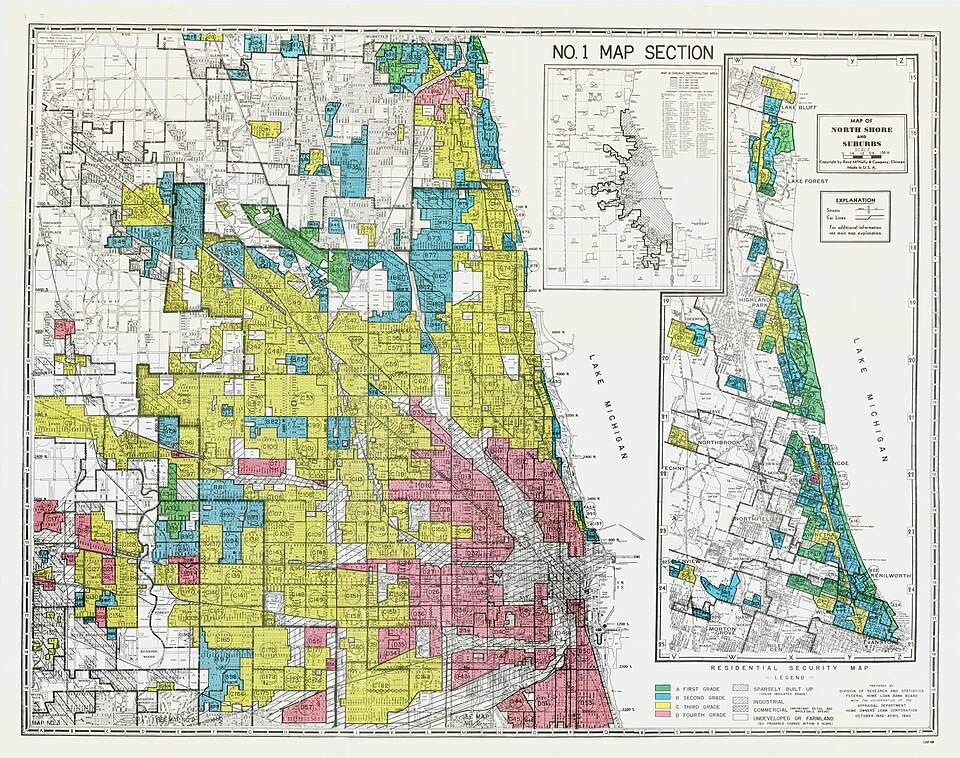
This is the most serious item here and it is not of a kind with the rest. In large parts of the United States, Black customers were served at separate windows, directed to separate branches, refused service, or simply understood not to be welcome in the building. Mortgage lending operated on explicit geographic exclusion, with maps marking neighbourhoods as unfit for lending, and the consequences of that pattern are measurable in American household wealth to this day.
The Fair Housing Act of 1968 prohibited discrimination in housing finance, and the disclosure and reinvestment statutes of the following decade were written specifically to make the pattern visible and to require institutions to serve the areas they drew deposits from. It is included because a description of a 1960 American bank that leaves it out is not a description of a 1960 American bank, and the rest of this piece should not be read as sitting alongside it.
Nobody outside the branch knew anything, and nobody inside had to report anything
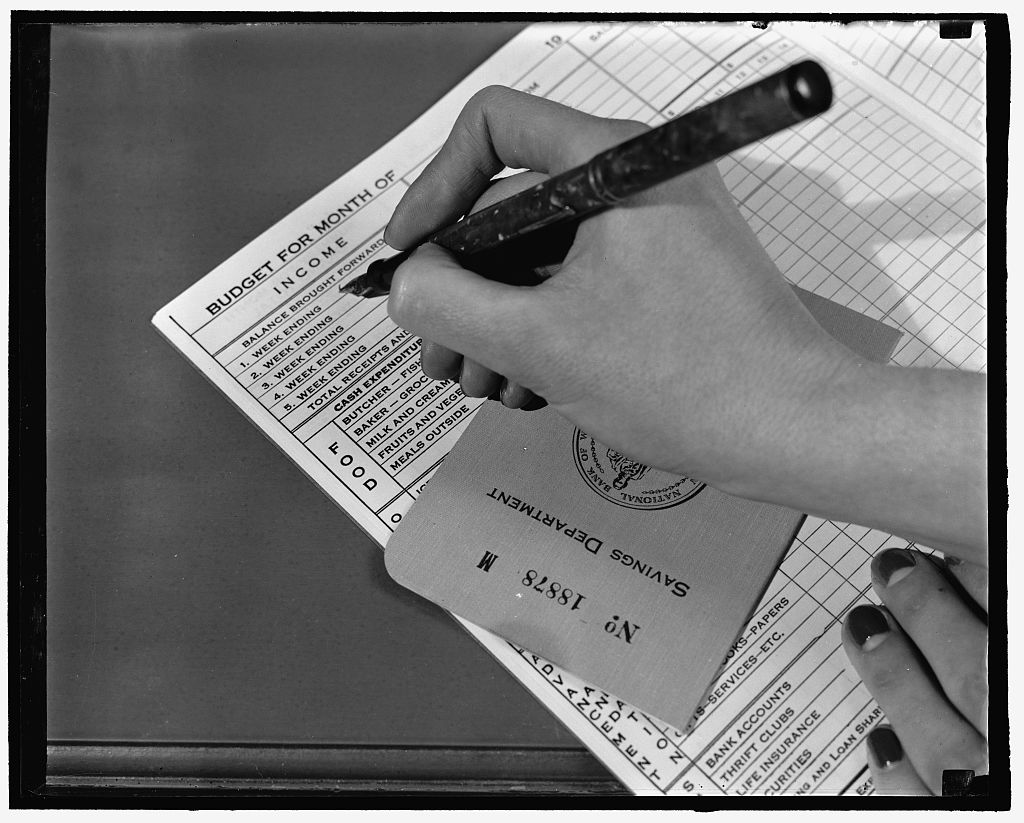
Two opposite gaps closed at once. On the customer’s side there was no financial privacy law: a bank’s records were the bank’s, and access by government or by anybody else was governed by practice rather than by statute, until the Right to Financial Privacy Act of 1978 and much later the privacy provisions of the 1999 financial modernisation legislation.
On the institution’s side there was no reporting obligation of the kind that now dominates the back office. The Bank Secrecy Act of 1970 introduced currency transaction reporting, suspicious activity reporting followed in the mid-1990s, and customer identification requirements were substantially expanded under the legislation of 2001. A 1960 branch could take a very large amount of cash from somebody it knew, record it as a deposit, and that was the whole of the compliance event.
Banker’s hours, and the machine that ended them
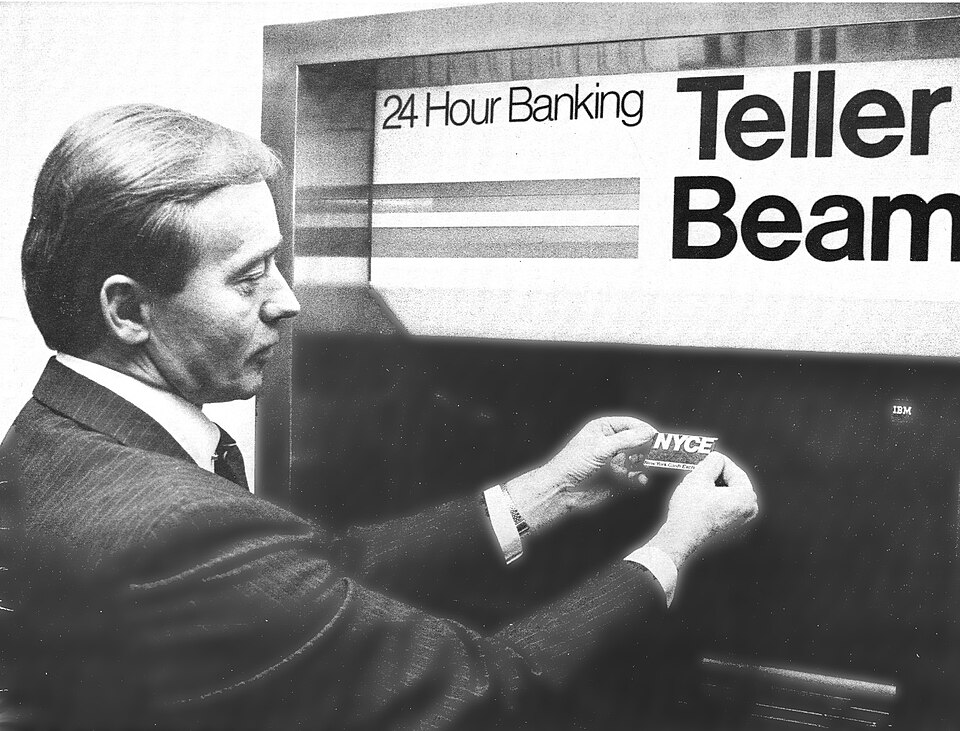
The branch opened at ten and closed at three, Monday to Friday. The phrase survives as a joke and it was literal, and the reason was that the hours after closing were needed to balance, post and clear by hand. Cheques travelled physically between institutions, which is why a cheque took days and why the resulting float was a real feature of American finance until the imaging legislation of 2003 removed it.
The first American automated teller machine was installed in 1969, and the thing it actually broke was not the teller’s job but the timetable. Once cash could be obtained at any hour, the ten-to-three branch stopped being an explanation and became an inconvenience. Passbook savings went the same way, along with the regulatory ceiling on the interest a bank could pay on them, which was phased out across the early 1980s and ended the era in which every bank in town offered the same rate because it was not permitted to offer any other.
What the marble was for
The honest summary is that the 1960 branch put its effort into looking trustworthy and the modern one puts its effort into being auditable. The marble, the brass, the clock and the manager who knew your father were the reassurance mechanism, and they worked, in the sense that people believed them.
What has replaced them is unglamorous: a camera, a glass screen, a written security programme, a credit model, a disclosure form, a suspicious activity report and a set of statutes with dates on them. The branch is a worse room and a far better institution, and the people who miss the old one are usually remembering the manager rather than the cage. It is worth remembering what else the manager’s discretion did.
Like our content? Follow us for more.