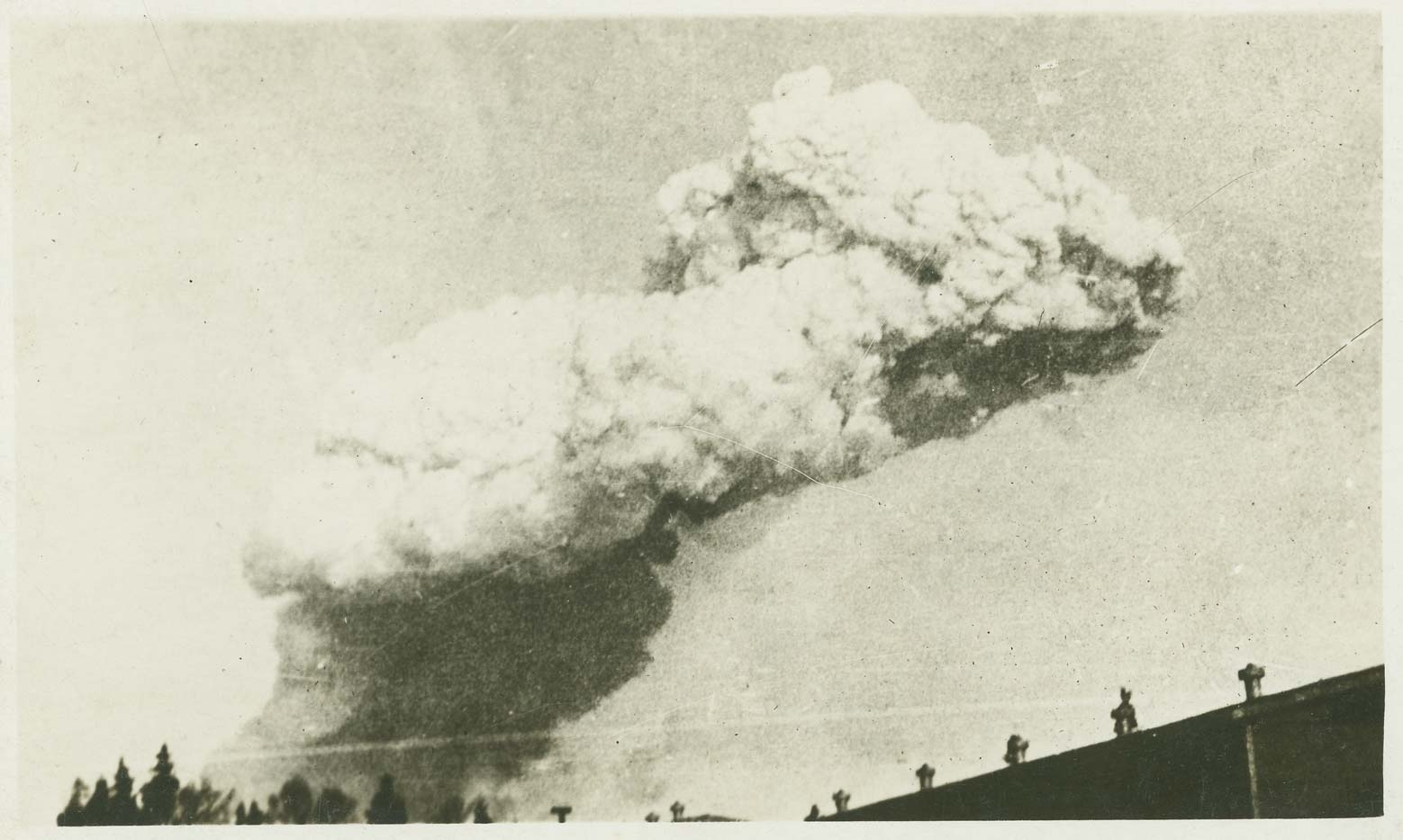
On the morning of December 6, 1917, the city of Halifax, Nova Scotia, was going about its business as a busy wartime port. The First World War was raging in Europe, and Halifax’s harbor was one of the great staging points for convoys carrying troops and supplies across the Atlantic. By nine o’clock that morning, much of the city’s north end would be obliterated, and Halifax would be the site of the most powerful explosion humanity had ever produced — a distinction it held, grimly, until the nuclear age.
What makes the Halifax Explosion so haunting is not only its scale but its cause. This was not a bomb or an attack. It was an accident — a slow, almost gentle collision between two ships in a crowded harbor, the kind of low-speed bump that ordinarily results in some shouting and a dented hull. But one of those ships was, in effect, a floating bomb of almost unimaginable power, and the chain of events that followed turned a minor maritime fender-bender into one of the deadliest disasters in the history of North America. It’s a story of catastrophic bad luck, staggering destruction, and a remarkable response, and it deserves to be far better known than it is.
A Harbor Full of Ships and Danger
To understand the disaster, you have to understand wartime Halifax. In 1917, the city’s harbor was one of the busiest on the continent, a vital hub where ships gathered into protected convoys before running the gauntlet of the Atlantic, where German submarines hunted. The harbor connected to a large basin through a narrow stretch of water called the Narrows, and traffic through this bottleneck was heavy and, on that particular morning, poorly coordinated.
Into this setting came two ships on a collision course. One was the SS Mont-Blanc, a French cargo ship that had arrived from New York carrying a cargo so dangerous it’s hard to believe it was allowed near a populated city: nearly 3,000 metric tonnes of high explosives, including large quantities of TNT, picric acid, and highly flammable benzol fuel, all destined for the war in Europe. The other was the SS Imo, a Norwegian vessel chartered to carry relief supplies to occupied Belgium, running empty and, by most accounts, moving too fast through the Narrows. Through a series of miscommunications and misjudged maneuvers, the two ships found themselves headed toward one another with no time to avoid contact.
Like our content? Follow us for more.
The Collision and the Fire
The collision itself, when it came at around 8:45 in the morning, was almost anticlimactic. The Imo struck the Mont-Blanc’s bow at low speed — the ships were barely moving — and the physical damage was minor. Under almost any other circumstances, it would have been a forgettable incident. But the impact and the scraping of metal produced sparks, and those sparks ignited the volatile benzol on the Mont-Blanc’s deck. A fire took hold.
The crew of the Mont-Blanc understood immediately what their ship was carrying and what the fire meant. Knowing the vessel was a floating bomb, they abandoned ship almost at once, rowing frantically for the far shore and trying, without success, to warn anyone of the danger. But they could not communicate the peril in time, and the burning, abandoned ship drifted toward the Halifax shore, coming to rest against a pier. And here the tragedy compounded: the spectacle of a burning ship in the harbor drew people to their windows and down to the waterfront to watch. Crowds gathered, office workers pressed to the glass, children stopped on their way to school — all of them watching the pretty fire, none of them understanding that they were looking at the largest bomb the world had yet produced, its fuse burning down.
The Largest Explosion in Human History
At 9:04 in the morning, about twenty minutes after the collision, the Mont-Blanc’s cargo detonated. The explosion was of a magnitude that had never been seen before. It released energy equivalent to roughly 2.9 kilotons of TNT, making it, at that moment, the largest man-made explosion in the history of the world — a record that would stand until the atomic bombs of 1945.
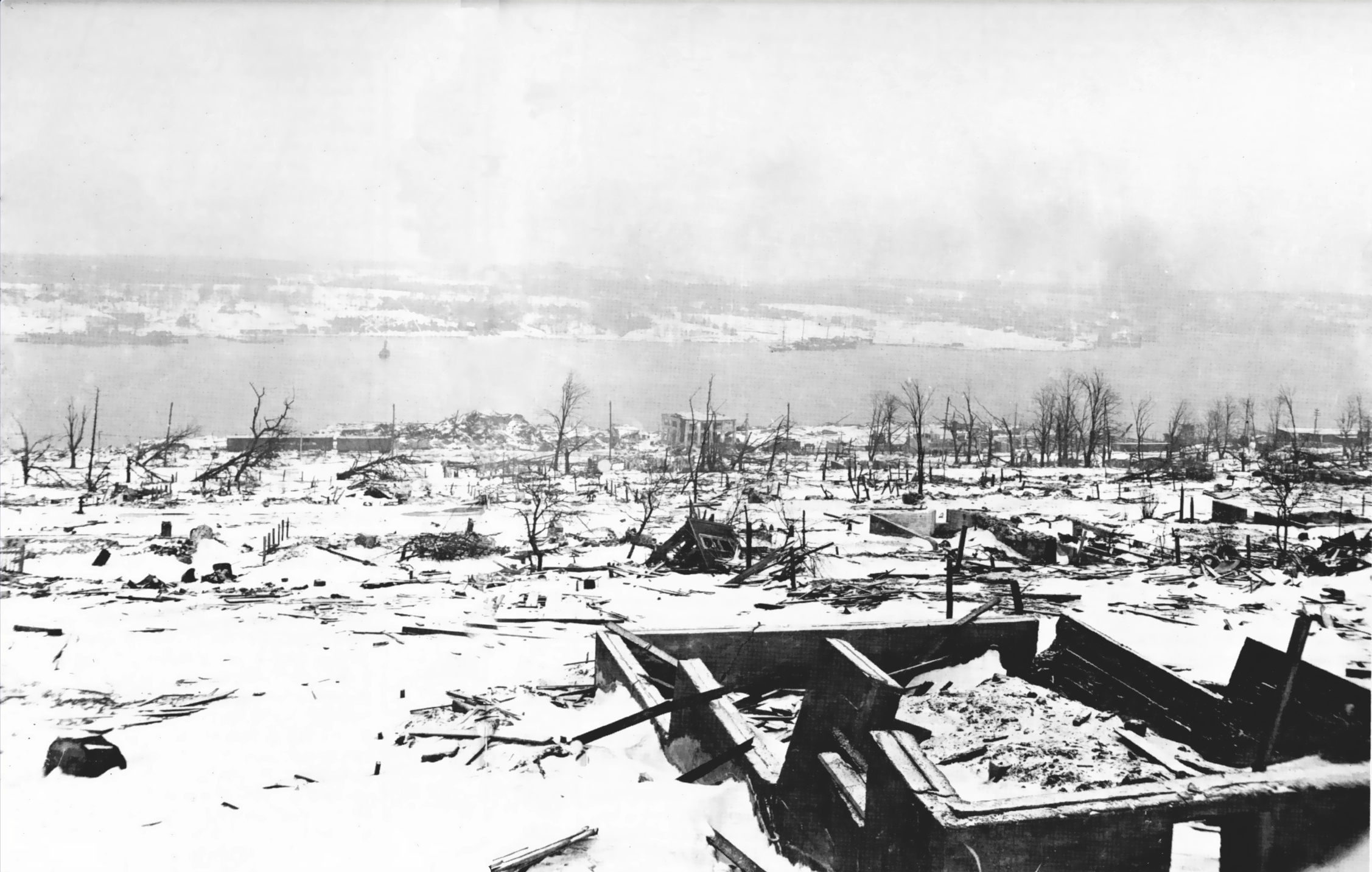
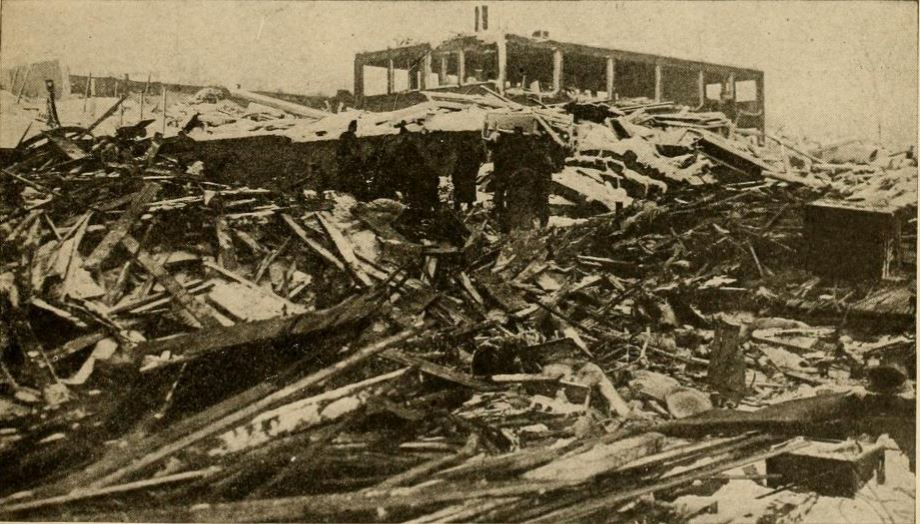
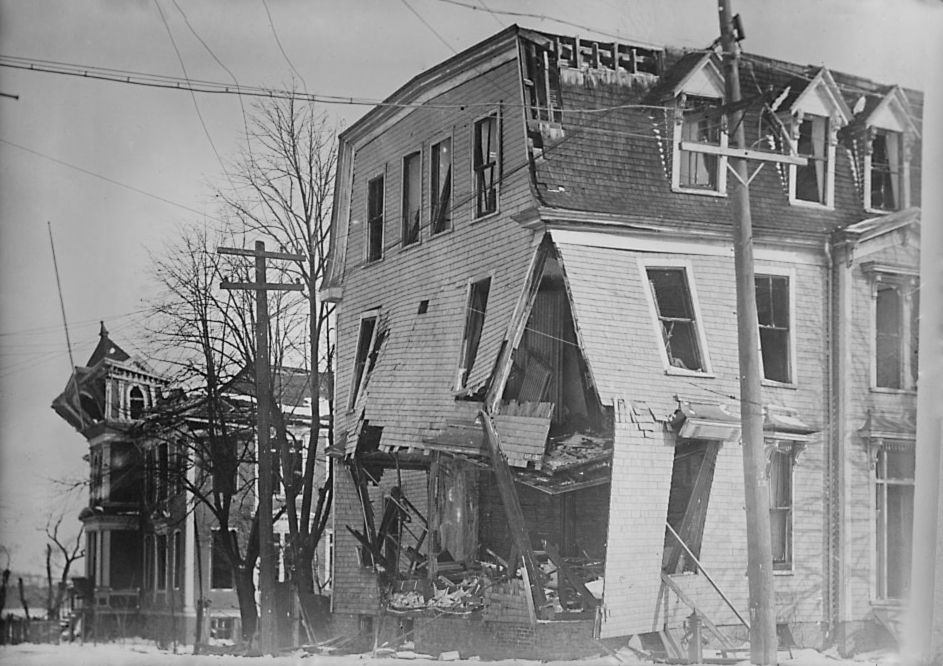
The devastation was near-total in the surrounding area. The blast instantly obliterated the Mont-Blanc, hurling fragments of the ship for miles; parts of it were found kilometers away. The entire Richmond district of Halifax’s north end, closest to the blast, was flattened, with buildings, homes, factories, and the people in them destroyed in an instant. A pressure wave radiated outward at tremendous speed, collapsing structures across a wide area, and the explosion generated a tsunami in the harbor that surged ashore and swept away more victims. Fires broke out across the ruins, many started by overturned stoves and lamps in the shattered homes, trapping and killing survivors of the initial blast. The sound was heard hundreds of kilometers away, and the shockwave shattered windows up to fifty miles distant.
The human toll was catastrophic. Around 2,000 people were killed, with estimates commonly cited near that figure, and roughly 9,000 more were injured. Whole families died together; entire streets were erased. And there was a particularly cruel category of injury: because so many people had been standing at their windows watching the fire when the blast came, the explosion blew in the glass of the entire city at once, and the flying shards blinded hundreds. The disaster produced an unprecedented number of eye injuries, and around 200 people lost their sight entirely, a horror that led to lasting advances in the treatment of eye trauma.
The Aftermath and the Response
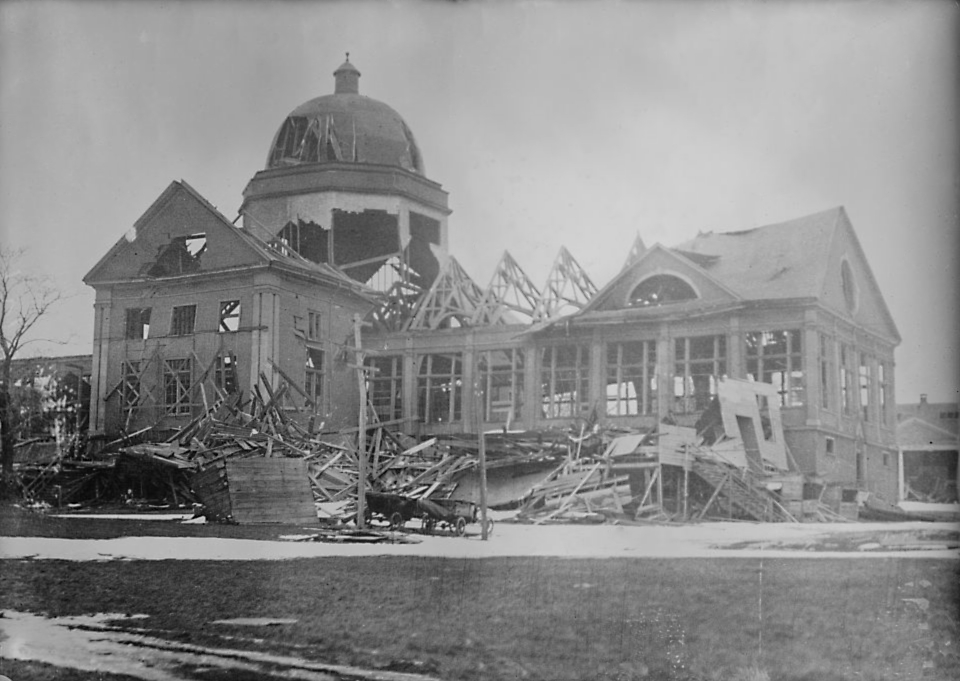
The response to the disaster was immediate and, in places, heroic. Even as the ruins burned, survivors and first responders began pulling the injured from the wreckage, and a coordinated medical relief effort — one of the first of its kind in Canada — swung into action, treating the overwhelming number of casualties with the resources at hand. The scale of injury drove real medical innovation, particularly in the care of the blind and in pediatric surgery, and contributed to the founding of institutions for the care of those who had lost their sight.
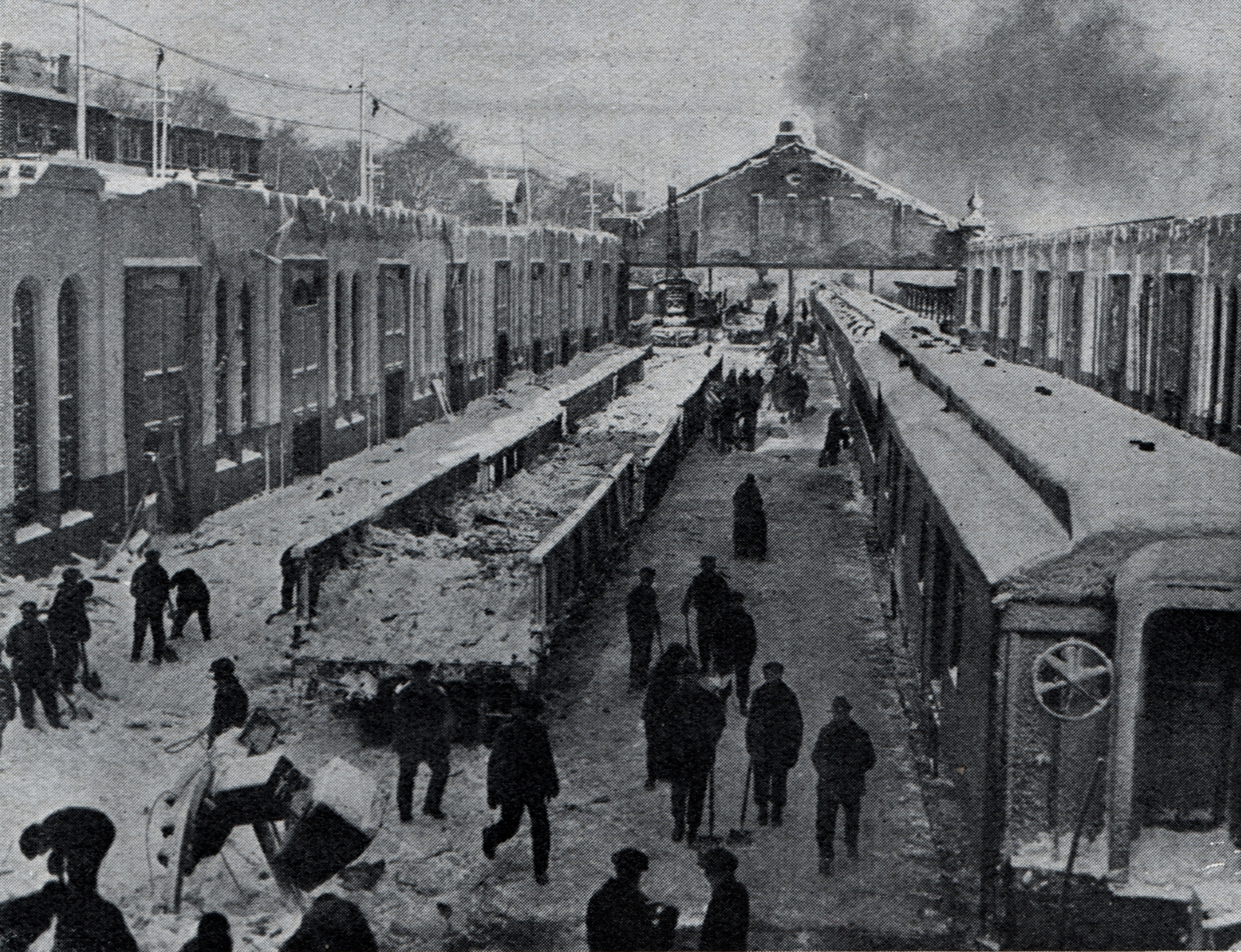
Then, as if the city had not suffered enough, a blizzard struck the following day, dumping heavy snow on a city full of exposed survivors, collapsed buildings, and people trapped in the rubble, hampering rescue efforts and adding to the misery. Help poured in from beyond the city, and one relationship born of the disaster endures beautifully to this day: the city of Boston and the state of Massachusetts sent aid so swift and generous — trains loaded with doctors, nurses, and supplies — that Halifax has, for over a century since, sent Boston an enormous Christmas tree every year as a thank-you, a tradition that continues as a living memorial to the catastrophe and the kindness it summoned.
Why It Faded From Memory
Given its scale, it’s striking how little-known the Halifax Explosion is outside Canada. Part of the reason is timing: it happened in the middle of the First World War, when the world’s attention was consumed by the vast slaughter in Europe, and a disaster in a Canadian port, however terrible, competed with news of battles claiming even more lives. The explosion was, in a sense, overshadowed by the very war that had caused it.
It was also, eventually, overshadowed by something even larger. The Halifax Explosion held the title of the largest man-made explosion in history for nearly three decades, and it was truly used as a reference point by scientists studying blast effects. But in 1945, the atomic bombs redefined what a man-made explosion could be, and Halifax was demoted from a singular horror to a historical footnote — the biggest blast before the bomb. That framing, while accurate, has perhaps done the disaster a disservice, reducing an event that killed around 2,000 people and blinded hundreds to a mere entry in a list of superlatives.
Remembering Halifax
Today, the Halifax Explosion is commemorated as a defining event in the city’s history and a landmark in the history of disaster response. Memorials mark the tragedy, museums tell its story, and the annual Christmas tree sent to Boston keeps its memory alive in an unexpected place. For a modern visitor to Halifax, the rebuilt north end and the memorial sites offer a sobering window into a catastrophe that reshaped the city.
The Halifax Explosion endures as a lesson in the terrible power of accident and coincidence. There was no malice behind it, no enemy action, just a series of small errors and misfortunes — a fast ship, a slow ship, a narrow channel, a spark, a cargo of explosives, and a crowd of curious onlookers at their windows — that combined into one of history’s deadliest disasters. It’s a reminder that catastrophe doesn’t always announce itself; sometimes it arrives disguised as a minor collision and a pretty fire in the harbor, drawing people to the window to watch, in the last quiet minutes before the largest explosion the world had ever known.
Like our content? Follow us for more.