Almost nobody who drinks coffee daily has seen the plant it comes from, and the vocabulary actively misleads.
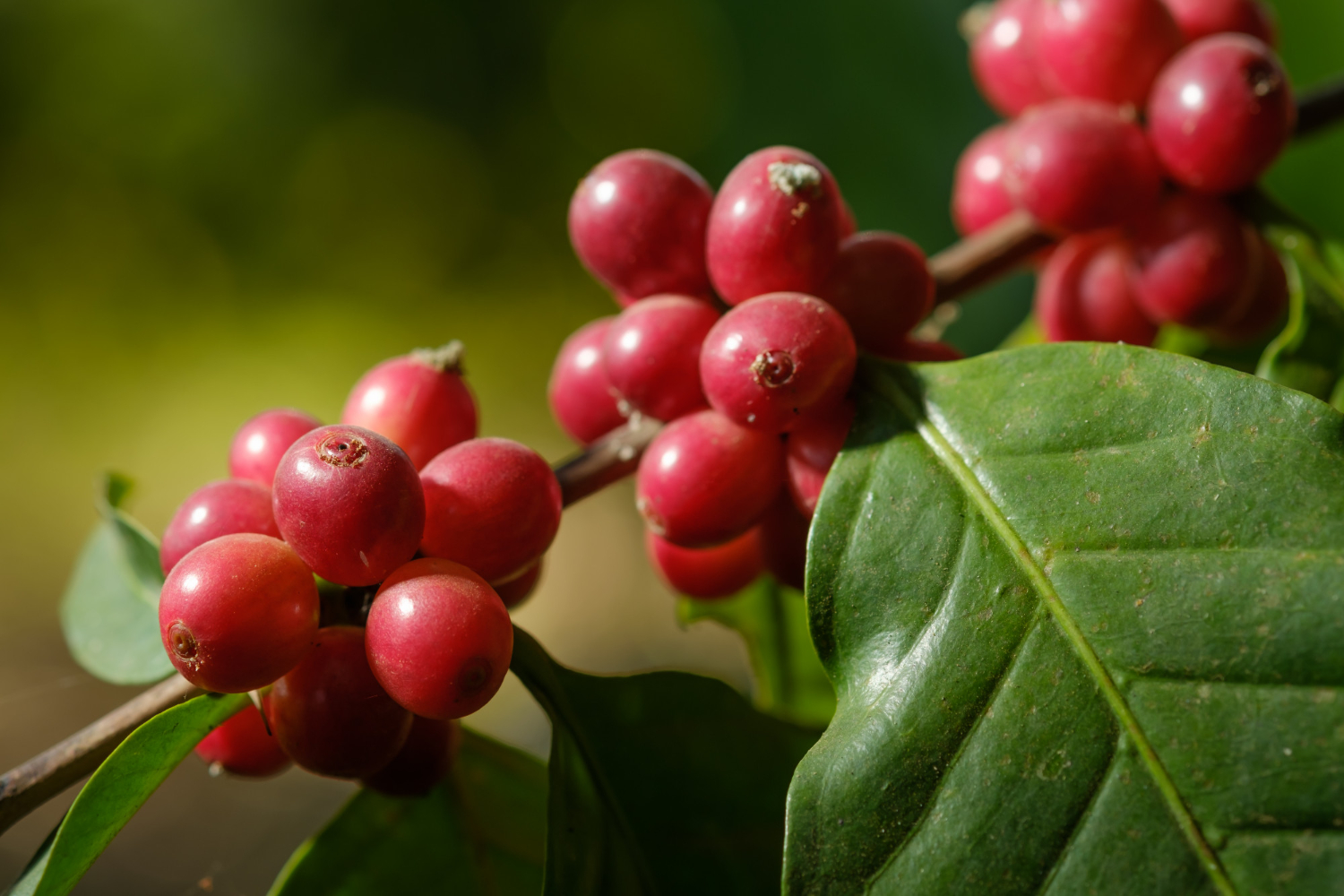
A coffee bean is not a bean. It is a seed, and the resemblance to true beans is the entire reason for the name. The fruit it comes from is usually called a coffee cherry, which it is also not — botanically it is a berry, most commonly containing two seeds rather than the single stone a cherry has.
As one specialist coffee writer put it, given that we call a peanut a nut and a tomato a vegetable, this is par for the course. In early literature the coffee fruit was most often called a berry; the word cherry came later and stuck.
What that mislabelling obscures is that coffee is agriculture on a fruit, and everything interesting about how it tastes happens between the tree and the roaster. Here is what is actually going on inside a coffee cherry.
The Anatomy
A coffee cherry is built in layers, and every one of them has to come off.
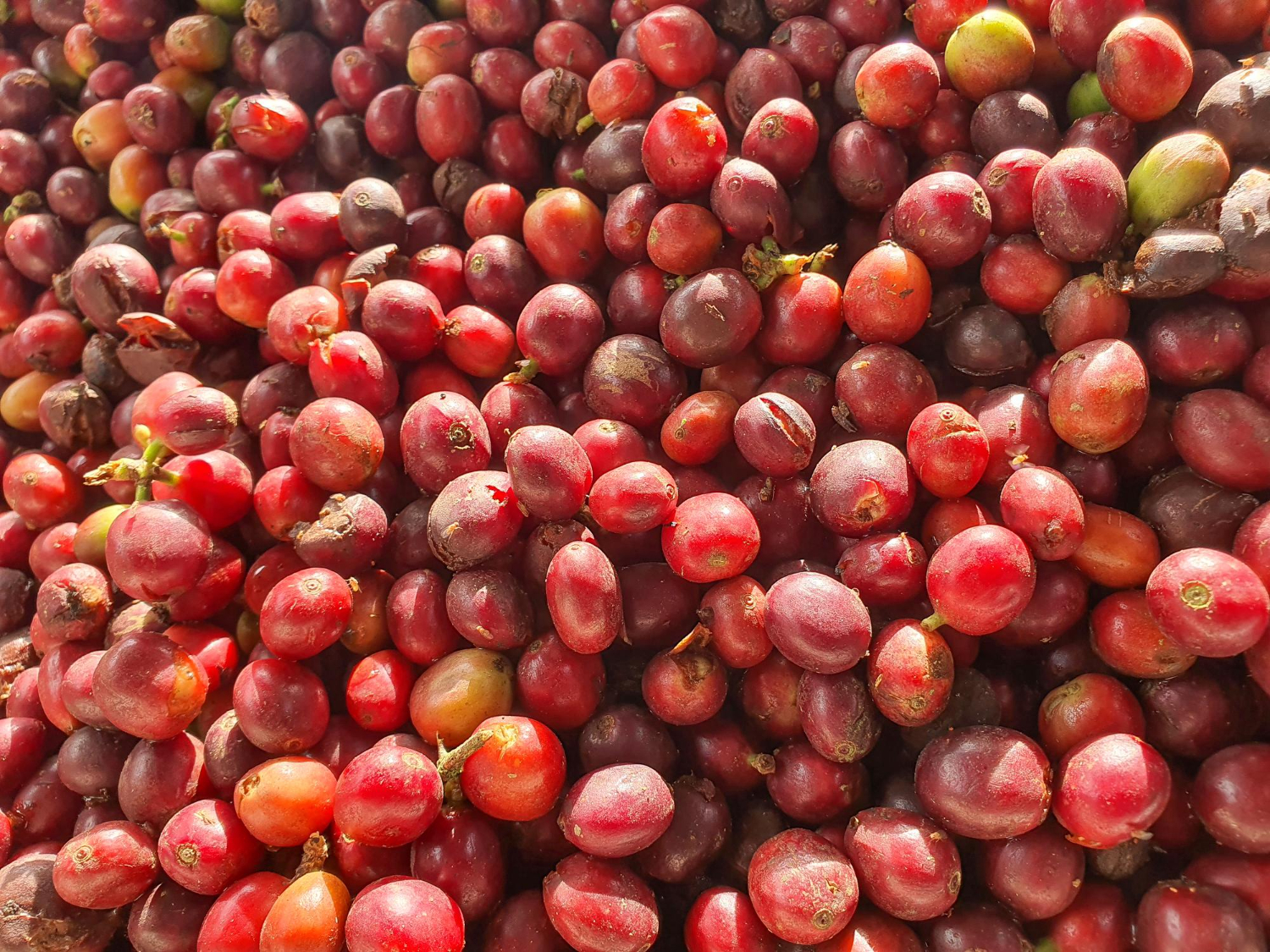
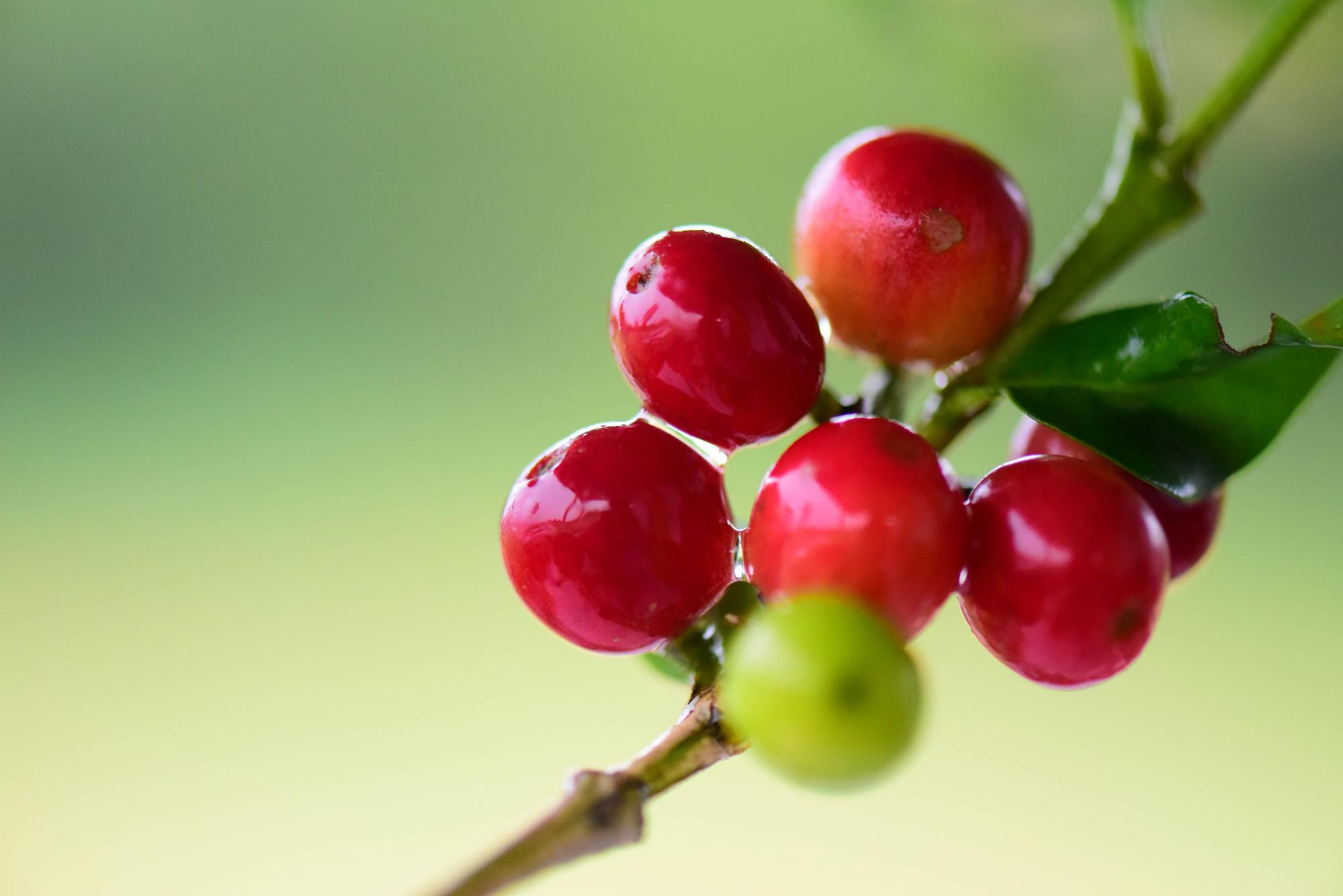
The outermost layer is the skin, or exocarp. It starts green as the fruit develops and turns yellow, then orange, then most typically red at maturity, though some varieties ripen yellow.
Beneath that is the pulp, or mesocarp — the fleshy part. It is sweet and edible, and this is the layer that matters most for flavour development during processing. Below the pulp sits the mucilage, a slippery, sticky layer composed of natural sugars and alcohols that clings tightly to the seed. Its sugars contribute substantially to the sweetness, acidity and overall character of the finished coffee.
Next comes the parchment, or endocarp, a papery husk directly enclosing the seeds. It hardens as the fruit matures, and in doing so restricts and controls the eventual size of the seed inside.
Finally there is the silver skin, an extremely thin membrane wrapping the seed itself. Fragments of it come off during roasting as chaff, visible on lighter-roasted beans.
And then the seed. Like Brazil nuts and white rice, a coffee seed consists mostly of endosperm — stored food for an embryo that will never, in this case, get to use it.
Like our content? Follow us for more.
Two Seeds, Flat Sides Together
The standard arrangement is two seeds per cherry, sitting face to face, which is why a coffee bean has one rounded side and one flat side with a crease down it. That flat face is where it was pressed against its twin.
Sometimes only one of the two ovules is fertilised, or one seed simply fails to develop, and the survivor grows without anything to flatten it. The result is a single rounded seed known as a peaberry, or caracolillo in Spanish, a word meaning small snail.
Estimates of how often this happens vary by source and by origin, running from around 5 percent to as much as 10 to 15 percent of the crop. Peaberries occur more often on parts of the plant exposed to harsher conditions, and the cause may be genetic or environmental.
There is a persistent belief that peaberries taste better, and they are frequently sold at a premium, particularly from Tanzania and from Kona in Hawaii. Whether the flavour difference is real is truly debated.
What is not debated is a practical point: their rounded shape rolls differently in a roasting drum, so keeping them separate produces a more even roast. That alone justifies sorting them, whatever you conclude about taste.
The Fruit You Almost Never Taste
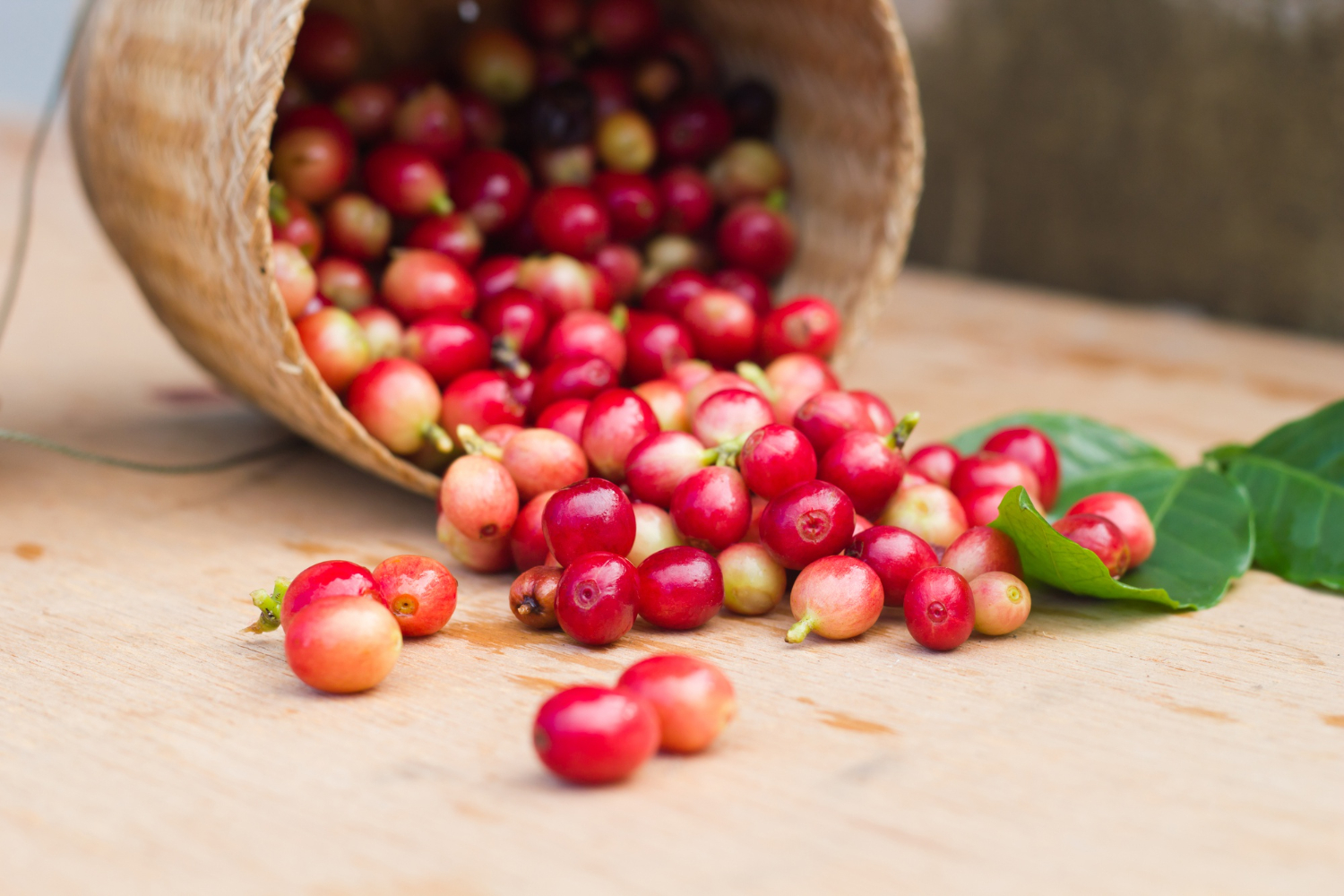
The pulp of a coffee cherry is edible, sweet and pleasantly acidic, and it tastes nothing whatsoever like roasted coffee.
You almost certainly have not tried it, for a straightforward reason: there is very little of it. The seeds occupy most of the space inside the fruit, leaving a thin layer of flesh that makes juicing impractical and eating unrewarding relative to the effort.
The dried skins and pulp do have a use. Under the name cascara — Spanish for husk — they are dried and brewed as an infusion, producing a drink closer to a fruit tea than to coffee, with some caffeine content since the plant produces caffeine as a natural pesticide and stores some in the fruit.
Cascara has a niche following, but drying the skins is as labour-intensive and risky as drying the beans themselves, and demand remains limited, so most producers discard the fruit. A related traditional drink, qishr, is made from the husks in Yemen.
So coffee joins cashews as a crop where the fruit is largely thrown away because only the seed can travel and only the seed has a market.
Why Processing Decides the Flavour
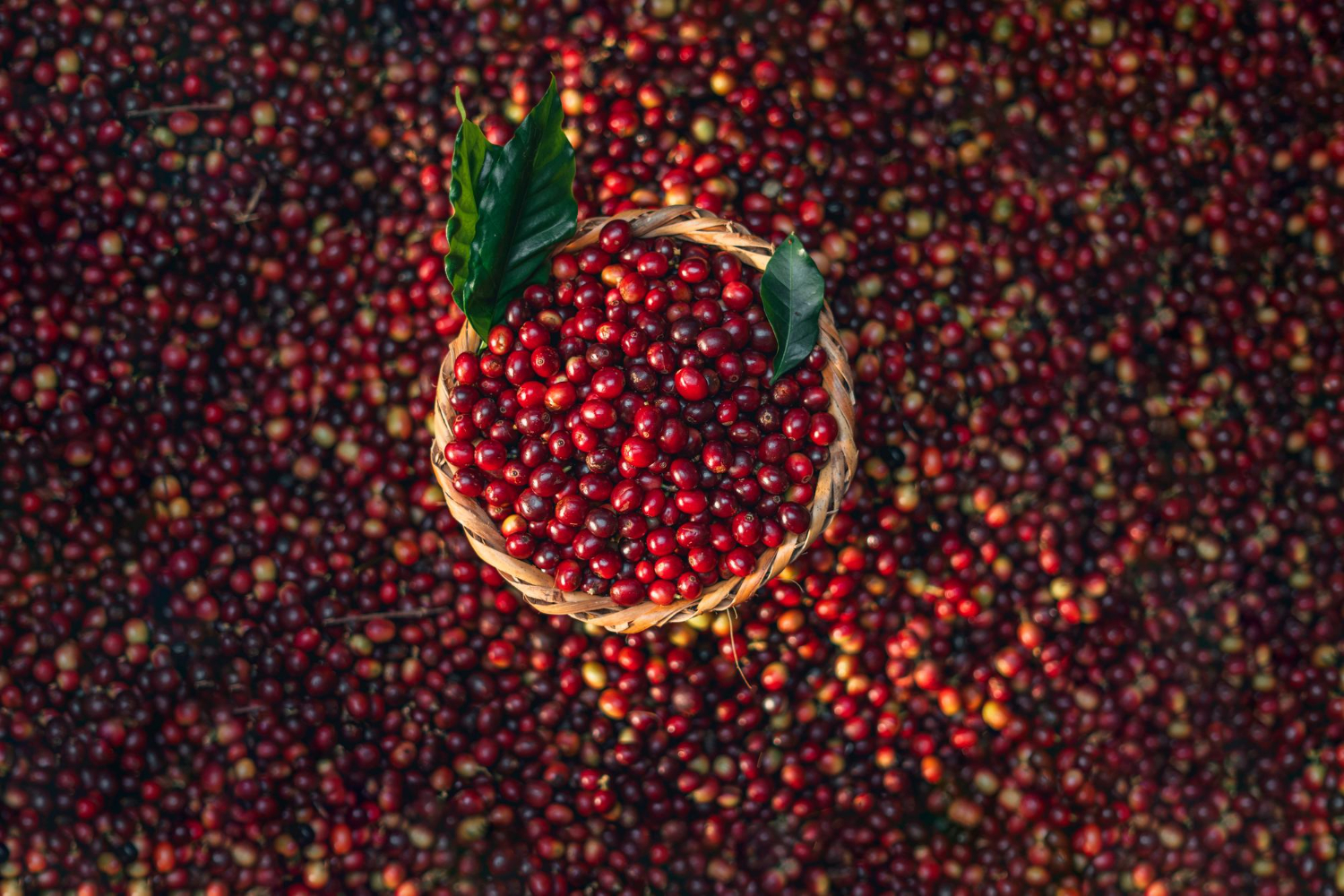
Removing those layers is the step that shapes the cup more than almost anything else after the growing itself, and there are three broad approaches.
In washed processing, the cherries are pulped within hours of picking, the mucilage is removed through fermentation and washing, and the parchment coffee is then dried. This tends to produce cleaner, brighter, more acidic coffees, because the seed spends little time in contact with the fruit sugars.
In natural or dry processing, the whole cherry is spread out in the sun — on concrete, brick or raised beds — and turned regularly for two to three weeks until the fruit dries around the seed. The sugars in the pulp and mucilage influence the seed throughout, producing heavier, fruitier, sweeter results.
Natural processing is harder to execute. The risks are over-fermentation if the fruit dries too slowly, and mould, which at best dulls the flavours and at worst introduces defects that can ruin a batch.
Honey processing sits between the two, removing the skin but leaving some mucilage on during drying.
There is also a well-known outlier. In parts of Asia, the Asian palm civet eats coffee cherries and excretes the seeds; because the animal selects the ripest fruit, and its digestion breaks down the pulp and mucilage, the recovered seeds are processed and sold as kopi luwak, marketed as rare and expensive.
As one producer’s guide puts it, the care taken during post-harvest processing is perhaps the single most important factor in determining coffee quality, and a single mistake can spoil an entire batch.
Two Species, Very Different Cups
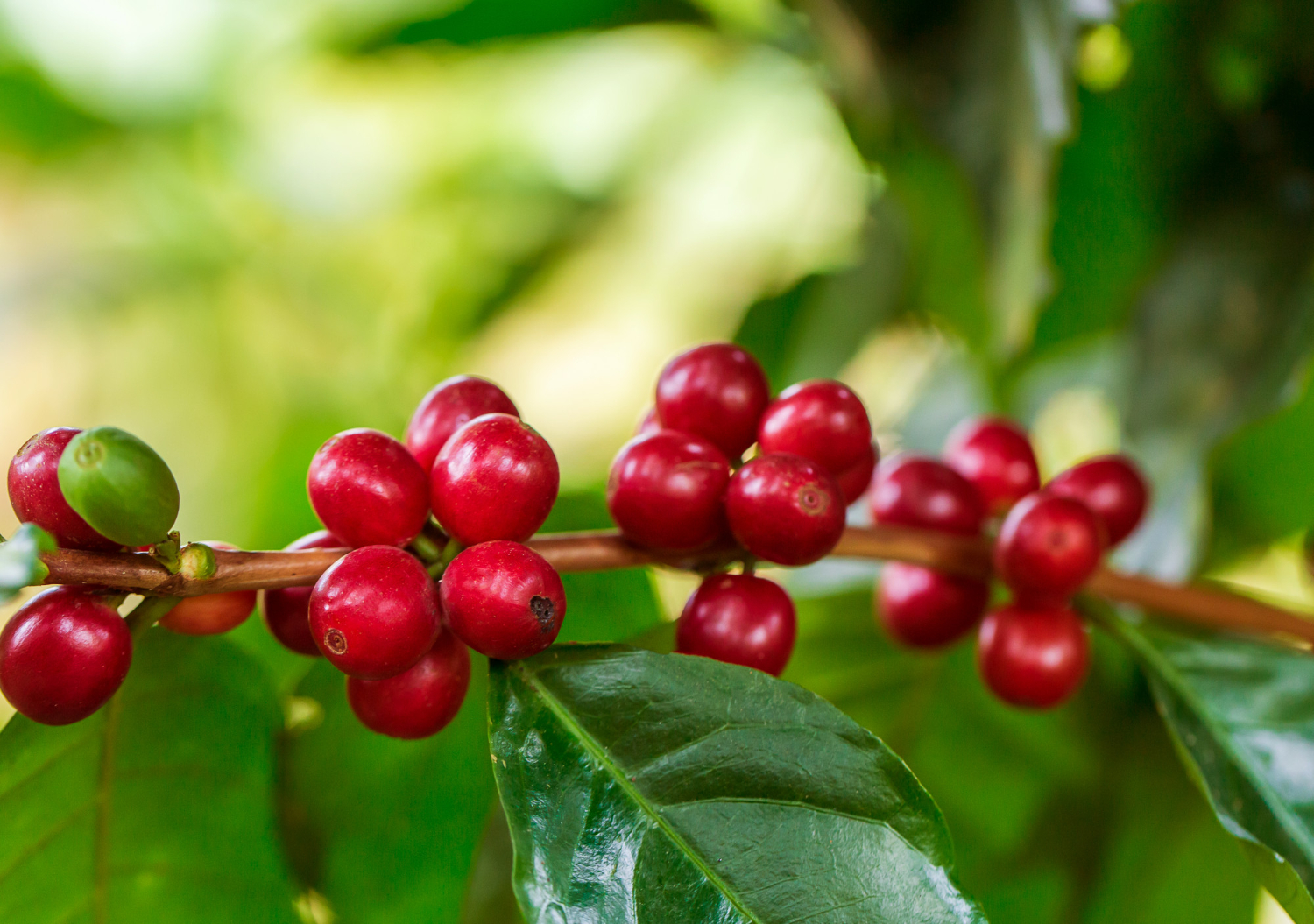
Almost all the coffee in the world comes from two species, and the distinction explains a great deal about price and taste.
Arabica accounts for the majority of global production and nearly all speciality coffee. It grows at higher altitudes, is more susceptible to disease and temperature swings, yields less, and produces a cup with more acidity, more aromatic complexity and less bitterness.
Robusta grows at lower altitudes, tolerates heat and disease far better, yields more per plant, and contains substantially more caffeine — which is part of its natural pest resistance. It produces a heavier, more bitter cup with a characteristic rubbery note, and it holds up well in espresso blends and instant coffee.
The altitude point is worth dwelling on, because it explains why coffee origins are described the way they are. Higher-grown arabica develops more slowly in cooler air, and slower development concentrates sugars and acids in the seed. This is why bags list elevation alongside origin, and why growing regions are so often mountainous.
It also explains the industry’s vulnerability. A crop that wants high altitude, specific temperatures and reliable rainfall has a narrow set of places it can grow well.
The Timescale Nobody Mentions
The last thing worth knowing is how slow all of this is.
A newly planted coffee tree takes roughly three to four years to bear fruit, and about five years to reach full production. Once a tree flowers — small, fragrant white blossoms that appear in clusters and last only a few days — it takes something like seven to eleven months for the cherries to ripen.
So from planting to a harvestable crop is around five years, and every subsequent harvest represents the better part of a year of fruit development, followed by weeks of careful processing, then milling, sorting, shipping and roasting.
Raw coffee seeds, incidentally, are green. The familiar brown appears only with roasting.
There is something worth pausing on in the ordinary cup. It contains the seeds of a fruit that took the better part of a year to ripen on a tree that took five years to start producing, harvested by hand, stripped of five distinct layers by a process that determines most of what you will taste, dried, shipped across an ocean, roasted, ground and brewed.
And the fruit those seeds came from — sweet, red, perfectly edible — was almost certainly thrown away.
Like our content? Follow us for more.