The Count Is the Same Everywhere and Nobody Mentions It
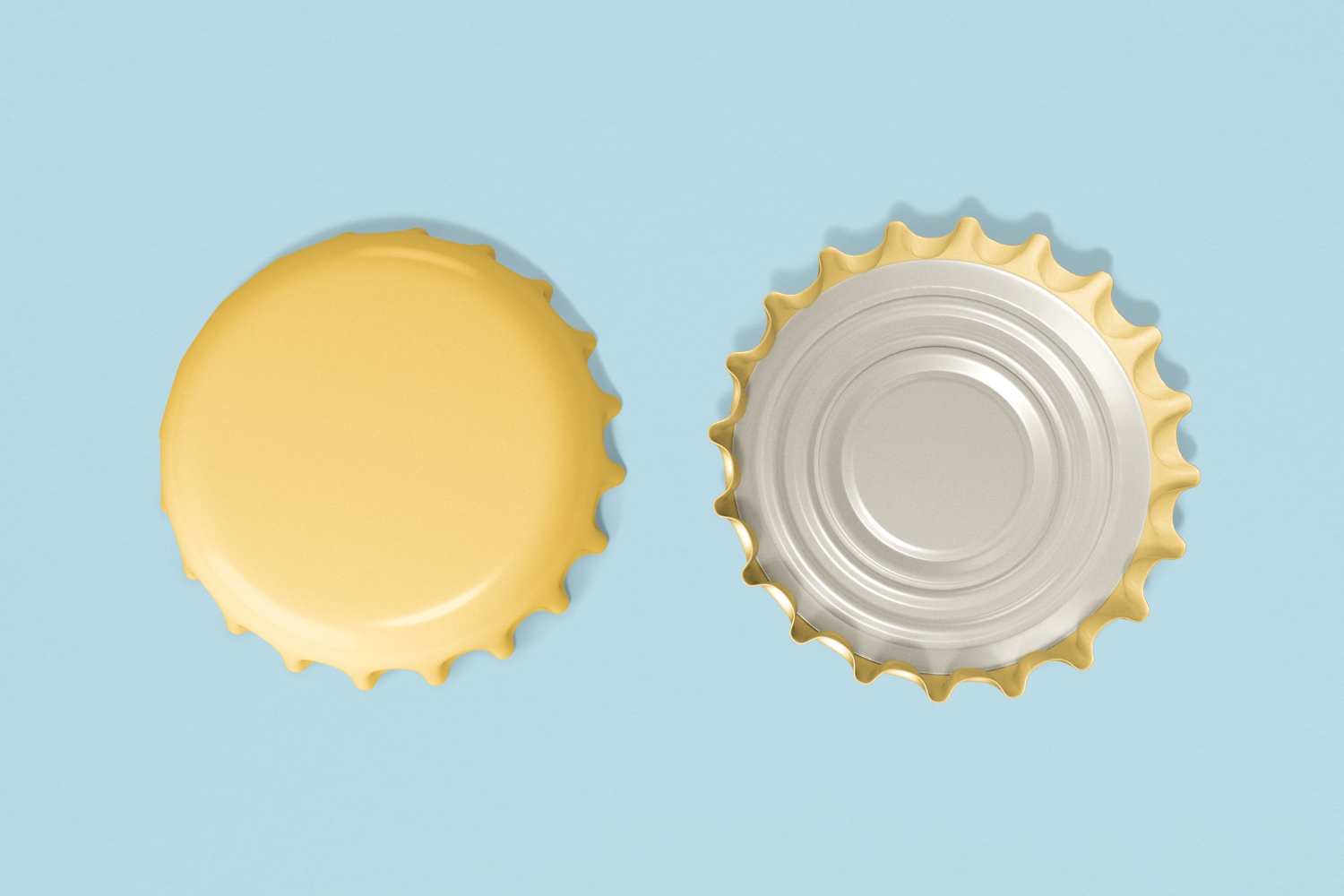
Take a crown cap off a glass bottle, turn it over and count the points around the crimped edge. There will be twenty-one of them. Do it again with a bottle from a different brewery, a different country, a different decade, and there will still be twenty-one.
This is one of the most thoroughly standardised objects in ordinary life and almost nobody knows the number. The cap itself has barely changed in well over a century: a shallow steel disc with a fluted skirt, a sealing liner inside, crimped down over a precisely dimensioned glass lip. The dimensions are specified, the steel thickness is specified, the liner is specified, and the tooth count is twenty-one.
What makes it interesting is that twenty-one is not a round number, not a convenient fraction of a circle, and not obviously derived from anything. It is an odd number sitting in the middle of a design that is otherwise all about symmetry. And it turns out that the oddness is the point.
Like our content? Follow us for more.
Why Not an Even Number
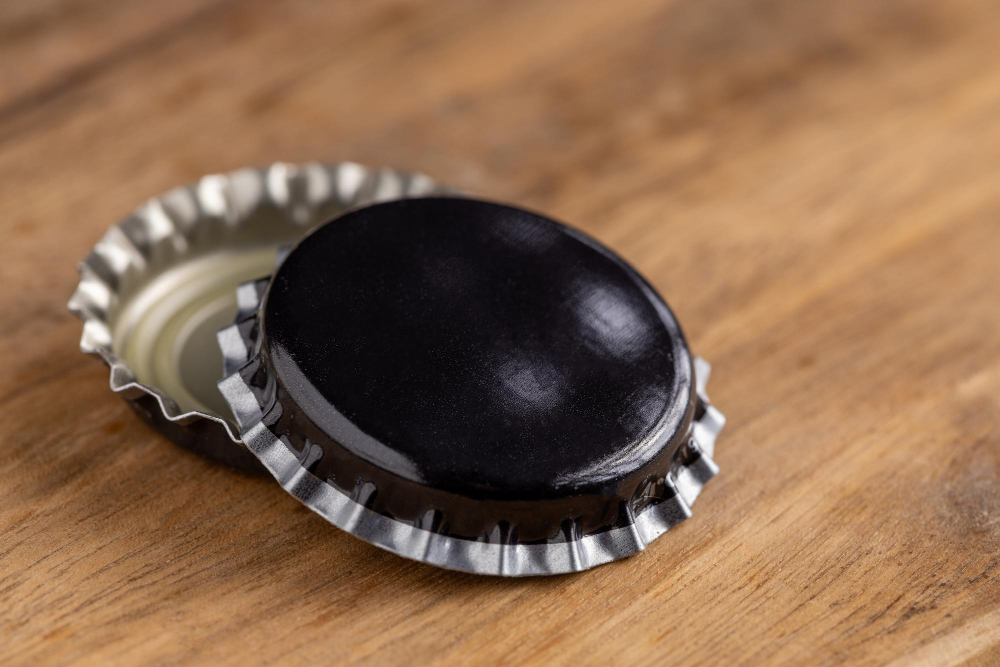
Crimping a cap means forcing a ring of metal inwards and downwards around a glass lip until it grips. The teeth are the folds that allow a flat disc of steel to become a smaller-diameter skirt without wrinkling randomly – each flute takes up a controlled amount of the excess circumference.
If the tooth count is even, every tooth has another tooth directly across from it. That sounds tidy and it causes two problems. The first is that the folding stresses pair up across the diameter and reinforce each other, which encourages the skirt to go slightly oval rather than staying round. The second is that an even, diametrically paired pattern makes it easier for the cap to find a stable deformed shape – it can settle into a flattened form rather than gripping evenly all the way round.
An odd count breaks that pairing. Every tooth sits opposite a gap, so the forces are distributed around the circumference rather than opposing each other in pairs, and the skirt is pushed towards staying circular. It is the same reasoning that puts an odd number of blades on a lot of fans and an odd number of lobes on a lot of rotating parts.
So Why Twenty-One Specifically
The number of teeth is a trade-off, and both directions are bad.
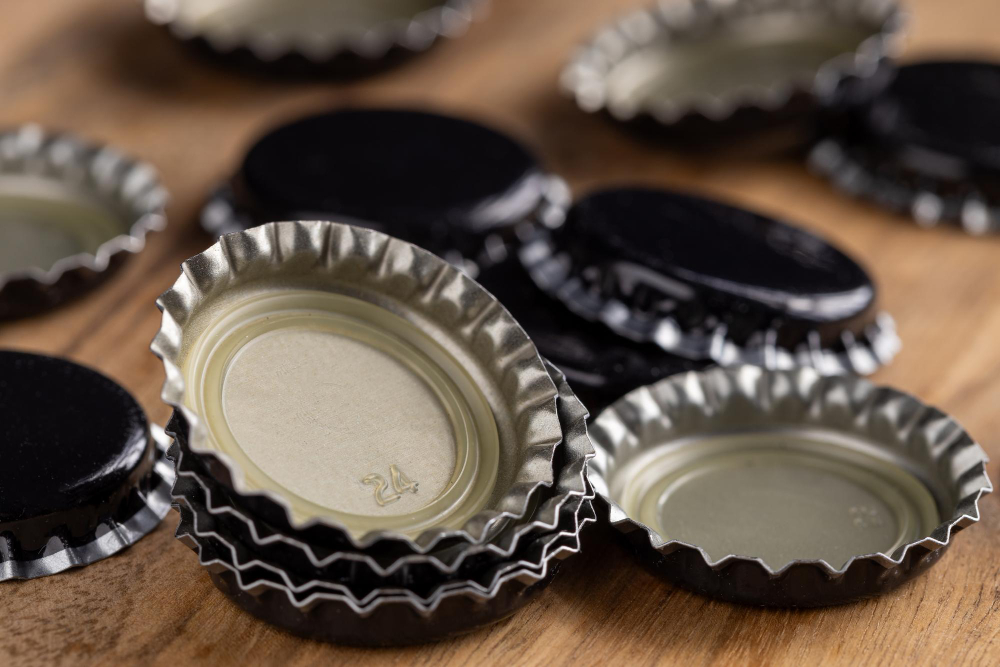
Too few teeth and each flute has to absorb too much excess metal. The folds become deep and sharp, the grip is concentrated at a small number of points rather than spread around the glass, and the seal is more likely to leak – which on a carbonated product means the bottle goes flat on the shelf and nobody buys that brand again.
Too many teeth and each flute is shallow. The cap takes more force to crimp properly, the skirt grips the glass more tightly all round, and – the part the drinker notices – it becomes harder to get off. A cap with thirty small teeth is a cap that fights the opener and tears rather than levering cleanly.
Twenty-one sits where the seal is reliable and the removal force is reasonable, on the specific lip diameter the glass industry standardised on. It was not calculated from first principles so much as arrived at: early caps used various counts, twenty-one performed best across the range of bottling lines, pressures and handling the trade actually had, and once the crimping heads were tooled for it the number stopped being a question.
The Cap Is Holding Back More Pressure Than People Realise
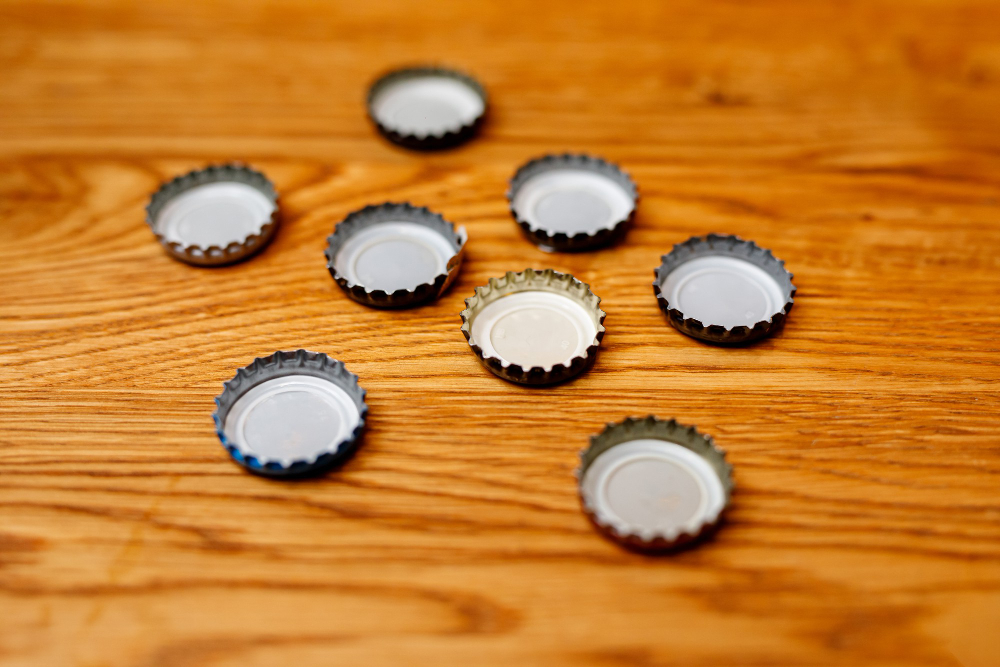
A bottle of beer is a pressure vessel. Carbonated at typical levels, the contents sit at a few atmospheres above ambient when cool, and considerably more when warm – a bottle left in a hot car can push its internal pressure up substantially.
That pressure is working on the cap continuously, from the moment it is crimped until the moment it comes off, and the only thing resisting it is a steel skirt gripping a glass lip plus the compression of a sealing liner. It has to hold for months on a shelf, through temperature swings, through being dropped into a crate, through being shipped across an ocean.
And it has to fail in the right direction. If the cap and the glass were both engineered to be stronger than any foreseeable pressure, the eventual failure would be the bottle bursting, which is the outcome nobody wants. Instead the crown is the weak point by design: at extreme pressure the skirt yields and the cap lets go, venting the bottle rather than shattering it.
That is a deliberate safety hierarchy, and it is why the cap is the cheap replaceable part and the bottle is not.
The Thing Inside Used to Be Cork
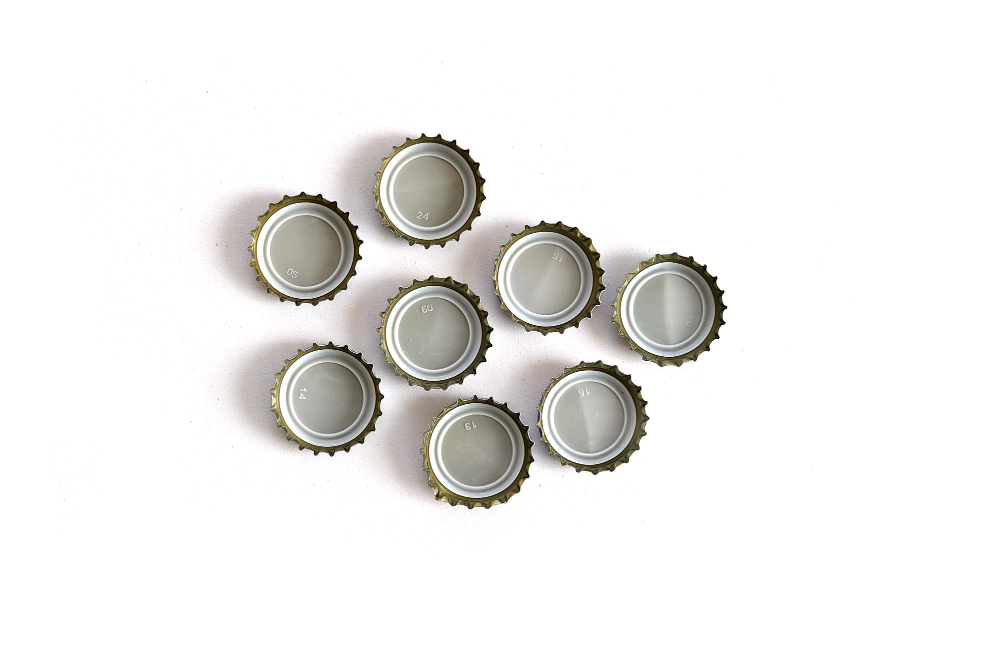
The steel does the gripping but it does not do the sealing. That job belongs to a liner pressed into the inside of the cap, which deforms against the glass lip and fills every irregularity in it.
For most of the crown cap’s life that liner was a disc of cork, sometimes with a thin paper facing to keep the cork away from the drink. Cork was the obvious choice: it compresses, it recovers, it is close to impermeable, and the bottling trade already had it in quantity.
It had drawbacks. Cork is a natural material with natural variation, it can carry flavour taints, and discs had to be cut, graded and faced. Over the later twentieth century it was replaced by moulded polymer liners – a ring or disc of plastic formed in place inside the cap – which are consistent, cheap, flavour-neutral and can be tuned for how much gas they let through over time.
So the cap you open today is the same stamped steel shape as a cap from a century ago with an entirely different sealing technology inside it, which is a good example of how an object can appear unchanged while its actual working part has been swapped out.
The Critical Dimension Is the Glass, Not the Cap
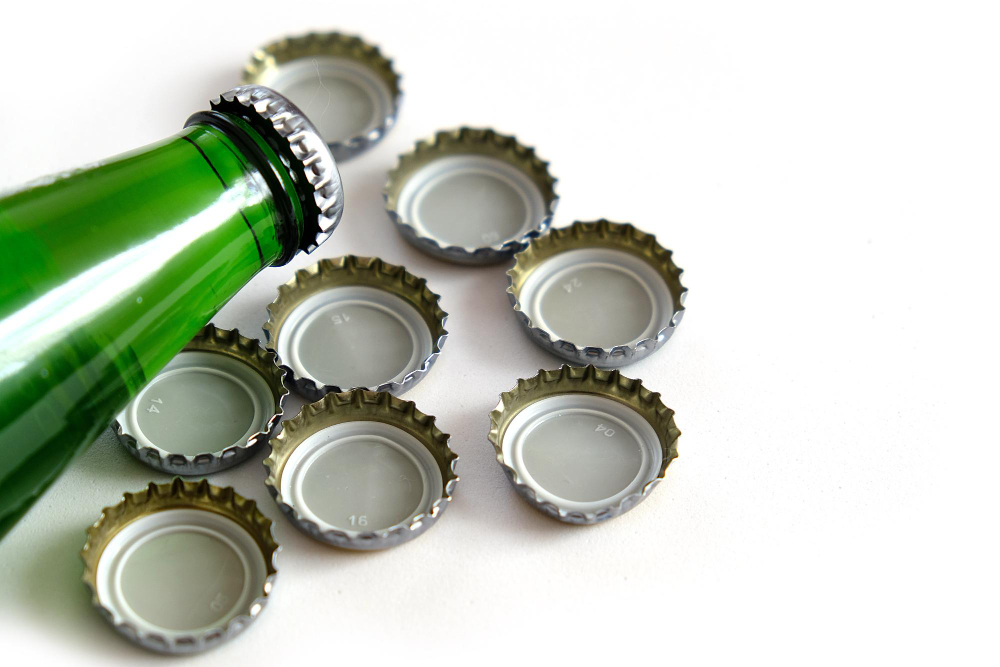
Everything about the cap is dictated by a feature of the bottle most people have never looked at closely.
The lip of a crown-finish bottle is a specific moulded shape: a defined outside diameter, a defined bead profile below it for the skirt to grip under, and a defined sealing surface on top for the liner to press against. All three are held to tight tolerances, because the cap is a fixed-size part being applied at speed by a machine that does not adjust.
This is why a bottle with a chipped lip cannot be capped reliably, why bottles that have been through too many return-and-refill cycles get rejected on the lip rather than on the body, and why the glass finish is the one part of a bottle that bottle makers are most careful about. The body can vary a little. The lip cannot vary at all.
It also explains an oddity that confuses people: a cap that has been levered off is deformed and will not reseal, but it looks as though it should. The flutes have been bent outwards and the grip under the bead is gone, and pressing it back on gives a cap sitting loosely on a lip it no longer engages. The various gadgets sold for resealing opened bottles all work by clamping something new over the lip rather than by reusing the cap, for exactly that reason.
How It Is Actually Made
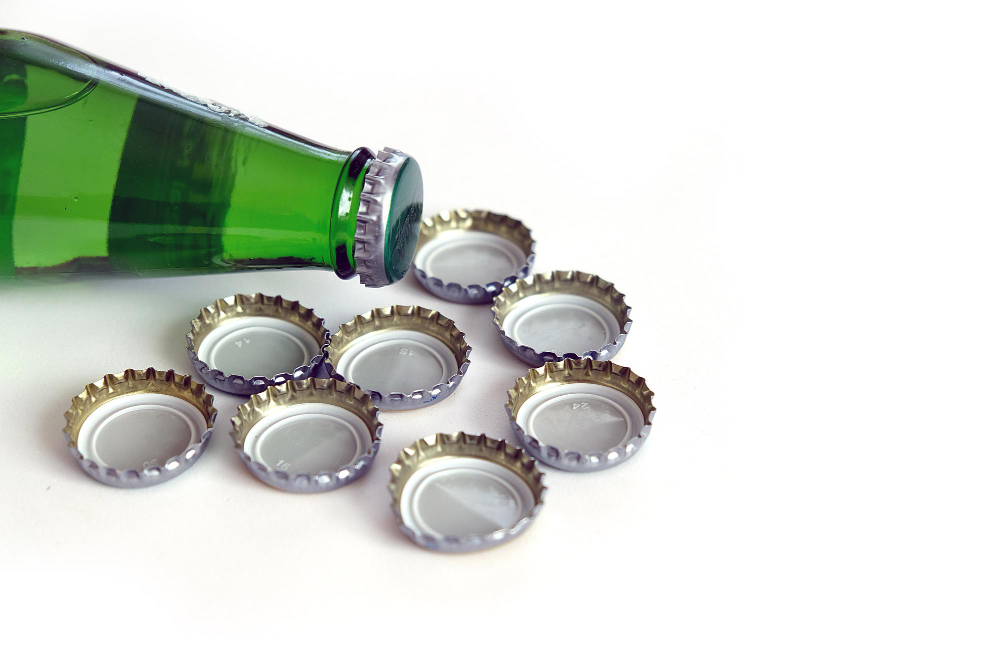
The manufacture is almost comically simple for an object doing this much work.
Coated steel arrives as a coil, already lacquered on both faces – inside so the contents never touch bare metal, outside to take printing and resist corrosion. It is printed flat, in sheets or on the web, which is why cap designs are slightly distorted on the finished skirt.
A press then blanks out a disc and forms it in the same stroke: the centre panel is pushed down, and the rim is drawn into the twenty-one flutes by a fluting die. The liner goes in next, either as a cut disc or, in modern production, as a measured drop of molten polymer spun into a ring and allowed to set.
That is the whole process. Printed steel in at one end, finished crowns out at the other, at rates measured in thousands per minute, into bulk cartons where they are shipped loose and poured into a hopper at the bottling plant.
Twist-Off Caps Have Different Teeth and They Are Not Interchangeable

There are two kinds of crown and the difference is in the skirt.
A standard crown has short, deep flutes that grip a plain glass lip by friction and deformation alone. It cannot be unscrewed because there is nothing to unscrew – it comes off by levering the edge against a fulcrum, which is exactly what a bottle opener provides.
A twist-off crown has longer, shallower flutes formed to engage threads moulded into the bottle neck. The bottle is different, not just the cap. Turning it winds the skirt up the threads and off.
This is why trying to twist a standard cap achieves nothing except a cut hand, and why a twist-off cap can also be levered off with an opener – the threads are a bonus rather than the only route. It is also why the two systems need different bottles, different crimping settings and, from the brewery’s point of view, a decision rather than a preference: you cannot change your mind about which kind of cap to use without changing your glass supply.
Why the Design Has Lasted So Long
Most packaging closures from the nineteenth century are museum pieces. The crown cap is still in production in the billions, and the reasons are worth separating out.
It is extremely cheap, because it is a single stamped and coated steel part with a moulded liner and nothing else – no moving parts, no threads to form, no second component.
It is tamper-evident without any added feature. A crimped cap cannot be removed and replaced without the deformation being obvious, which is a property most closures have to engineer in deliberately.
It seals better than nearly anything at low cost, holding gas pressure for months.
It fails safely, venting rather than bursting.
And it is removable without any thought by somebody who has never been told how it works, using a fulcrum – the edge of a table, a lighter, a key, another bottle – if no opener is to hand.
That combination is hard to beat, which is why a design that predates powered flight is still sitting on top of a very large proportion of the glass bottles sold anywhere in the world.
With twenty-one teeth, because twenty-two would be worse.
Like our content? Follow us for more.