The Part Everybody Thinks Is a Filter
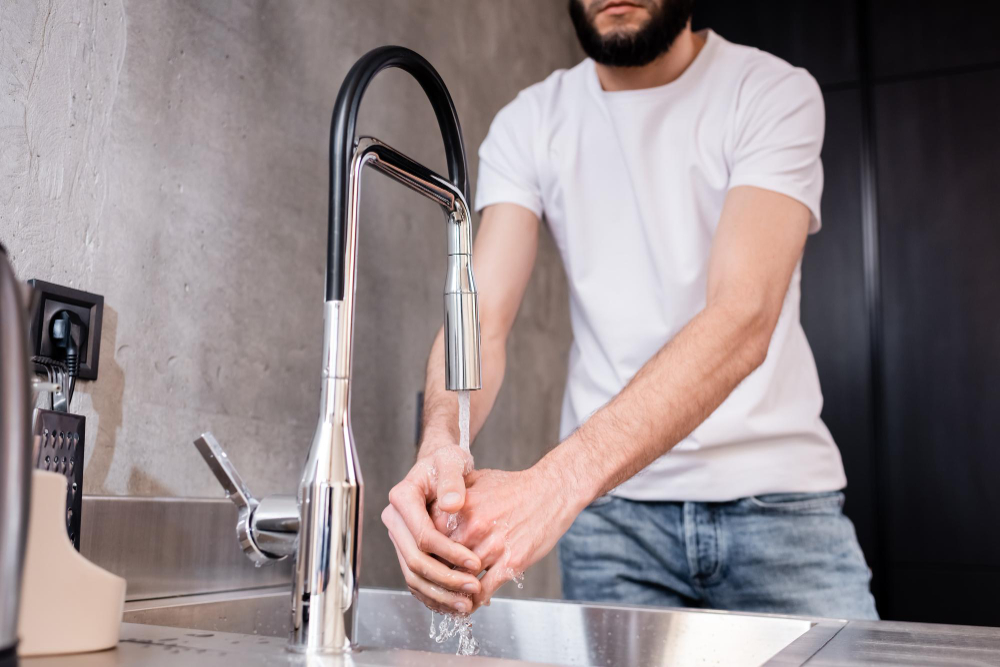
Look into the end of almost any kitchen or bathroom tap and there is a small screen set into a threaded insert. Most people assume it is there to filter grit out of the water, and it does catch the occasional fragment, which reinforces the belief.
That is not its job. The component is an aerator, and what it does is draw air into the water as it passes through, producing a stream that is a mixture of water and air rather than water alone.
The consequences are larger than they look. An aerated stream is bulkier than the water in it, which means a tap can deliver noticeably less water while appearing to deliver the same amount. It is softer to the touch, so it does not sting the hand or splash out of a basin. It is quieter. And it is much more even, because the mixing breaks up the turbulent, surging flow that comes out of a plain open spout.
Unscrew one and run the tap and the difference is immediate and slightly shocking: a hard, narrow, splashing jet that goes everywhere and uses more water doing it.
Like our content? Follow us for more.
How Mixing Air Into Water Saves Water
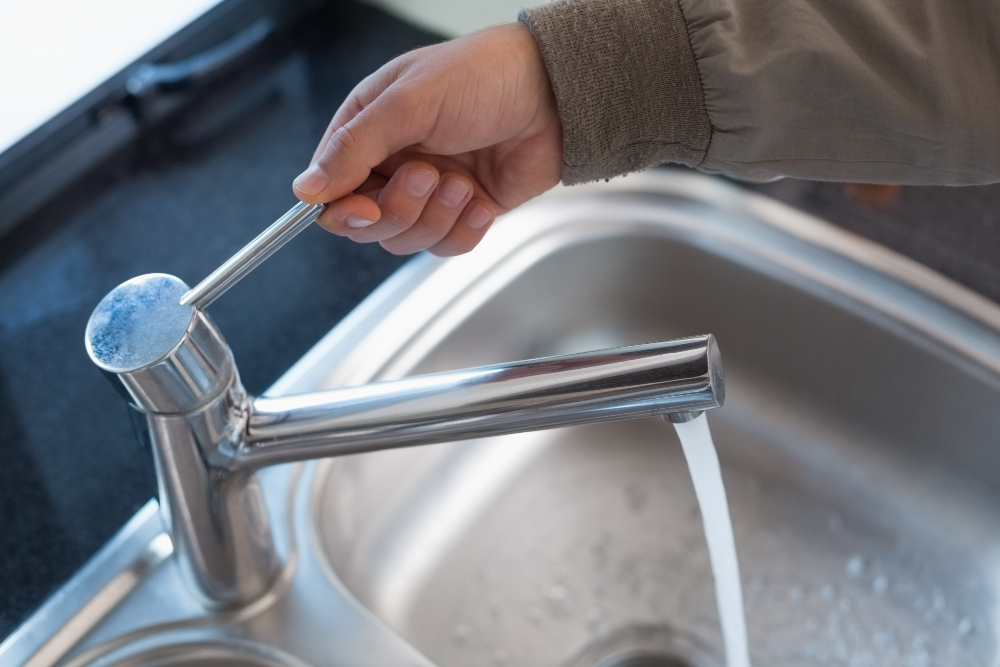
The mechanism is straightforward. Water entering the aerator is forced through a restriction, which speeds it up. Fast-moving water passing an opening drags air in behind it – the same effect that makes a shower curtain billow inwards – and the aerator has side ports specifically to let that air enter.
Downstream of the ports, the screen or a stack of baffles mixes the two together and straightens the result into a column. What leaves the spout is a foam-like stream of fine bubbles in water, occupying a volume much greater than the water alone.
Because the apparent thickness of the stream is what people judge by, a tap can be restricted substantially without the user feeling short-changed. A plain tap might run at something like fifteen litres a minute wide open. An aerated one fitted with a flow restrictor commonly runs at five or six, and in bathroom applications lower still, while looking like a full flow.
For anything where you are rinsing, wetting or washing – which is most of what a tap is used for – the water saved is simply saved. The job gets done at the same rate.
The Cases Where It Costs You Time
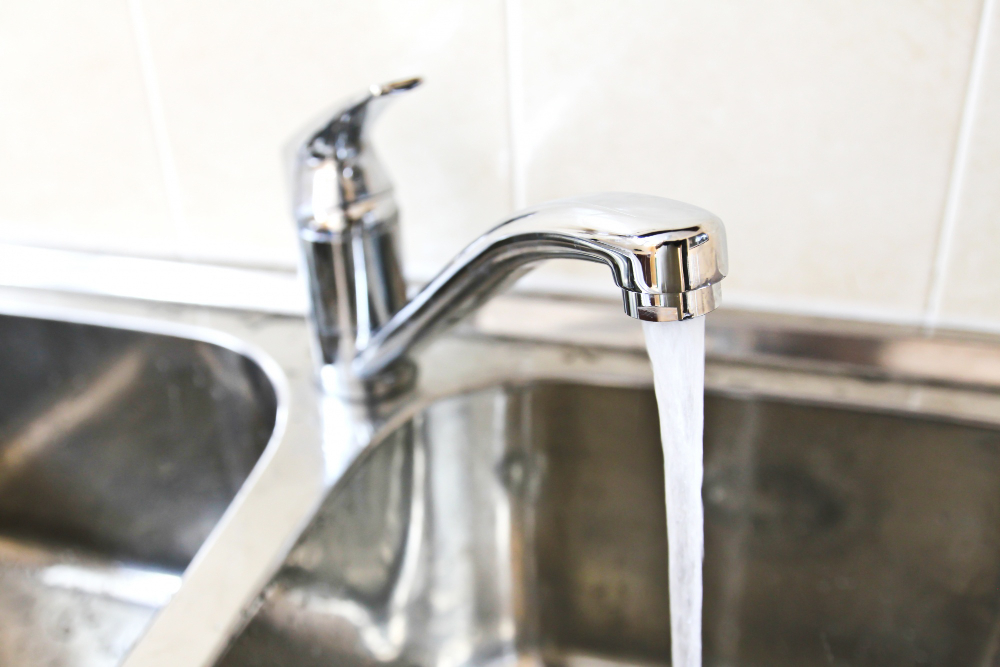
There is an honest counter-argument and it is worth stating, because the saving is not free in every situation.
If you are filling a container – a kettle, a pan, a bucket, a watering can – what matters is litres per minute and nothing else. An aerator with a restrictor makes that slower, and the water saved is zero, because you need the same volume either way. You have simply waited longer for it.
This is why a lot of people quietly remove the restrictor from the kitchen tap and keep it in the bathroom, where the use is overwhelmingly rinsing, and it is a defensible decision rather than vandalism. Some kitchen taps are sold with a higher-flow aerator for exactly this reason.
There is a second cost, smaller but real. Aerated water picks up dissolved gases and can taste faintly different to some people, and a glass filled from an aerated tap comes out cloudy for a few seconds while the bubbles rise out. Neither is a problem, but both get mistaken for a water quality issue and reported as one.
It Is the Commonest Cause of a Tap That Has Gone Weak
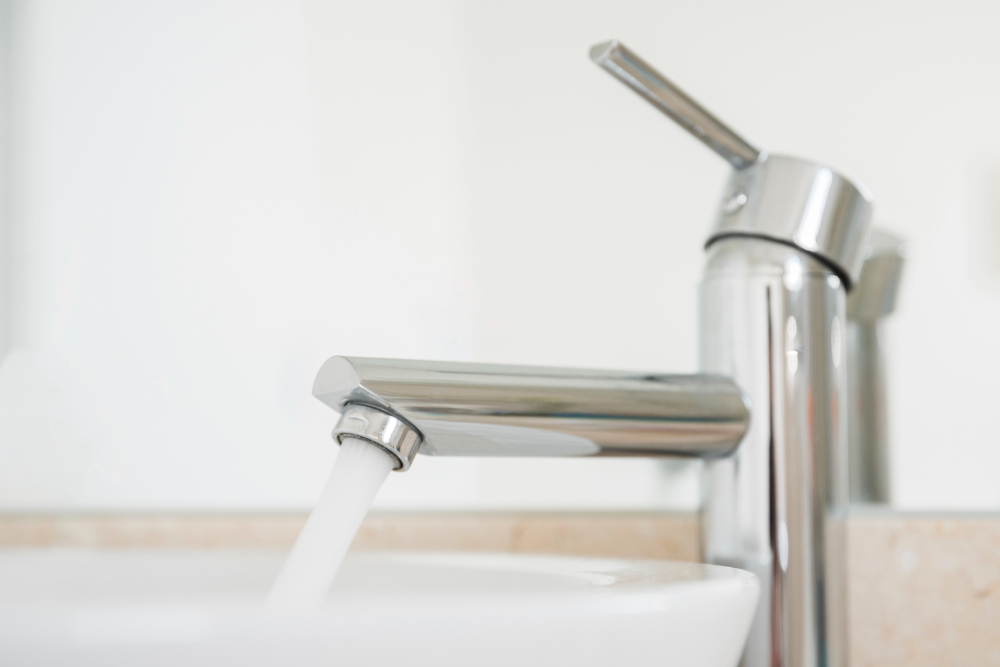
If a tap’s flow has dropped off over months or years and the pressure elsewhere in the house is fine, the aerator is the first thing to look at and it is right almost every time.
Two things clog it. The first is mineral scale, which builds on the screen and inside the baffles wherever the water is hard, gradually reducing the open area until the flow is a trickle or a sideways spray. The second is debris – fragments of grit, flakes of corrosion, scraps of old sealing material from somewhere upstream in the plumbing – which the screen catches and holds, which is the one way it does act as a filter.
Both are fixed in a few minutes. The insert unscrews from the end of the spout, usually by hand or with a cloth for grip, occasionally needing the small plastic key supplied with some modern taps. It comes apart into a screen, one or more baffles and a rubber washer, all of which can be rinsed, brushed and soaked in a descaling solution or vinegar.
The two things worth knowing before you start: lay the parts out in the order they came out, because they go back in a specific sequence and the wrong way round will spray; and some inserts are left-hand threaded, so if it will not turn one way, try the other before applying force.
Laminar Flow Is the Other Kind and It Is Not the Same Thing
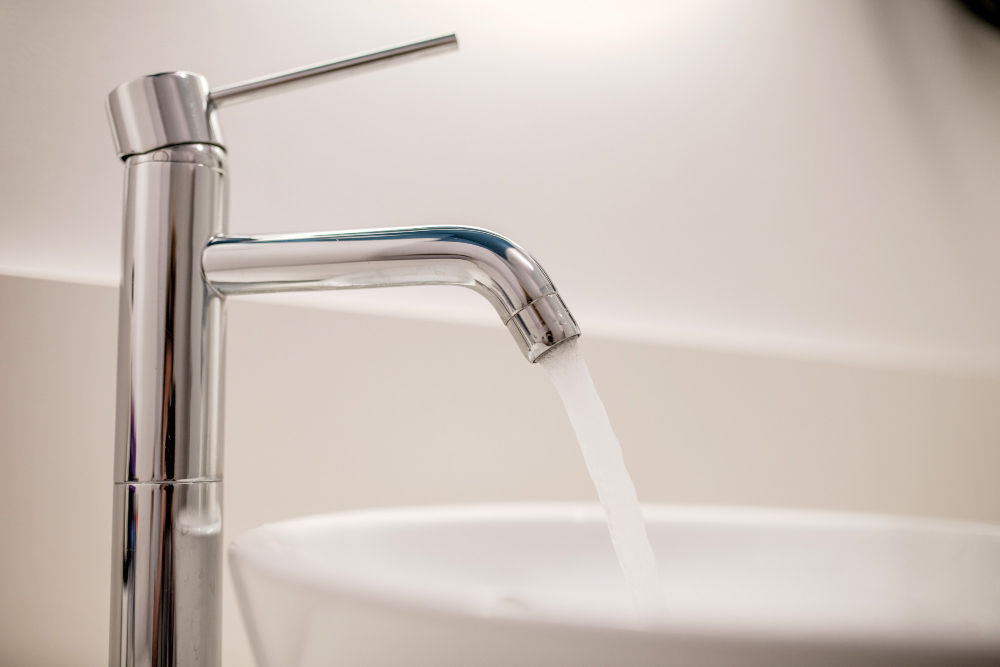
Not every tap insert is an aerator, and the distinction matters if you ever choose one.
An aerator mixes air in and gives a soft, white, slightly fizzing stream. A laminar insert does the opposite: it splits the water into a bundle of fine parallel streams with no air at all, producing a clear, glassy, almost solid-looking column.
Laminar flow looks considerably better – it is what you see on expensive bathroom fittings and in hotels – and it does not aerate, which is why it is specified in some healthcare settings where drawing room air through the fitting is unwanted.
What it does not do is save water by bulking the stream out, so a laminar tap achieves a given flow reduction only by actually reducing the flow, which the user feels. There is also no air mixing to quieten it, so laminar taps are louder.
So the choice is a real one: aerated for saving water and comfort, laminar for appearance and where air entrainment is undesirable. The threads are usually the same size, and swapping one for the other is a two-minute job.
The Sizes Are Standardised and There Are Only a Few
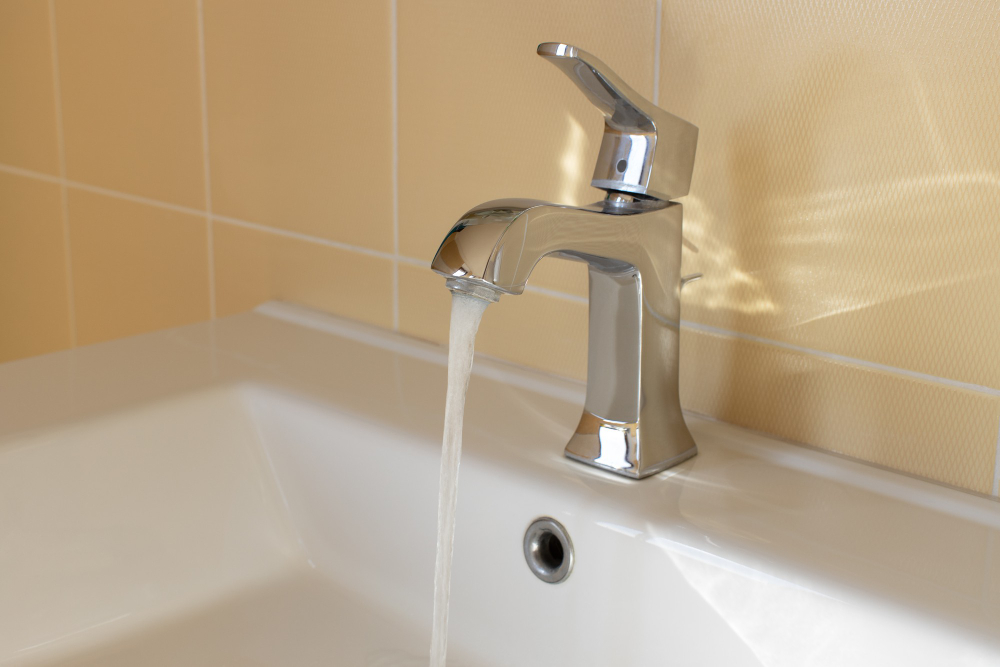
Replacing one is easier than people expect, because the fitting is standardised and the range of sizes is small.
Aerators thread into the spout either externally – the insert has male threads that screw into the spout’s internal thread – or internally, where the spout has an external thread and the aerator housing screws over it. Which one you have is obvious as soon as it is out, and it is the only thing you need to know to buy a replacement.
Diameters cluster around a handful of common sizes for domestic taps, with a smaller set used on bathroom fittings and a slightly larger one on some kitchen mixers. Take the old one to a plumbers’ merchant or a hardware shop and the match takes thirty seconds; guess the size online and there is a reasonable chance of getting it wrong.
There are also variants worth knowing. Swivel aerators pivot so the stream can be directed, which is useful on a shallow sink. Spray aerators produce a wide fan rather than a column, intended for hand washing. Anti-vandal versions are recessed and need a key, which is why public washroom taps cannot be unscrewed by hand. And on some taps the whole assembly is moulded into the spout and cannot be removed at all – in which case a weak flow has to be dealt with by descaling the spout in place or replacing the tap.
It Is the Cheapest Thing You Can Do About a Water Bill
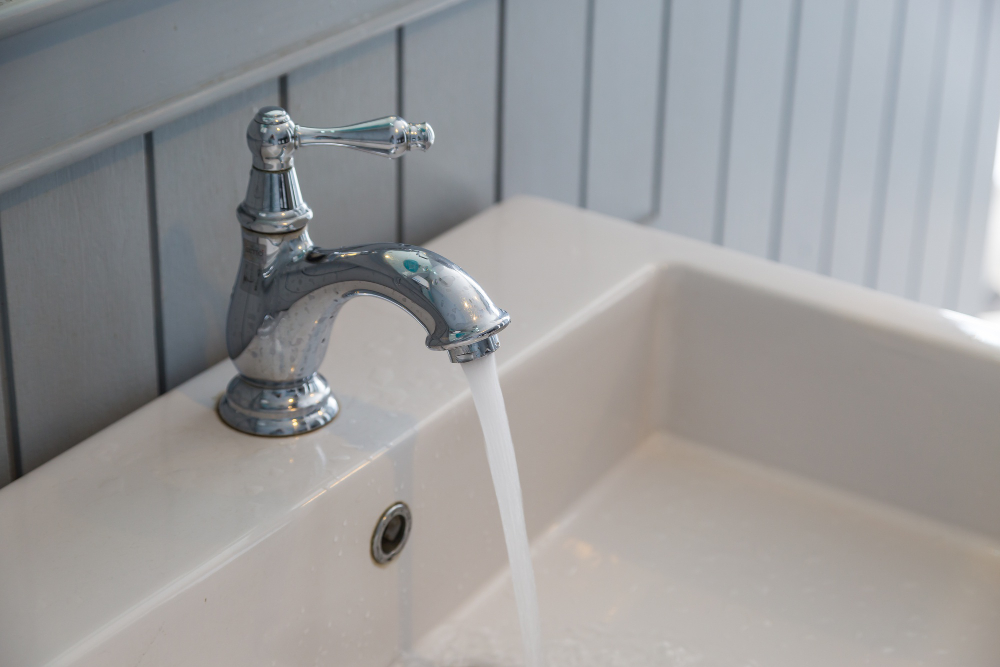
Of all the measures available to reduce household water use, this is the one with the best ratio of effect to effort, and it is worth being concrete about why.
A replacement aerator costs very little. Fitting one takes a couple of minutes with no tools and no plumbing knowledge, and nothing can go badly wrong – the worst case is that you put it back the way it was. There is nothing to maintain afterwards beyond an occasional descale.
And the taps are used constantly. A kitchen tap is opened dozens of times a day in an ordinary household, mostly for a few seconds at a time, and the water that runs during those few seconds is mostly not doing any work – it is running while somebody reaches for something or decides what they are doing. Halving the rate at which it comes out halves that waste directly.
The same logic does not apply to the big single uses. A bath takes the volume it takes. A washing machine is metered by its own programme. But the sum of all the small taps is a substantial share of indoor use, and it is the share that responds to a part costing less than a sandwich.
Where It Came From
The aerator is a mid-twentieth-century invention and it did not arrive as a conservation device. It arrived as a comfort and nuisance fix.
The problem it solved was splashing. Mains pressure was rising as water systems improved, basins were getting shallower and more decorative, and a hard jet of water hitting a shallow basin throws water onto the floor, the mirror and the user. An aerated stream lands softly and stays in the bowl.
The water saving was noticed afterwards, and it became the main selling point only when water metering, drought restrictions and efficiency regulation made consumption something householders and specifiers paid attention to. In a lot of jurisdictions a maximum flow rate for new taps is now written into building or plumbing regulations, and the aerator is how that number is met without making the tap feel feeble.
Which is a familiar sequence: a part added to stop water going on the floor turned out to be the cheapest water-conservation measure available, and is now fitted to practically every tap sold – still assumed by most of the people using it to be a filter.
Like our content? Follow us for more.