There is an enormous quantity of food on this planet that almost nothing can eat.
Cellulose makes up the structural walls of plant cells, which means it constitutes the bulk of every stem, leaf, trunk and blade of grass in existence. By mass it is the most abundant organic compound on Earth by a wide margin.
It is also made of glucose. Not something like glucose — glucose, the same molecule that circulates in your blood and that your cells burn for energy, assembled into long chains.
A field of grass is, chemically speaking, a very large quantity of sugar. And a human standing in it will starve.
The reason is one of the more elegant details in biochemistry, and the workarounds that evolved to get around it are stranger than the problem.
The Difference Is in the Join
Glucose molecules can be linked together in more than one orientation, and the orientation determines everything.
Link them one way and you get starch — the storage carbohydrate in potatoes, grain and roots. Human digestion handles starch easily, because we produce enzymes that recognise that particular linkage and cut it.
Link them the other way, with the connection flipped, and you get cellulose. The chemical formula is essentially the same. The energy content is the same. What differs is the geometry of the bond between one unit and the next.
Enzymes work by shape. An enzyme that cuts starch fits around the starch linkage and does nothing at all to the cellulose one, because the geometry is wrong — like a key that fits the lock but turns the wrong way.
That is the entire barrier. Not a poison, not a toxin, not an indigestible material in any fundamental sense. A bond in the wrong orientation, and no mammal makes the enzyme that opens it.
The consequence of that flipped bond is also structural. Cellulose chains lie flat and pack tightly against one another in bundles held by extensive hydrogen bonding, producing fibres of considerable strength. That is why plants can stand up, and why cellulose is difficult to attack even chemically.
Like our content? Follow us for more.
Nobody Makes the Enzyme
The striking part is how universal this failure is among animals.
No mammal produces cellulase. Not cows, not horses, not sheep, not elephants, not termites in the way most people assume. The enzyme exists in abundance in the living world — bacteria, fungi and some protists make it constantly, and it is how fallen wood eventually disappears — but the animal kingdom largely does not.
Which means every animal that lives on plant structural material has solved the problem the same way: by outsourcing it.
They do not digest cellulose. They house organisms that do, feed those organisms, and then absorb the products.
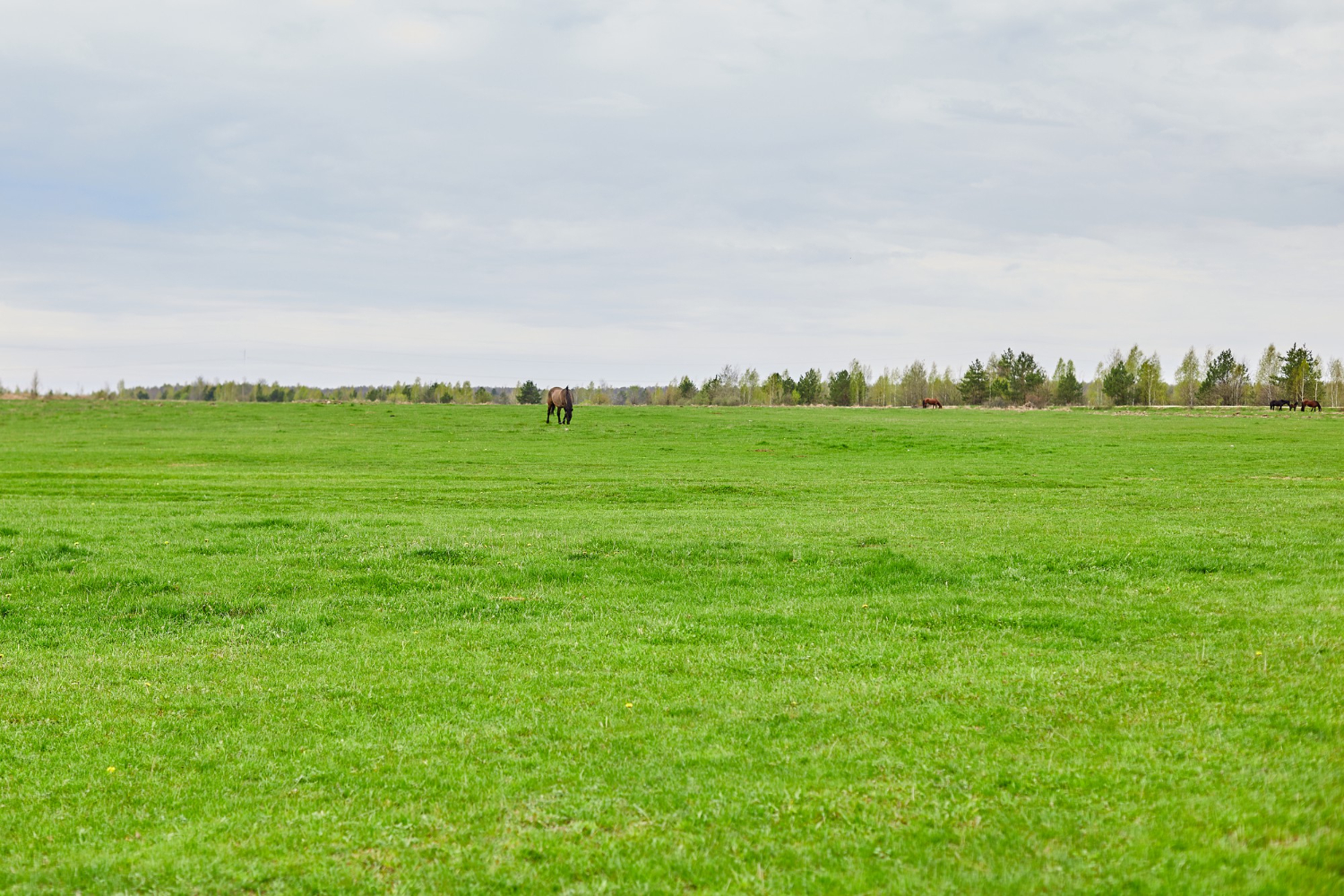
That is a truly different relationship from eating. A cow is not extracting energy from grass. A cow is maintaining a culture of microorganisms in optimal conditions, supplying them with raw material, and living on what they excrete.
What a Rumen Actually Is
The four-chambered stomach is frequently described as an efficient digestive system, which undersells it substantially.
The first and largest chamber is a fermentation vat, held at a stable temperature and near-neutral acidity, containing an enormous and diverse microbial population — bacteria, protozoa and fungi in numbers that are difficult to convey.
Grass arriving there is not being digested by the animal at all. It is being broken down by microbes, which cut the cellulose linkages, release the glucose, and ferment it. Their waste products are short-chain fatty acids, and those are what the cow absorbs and lives on.
So the animal’s energy source is not the sugar in the grass. It is the metabolic by-product of the organisms that ate the sugar in the grass.
Several features follow from this. Chewing the cud is the process of returning partly fermented material to the mouth for further grinding, which increases the surface area available to the microbes. The scale of the chamber is necessary because fermentation is slow, and slow processes need volume.
And the microbes themselves are eventually digested further along the tract, which supplies a substantial proportion of the animal’s protein. The cow is farming its tenants and then eating some of them.
The Other Solutions
Ruminants are one answer and not the only one, and the alternatives are instructive.
Horses and rabbits ferment further down the tract rather than before the true stomach, which is faster and less thorough. That produces a different trade-off: less energy extracted per mouthful, so more mouthfuls required, which is why a horse grazes for a very large fraction of the day.
Rabbits solve the resulting inefficiency by passing material through twice, producing a specific type of soft pellet that is re-ingested to capture what the first pass missed. It is unappealing to describe and entirely rational.
Termites host protists and bacteria in their guts that break down wood, which is why termites can consume timber and why removing those symbionts leaves the insect unable to feed on its own diet.
Some animals avoid the problem altogether by eating only the parts of plants that are not structural — fruits, seeds, nectar, storage organs — which are precisely the parts plants make available or store energy in, in the easily digested form.
Humans took that route, and then took a further one.
There is a further consequence of the fermentation arrangement that shapes the animals built around it.
Fermentation is slow, so the chamber must be large, and a large chamber full of wet plant material is heavy. That weight has to be carried, which constrains body shape, gait and speed, and it explains why large grazing animals are built the way they are.
It also constrains diet in the other direction. The microbial population is a living community adapted to a particular input, and changing what arrives suddenly disrupts it — which is why abrupt dietary change in these animals is a real problem rather than a preference.
The animal is not simply eating. It is maintaining an ecosystem, and the ecosystem has requirements of its own.
What Humans Did Instead
We cannot ferment cellulose meaningfully, so our access to plant energy is confined to starch, sugars, fats and proteins — the contents of cells rather than their walls.
Cooking is the major workaround. Heat ruptures cell walls mechanically, releasing the contents to enzymes that could not otherwise reach them, which substantially increases the energy available from the same plant material. Grinding, milling and pounding do the same thing by force.
Agriculture is the other. Nearly every staple crop is a plant selectively bred to concentrate storage carbohydrate — grain, tubers, pulses — in a form our enzymes can handle. We did not solve the cellulose problem; we bred plants that offered more of the alternative.
And in the largest sense, animal husbandry is a cellulose solution. A cow converts grass, which we cannot use, into milk and meat, which we can. Grazing animals on land that will not grow crops is a way of accessing the energy in cellulose indirectly, through an intermediary that has the microbial machinery we lack.
The Animals That Nearly Manage It
There is a qualification to the no-animal-makes-cellulase rule that is worth stating, because the exceptions are informative.
A small number of invertebrates have been found to produce cellulase themselves rather than relying entirely on symbionts. Certain beetles, some molluscs, and a few other groups carry the genes for it, and shipworms — which are molluscs that bore into submerged timber — are among the better-documented cases.
That does not overturn the picture. These are scattered exceptions among invertebrates, the quantities involved are small compared with what a fermentation chamber achieves, and no vertebrate is among them.
There is also an intermediate arrangement that is easy to miss. Some animals produce enzymes attacking other components of plant cell walls without touching cellulose itself, which gets them partway into the material by taking apart the matrix the cellulose fibres sit in.
The general conclusion holds. Animals have repeatedly failed to evolve the ability to break the beta linkage, despite the enormous quantity of food it would unlock and despite bacteria and fungi doing it constantly and everywhere.
Which is a reasonable indication of how difficult it is. Natural selection has had several hundred million years and an obvious incentive, and the overwhelmingly dominant solution has been to hire somebody else to do it.
The Fibre We Cannot Use
The final consequence is the one most people encounter without knowing the chemistry behind it.
Cellulose passes through the human digestive system essentially unchanged, which is what dietary fibre largely is: plant structural material that arrives at the far end in much the same condition it went in.
It is not a failure of the food or of the digestion. It is a molecule that our enzymes cannot open, travelling through a system that is not equipped for it.
Which is a curious position to be in. Standing in a field containing an enormous quantity of glucose, chemically identical to the sugar that keeps us alive, assembled with the joins facing the wrong way — and needing to persuade a cow to stand in it for us.
Like our content? Follow us for more.