The ancient city of Cyrene sat on the North African coast, in what is now Libya. Founded by Greek settlers in the seventh century BC, it became one of the wealthiest places in the Mediterranean world, and its wealth did not come from gold, conquest, or a strategic harbour. It came from a plant.
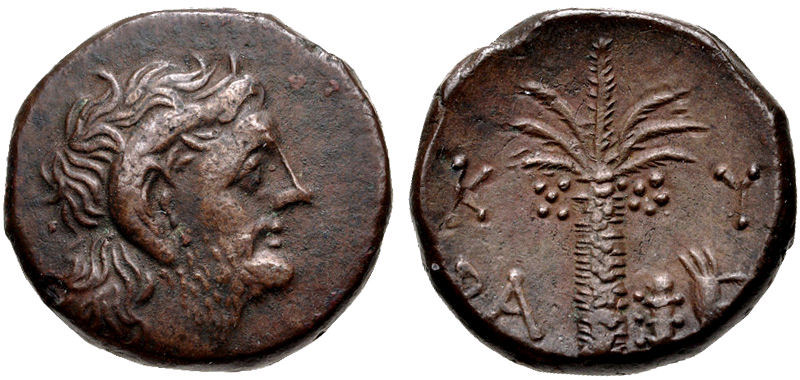
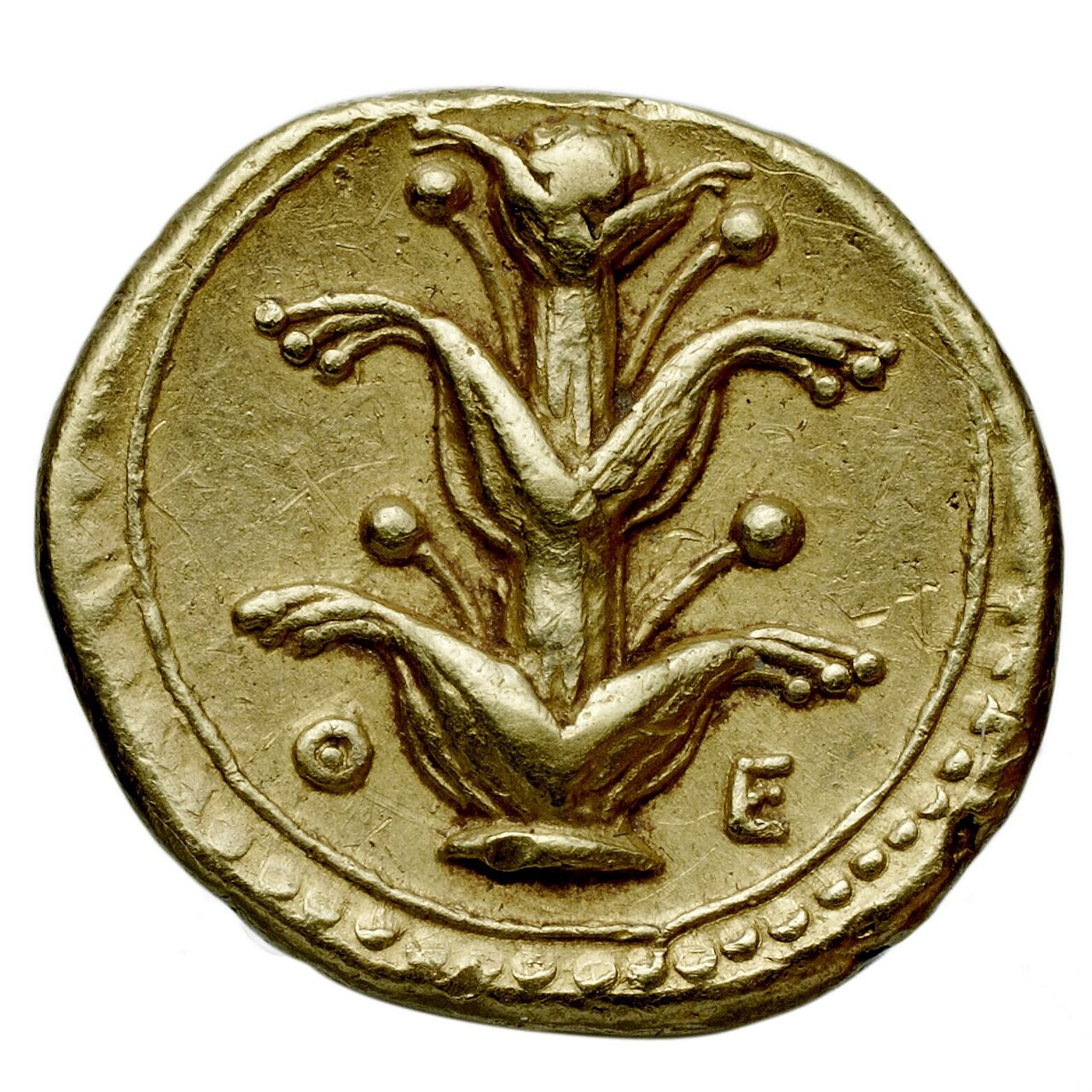
The plant was called silphium, sometimes silphion, and it grew wild on the hillsides and steppes around the city. It was a tall, thick-stalked herb, yellow-flowered, with a hollow stem and a pungent resin, and the ancient world could not get enough of it. It was used as a culinary seasoning, as a perfume, and as a medicine for an extraordinary range of complaints. Cyrene grew rich on it and put its image on the city’s coins.
And then it ran out. Not diminished, not replaced by a cheaper import, but gone entirely, in what is often described as one of the earliest documented instances of a species being consumed out of existence. Nobody has ever conclusively identified what it was, because no preserved specimen exists. Here is the story of the most valuable plant in the ancient world.
A City Built on a Weed
Silphium’s economic importance is difficult to overstate. Cyrene’s prosperity was so bound up with it that the plant appears on the city’s silver coinage, both the plant itself and its distinctive seed pod. When a city puts something on its money, it is telling you what it considers itself to be.
The value was extraordinary. By various ancient accounts the resin was worth its weight in silver, and demand ran across the entire Mediterranean. Julius Caesar is said to have kept a substantial cache of it, in the region of 1,500 pounds, in the official Roman treasury, alongside gold and other reserves. His heir Augustus later mandated that stocks be sent to Rome.
Its uses ran in every direction. As a culinary ingredient, the resin, known as laser or laserpicium, was a seasoning prized across Roman cooking. It was applied as a topical salve. Ancient Egyptians used the gum-resin in mummification, to secure bandages. It was recommended for everything from coughs and fevers to sore throats and hernias, and it had a reputation as an aphrodisiac. It was also documented by ancient writers as a contraceptive, a use that accounted for a substantial share of both its demand and its later mystique. That reputation is a matter of historical record rather than a medical claim; no reliable modern evidence establishes what the plant actually did, and there is no way to test it.
Silphium even turns up in Roman poetry. Catullus, writing love poems in the first century BC, reached for “silphium-producing Cyrene” as a measure of vastness when trying to describe the scale of his devotion. It was the kind of reference an audience would immediately understand.
Like our content? Follow us for more.
The Plant That Refused to Be Farmed
The fatal problem with silphium was agricultural, and it was recognized in antiquity.
Theophrastus, the Greek botanist who studied under Aristotle, described the plant as having a thick root covered in dark bark, a hollow stem resembling fennel, and golden leaves similar to celery. He also recorded the characteristic that would prove decisive: silphium did not thrive in cultivated soil and would not grow outside its natural habitat in the southern steppes of Cyrenaica.
Every attempt to farm it failed. It grew where it grew, in a narrow strip of North African coast and highland, and nowhere else, no matter what anyone tried. That left the entire Mediterranean supply dependent on wild harvest from a single limited region.
There is a plausible botanical explanation. Silphium may have been monocarpic, meaning it flowered once, set seed, and then finished its life cycle, combined with slow growth to maturity. Another suggestion is that it was a hybrid, which would explain both the difficulty of propagating it from seed and its restricted range. Either would make wild populations slow to replace and easy to over-harvest.
The Cyrenians appear to have understood the risk. There are indications they tried to regulate and balance the harvests. It was not enough.
How It Disappeared
The traditional account is straightforward: demand across an empire, a plant that grew only in one place and could not be cultivated, and a harvest that outran replacement until nothing was left. Estimates of when this happened vary; some sources place the collapse as early as the second century BC, while the most-repeated account puts the end in the first century AD.
That version comes with a famous coda. Pliny the Elder recorded that the last stalk of silphium found in Cyrenaica was presented to the Emperor Nero as a curiosity. Nero, according to the account, ate it. It is a good story, and it should be held loosely; it comes to us from a single ancient source with an interest in a memorable ending.
More recent scholarship has complicated the picture. A 2022 study in the journal Frontiers in Conservation Science challenged the pure over-harvesting narrative, proposing that the primary driver was desertification in ancient Cyrenaica, which shrank the plant’s viable habitat independently of how much of it people were pulling up. On that reading, silphium’s range was contracting for climatic reasons, and heavy harvesting finished off a population already under pressure.
The two explanations are not mutually exclusive, and the honest position is that both likely contributed.
The Heart Symbol Question
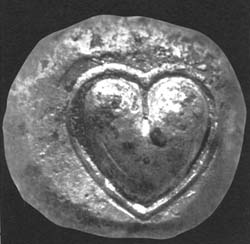
The most widely circulated claim about silphium is that its seed pod is the origin of the modern heart symbol, the double-lobed shape that appears on cards and screens and looks nothing like an actual human heart.
The basis for the claim is real and visual. Cyrene’s coins depict the silphium seed pod, and the shape on those coins is strikingly close to the familiar symbol. Given that the plant was strongly associated with love, romance, and sexuality in the ancient world, the connection is appealing.
It is also unproven. The idea has not won broad scholarly acceptance, and competing explanations for the heart symbol exist, including derivations from ivy or fig leaves, waterlilies, and stylized depictions of the human body, with the familiar shape appearing in the historical record in later medieval contexts. What can be said accurately is that the shape appears on Cyrenaic currency long before its medieval use, and that this is suggestive rather than conclusive. Treat it as an intriguing possibility, not a settled fact.
Looking for a Ghost
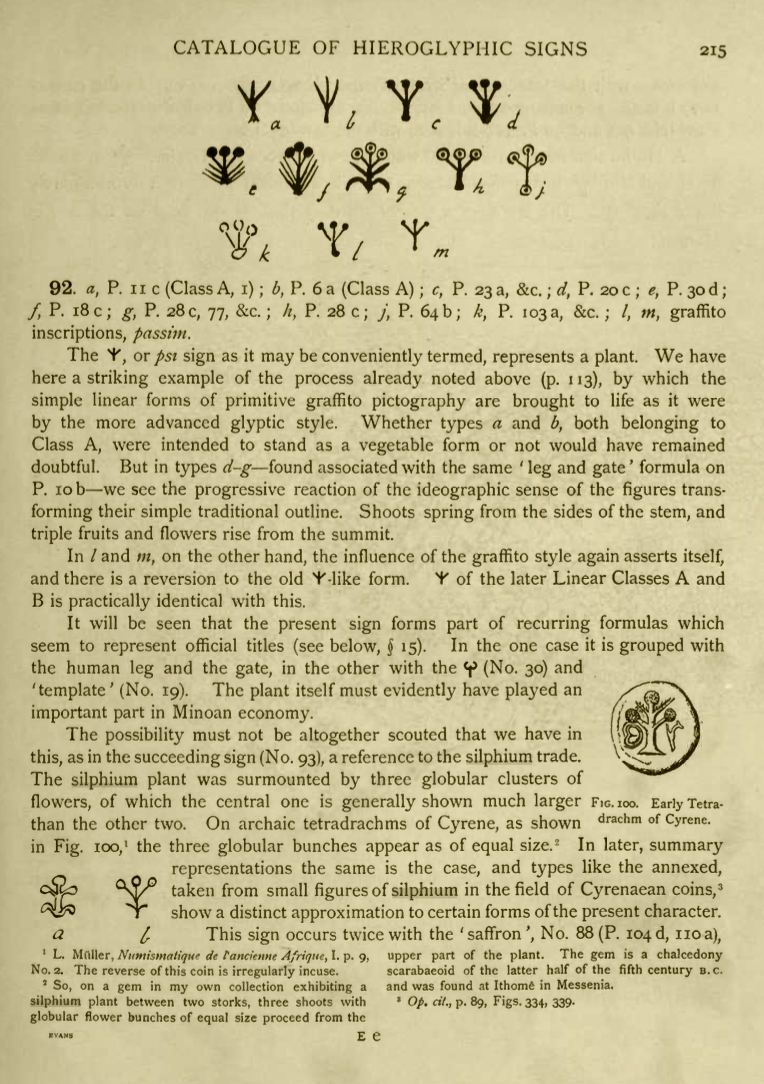
Because no preserved biological sample of silphium exists, identifying it is a puzzle assembled from coin images, written descriptions, and botanical inference.
The most widely accepted hypothesis places it in the genus Ferula, the giant fennels, based on Theophrastus likening it to ferula and on the resemblance between giant fennel species and the plants depicted on Cyrenaic coins. Candidates have included giant Tangier fennel and common giant fennel.
The most interesting recent development came from Turkey. A researcher named Mahmut Miski has argued that a species called Ferula drudeana, found in Anatolia, matches both the coin imagery and the ancient descriptions unusually well. Reported similarities include rapid growth after heavy rain or snowmelt, reaching substantial height within about a month, a rich resin, and difficulty in transporting the plant, which would have been a problem for ancient traders too. One assessment of the plant’s chemistry described it as combining the properties of several important medicinal plants in a single species.
This remains a proposal rather than a confirmed identification. Ferula drudeana grows hundreds of miles from Cyrene, and without a sample of the original there is no way to close the case definitively. But it has revived a question most people assumed was permanently shut.
What Silphium Left Behind
Silphium’s real legacy is not culinary, since nobody alive has tasted it, and the closest modern relative in cooking is generally reckoned to be asafoetida, a pungent resin used in Indian cuisine that Roman cooks reportedly turned to as a substitute once silphium became unobtainable.
The legacy is as a case study. Here was a resource that was enormously valuable, geographically confined, impossible to farm, and harvested by an empire that knew it was becoming scarce. It is frequently cited as among the earliest documented examples of a species driven to extinction by human exploitation, and the fact that it happened two thousand years ago, to a plant whose value everyone understood, is the part worth sitting with.
It also leaves a curious kind of absence. We have the coins, the poetry, the recipes that call for it, the descriptions, and the accounts of its worth. We do not have the plant, and we cannot be certain what it was. An entire industry, a city’s fortune, and a flavour that the Mediterranean world considered indispensable, all documented in detail and completely irretrievable.
Somewhere in the hills of Anatolia there may be a relative of it, growing in obscurity. Or the thing itself may simply be gone, which is the more likely answer, and the more instructive one.
Like our content? Follow us for more.