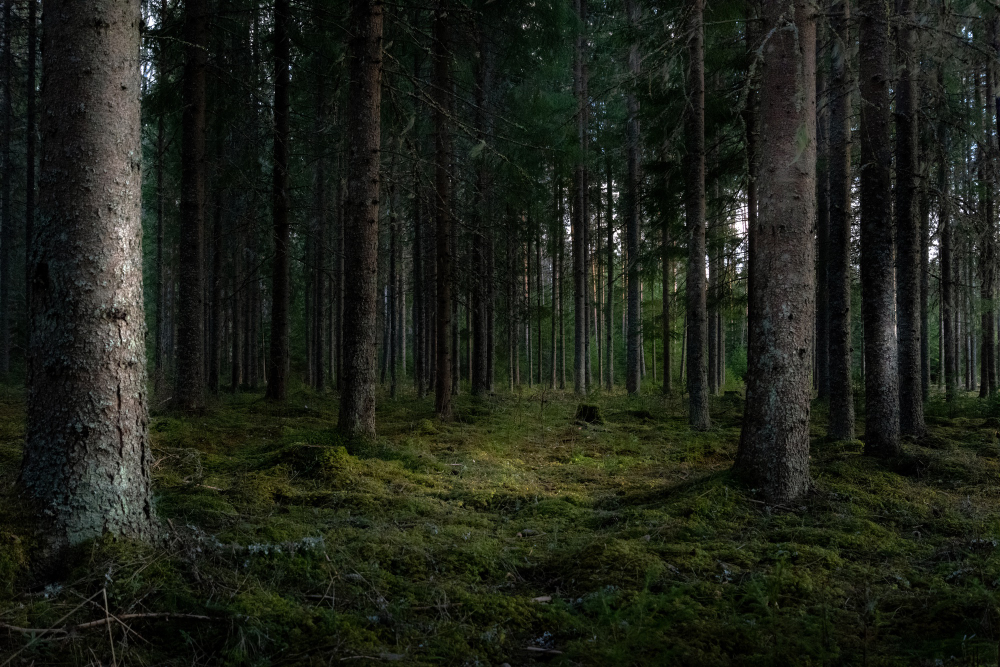
There is a way of thinking about disturbance that treats it as damage — something that happens to an ecosystem and that the ecosystem then recovers from.
That framing works for events that are truly unusual. It works badly for anything that happens regularly, because anything regular becomes something that living things adapt to and then depend on.
Fire in many landscapes is regular. It has occurred at intervals for an extremely long period, driven by lightning and by climate, and it has been frequent enough and predictable enough to shape the plants that live there.
The result is a set of adaptations that make no sense at all unless fire is expected — and in several cases, the plant cannot reproduce properly without it.
Holding Seeds Until It Happens
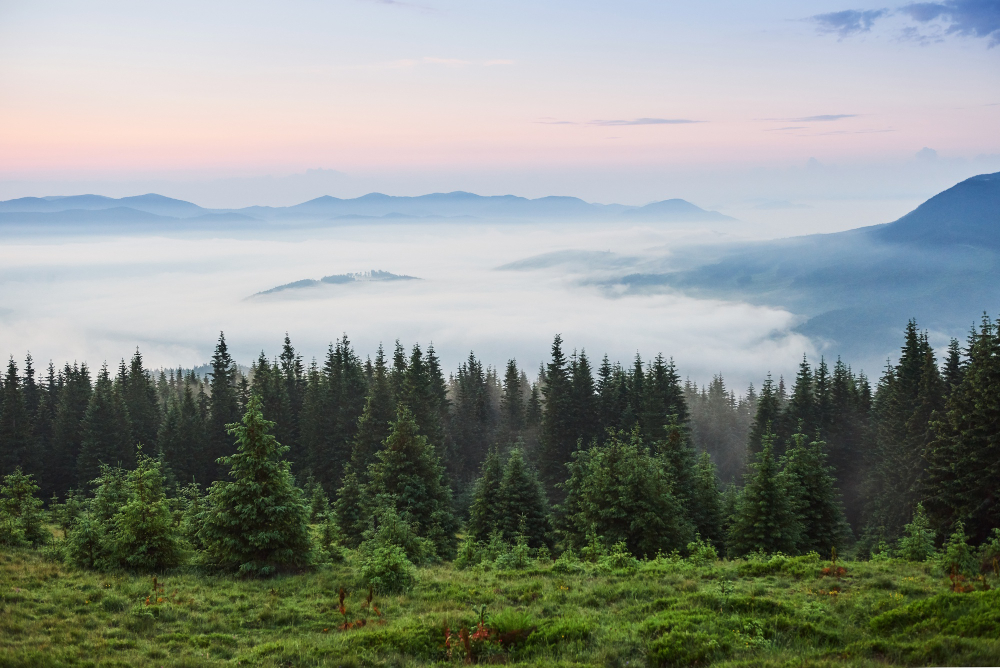
The most striking adaptation is delayed release, and the mechanism is simple.
Certain trees produce cones that do not open when mature. The scales are sealed with a resin that remains solid at ordinary temperatures, and the seed stays inside — for years, and in some cases for decades.
When a fire passes, the heat melts the resin, the scales open, and the seed falls onto the ground.
The timing is the point. The seed arrives immediately after a fire, on ground where competing vegetation has been removed, where ash has released nutrients, where the canopy that was shading the ground has gone, and where the seed-eating animals that would normally take it have been reduced.
That is a set of conditions no seedling would otherwise encounter, and the tree has stored years of seed production in order to release all of it at exactly that moment.
Some species hold seed for long enough that a single fire releases the accumulated output of decades in a few hours.
There is a timing detail worth adding. The post-fire window is short – competing vegetation returns, nutrients wash away and the bare ground closes over within a season or two.
That is why the responses are triggered rather than gradual. A seed that germinated slowly after a fire would arrive to the same competition it was avoiding.
Like our content? Follow us for more.
Seeds That Need Heat or Smoke
Other mechanisms achieve the same timing differently.
Some seeds have coats so hard that water cannot penetrate, which prevents germination indefinitely. Heat cracks the coat, and the seed then germinates when rain arrives.
That is a straightforward physical trigger and it produces the same outcome — germination timed to the period immediately after a fire.
More remarkable is chemical triggering. Compounds present in smoke, and in charred material, have been identified as germination triggers for a considerable number of species.
Those seeds can sit in soil without germinating, sometimes for very long periods, and respond specifically to the chemical signature of burnt vegetation.
That is a detection mechanism rather than a physical effect. The seed is not being cracked or heated; it is identifying that a fire has occurred and responding.
Surviving Rather Than Waiting
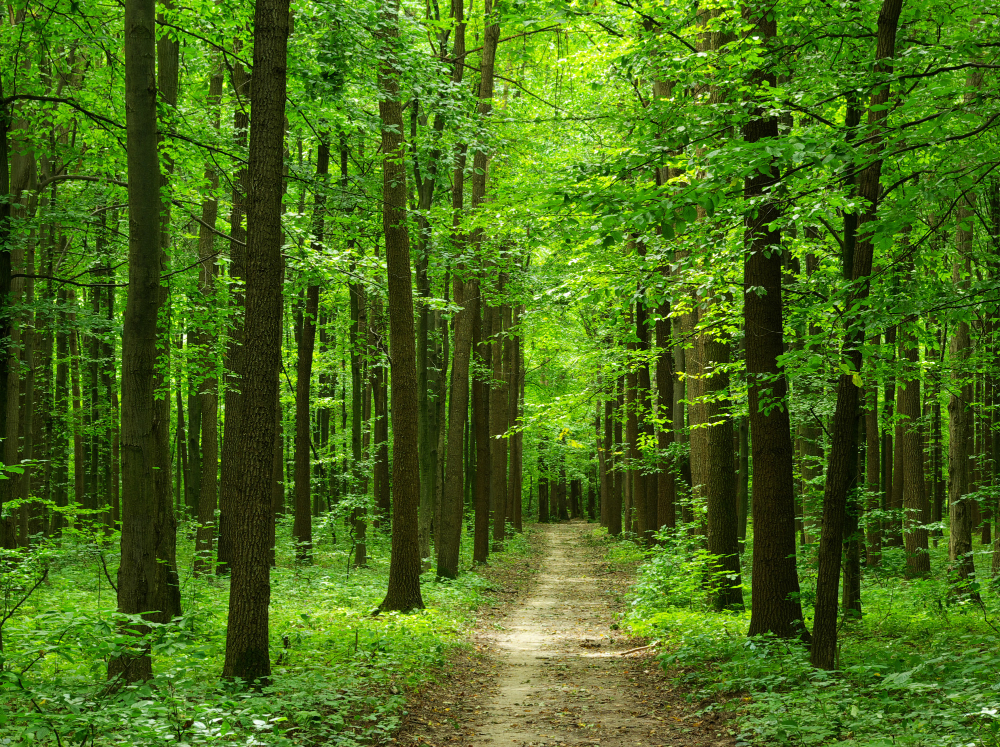
A different set of adaptations protects the adult plant, and they are worth distinguishing.
Thick insulating bark protects the living tissue beneath from heat, which allows a tree to survive a fire that removes everything around it.
Growing points held below ground or protected within the trunk allow a plant to regrow after its above-ground parts are destroyed, which means the visible plant can be lost without the individual dying.
Shedding lower branches removes the route by which fire climbs from the ground into the canopy, which keeps a surface fire on the surface.
And in some species, the plant holds buds beneath the bark that are released to sprout directly from the trunk after a fire, producing regrowth along the whole length rather than only from the base.
Those are survival strategies, and species tend toward one approach or the other — either the adult survives, or the adult is lost and the seed carries the generation through.
There is a distinction worth drawing between kinds of fire. A fire moving through surface vegetation behaves entirely differently from one that has reached the canopy, in speed, temperature and what survives.
Most of the adaptations described above are suited to the first kind, and a community adapted to surface fire is not adapted to the second – which is part of why fire regime rather than fire alone is the operative variable.
Why the Interval Matters
The critical variable is how often fire occurs, and this is where the subject becomes complicated.
Every one of these adaptations is tuned to a particular frequency. A species holding seed for decades requires fires spaced far enough apart for it to mature and accumulate that seed, and close enough together that it eventually gets one.
Fire too frequently removes plants before they can reproduce. Fire too rarely allows vegetation to accumulate, changes the community composition, and produces fires of a different and far more severe character when they eventually occur.
So a fire-adapted community is adapted not to fire in general but to a particular pattern — a frequency, an intensity and a season — and changes to that pattern affect it substantially even though fire still occurs.
That is why the subject cannot be reduced to fire being good or bad for an ecosystem. The relevant question is always which pattern, and a community adapted to one pattern is not adapted to another.
What This Does Not Mean
Several clarifications belong here, and they matter.
This does not apply everywhere. Many ecosystems have no fire history and no adaptations to it, and fire in those places is really destructive rather than part of any cycle.
It does not mean that fires are harmless. A fire that a plant community is adapted to is still a fire, and the adaptations concern survival and reproduction of populations rather than the fate of individuals.
It does not translate into any claim about how land should be managed. Fire management is a actually difficult area involving human safety, property, competing objectives and local conditions, and it is not something an account of seed biology settles.
And nothing here concerns fires affecting people or property, which is a different subject entirely and one where the ecology is a small part of a much larger picture.
The Vegetation That Encourages It
There is a further layer that makes the relationship more than passive adaptation.
Some fire-adapted plants produce material that burns readily — resinous foliage, volatile compounds, bark that sheds in flammable strips, dense retained dead material that would be shed by other species.
That has been argued to be adaptive rather than incidental. A plant that burns readily, survives fire and requires it for reproduction benefits from fire occurring — and from it occurring at a frequency and intensity that suits its own life cycle rather than a competitor’s.
On that account, the plant is not merely tolerating fire but contributing to a regime that disadvantages species less equipped for it.
The argument is truly contested. The alternative reading is that flammable characteristics arise for other reasons — drought resistance, defence, nutrient conservation — and the fire consequences are a by-product rather than a function.
Distinguishing the two is difficult, because the evidence that would settle it involves establishing what a trait is for rather than what it does, which is the hardest kind of question in the field.
What is not disputed is the effect. Where such species dominate, fires occur more readily and behave differently, which means the vegetation influences the disturbance regime it is adapted to regardless of whether that influence was selected for.
The Broader Point
What the case illustrates is a general principle about disturbance.
Anything that happens regularly stops being an interruption and becomes a condition. Organisms adapt to it, then depend on it, and eventually the thing that looks like destruction turns out to be the mechanism by which the system renews itself.
That applies to flooding in river systems, to grazing in grasslands, to storm damage in forests and to the disturbance of the seabed by currents — all of which look like damage from outside and are load-bearing from within.
The specific version here is the most vivid. A tree that produces cones which will not open, and holds its entire reproductive output sealed for thirty years waiting for a temperature it cannot produce itself, is not enduring fire.
It has arranged its whole life around the expectation of one, and would fail without it — which is a considerable thing to be able to say about an event that looks, from any distance, like the end of everything there.
That inversion is the point worth keeping. What looks from outside like destruction is, from inside the system, the moment the next generation gets its chance – and the plant has spent thirty years preparing for it.
Like our content? Follow us for more.