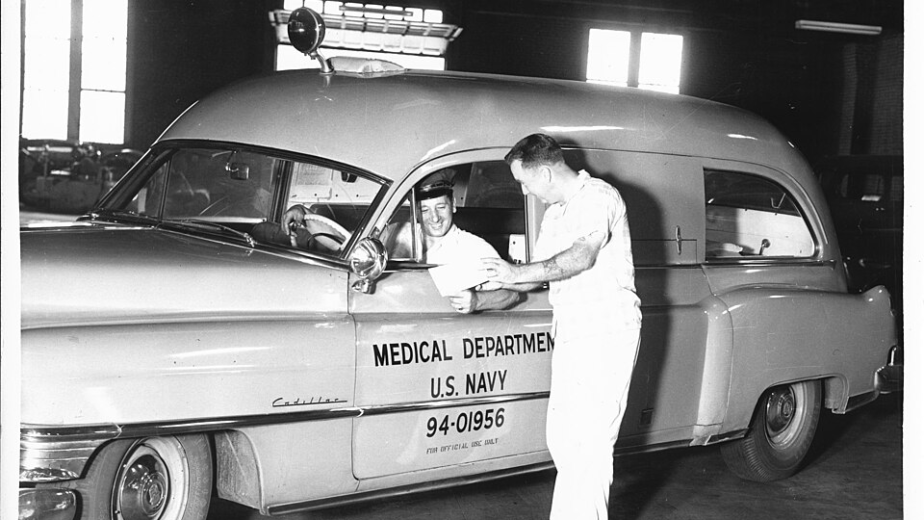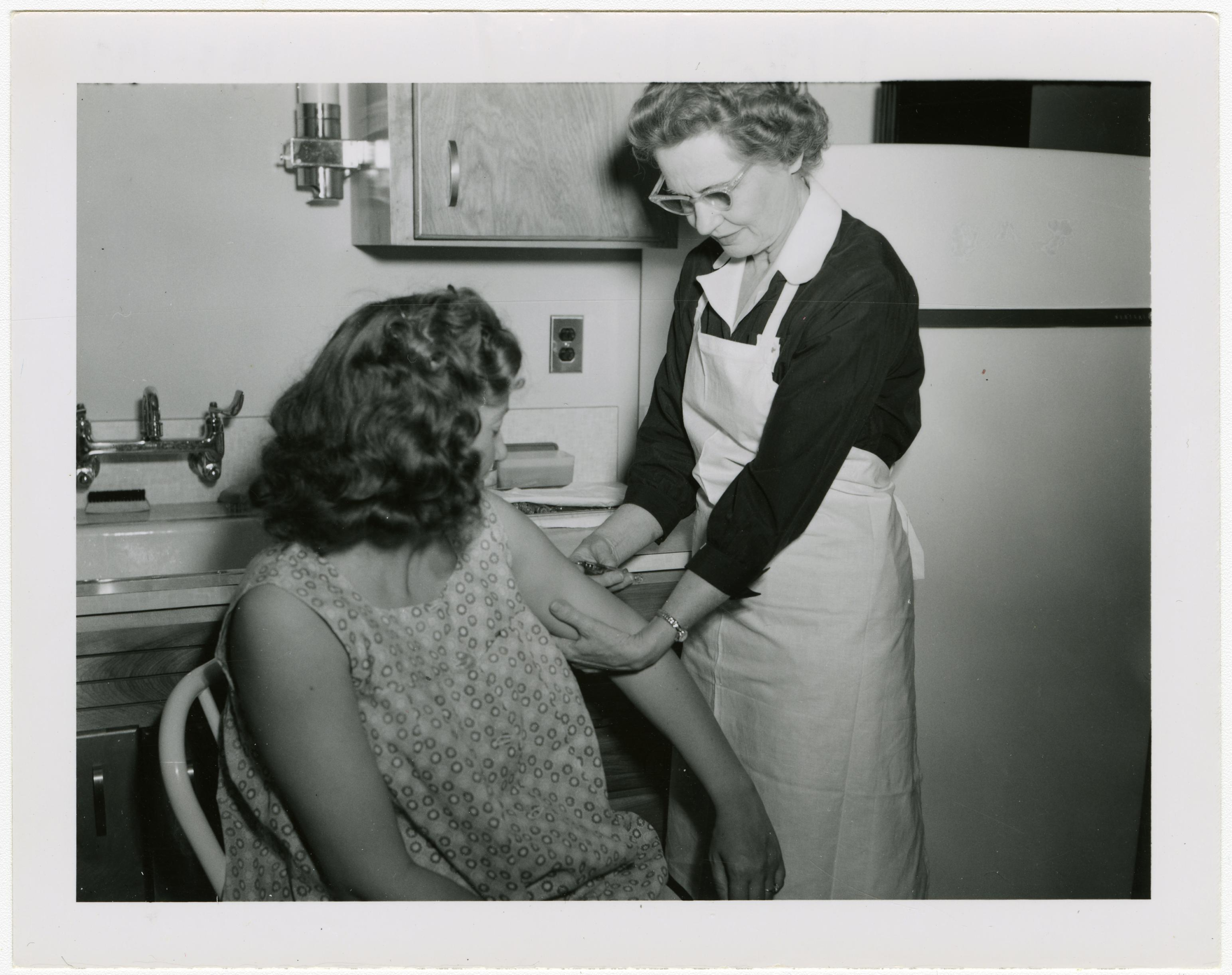
In 1960 a visiting nurse’s entire working equipment travelled in one bag. Inside it were instruments she sterilised herself, dressings she had packed herself, a record card for each household, and a lining she scrubbed out at the end of every day.
She worked alone, across a district she knew street by street, and she made decisions in people’s kitchens with no colleague to consult and no way of being contacted between calls. Almost every structural feature of that job has since been dismantled and rebuilt, and the reasons are more interesting than nostalgia usually allows.
What the job was called and what it covered
The terms varied. Visiting nurse, public health nurse, community nurse and district nurse all described broadly the same function in different countries and different decades, and in the United States the dominant models were the voluntary visiting nurse association and the county or city public health nursing service.
The work was nursing care delivered in the home: dressings and wound care, injections, bed care for people who were seriously ill or dying at home, care of older people, and support of mothers and infants.
It also included a large amount of what would now be called public health: health education in the home, school visiting, follow-up of communicable disease contacts, and acting as the point at which a family’s situation became visible to anybody official.
That last function is easy to underrate. The nurse was frequently the only professional who went inside the house, and what she noticed there determined what happened next.
Her caseload was geographic rather than clinical. She took whoever was in her district, which meant the range of what she dealt with in a single morning was very wide.
Like our content? Follow us for more.
The bag
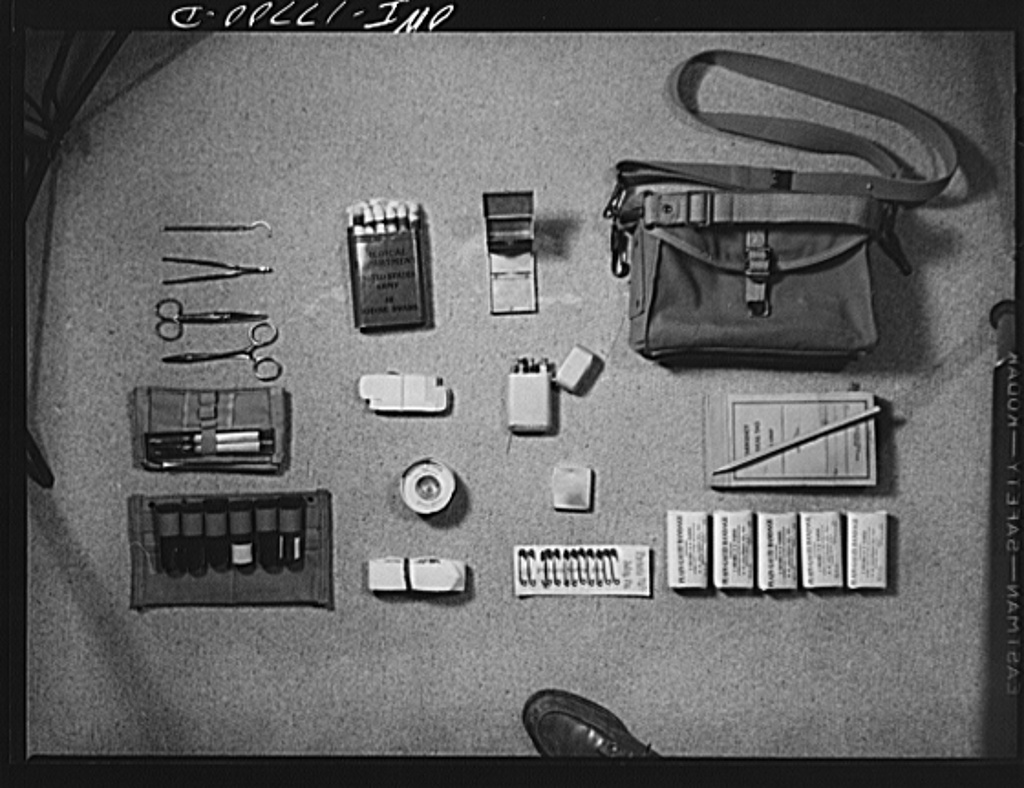
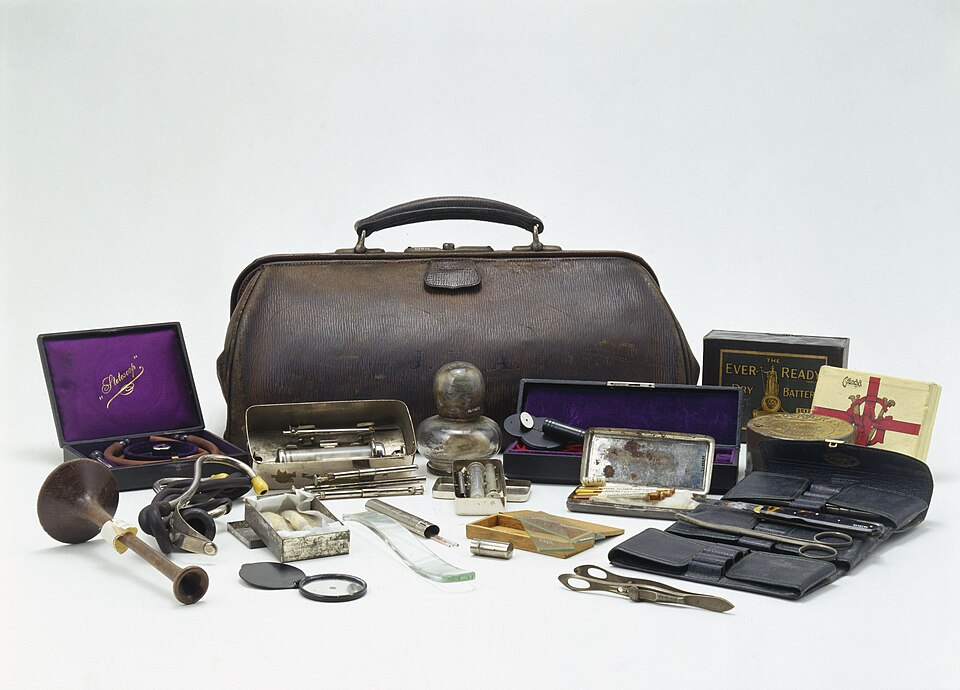
It was a leather or heavy fabric case with a rigid frame, and its organisation was a professional matter with rules attached. The inside was divided into a clean section and a section for everything that had been used, and keeping them apart was the whole discipline of working out of a bag.
It held instruments, a thermometer, dressings and bandages, soap and a nail brush, a towel she brought herself, a measuring glass, and the paperwork.
The paperwork mattered more than people assume. A record card per patient, carried in the bag, written up by hand, was the only record of the visit, and it travelled through the weather on a bicycle or in a car with her.
The bag technique that was taught — newspaper or paper laid down first, hands washed before opening it, the clean side never touched with used hands — was an infection control system designed for a setting with no running hot water guaranteed and no second pair of hands.
It was also heavy, and she carried it up stairs all day.
Sterilising, which she did herself
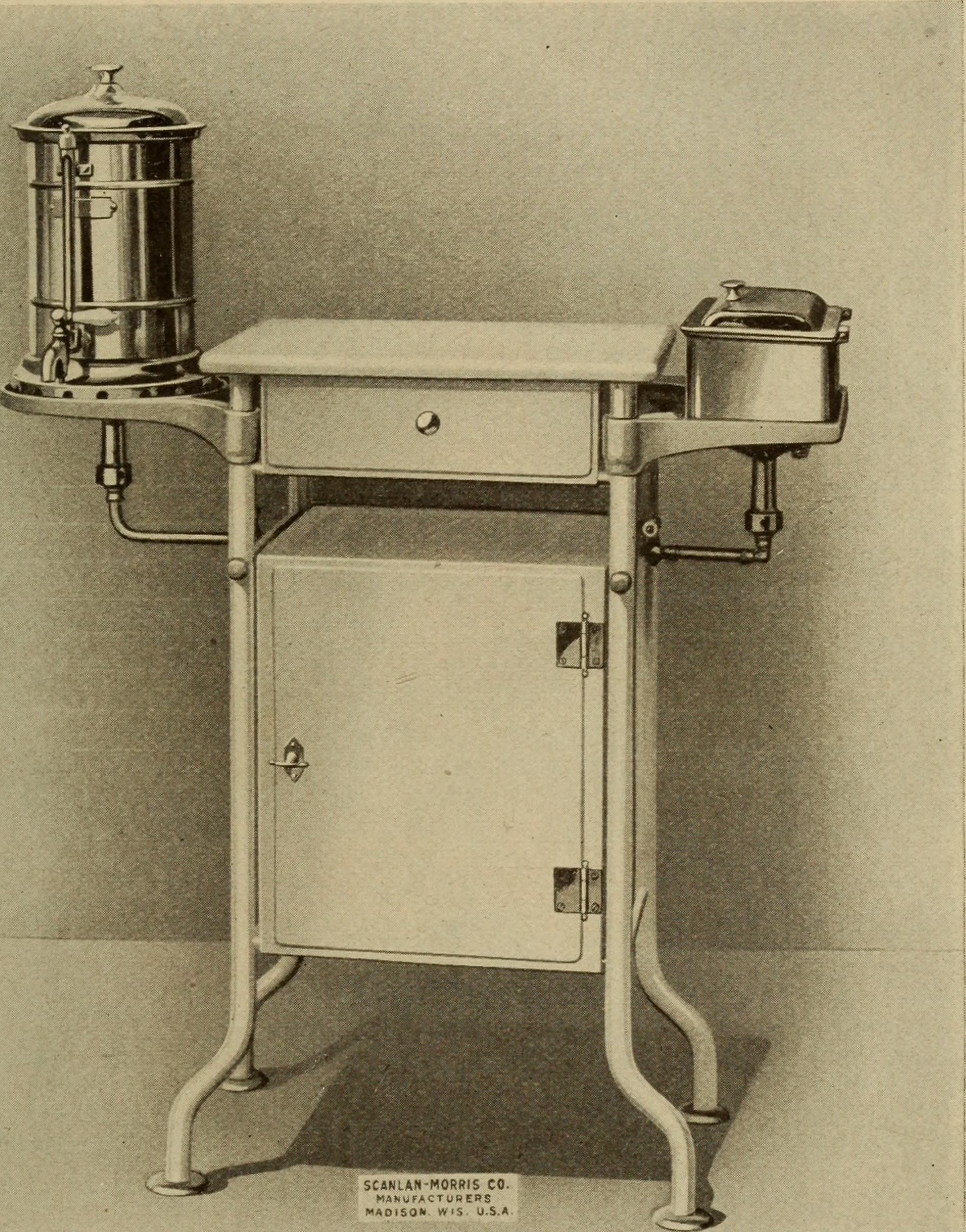
This is the practice that has vanished most completely. Before single-use sterile supplies, reusable instruments and some dressings were sterilised by boiling, in a pan, either at a clinic base or in the patient’s own kitchen.
Boiling is a real method with real limits, and those limits were understood even then: it is adequate for many purposes and does not achieve what an autoclave achieves. Clinics with autoclaves used them; a nurse in a house had a saucepan.
Syringes were glass with reusable needles, which were cleaned, sharpened when they became blunt, and sterilised. Needles were a consumable that was maintained rather than discarded.
The entire arrangement was replaced within roughly two decades by single-use sterile disposables, and the change was driven by infection control, by manufacturing cost falling, and by the recognition that reprocessing in the field could not be verified.
That last point is the key one and it recurs throughout this file. The modern answer to almost every problem here was not a better technique but a system that could be checked.
The round, and being unreachable
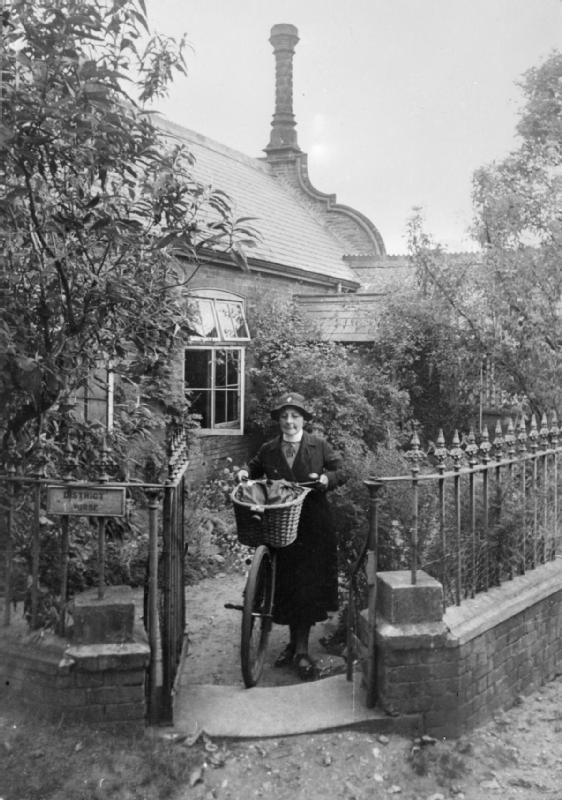
She planned her own day, usually from a list at a base in the morning, and then she was gone. There was no radio, no pager and no telephone except somebody else’s, and if her plan needed to change the information could not reach her.
Transport was a bicycle, a car where the district or the service provided one, and in rural services sometimes something more unusual. Mileage was a real constraint on how many people could be seen.
If she needed a doctor she found a telephone, which meant a call box or asking to use a neighbour’s, and the doctor might be on his own rounds and equally unreachable.
She also went into houses alone, at any hour, with no one knowing exactly where she was at a given moment. The modern treatment of that is a lone-working policy: a known itinerary, a check-in requirement, a means of raising an alarm and a documented risk assessment for particular addresses.
That is probably the single largest change in the job that nobody notices, because it is invisible when it is working.
Where she sat in the system
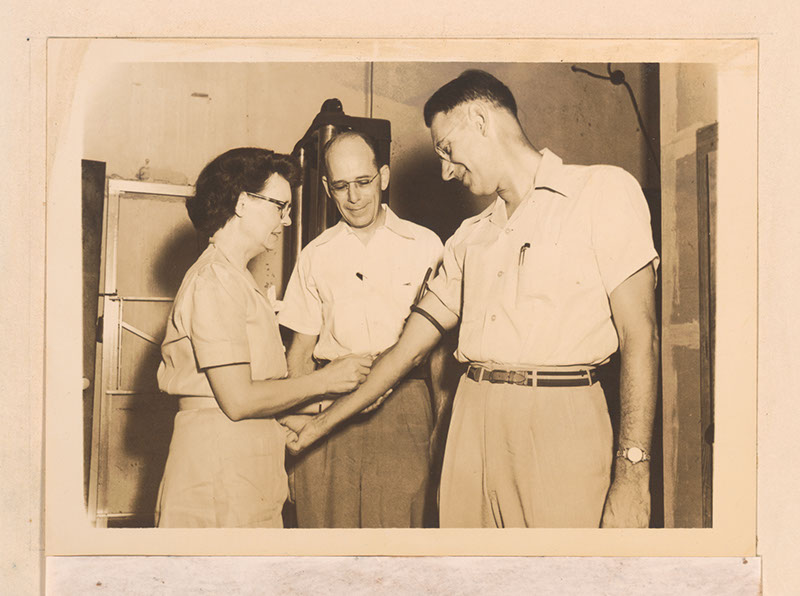
Below the doctor formally and beside him practically. Her clinical scope was narrow on paper: she worked to the physician’s orders, she did not prescribe, and she was not supposed to diagnose.
In practice she was in the house every day and he was not, and the judgment about when to call him was hers. Everybody involved understood that arrangement, and it was never written down.
That gap between formal scope and actual responsibility is the defining tension of the role as it then existed, and resolving it is most of what has changed. Community nursing today has specialist and advanced practice roles with explicit scope, formal qualifications, prescribing rights in many jurisdictions, and protocols that say what to do rather than leaving it to be inferred.
The nurse also mediated between the family and officialdom, which meant she was simultaneously trusted and slightly feared, since she was the person who could report what she saw.
Safeguarding duties now make that function explicit, with thresholds, referral routes and recording requirements, rather than leaving it to a nurse’s conscience and a record card.
Who was allowed to do the job
Training in 1960 meant a hospital nursing qualification followed, for this work, by additional preparation in public health or district nursing, which was a recognised post-qualification course.
It was overwhelmingly a woman’s occupation, and in most services a married woman’s employment was either restricted or recently so. Pay was modest and the hours were not what the contract said.
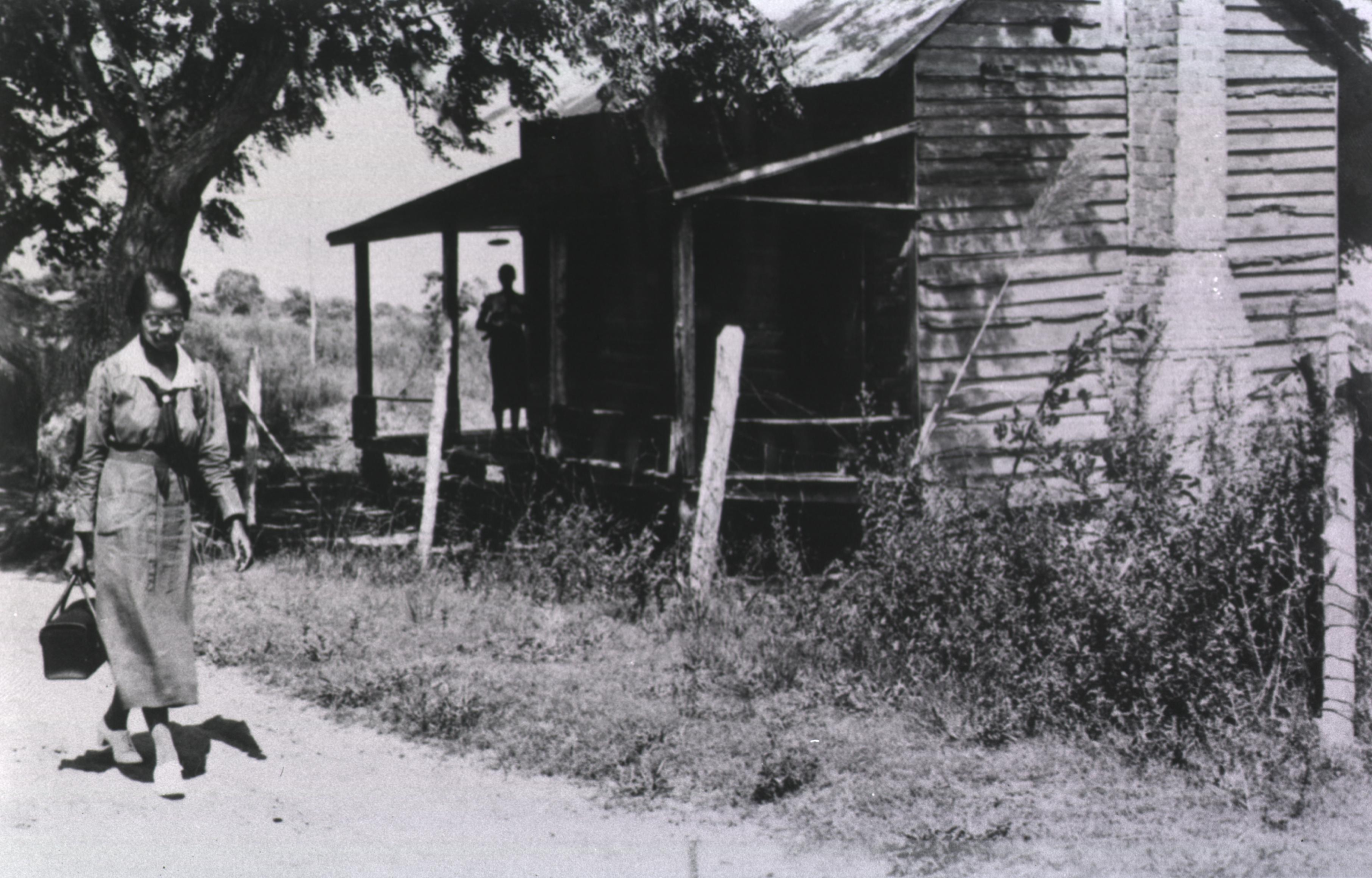
In the United States the service was segregated across much of the country, and Black nurses were excluded from many training programmes and professional associations while separate services staffed by Black nurses served Black communities, frequently with far fewer resources. That is a documented part of the history of the occupation rather than an incidental detail, and an account of who did this job is incomplete without it.
Rural services and urban services were effectively different jobs, with the rural nurse covering enormous areas and the urban nurse covering tenement districts on foot with very high caseloads.
Many services were charitable rather than public, funded by subscription and donation, which meant the care available in a district depended on what had been raised there.
What replaced the lone nurse
A team. Community nursing is now organised in teams with a skill mix, caseload management, shared records and a referral system, rather than one person holding a district in her head.
Records are electronic and shared, which removed the card in the bag and with it the situation where the only account of a visit was in one person’s handwriting in a case that went out in the rain.
Equipment is single-use and delivered. Supply chains put sterile product where it is needed rather than requiring the practitioner to produce sterility herself.
Specialisation arrived too. Where one nurse once did wound care, elderly care, maternal support and end-of-life care, those are now distinct specialisms with their own training, and the generalist district nurse role has narrowed accordingly.
The honest summary: the 1960 visiting nurse worked a geographic caseload alone out of one bag organised into clean and used sections, with a bag technique designed for homes without guaranteed hot water; she sterilised reusable instruments and reusable needles by boiling, a method whose limits were understood and which was replaced within about two decades by single-use sterile supplies because field reprocessing could not be verified; she was unreachable between calls, which is now addressed by lone-working policies with itineraries, check-ins and alarms; her formal scope was narrow while her actual responsibility for when to escalate was total, a gap now closed by specialist and advanced roles, explicit scope, protocols and in many places prescribing rights; her safeguarding function was a matter of conscience and is now a duty with thresholds and referral routes; and in the United States the service was segregated across much of the country, with Black nurses excluded from many training programmes and associations.
Like our content? Follow us for more.