It Is Not a Bubble Popping
The standard account for decades was that a small gas bubble inside the joint fluid suddenly collapses, and the collapse makes the noise. It appeared in textbooks, it sounded right, and it was wrong.
The problem was that nobody had watched it happen. The sound lasts a fraction of a second, it occurs inside a sealed joint a centimetre across, and until imaging became fast enough there was no way to see the inside of a knuckle at the moment it cracked.
When that became possible – a hand in a scanner, a finger pulled until it popped, the whole thing recorded continuously – the sequence turned out to run the other way round.
Like our content? Follow us for more.
It Is a Bubble Forming

What the recordings showed is that the sound coincides with a cavity appearing in the joint fluid where there was no cavity before.
The joint surfaces are pulled slightly apart. The space between them increases. The fluid filling that space cannot expand to fill it, so the pressure drops sharply, and at a certain point gas that was dissolved in the fluid comes out of solution all at once and a void opens.
That opening is the event. The noise is the sound of a cavity being created in a liquid, which is an abrupt and surprisingly loud thing to happen.
And the cavity does not immediately vanish. On the recordings it is still there afterwards, sitting in the joint, visible for some time after the sound has finished – which is the detail that settles the argument, because a bubble that is still present cannot have made its noise by collapsing.
Which Is Why You Have to Wait Twenty Minutes

This is the part everybody already knows from their own hands and has never had explained: crack a knuckle and it will not crack again straight away. Try it and nothing happens. Wait a while and it works.
The delay is the gas going back into solution. The cavity that opened is full of gas that came out of the fluid, and it has to dissolve back in before the system can be reset. That takes time – commonly something like twenty minutes, varying between people and joints.
Until then the joint is simply in a different state. There is nothing left to come out of solution and no cavity left to form, so pulling on it produces no sound.
The refractory period is the strongest everyday evidence for the forming explanation and against the collapsing one. If the sound were a collapse, the limiting factor would be making a new bubble, which is quick. The fact that the wait is long, consistent and in the right ballpark for gas to redissolve points squarely at what is actually going on.
What Is Being Pulled Apart
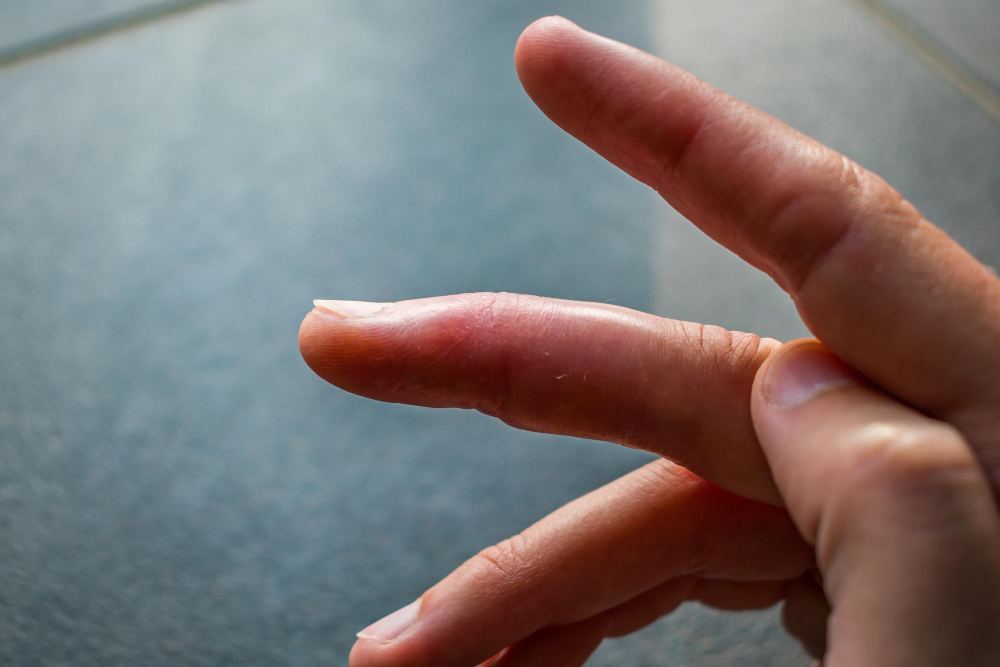
A joint is not a hinge with the two bones in contact. The ends are covered in a smooth layer, they are held close together inside a sealed capsule, and the gap between them is filled with a small amount of thick fluid.
That capsule is what you are acting on. Bending a finger backwards, pulling on it, or squeezing the joint laterally applies a force that separates the two surfaces by a very small distance – well within what the capsule and the surrounding tissues allow.
The movement involved is tiny. It is not a dislocation, nothing comes out of place, and nothing is being forced past its limit. The entire event is a fraction of a millimetre of separation inside a sealed bag of fluid.
Which is why the noise is so disproportionate to the cause, and why so many people assume something more dramatic must be happening.
The Gas Comes Out of Solution Like Opening a Bottle
The physics is identical to something everybody has seen, which makes it easy to picture.
A sealed fizzy drink has gas dissolved in it under pressure and no bubbles. Open it and the pressure drops; the liquid can no longer hold that much dissolved gas; bubbles appear throughout. Nothing was added. The gas was already there, in solution, and a pressure change released it.
A joint does the same thing on a much smaller scale. The fluid has gas dissolved in it. Pulling the surfaces apart drops the pressure. Gas comes out of solution. The only difference is that in a sealed joint there is nowhere for it to go, so instead of fizzing it forms one void – and that is the pop.
It is also why the same noise occurs during a manipulation of the spine or a larger joint. The sound is not specific to fingers or to anything anybody is doing deliberately. It is what a sealed fluid-filled space does when it is suddenly made larger.
Not Everybody Can Do It

A proportion of people simply cannot crack their knuckles, have never been able to, and are routinely assumed to be doing it wrong.
They are not. Whether a joint will produce the sound depends on how much the capsule and the surrounding tissue permit the surfaces to separate, and on how much gas the fluid is holding – both of which vary considerably from person to person and from joint to joint in the same person.
If the surfaces cannot be drawn far enough apart, the pressure never falls far enough, no gas comes out of solution and there is no sound available to produce. No amount of effort or technique changes that.
Which means the division of the population into people who crack their knuckles and people who find it unbearable to watch is partly a division between two kinds of joint rather than two kinds of personality.
A Clicking Knee Is a Completely Different Mechanism
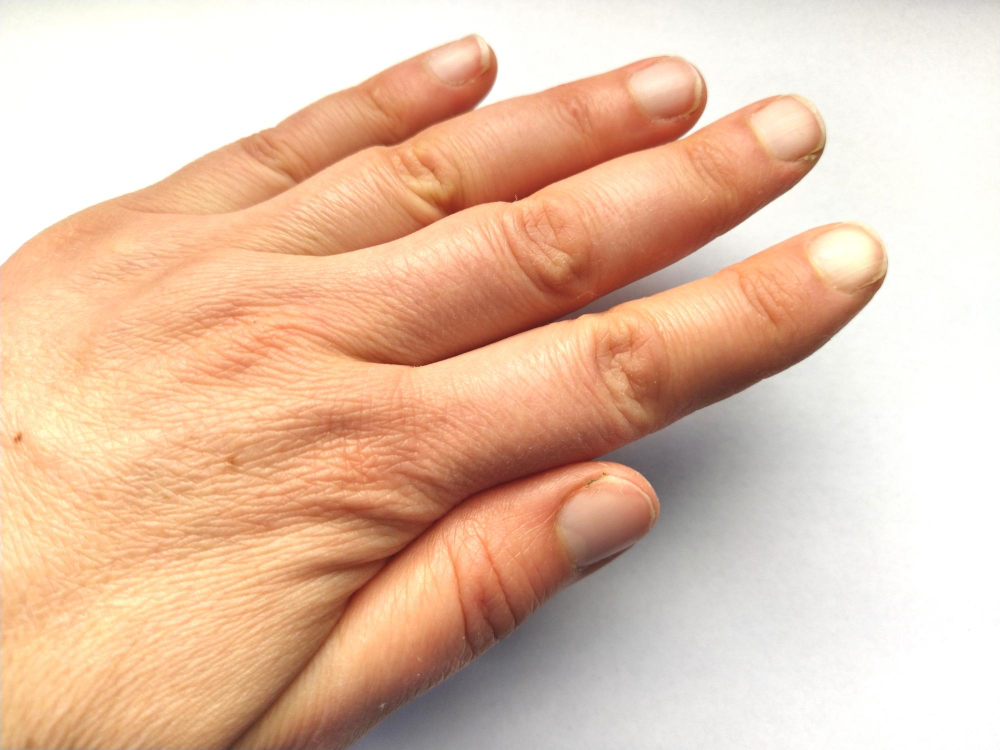
Joints make several unrelated noises and they get lumped together under one heading, which causes a lot of confusion.
The crack described above is a one-off event with a long refractory period. A click that happens every single time you bend a joint, with no waiting required, is not that. It is usually a tendon or a band of tissue slipping over a bony prominence and snapping back – a mechanical catch and release, repeatable immediately and as often as you like.
A third category is a continuous fine grating or crunching through a movement rather than a single noise, which arises from surfaces moving against one another rather than from anything to do with gas.
The useful distinction is repeatability. A sound you can produce once and then not again for twenty minutes is a cavity forming. A sound you can produce on every repetition is something sliding over something.
The Question Everybody Asks, and the Man Who Tested It on Himself
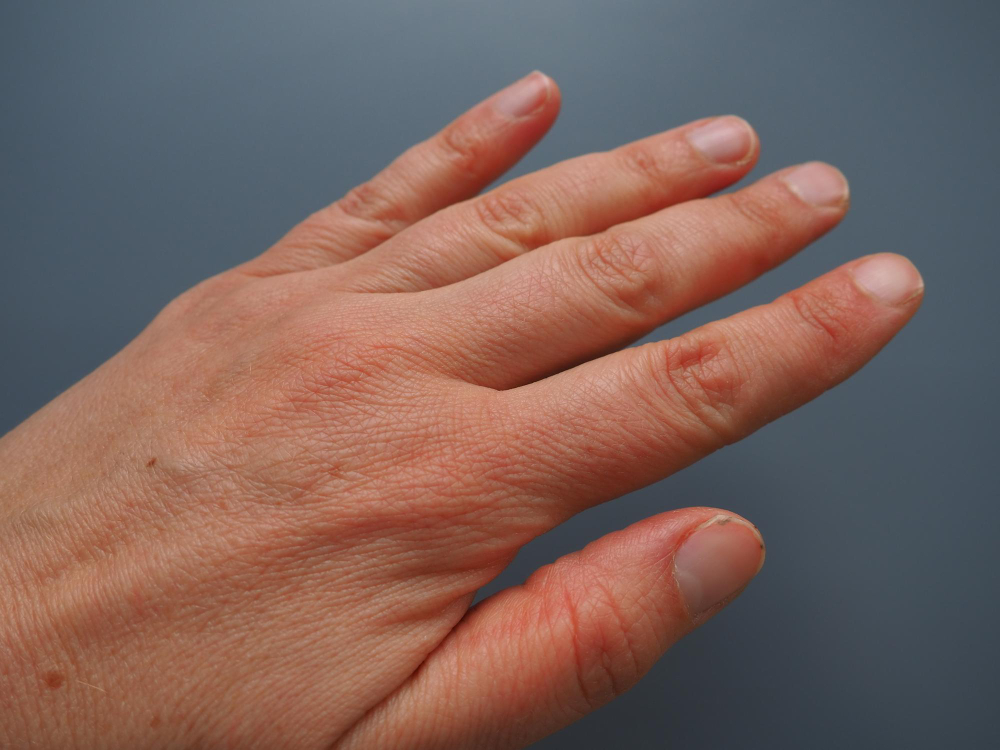
The belief that this causes arthritis is one of the most widely held pieces of folk medicine there is, and the evidence does not support it.
The most entertaining test of it was conducted by a doctor on himself over an extremely long period. He cracked the knuckles of one hand regularly and deliberately left the other alone, kept it up for around sixty years, and then compared the two. There was no difference between them.
That is a single subject and it is not conclusive on its own, but it points the same way as the larger comparisons that have been done, which have not found the association either.
What is less settled is whether there is any other long-term consequence. A few studies have reported differences in grip strength or hand swelling in habitual crackers, the findings are inconsistent, the numbers involved are small, and nothing resembling a clear answer has emerged. Which is the honest state of it, and this piece is not the place for anybody to be told what to do with their hands either way.
Why a Wrong Explanation Lasted So Long
The collapsing-bubble account survived for the better part of a century, and it is worth asking why, because the reason is instructive.
It was not a stupid idea. Collapsing cavities really do make noise – it is a real and well-studied effect, responsible for damage to ship propellers and pump impellers. Borrowing it to explain a pop inside a joint was entirely reasonable.
It also predicted the right things loosely enough to pass. There is a bubble, there is a noise, the two are connected, and the timing is too fast to check by ear. Nothing about ordinary observation could separate it from the correct answer.
What finally settled it was not a better argument. It was a machine that could record the inside of a joint continuously while somebody pulled on a finger – and the moment anybody could actually look, the question took about one recording to answer. A great many long-running disputes turn out to be like that: not hard, just unobservable, until suddenly they are not.
Like our content? Follow us for more.