There is a common assumption about early steam power that inverts the actual mechanism, and correcting it makes the whole development sequence comprehensible.
The assumption is that steam pushes. High-pressure steam expanding against a piston is how a great many engines have worked, and it is the obvious way to imagine the thing.
The first machines that did useful work operated on the opposite principle. Steam was admitted at barely more than atmospheric pressure, then condensed — and the piston was moved by the pressure of the atmosphere outside falling into the space left behind.
That distinction explains why the early engines were enormous, why they were extraordinarily inefficient, why they were nonetheless transformative, and what the crucial improvement actually improved.
The Problem They Were Built For
The application came first and it was extremely specific.
Mines fill with water. Below the level at which water can drain away, everything extracted has to be lifted, continuously, for as long as the mine operates.
That was done by animal power and by water power where a suitable stream existed, and both limited how deep a mine could go — since the quantity of water rises with depth and the power available does not.
So there was a well-defined problem with an identifiable value attached: a machine that lifts water out of a hole, running continuously, at a cost lower than the alternative.
That specificity matters. The early engines were not general-purpose power sources and were not efficient enough to be; they were pumps, built at mines, frequently burning fuel that was being extracted on site and had little value elsewhere.
Which is why the enormous fuel consumption did not prevent adoption. At a coal mine, the fuel was effectively free.
Like our content? Follow us for more.
Why the First Design Was So Wasteful
The inefficiency has a single cause and understanding it makes the improvement obvious.
Each cycle required the cylinder to be filled with steam and then cooled enough to condense it — which was achieved by spraying water directly into the cylinder.
That cools the metal of the cylinder as well as the steam. So at the start of the next cycle, incoming steam meets a cold cylinder and immediately condenses against the walls until the metal has been reheated.
A substantial proportion of the fuel was therefore spent heating the cylinder back up, every stroke, only to cool it again immediately afterwards.
The machine was heating and cooling several tonnes of iron repeatedly, at a rate of several times a minute, and the useful work was what remained.
That is not a marginal loss. It was most of the fuel, which is why these engines were viable only where fuel cost essentially nothing.
The Change That Mattered
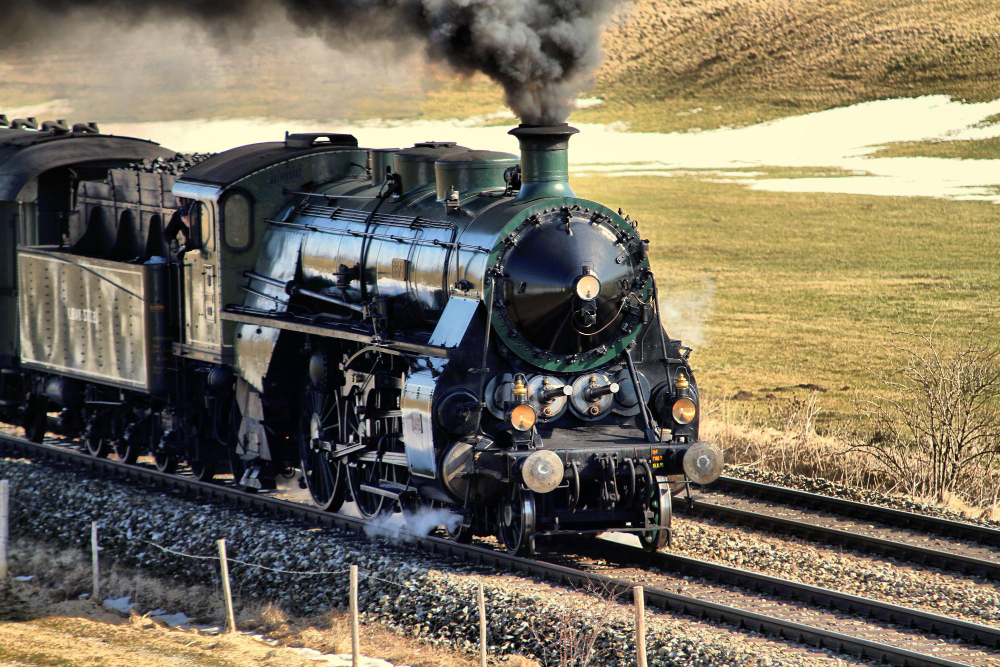
The decisive improvement addresses exactly that and nothing else.
If condensation happens in a separate vessel connected to the cylinder rather than in the cylinder itself, the cylinder can be kept hot permanently while the condensing vessel is kept cold permanently.
Steam is admitted to a hot cylinder without condensing against the walls, then allowed into the cold vessel where it condenses, producing the vacuum without ever cooling the working cylinder.
That single change reduced fuel consumption by a very large proportion, and it is the reason the technology moved beyond the mines that had free fuel.
Everything else followed from that economics. An engine that used substantially less fuel could be operated where fuel had to be bought and transported, which meant it could be installed anywhere rather than only at a colliery.
Which is the actual transition. The engine had existed and worked for decades; the improvement made it affordable somewhere other than on top of a coal seam.
There is a measurement point worth including. Because engines were sold against the alternative, their output was expressed in terms of how many animals they replaced – a unit defined by the thing being displaced rather than by any physical quantity.
That unit is still in use, long after anybody was comparing the two.
From Pumping to Turning
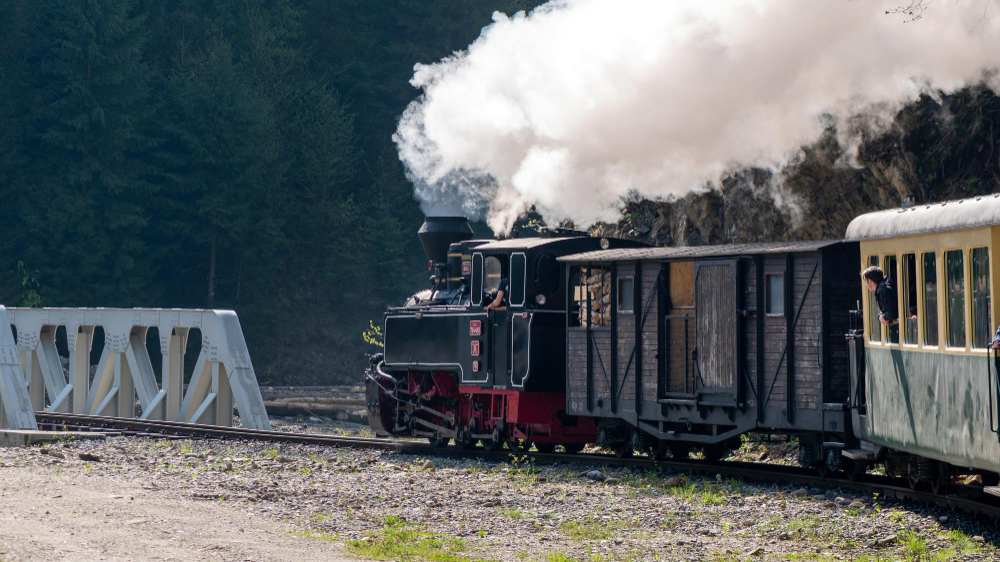
A second development was required before the machine could do anything but lift water.
A pumping engine produces a reciprocating stroke, up and down, which is what a pump needs and what almost nothing else does.
Converting that to rotation is a mechanical problem, and the obvious solution — a crank — was encumbered and was worked around with alternative mechanisms until it became available.
Once rotation was possible, the machine stopped being a pump and became a source of power for anything, which is the point at which it began replacing water power in manufacturing.
That mattered geographically. Water power is available only where there is falling water, which had concentrated manufacturing along suitable rivers; an engine burning fuel can be placed wherever the fuel can be delivered.
So the consequence of rotation was not merely that more things could be driven. It was that the location of production was no longer set by the location of rivers, which redistributed industry entirely.
There is an efficiency point worth stating. Even after the major improvement, these engines converted only a small percentage of the energy in the fuel into work, with the overwhelming majority leaving as heat.
That was tolerated because the comparison was with animal power rather than with any theoretical ideal, and by that standard the machine was transformative.
Why Pressure Came Later
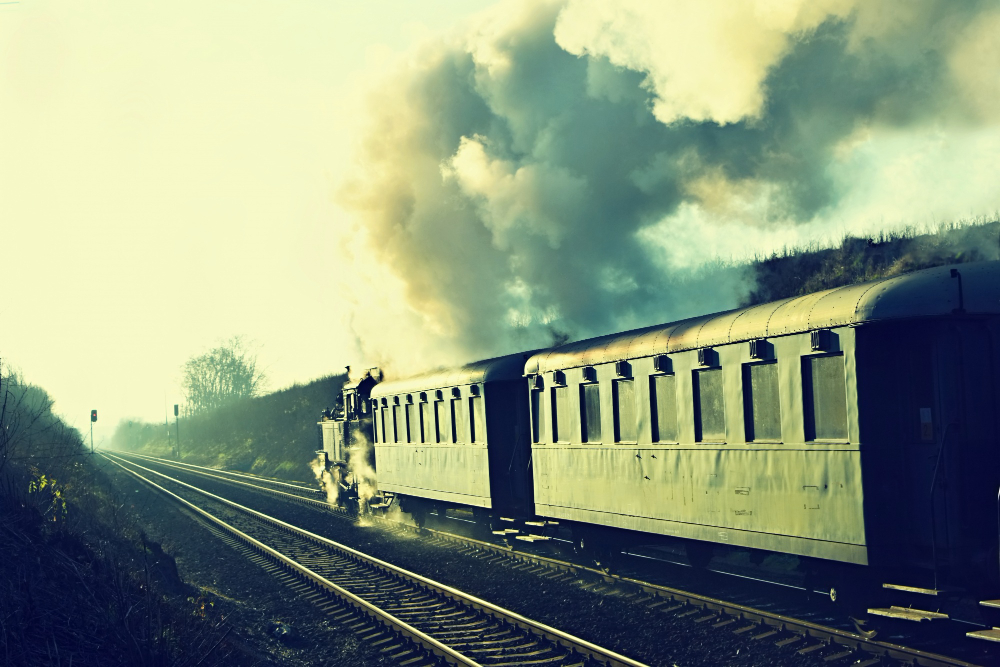
The move to steam that actually pushes was slower than expected and the reason is materials.
A high-pressure engine is far smaller, lighter and more powerful for its size than an atmospheric one, and those properties are what make a mobile engine possible at all.
It also requires a boiler that will contain the pressure, which demands materials, manufacturing and joining techniques that took time to develop, and failures in that period were serious.
Resistance to high pressure on safety grounds was therefore not unreasonable, and the transition occurred as the engineering became dependable rather than as the idea became acceptable.
Once it did, the size reduction is what changed everything. An engine light enough to move itself is a different category of object from one that occupies a building, and everything that followed in transport depended on that.
What It Displaced and What It Did Not
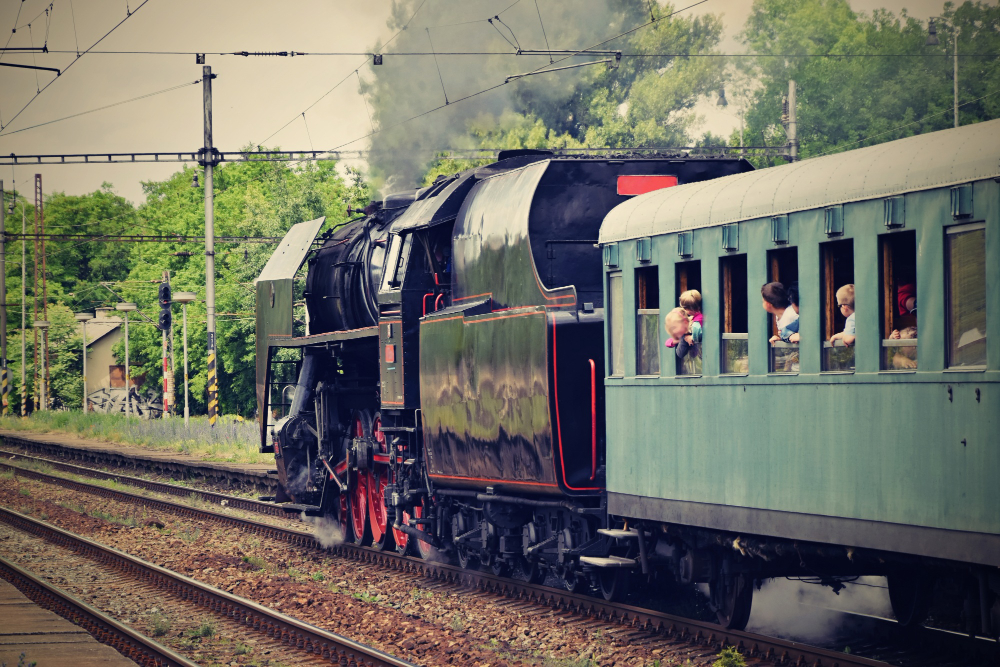
The transition from earlier power sources was slower and more partial than the standard account suggests.
Water power remained substantially cheaper than steam wherever a suitable site existed, and continued in use for a very long time alongside engines rather than being replaced by them.
Wind power persisted for the same reason in the applications it suited, and animal power remained the most common source of motive effort for far longer than the industrial narrative implies.
What the engine did was remove a constraint rather than replace an incumbent. It made power available where there had been none, at times when water was frozen or low, and in quantities that no site could supply.
That is a different claim from being better. For a given amount of power at a good water site, the older method was frequently the rational choice throughout the period when steam is generally described as having taken over.
The displacement happened as fuel became cheaper to move, as engines became more efficient, and as the scale of demand rose beyond what any watercourse could deliver.
Which is the usual shape. A new source of power rarely wins by outperforming the old one at what the old one did; it wins by being available where the old one was not, and the old one persists at its own sites until something else changes.
What the Sequence Shows
The general point concerns how a technology becomes general.
The first working version solved one specific problem, in one place, under conditions that made its enormous inefficiency irrelevant. That is a typical starting position and it is frequently mistaken for a failure of the early design.
The improvement that mattered was not a new capability but a reduction in cost, which removed the condition that had confined it to one setting.
The second improvement was not about power at all but about converting the motion into a form other things could use.
And the third was about size, which turned a stationary machine into a mobile one.
Each step opened a category of use rather than improving performance at an existing one — which is the shape of most technological transitions and is almost never how they are described afterwards, when the whole sequence gets compressed into somebody having an idea.
Which is worth resisting whenever a technology is summarised. The idea is usually the easy part and is frequently much older than the adoption, and what actually changed was a cost, a conversion or a size.
Like our content? Follow us for more.