There is a point beyond which human beings do not settle permanently. It is not a line on a map but a physiological boundary, and the practical upper limit of continuous human habitation has been established empirically by the people who live in one particular town in the Peruvian Andes.
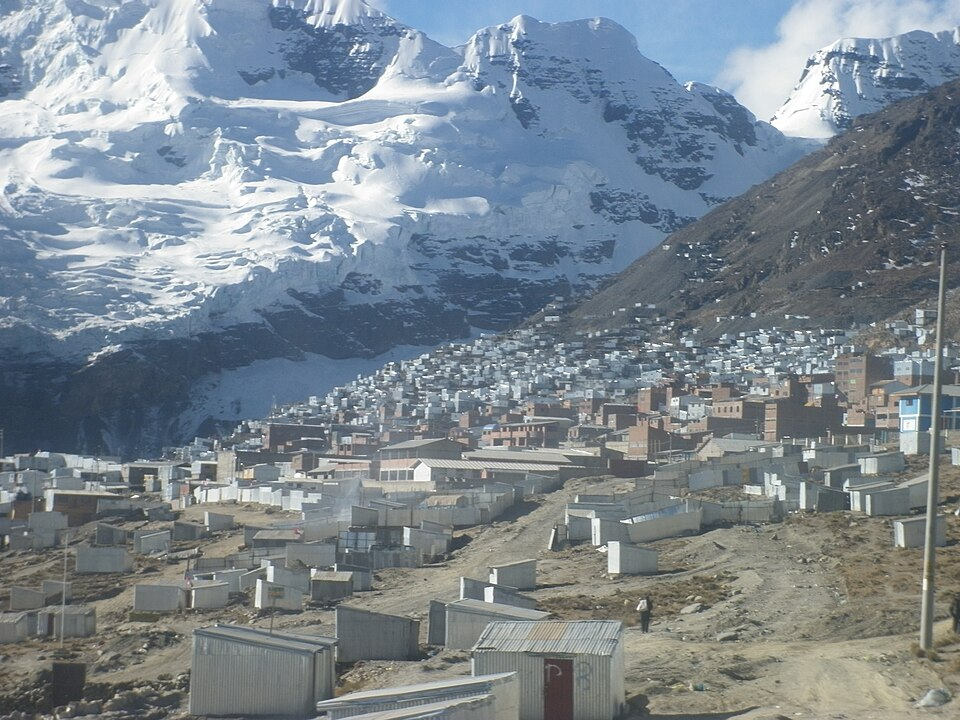
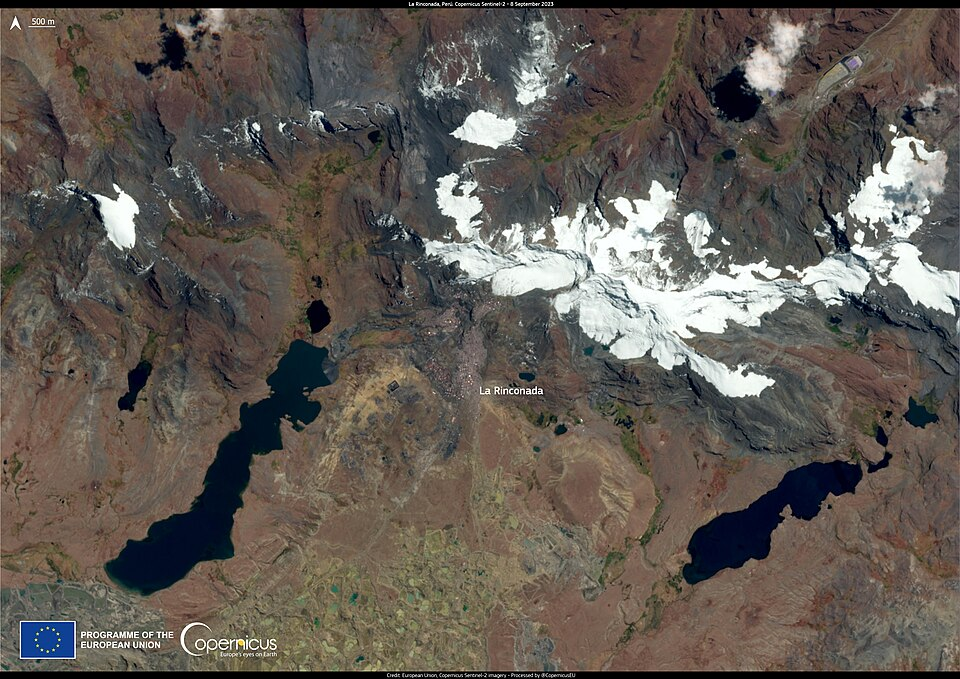
La Rinconada sits at roughly five thousand one hundred metres, which is about sixteen thousand seven hundred feet, in the Puno region near the Bolivian border. It is higher than any permanent settlement anywhere else. Base camp on Everest is lower. The population has fluctuated with the gold price and has been in the tens of thousands, and there is no infrastructure in any ordinary sense: no piped water, no sewerage system, no hospital. The reason anybody is there is that the rock contains gold.
What the altitude does
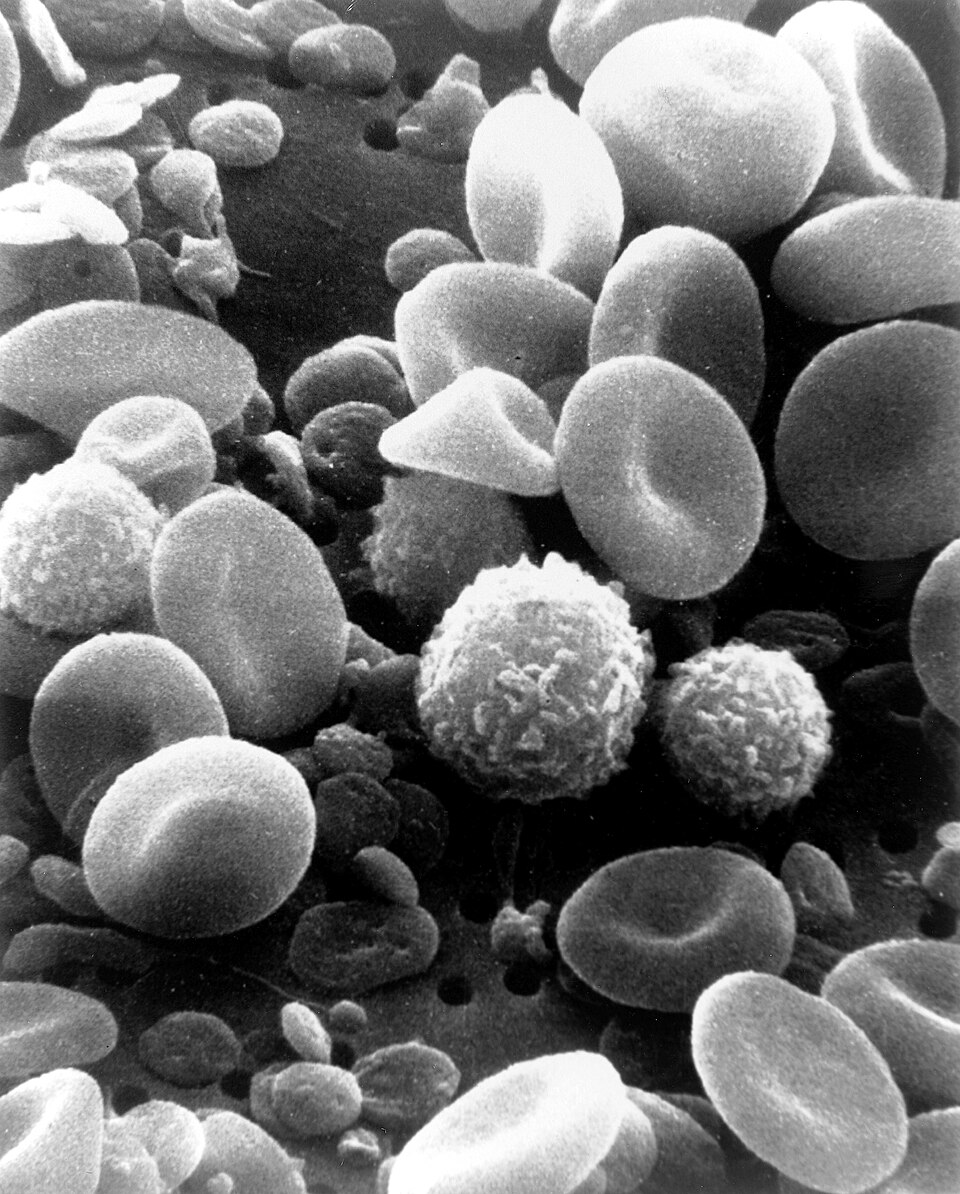
At five thousand metres the air contains roughly half the oxygen available at sea level. A visitor is substantially impaired within hours. A resident adapts, and the adaptations are real and well documented: increased breathing rate, increased red blood cell production, changes in how tissue extracts oxygen from blood.
But the adaptation has a limit and the people of La Rinconada are the population in which it is most visible. Chronic mountain sickness — a condition in which the body overproduces red cells until the blood becomes too thick to circulate efficiently, producing headache, breathlessness, sleep disturbance and cardiovascular strain — occurs at elevated rates there, and it is the main reason physiologists have studied the town so intensively. Research expeditions have gone specifically to measure haemoglobin concentrations, sleep, cognition and cardiac function in a population living above the altitude at which anybody previously thought permanent residence was feasible. The town is, in effect, the experiment nobody could have designed.
The comparison that makes the altitude legible is with the mountaineering world. Climbers refer to everything above roughly eight thousand metres as the death zone, where the body deteriorates faster than it can recover and nobody can remain for long. La Rinconada is well below that, but it sits above the elevation at which climbers and physiologists both expected sustained residence to become impossible, and the people there are not acclimatising for a summit attempt. They are raising children, going to work and growing old at an altitude that expedition medicine treats as a place to pass through.
Like our content? Follow us for more.
Thirty days for nothing, and the thirty-first for yourself
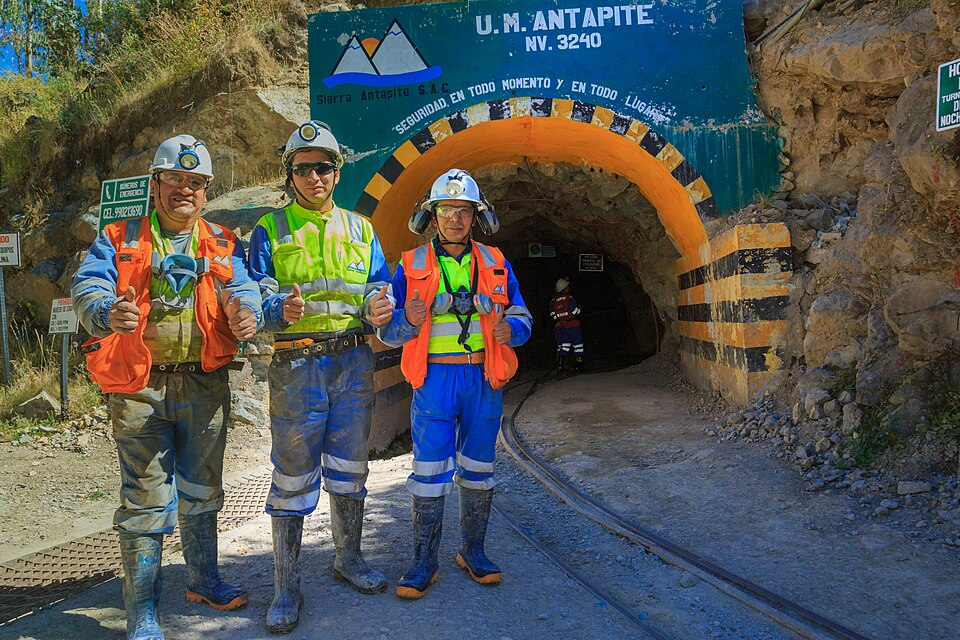
The labour arrangement is the detail that most defines the place and it has a name: cachorreo. A miner works without wages for a period, commonly around thirty days, and on the final day is entitled to take out as much ore as he can personally carry. What is in that sack is his pay.
The system is a lottery. The ore may be rich or it may be worthless, the miner has limited ability to assess it before carrying it out, and the amount is limited by what one person can shoulder down a tunnel. It transfers the entire geological risk from the mine operator to the worker, and it is the reason the population tracks the gold price so closely: when gold rises, the gamble improves and people arrive. It also sits outside the formal employment relationship in a way that removes most of what employment law would otherwise provide, which is the central problem with informal mining everywhere and is not specific to Peru.
Mercury
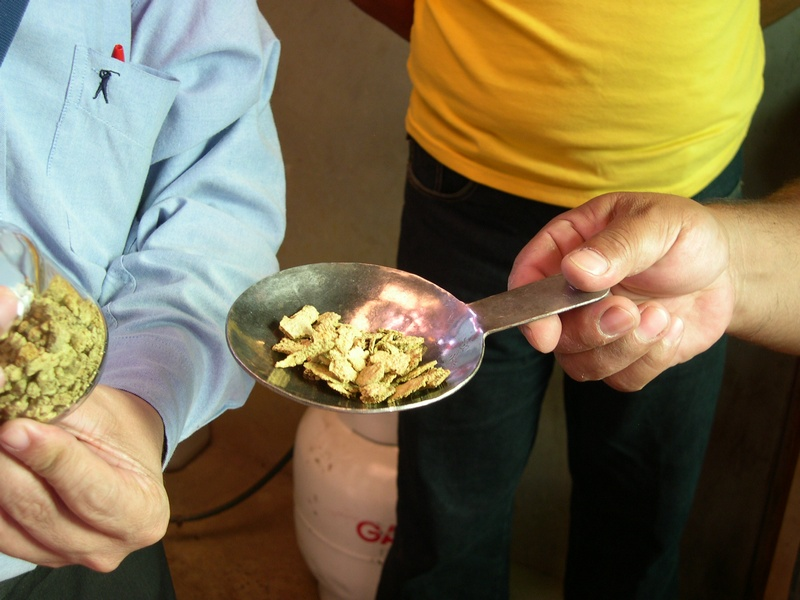
The ore is processed on site by amalgamation, which means mixing crushed rock with mercury so that the gold binds to it, then driving the mercury off. It is an old technique, it works without industrial plant, and it is used throughout artisanal and small-scale gold mining worldwide.
It is also the largest source of mercury released into the environment by human activity anywhere on the planet, and the people most exposed are those doing the processing and their households, because the work happens where they live. Peru has worked to formalise parts of the sector and there are international programmes aimed at introducing mercury-free methods, with the international convention on mercury specifically addressing this type of mining. The results have been partial. The technique persists because it is cheap, requires no capital and produces gold today rather than after an investment, which is a decisive advantage for somebody whose pay depends on this month’s sack.
No water, under a glacier
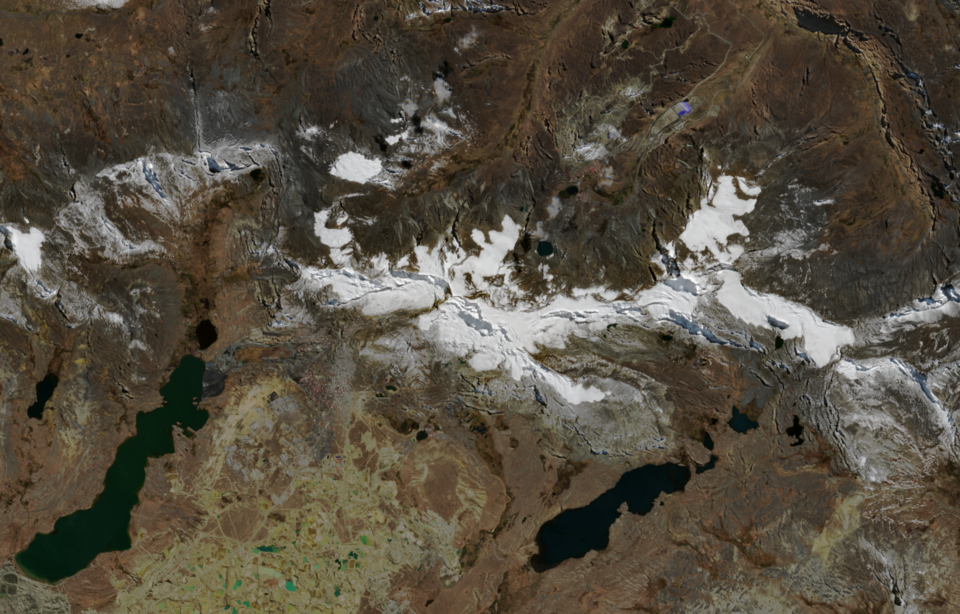
The town sits directly below a glacier, which is its water supply, and this is where the arrangement becomes most difficult to credit. There is no treatment and no distribution network. Meltwater is collected and carried. Waste has nowhere to go, in a settlement on a steep slope above the snow line where decomposition is slow and the ground is frozen.
The glacier is also retreating, as glaciers across the tropical Andes are, and it is simultaneously the water source and the receiving environment for the mine tailings and the mercury. A settlement of this size with no sanitation produces conditions that need no describing, and the combination of altitude, cold, crowding and contaminated water is the public health situation that researchers and Peruvian authorities have repeatedly documented. Temperatures fall below freezing most nights of the year, and heating is whatever a household can buy or burn.
Who lives there
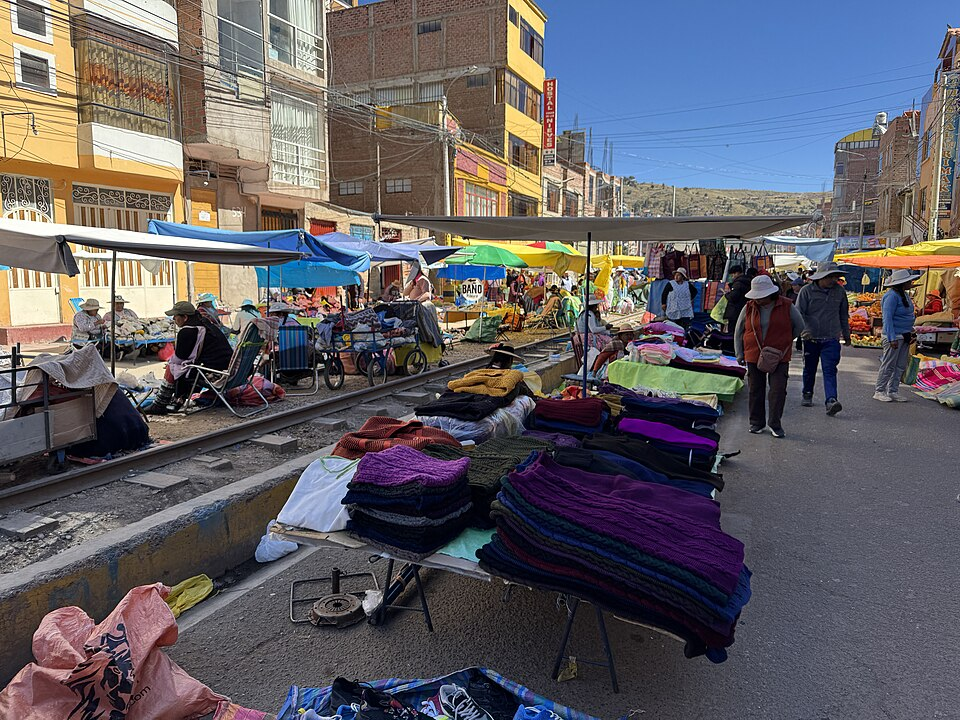
It would be easy to write about La Rinconada as a curiosity and the people there are not a curiosity. They are overwhelmingly economic migrants from elsewhere in the Peruvian highlands who have gone to a very hard place because the alternative was worse, which is the same calculation that has produced mining settlements throughout history.
The town has shops, bars, schools, churches, markets, football, families and the full ordinary texture of a place where people live. Women work as pallaqueras, picking through discarded rock for gold the miners missed, which is its own recognised occupation with its own economics. Children are present, and child labour in the sector is documented and has been the subject of Peruvian and international attention. None of that is unique to this town. What is unique is the elevation, and the elevation makes every one of those ordinary things harder.
Why not just build a road and a pipe
The obvious question is why a settlement of this size has no infrastructure, and the answer is its legal and economic status rather than its altitude. Formal infrastructure follows formal settlement: land title, municipal recognition, a tax base, a mining concession operating under permit. La Rinconada grew as an informal settlement around informal mining, and the resulting pattern — no title, no plan, no utility, no enforcement — is characteristic.
Peru has made repeated efforts at formalisation, both of the mining and of the settlement, and these are genuinely difficult. Formalising an operation means it has to meet standards, which costs money the informal economics do not generate; it also means identifiable owners, taxable income and enforceable obligations, which not everybody wants. The town is a case study in why informal mining is so persistent, and the answer is never simply that nobody has thought of fixing it.
What it establishes
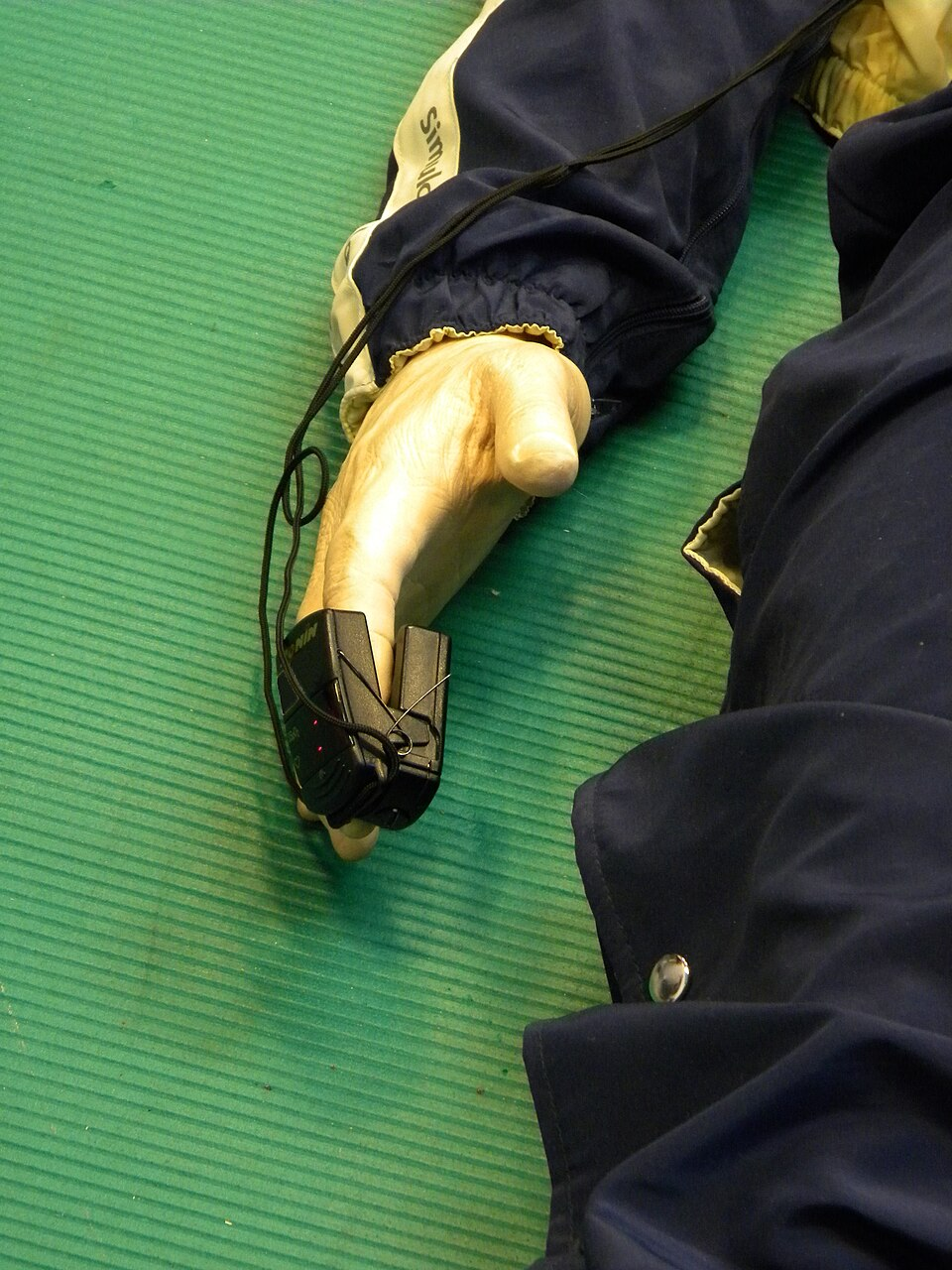
The scientific value of La Rinconada is that it marks a boundary with people standing on it. Before it was studied, the upper limit of permanent human habitation was an estimate. Now there is a population of tens of thousands living and reproducing above five thousand metres, with measured rates of chronic mountain sickness, measured haemoglobin levels, and measurable effects on sleep and on cardiac function.
That has changed what is known about human altitude tolerance and it has practical consequences beyond the Andes, for the much larger populations living at somewhat lower elevations in the Himalaya, the Tibetan plateau and the Ethiopian highlands, and for the clinical understanding of conditions in which the body overproduces red cells for other reasons. The town is a hard place to live and it has produced real knowledge, and both of those facts are owed to the people who live there rather than to the researchers who visit.
Going, and whether to
It is reachable. The route is from Juliaca or Puno, several hours by road, and the ordinary advice about extreme altitude applies in its strongest form: acclimatise properly at a lower elevation over days, understand that a direct ascent to five thousand metres is a serious undertaking, and treat it as a mountaineering rather than a tourist proposition.
The better question is whether a visitor should go at all. The town is not a sight and it is not equipped for visitors, the people there are working, and the attention it has received has largely been a function of its superlative rather than of anything anybody there asked for. Lake Titicaca and the surrounding highlands are nearby, extraordinary and set up for travellers. La Rinconada is a place that exists for a reason, and the reason is the gold, not the view.
That is the honest note to end on, and it applies to the piece as much as to a visit. The town is worth knowing about because of what it establishes about human limits and about how informal mining actually works, and both of those can be understood from a distance. The superlative is the reason anybody has heard of it and the gold is the reason it is there, and the people who live with the consequences of the second did not choose to become an example of the first.
Like our content? Follow us for more.