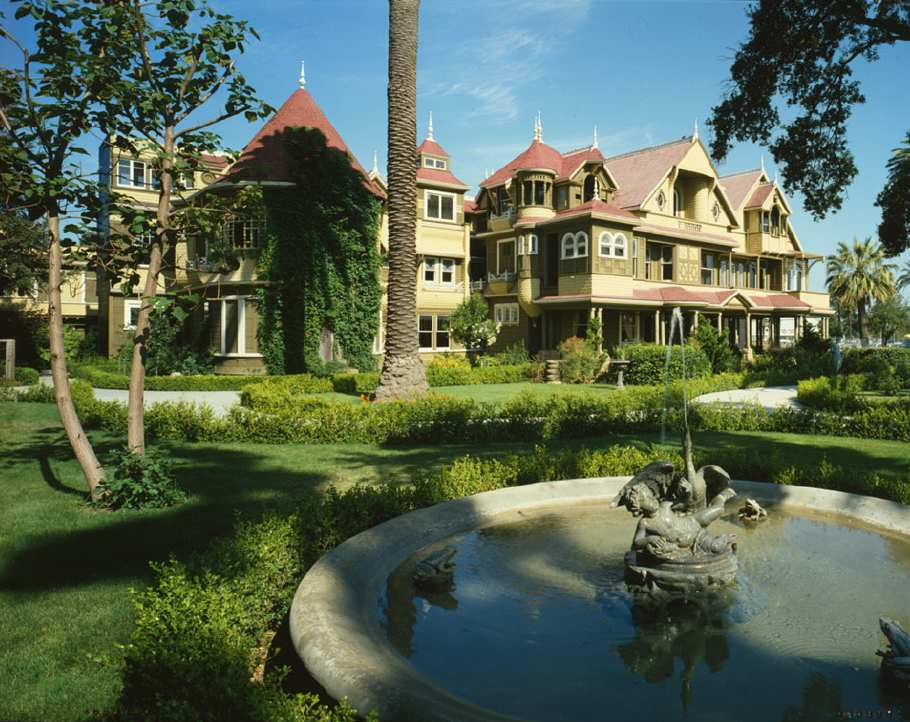
The story everyone knows goes like this: a grieving widow, told by a Boston medium that the ghosts of everyone killed by Winchester rifles would haunt her unless she built forever, moved west and kept carpenters hammering 24 hours a day, 365 days a year, for nearly four decades — deliberately building staircases that dead-end into ceilings and doors that open onto two-story drops to confuse the spirits, until death finally stopped the work mid-nail in 1922.
It’s one of America’s best ghost stories, it’s printed on a million brochures, and the house it describes — the Winchester Mystery House in San Jose, California — is every bit as bewildering as advertised: 160 rooms, 10,000 windows, 47 stairways, and architectural decisions that make first-time visitors laugh out loud. Which makes the real story, assembled by researchers from Sarah Winchester’s own letters and records, all the more interesting — because the woman behind the maze turns out to be stranger than her legend in entirely different ways, and the gap between the two is now part of what the house teaches.
The Sorrows Were Real
The legend gets its foundation right. Sarah Lockwood Pardee married William Wirt Winchester, heir to the Winchester Repeating Arms Company — maker of “the gun that won the West” — and suffered the two losses around which every version of her story orbits: an infant daughter, Annie, who died in 1866 just weeks old, and William himself, taken by tuberculosis in 1881. The inheritance that followed was staggering for the era — a large stake in the company and income commonly described as about a thousand dollars a day, at a time when a good annual wage was a fraction of that — and in the mid-1880s the widow Winchester left New Haven for California’s Santa Clara Valley, bought an eight-room farmhouse amid orchards, and began to build.
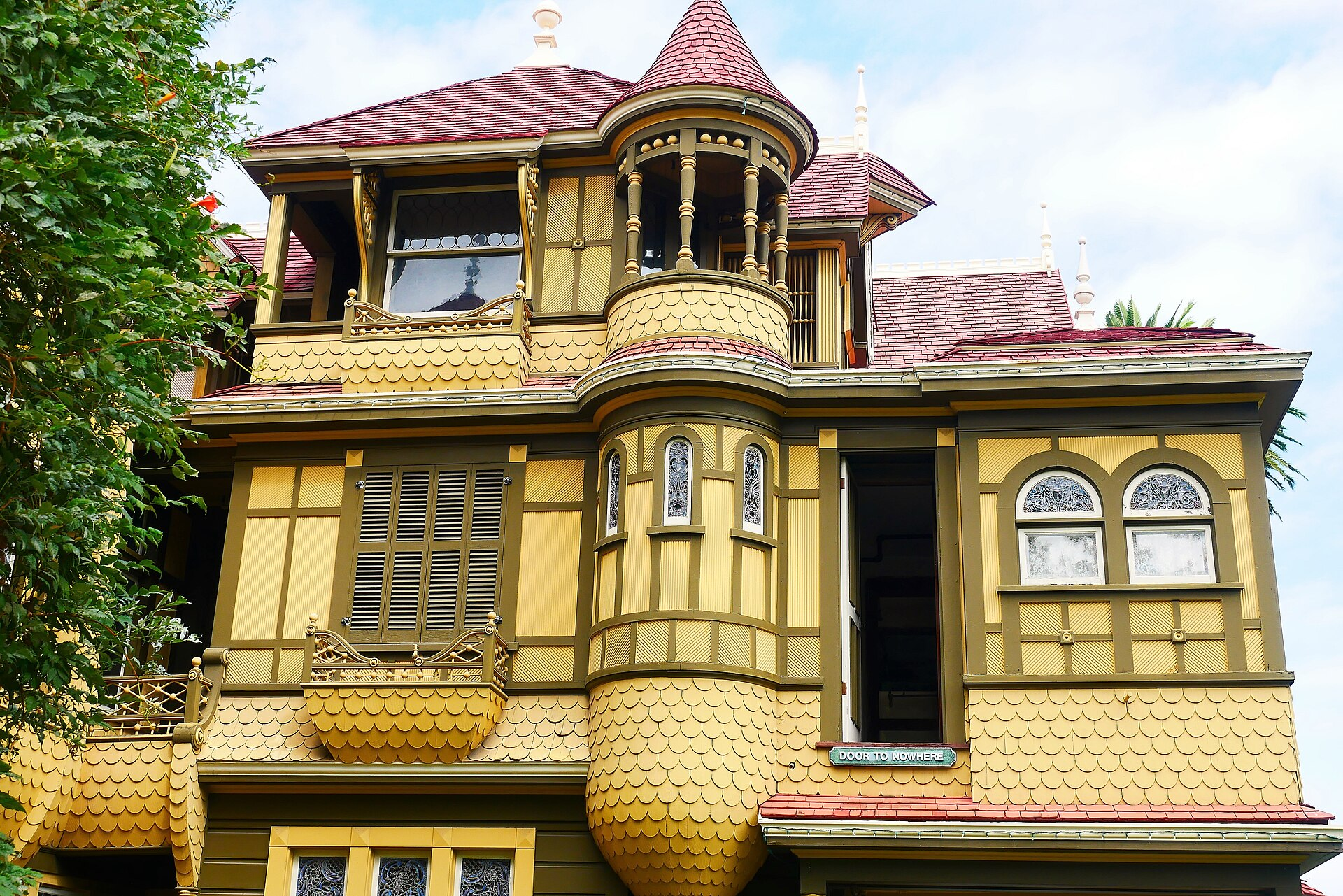
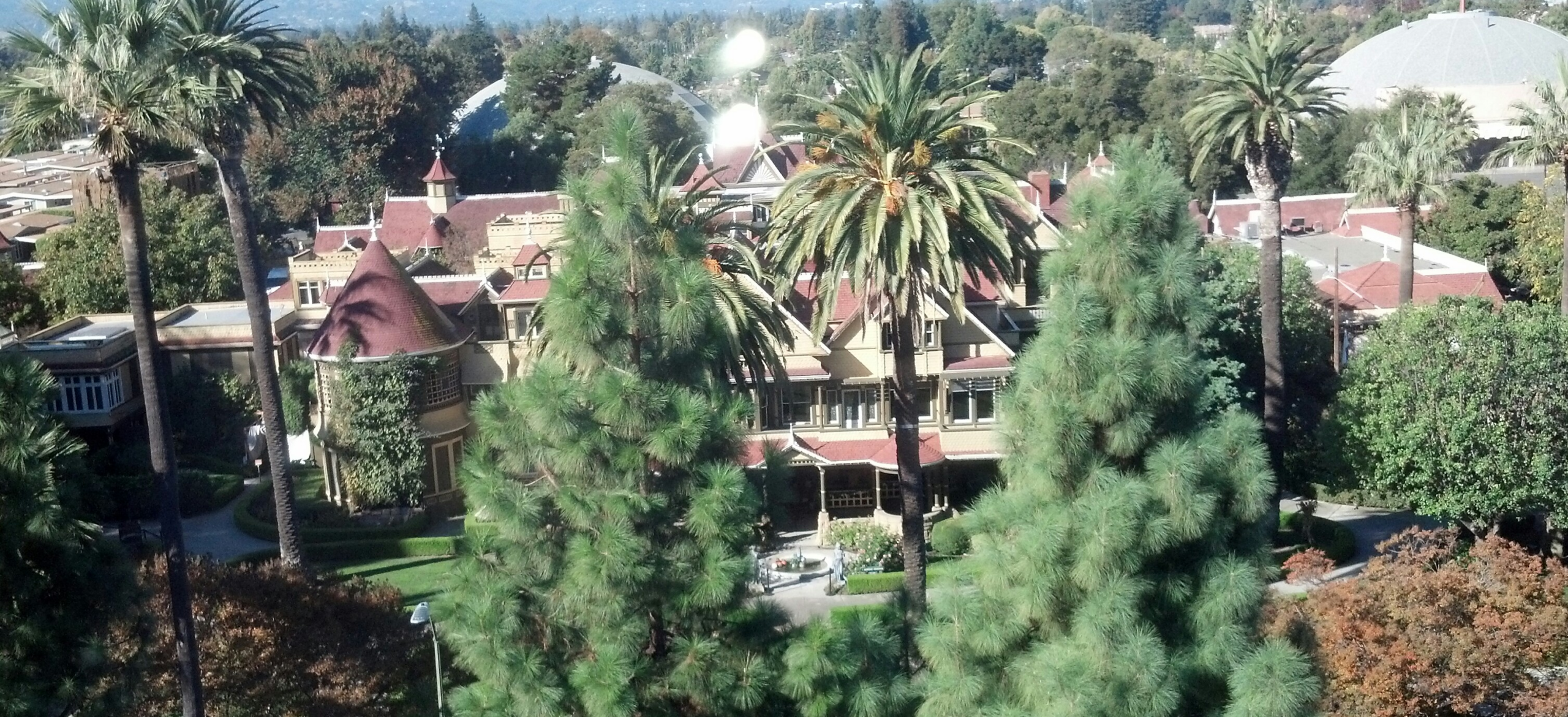
And build. And build. For the next 36 years, construction on the property was a more or less constant fact of neighborhood life, the farmhouse swelling into a seven-story Victorian mountain (earthquake-reduced, later, to four) of turrets, cupolas, and additions colliding with additions. By the time Sarah Winchester died in her sleep in September 1922, the house sprawled across six acres with its 160 rooms, 2,000 doors, and the now-famous inventory of impossibilities: the staircase climbing directly into a ceiling, the door on the second floor opening onto open air, the tiny “switchback” staircase whose seven flights rise barely nine feet, windows set into interior walls and floors, and a recurring motif of the number thirteen — thirteen-paneled ceilings, thirteen-globed chandeliers, thirteen drain holes in a sink.
Like our content? Follow us for more.
Where the Ghost Story Came From
Here’s the first surprise from the archives: the haunted explanation wasn’t invented after Sarah Winchester’s death — it swirled during her lifetime, and she apparently ignored it. She was, by every account, intensely private: she gave no interviews, kept high hedges, and turned away callers reportedly including President Theodore Roosevelt (by lore, sent around to the back door by staff — a story the house itself now tells with a wink and historians tell with a shrug). Into that vacuum, Gilded Age newspapers poured speculation, and the elements assembled themselves — the rifle fortune, the dead husband and child, the endless hammering — into the tale of the cursed widow building against the spirits. No letter, document, or firsthand account has ever surfaced of the famous Boston medium, the séance-room rituals, or the build-forever command; researchers who have combed her correspondence, most notably her biographer, found a woman who never mentioned ghosts at all.
What the Letters Actually Show
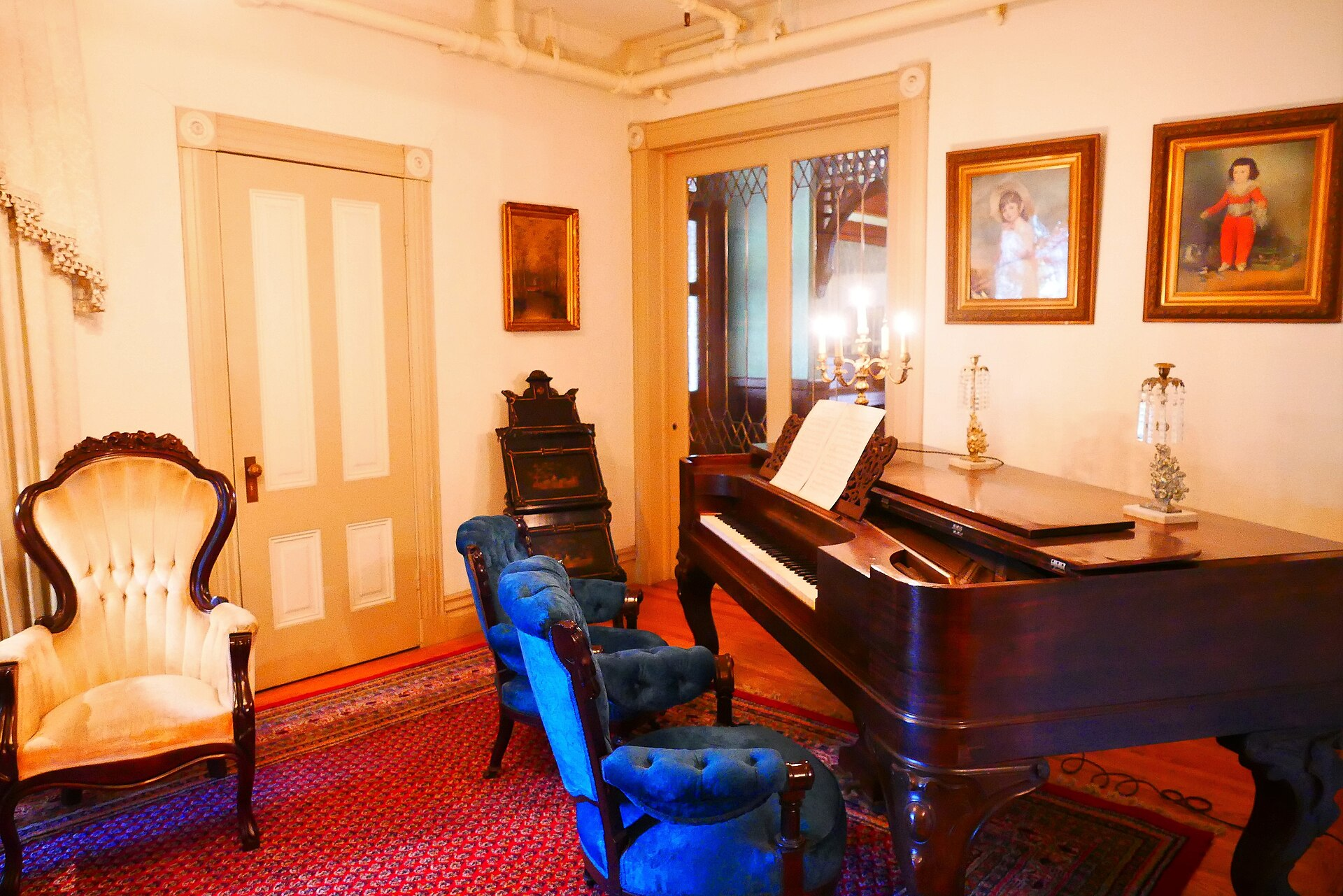
What did the letters show? A meticulous, intelligent, arthritic woman with a serious architecture hobby and unlimited budget — an amateur designer sketching her own plans on napkins and notepaper, testing ideas at full scale, and cheerfully tearing out what didn’t please her. Modern researchers offer un-supernatural readings for nearly every famous oddity: stairs to ceilings and doors to nowhere are largely the scar tissue of the 1906 earthquake, which collapsed portions of the house that Sarah — then in her later sixties — simply sealed off rather than rebuilt; the switchback staircase with its two-inch risers reads as an accommodation for severe arthritis; the odd windows once opened onto exteriors that later additions swallowed. Even the twenty-four-hours-a-day construction appears to be embroidery — records and worker accounts indicate ordinary schedules, with pauses, including a long one after the earthquake. The number thirteen? There the trail thins; she also, her defenders note, loved the number in ways that may have been simple whimsy, and spiderweb motifs beside it. Every good myth deserves one unexplained room.
A House That’s Astonishing Either Way
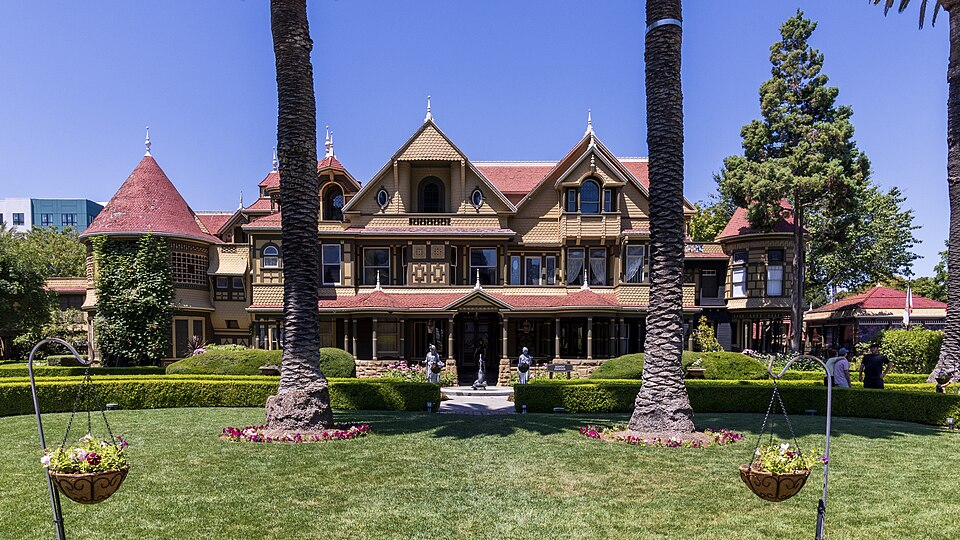
Strip away every ghost and the house remains one of the strangest buildings in America — arguably stranger, because someone chose all of it while fully awake. Sarah Winchester was, in the reappraisal, an untrained woman practicing architecture obsessively in an era that offered her no other outlet for it, and parts of the house were legitimately ahead of their time: she installed carbide gas lighting operated by pushbutton, indoor plumbing with innovations rare for the period, inclined “easy-riser” stairways for her arthritis, and elevator equipment, all in a private home before many hotels had them. The craftsmanship in the finished rooms — the ballroom built reportedly almost without nails, the Tiffany-style art glass, the inlaid floors — is the equal of any Gilded Age mansion. The unfinished rooms, frozen where the work stood in 1922, complete the effect: a life-sized sketchbook, abandoned mid-thought.
Within two years of her death, the property reopened as a tourist attraction — entrepreneurs leased it in 1923, the “Mystery House” branding did the rest, and the house has now spent over a century as one of California’s signature roadside destinations, a National Register property that leans into both of its identities. Tours walk the maze’s greatest hits — the stairs to nowhere, the door to the drop, the séance room (so labeled by the attraction; the archives, again, are silent) — while the house’s own materials increasingly present the historical Sarah alongside the legendary one, letting visitors pick their widow. Seasonal candlelight and Halloween flashlight tours serve the ghost-story constituency with theatrical honesty; the daytime estate tour serves the architecture constituency; most visitors, sensibly, take both.
Visiting the Maze
The practical notes are simple. The house sits in central San Jose, an easy add-on to any Bay Area trip, with tours running daily year-round and the full walk covering something over a mile of corridors — comfortable shoes matter more here than at most mansions, and so does booking ahead in summer and October, the house’s two high seasons. The gardens, outbuildings, and Winchester-history exhibits round out a half-day; pairing it with the region’s other Gilded Age survivor, the Filoli estate up the peninsula, makes a fine contrast between what convention built and what freedom from it built.
One more layer rewards the curious visitor: the house’s own history as an attraction is now a century old, which makes it a museum of American tourism too. The earliest tours ran when Sarah’s furniture was barely out the door; decades of postcards, roadside billboards, and midcentury family-vacation itineraries built the legend as surely as any newspaper had, and the attraction’s evolution — from pure spook-show to today’s dual-track storytelling — mirrors the country’s changing appetite for its own myths. Souvenir cases display artifacts from every era of the operation alongside Winchester family pieces, and the gift shop sells both the ghost story and the biography that dismantles it, shelved side by side, which may be the most honest arrangement in the building.
Photography is welcome in most areas, and the house rewards it strangely — hallways that refuse to line up, windows framing other windows — while the garden’s palms and fountains offer the era’s California-estate graciousness as a palate cleanser between mazes. Allow more time than the ticket suggests; everyone does a second lap of something.
Go with the right question. Not “is it haunted?” — the house has been asked that for a hundred years and answers only in creaks — but the better one the archives leave you with: what does a brilliant, wounded, boundlessly wealthy woman build when nobody can tell her no? The answer has 160 rooms, 47 stairways, and no explanation that fully closes the file, which may be why the place outdraws mansions twice as grand. America has plenty of houses with ghost stories. It has exactly one where the ghost story, on close inspection, turns out to be the least mysterious thing in the building — and where the truth behind it, a widow with blueprints and no one to answer to, keeps visitors talking longer than any ghost could.
Like our content? Follow us for more.