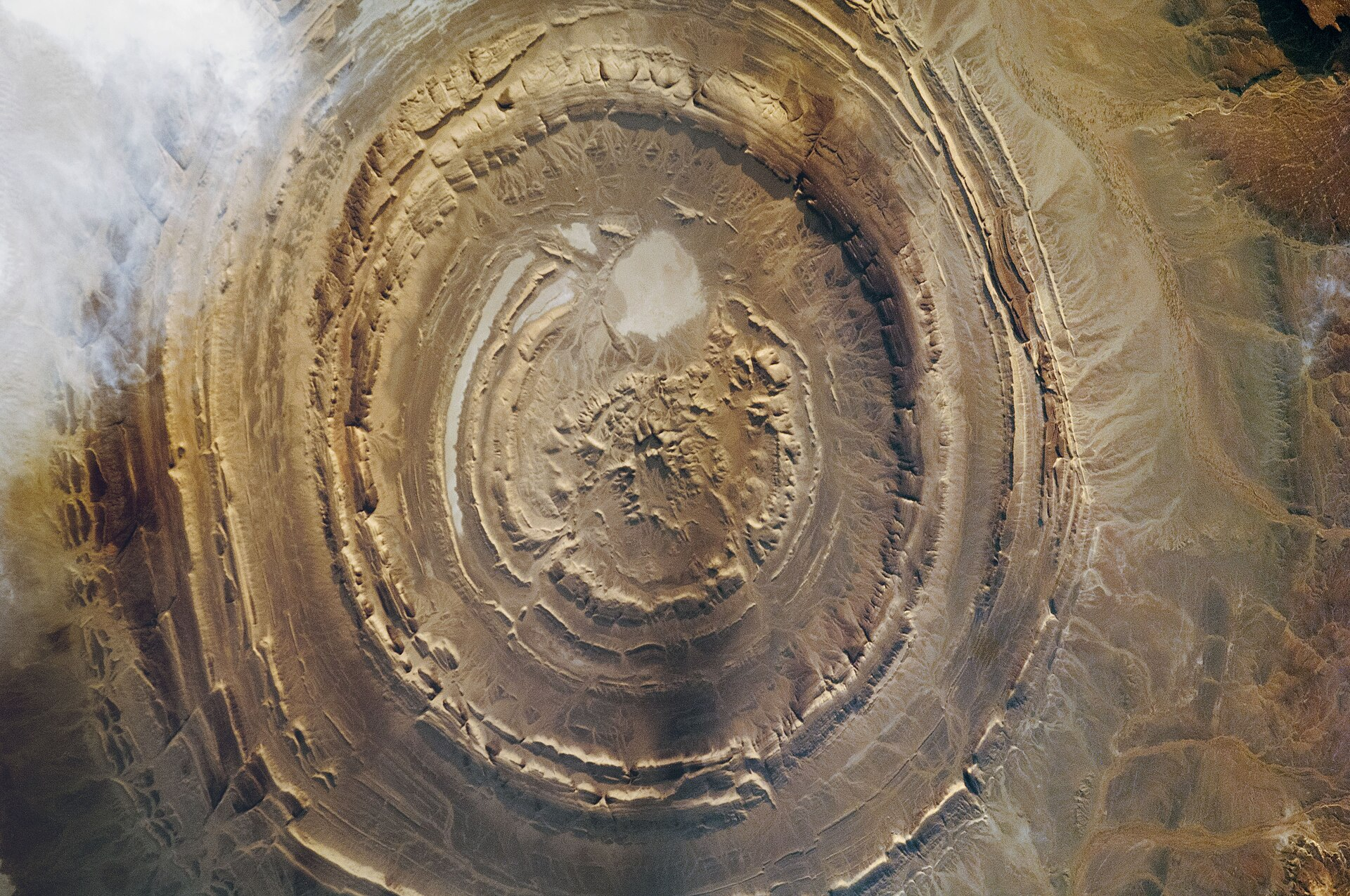
Seen from high above, in photographs taken by satellites and by astronauts aboard the International Space Station, it looks almost too perfect to be natural: a vast, circular pattern of concentric rings stamped into the barren landscape of the Sahara Desert, staring up at the sky like a giant eye. This is the Richat Structure, better known by its evocative nickname, the Eye of the Sahara, one of the most striking and mysterious-looking geological features on the entire planet.
Located in the remote desert of the West African nation of Mauritania, the Eye of the Sahara is so large, some tens of miles across, that its full, circular form is impossible to appreciate from the ground; it can only truly be seen from the air or from space. Its remarkable bull’s-eye appearance has made it a famous landmark, used by astronauts as a reference point on the featureless desert below, and it has also made it the subject of intense speculation. For years, people wondered whether it was the scar of a massive meteorite impact. More recently, it has become the darling of those who believe it to be the site of the legendary lost city of Atlantis. But the true story of how this extraordinary formation came to be, pieced together by geologists, is a fascinating tale of deep time and the slow, patient work of the Earth. Here is the real explanation behind the Eye of the Sahara.
A Giant Eye in the Desert
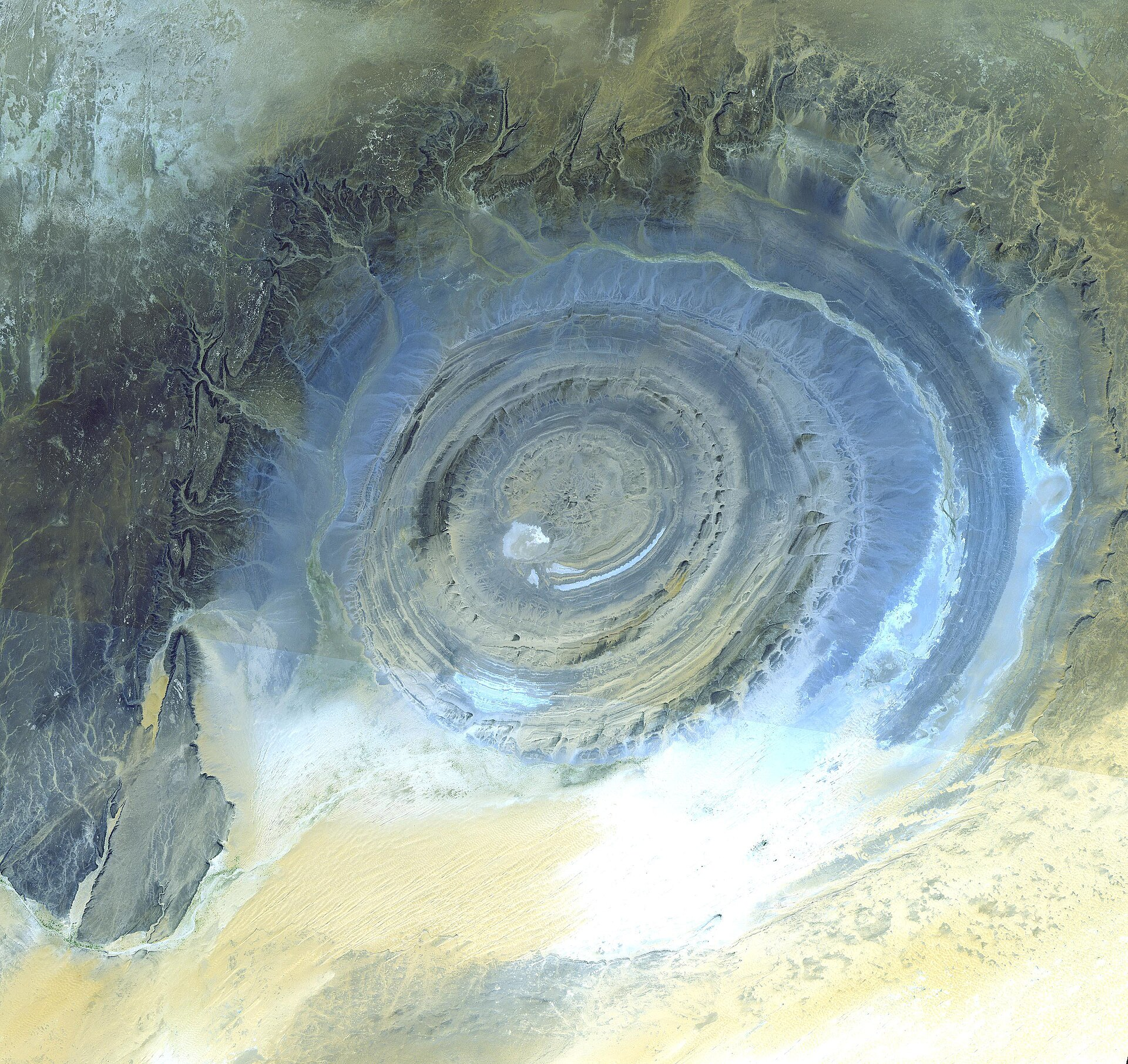
The Eye of the Sahara sits in a remote region of Mauritania, in a part of the Sahara so vast and empty that the structure went largely unappreciated for much of human history, simply because no one could see it whole from the ground. It’s an enormous feature, with its outer rings spanning a diameter of roughly thirty miles, a scale so large that a person standing within it would perceive only rocky ridges and valleys, with no sense of the grand circular pattern they were part of.
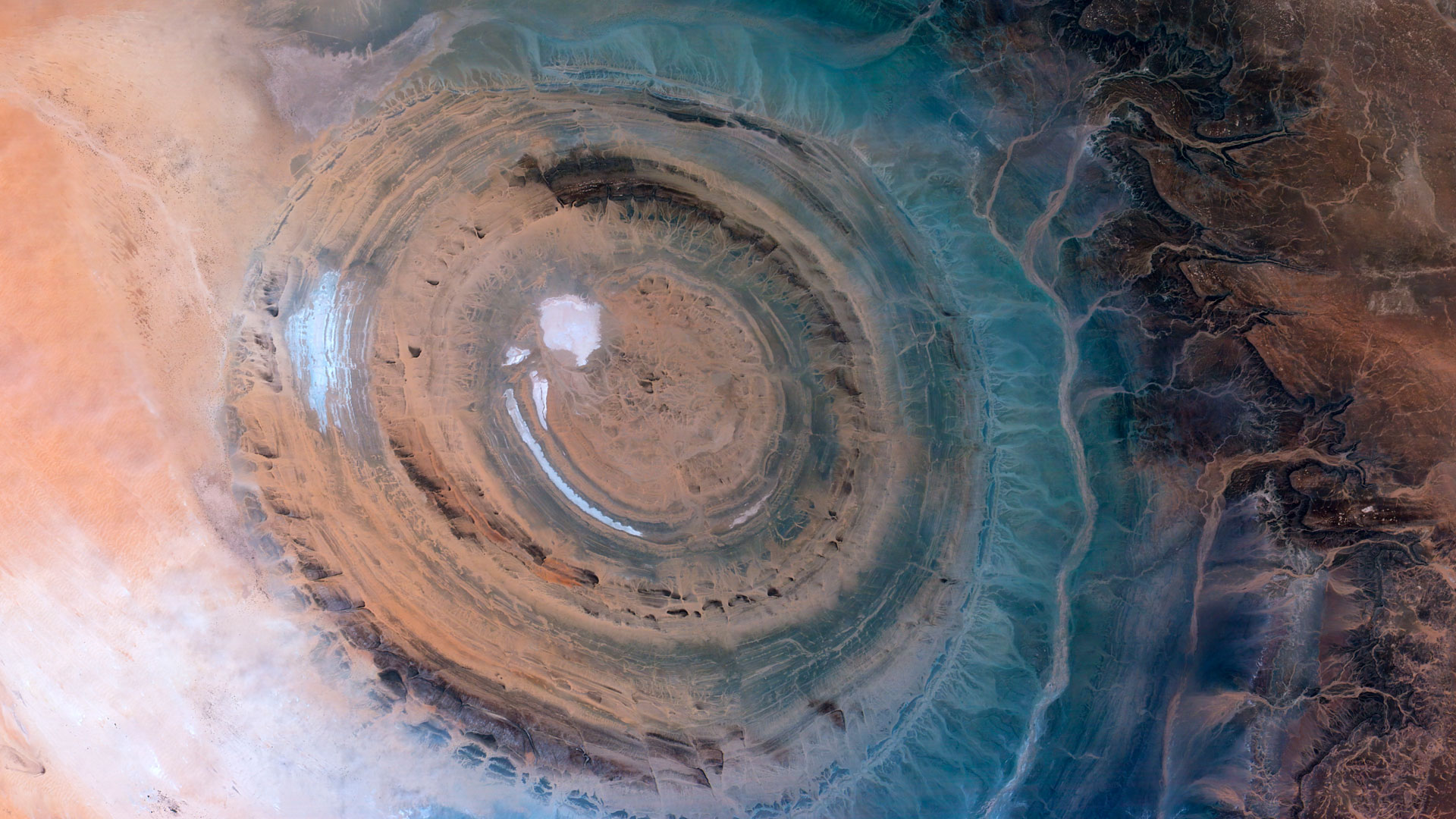
The structure consists of a series of concentric ridges and depressions, alternating rings of harder and softer rock, that together create the distinctive target-like appearance. From the air, the effect is stunning and unmistakable: a great series of rings radiating out from a center, like ripples frozen in stone. It was really only with the advent of aviation and, later, spaceflight that the full form of the Eye of the Sahara could be appreciated. It became a valued landmark for astronauts, whose view from orbit reveals its circular shape in all its glory against the otherwise monotonous expanse of the desert. That view from above is also precisely what fueled decades of speculation about what could possibly have created such a perfect-looking circle in the middle of the desert.
Like our content? Follow us for more.
Not a Meteorite Crater
Given its round, target-like shape, the most natural early assumption about the Eye of the Sahara was that it must be an impact crater, the scar left behind by a massive meteorite slamming into the Earth long ago. The concentric rings certainly call to mind the kind of structure an impact might produce, and for a time this seemed like a plausible explanation for the formation’s striking geometry.
But when geologists studied the structure carefully, they found that it simply does not fit the profile of an impact crater. Impact sites bear certain telltale signatures, distinctive types of shocked and melted rock and other physical evidence created by the immense force and heat of a collision. When scientists examined the Eye of the Sahara, they found none of these diagnostic signs of an impact. There were no shocked minerals, no melt rock, none of the fingerprints that a meteorite strike leaves behind. The conclusion was clear: whatever had formed the Eye of the Sahara, it was not a meteorite. The Earth had never been struck at this spot. The structure’s origin lay not in a sudden, violent collision from space, but in far slower and more terrestrial processes, unfolding over an almost unimaginable span of geological time.
How It Really Formed
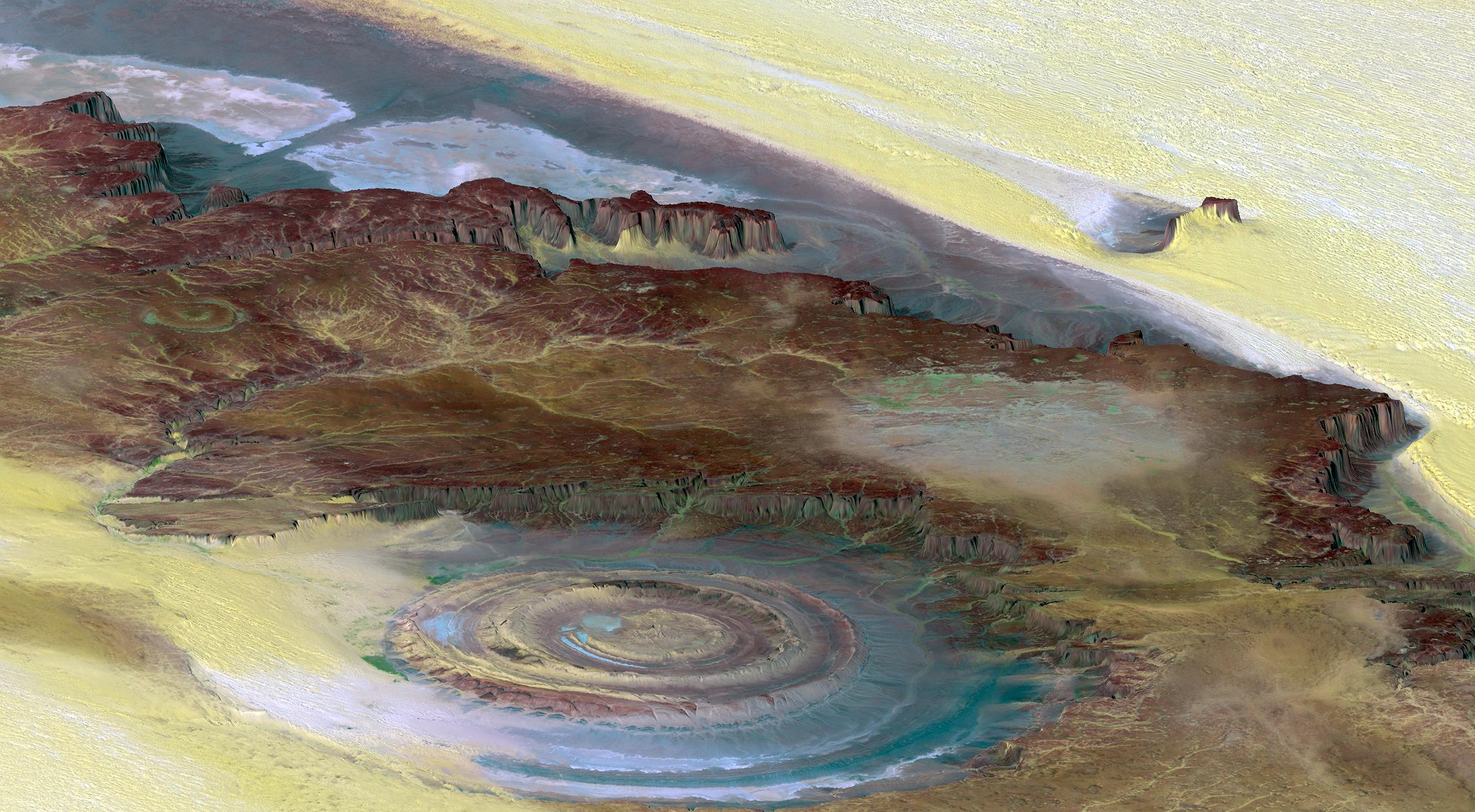
The true explanation for the Eye of the Sahara, worked out through careful geological study, is a story of uplift and erosion playing out over tens of millions of years. Deep beneath this spot, long ago, molten rock pushed upward from within the Earth without ever breaking through to erupt at the surface. Instead of bursting out as a volcano, this rising body of magma pushed up the layers of rock above it, arching and doming them upward, much like a blister forming beneath the skin, or a bubble rising in something thick.
This created a large, dome-shaped structure of raised rock layers. Then, over vast stretches of time, the forces of erosion, wind and water wearing away at the surface, went to work on the dome. The rock layers making up the dome were not all the same; they consisted of alternating bands of harder and softer rock. As erosion stripped away the surface, the softer layers wore away more quickly than the harder, more resistant layers. This differential erosion, the softer rings eroding faster than the harder ones, gradually carved the dome into the series of concentric circular ridges and valleys we see today. The harder layers stand up as ridges, the softer layers have been worn down into the depressions between them, and the whole thing, viewed from above, forms the giant bull’s-eye pattern. In other words, the Eye of the Sahara is the deeply eroded remains of an ancient geological dome, sculpted into rings by millions of years of patient weathering, a slice through the machinery of the planet exposed at the surface. Its rocks are extraordinarily old, with some of the layers dating back hundreds of millions of years.
The Atlantis Question
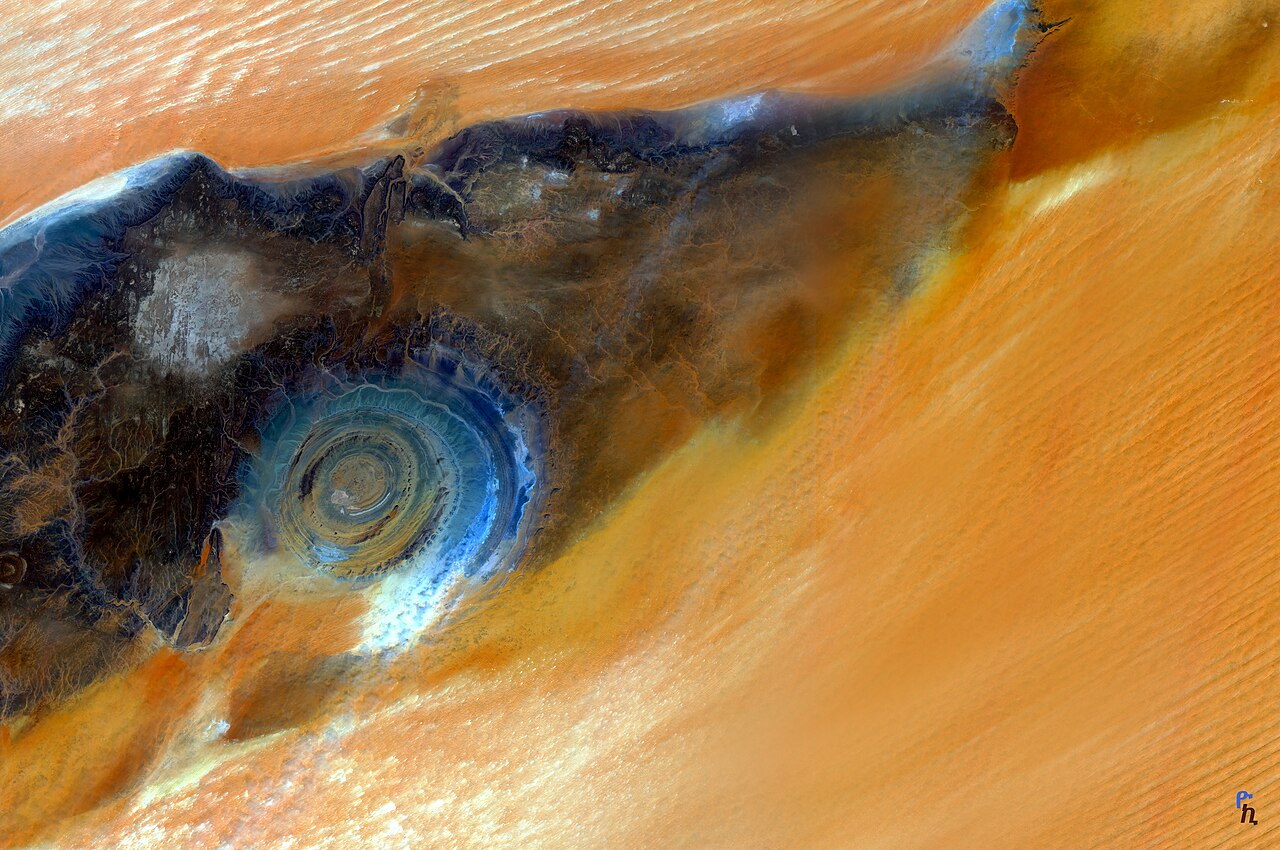
In recent years, the Eye of the Sahara has gained a new kind of fame, becoming the focus of a popular theory that it is the site of the lost city of Atlantis, the legendary advanced civilization described by the ancient Greek philosopher Plato and said to have sunk beneath the waves. The theory, which has spread widely through the internet, points to the structure’s concentric rings and notes that Plato described Atlantis as a city laid out in concentric rings of land and water, a resemblance that theory’s proponents find compelling.
It’s an intriguing idea, and the visual similarity is really striking. But when the theory is examined against the actual evidence, it falls apart. For one thing, the geology is clear: the Eye of the Sahara is a natural rock formation, an eroded dome shaped over tens of millions of years, not the ruins of a built city. There is no archaeological evidence of a great civilization at the site. Moreover, the geography is entirely wrong for Atlantis. Plato described Atlantis as an island in the ocean that sank beneath the sea in a single catastrophic day and night. The Eye of the Sahara, by contrast, sits hundreds of miles inland, far from any ocean, and at an elevation well above sea level; it is not underwater and never was, and the region is geologically stable, with no evidence of the kind of dramatic sinking the Atlantis legend requires. Most scholars, in any case, regard Plato’s Atlantis not as a real place at all but as an invented allegory, a fable designed to illustrate a philosophical point about the pride of nations. However captivating the idea of a lost city in the desert may be, the Eye of the Sahara is not Atlantis; it is something arguably more wonderful, a real window into the deep geological history of our planet.
A Wonder of Deep Time
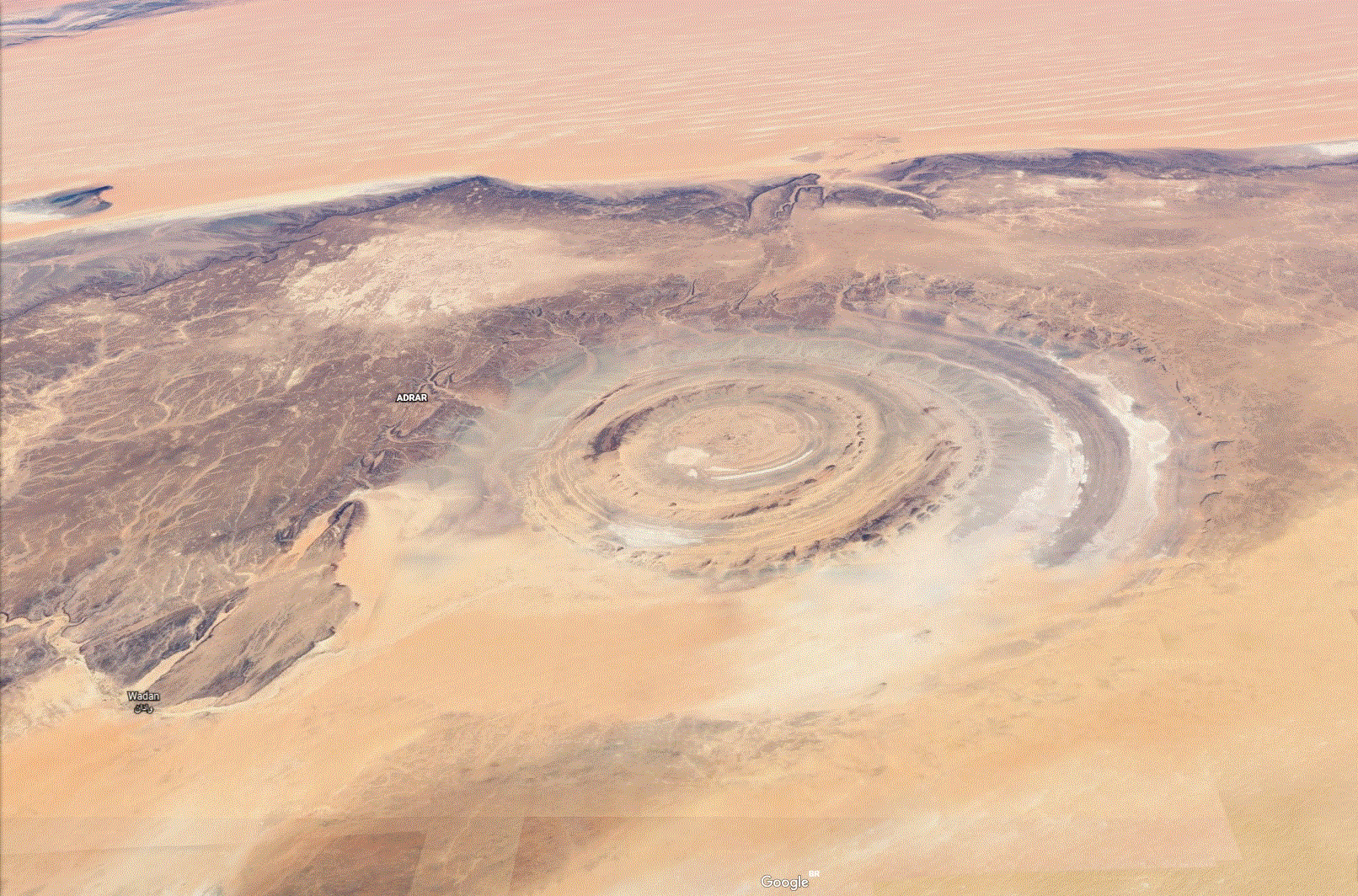
Freed from the myths of impacts and lost cities, the Eye of the Sahara can be appreciated for what it honestly is: one of the most remarkable geological features on Earth, a testament to the immense forces and vast timescales that shape our planet. It’s a place where the slow rising of molten rock and the patient carving of erosion, working over tens of millions of years, have combined to create a formation of extraordinary beauty and symmetry, visible even from space.
The structure continues to be of great interest to geologists, who study it to understand the processes that formed it and the ancient rocks it exposes, and it has become a point of fascination for people around the world drawn to its mysterious appearance and dramatic story. For the adventurous few who make the difficult journey to this remote corner of Mauritania, the Eye of the Sahara offers the chance to walk among the rocky rings of one of the planet’s great natural wonders, even if its full grandeur can only be grasped from above. It stands as a reminder that the Earth itself is the greatest artist and architect of all, capable of creating forms so perfect and so strange that we reach for meteorites and lost civilizations to explain them, when the truth, that the planet slowly built and then sculpted a giant stone eye in the middle of the desert, is more astonishing still.
The Real Story Written in Stone
The Eye of the Sahara is, in the end, a perfect example of how the natural world can produce sights so extraordinary that they seem to demand extraordinary explanations, whether cosmic collisions or vanished civilizations. And yet the real explanation, the one written in the rocks themselves and read by patient geologists, is every bit as awe-inspiring: a story of the Earth’s own inner heat lifting the land, and of wind and water spending millions of years sculpting the result into a colossal target visible from orbit.
There’s a lesson in that, about the value of looking closely and following the evidence rather than leaping to the most dramatic conclusion. The Eye of the Sahara didn’t need to be a meteorite crater or the ruins of Atlantis to be remarkable; it was always remarkable, as a pure product of geology. So the next time you see one of those stunning images of the great desert eye staring up from the sands of Mauritania, you’ll know the true story behind it, a story not of catastrophe or legend, but of the quiet, staggering power of deep time to shape the face of our world into wonders beyond imagining.
Like our content? Follow us for more.