The Voyager probes launched in 1977 to study the outer solar system, and they did that job extraordinarily well, returning the first detailed images of Jupiter, Saturn, Uranus and Neptune and their moons. That was the mission.
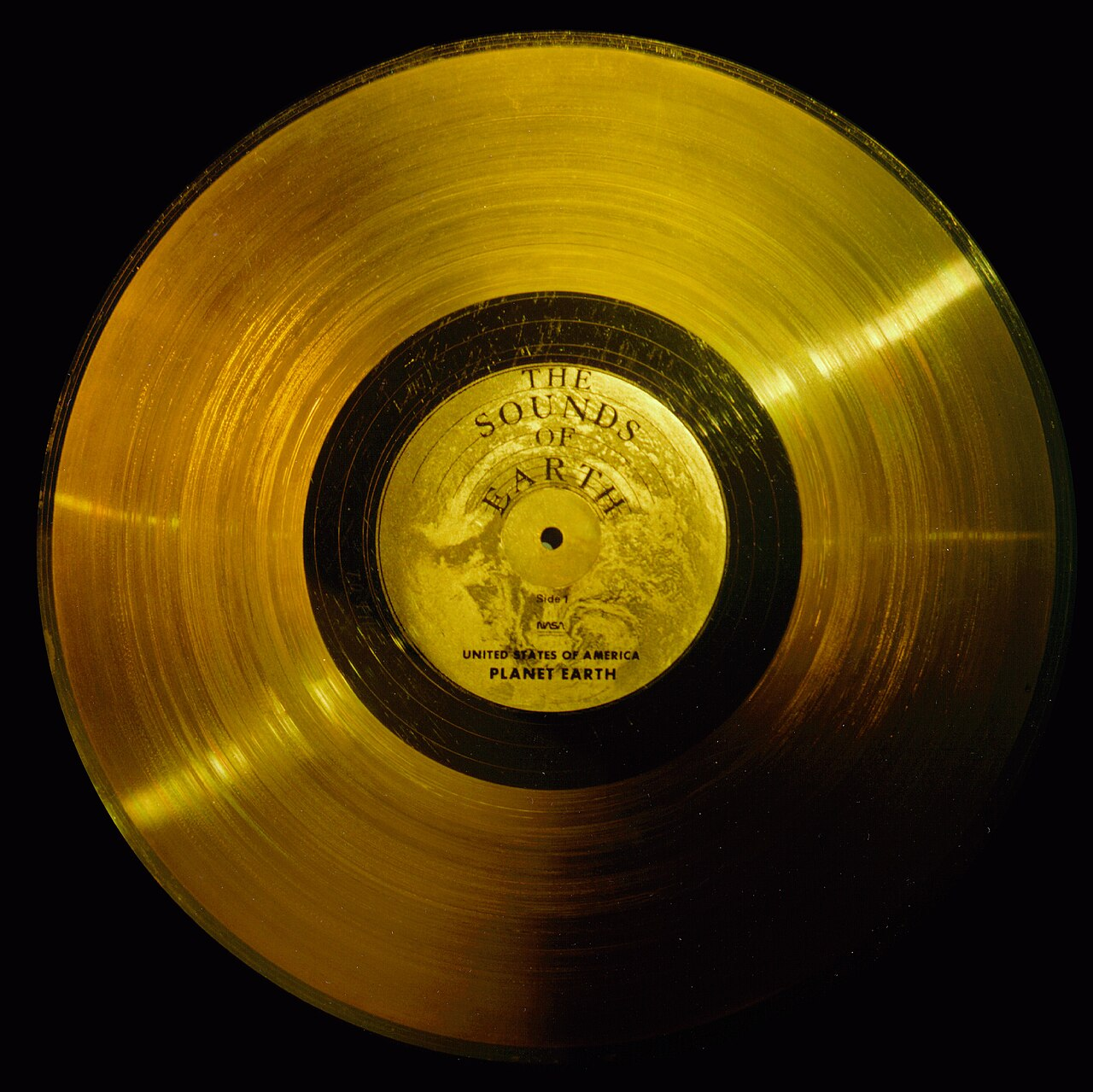
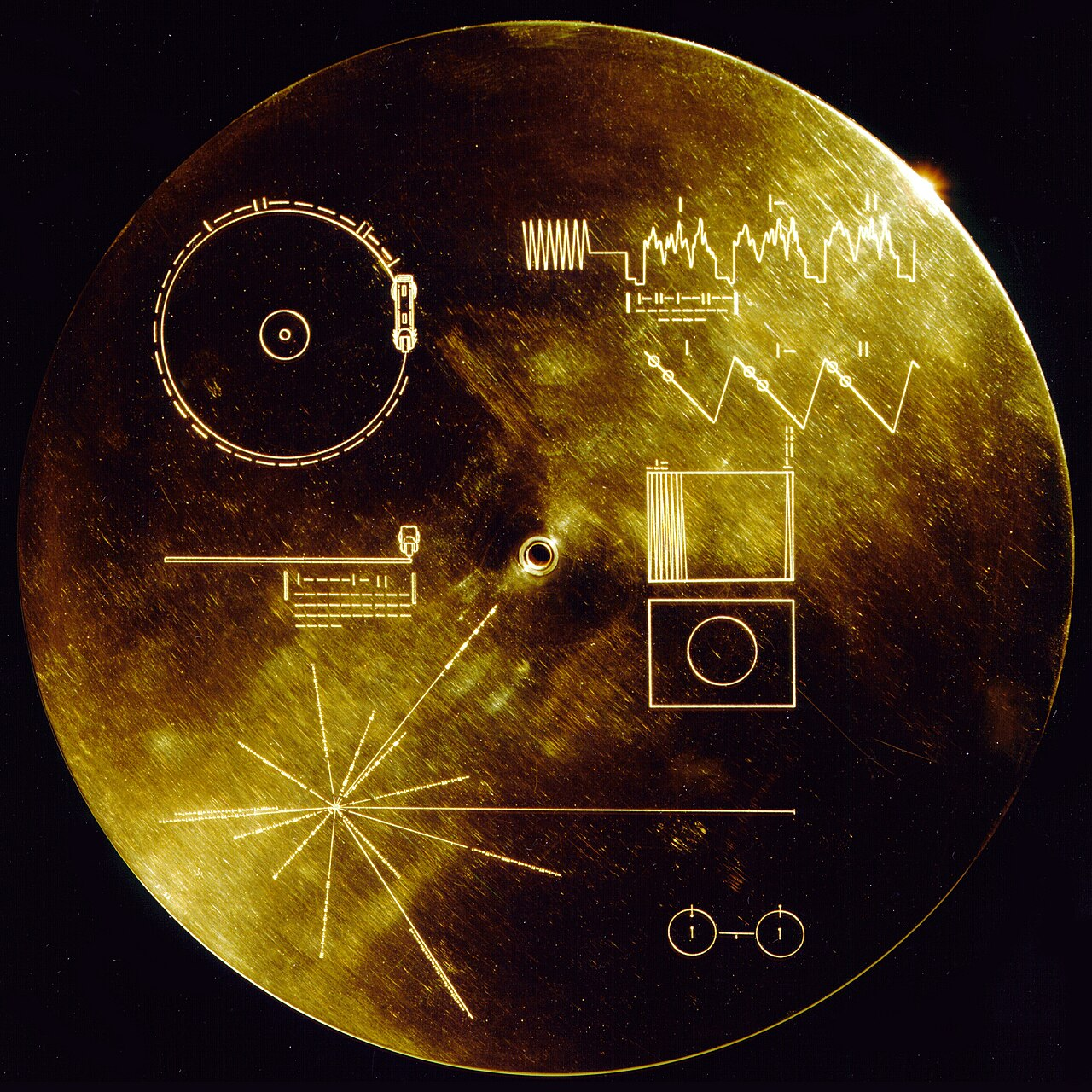
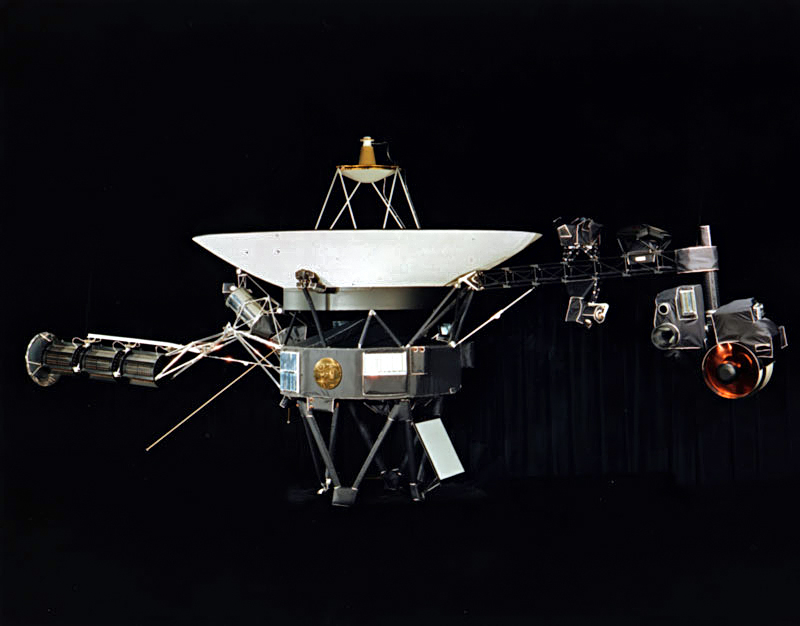
Attached to the side of each spacecraft, however, is something that has nothing to do with planetary science. It is a twelve-inch gold-plated copper phonograph record, in an aluminium cover, with a stylus and cartridge included and playback instructions etched into the casing in symbolic diagrams.
The idea came from the astronomer Carl Sagan, who had already put simpler messages into space: he and Frank Drake had designed engraved plaques for the earlier Pioneer probes, showing human figures and Earth’s location. The record was an upgrade — a chance to send not a diagram but a portrait.
Both Voyagers have now left the heliosphere and are travelling in interstellar space, each carrying an identical copy. Here is what is on them, how it was chosen, and what it means to have sent it.
What Is Actually on It
The contents were assembled by a committee chaired by Sagan, working under severe time pressure imposed by the launch schedule.
Side A holds spoken greetings in 55 languages and a montage of natural sounds. Side B holds the music and the encoded images. The record plays at 16⅔ revolutions per minute — half the usual speed for an LP — to fit more material on.
The images number 115 or 116 depending on the source, encoded in analog. They include a silhouette of a man and a pregnant woman, people eating, an aerial photograph of Earth, the Taj Mahal, Olympic sprinters, a page from Isaac Newton’s System of the World, and a range of diagrams covering mathematics, chemistry and human anatomy.
The sound montage runs about twelve minutes and was assembled into what its makers called “Sounds of Earth”: surf, wind and thunder, birdsong, humpback whales, a train, a kiss, a baby’s cry, volcanoes, rocket launches.
The music runs roughly 90 minutes across 28 tracks, chosen to span cultures and eras. It includes Bach, Beethoven and Mozart alongside Chuck Berry, Blind Willie Johnson, Benin percussion, Solomon Islands panpipes, and traditional music from around the world.
There is one further inclusion that is easy to miss and hard to forget: Ann Druyan, who worked on the project and later married Sagan, recorded her own brainwaves and heartbeat, so that a record of human emotion — as measured in one person’s nervous system on one particular day — is aboard both craft.
Like our content? Follow us for more.
The Greetings
The spoken greetings are the part that tends to affect people most, because of a decision the team made about how to collect them.
Rather than issuing a standard script for translation, the wording of each greeting was left to the speaker of that language. The result is a set of messages that are individually human rather than institutionally uniform.
In Burmese, the message is a simple enquiry after the listener’s wellbeing. In Indonesian, it is a courteous good night to ladies and gentlemen, with a goodbye and a hope of meeting again. The greeting in the Chinese dialect of Amoy asks how the friends of space are doing, whether they have eaten yet, and invites them to visit if they have time — which is, recognizably, how a person actually talks.
The first voice on the record is not a greeting in that sense at all but a formal statement from the then Secretary-General of the United Nations, sending greetings on behalf of an organization representing almost all the human inhabitants of the planet and describing the journey outward as seeking only peace and friendship.
The final English greeting was recorded by Sagan’s six-year-old son.
There is also a greeting that is not human. The record includes a whale song, placed with the spoken messages, on the grounds that whales are the other species on this planet with complex vocal communication.
Why Send It At All
The obvious objection is that nobody is going to hear it, and Sagan said as much himself.
His formulation at the time was direct: the spacecraft would be encountered and the record played only if there are advanced spacefaring civilizations in interstellar space, but launching this bottle into the cosmic ocean says something hopeful about life on this planet.
That is the honest case. The chance of interception is effectively negligible. Space is overwhelmingly empty, the probes are travelling in a particular direction at a particular speed, and the odds of anything finding a small object in that volume are not worth calculating seriously.
The distances make the point. Voyager 1 is travelling at roughly 17 kilometres per second, and it will be about 40,000 years before it passes within 1.6 light-years of another star. That is not an arrival; it is a distant pass.
So the record is better understood as a gesture than a message — an act of self-description performed by a civilization for its own reasons, with the extremely unlikely recipient functioning as a device that forced the question. Deciding what to put on it required deciding what humanity is, in ninety minutes of music and a hundred pictures, and that exercise had value regardless of who listens.
The Cover Is a Puzzle
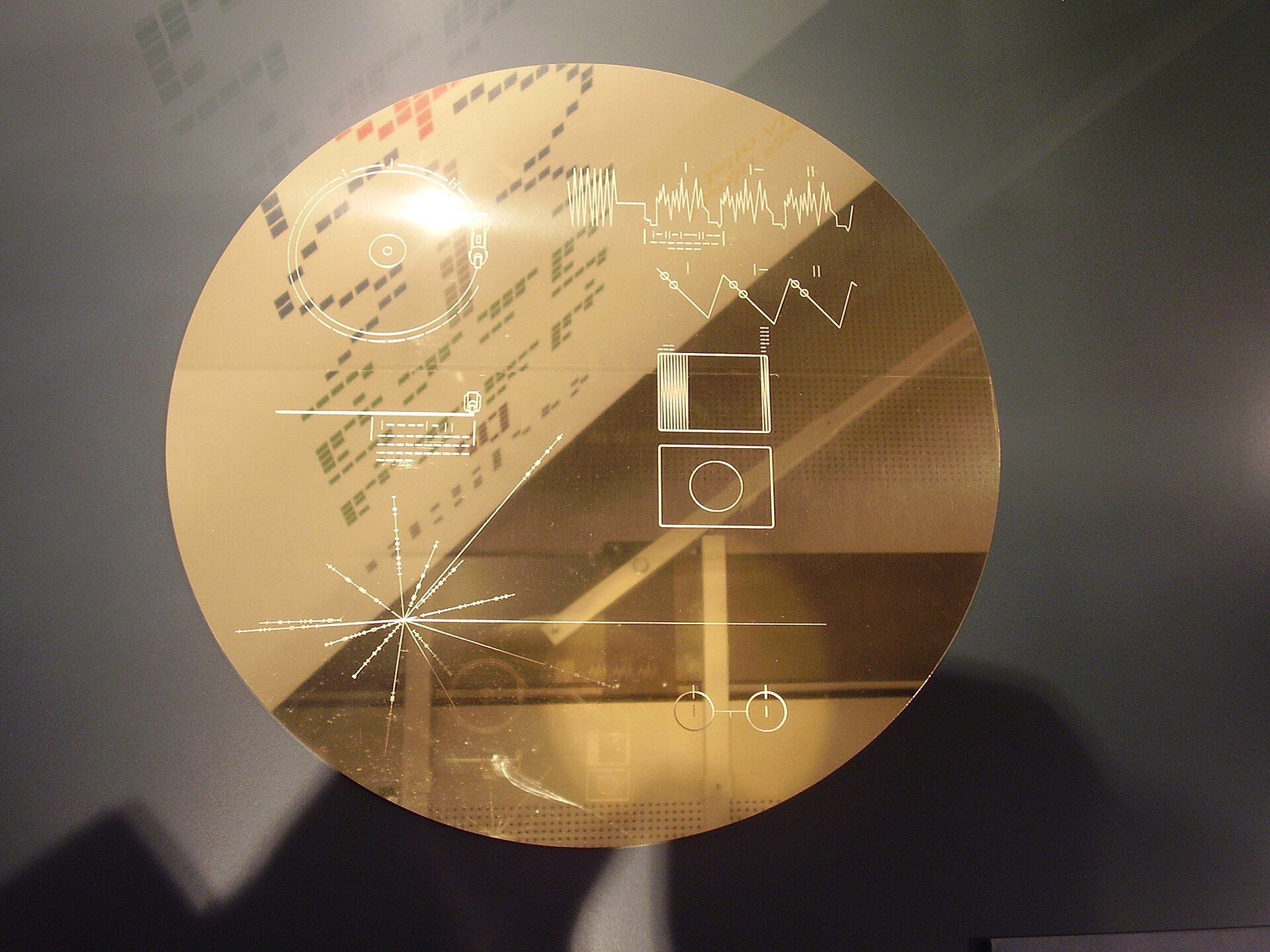
The record itself would be useless without instructions, and the aluminium cover carries them — etched as diagrams, on the assumption that whoever finds it shares no language, no notation and no cultural reference with us.
The engineering solution is to build everything from physics. One diagram shows the record and stylus, with a side view indicating how one meets the other, and binary notation giving the correct rotation speed. That speed is expressed in units derived from a fundamental property of the hydrogen atom, the most abundant element in the universe, on the reasoning that anyone capable of intercepting a spacecraft will know it.
Another diagram explains how the images are encoded, showing how the signal translates into scan lines and giving a reference picture so the finder can check whether they have decoded it correctly.
There is also a pulsar map: a starburst of lines showing the position of the Sun relative to fourteen pulsars, with each line’s binary notation giving that pulsar’s frequency. Because pulsars spin down at known rates, the map functions as both an address and a timestamp.
Whether any of this would work is unknowable. It is, in any case, a remarkable attempt to write instructions for a reader about whom you can assume nothing at all.
The Thing That Will Outlast Us
There is a practical fact about the record that gives it a weight the mission never intended.
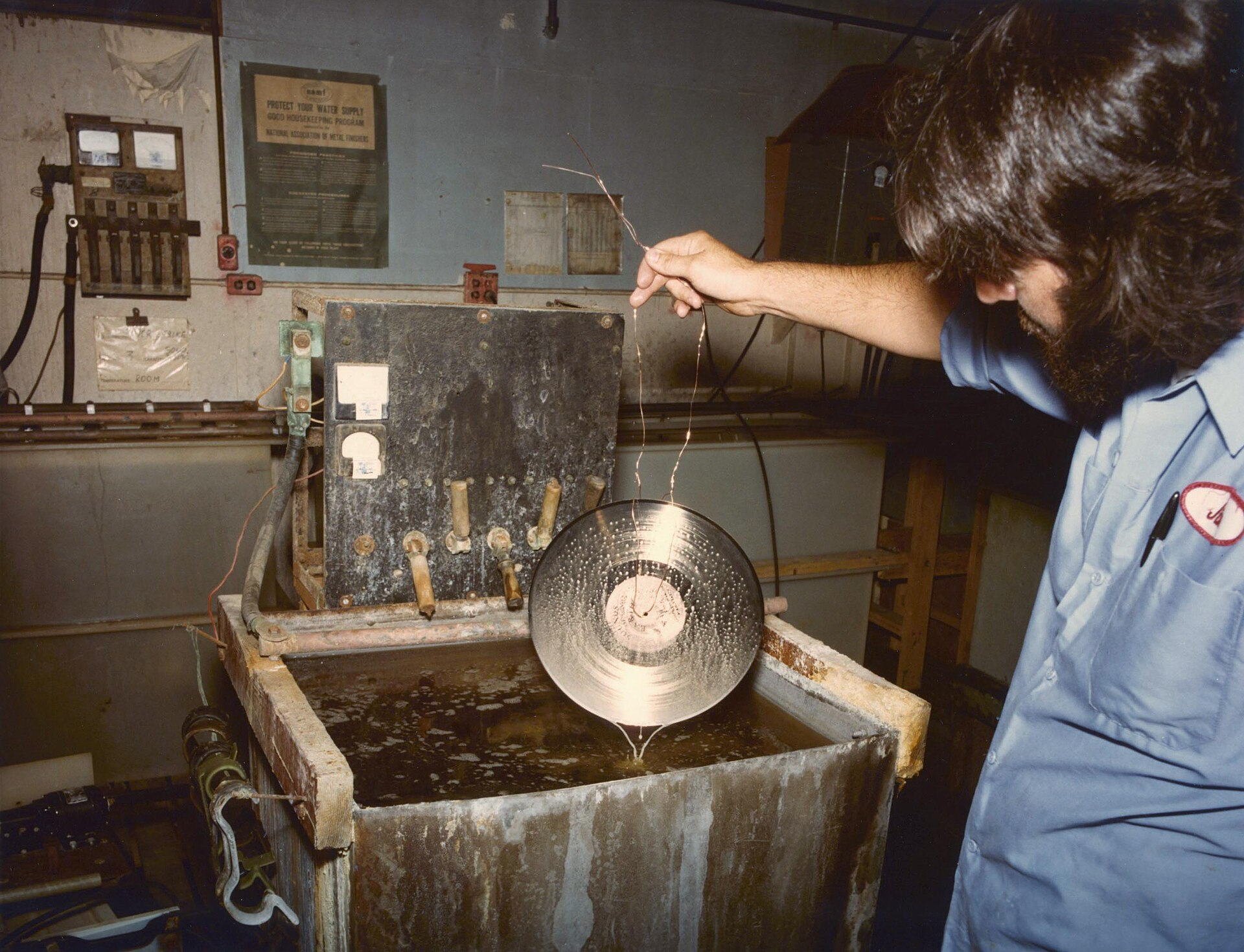
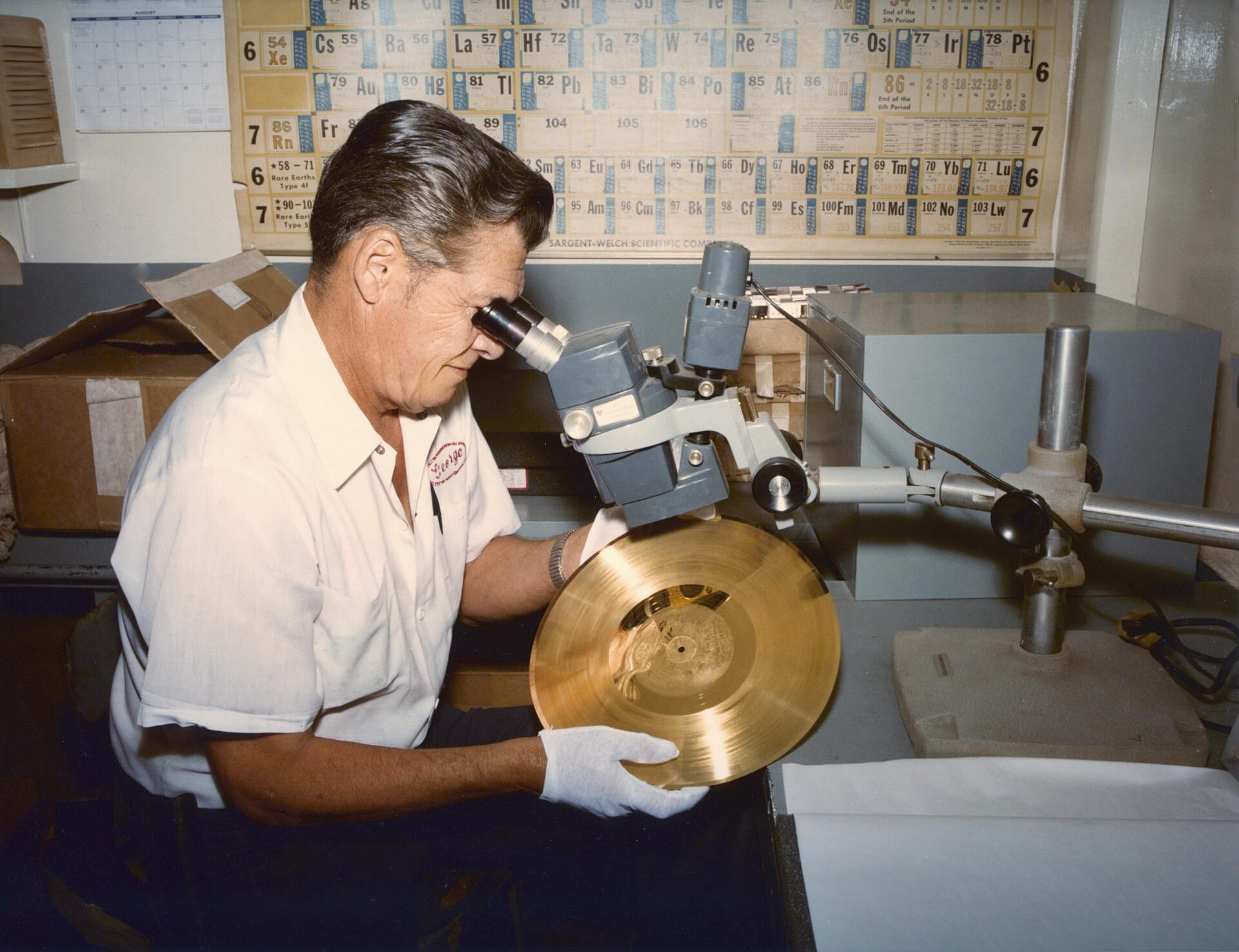
It is gold-plated copper, sealed in aluminium, in a vacuum, at extremely low temperature, with essentially nothing around to erode it. Estimates of its survivable lifespan run to something on the order of a billion years.
Nothing else humans have made comes close. Buildings weather. Books decay. Digital storage degrades and, more importantly, depends on machines and formats that stop existing. Every archive on Earth sits on a planet with weather, tectonics, oxygen and an eventual expiration date.
The Voyager records sit in the safest storage environment available: nowhere, moving away from everything.
There is a real possibility that a phonograph record with Chuck Berry on it becomes the last durable evidence that our species existed. That is a strange sentence to write and stranger to sit with.
What It Says About 1977
The record is also a document of the moment that produced it, and reading it that way is instructive.
It was assembled quickly, by a small committee, with limited technology and enormous ambition. It is optimistic in a way that a contemporary version might struggle to be: it presents humanity as curious, musical, scientifically capable and fundamentally well-meaning, and it does so without irony.
It has fair criticisms. The selection is inevitably partial, shaped by the tastes and blind spots of a small group working at speed in one country. Any such artifact would be. It also assumes a recipient who could work out how to build a turntable from etched diagrams, which is a substantial assumption.
But the intent is clear and holds up. NASA has since released the record’s contents publicly, so anyone can listen to the greetings and the sounds of Earth as they were sent.
Both Voyagers are still transmitting, decades past their design lives, though their power is dwindling and they will eventually fall silent. When they do, the mission ends and the record’s actual job begins: to keep travelling, indefinitely, carrying whale song and a heartbeat and a child’s voice, in a direction where nobody is waiting.
It is a gift from humanity to the cosmos, as one description puts it, and also a gift to humanity — a reminder of what a species is capable of when it decides to introduce itself.
Like our content? Follow us for more.