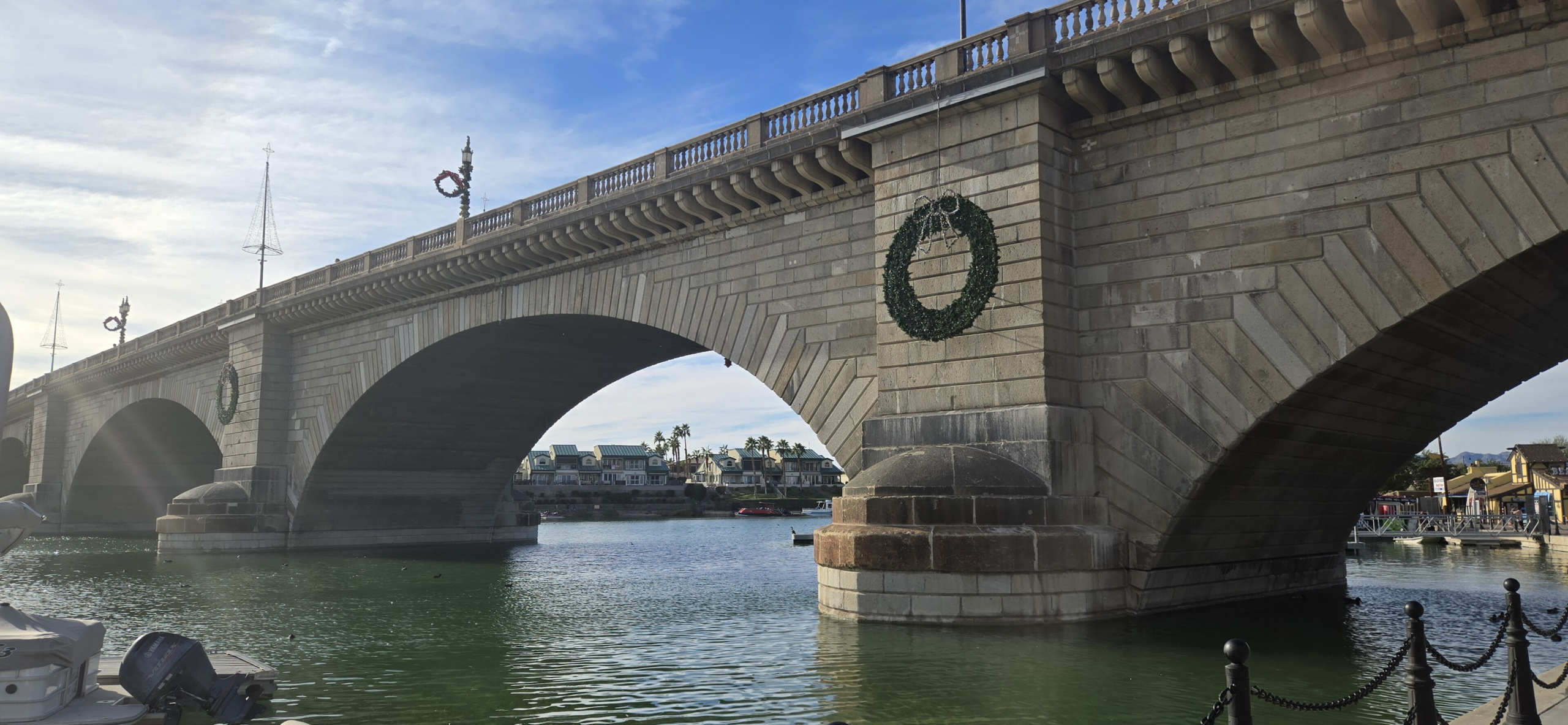
There are roadside attractions, and then there is the moment on Arizona’s Route 95 when an actual piece of nineteenth-century London — five granite arches that once watched Victoria’s funeral procession and survived the Blitz — appears through the heat shimmer, spanning blue water between palm trees, three hundred miles from the ocean and five thousand from the Thames.
This is not a replica. Lake Havasu City’s London Bridge is the London Bridge, the 1831 stone crossing that carried the city’s traffic for 130 years, purchased at auction, taken apart, and reassembled in the Mojave Desert by a man who needed something — anything — to make people drive out and look at his new town. It worked better than even he predicted. The bridge became one of Arizona’s most visited attractions, the town around it grew from a barren airstrip to a city of 57,000, and the whole story remains the greatest real-estate stunt in American history.
A Bridge With a Problem, a City With a Price Tag
Start on the Thames. The London Bridge in question — designed by John Rennie, completed in 1831, built of granite from Scotland and Devon — replaced the medieval bridge of nursery-rhyme fame and served the city grandly for over a century. By the 1960s, though, the nursery rhyme was coming true on schedule: London Bridge was falling down, or more precisely sinking, settling into the Thames clay at roughly an inch every eight years under traffic it was never designed to carry. The city needed a modern replacement and faced a demolition bill for a beloved landmark.
A city councilman named Ivan Luckin had a better idea, one colleagues reportedly found ridiculous right up until it worked: don’t demolish the bridge — sell it. London put the world’s most famous crossing up for sale in 1967, and Luckin traveled to New York to pitch it with a line of pure salesmanship: this wasn’t 130,000 tons of used granite, it was two thousand years of history, heir to every London Bridge back to the Romans. Somewhere in America, he figured, was a buyer who understood that.
Like our content? Follow us for more.
The Chainsaw King Who Needed a Landmark
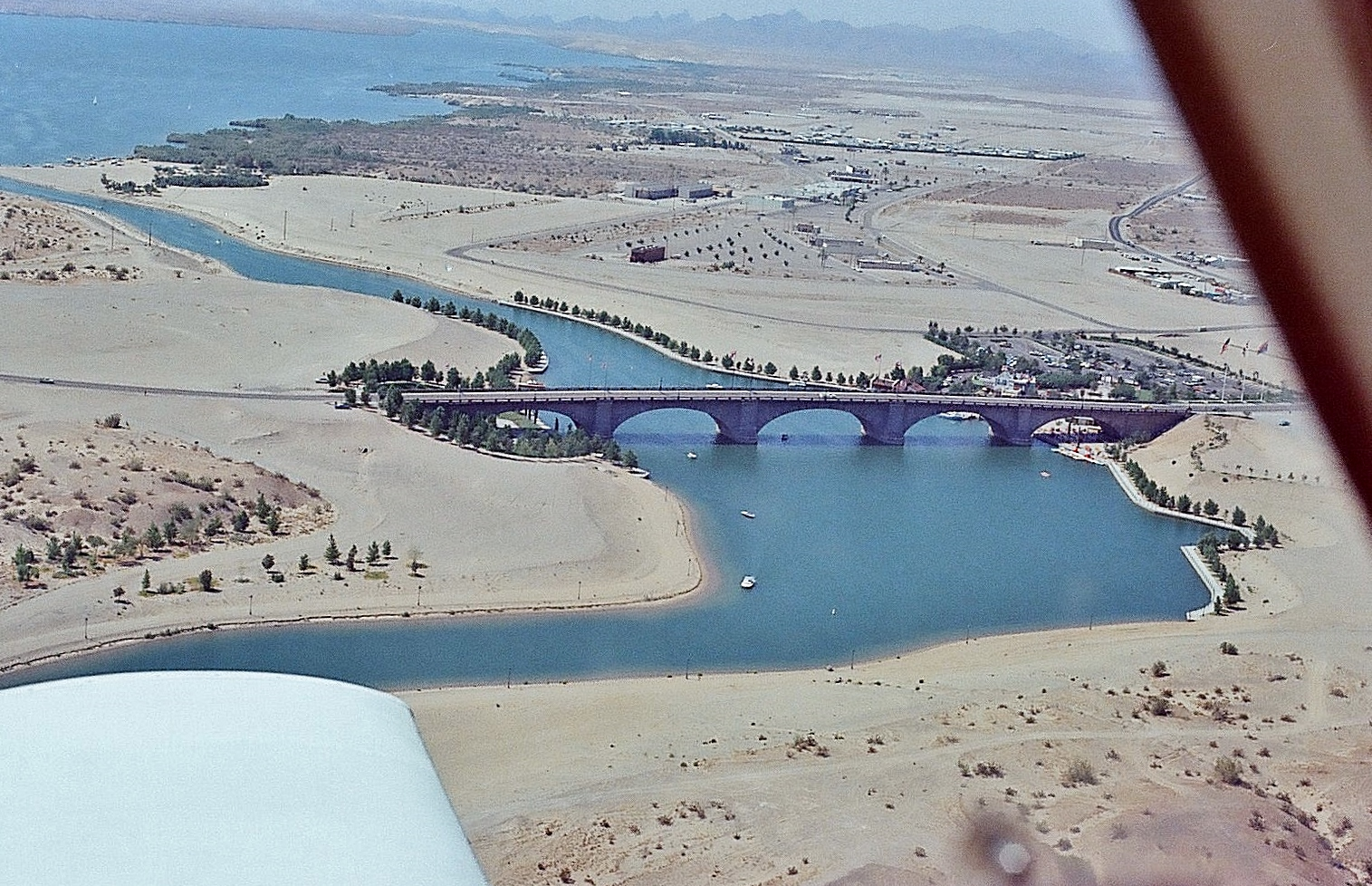
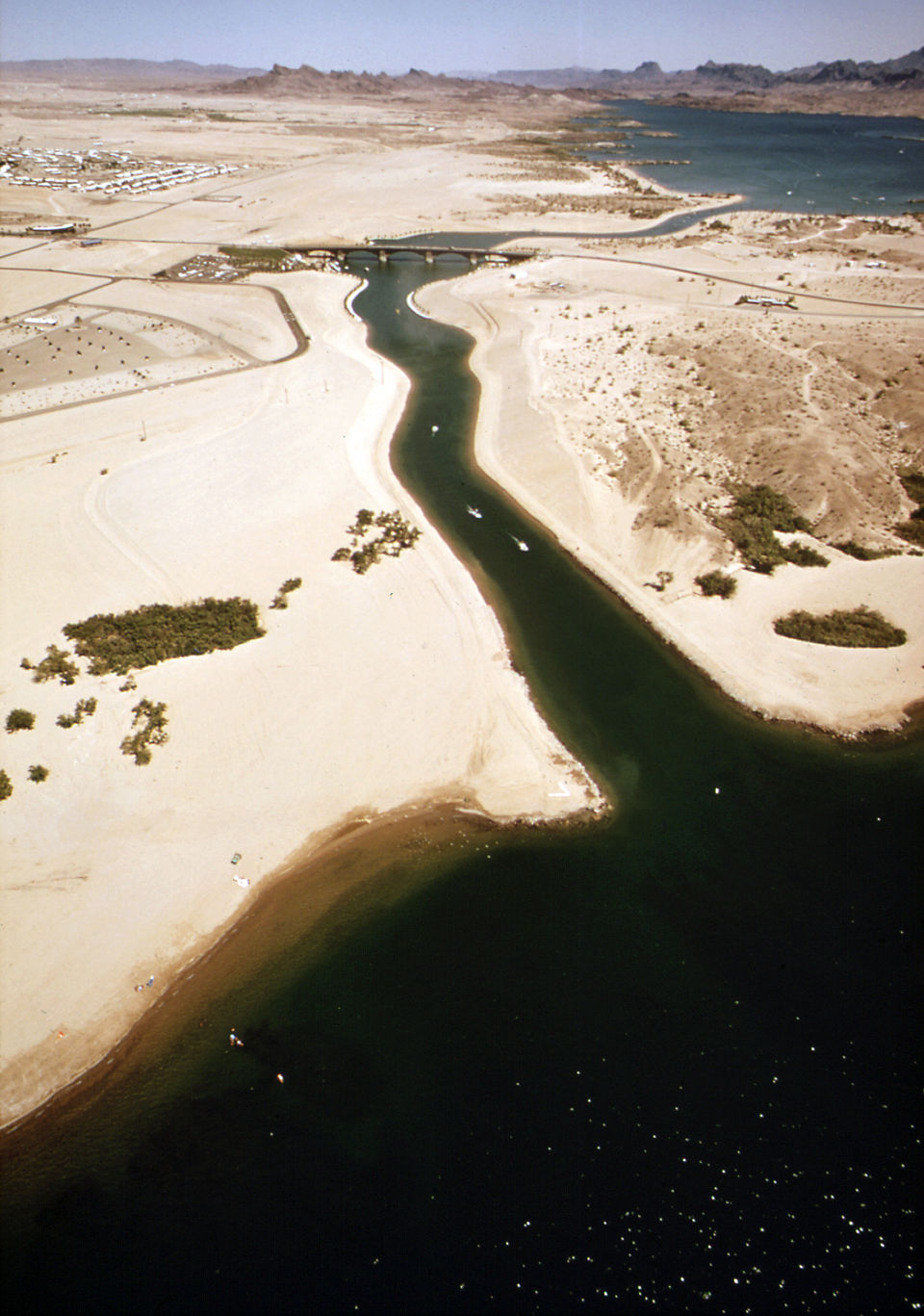
That buyer was Robert P. McCulloch, an oilman and manufacturer whose chainsaws had made him a fortune, and whose latest venture was an honest head-scratcher: a planned city on the shore of Lake Havasu, a reservoir on the Colorado River between Arizona and California, where he’d bought twenty-six square miles of desert — one of the largest private land deals in Arizona history — and was trying to convince ordinary Americans to move somewhere with summer temperatures north of 110 degrees. He was flying prospective buyers in by the planeload on free flights. What he didn’t have was a reason for anyone else to come.
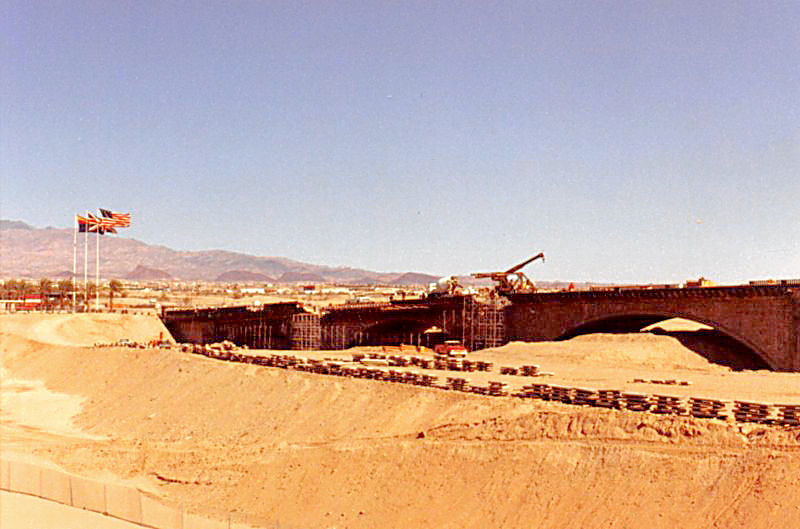
McCulloch’s bid for the bridge — $2,460,000 — was famously arrived at by doubling the estimated dismantling cost and adding a flourish; accounts differ on the exact arithmetic, which suits the story fine. He won the auction in April 1968, instantly acquiring the largest antique ever sold, and then the truly audacious part began. Masons dismantled the bridge’s granite facing stones block by block, numbering each with a code marking its position — many stones still wear their numbers today, visible to anyone who walks the bridge and knows to look. Ten thousand tons of granite crossed the Atlantic, transited the Panama Canal to Long Beach, and rode trucks three hundred miles into the desert.
At Lake Havasu, the reconstruction was cleverer than the legend suggests: rather than rebuild a freestanding stone bridge, engineers erected a steel-reinforced concrete structure and clad it in the original granite — the historic skin on a modern skeleton — assembling it on dry land while the famous stones went back into their numbered places. Then, in the move that made the whole thing real estate genius, McCulloch dredged a mile-long channel beneath the finished bridge, cutting off a peninsula to create an island and giving his London Bridge actual water to cross. The bridge didn’t come to a river; the river was built to fit the bridge.
“He Thought He Was Buying Tower Bridge” — the Myth That Won’t Die
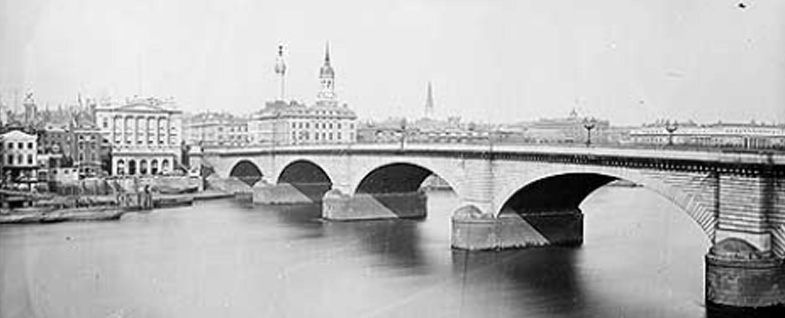
Every visitor hears the same story within an hour of arriving: McCulloch believed he was buying Tower Bridge — the photogenic Victorian one with the towers and the lifting roadway — and discovered too late he’d purchased its plainer upstream cousin. It’s a perfect story, and by every serious account it’s false. McCulloch and his team knew precisely which bridge was for sale; the auction was international news, the specifications were public, and the man ran a manufacturing empire — he could read a listing. Both McCulloch and London officials denied the mix-up for the rest of their lives, and historians side with them.
The myth persists because it’s more fun than the truth, and Lake Havasu has long since made peace with it — tour guides debunk it with a wink, gift shops profit from it either way. File it with the alligators in the sewers: too good to kill, too false to print without this paragraph.
What a Visit Actually Looks Like
The bridge rewarded McCulloch’s gamble almost immediately — the October 1971 dedication drew dignitaries from London, and for decades the site was routinely described as Arizona’s second-most-visited attraction after the Grand Canyon, a claim worth hedging today but not by much. The experience holds up. The bridge carries real vehicle traffic and has good pedestrian walkways on both sides; the best views come from the water level along the Bridgewater Channel, where boats idle beneath the arches and the granite glows gold at sunset. Look for the blocks’ carved position numbers, and for the scars on the stone that local lore attributes to strafing damage from the Second World War — the bridge kept London’s wounds.
At its feet sits the English Village, a cheerfully improbable Tudor-style shopping court from the original development, and the visitor center runs walking tours that tell the whole saga properly, granite numbers and myth-debunking included. Beyond the bridge, Lake Havasu leans into its identity as Arizona’s beach town: boat rentals and channel cruises for every budget, a long sandy state-park beach, and a shoreline of small lighthouse replicas — the town has dozens, scale models of famous American lights, its own second act of borrowed landmarks — and water that draws spring-breakers in March and families all summer. Time a visit for October through April unless triple digits sound refreshing; summer here is not a figure of speech, though the lake crowd treats it as a dare and the sunset boat cruises run regardless.
The Stunt That Built a City
Here’s the measure of the thing: it worked completely. Lake Havasu City, a dusty airstrip with a sales office in 1963, is today a city of some 57,000 people whose economy, identity, and skyline (such as it is) all trace to the afternoon a chainsaw magnate raised his hand at an auction. The bridge did exactly what landmarks do — it made a place a destination — except in reverse order: first the landmark, then the place. Urban planners still cite it; no one has ever quite repeated it.
And there’s something fitting in where the old bridge ended up. London Bridge spent its first life carrying commuters who never gave it a glance. It spends its second being photographed a thousand times a day by people who drove hours through a desert specifically to see it — wanted, at last, for itself. Of all the strange American afterlives, the London Bridge of Arizona may be the happiest: still falling down nowhere, still crossing water, still proof that with enough nerve and enough numbered crates, you really can take it with you.
There’s a tidy coda on the Thames side, too. The modern concrete London Bridge that replaced Rennie’s opened in 1973 and does its job with perfect anonymity — tourists photograph Tower Bridge and ignore it completely, which rather proves Luckin’s original sales point: the fame was always portable. London got a bridge that works; Arizona got a bridge that matters. Ask the crowds along the Bridgewater Channel on any winter evening, watching the lights come up under five Georgian arches with the desert going purple behind them, which city got the better half of the deal. The granite, for its part, has now spent longer in Arizona than some of it spent over the Thames in the twentieth century — at what point does a transplanted landmark become simply a landmark? Lake Havasu settled that question years ago, and prints the answer on every postcard.
Like our content? Follow us for more.