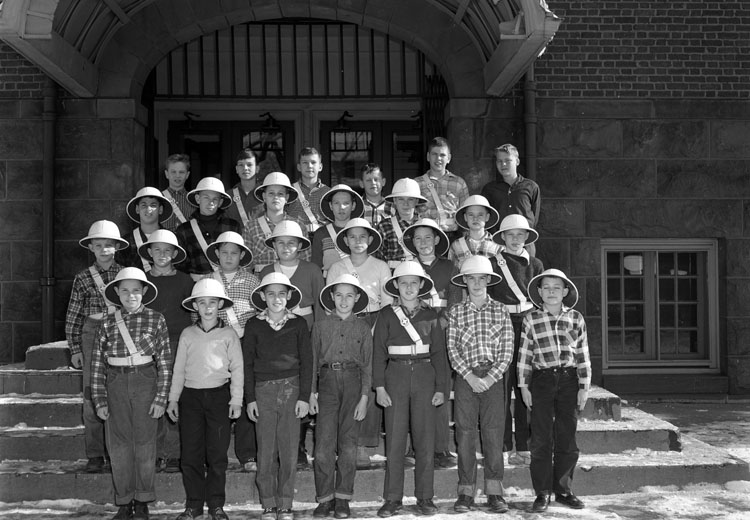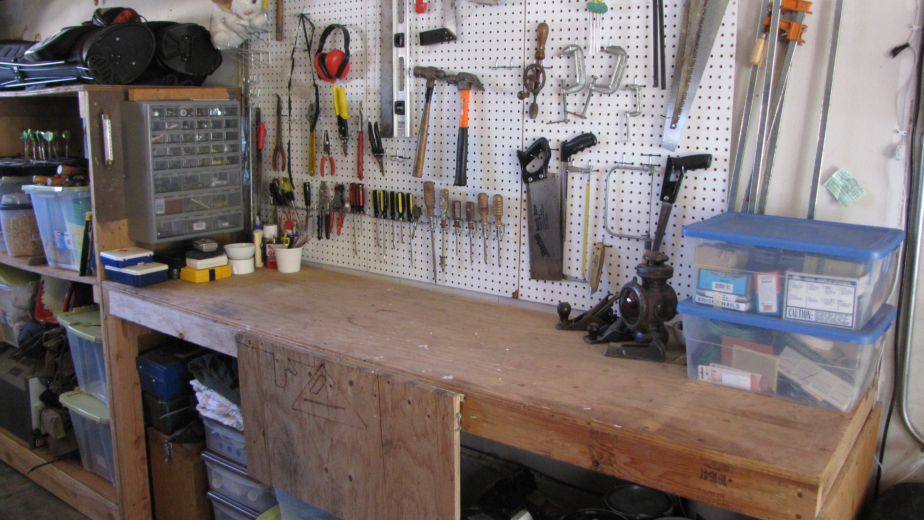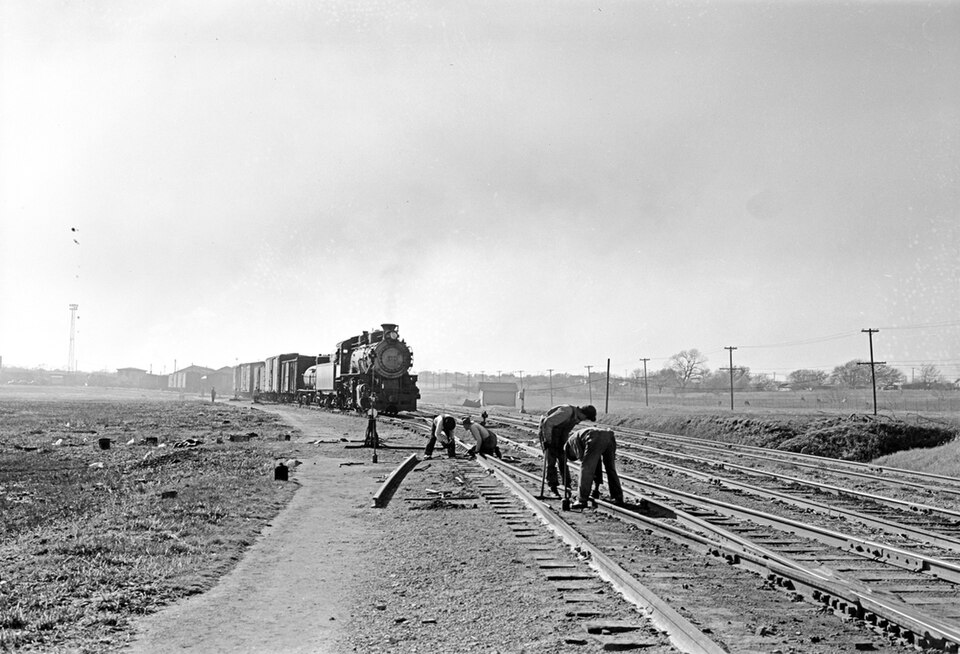
Here are sixteen things the permanent way gang — the track gang, in American usage — did by hand in 1960. Almost every one of them is now done by a machine, at night, inside a formally closed section of railway, and the reason the two changes happened together is the most important thing in this list.
1. Worked on the track with trains still running on it
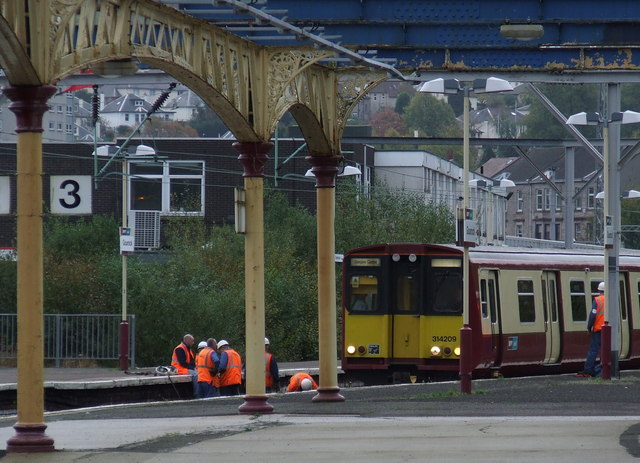
The defining condition of the old permanent way gang was that the railway did not stop for them. Work was done between trains, on a line carrying normal traffic, with the gang stepping clear as each one approached.
The arrangement depended entirely on a lookout: a man posted with a horn or a whistle whose only job was to watch and warn, and on busy or curved sections more than one.
Modern track work is done in a possession. The line is formally blocked, protection is physically applied, the work is planned around the closure rather than the closure around the work, and nobody relies on seeing a train in time. The change was not a refinement of the old method. It was an abandonment of it.
Like our content? Follow us for more.
2. Packed ballast under sleepers with a hand beater
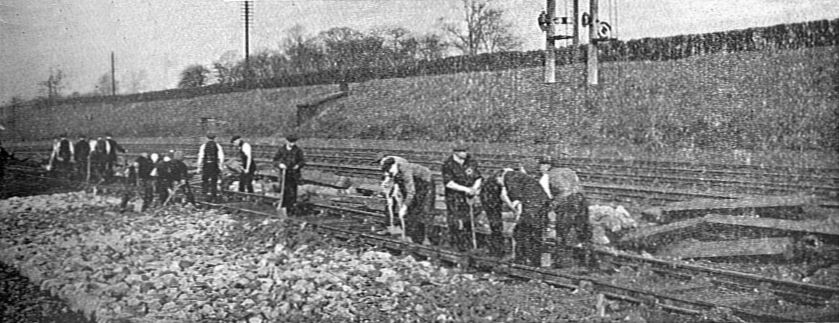
Packing meant forcing stone in hard underneath each sleeper with a heavy steel beater, swung repeatedly, by men working in pairs along the length. It is the job the trade was defined by and the one every ganger could do.
It is the single most laborious job on a railway and it had to be repeated constantly, because traffic works the packing loose again and the length never stayed done for long.
A modern tamping machine does the same job mechanically as it travels, doing in an hour what a gang did in a week and to a tolerance a hand gang could not have measured, let alone achieved. How the stone itself behaves under a railway is a subject of its own and is not this file’s.
3. Lined the track by eye, with bars and judgment
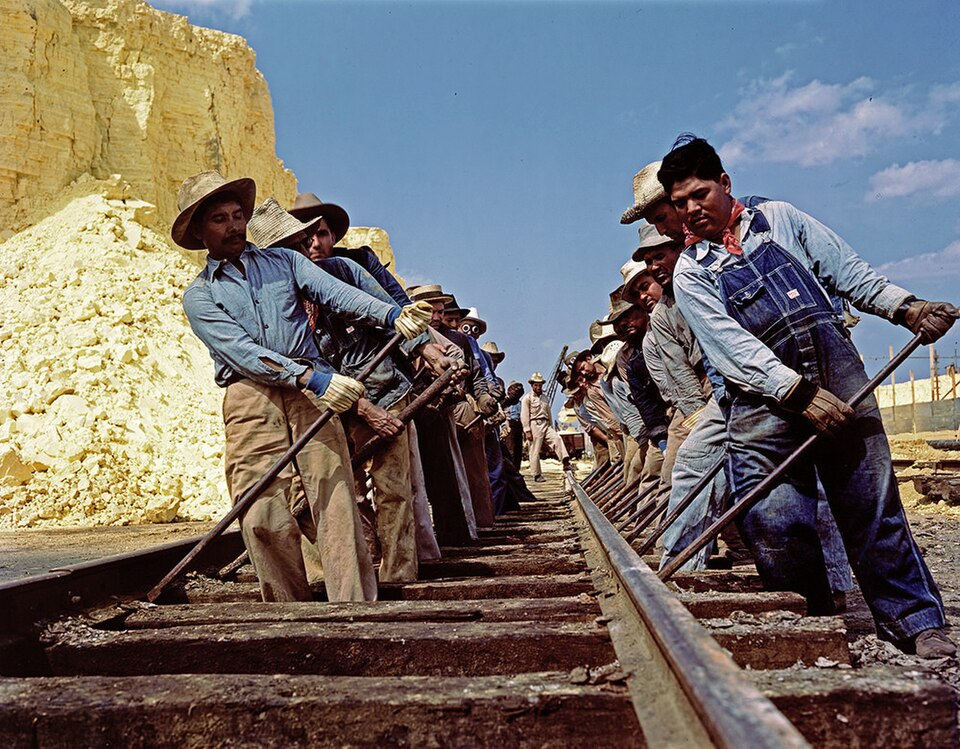
Getting a length of track straight, or into a correct curve, was done by sighting along the rail from a crouch, calling the error, and levering the whole assembly sideways with crowbars until it looked right.
On curves the gang also set the cant, the difference in height between the two rails, which balances a train through the curve. Cant was measured with a gauge and adjusted by packing one side.
Now the geometry is surveyed and the machine works to designed coordinates. The eye of a good ganger was remarkably accurate and it was still an eye, and two gangers could disagree about the same length of railway.
4. Changed sleepers one at a time, by hand, in traffic
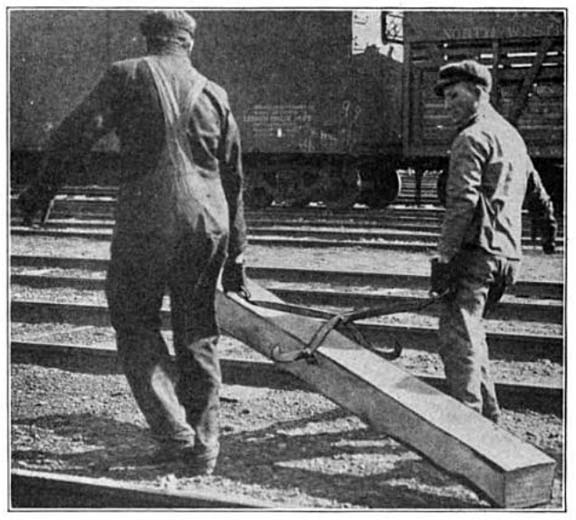
Replacing a rotten timber sleeper meant digging out the ballast around it, unfastening the rails, dragging the old one out sideways, sliding the new one in, refastening and repacking.
A hardwood sleeper is extremely heavy and awkward and the work was done bent double at track level with limited room on either side.
Modern renewal replaces whole lengths of track as panels, or uses machines that extract and insert sleepers continuously, and a hand sleeper change is now the exception rather than the routine, done where access or geometry rules a machine out.
5. Kept jointed track alive one fishplate at a time
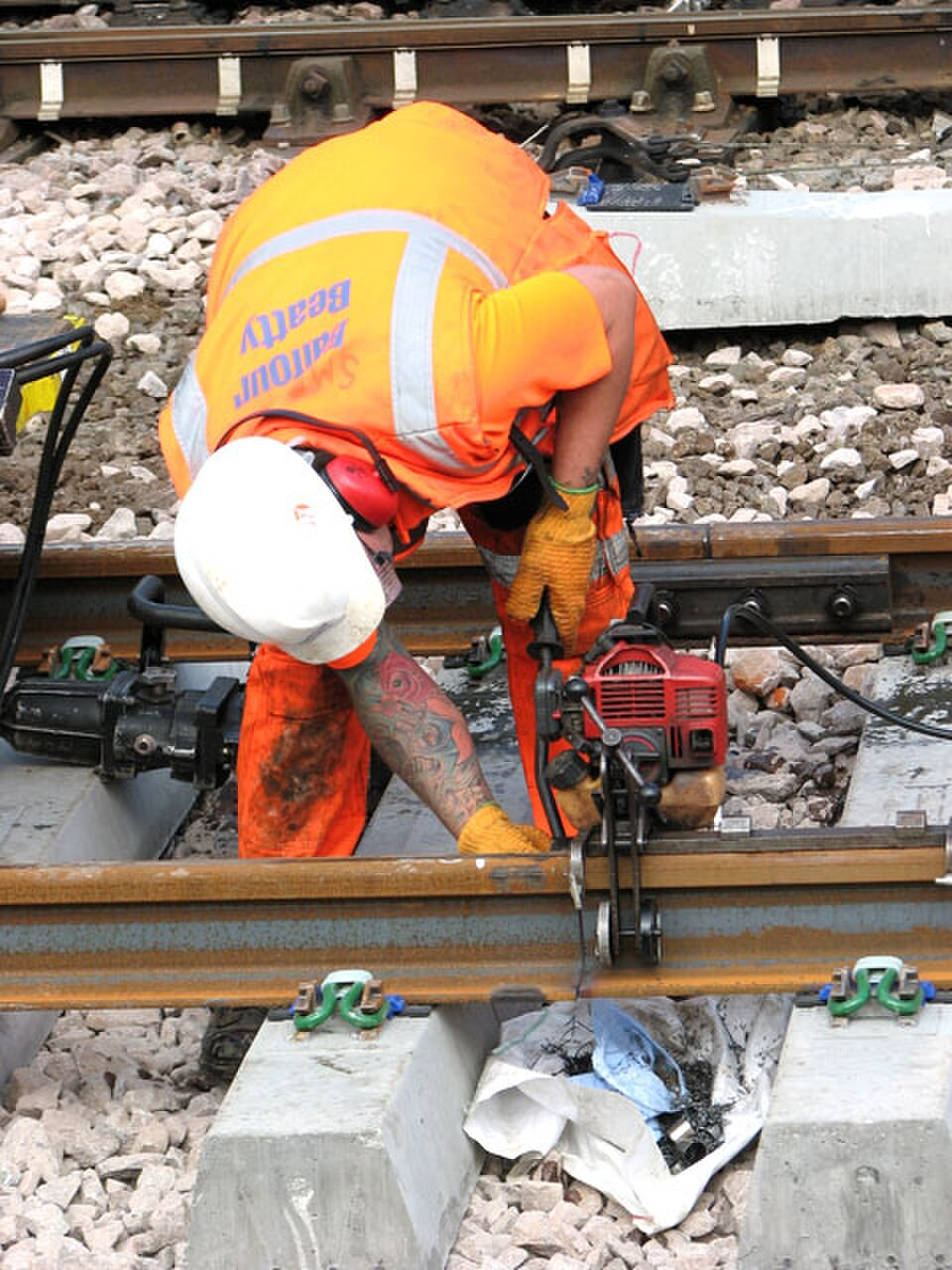
Before continuous welded rail, track was laid in short lengths joined by fishplates: steel plates bolted across each joint, with a deliberate gap left for expansion.
Every one of those joints was a weak point that worked loose under traffic, so the gang went along tightening fishplate bolts, replacing them, and dealing with joints that had battered down and become low spots.
The number of joints on a railway was enormous and the maintenance they generated was the bulk of the gang’s routine work. Welding the rail into continuous lengths removed most of it at a stroke, and took with it the characteristic sound of a train on jointed track, which is the detail most passengers actually noticed.
6. Left and managed expansion gaps that had to be right
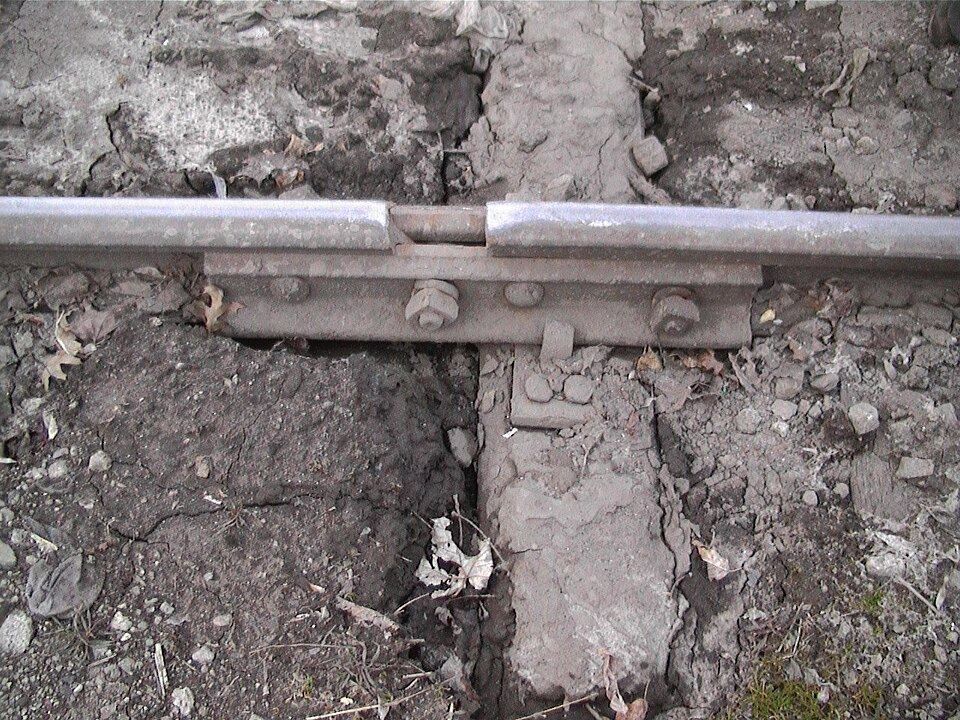
Setting the gaps was a measuring job the gang did by hand, with the correct gap for the day taken from a table against the temperature at which the rail was being laid.
Getting it wrong in one direction gave trouble in summer and in the other gave a railway full of rough joints all winter, so the gang carried a thermometer and used it.
Continuous welded rail removed the task altogether, and with it the gauging, the tables and the thermometer. Why welded track can be laid without gaps at all is an engineering question with an answer of its own, and it is not the gang’s story.
7. Keyed rails into cast chairs with wooden wedges
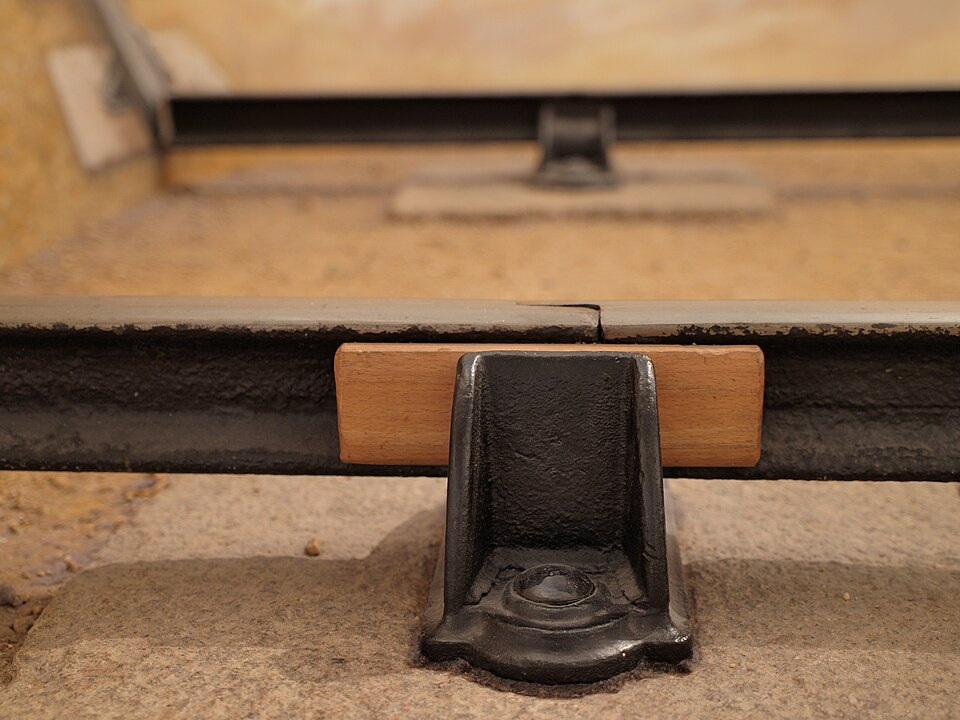
On older track the rail sat in a cast iron chair bolted to the sleeper and was held by a wooden key hammered in beside it. Keys worked loose, dried out, split and fell out.
Keying up was a continuous task along the whole length, done with a hammer, and oak keys were soaked and replaced in their thousands.
Modern fastenings are sprung steel clips designed to hold a constant force and to need no attention, which is a small invention with an enormous effect on how many people a railway needs. A great deal of railway modernisation looks like this: an unglamorous component that deletes a job.
8. Drove spikes and screwed down baseplates by hand
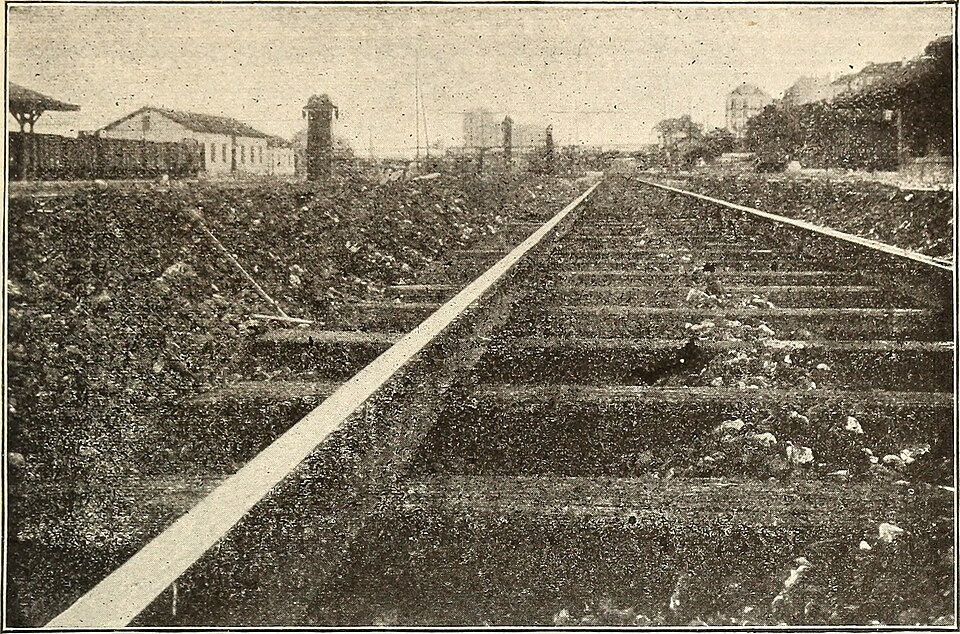
On flat-bottom track laid directly on timber, the rail was held by spikes driven through baseplates into the sleeper, or by screws, and both were applied with a hammer or a hand spanner.
Driving spikes accurately all day is a skill and a punishment, and a gang that did it was recognisable by their forearms.
Powered impact tools and machine-mounted screwing heads do it now, which is faster and, more importantly, consistent: a spike driven to the same depth every time holds the same way every time, and consistency is what lets an engineer predict how track will behave.
9. Walked the length of the line, every day, looking at it
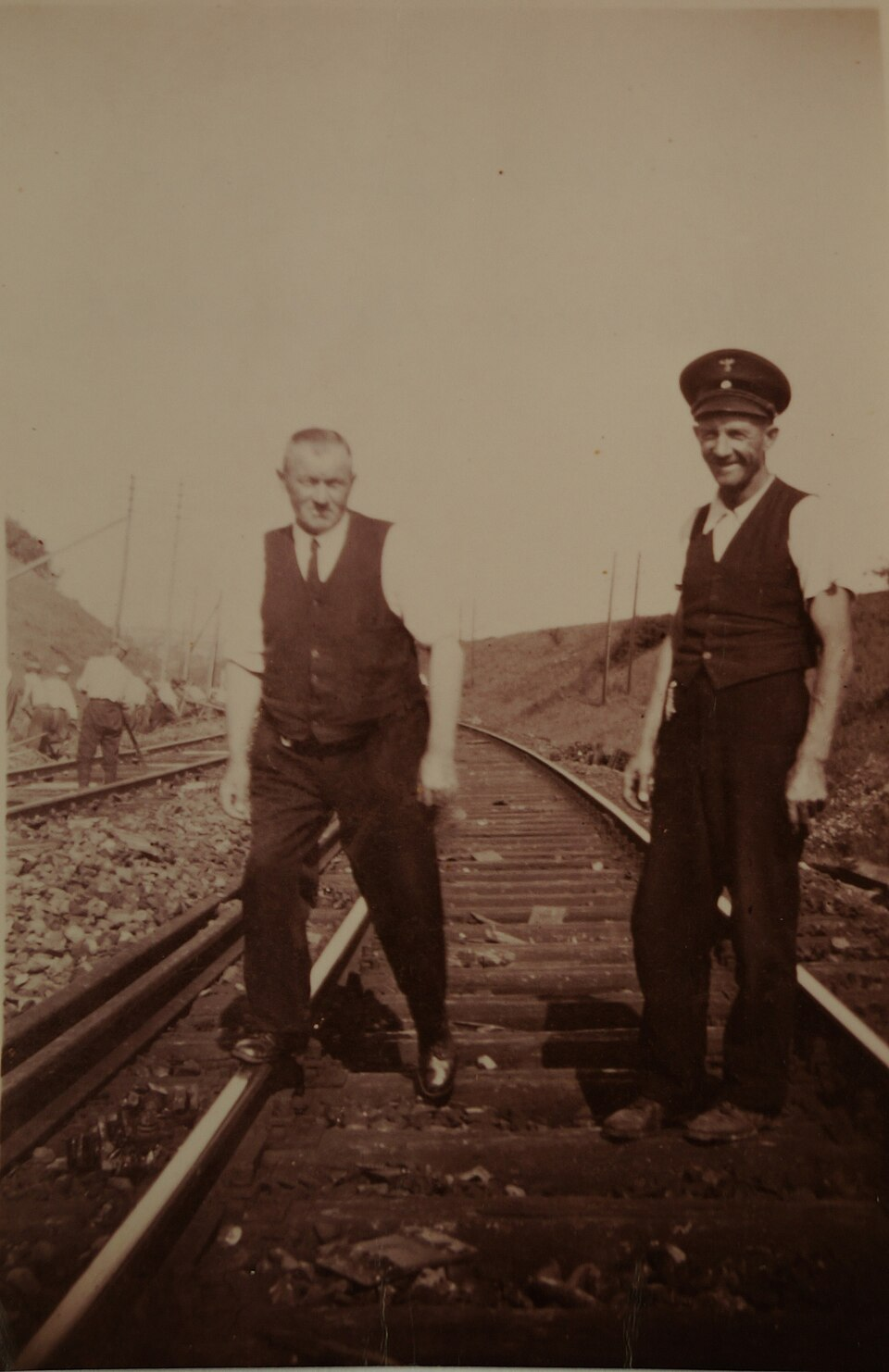
Each gang had a stretch of railway it was responsible for and a man walked it regularly, examining rails, joints, fastenings, drainage and the condition of the formation.
That inspection was the railway’s main defence against a developing defect, and it worked because the same man walked the same ground often enough to notice change.
Inspection is now done by recording vehicles that measure geometry at speed, by ultrasonic testing for internal rail defects, and by targeted foot patrols. The patrol survived; the daily walk by a man who knew every yard did not, and the knowledge that went with it was never written down anywhere.
10. Cut vegetation and cleared drains with hand tools
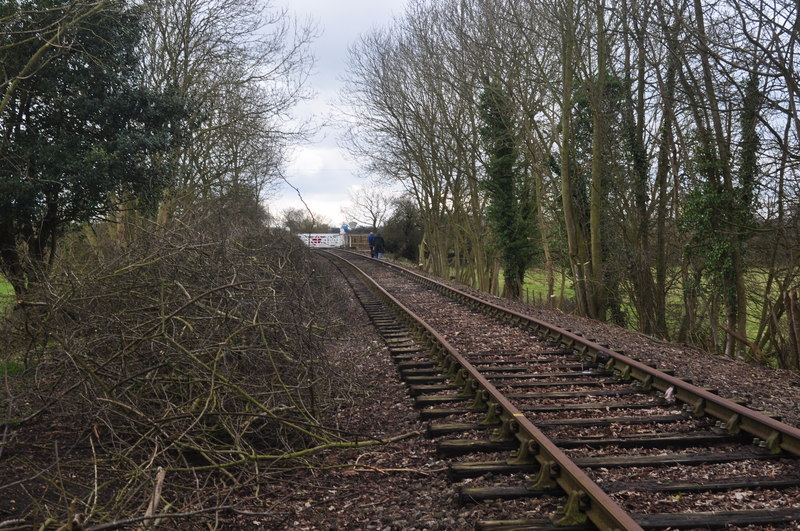
A railway’s drainage is what keeps the formation beneath the track dry, and a blocked ditch produces a soft spot that no amount of packing will fix. Clearing them was shovel work.
Lineside vegetation was cut back by scythe, hook and billhook, continuously, in season, because growth obstructs sightlines to signals and holds moisture against the structure.
Both jobs are now largely mechanised and both are now also the subject of environmental constraint, with timing restricted to protect nesting and habitat, which did not feature in the old calendar at all.
11. Dealt with the cold, the heat and the wet with no shelter
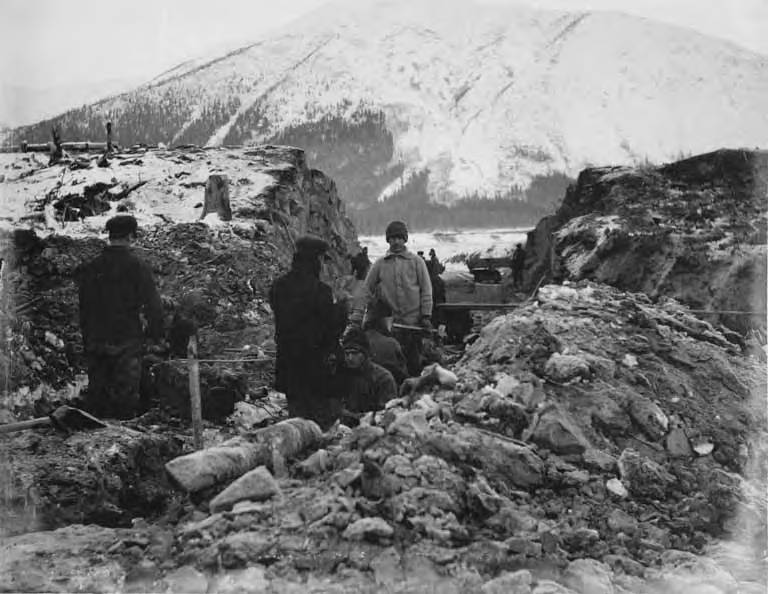
The gang worked outdoors in whatever the weather did, with a hut at one end of the length containing a stove and a kettle and nothing else.
Rail is coldest and most brittle in winter and hottest and most mobile in summer, so the work followed the weather: packing and lining in reasonable conditions, broken-rail response in a hard frost.
Modern track work is still outdoor work and always will be, but it is planned around weather limits, with heat and cold thresholds that stop certain operations and welfare facilities that are a requirement rather than a kindness.
12. Responded to a broken rail at any hour
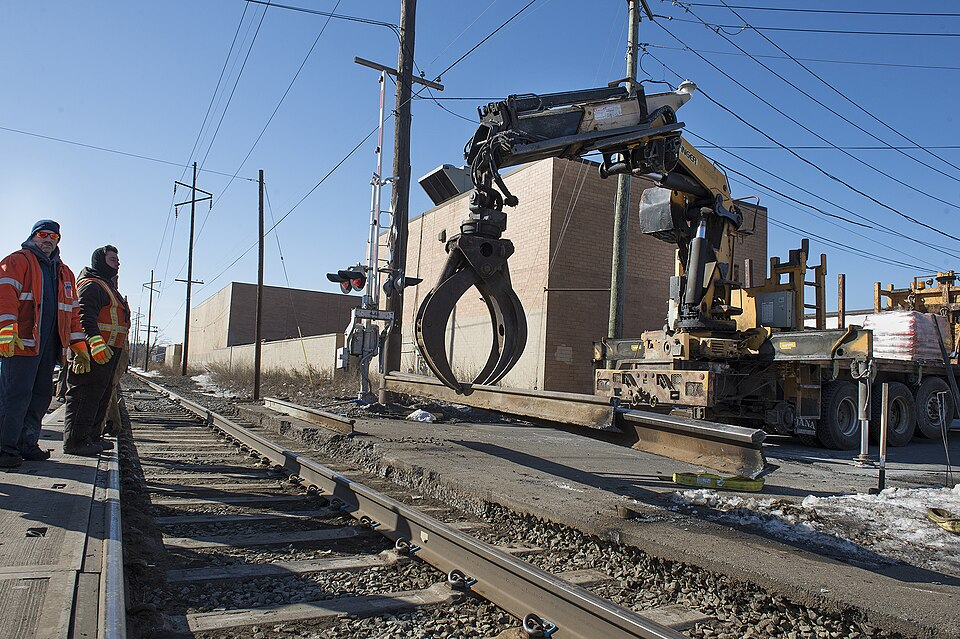
A fractured rail had to be dealt with immediately, and the gang turned out for it in the dark, in whatever conditions, to fit a temporary clamped joint so that traffic could pass at reduced speed.
It happened most in cold weather, when steel is least tolerant of a defect, and it was the one part of the job with no timetable at all.
The modern equivalent is the same emergency with better detection in front of it. Ultrasonic testing and track circuit monitoring find many defects before they become fractures, which turns an emergency into planned work.
13. Loaded and unloaded materials by hand from wagons
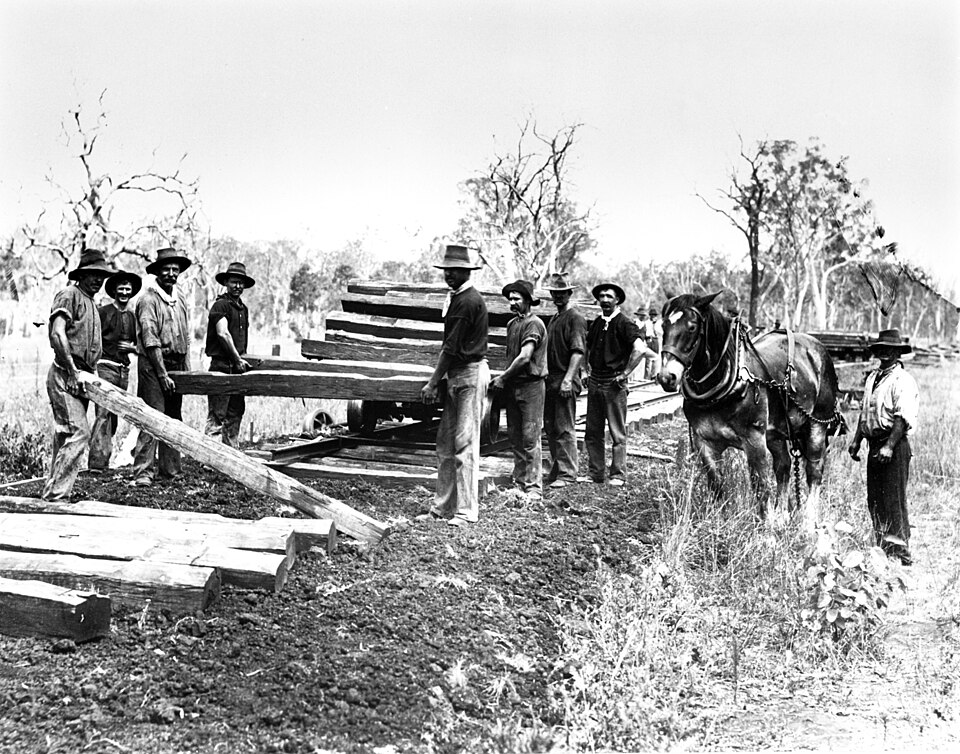
Rails, sleepers, chairs, keys, fastenings and ballast all arrived by rail and all came off by hand, with rails carried by gangs using tongs and sleepers manhandled off the wagon floor.
A length of rail is long, heavy and flexible, and moving one with six men requires everybody to lift and set down together on a called command.
Road-rail plant and on-track machines now handle materials, and manual handling of rails and sleepers is specifically controlled. The called lift survives wherever a machine cannot reach.
14. Took orders from a ganger who ran the length like a farm
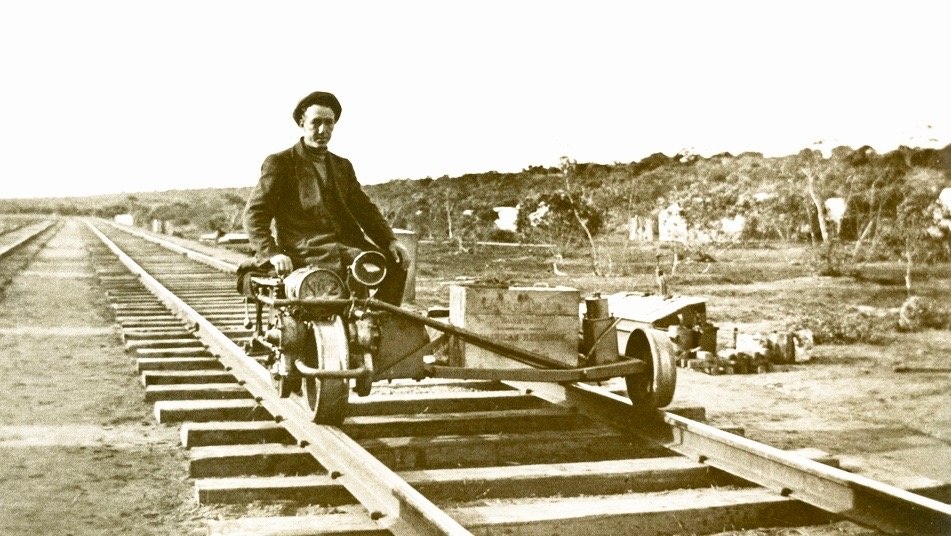
Each gang had a ganger, a working foreman who allocated the day’s tasks, judged what needed doing, dealt with the inspector and was answerable for the condition of the length.
He held no formal engineering qualification and the length’s safety depended substantially on his judgment, which was built from decades on the same few miles.
That role has been replaced by planned maintenance regimes, asset data and engineers who specify work centrally. The gain is consistency; the loss is the person who knew that one particular curve always went first.
15. Worked in a gang that was also a community
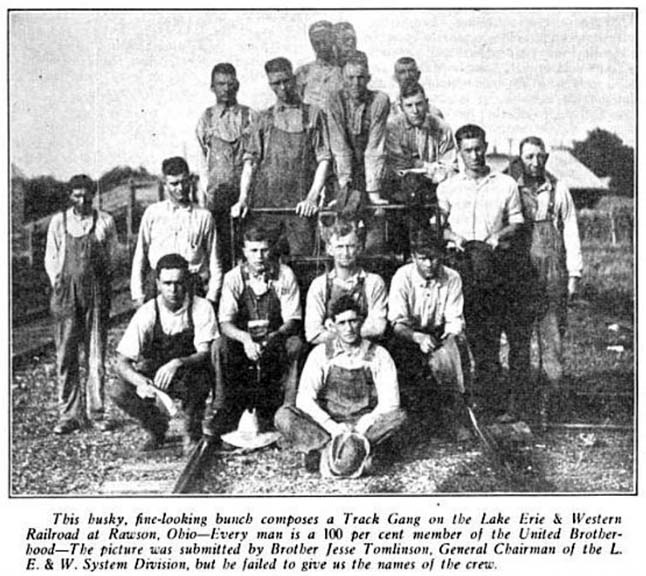
Gangs were small, permanent and local, often working the same length for a working lifetime, and in many places they lived in railway cottages beside it.
The social structure was part of the job: training was informal and continuous, the ganger knew everybody’s family, and men stayed in the same gang for decades.
Modern track maintenance is largely delivered by mobile teams and contractors travelling to planned work. It is safer, better equipped and more consistent, and it is not the same thing at all.
16. And the change that mattered more than any machine
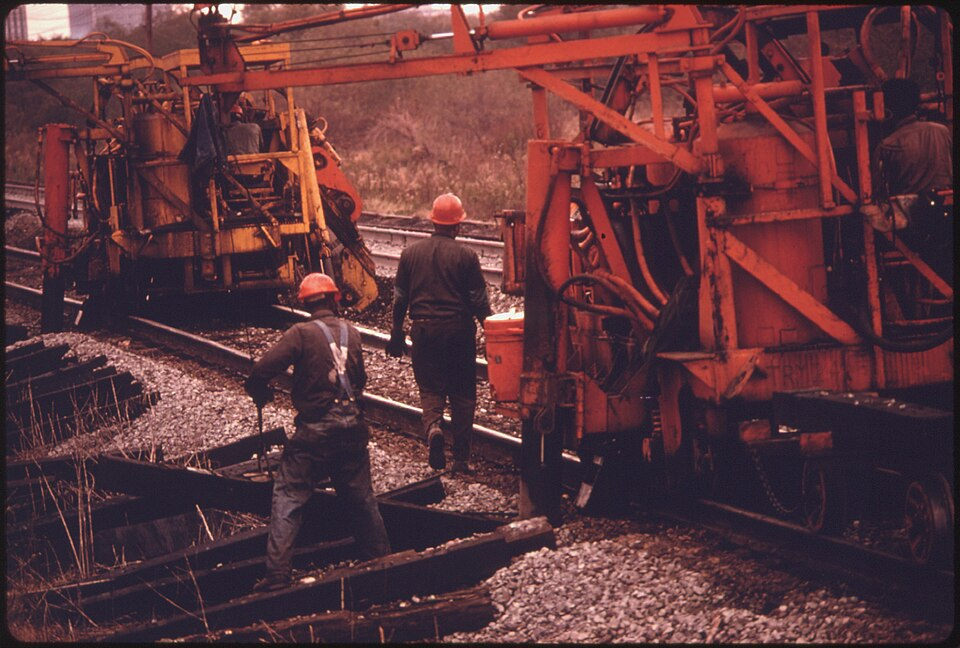
The possession. The decision that track work would be done on a railway that had been formally closed and protected, rather than between trains with a man watching, is the single change that transformed this job.
Everything else follows from it. Machines can only work where the line is blocked; a gang stepping clear every few minutes cannot operate a tamper. The safety case and the productivity case turned out to be the same case.
It is worth stating plainly that the old arrangement was understood to be dangerous at the time, and that the men who did it knew exactly what they were relying on.
Why the machines needed the possession first
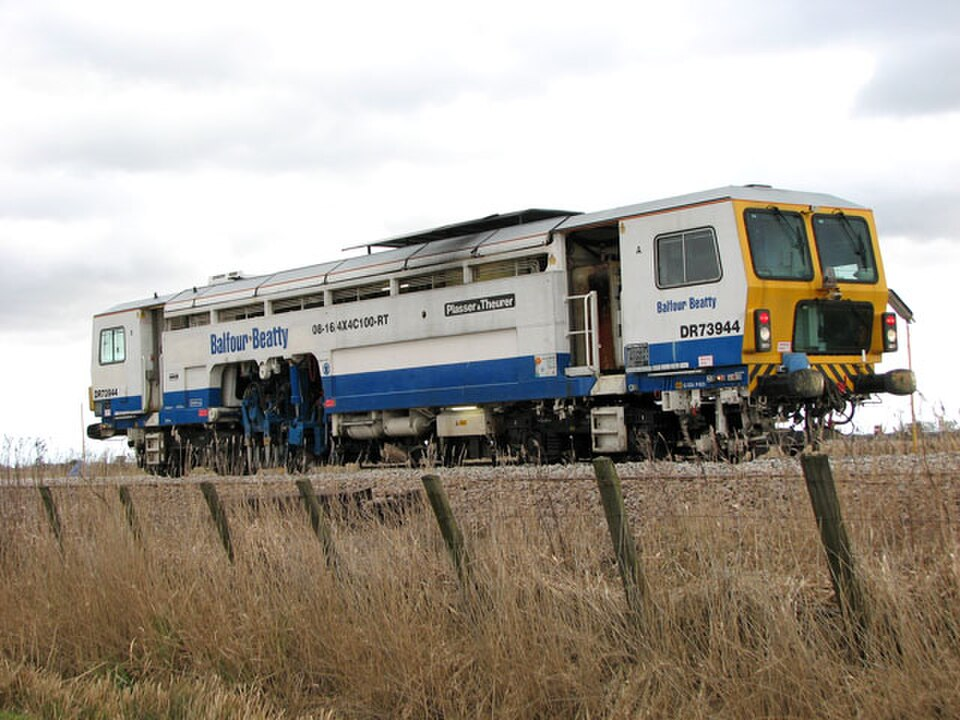
The productivity of modern track maintenance is usually credited to the machines, and the machines are remarkable. But a tamper, a regulator or a track renewal train cannot work on a line that is still carrying traffic, and none of them could have been introduced into a world where the gang stepped clear every few minutes.
The prior change was organisational: blocking the line, protecting it physically, and planning the work around the closure. Once that was normal, the machines became possible, and once the machines existed the gang of fifteen men with beaters and crowbars had no economic future. The order of events matters, because it is the opposite of how the story is usually told.
The men who did this work maintained a railway to a standard that carried express trains, using hand tools, by eye, while the trains kept running. That deserves recording accurately rather than romantically — including the part where the arrangement they worked under was known to be unsafe, and was changed for that reason as much as for any other.
Like our content? Follow us for more.