Vanilla, chocolate, and strawberry conquered the national freezer case long ago, but pull into the right local scoop shop and the menu goes suddenly, wonderfully strange — flavors with fifty-year histories that somehow never traveled more than a few hundred miles from home. Locals order them without explanation. Visitors point and ask. Here are eight regional ice cream flavors the rest of the country has never tasted, and where to find each one.
1. Superman: Michigan’s Three-Color Mystery
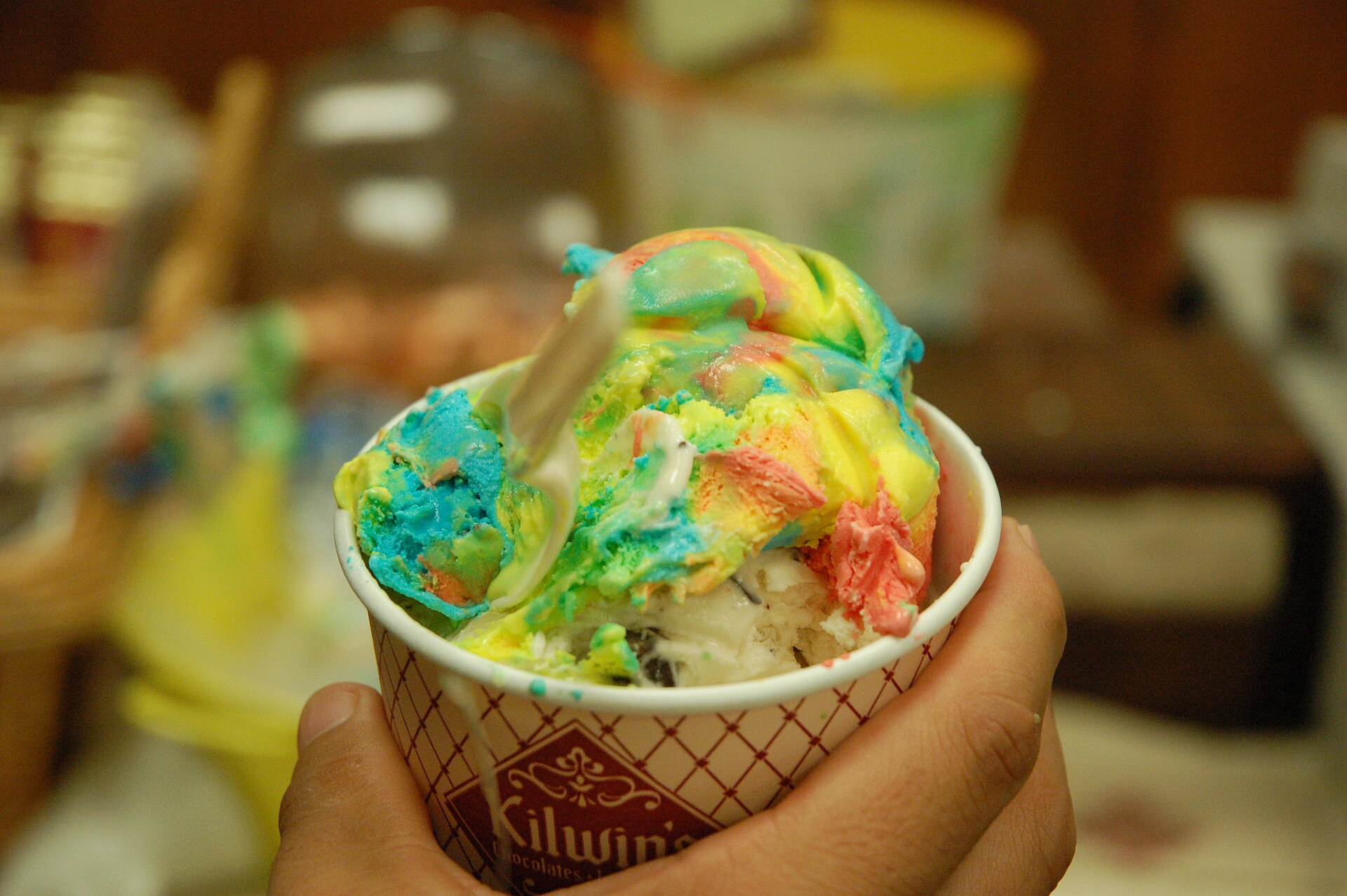
Blue, yellow, and red swirled together. What it actually tastes like depends on who’s scooping.
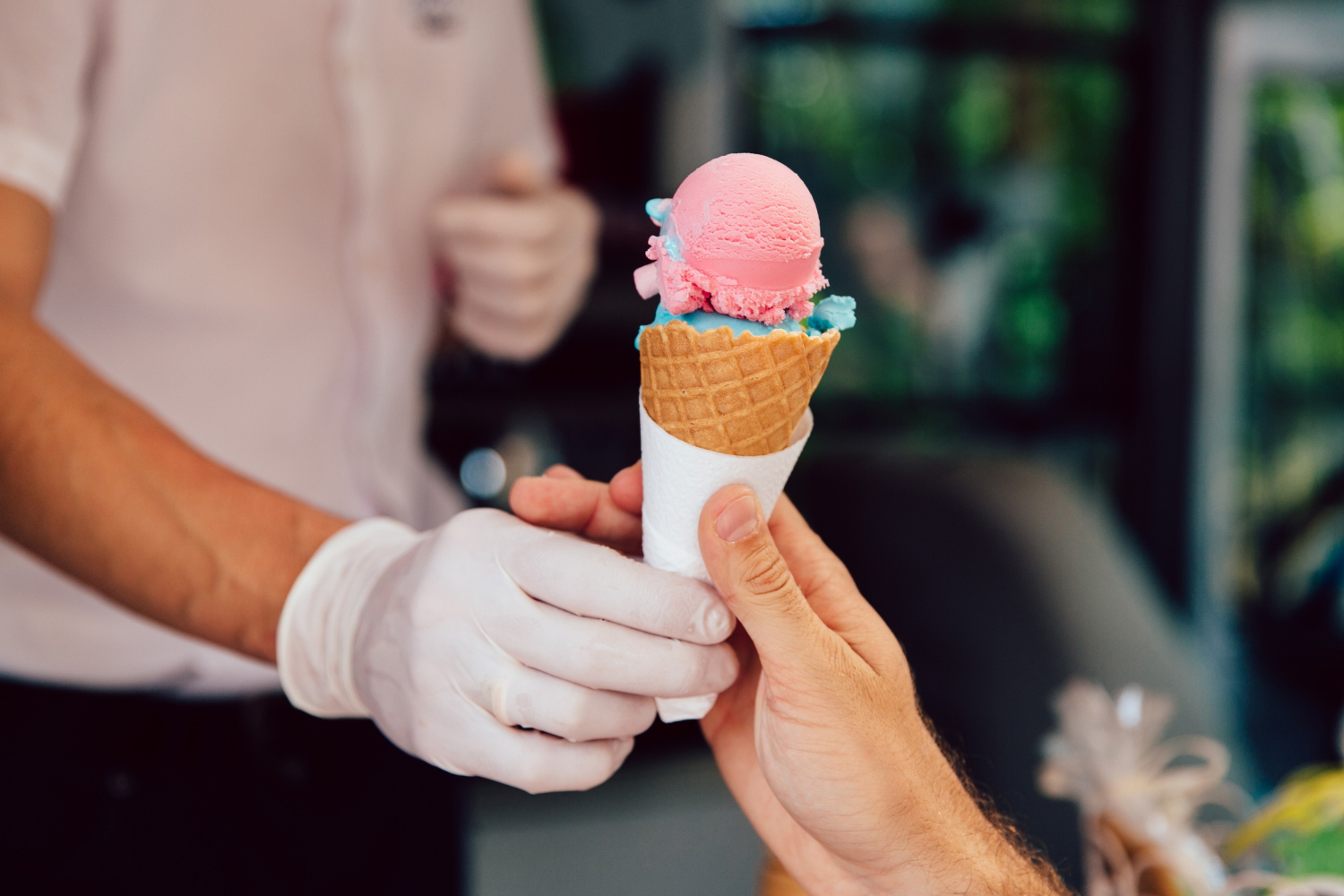
Every Michigan kid’s first great ice cream decision is Superman — a psychedelic swirl of blue, yellow, and red that turns tongues tricolor and defies flavor description, because there isn’t one answer: depending on the shop, the ribbons might be blue moon, lemon, and cherry, or something else entirely, and Michiganders consider the mystery part of the deal. Found across the upper Midwest but beloved most fiercely in Michigan, it remains nearly unfindable on the coasts, where adults encounter it on vacation and order it out of pure disbelief.
Like our content? Follow us for more.
2. Blue Moon: The Upper Midwest’s Unexplainable Blue
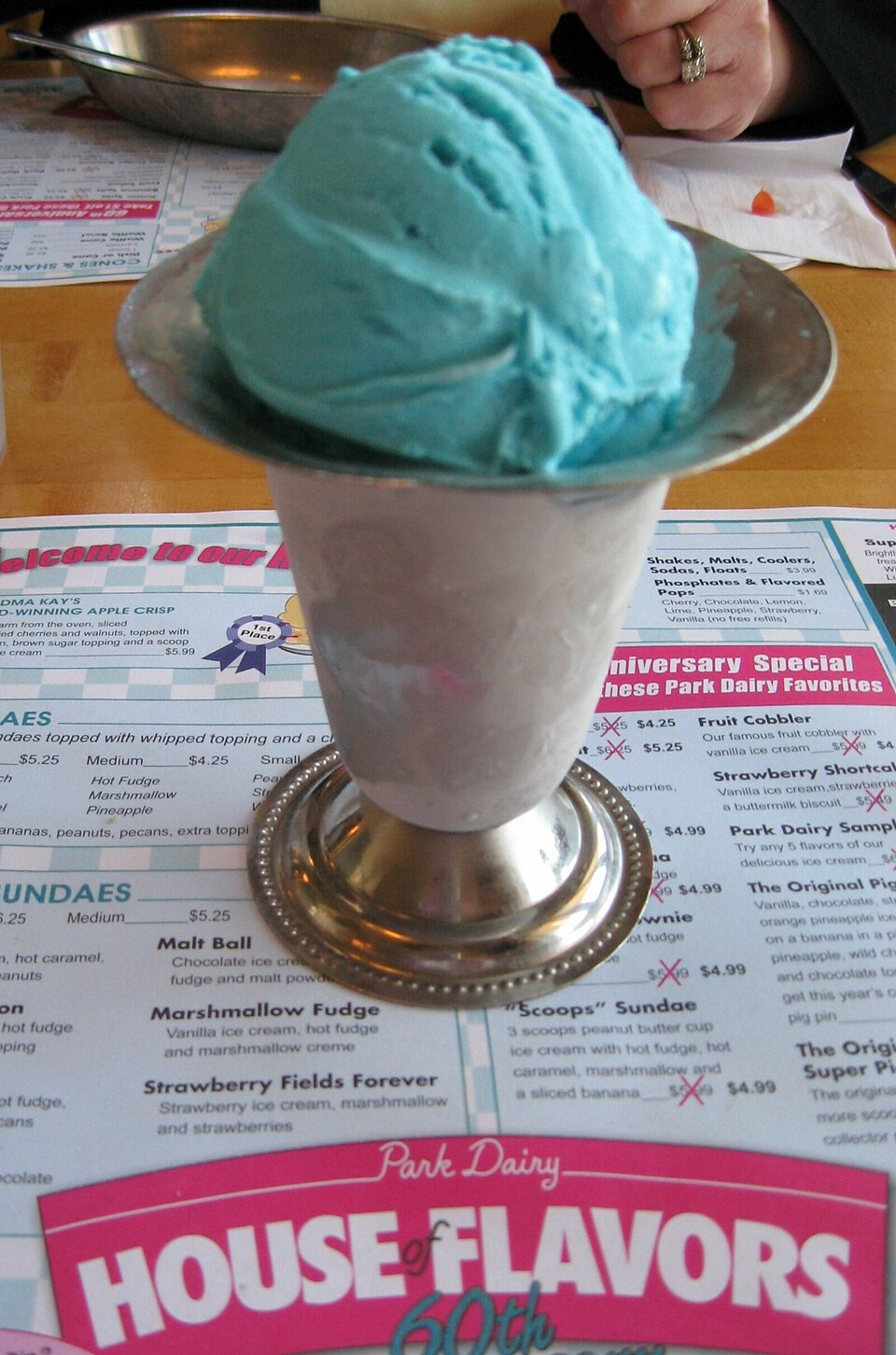
Bright Smurf-blue with a flavor nobody can name. Fruit Loops? Almond? Bubble gum? Yes.
Superman’s key ingredient deserves its own entry: blue moon, the electric-blue scoop of Wisconsin and Michigan childhoods, has a flavor that has been described as fruity cereal, almond, vanilla-citrus, and bubble gum — sometimes by the same person mid-cone. Its exact formula has stayed a closely held trade secret among Midwest dairies since roughly the mid-twentieth century, and asking what blue moon tastes like at a Milwaukee scoop window will earn you the region’s most honest answer: “blue.”
3. Grape-Nut: New England’s Breakfast-Cereal Classic
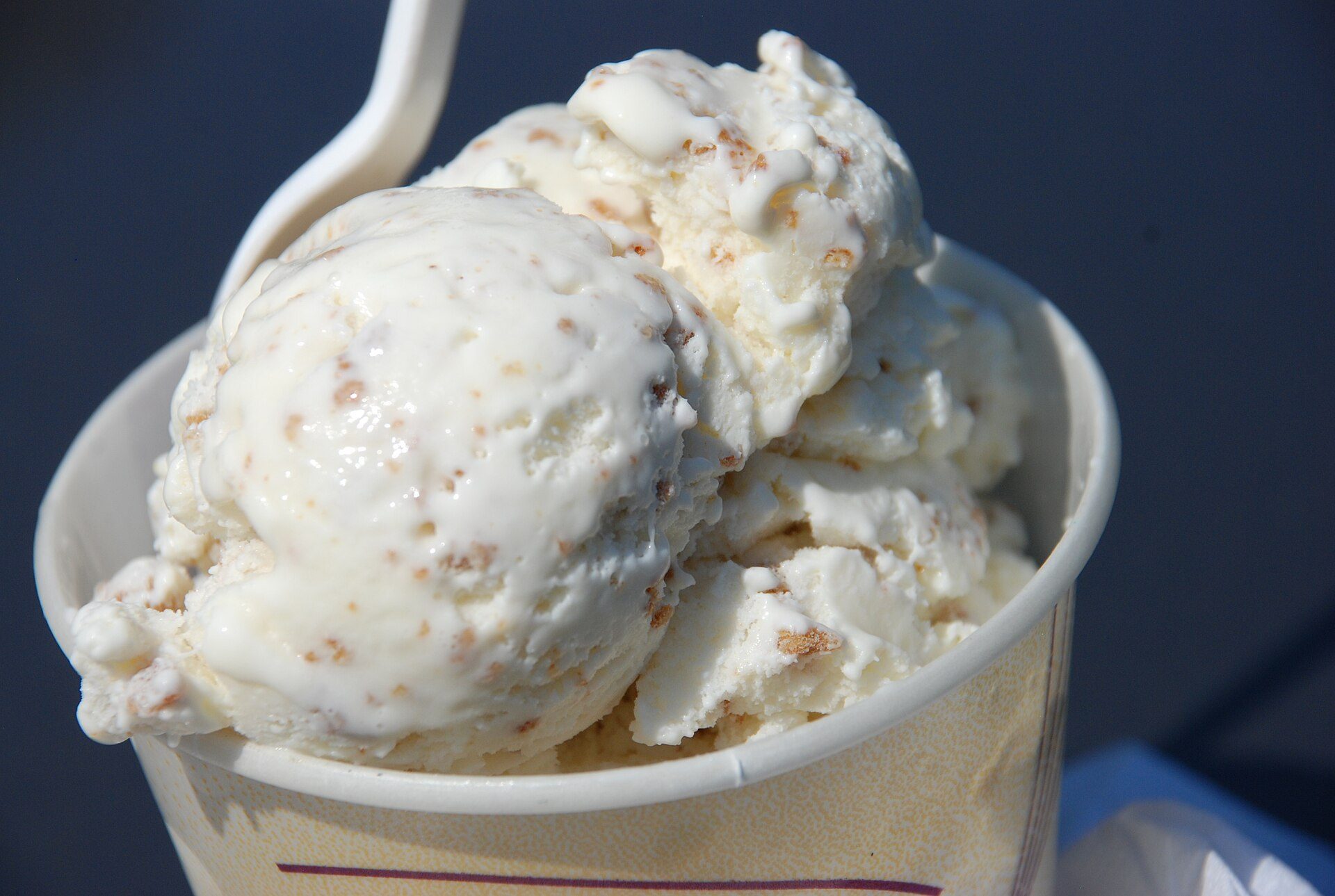
Crunchy cereal folded into custard. New England and maritime Canada split custody.
It sounds like a dare and eats like a classic: Grape-Nut ice cream folds the famously dense breakfast cereal into sweet vanilla custard, where the nuggets soften into chewy, malty little pockets. A staple of New England dairy bars and diners for the better part of a century — with a parallel devotion in Atlantic Canada and Jamaica, of all places — it’s the flavor summer people from Boston order on autopilot and everyone else orders once, skeptically, before becoming summer people about it.
4. Teaberry: Pennsylvania’s Wintergreen Time Machine
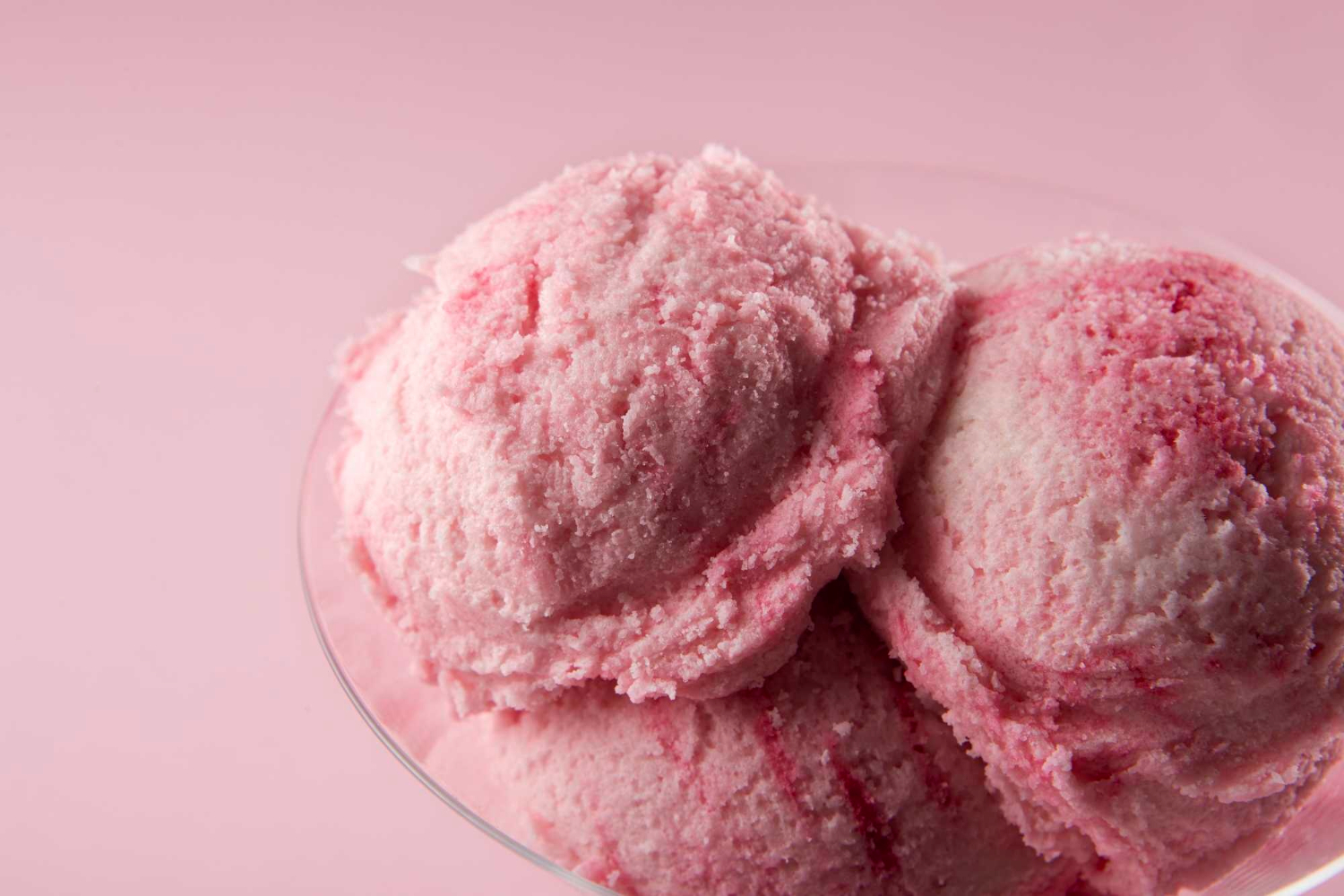
A pink scoop flavored like a vanished chewing gum. Western Pennsylvania keeps it alive.
Teaberry ice cream — pale pink, flavored with the wintergreen-adjacent taste of the native teaberry plant — survives almost exclusively in Pennsylvania, where it’s tied to the memory of a once-famous regional chewing gum and to scoop shops that have carried it since your grandmother’s first date. The flavor is cool, faintly medicinal in the best way, and utterly transporting for Pennsylvanians of a certain age, who order it the way other people visit a childhood home.
5. Butter Brickle: The Plains’ Toffee Heirloom
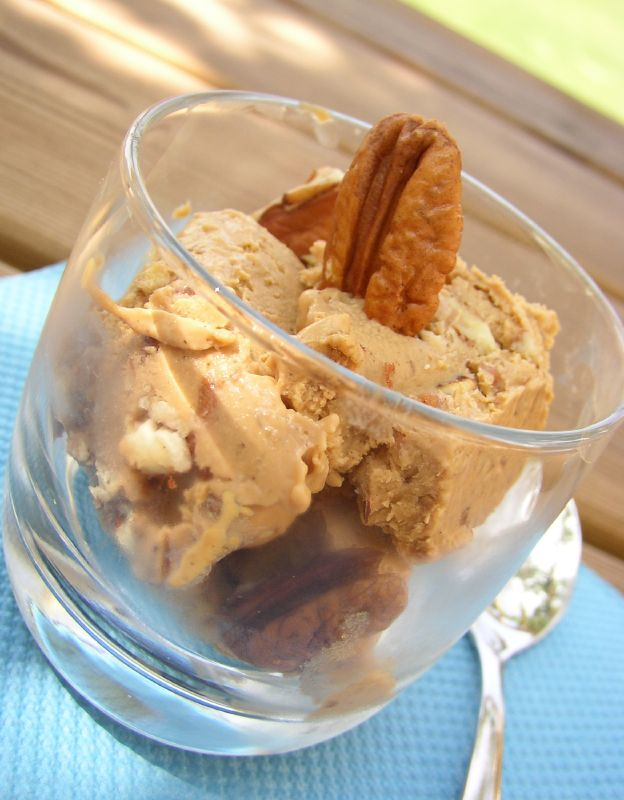
Buttery toffee chips in sweet cream. It was born in a Nebraska hotel kitchen.
Butter brickle — sweet cream loaded with buttery toffee chips — traces its origin story to an Omaha hotel in the 1920s, and while a related candy bar went national and then vanished, the ice cream held its ground across Nebraska, Iowa, and the Plains, where old-line parlors and grocery freezers still stock it and where “brickle” requires no explanation. Order it east of Pittsburgh and you’ll get a blank look; order it in Omaha and you’ll get a nod of respect.
6. Goo Goo Cluster and the South’s Candy-Bar Scoops
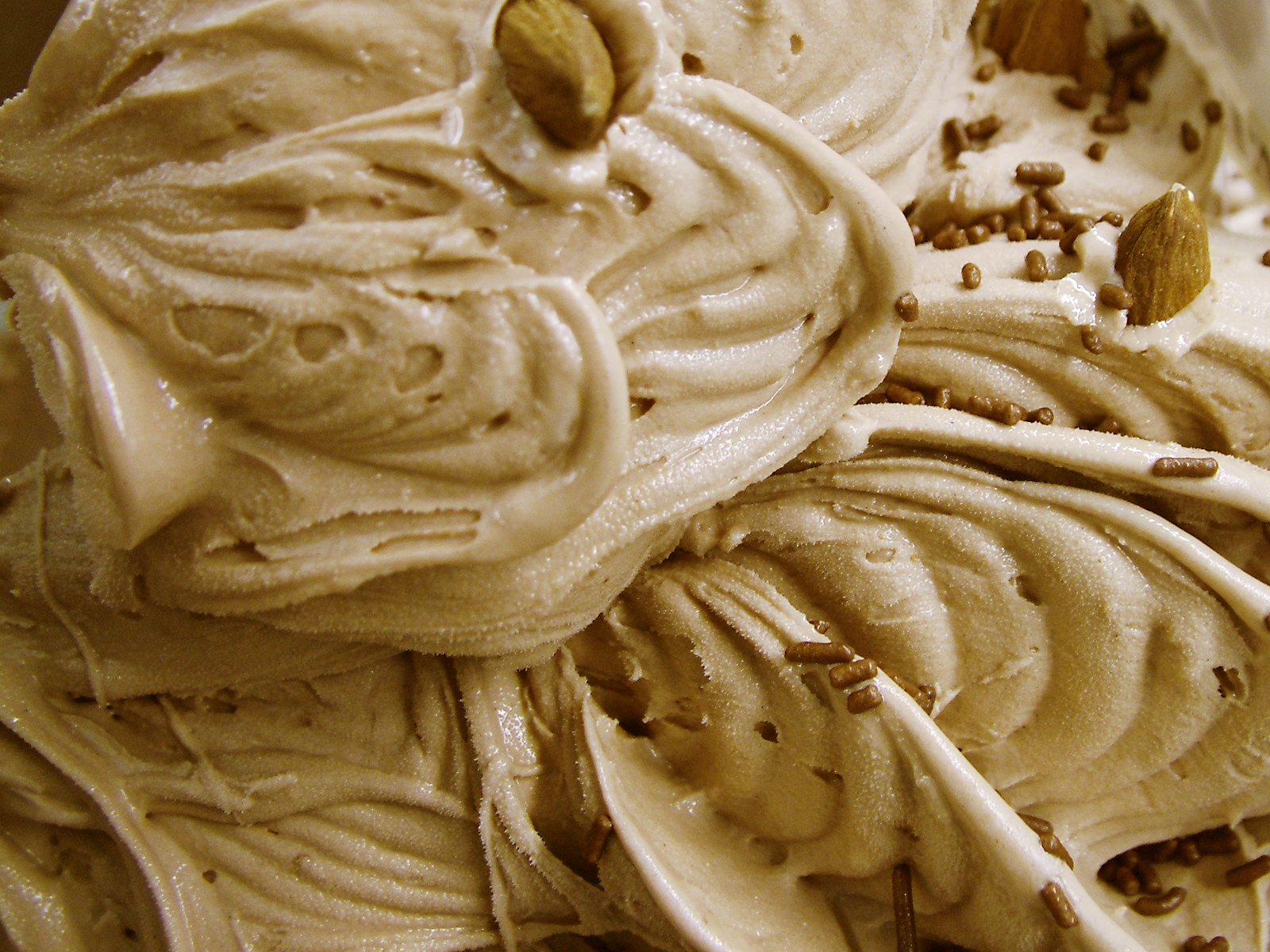
The South churns its native candy into ice cream. Nashville’s century-old cluster leads the way.
The South’s contribution is a genre: hometown candy folded into cream. The flagship is Nashville’s Goo Goo Cluster — the century-old marshmallow-caramel-peanut-chocolate round that claims the title of America’s first combination candy bar — which Southern creameries churn into an ice cream that functions as regional identity in a waffle cone. Variations on the theme run across the South, but the principle is constant: if the candy is ours, the flavor is ours, and no, it doesn’t ship well, you’ll have to come down.
7. Frozen Custard Concretes: St. Louis Thickens the Rules
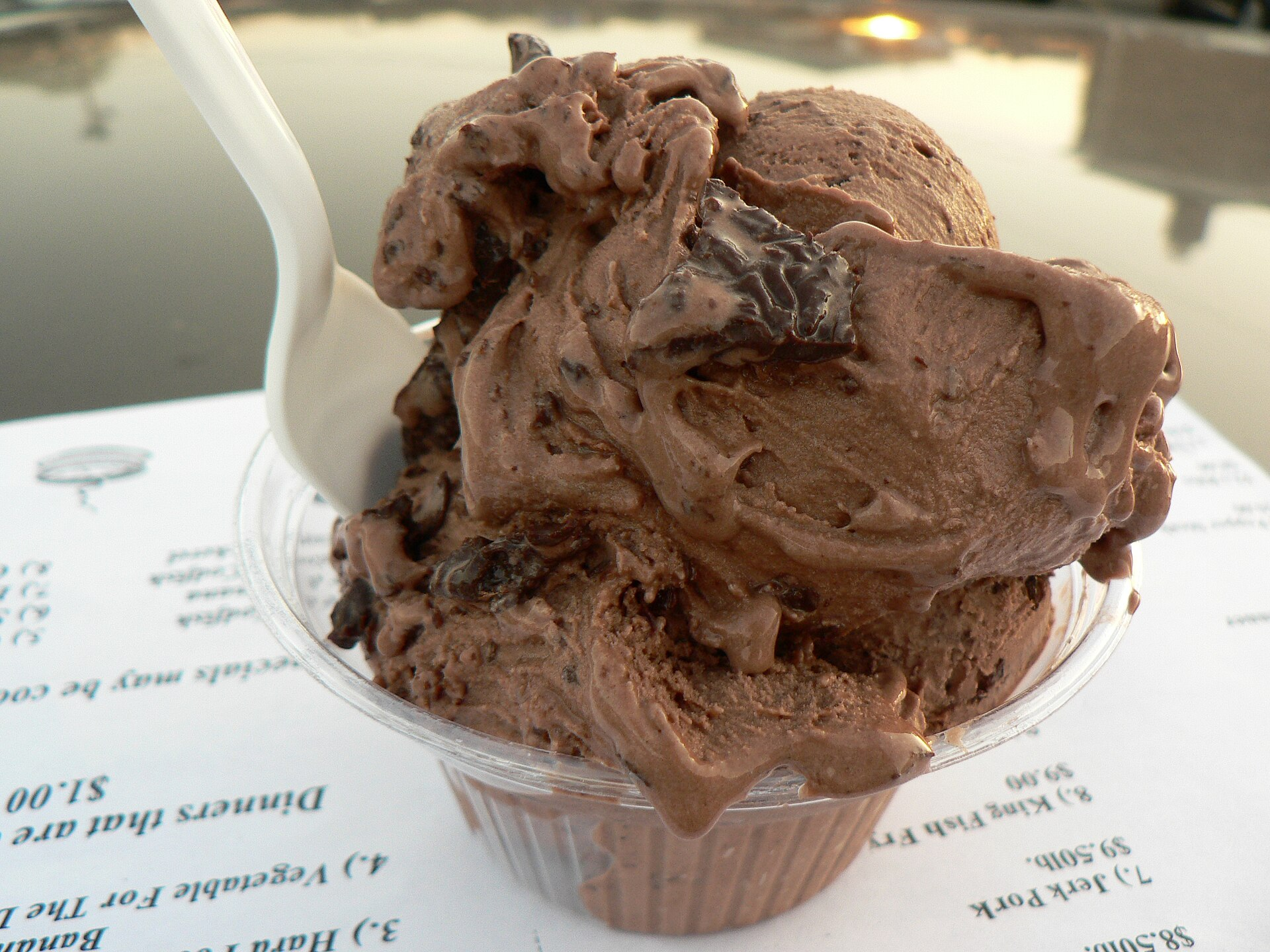
Egg-rich custard blended so dense it defies gravity. St. Louis serves it upside down to prove it.
St. Louis will explain, at length, that frozen custard is not ice cream — the egg yolks make it denser and silkier — and the city’s signature format is the concrete: custard blended with mix-ins to a thickness traditionally demonstrated by handing it to you upside down. The style radiates through the Midwest (Wisconsin’s custard stands run a parallel civilization), but St. Louis treats the concrete as municipal heritage, and a summer evening in line at a custard stand is as close as dessert gets to a civic ritual.
8. Huckleberry: The Mountain West’s Purple Obsession
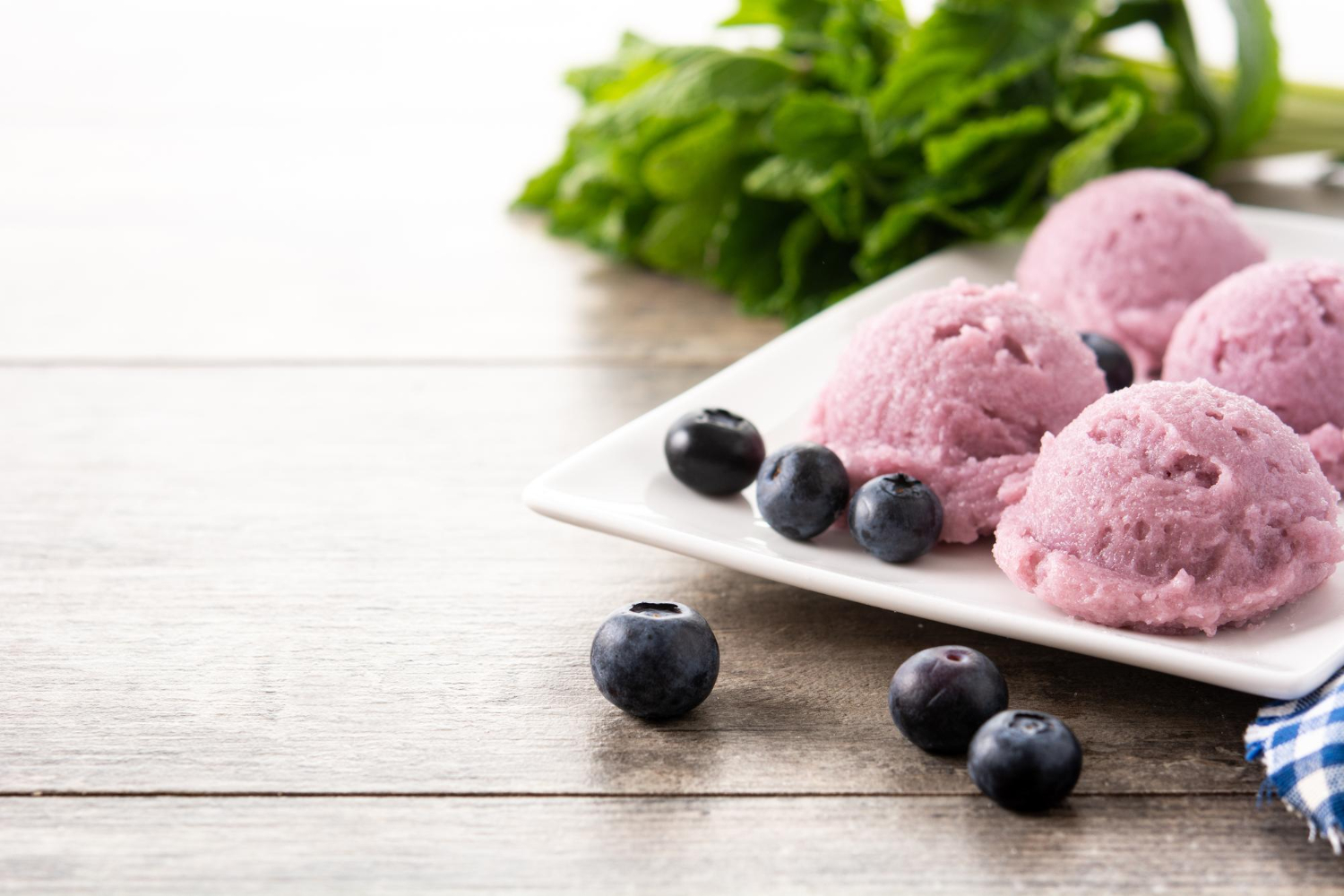
Wild berries that refuse to be farmed. Montana and Idaho scoop them all summer.
[IMAGE SUGGESTION] Wikimedia Commons “huckleberry ice cream purple scoop mountain” — CC-licensed image of huckleberry ice cream.
Huckleberries grow wild in the Northern Rockies, resist all attempts at commercial farming, and must be hand-picked on mountainsides — which is why huckleberry ice cream, purple-swirled and tarter than blueberry, remains a fiercely guarded regional specialty of Montana, Idaho, and the Yellowstone gateway towns. Every roadside stand and park-adjacent creamery scoops it in season, every visitor tries it, and every attempt to describe it back home fails, because the berry legally cannot follow you to the suburbs. The mountains keep what’s theirs.
The Map Tastes Better Than the Freezer Aisle
Eight flavors, eight home territories, and one shared rule: none of them ever needed the rest of the country’s approval. Regional ice cream survives on loyalty — the Michigan kid who’ll always order Superman, the Pennsylvanian transported by teaberry — and that loyalty is exactly what makes tasting them on their home turf worth the trip.
The national brands standardized the freezer aisle decades ago, but the scoop shops never surrendered, and summer road-trippers get the benefit: pull off the highway in the right state and the menu board itself tells you where you are. Order the local one. Ask the teenager scooping it what it tastes like. Write down the answer, because nobody at home will believe “blue.”
Like our content? Follow us for more.