

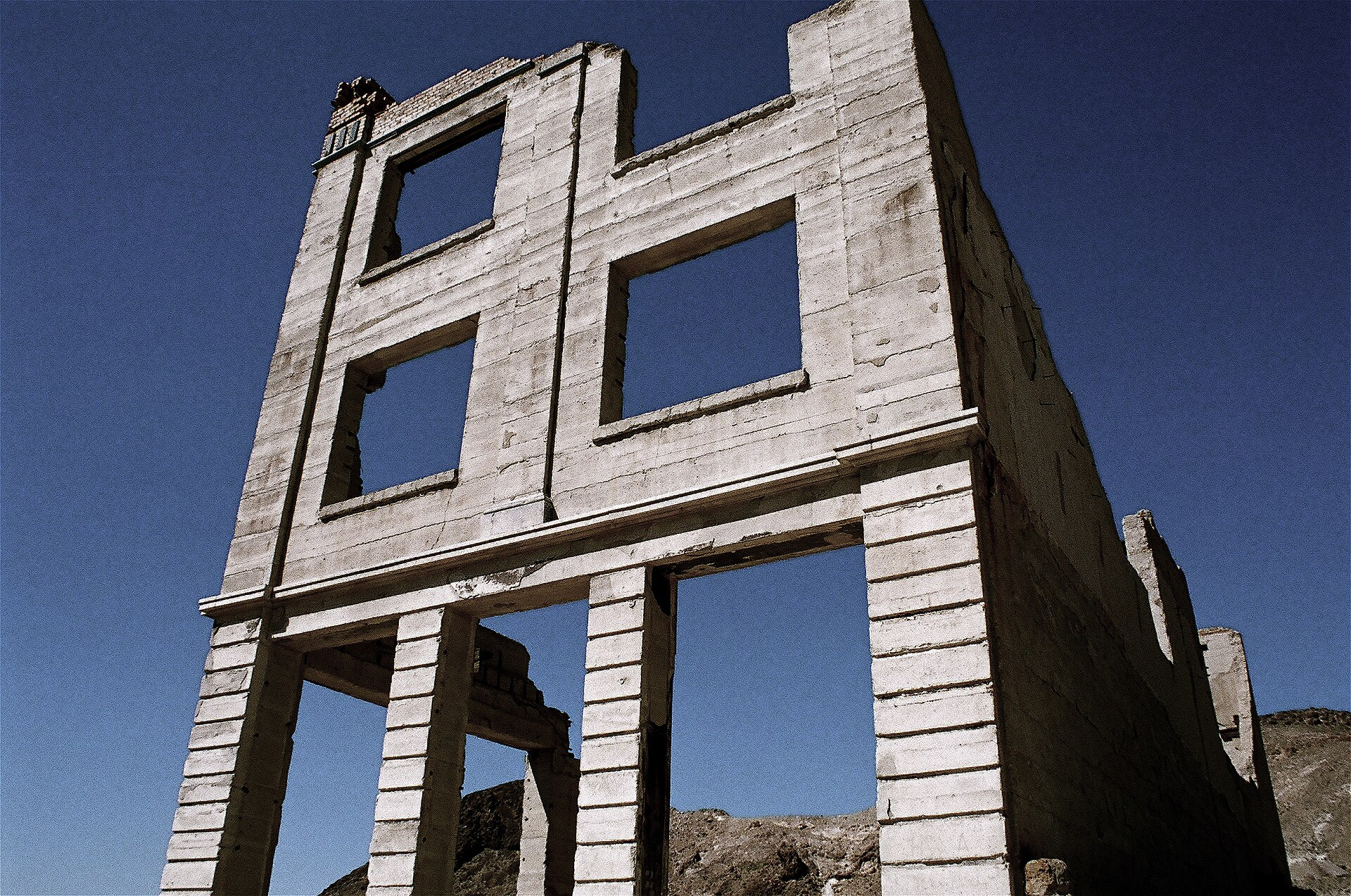
Just outside the eastern boundary of Death Valley National Park, in Nevada’s remote Bullfrog Hills, stand the crumbling remains of Rhyolite, a town that offers perhaps the most dramatic boom-to-bust story in the entire history of the American West. In barely a decade, this desert settlement rose from nothing to a genuine small city, then collapsed back into nothing at all, leaving concrete ruins that remain among the most photographed ghost towns in the country.
A Gold Strike Sparks a Rush
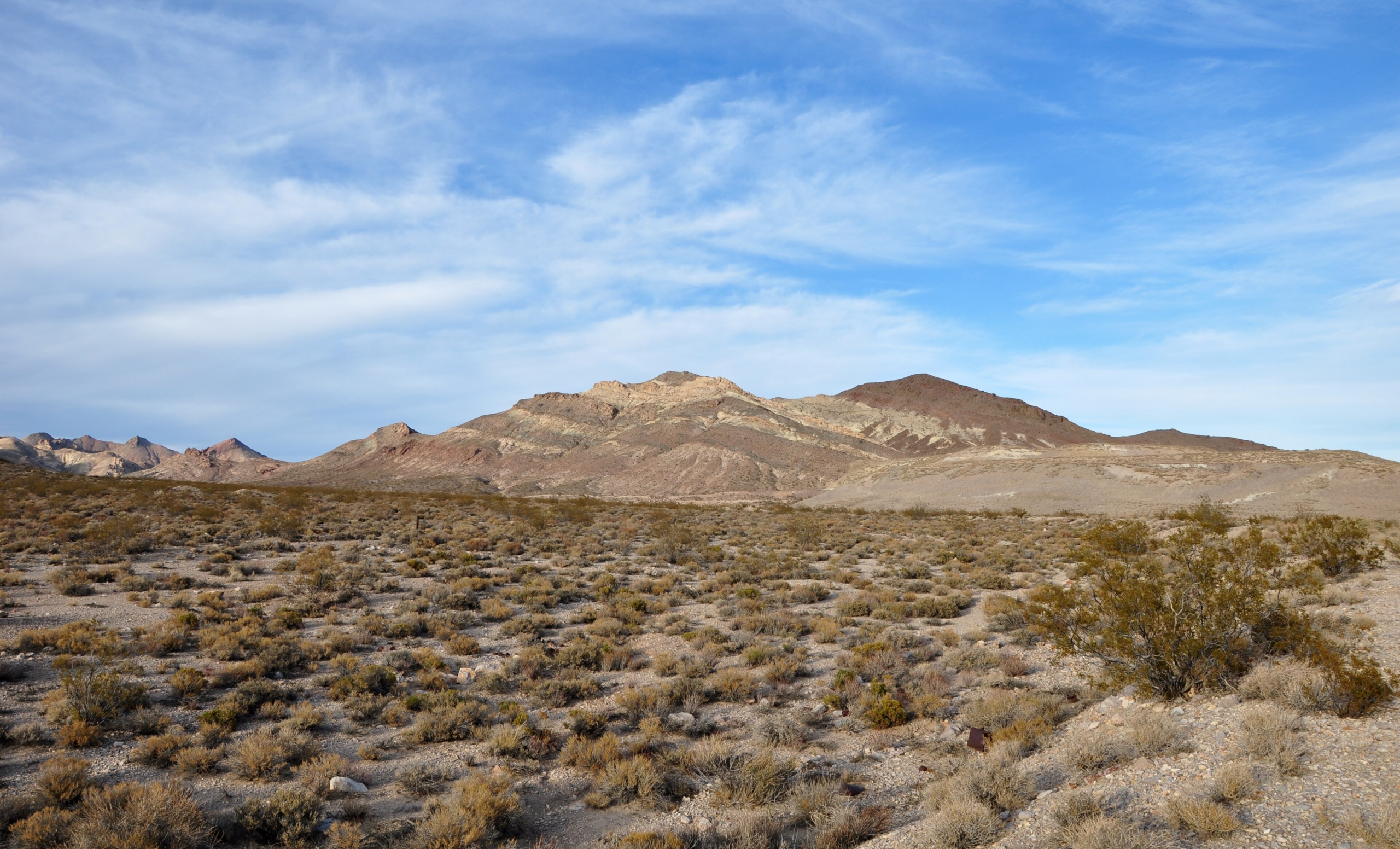
The town’s origin traces to 1904, when prospectors Frank “Shorty” Harris and Ernest “Ed” Cross discovered gold-bearing quartz in the Bullfrog Hills, naming their claim after the frog-like green color of the rock. Word of the “Bullfrog Rush” spread fast, and prospectors and developers flooded into the surrounding desert, with the young settlement of Rhyolite quickly emerging as the largest and most promising of the mining camps scattered across the district.
Like our content? Follow us for more.
From Tent City to Modern Town in Two Years
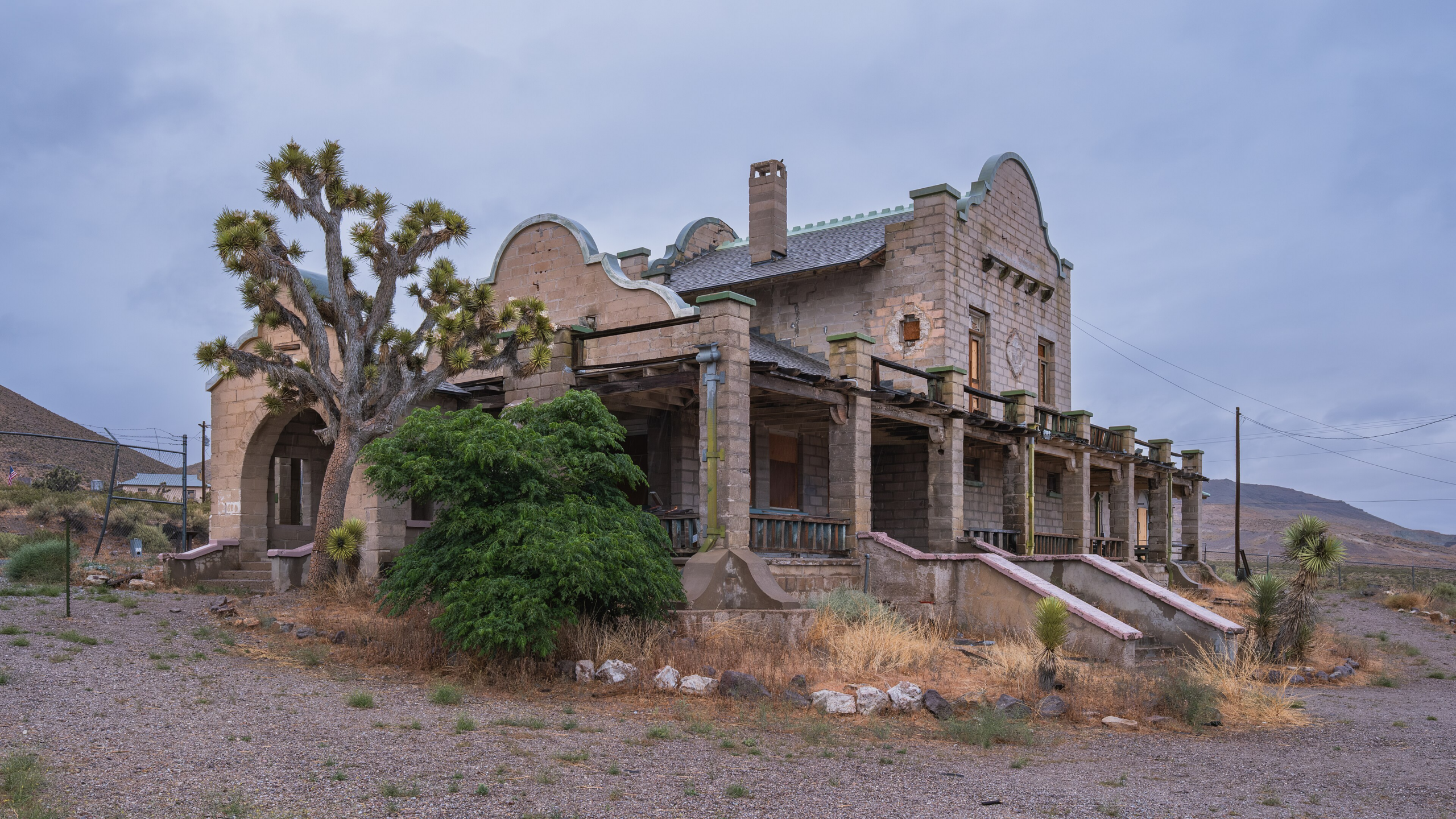
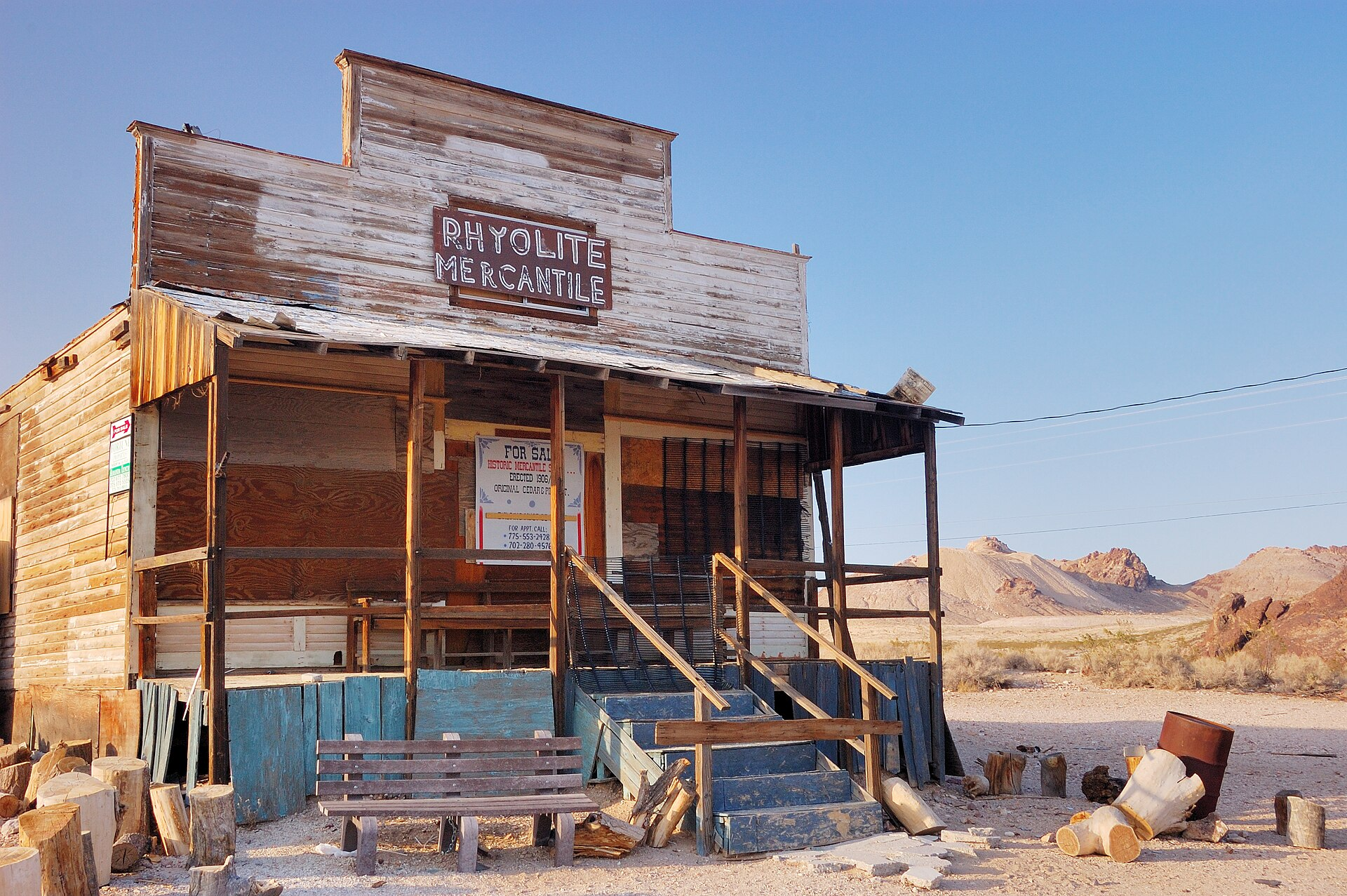
Rhyolite’s growth was staggering by any standard. What began as tent boarding houses and saloons in 1905 had, by 1907, transformed into a town boasting electric lights, running water, telephone lines, a hospital, a school serving 250 children, an opera house, and even a stock exchange. Steel magnate Charles M. Schwab purchased the district’s most productive mine, the Montgomery-Shoshone, in 1906 and poured money into infrastructure, including a piped water system and a 100-mile electric line. Three separate railroads eventually built lines to serve the town, and the population peaked somewhere between 7,000 and 8,000 residents at its height.
Built to Last, Right Up Until It Didn’t
Unlike many mining camps thrown together from wood and canvas, Rhyolite’s most prominent buildings were constructed from steel and concrete, meant to signal permanence and attract serious long-term investment. The three-story John S. Cook & Company Bank building, costing roughly $90,000 to build, around $3 million in today’s dollars, became the town’s grandest structure and remains its most photographed ruin. This ambition, however, meant the town’s infrastructure was often still being completed even as the first signs of its coming collapse were already underway.
Collapse as Sudden as the Boom
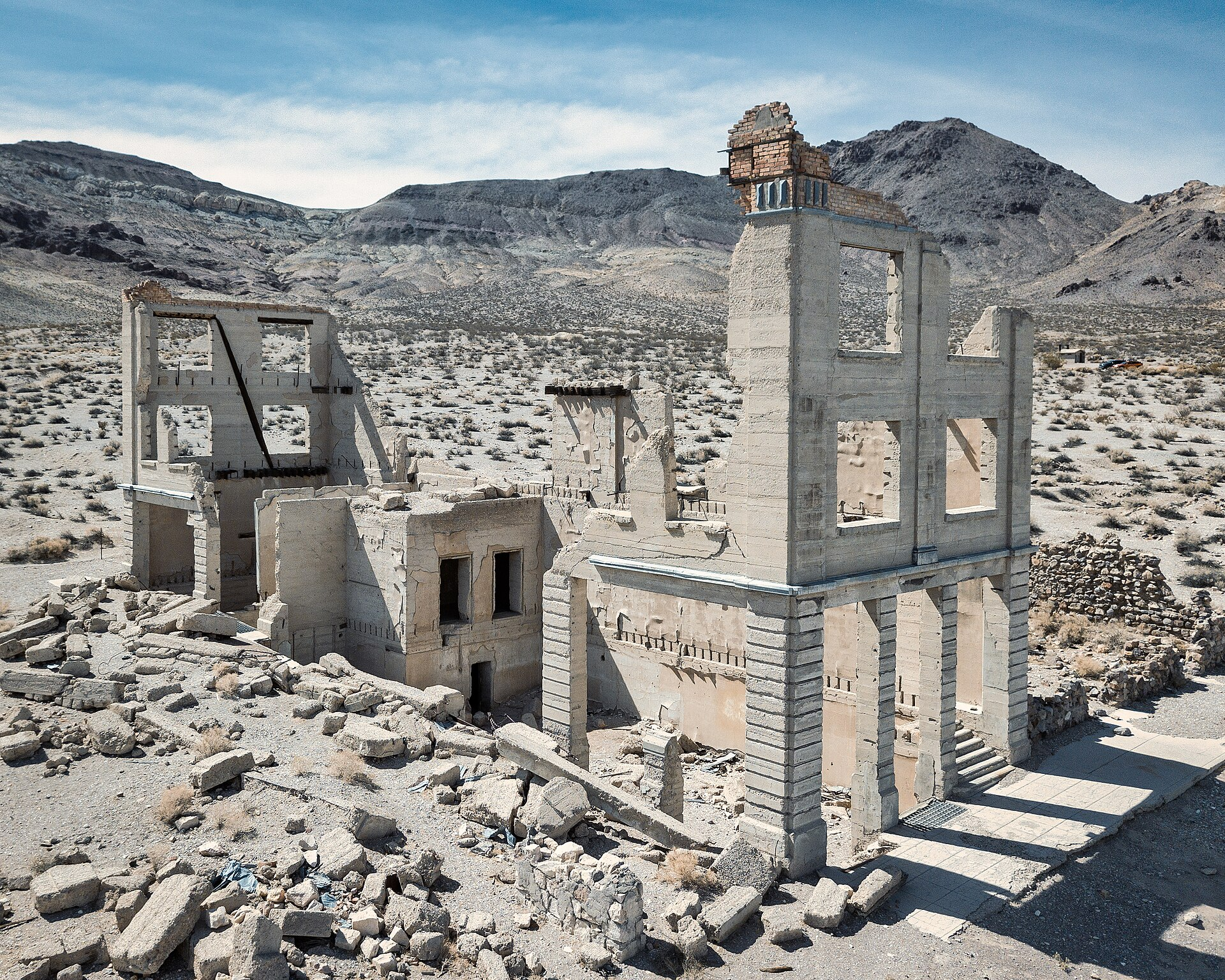
Rhyolite’s downfall came almost as quickly as its rise. The catastrophic 1906 San Francisco earthquake devastated a city that had supplied much of the investment capital flowing into Nevada mining, and the Panic of 1907, a major Wall Street financial crisis, dried up remaining funding almost overnight. An independent study soon revealed that Rhyolite’s mines had been significantly overvalued, and mining stocks collapsed. By 1910, the district’s mines were operating at a loss, and the crucial Montgomery-Shoshone mine closed for good in 1911. The town’s last newspaper folded in 1912, and the electricity was finally switched off between 1914 and 1916, marking the effective end of Rhyolite as a living town, barely more than a decade after it had begun.
Buildings Moved, Salvaged, and Left Behind
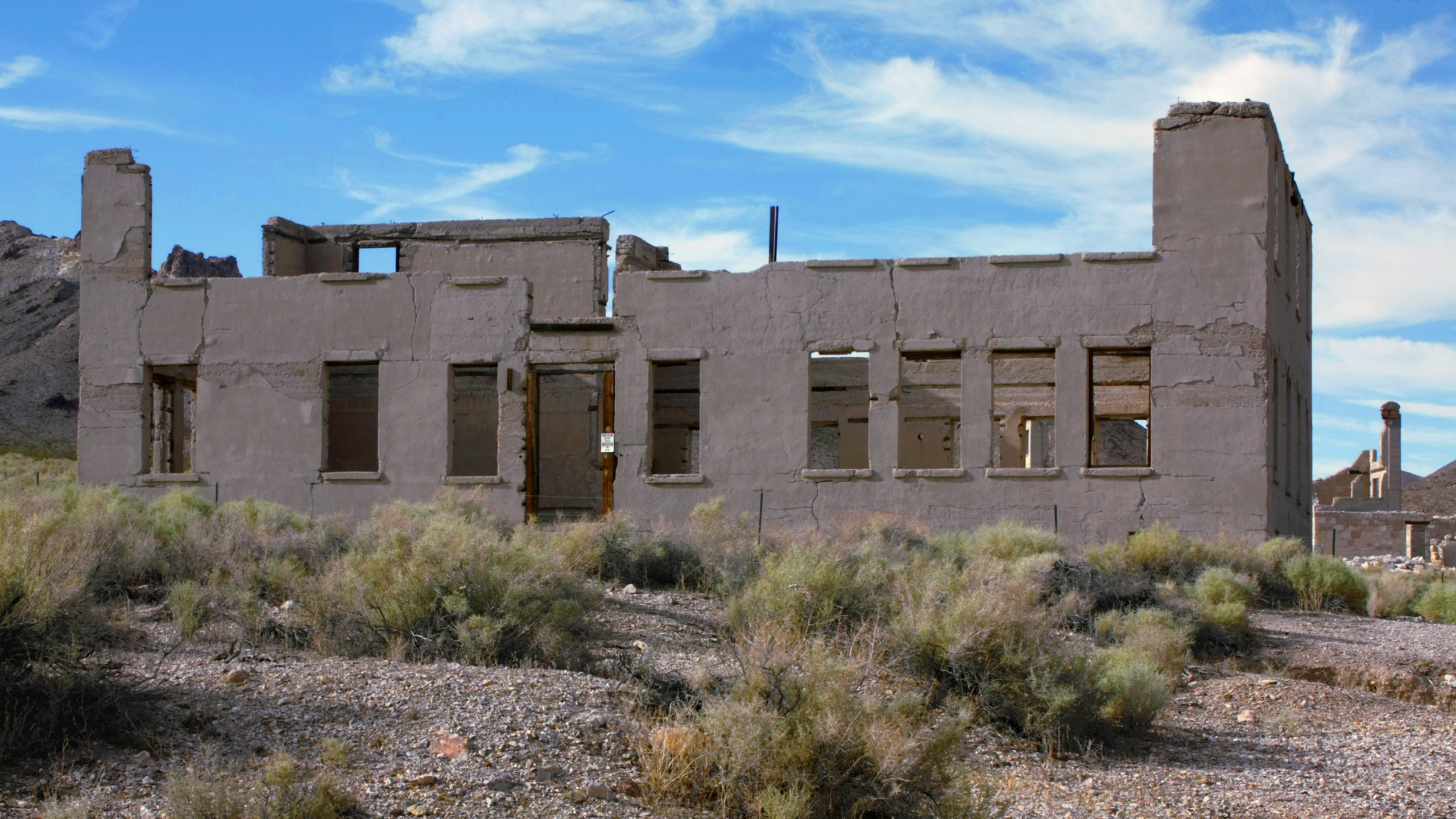
As Rhyolite emptied out, much of its infrastructure was cannibalized for use elsewhere. Whole buildings were physically relocated to the nearby town of Beatty, which survived the district’s collapse, and the Miners’ Union Hall became Beatty’s town hall. What remained behind in Rhyolite was left to the desert, slowly crumbling under sun, wind, and the occasional souvenir hunter over the following century.
A Ghost Town Built From Beer Bottles and Concrete
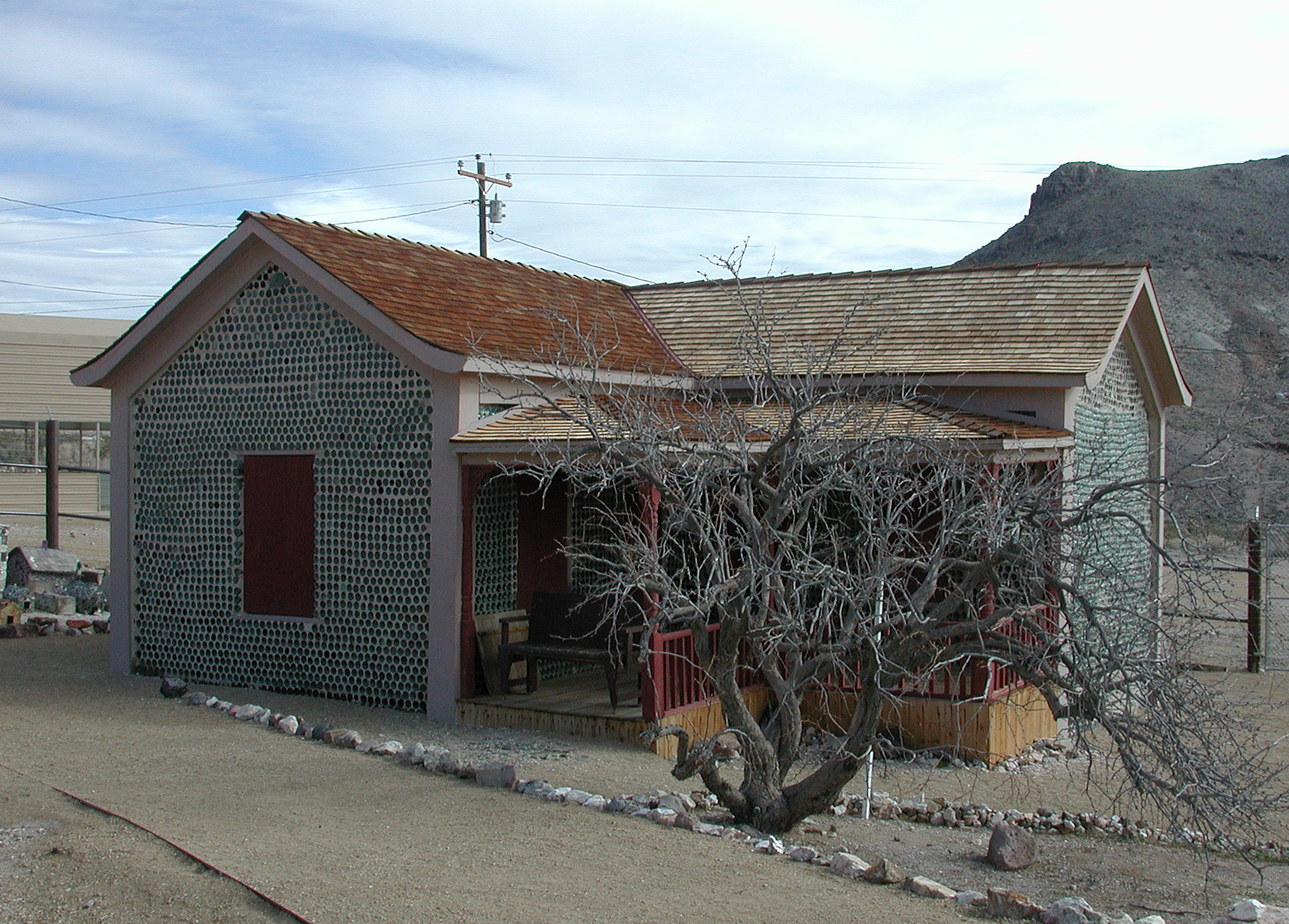
Among Rhyolite’s most unusual surviving structures is the Bottle House, built in 1906 by miner Tom Kelly using an estimated 50,000 glass bottles, mostly empty beer and liquor bottles from the town’s many saloons, mortared together in the absence of more conventional, and expensive, building materials in the remote desert. The house has proven remarkably durable, and it was even restored in 1925 by Paramount Pictures for use as a film location, beginning a long tradition of Hollywood productions using Rhyolite’s ruins as an atmospheric backdrop, including several films shot amid the skeletal remains of the old bank building decades later.
Visiting Rhyolite Today
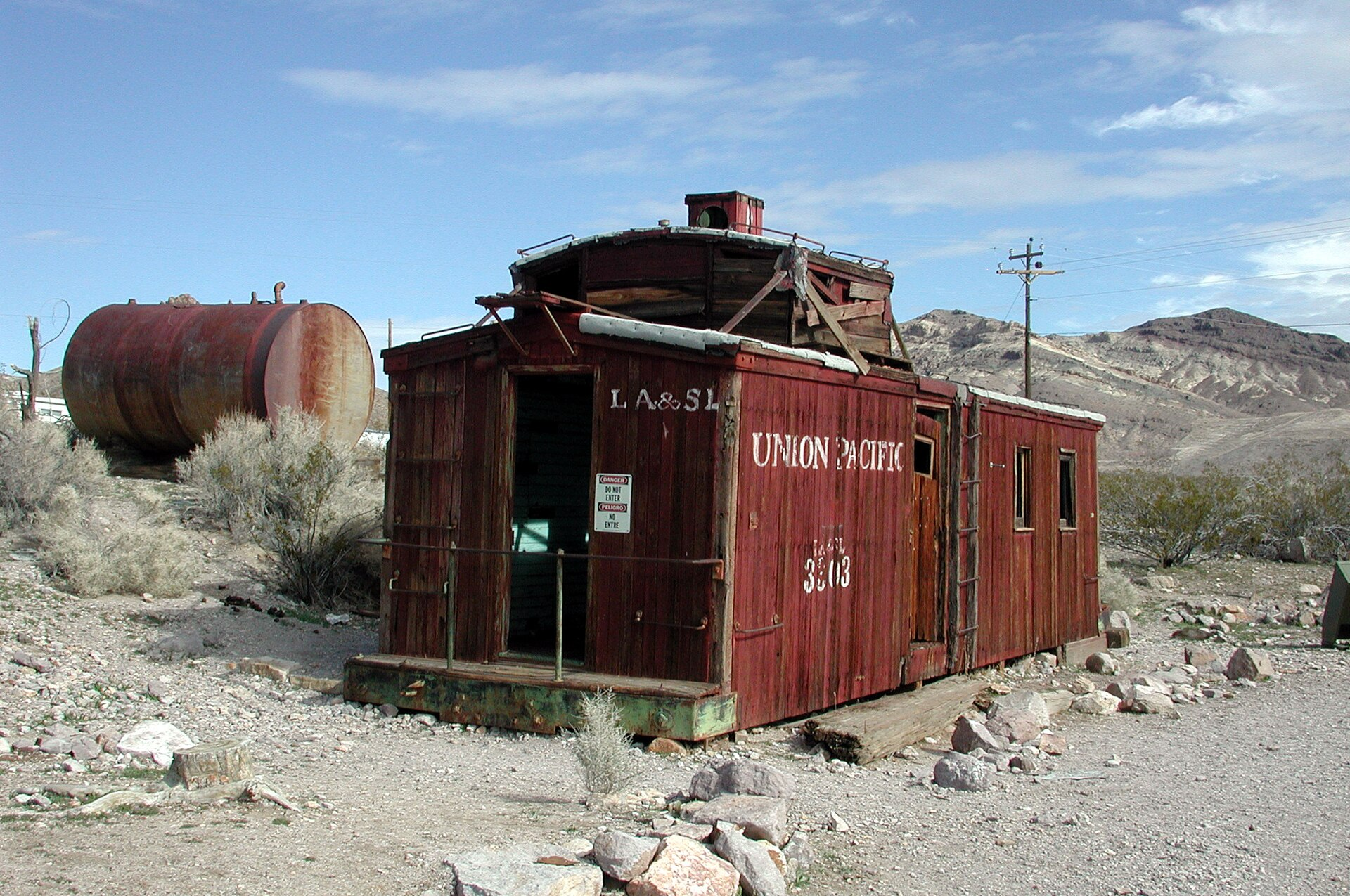
Rhyolite is managed by the Bureau of Land Management as a free, day-use historic site, reachable via a paved road just a few miles from the small town of Beatty, Nevada, and easily combined with a Death Valley National Park visit. There are no entrance fees, rangers, or gift shops, just an extensive, legible grid of ruins that visitors can explore on foot at their own pace. Adjacent to the townsite sits the Goldwell Open Air Museum, an outdoor sculpture park founded in 1984 featuring a haunting, ghostly recreation of Leonardo da Vinci’s Last Supper, open to visitors around the clock, free of charge.
A Monument to Ambition’s Limits
Rhyolite endures as one of the American West’s most vivid illustrations of boomtown ambition and its limits, a place that briefly had every marker of a genuine modern city before collapsing entirely within a single decade. Its striking, sun-bleached ruins, especially the towering shell of the old bank building, continue to draw photographers, road-trippers, and history enthusiasts making the detour between Las Vegas and Death Valley. For anyone fascinated by the boom-and-bust cycles that shaped so much of the West, Rhyolite offers one of the most dramatic and well-preserved examples anywhere in the region.
Like our content? Follow us for more.

