Ancient Egypt gets filed in most people’s heads as a single block of time. Pyramids, mummies, hieroglyphs, gold masks, Cleopatra. All of it feels like it belongs together, roughly simultaneous, sometime in the distant past labelled “ancient.”
The arithmetic breaks that picture completely.
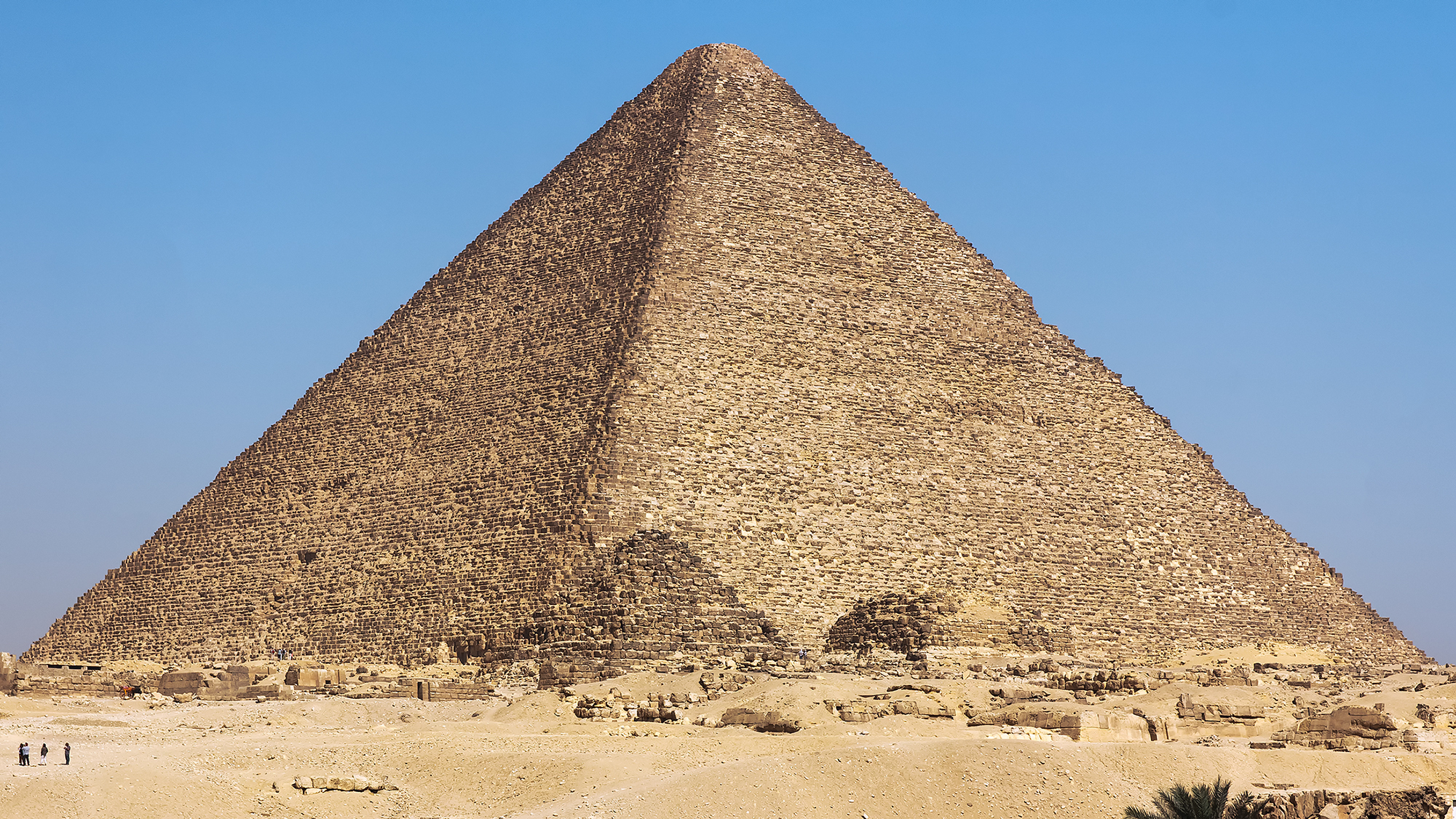
The Great Pyramid of Giza was completed around 2560 BCE, during Egypt’s Old Kingdom, as a tomb for the pharaoh Khufu. Cleopatra VII was born in 69 BCE and died in 30 BCE. The gap between the pyramid’s completion and her birth is roughly 2,490 years.
Apollo 11 landed on the Moon in 1969, about 1,999 years after Cleopatra’s death.
So the last active pharaoh of Egypt lived closer in time to the Moon landing, to television, to the internal combustion engine, than to the construction of the monument standing a short journey up the Nile from her capital. Here is what that gap actually contains, and why our sense of ancient history is so badly compressed.
The Numbers, Laid Out
It is worth stating the timeline plainly, because the effect depends on the specific figures rather than the general idea.
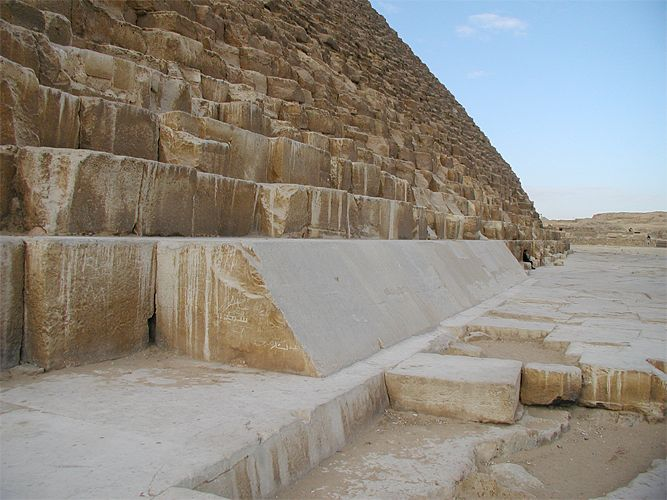
The Great Pyramid was completed around 2560 BCE. It remained the tallest structure built by humans for over 3,800 years, a record it held until Lincoln Cathedral in England surpassed it in the fourteenth century.
Egyptian dynastic civilization ran from the unification of Upper and Lower Egypt around 3100 BCE to Cleopatra’s death in 30 BCE: approximately 3,000 years. That single civilization lasted longer than the entire span from the birth of Christ to the present day.
Cleopatra was born in 69 BCE, roughly 2,490 years after the pyramid was finished. She died in 30 BCE. From that point to 1969 is 1,999 years.
To put the earlier gap in a familiar frame: the distance between the Great Pyramid and Cleopatra is longer than the entire history of Christianity to date. It is a span that contains the invention of formal philosophy in Greece, the writing of much of the Hebrew Bible, the founding and rise of Rome, and the conquests of Alexander the Great — all of it fitting comfortably inside the interval separating one Egyptian monument from one Egyptian queen.
Like our content? Follow us for more.
The Pyramids Were Already Tourist Attractions
The consequence for Cleopatra’s actual experience is the part that reframes things.
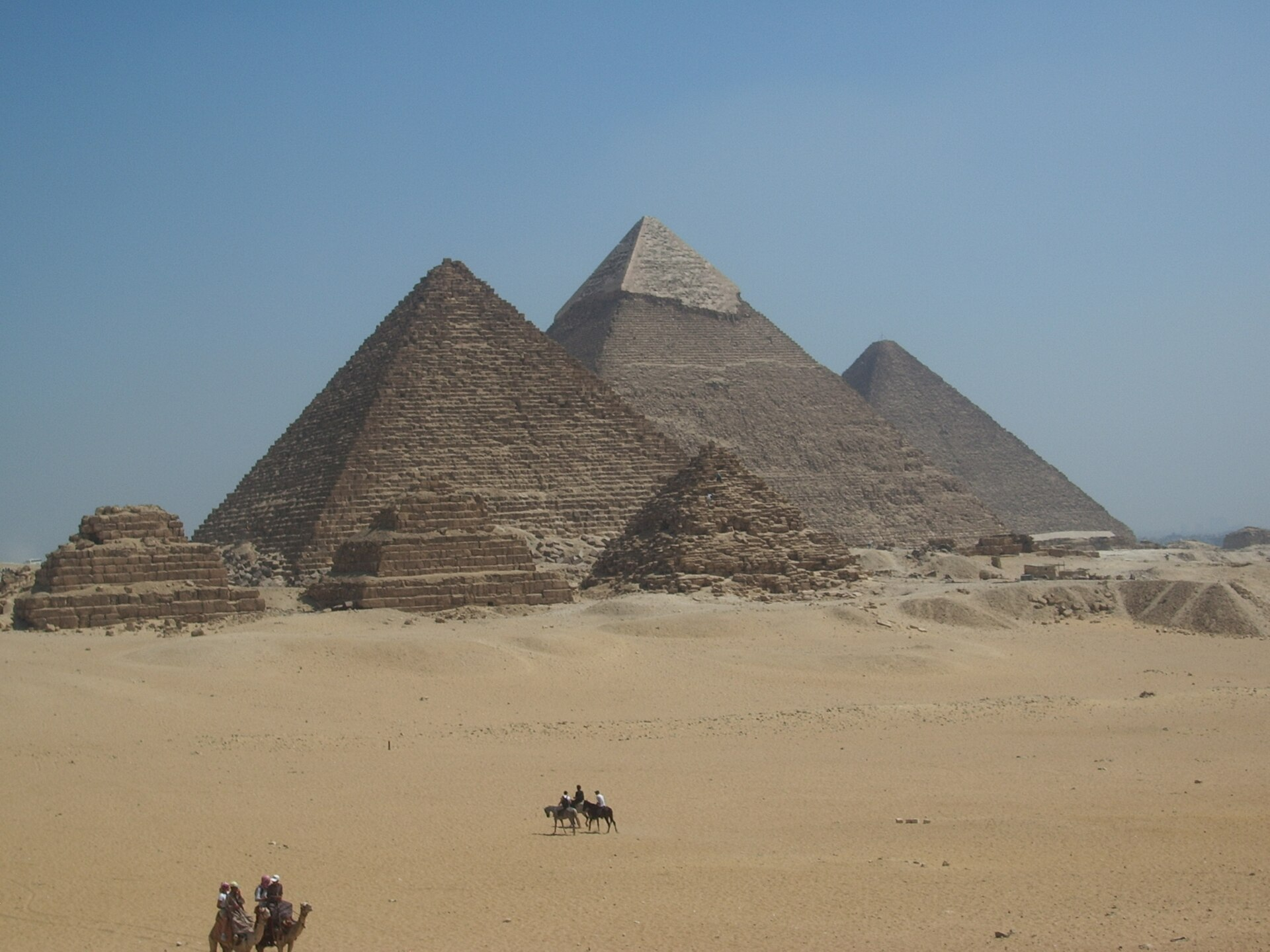
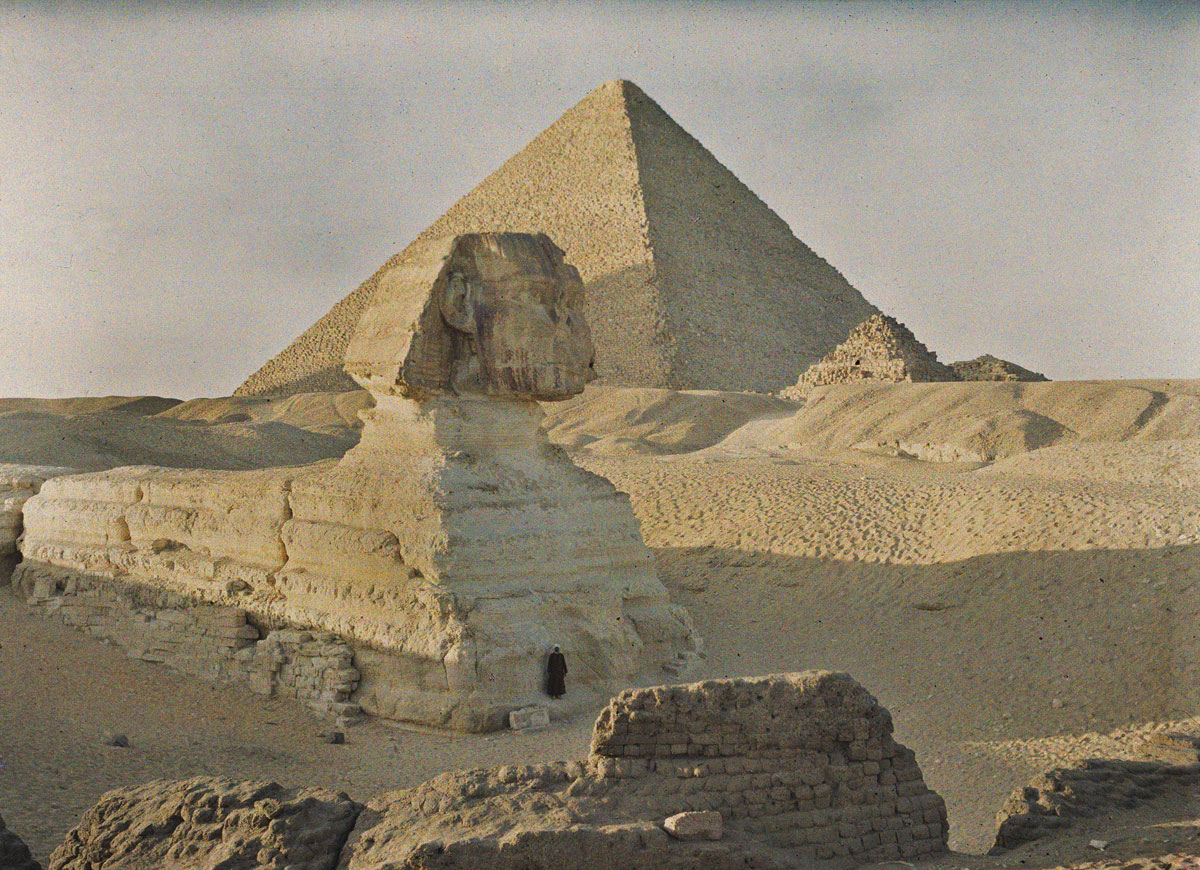
She did not live in a world where the pyramids were impressive new engineering. She lived in a world where they were ancient ruins, older to her than the Colosseum is to us. By her lifetime they had been standing for twenty-five centuries, had already been robbed, and pyramid-building as a practice had been abandoned roughly 1,500 years earlier.
They were, by then, established tourist attractions. Greek and Roman visitors travelled to see them and carved graffiti into the stones, exactly as later tourists would. Herodotus had visited and written about them four centuries before Cleopatra was born, and even he was recording second-hand explanations from guides about monuments already impossibly old in his own time.
One difference is worth noting: the pyramids Cleopatra would have seen still retained much of their smooth white limestone casing, which was later stripped for building material. They would have gleamed in a way the stepped, weathered structures visible today do not.
Cleopatra Was Not an Egyptian Pharaoh in the Way You Think
The compression also distorts who Cleopatra was.
She was ethnically Greek, a Macedonian, descended from Ptolemy I Soter, one of Alexander the Great’s generals who took control of Egypt after Alexander’s death in 323 BCE. Her family had ruled Egypt for nearly three centuries by the time she was born, and they were a Hellenistic dynasty governing an Egyptian kingdom.
The Ptolemies famously did not assimilate linguistically. Cleopatra is generally noted as the only member of her dynasty who bothered to learn the Egyptian language — a striking detail about a family that ruled the country for 300 years.
Her world was Mediterranean and Roman-facing rather than inward-looking. She dealt with Julius Caesar and Mark Antony, operated in a globalized eastern Mediterranean of trade and shifting alliances, and lived under the shadow of an expanding Rome. She died in 30 BCE, less than a century before the traditional date for the birth of Jesus, and just over a decade after Caesar’s assassination.
By her time Egypt had already passed through the Old Kingdom, the Middle Kingdom, the New Kingdom, several intermediate periods of fragmentation and reunification, Persian conquest, and Alexander’s arrival. Thirty dynasties preceded her family. She was the last ruler at the end of an extraordinarily long sequence, not a representative figure from its middle.
What Fits Inside the Gap
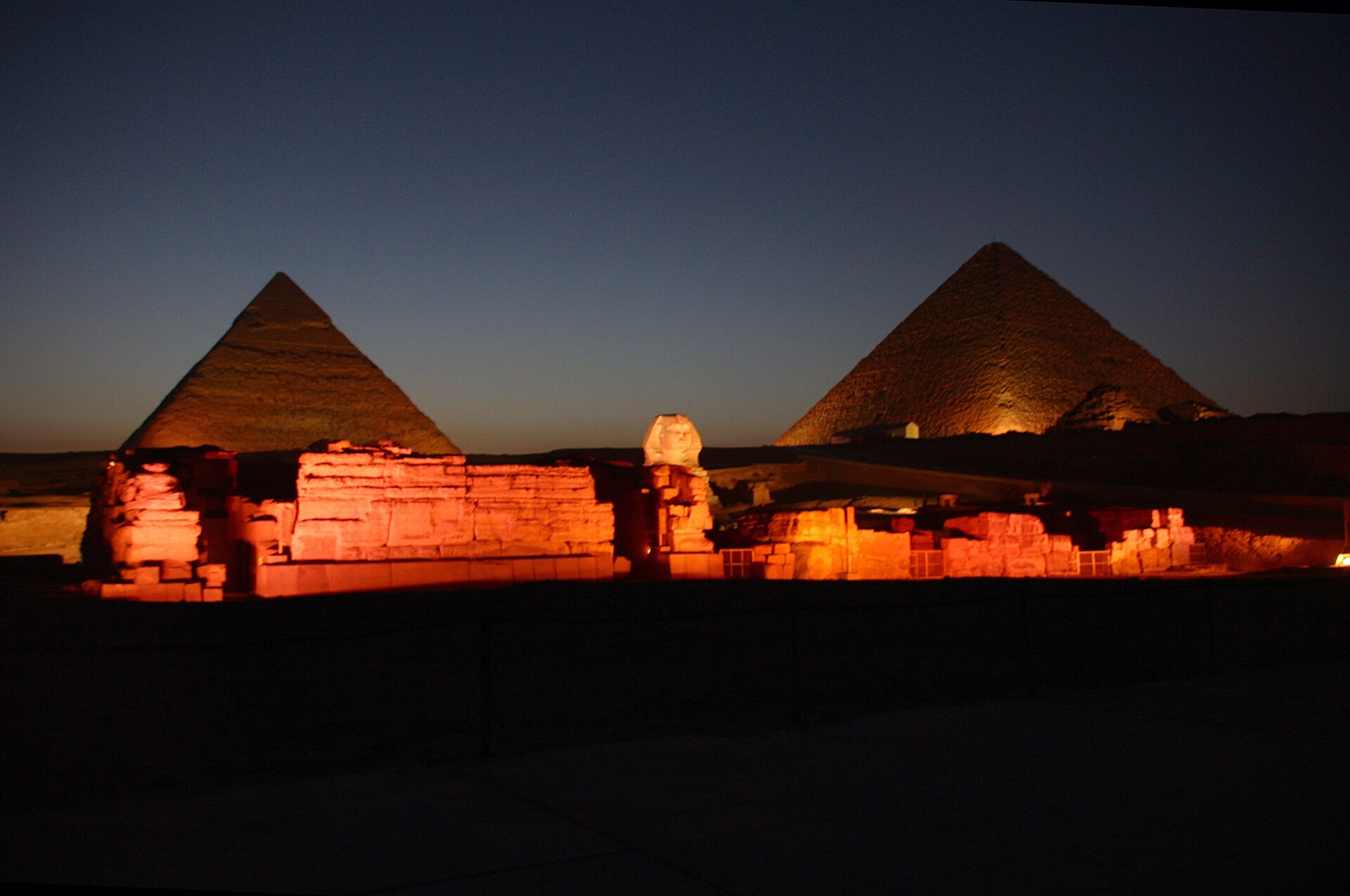
The distance between the Great Pyramid and Cleopatra is easier to grasp if you fill it with events rather than leaving it as a number.
Start at 2560 BCE with the pyramid complete. Egypt’s Old Kingdom still has centuries to run before it collapses into the First Intermediate Period. The Middle Kingdom rises and falls. The New Kingdom follows, producing the pharaohs most people can actually name — Hatshepsut, Akhenaten, Tutankhamun, Ramesses II — none of whom are remotely close to the pyramid builders. Tutankhamun ruled around 1330 BCE, which places him closer in time to Cleopatra than to Khufu.
Outside Egypt, the same interval contains the entire Bronze Age and its collapse, the rise of Assyria and Babylon, the founding of Rome in the eighth century BCE, the Greek classical period with Socrates, Plato and Aristotle, the Persian empire, and Alexander’s conquests.
By the time Cleopatra is born, all of that has already happened. Rome is a major power. Greek philosophy is old. The pyramid has been standing through every bit of it.
That is the gap: not an abstract 2,500 years, but the whole of ancient history as most people learn it, fitting comfortably between one monument and one queen.
Why Our Brains Do This
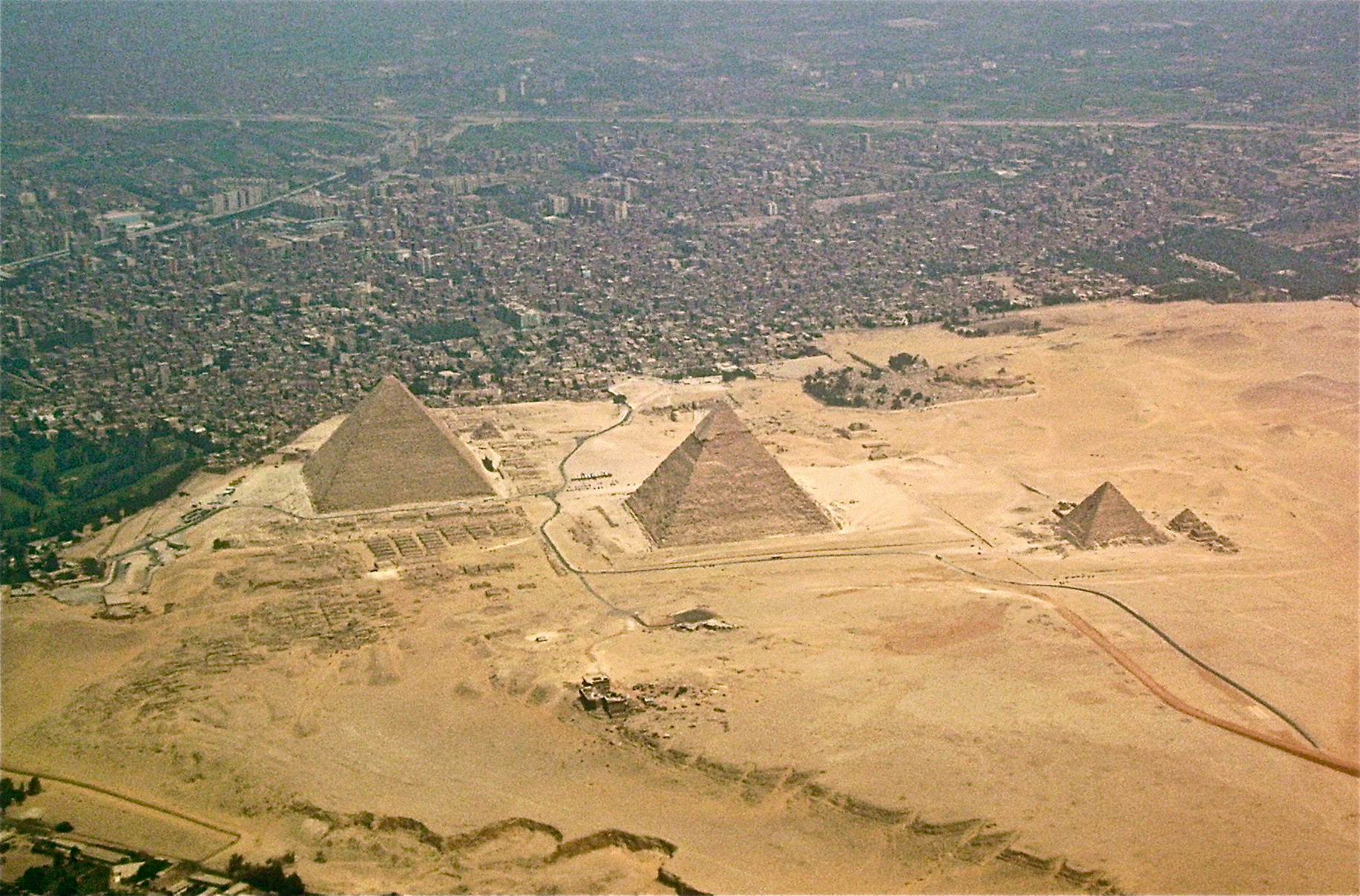
The compression is not ignorance so much as a predictable feature of how people handle time.
Psychologically, we tend to foreshorten periods we did not live through. Recent decades feel granular and distinguishable; anything before a certain point collapses into an undifferentiated “past.” The further away something is, the more it compresses, which is why the 1980s and 1990s feel clearly separate while the twelfth and fifteenth centuries blur together for most people.
Visual shorthand reinforces it. Museums, films, textbooks and travel marketing present ancient Egypt as a coherent aesthetic package: pyramids, sarcophagi, hieroglyphs, eyeliner, gold. Objects separated by two thousand years sit in the same display case under the same heading, and the heading does more work than the dates.
Education contributes as well. Egyptian history is usually taught as a unit rather than as a sequence, and units imply simultaneity. Very few people come away with a working sense that the Old Kingdom and the Ptolemaic period are separated by more time than separates us from Julius Caesar.
The result is a mental image in which everything ancient happened at roughly the same time, which flattens three thousand years of change into a single tableau.
Other Comparisons That Break the Same Way
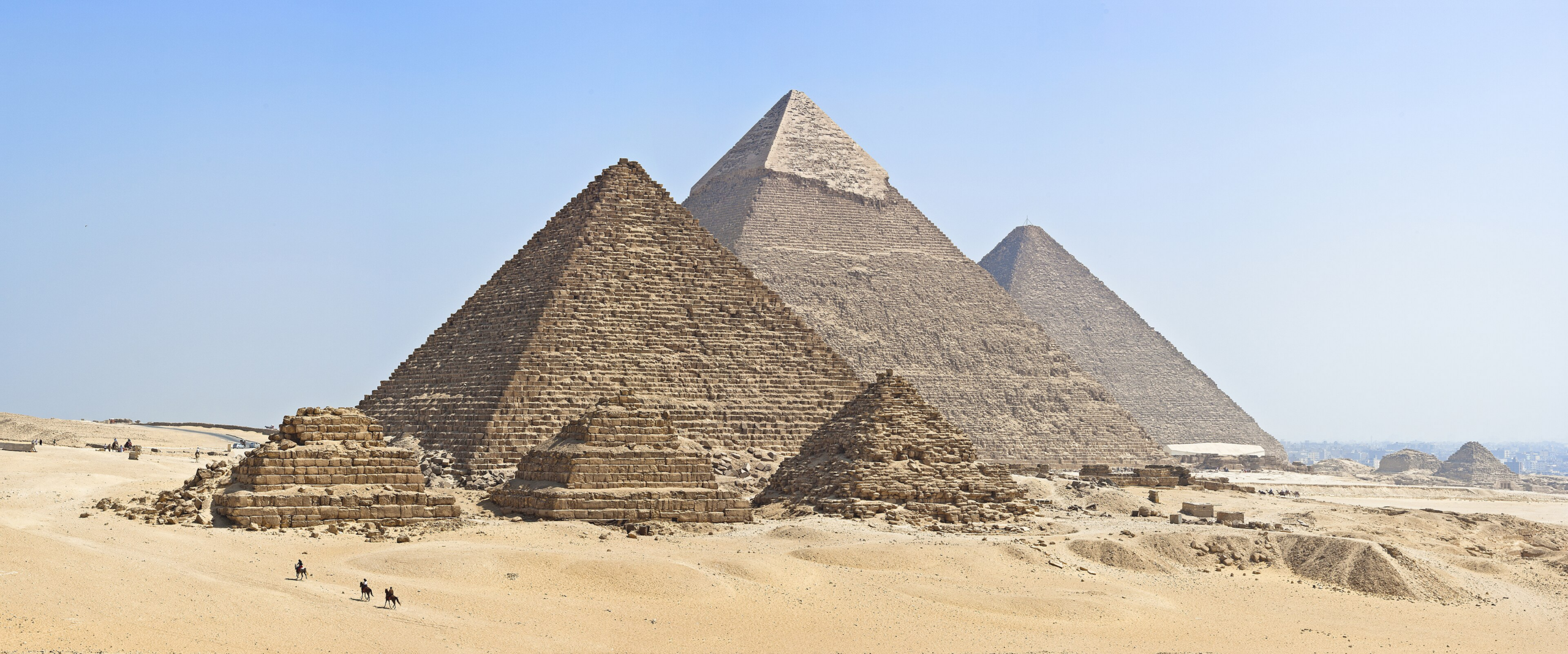
Once you notice the effect, it turns up everywhere, and a few examples are worth having.
Oxford University was teaching students before the Aztec Empire existed. Sharks predate trees. The last woolly mammoths were alive while the Great Pyramid stood, wandering on an Arctic island long after the pharaohs had built it — meaning that when Khufu’s workers were cutting limestone, mammoths were still walking the Earth.
Each of these produces the same jolt, and for the same reason: they place two things in correct chronological relation when our mental filing system had them in the wrong order or the wrong era entirely.
The point is not that these are quiz facts. It is that our intuitions about historical distance are systematically unreliable, and unreliable in a consistent direction — we compress the distant past and stretch the recent one.
What This Changes
There is a practical benefit to taking the correction seriously, beyond the pleasure of a good fact.
It changes how you read anything about the ancient world. Statements about “the ancient Egyptians” are frequently statements about a specific dynasty in a specific century, generalized across three thousand years of a civilization that changed enormously in language, religion, art, politics and technology. Treating that as one culture is roughly like treating Roman Britain and modern Britain as the same society because both are on the same island.
It also does something useful to your sense of scale. Human civilization is not a thin recent layer on top of prehistory; it is deep, and it contains internal distances vast enough that its own inhabitants found parts of it unimaginably ancient. Cleopatra looking at the pyramids was doing what we do when we look at a medieval cathedral, except with ten times the gap.
The Great Pyramid was old when Rome was founded. It was old when Greece invented philosophy. It was old when Cleopatra was born, and she is closer to us than she was to it.
Next time you see them grouped together in a documentary, it is worth doing the mental arithmetic. The distance inside “ancient Egypt” is larger than the distance between ancient Egypt and now.
Like our content? Follow us for more.