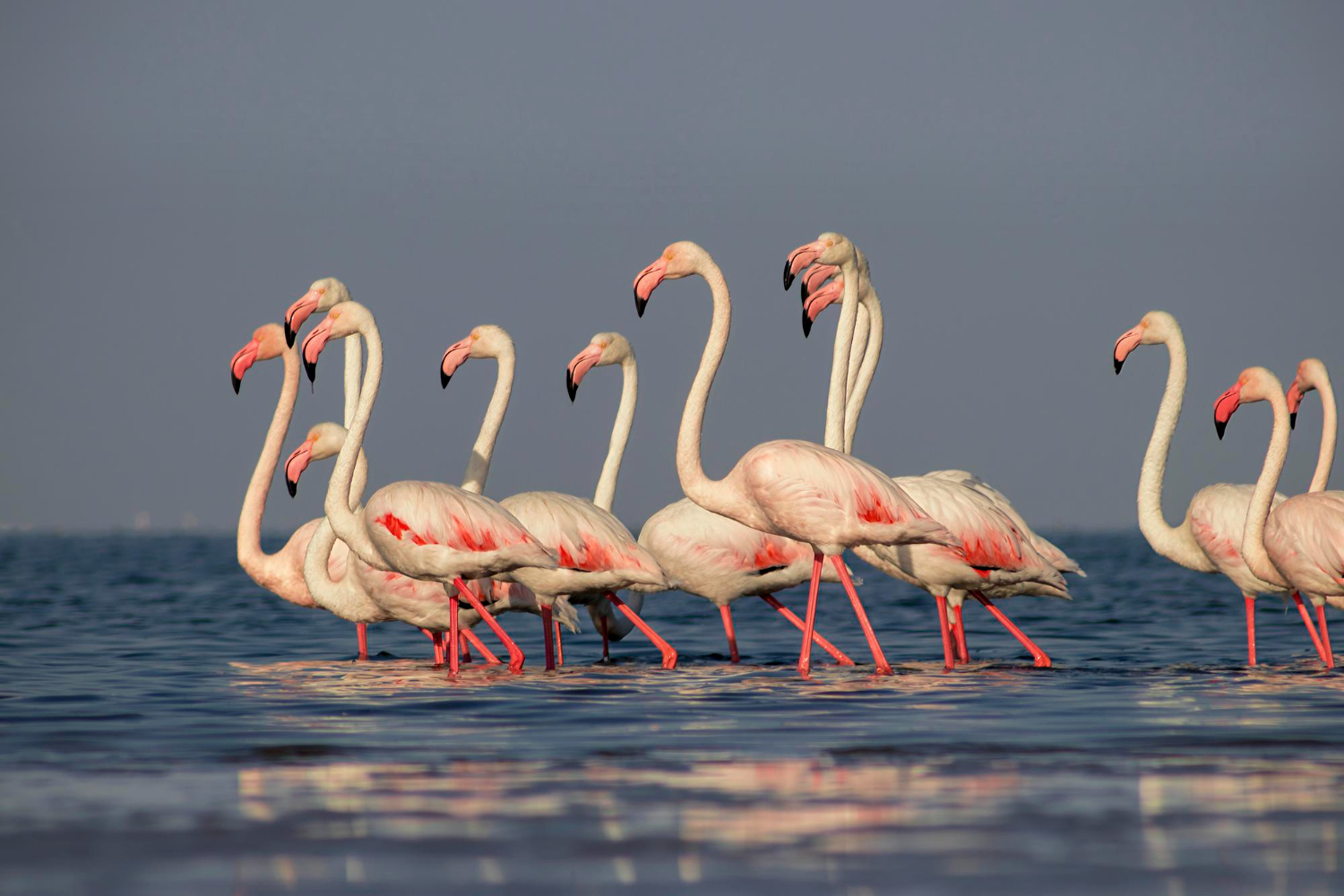
The flamingo is one of the few animals recognizable from colour alone. The name itself comes from a Spanish or Portuguese word meaning flame-coloured, and the birds are so associated with pink that the shade is named after them.
Which makes the underlying fact truly surprising: the colour is not a hereditary trait. It is not written into the bird in the way that a cardinal’s red or a peacock’s blue largely is. Flamingo chicks hatch covered in dull grey down and stay that way for a long time.
The pink is assembled from the outside, over years, out of what the bird eats. And the food it eats to get there is material that would cause serious problems for most other animals, in water that would injure most things that tried to live in it.
Here is how a bird eats its way to becoming pink.
Where the Colour Comes From
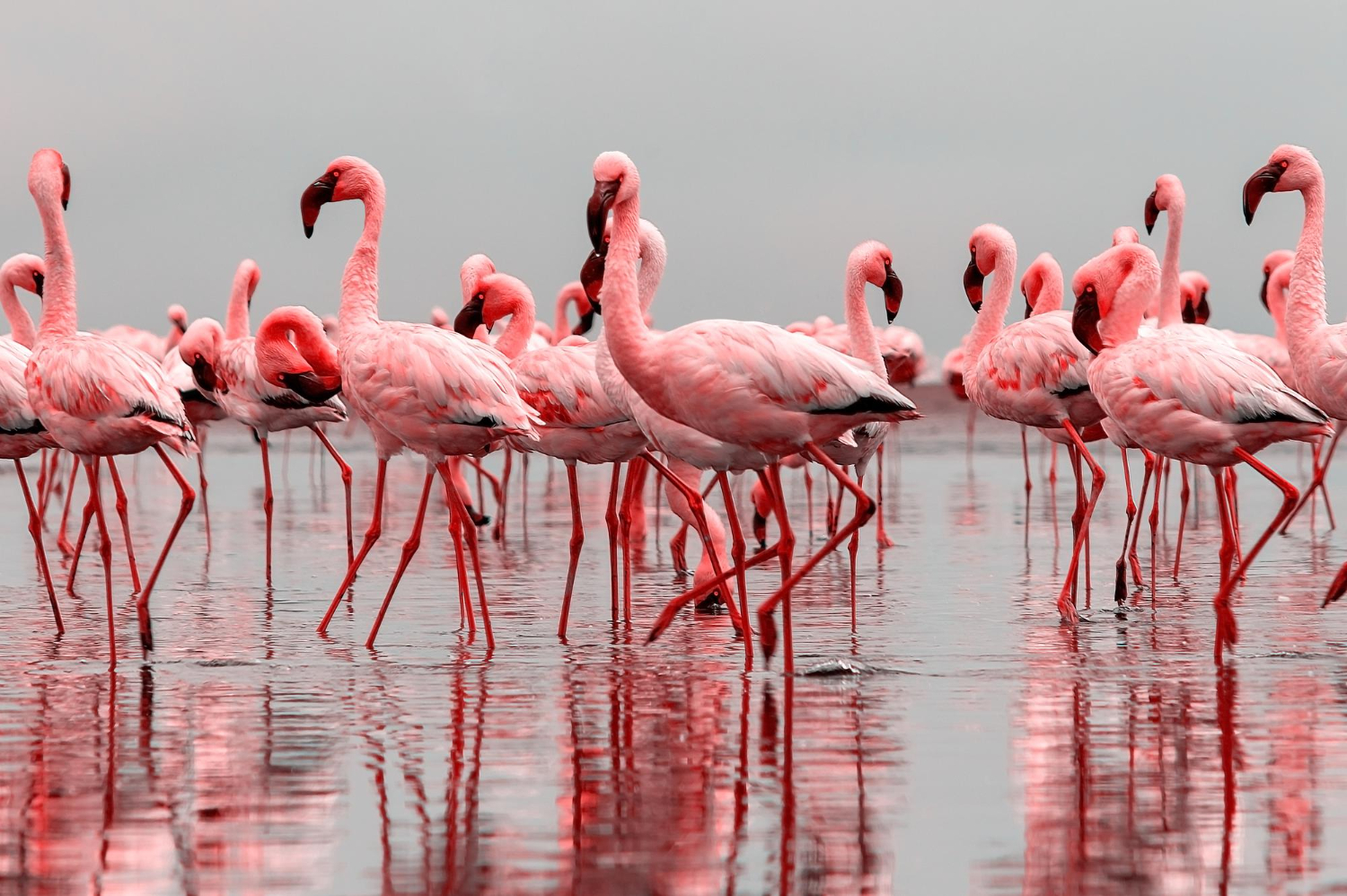
The pigments responsible are carotenoids, a family of organic compounds that produce red, orange and yellow colours across the natural world. They are the same class of compound that makes carrots orange, tomatoes red and marigolds yellow.
The critical fact about carotenoids is that animals cannot manufacture them. They are produced by plants, algae and certain bacteria. Any animal displaying carotenoid colour has obtained it by eating something that made it.
For flamingos the sources are the blue-green algae and diatoms in their feeding grounds, and the small creatures that themselves eat that algae — principally brine shrimp, along with brine fly larvae, molluscs and small crustaceans. Both routes deliver the same compounds, and the pigments concentrate as they move up the food chain.
The specific compounds matter. Beta-carotene, the orange-yellow pigment familiar from vegetables, is one. Canthaxanthin, a deep orange-red, is another, along with astaxanthin, the compound that also colours shrimp and salmon.
Flamingos and shrimp are, in a sense, pink for the same reason. Both are eating algae that produce the pigment. The shrimp are not the origin of the colour; they are a delivery mechanism.
Like our content? Follow us for more.
The Liver Does the Work
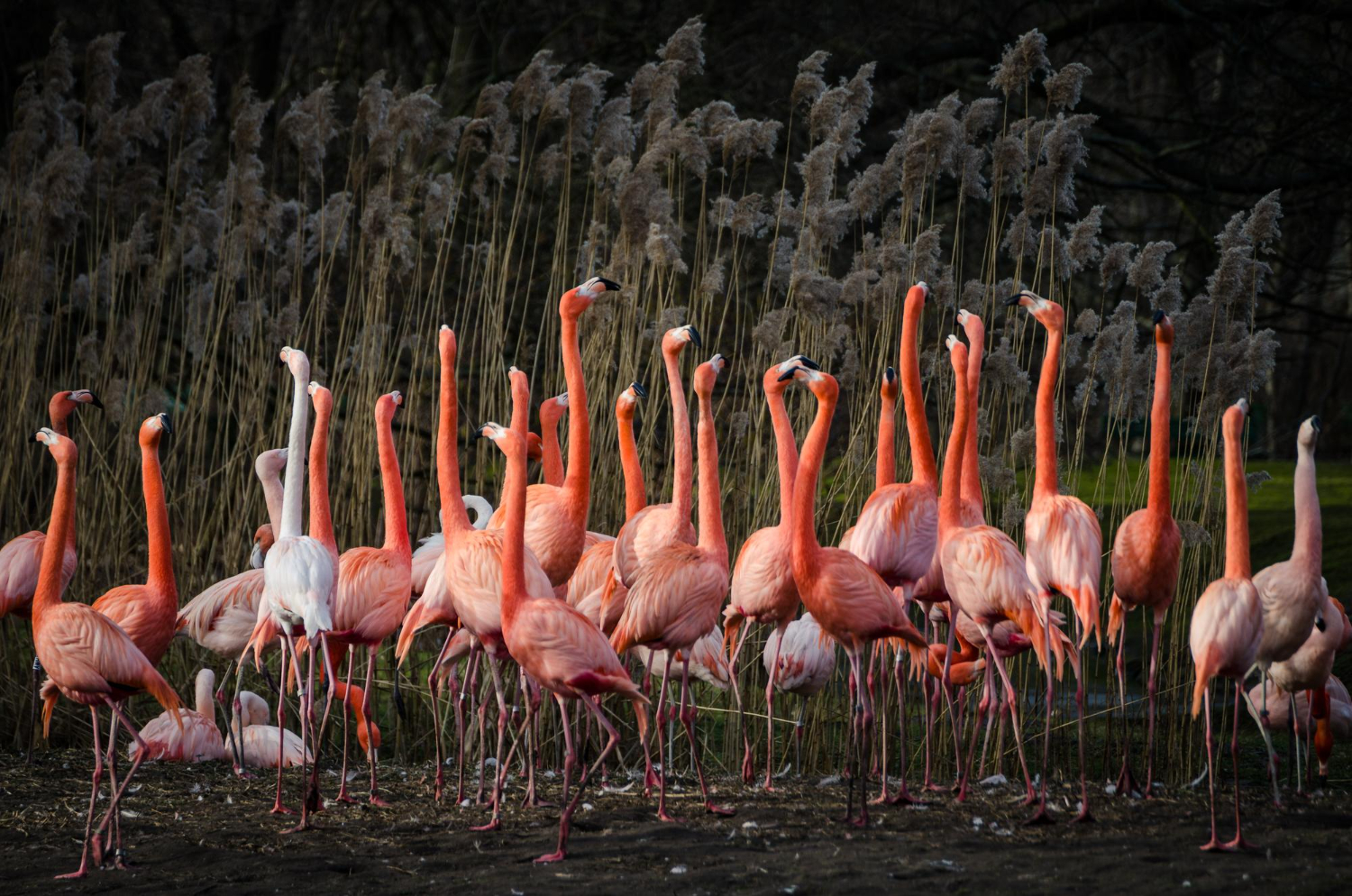
The mechanism from meal to feather runs through the bird’s metabolism, and this is the part that separates flamingos from animals that simply cannot do it.
When a flamingo eats, enzymes in the digestive system detach the carotenoids from the proteins they are bound to. The liver then processes them, breaking down the compounds and converting much of the beta-carotene into canthaxanthin — the deeper red-orange pigment that produces the characteristic shade.
The resulting pigments are stored in fat and then deposited into newly growing feathers, and into the skin and beak.
That last detail explains something about the timeline. Pigment goes into feathers as they grow. It does not colour feathers already in place. So a flamingo becomes pink gradually, feather by feather, as it moults and regrows plumage on a carotenoid-rich diet. Chicks hatch grey and take roughly two to three years to develop full adult colour.
The process also runs in reverse. Feathers fade over time, and if carotenoids are not replenished through diet, the bird pales. Deprived of the relevant foods, a flamingo will trend toward pale pink or white. This is why flamingos in captivity typically require dietary supplements to maintain their colour — without them, the most famous pink birds in the world go beige.
The Water Nobody Else Can Use
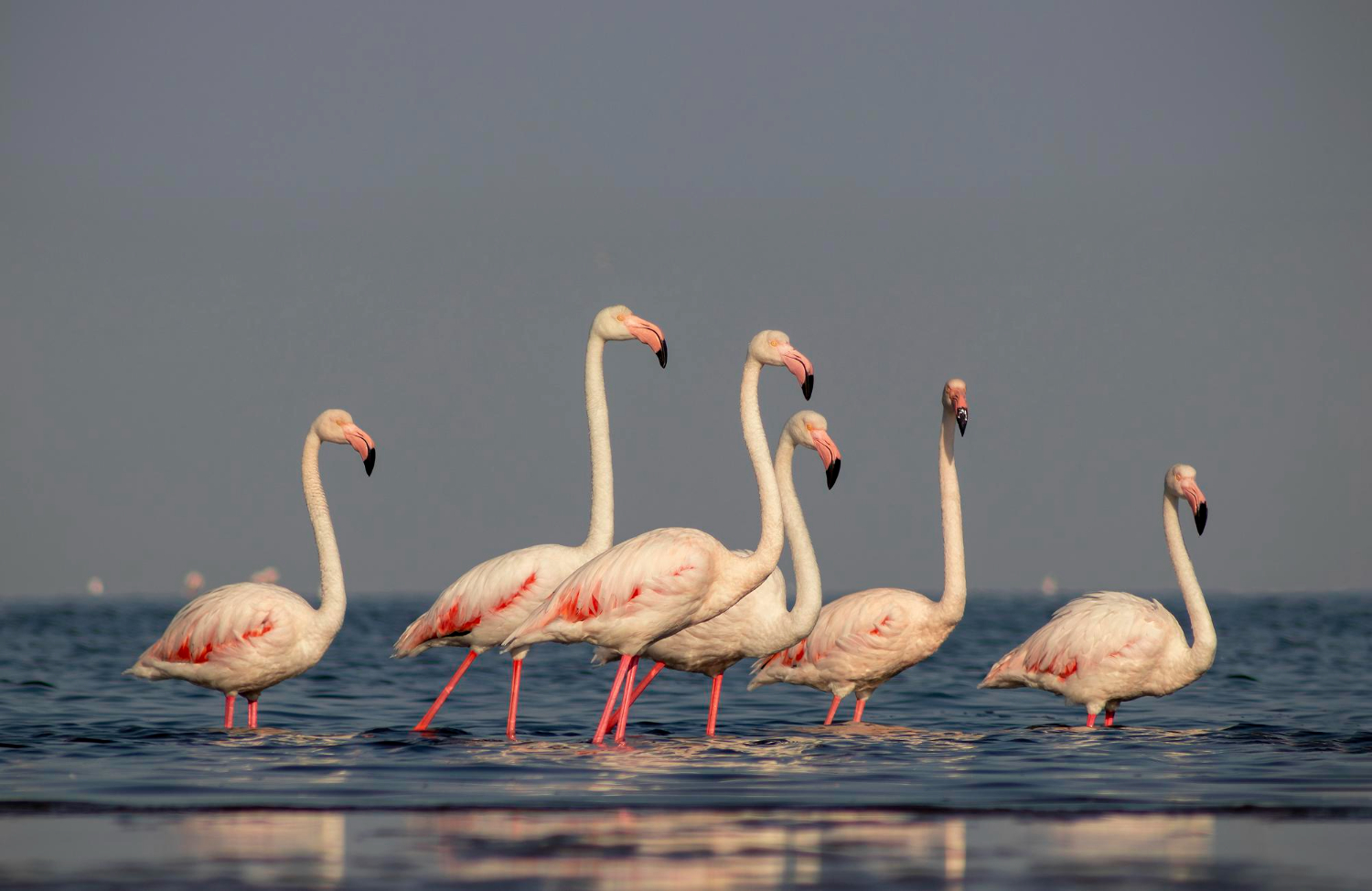
The habitat is the part of the story that reframes the whole thing, because it explains why flamingos evolved to process these compounds at all.
Flamingos live in inhospitable, often remote wetlands: shallow, highly alkaline or saline lakes. Paul Rose, a zoologist at the University of Exeter, has described these as lakes so alkaline that the water is truly caustic.
Very little can live in water like that. But the water is not empty — it holds crustaceans, cyanobacteria and diatom algae in quantity, an entire food supply with almost no competition for it, because the compounds involved are difficult for most animals to handle and the environment excludes nearly everything else.
Flamingos have a specialised metabolism that lets them process this material in the liver, breaking it down into usable components and pigments. What is a barrier for other species is an open larder for them.
Seen this way, the pink is a byproduct. The bird did not evolve to be decorative; it evolved to exploit a food source nothing else could touch, and the colour is what happens to the leftovers of that chemistry.
Chicks, Milk and Grey Parents
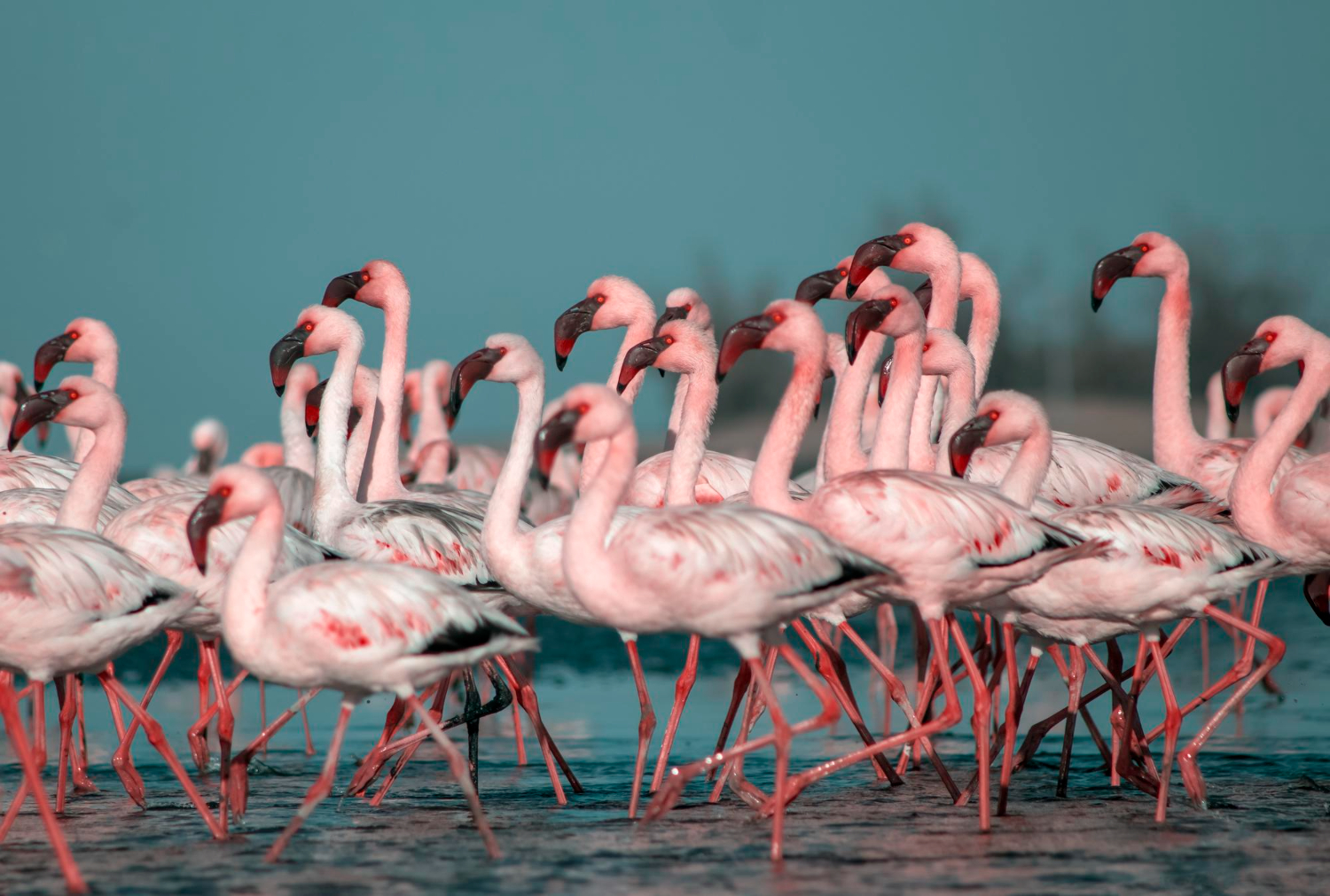
The way flamingos raise their young adds a further twist to the pigment story.
Both parents produce a substance often called crop milk, secreted from the upper digestive tract and fed to the chick during its early weeks. It is not milk in the mammalian sense, but it serves the same function, and pigeons produce something comparable.
Crucially, that secretion is loaded with the carotenoids the parents have accumulated. Feeding a chick therefore draws pigment directly out of the adults, and parents visibly pale during the rearing period, recovering their colour after the chick becomes independent.
So a grey chick is being fed pink by parents who fade in the process — the pigment moving from one generation to the next before the young bird can gather any for itself.
Chicks are also born with straight bills. The characteristic downward bend develops over the first months, which is why very young flamingos cannot yet filter feed in the adult manner and depend on being fed.
Why the Colour Is Not Wasted
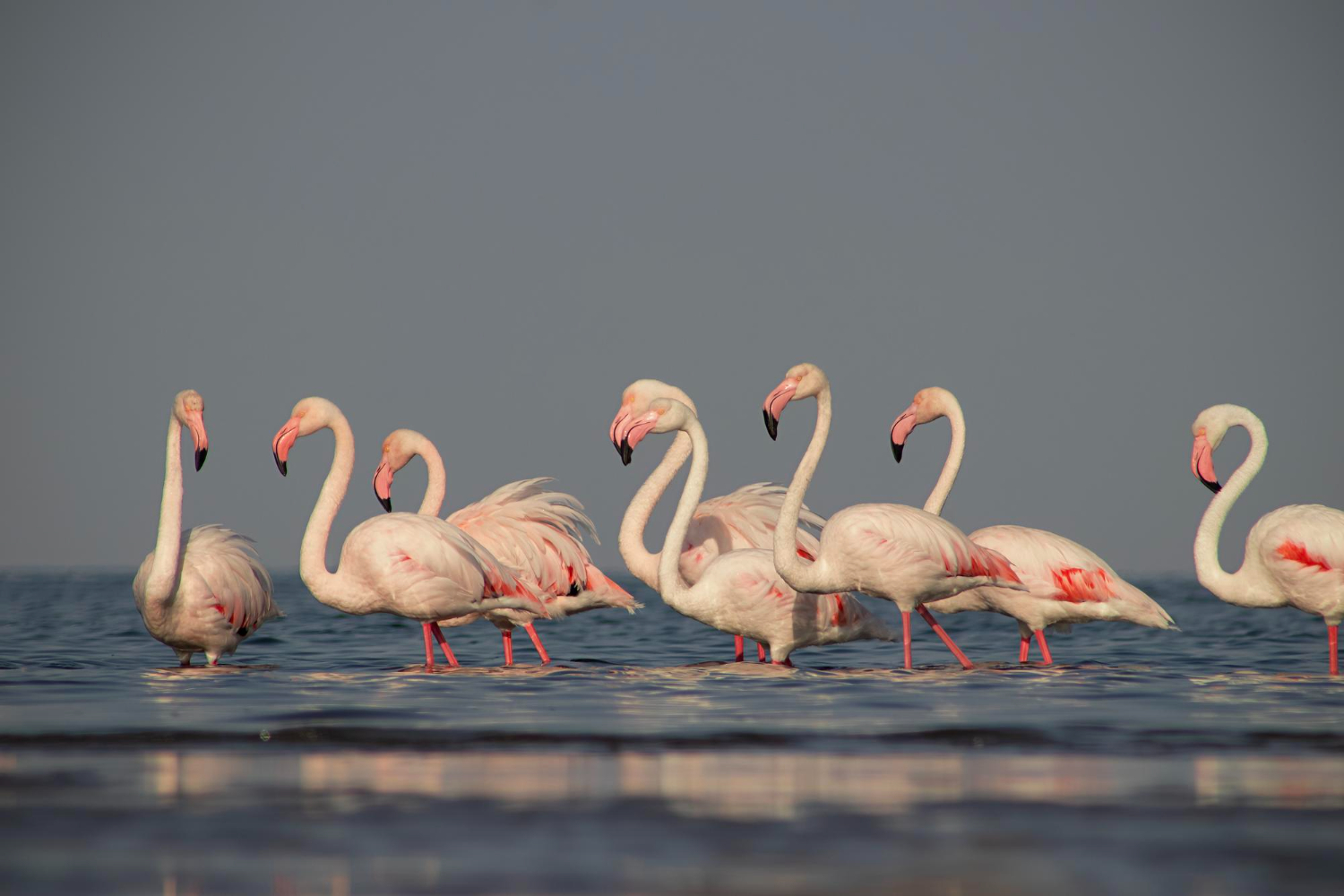
Having arrived by accident, the pigment then acquired a function, and this is where the biology gets neat.
Because colour depends entirely on diet, it is an honest signal. A flamingo cannot fake being pink. A deep, vivid bird has been foraging successfully in good conditions and is processing its food efficiently; a pale one has not. The colour is a live readout of health and competence.
Studies suggest brighter birds have an advantage in competition and in mate choice, which is exactly what you would expect from a signal that cannot be counterfeited.
There is a further behaviour that suggests the birds are aware of the stakes. Flamingos appear to apply additional pigment during preening, drawing secretions from a gland and working them into their feathers, particularly around the breeding season. That is, in effect, cosmetics — a bird enhancing a signal it cannot otherwise improve.
Colour also varies by species and circumstance. Caribbean flamingos tend to be the most vivid, often reaching rich magenta or crimson; greater flamingos, found across Africa and Europe, are usually a lighter pink or pale peach. Diet quality, moult timing and species all contribute.
How a Flamingo Actually Eats
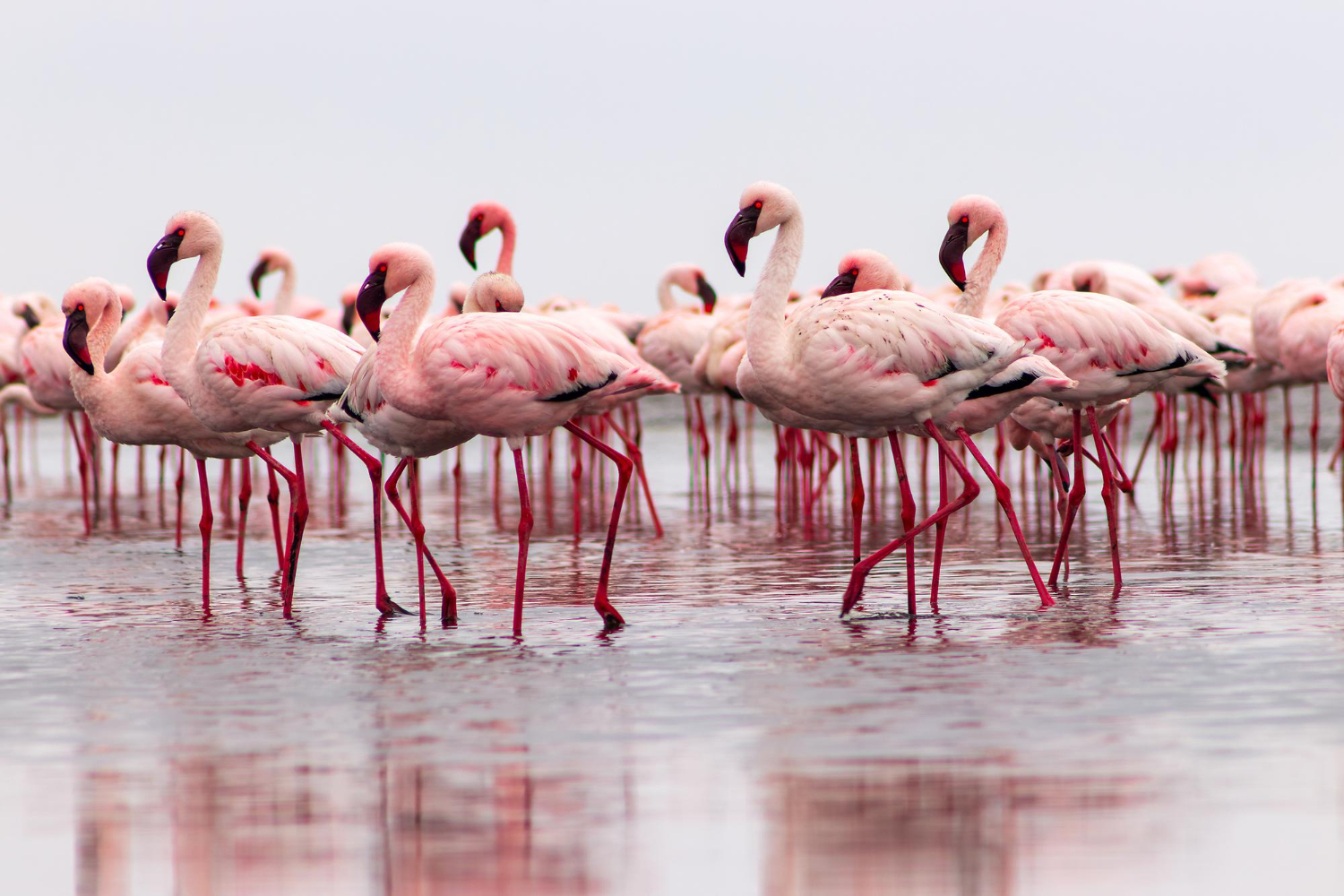
The feeding mechanism deserves attention, because it is as unusual as the colour and directly responsible for it.
A flamingo feeds with its head upside down. It lowers its bill into the water inverted, so that what would be the top of the beak sits underneath, and sweeps it from side to side.
The bill contains rows of comb-like structures called lamellae, and the tongue pumps water through them. Food particles — algae, diatoms, tiny crustaceans — are trapped while the water is expelled. It is filter feeding, working on the same principle as a baleen whale, executed by a bird standing in a lake.
That is why flamingos can exploit water nothing else can use. They are not hunting individual prey; they are straining an entire water column for microscopic material, which is precisely where the carotenoids are concentrated.
The famous single-leg stance is related to the same lifestyle. Explanations include heat conservation in cold water and reduced muscular effort, and research suggests the posture may require less energy than standing on two — useful for a bird that spends long periods motionless in shallow water.
You Are What You Eat, Literally
Flamingos are the best-known example of dietary colouring, but they are not alone, and the comparison is useful.
Northern cardinals and goldfinches derive their red and gold plumage partly from carotenoids metabolised from berries; on a carotenoid-free diet those colours would fade with each moult. Shrimp themselves cannot produce the compounds and depend on their own diet for colour. Salmon flesh gets its shade the same way.
Humans are not exempt from the underlying chemistry, though the effect is different. Carotenoids appear in yams, kale, spinach, watermelon, cantaloupe, peppers, tomatoes and carrots, and prolonged consumption of very large quantities can produce carotenosis, in which the skin takes on a yellow-orange tinge. It is harmless and reverses when intake drops. We are simply less efficient at concentrating the pigment than a bird whose entire diet is built on it.
The flamingo remains the clearest case, because the transformation is total and the reversal is demonstrable. The bird is a walking record of everything it has eaten since its last moult.
It is worth holding that image next time you see a flock. Those birds are not pink because of their genes. They are pink because they stood for years in caustic water that nothing else could tolerate, filtering out algae and shrimp that nothing else could use, and converting the results into the most recognizable colour in the animal kingdom.
Like our content? Follow us for more.