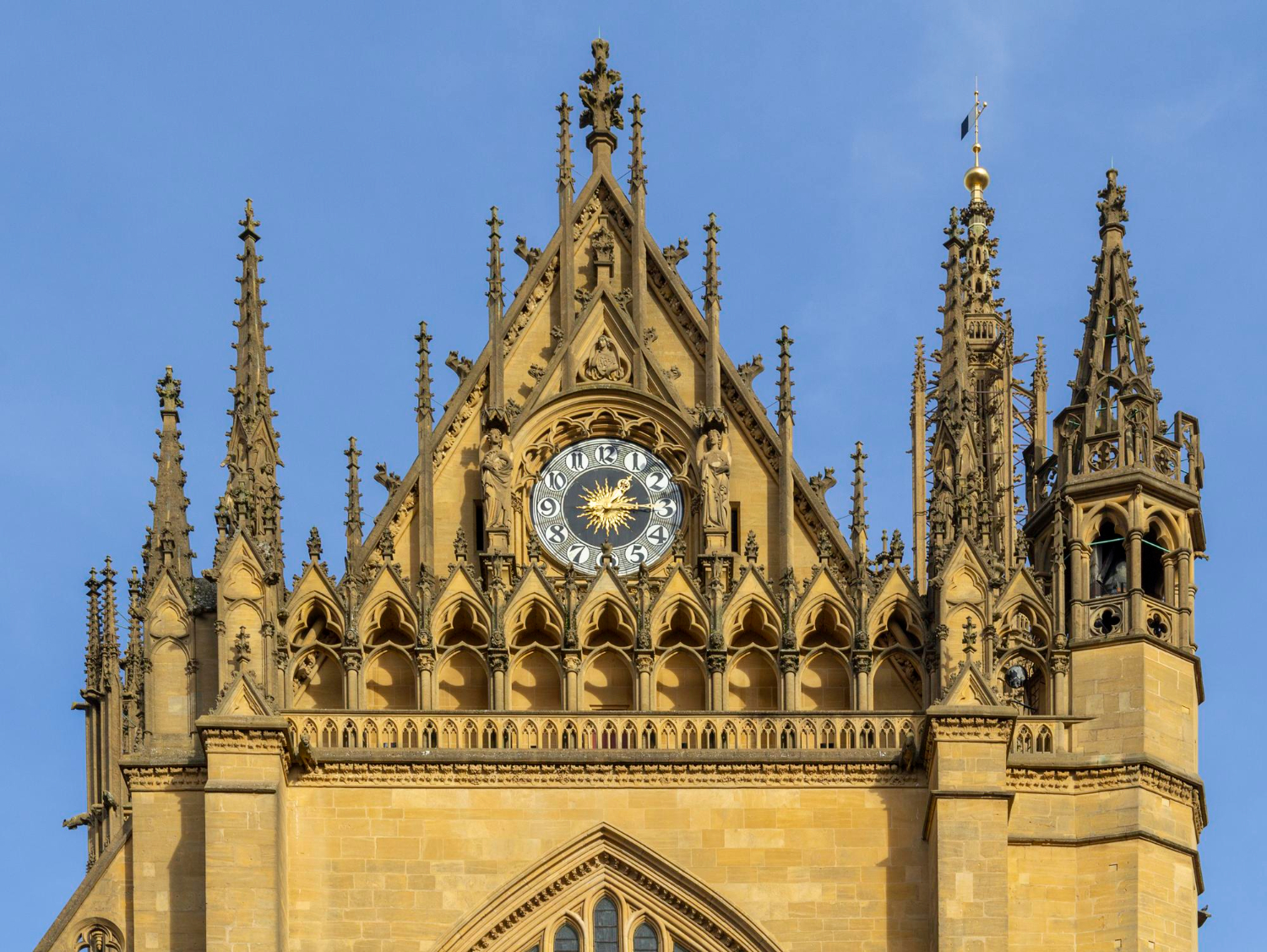
These are not clocks with decoration added. They are astronomical instruments that happen to display the hour, built when the position of the sun and moon mattered to planting, sailing and religious observance. Here are fifteen worth standing in front of.
1. Prague Astronomical Clock, Czech Republic
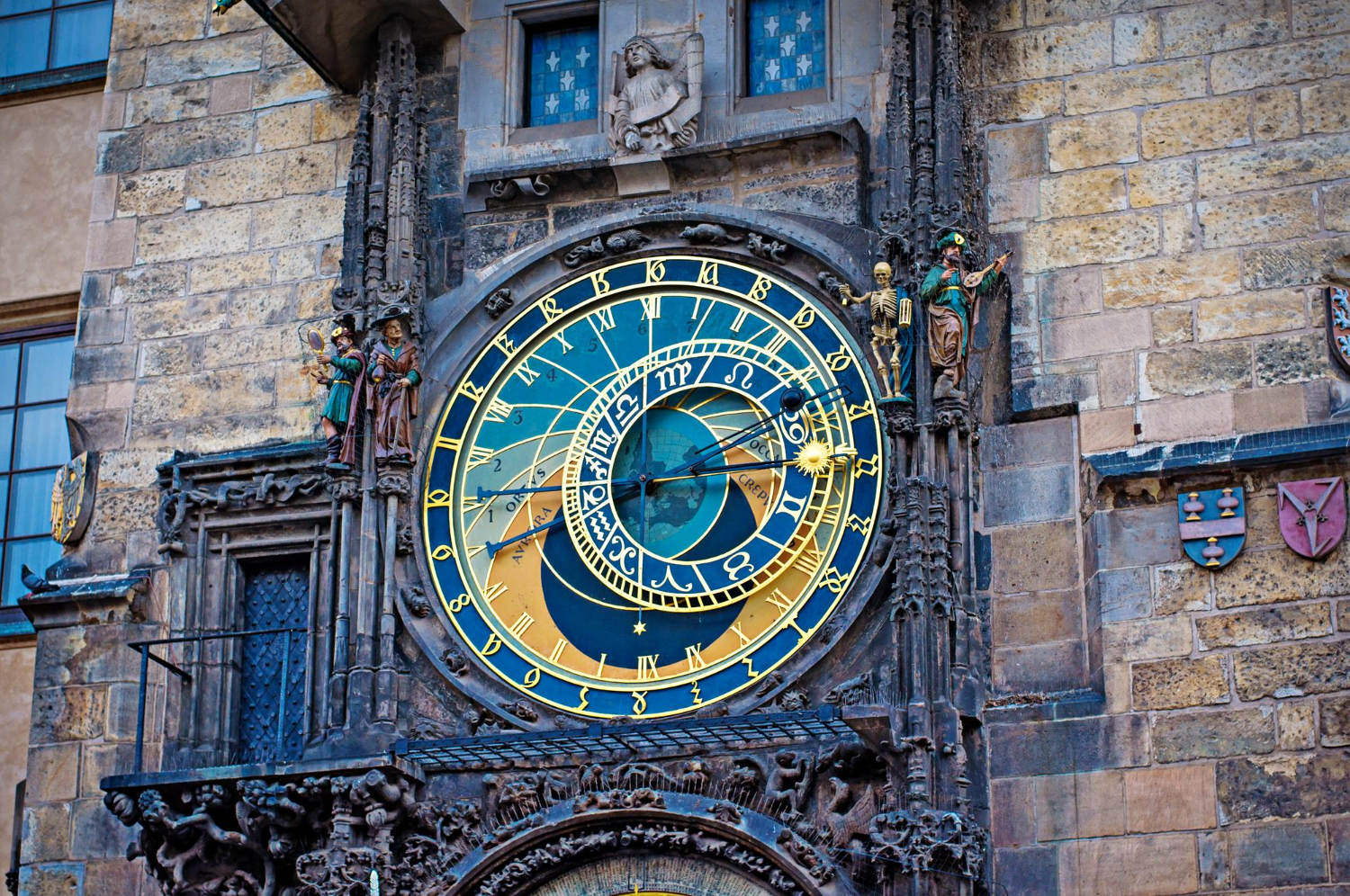
The most famous of them all, installed on the Old Town Hall in the early fifteenth century and still operating with substantial original mechanism.
The upper dial shows the position of the sun and moon and the hour in several different systems at once, and figures move on the hour to a large crowd. Prague is the astronomical clock everybody has seen a photograph of.
Like our content? Follow us for more.
2. Strasbourg Cathedral Clock, France
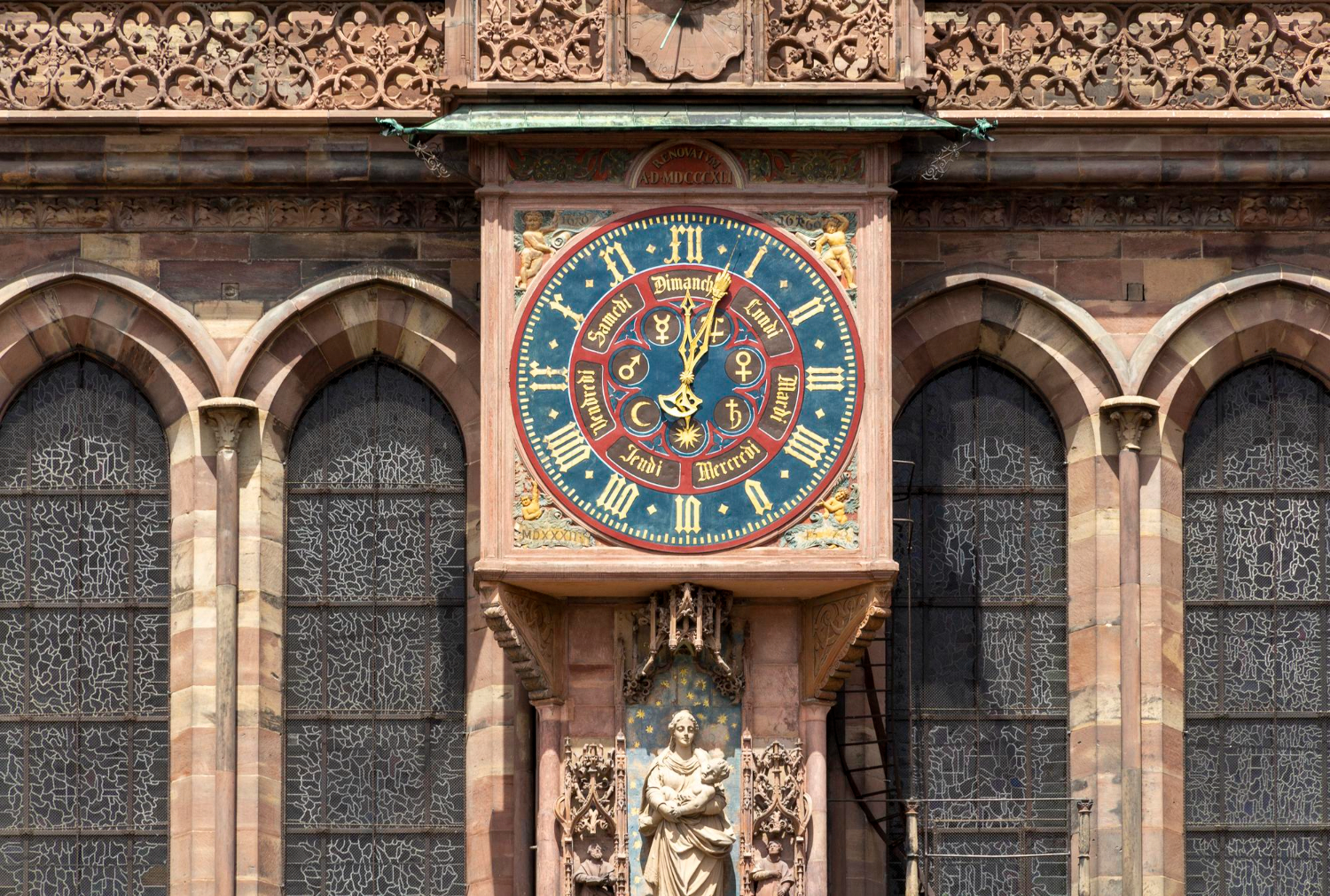
A vast Renaissance clock inside the cathedral, the third on the site, with a mechanism dating substantially from the nineteenth century.
It includes a perpetual calendar, planetary indications and a procession of figures that performs at a fixed time each day. Strasbourg is the astronomical clock built at cathedral scale indoors.
3. Wells Cathedral Clock, England
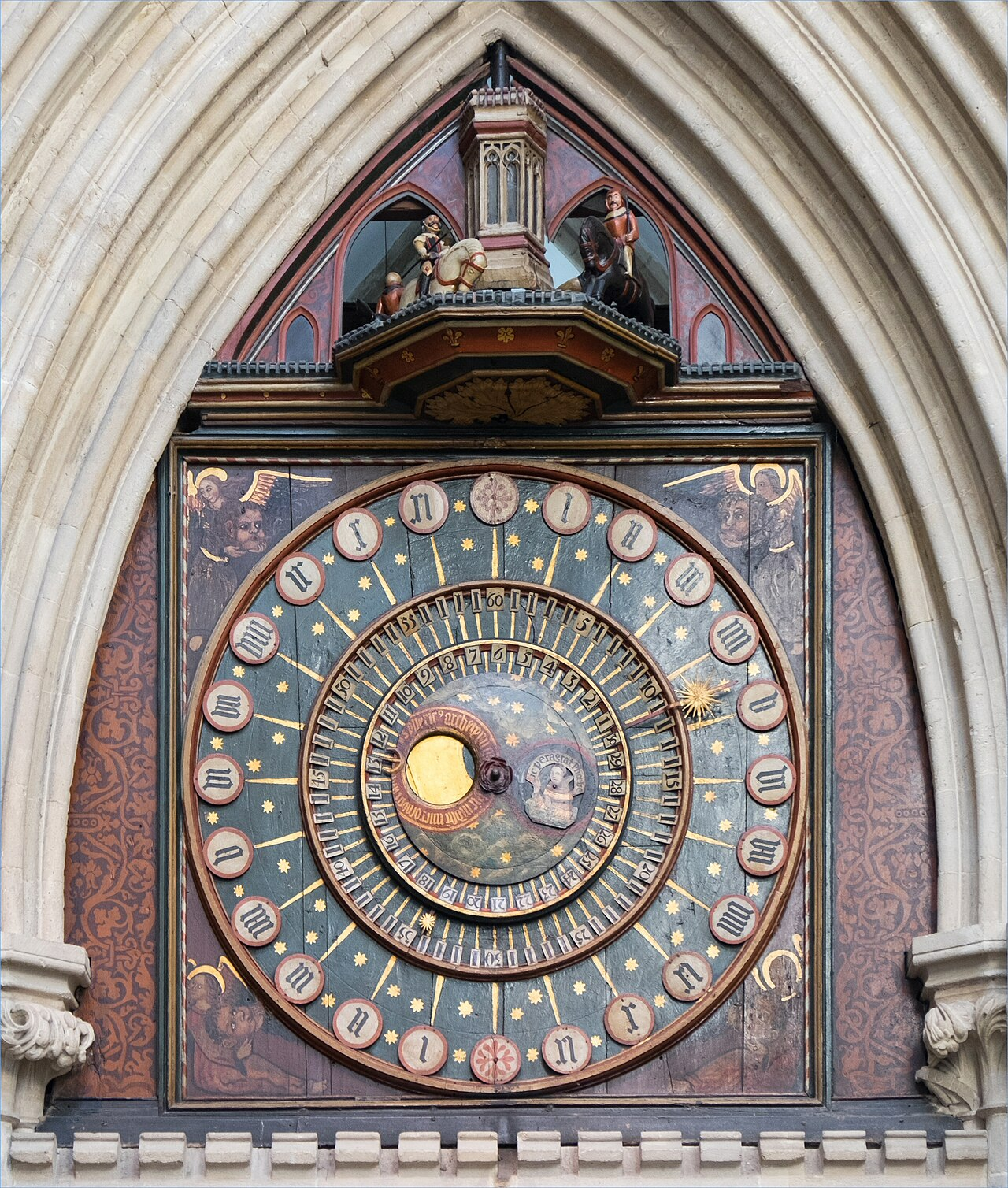
Among the oldest surviving clock faces in the world, with a dial showing the sun, moon and phases, and jousting knights that circle on the hour.
Its original mechanism was removed to a museum and the dial is now driven by a later movement. Wells is the astronomical clock whose face has been running since the fourteenth century.
4. The Clock Tower of St Marks Square, Venice, Italy
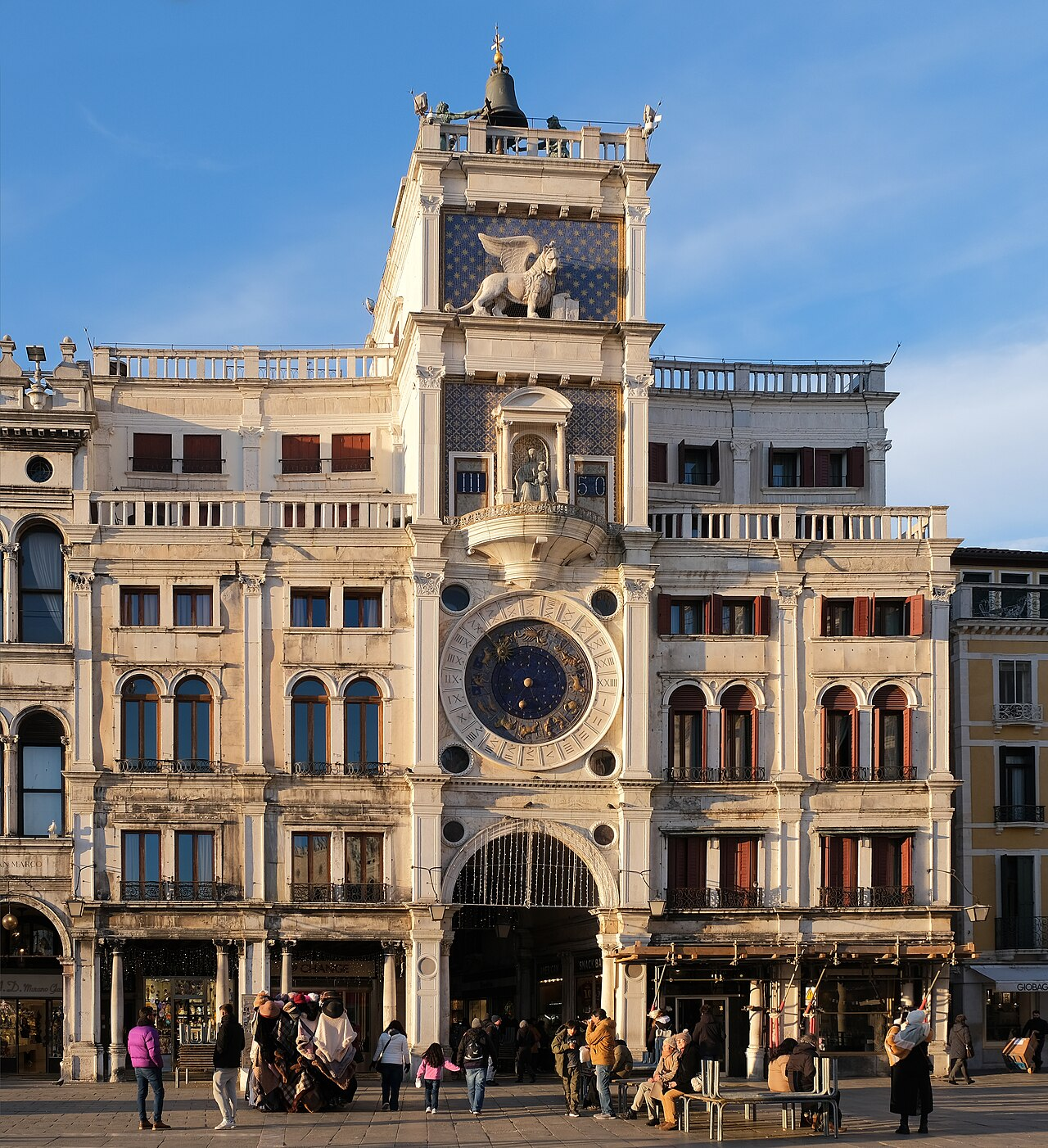
A Renaissance clock tower with a blue and gold dial showing the zodiac and the phase of the moon.
Two bronze figures strike the bell on the terrace above, and access is by guided tour into the mechanism itself. Venice is the astronomical clock you can climb inside.
5. Lund Cathedral Clock, Sweden
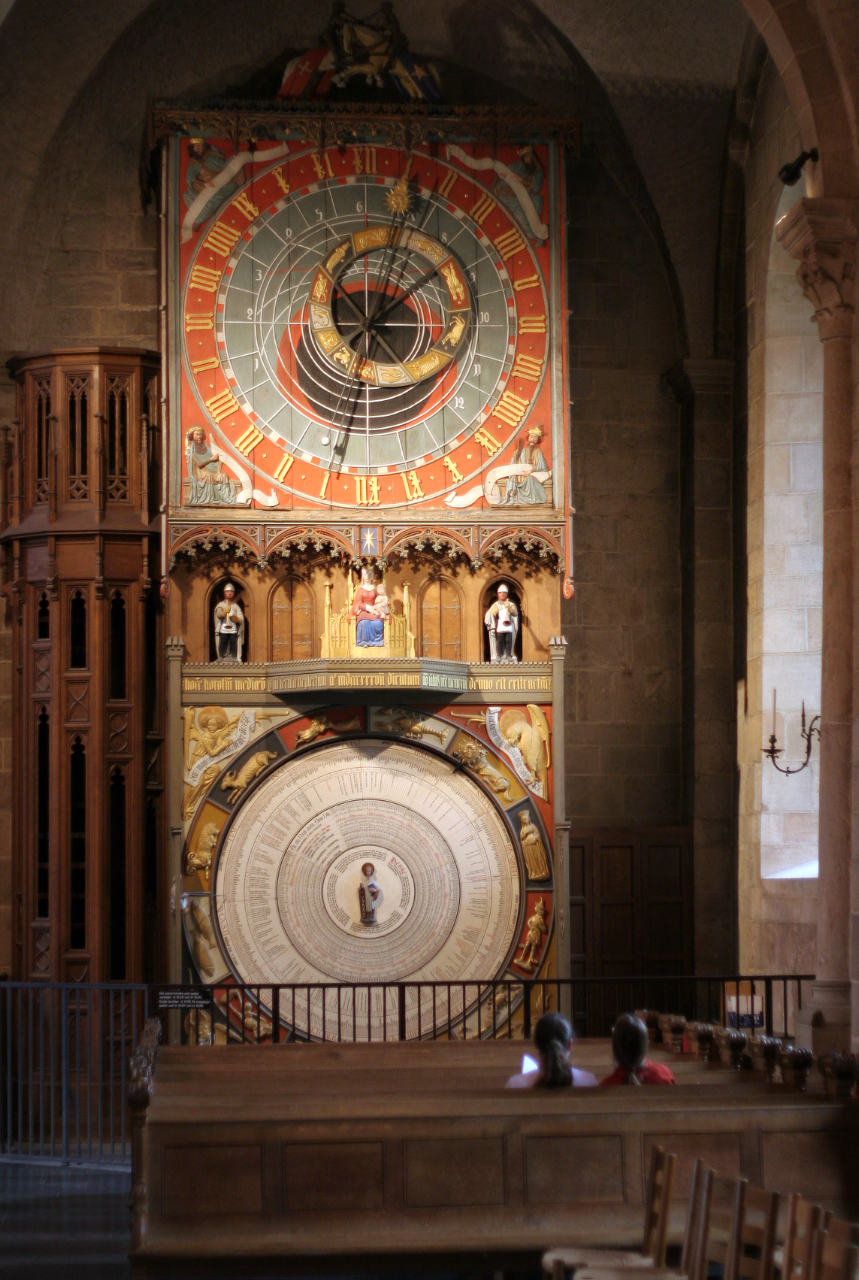
A medieval clock restored in the twentieth century, with a calendar dial and figures that appear twice daily accompanied by music.
The lower dial functions as a perpetual calendar reaching centuries ahead. Lund is the astronomical clock that plays music at a scheduled hour.
6. Besancon Cathedral Clock, France
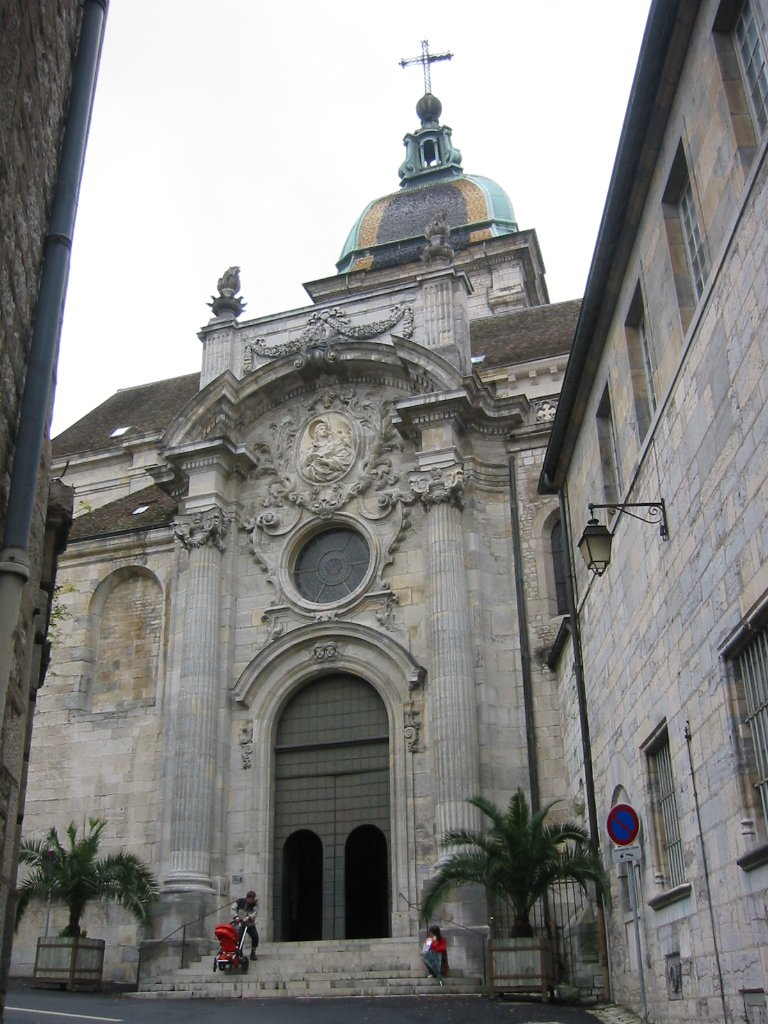
A nineteenth-century clock of extraordinary complexity, with tens of thousands of parts and a very large number of separate indications.
It shows tides at several ports, the times of sunrise and sunset, and the local time in cities worldwide. Besancon is the astronomical clock that tries to display almost everything at once.
7. Munster Cathedral Clock, Germany
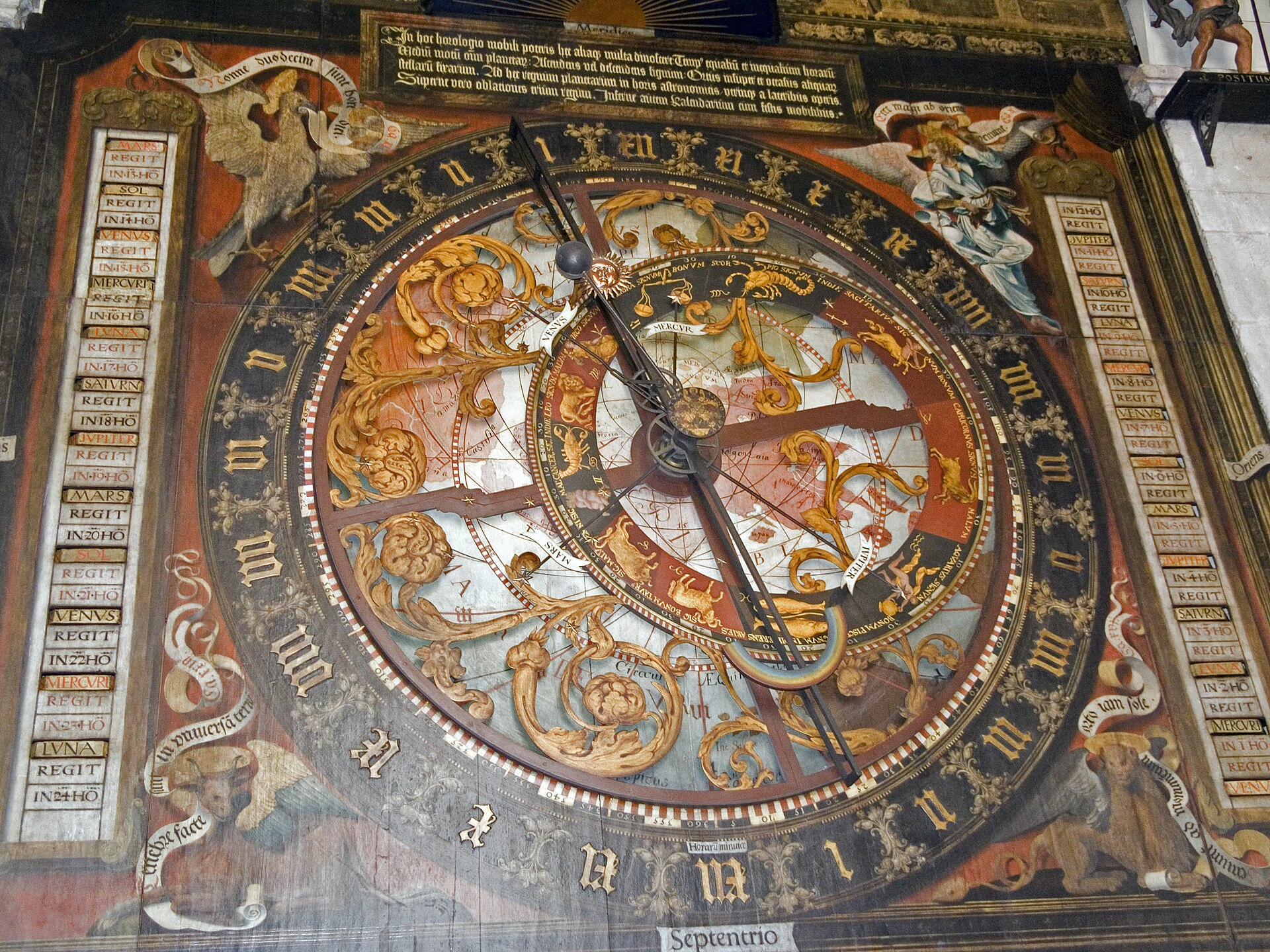
A sixteenth-century clock with a painted dial, a planetary display and a calendar calculated far into the future.
Figures process at midday and the mechanism includes a carillon. Munster is the astronomical clock whose calendar was worked out centuries in advance.
8. Olomouc Astronomical Clock, Czech Republic
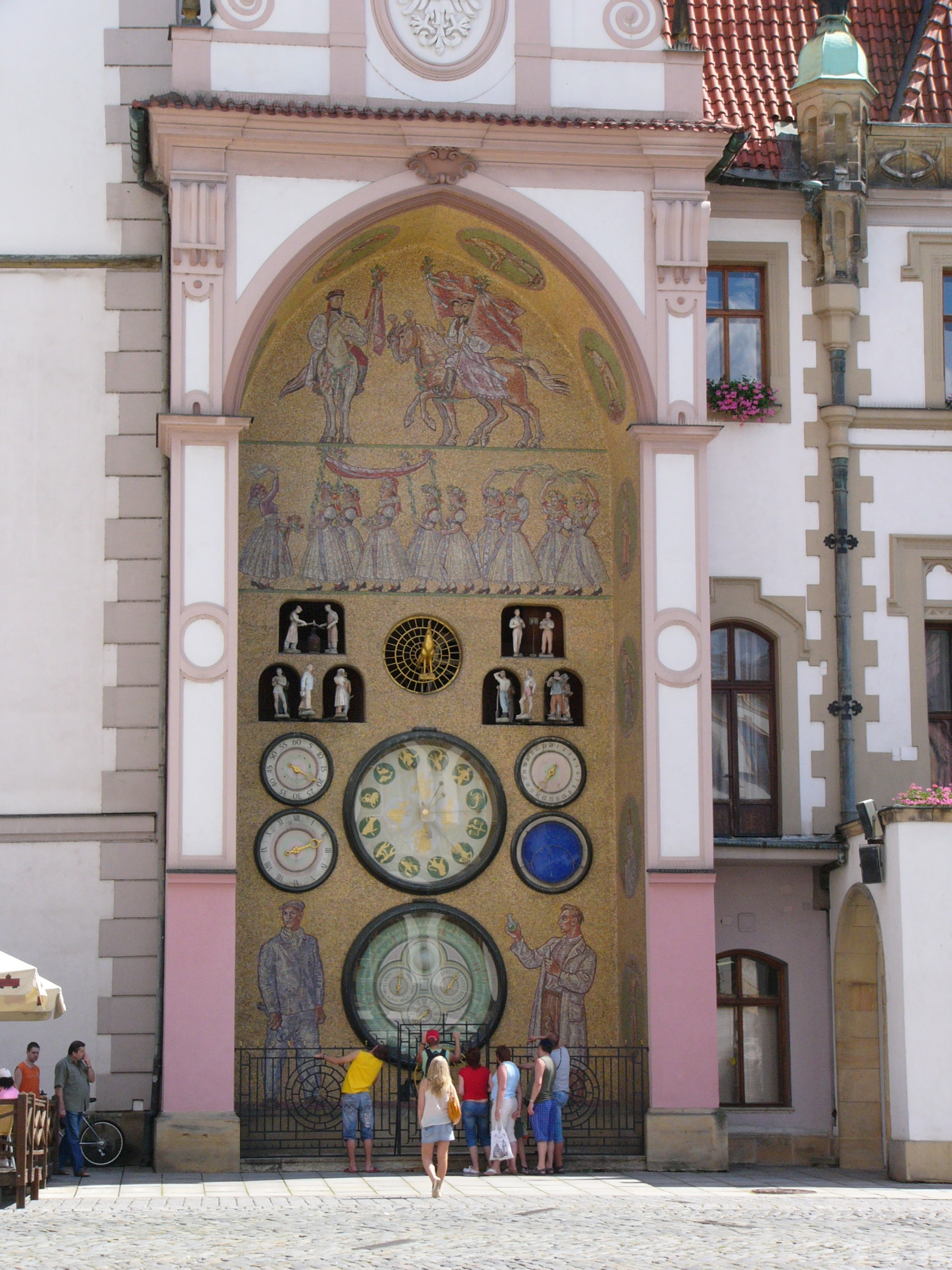
A medieval clock rebuilt in the mid-twentieth century in a completely different visual style, with mosaic figures depicting workers rather than saints.
The rebuild reflects the politics of the period in which it was remade, which makes it unusual among these. Olomouc is the astronomical clock whose appearance records the era of its restoration.
9. Rostock Astronomical Clock, Germany
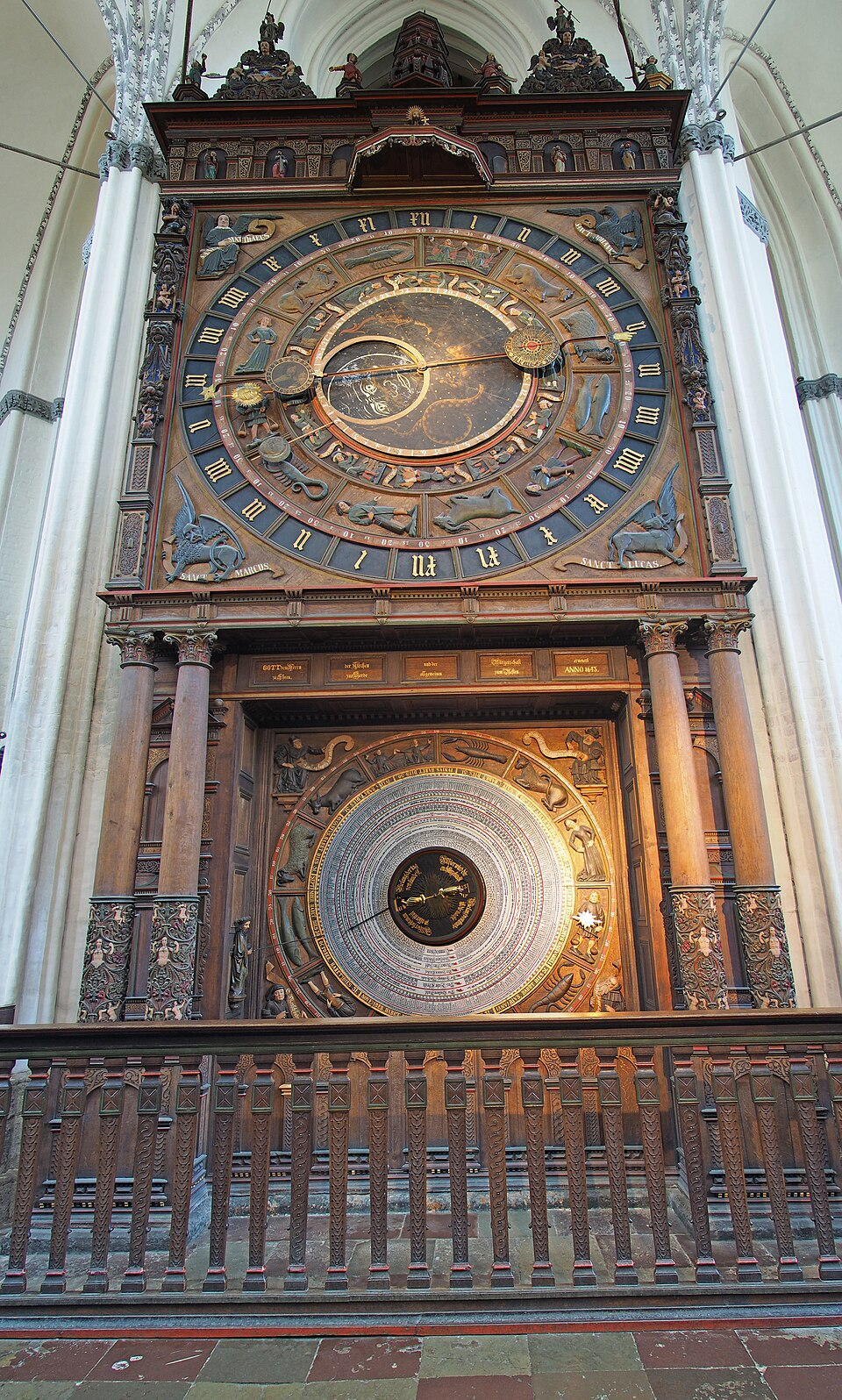
A fifteenth-century clock in a city church, described as still running on its original works.
Its calendar disc runs out at a specific future date, after which it will need replacing. Rostock is the astronomical clock with a calendar that has an end date.
10. Ulm and the Southern German Town Hall Clocks
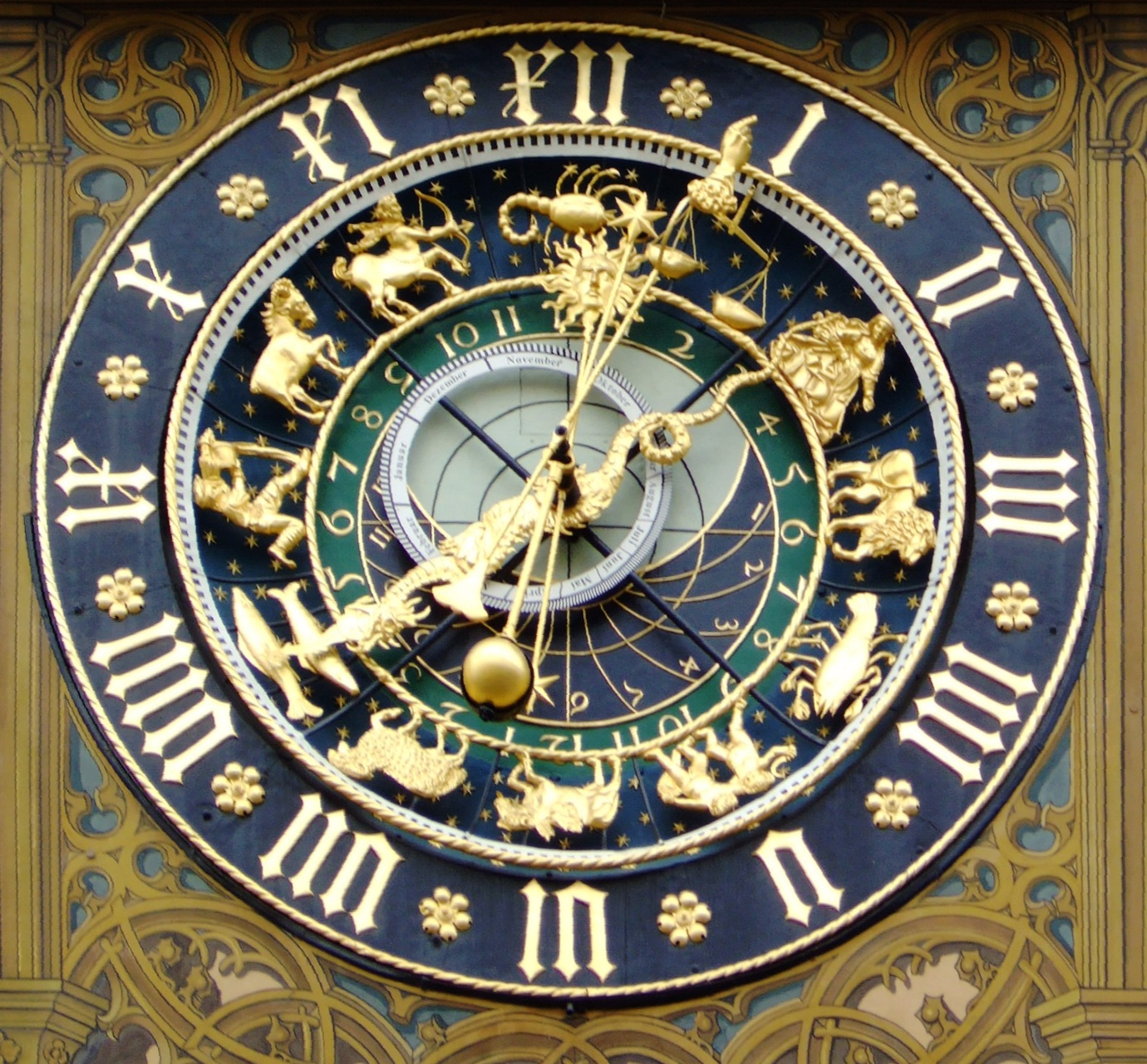
Several southern German towns retain astronomical clocks on their town halls, showing zodiac, lunar phase and calendar alongside the hour.
They were civic statements as much as instruments, positioned where a market crowd would see them. These are the astronomical clocks built to be looked up at from a market square.
11. Exeter Cathedral Clock, England
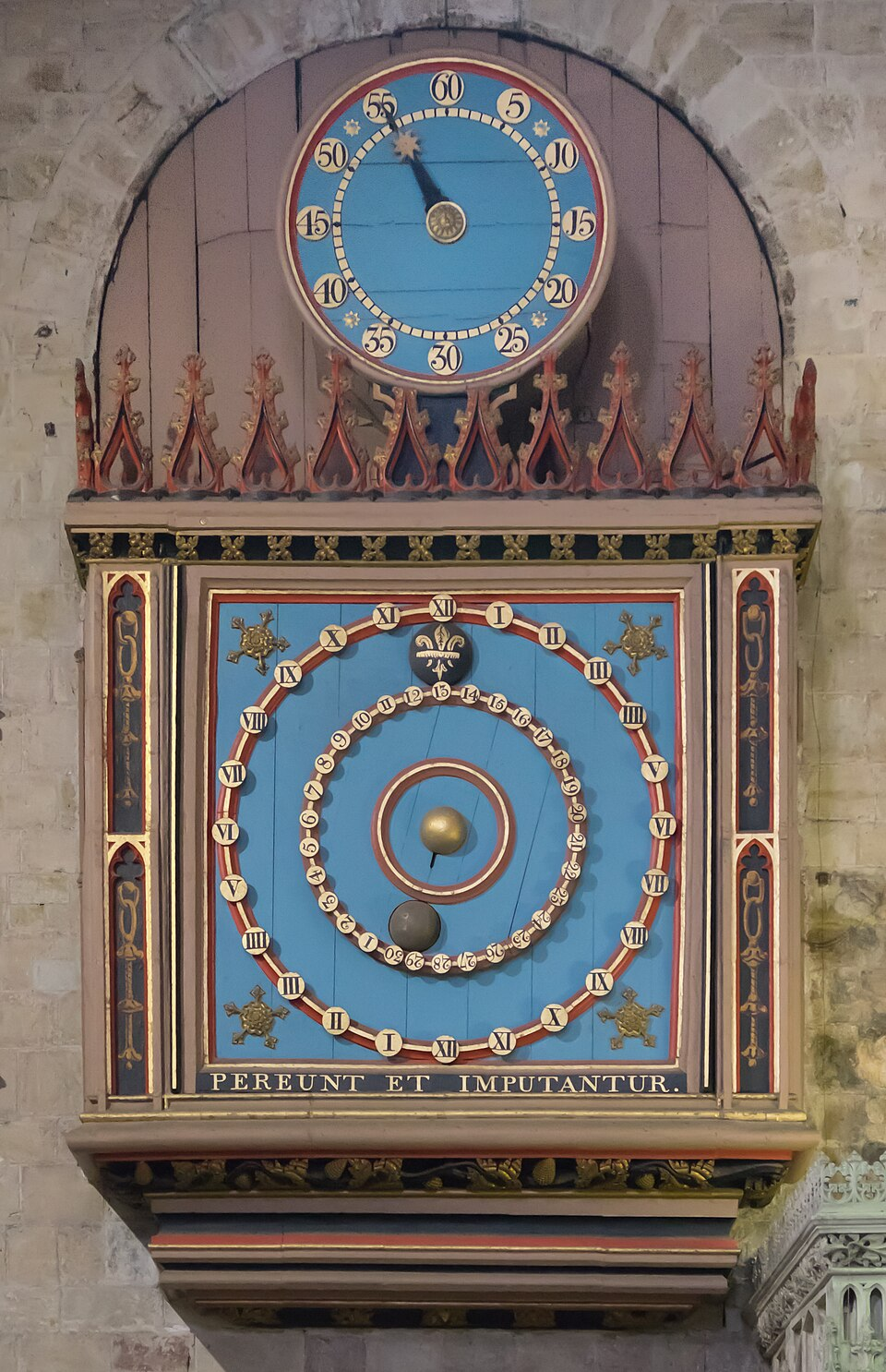
A medieval dial showing the earth at the centre with the sun and moon revolving around it, reflecting the astronomy of the period it was built in.
The moon indicator rotates to show its phase through the month. Exeter is the astronomical clock displaying a model of the universe nobody believes any more.
12. Padua Clock Tower, Italy
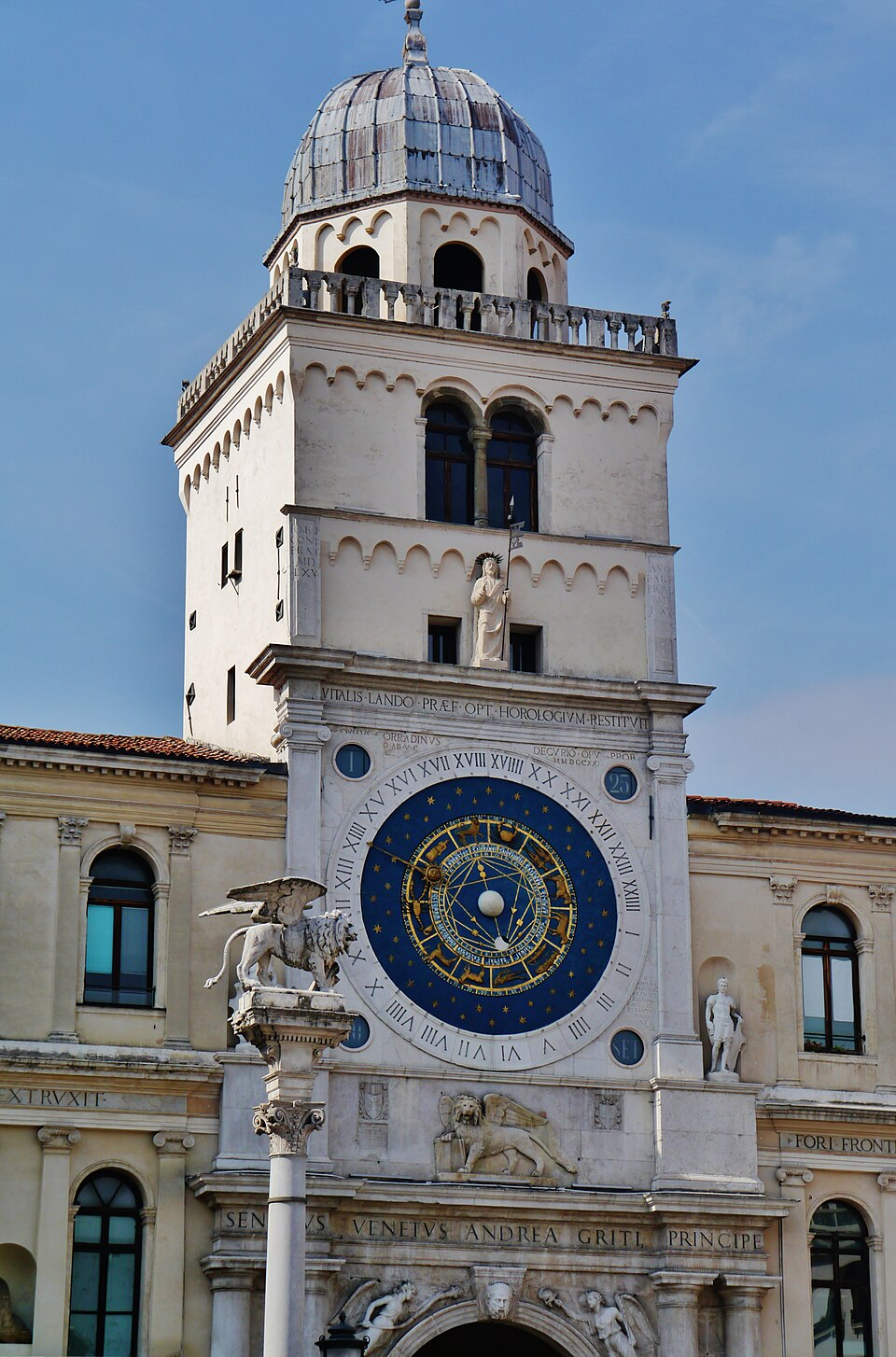
A fourteenth-century astronomical clock in the Piazza dei Signori, showing the zodiac, the lunar phase and the planetary hours.
One zodiac sign is famously absent from the dial, which has produced several competing explanations. Padua is the astronomical clock with a gap in the zodiac.
14. The Jens Olsen World Clock, Copenhagen, Denmark
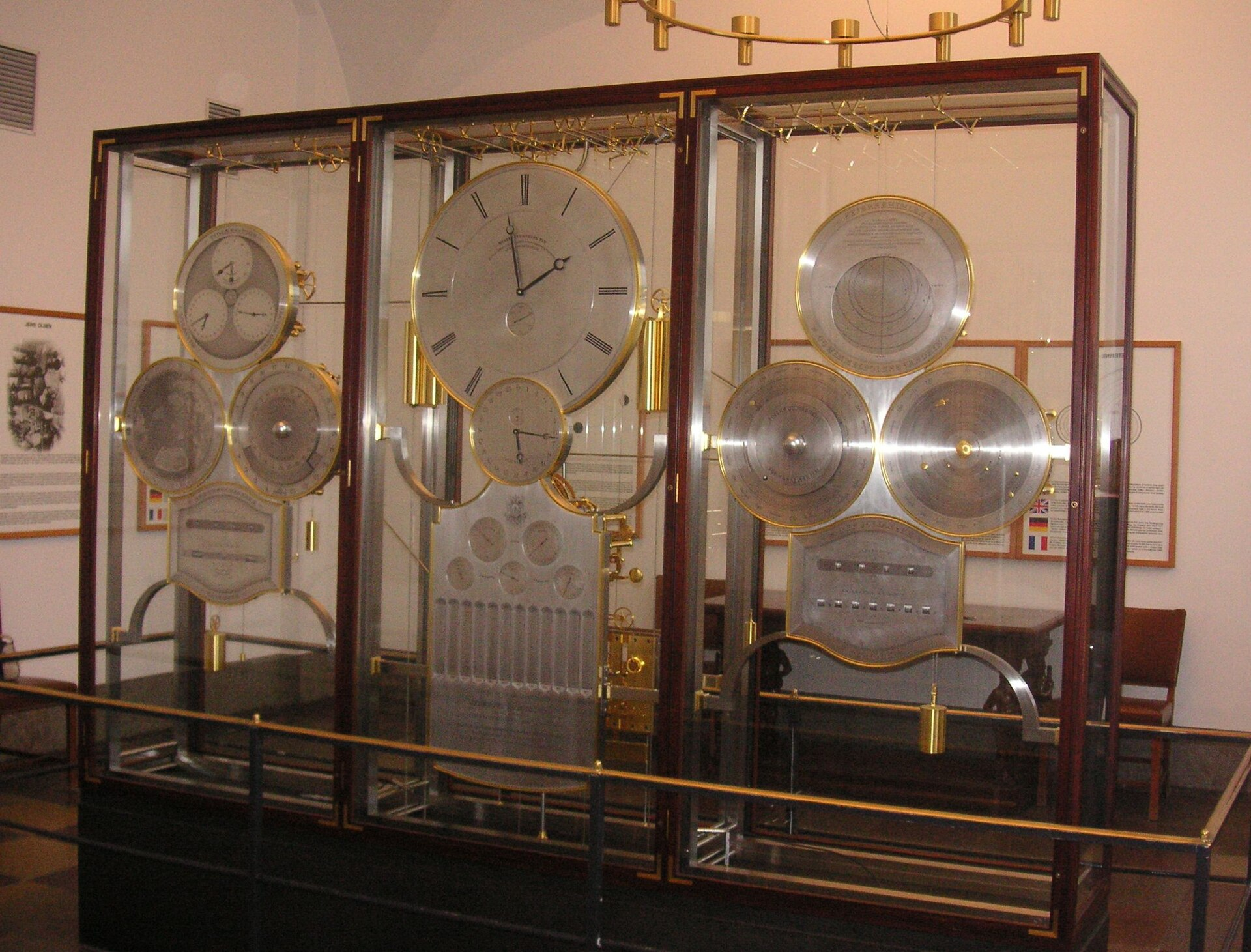
A twentieth-century mechanical calculator of extreme precision, tracking celestial motions on cycles running to tens of thousands of years.
Its slowest gear takes an enormous span of time to complete a single rotation. The Copenhagen world clock is the astronomical clock with a component that will not finish turning for millennia.
15. Hampton Court Astronomical Clock, England
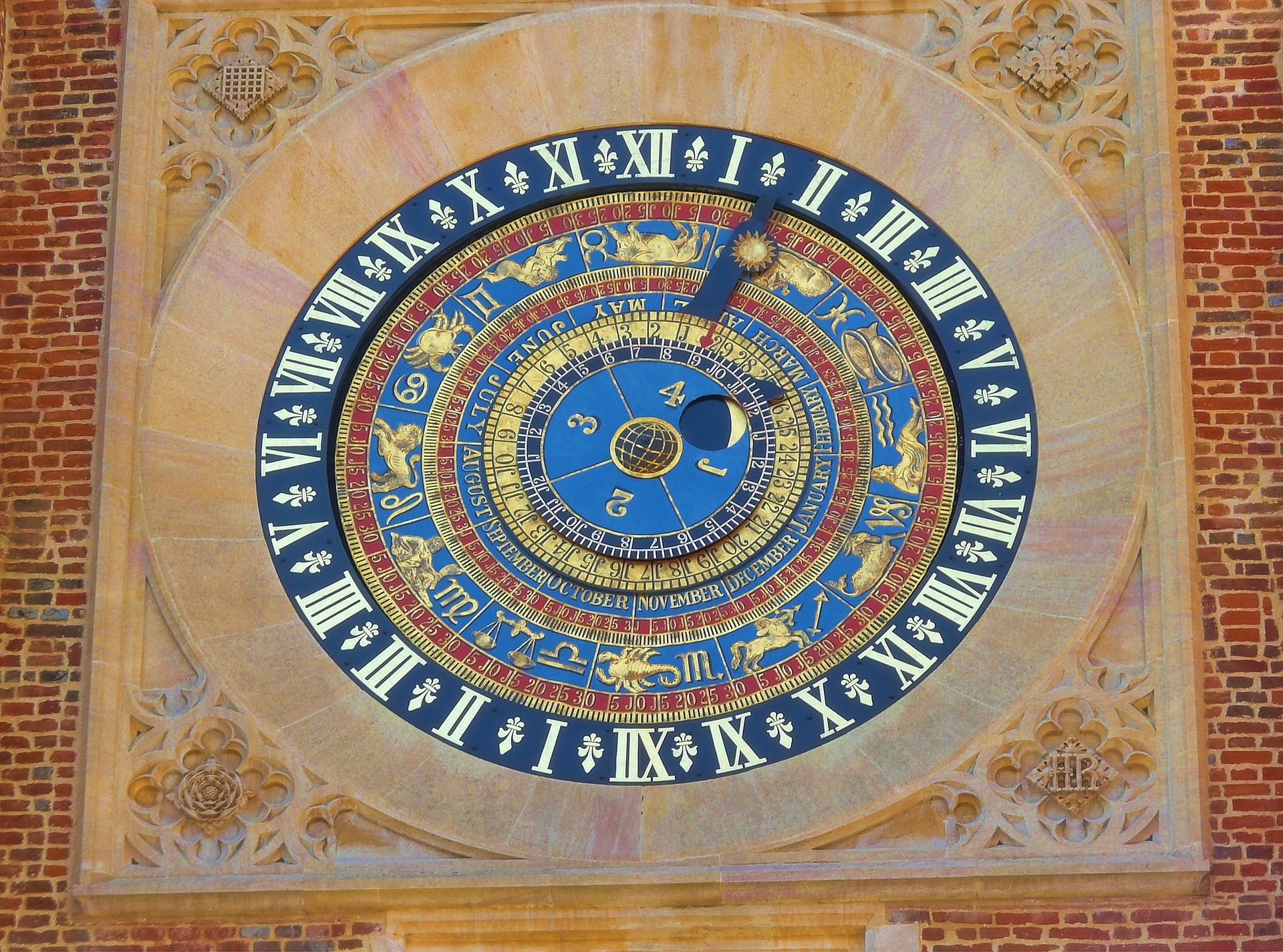
A sixteenth-century dial showing the hour, the month, the phase of the moon and the time of high water at London Bridge.
That tidal indication was really practical, since river travel to and from the palace depended on it. Hampton Court is the astronomical clock that told you when to catch a boat.
Machines for Reading the Sky
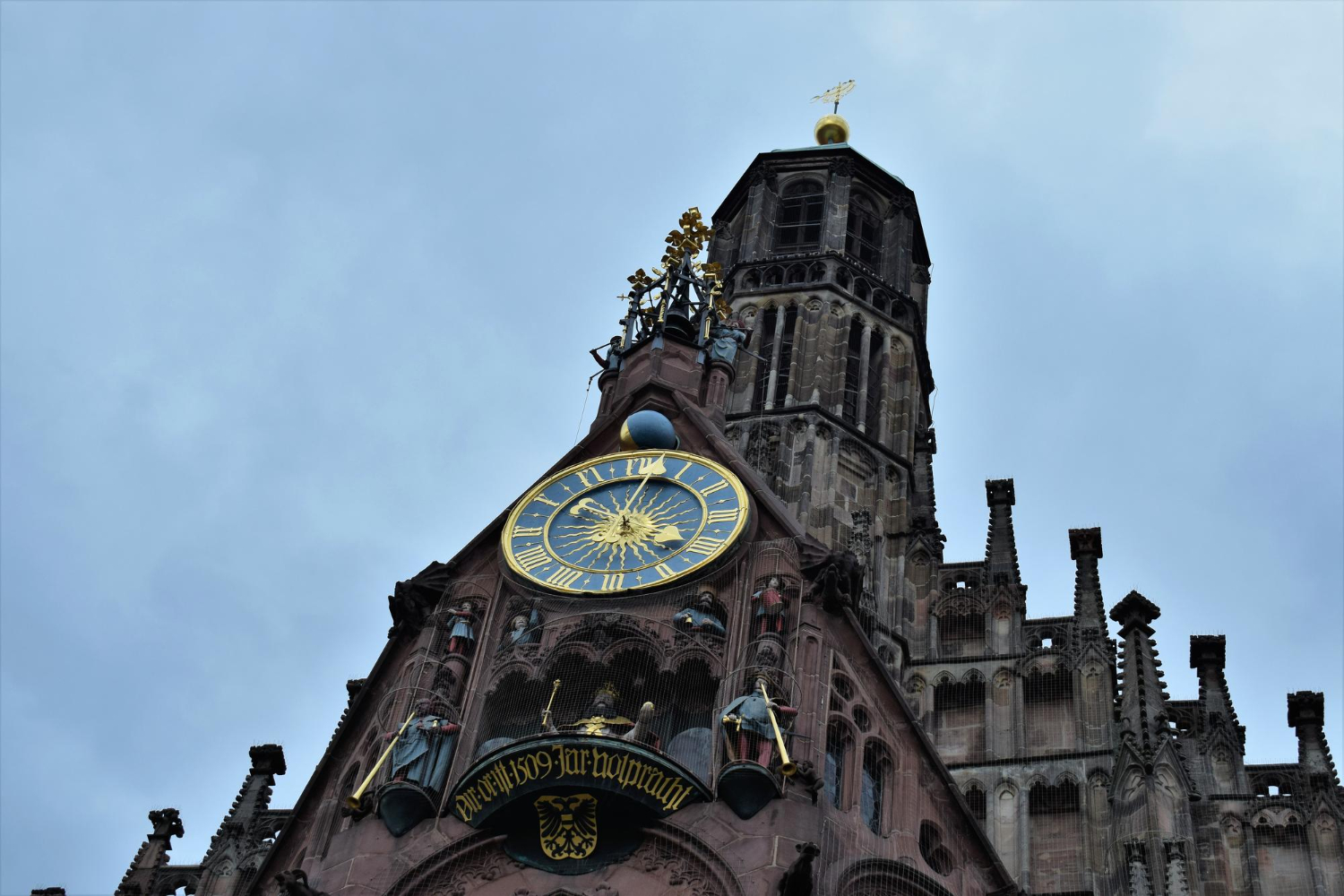
These were built when celestial position determined planting, sailing, fasting and feast days, so a device displaying all of it in a public square was infrastructure rather than ornament.
Practical notes: most of these perform their figure displays only at specific times, several are inside churches with restricted access during services, and mechanism tours where they exist usually require booking. Check the performance time before travelling, arrive early because the good viewing spots fill up, and look at the lower dial, which is where the calendar work is and which almost everyone ignores.
Like our content? Follow us for more.