

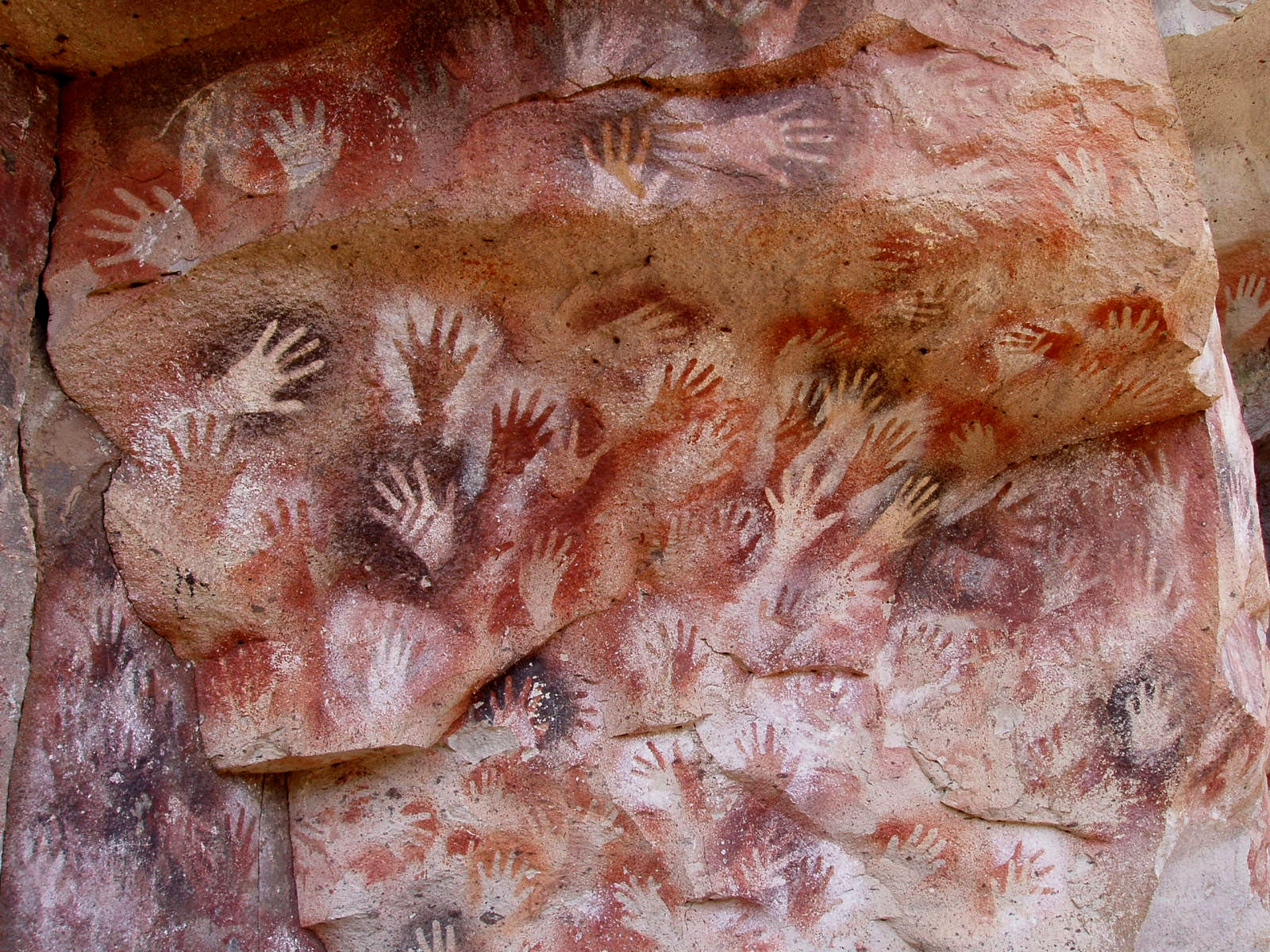
Palaeolithic cave art is among the most extraordinary things humans have left behind, and it presents a problem that almost no other heritage site does: the act of looking at it destroys it.
The paintings survived tens of thousands of years because the caves were sealed, dark, and at a constant temperature and humidity. Every one of those conditions is undone by opening a door and admitting people.
Which has produced one of the stranger situations in tourism. Several of the most significant painted caves in the world are closed permanently, and what visitors see instead are meticulous reproductions built nearby — accurate to the millimetre, painted with the same pigments, in artificial chambers modelled on laser scans of the real thing.
Here is why that happened, and what it says about how fragile this material is.
What Is Actually Down There
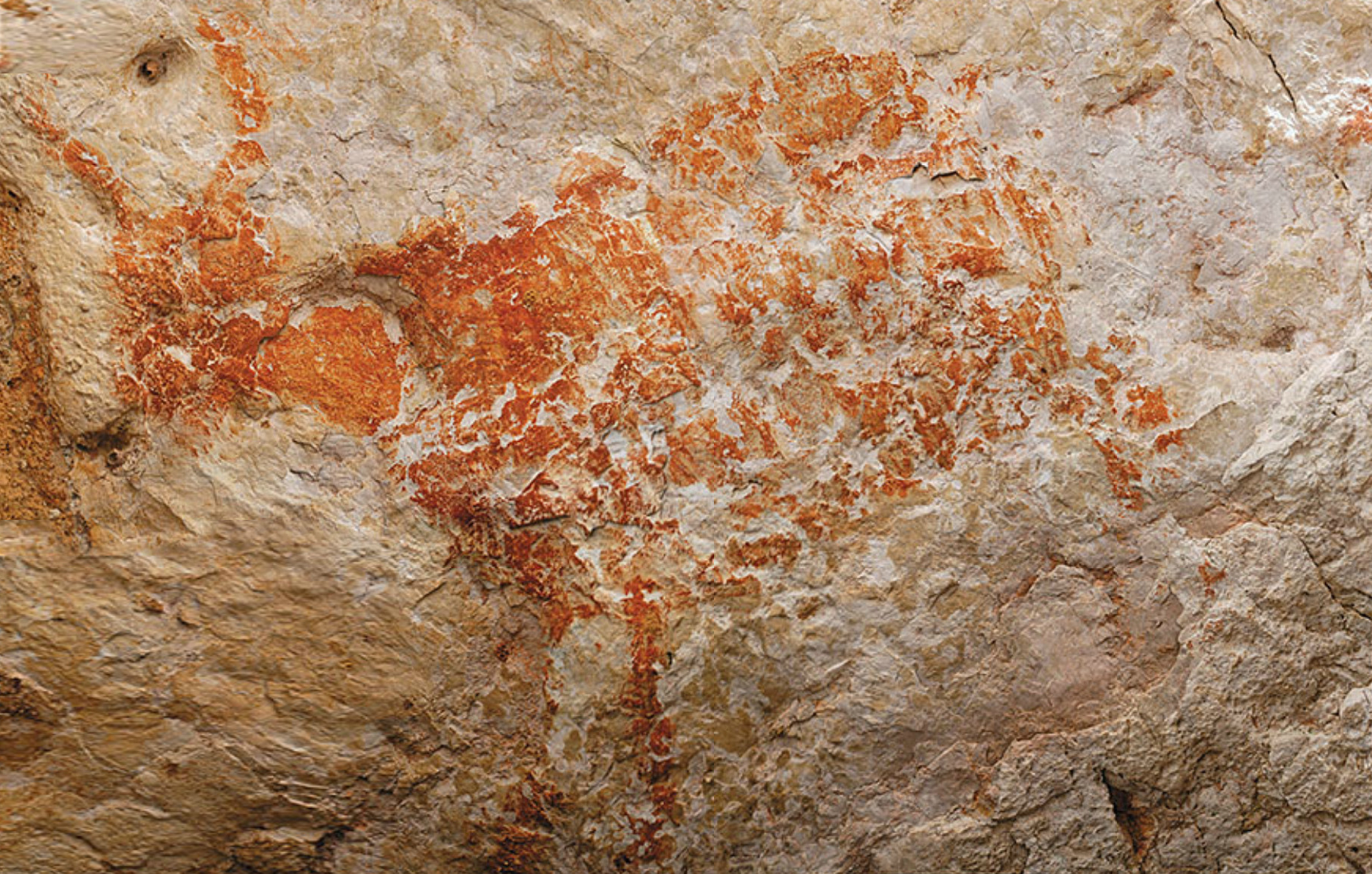
The art itself is older and more sophisticated than most people expect.
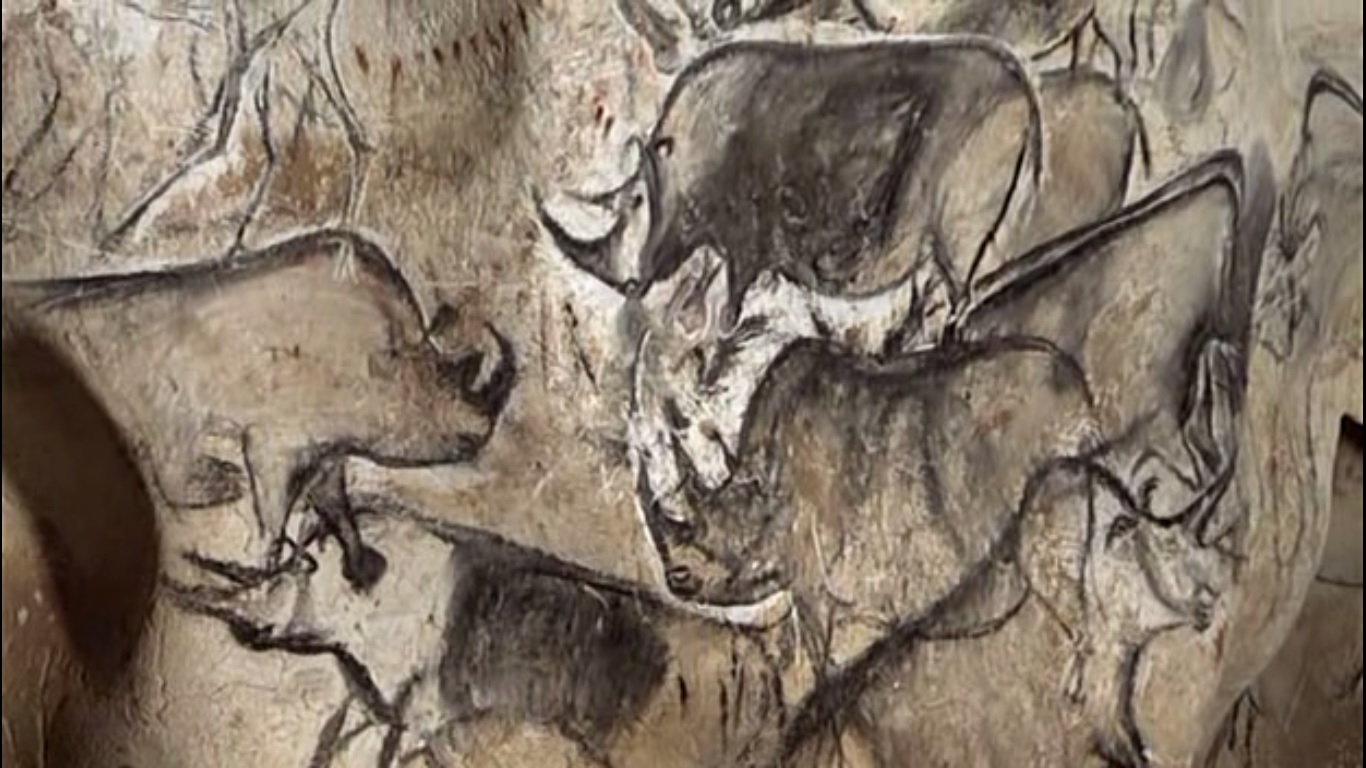
The paintings depict animals overwhelmingly — horses, bison, aurochs, deer, lions, rhinoceroses, mammoths — rendered with a confidence and observational accuracy that startles anyone expecting crude outlines. There are hand stencils, made by blowing pigment around a hand pressed to the wall. There are abstract signs and dots whose meaning is unknown.
Human figures are rare, and where they appear they are usually schematic in a way the animals are not.
The pigments are mineral: ochre for reds and yellows, manganese and charcoal for blacks. They were applied by brush, by finger, by pad, and by blowing pigment through a tube, which is what produces the hand stencils and the softly graded areas.
The artists used the rock itself. Bulges in the wall become the shoulder of a bison, a natural ridge becomes a back, and figures are positioned so that the contours of the cave do part of the work. In a chamber lit by a flickering lamp rather than a floodlight, that three-dimensionality would have been substantially more pronounced.
Ages vary by site, running from roughly seventeen thousand years at some to well over thirty thousand at others, with dating continuing to push the earliest examples further back.
Like our content? Follow us for more.
Why Visitors Destroy It
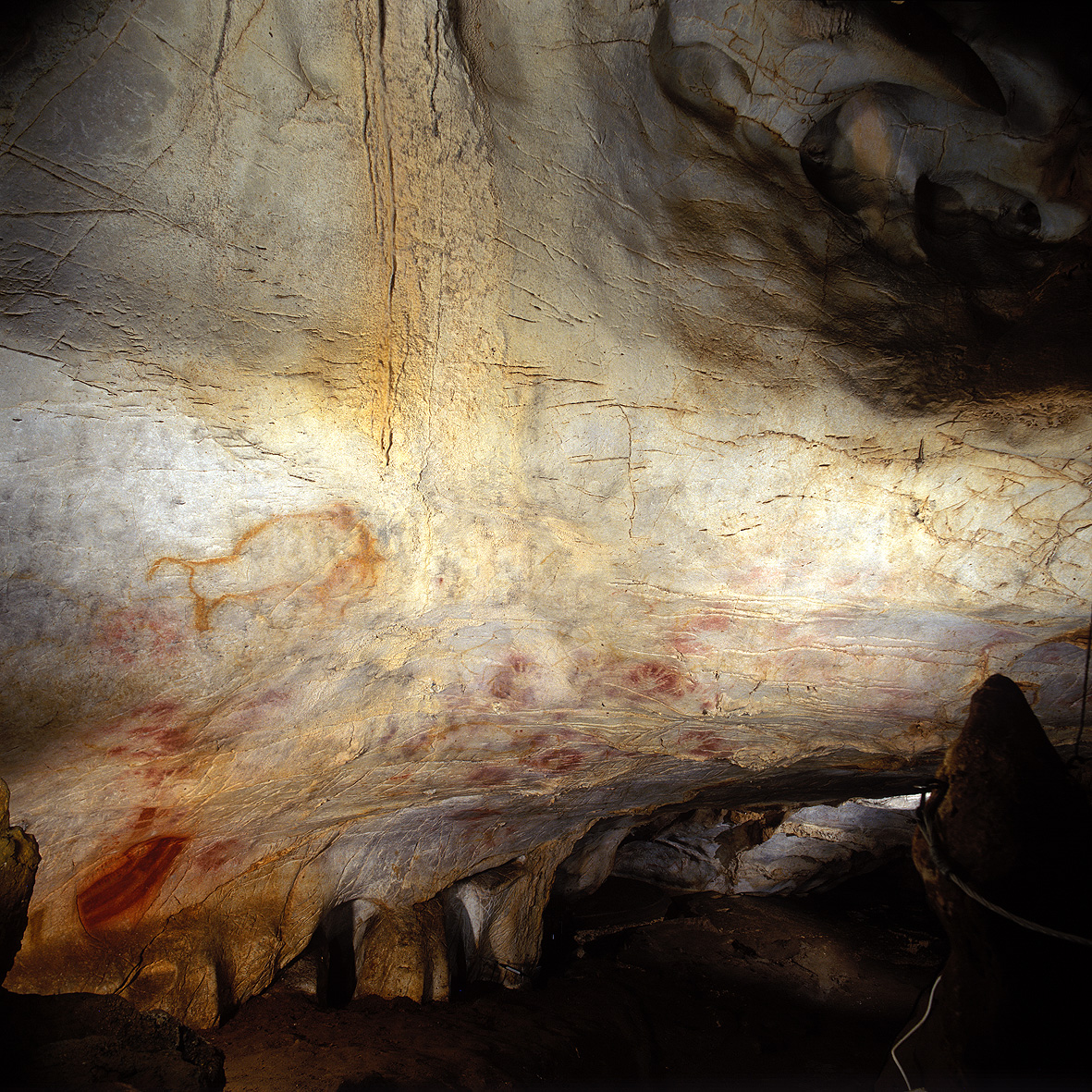
The mechanism is unglamorous and entirely physical.
A sealed cave holds stable conditions: constant temperature, near-total humidity, still air, no light and a particular balance of carbon dioxide.
Every visitor changes all of it. A person exhales warm, moist air containing carbon dioxide, and radiates body heat. Multiply that by hundreds of people a day and the cave’s atmosphere shifts measurably.
The consequences are specific. Raised carbon dioxide levels combined with moisture can produce carbonic acid, which attacks the mineral surfaces the paintings sit on. Changed temperature and humidity alter condensation patterns, so water forms where it previously did not, running over painted surfaces.
And light plus moisture plus organic material brought in on clothing and shoes creates conditions in which algae, bacteria and fungi will grow. Lascaux developed a green algal growth, and later a white fungal infestation, followed by black stains — a sequence of biological problems each partly caused by the treatment applied to the last.
Installing air conditioning and lighting to manage visitors introduced further changes to a system that had been stable for millennia.
Lascaux was discovered in 1940 by teenagers, opened to visitors after the war, and closed in 1963 once the deterioration became undeniable. It has been essentially closed since, with access restricted to a small number of specialists for limited periods.
Building a Copy
The replica solution is now standard practice, and the craft involved is remarkable in its own right.
The process begins with survey. Modern facsimiles are built from laser scanning and photogrammetry that record the cave surface at very fine resolution, capturing every bulge, crack and irregularity, because the art is inseparable from the rock it sits on.
That data is used to construct an artificial shell reproducing the cave’s geometry. Artists then paint the reproductions using the same mineral pigments and, as far as possible, the same techniques as the originals.
Several generations of facsimile exist at Lascaux, each more complete than the last, with the most recent reproducing a far greater proportion of the cave. Other painted caves have taken the same route.
The obvious objection is that a copy is not the thing. That is true, and it is worth stating plainly rather than glossing over. What a facsimile gives you is the scale, the darkness, the geometry, the position of the figures and the relationship between art and rock — which is most of the experience, minus the knowledge that you are standing where they stood.
The alternative is not access to the original. The alternative is nobody seeing anything at all, and the original deteriorating anyway.
The Ones You Can Still Enter
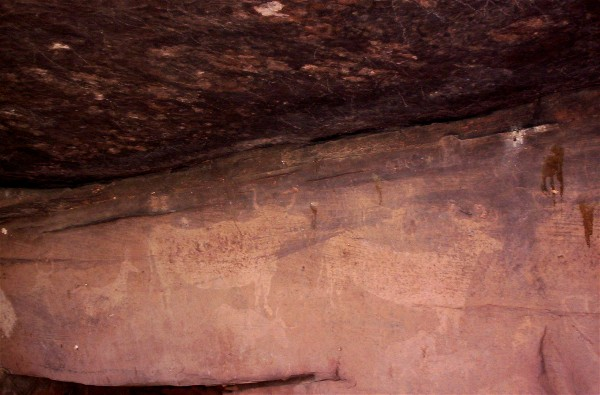
Not every painted cave is closed, and access varies enormously.
Some sites admit small numbers under strict conditions — limited group sizes, short visits, timed entry, sometimes ballots or long advance booking, with restrictions on clothing, bags and photography.
Others have been closed entirely and offer only a replica or a visitor centre.
A number of decorated caves remain accessible in various countries, generally those with more robust conditions, less fragile pigment, or lower visitor pressure.
The variables are the same everywhere: how stable the cave’s microclimate is, how vulnerable the specific pigments are, how many people want to come, and whether the resources exist to monitor conditions continuously.
Anyone hoping to see original Palaeolithic art should expect to plan well ahead, accept that availability changes, and check current arrangements directly with the site rather than relying on any published account, including this one.
The Argument That Has No Clean Answer
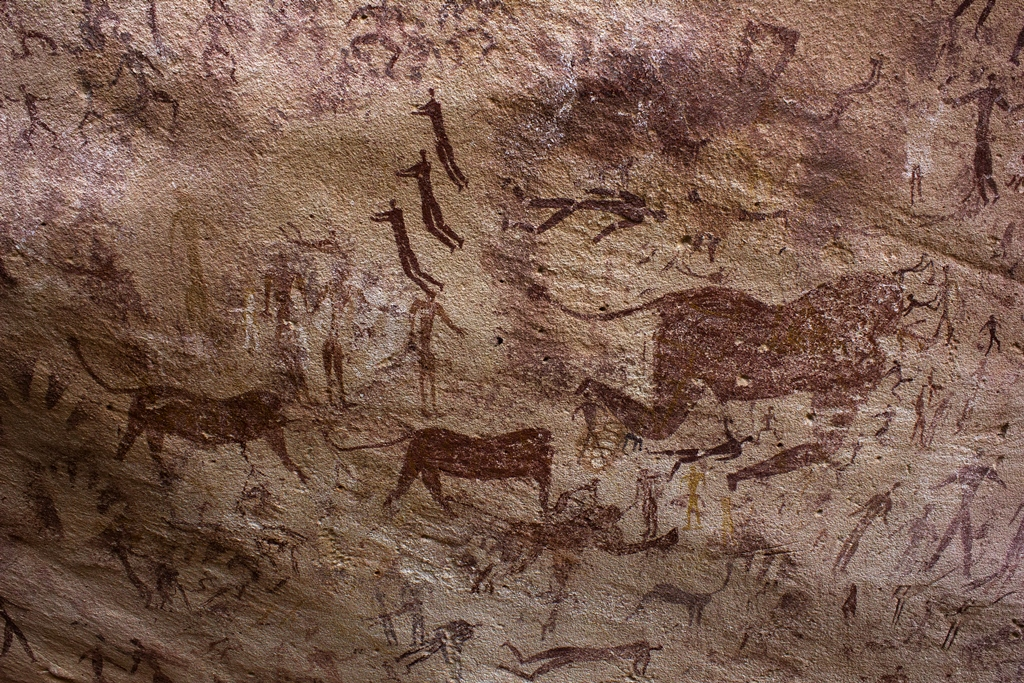
Underneath the practicalities sits a real dilemma that heritage professionals discuss openly.
These paintings are among the most significant surviving works of human culture. There is a strong argument that people should be able to stand in front of them, and that a heritage kept entirely from the public loses part of its purpose.
There is an equally strong argument that the material is irreplaceable, that damage is cumulative and irreversible, and that a few decades of visitor access is a poor trade for losing something that has lasted thirty thousand years.
Lascaux is the case that settled the argument for many sites, because it demonstrated the outcome empirically. Roughly two decades of access did measurable harm to paintings that had been stable since the Ice Age, and the conservation effort since has been continuous, expensive and only partly successful.
The replicas are a compromise rather than a solution, and they are generally described that way by the people who build them.
How Anyone Knows How Old It Is
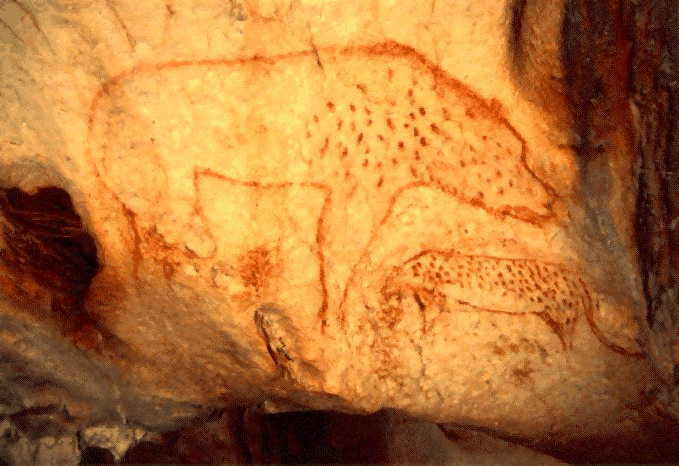
Dating cave art is truly difficult, and the methods used explain why the earliest dates keep moving.
The direct approach is radiocarbon dating, which works on organic material. Charcoal pigment contains carbon, so a black figure drawn with charcoal can in principle be dated directly — but doing so requires removing a sample from the painting itself, which conservators are understandably reluctant to permit, and the quantities taken are kept microscopic.
Ochre presents a different problem. Mineral pigments contain no carbon, so radiocarbon dating cannot touch them at all, which means a great many red figures cannot be dated by that route.
The indirect approach dates what is around the art rather than the art itself: charcoal from hearths on the cave floor, occupation layers, or material sealing a chamber. That establishes when people were present rather than when they painted.
A third method has changed the field substantially. Calcite deposits form slowly over painted surfaces, and uranium-series dating of that crust gives a minimum age for the art beneath it. Because it dates the covering rather than the pigment, it works on ochre, and it has pushed some estimates substantially earlier.
Each method has limitations and each has produced results that were subsequently revised. The dates in any account of cave art should be read as current best estimates rather than settled figures.
What Survives Because Nobody Found It
There is a final thought worth sitting with.
Every decorated cave known today survived because it was sealed — by a rockfall, by sediment, by a collapsed entrance — and stayed sealed until someone opened it. The art we have is the art that was protected by inaccessibility.
Which implies something about what has been lost. Painted surfaces in caves that remained open, or that were reopened and used, or that were never sealed at all, will have gone long ago. What survives is a sample selected entirely by accident of geology.
And the reason the most famous examples are now behind a door with the atmosphere monitored is that we understand, belatedly, that the accident was doing the conserving. Once it stopped, the responsibility transferred to us, and the evidence suggests we are not as good at it as a rockfall was.
Like our content? Follow us for more.
