There is an object in a museum case in London that does something a piece of fourth-century glass has no business doing.
Look at it with the light coming from your side and it is a deep opaque green. Put the light behind it, so you are looking through the glass rather than at it, and the whole vessel turns a glowing translucent red.
It is not a trick of the display. It is a property of the material, and the material is roughly sixteen hundred years old.
The cup is known as the Lycurgus Cup, after the mythological scene carved around it, and its colour behaviour was a real scientific puzzle for a considerable period. The answer, when it arrived, put Roman glassworkers in an unexpected position: they were manipulating matter at a scale nobody had a name for until the twentieth century.
What the Object Is
Some description first, because the colour is only half of what makes it remarkable.
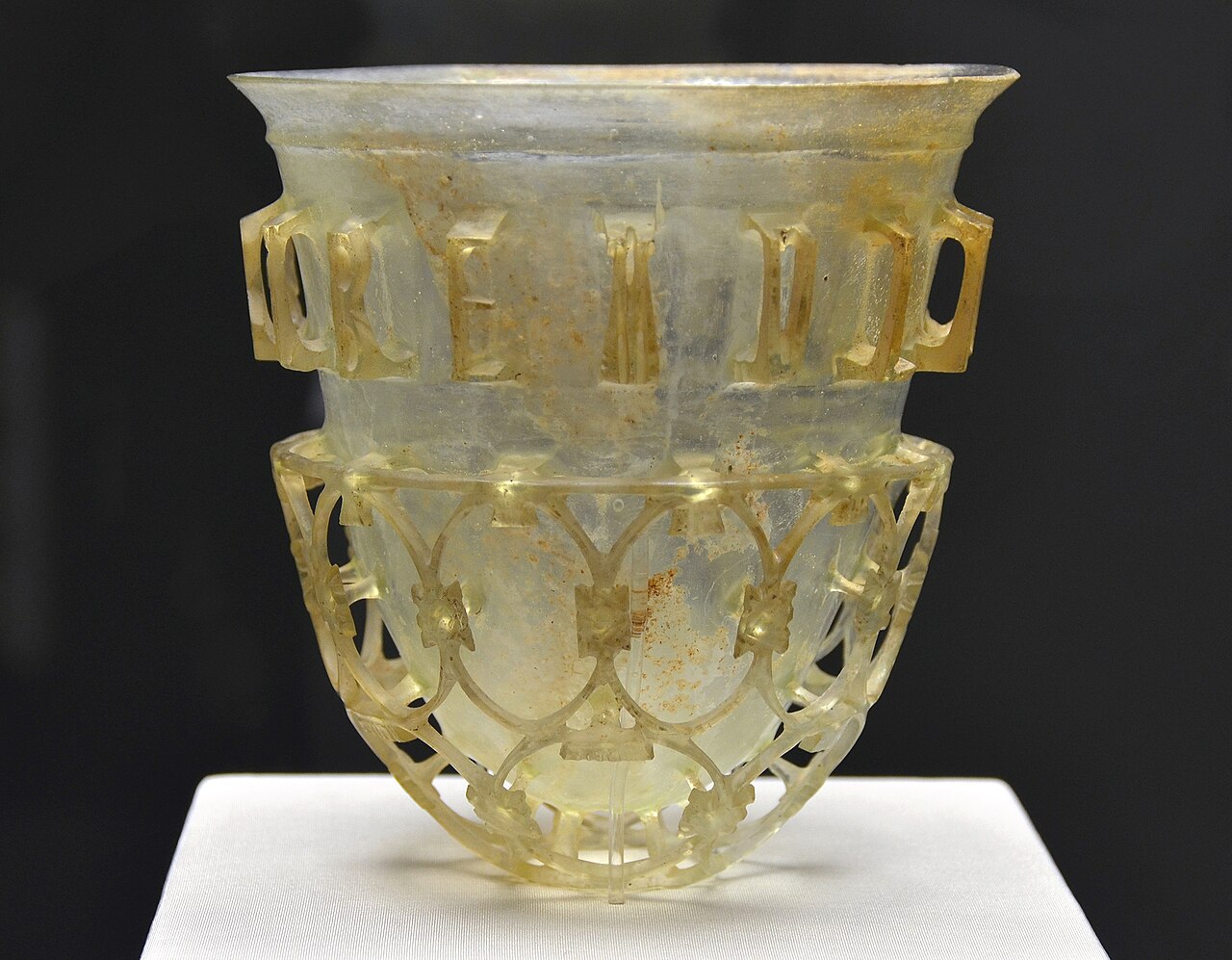
It is a cage cup — a form in which the vessel is carved so that a decorative outer layer stands proud of the body, connected by small bridges, so the ornament appears to be a cage surrounding an inner cup. The whole thing is cut from a single thick blank of glass, which means the cage is not attached but is what remains after everything around it has been removed.
That is subtractive work of an extremely demanding kind, on a material that shatters. There is no correcting a mistake.
The carving depicts a scene from the myth of Lycurgus, a king who comes off badly in an encounter with the god Dionysus, with the figures standing in high relief.
It is generally dated to the fourth century, probably made in Alexandria or Rome, and it is around sixteen centimetres tall. A gilt metal rim and foot were added much later, in about 1800. It passed through a well-known collecting family in the nineteenth century and was sold to the British Museum in the 1950s.
Crucially, it is the only complete surviving example of this glass from the period. A small number of fragments of comparable material have been found elsewhere, and nothing else intact.
Like our content? Follow us for more.
Why the Colour Was Baffling
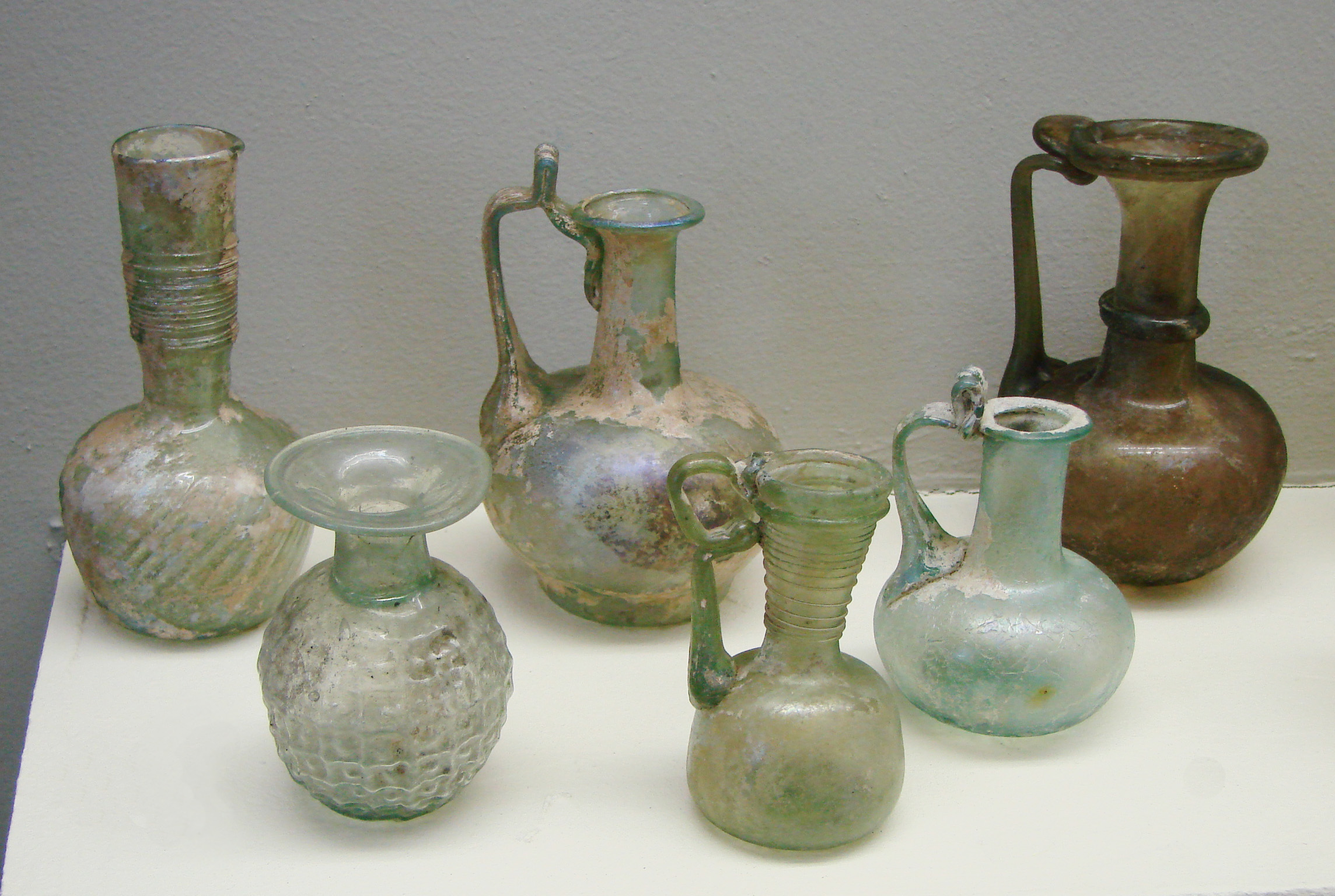
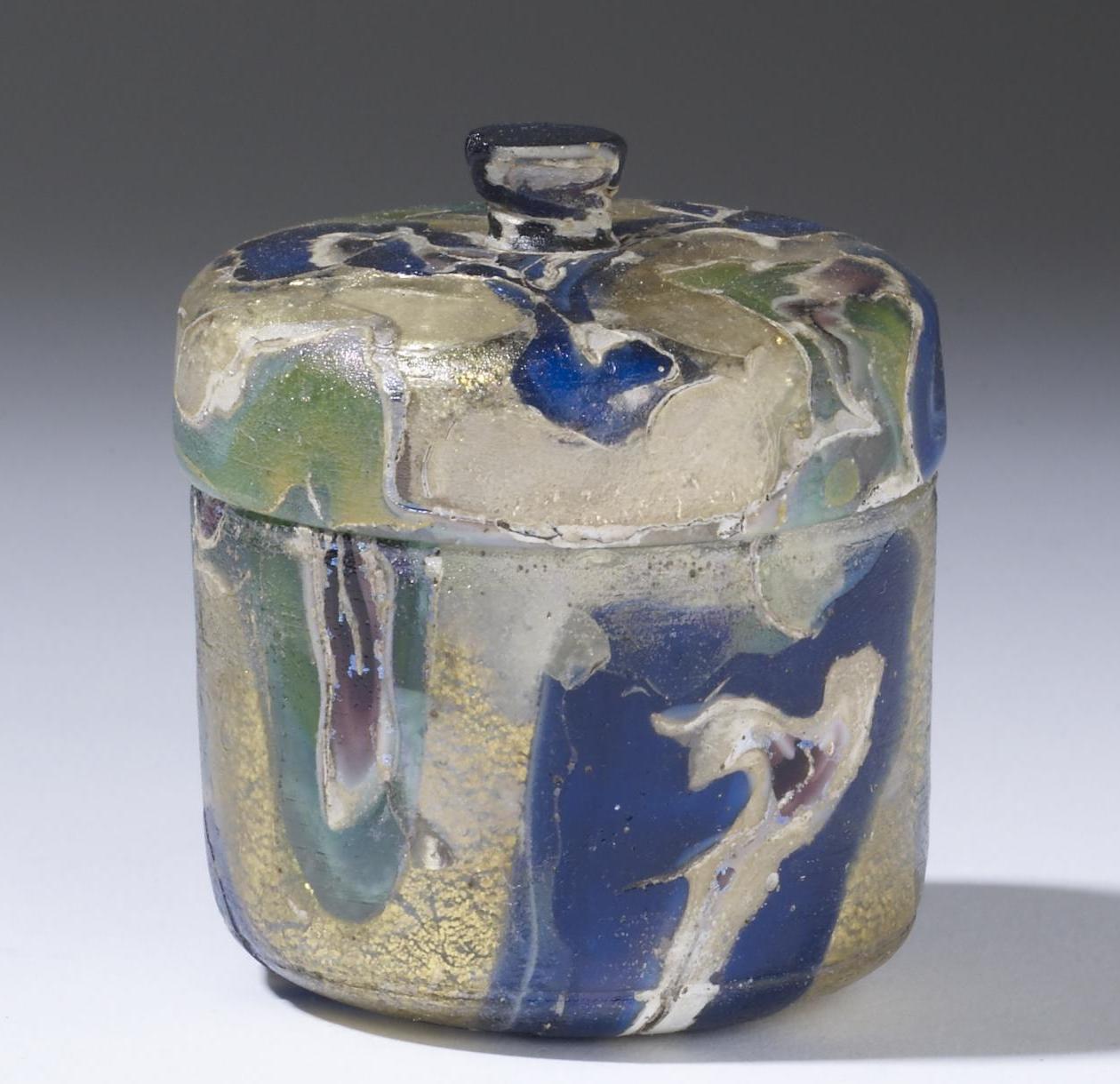
Coloured glass was not new. Roman glassworkers routinely added metal compounds to produce blues, greens, ambers and purples, and the technique of colouring glass with additives goes back a very long way.
What the Lycurgus Cup does is different in kind. It is not one colour. It is two, and which one you see depends entirely on the geometry of the light.
Glass is described as dichroic — from the Greek for two-coloured — when it does this. Ordinary coloured glass absorbs certain wavelengths and transmits the rest, so it looks broadly the same colour whether light is passing through it or bouncing off it. Dichroic glass behaves differently in transmission and in reflection.
Producing that behaviour is not a matter of adding more of something. It requires the additive to be present in a particular physical form, at a particular size, in a particular quantity — and there was no reason to think anyone in the fourth century could control any of those variables.
So for decades after the museum acquired the cup, the mechanism was simply unexplained.
The Answer Is Particle Size
The resolution came in the 1990s, when broken fragments of comparable Roman glass were examined under a sufficiently powerful microscope.
The glass contains minute particles of metal — gold and silver, with a small amount of copper — dispersed through it. Reported figures for their size vary between sources, generally falling in the range of tens of nanometres up to around a hundred.
That size is the entire point. A nanometre is a billionth of a metre, and particles at that scale interact with light in a way that bulk metal does not.
The essential physics is that electrons in a very small metal particle can oscillate collectively in response to incoming light, and the frequency at which they do so depends strongly on the particle’s size and composition. That resonance determines which wavelengths are absorbed and which are scattered.
The result in this case is a division of labour. The gold particles are principally responsible for the red seen in transmitted light. The silver particles scatter light and produce the green seen in reflection.
So the same object presents two different colours because two different populations of particles are doing two different things, and which effect dominates depends on whether the light is passing through the glass or bouncing off its surface.
Bulk gold is yellow and bulk silver is grey. Ground fine enough, they are neither.
Did the Romans Know What They Were Doing
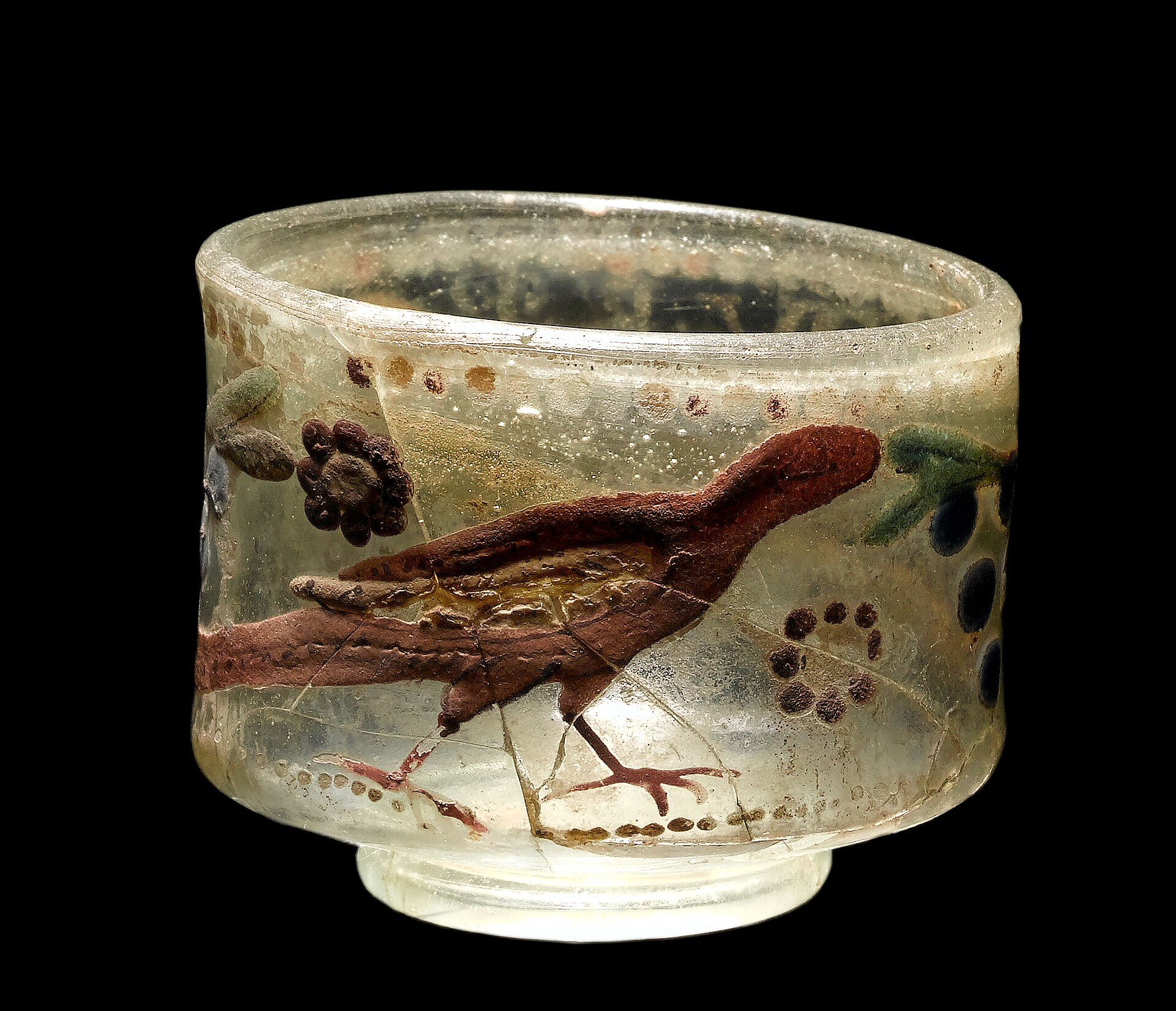
This is the truly contested part, and accounts differ sharply.
The case for deliberation is that the effect is difficult. Producing dichroic glass requires the right metals, in the right proportions, ground or precipitated to the right scale, dispersed evenly, and held at the right temperature — and getting any of those wrong produces ordinary coloured glass or a muddy mess. Some accounts note that the quantities involved appear carefully judged, which would suggest the makers knew what result they were aiming at.
The case for accident is that the underlying physics was entirely unavailable to them. Nobody in the fourth century could have known about particle size or electron behaviour, and the effect could have been discovered empirically — noticed in a batch, valued, and then reproduced by copying the procedure without understanding it.
Both of these can be true at once, and probably are. The likely picture is that the effect was found by accident, recognised as extraordinary, and then reproduced deliberately by following a recipe whose reasons nobody could explain.
There is a further consideration worth raising. Glassmaking was a substantial industry in the Roman world, with large numbers of people working the material daily and a great deal of glass being recycled. A workforce that size, working empirically for generations, accumulates practical knowledge that is not written down and does not survive the collapse of the industry.
Which means the honest answer is that we do not know how much they understood, and the rarity of surviving examples makes it hard to establish.
What It Was For
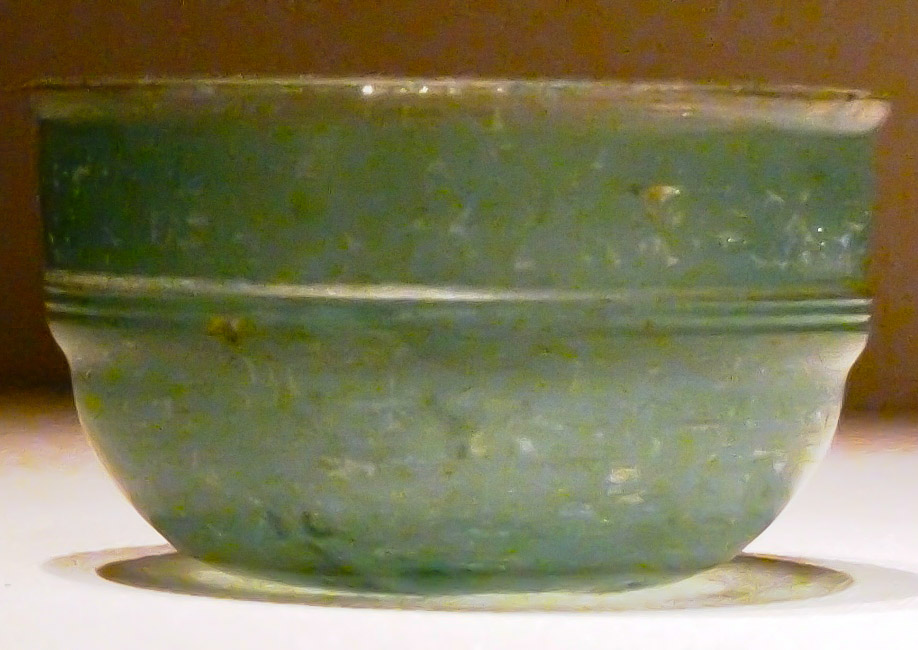
Even the function is uncertain, which is unusual for an object this well studied.
Proposals include a drinking cup, a lampshade or a decorative piece. The colour behaviour is an argument for the second: an object that glows red when lit from within would be a spectacular lamp, and the effect is at its most dramatic in exactly that configuration.
Against that, its form is a cup, and cage cups of the period were luxury vessels.
The condition offers a clue about its history. It survives in an exceptional state, which suggests it spent most of the intervening centuries above ground rather than buried — perhaps kept in a church treasury, as a number of remarkable Roman objects were.
Why Anyone Still Cares
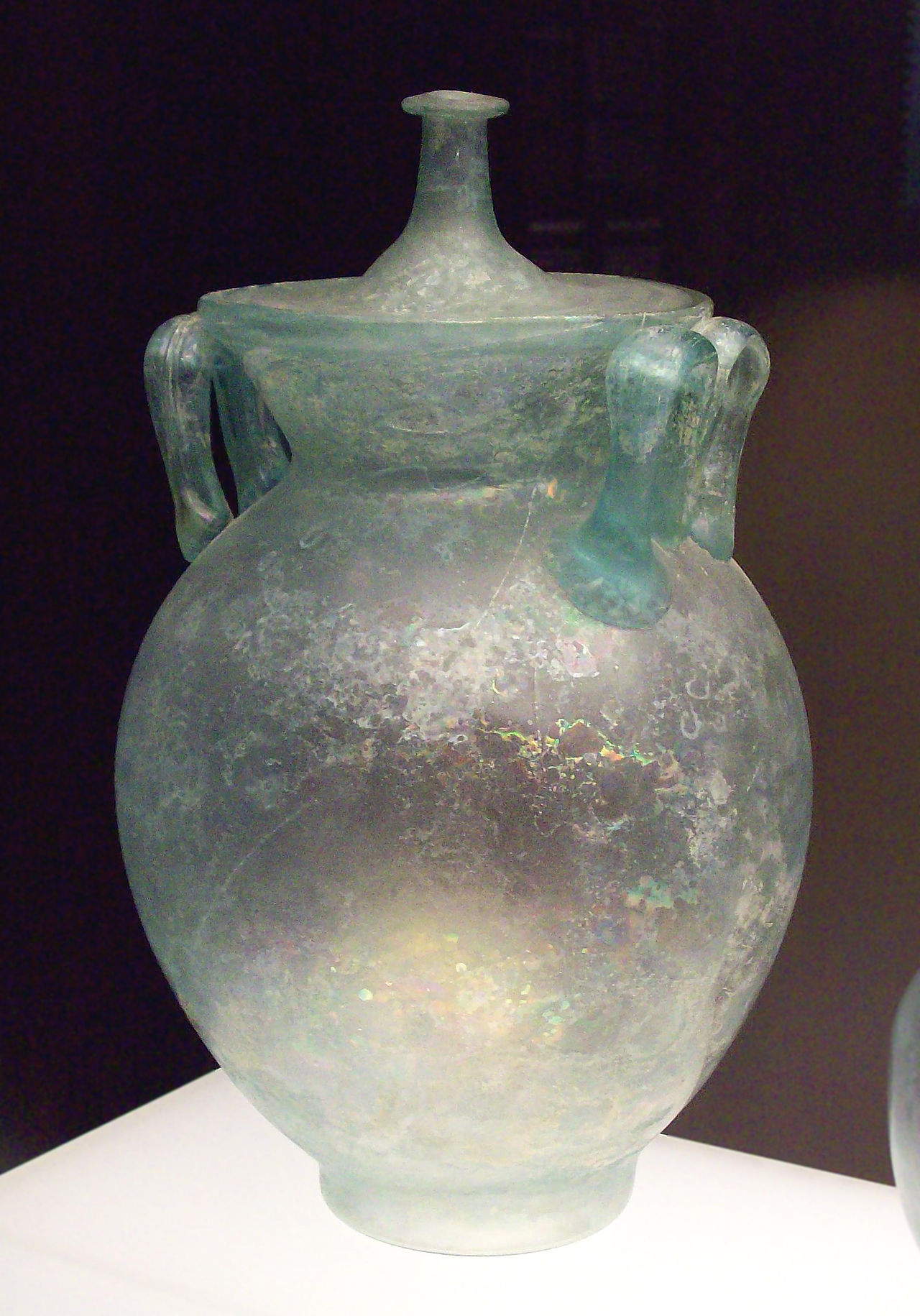
The cup is not merely a curiosity, and the reason is that the effect turned out to be useful.
Modern researchers have been interested in it precisely because nanoparticle behaviour is sensitive to its surroundings. If the material around the particles changes — a different liquid, a different substance in contact with the glass — the resonance shifts and the colour changes measurably.
That makes such a material a potential detector. Work inspired by the cup has explored using nanoparticle arrays for extremely sensitive sensing, with suggested applications in identifying substances at very low concentrations.
Researchers have also worked on reproducing the dichroic effect using modern methods, including nanoparticle composites developed for printing, which had not been successfully achieved for a long time despite the underlying physics being understood.
So a fourth-century drinking vessel, or lampshade, has been the reference object for a line of contemporary materials research.
An Accident Worth Sixteen Centuries
What makes this story satisfying is the mismatch between what was known and what was achieved.
Nobody in the fourth century had a theory of light, a concept of the electron, a notion of a nanometre, or any means of seeing a particle that small. What they had was a furnace, some metal, a great deal of accumulated practice, and enough attention to notice when a batch of glass did something extraordinary.
They then carved that glass, one of the most difficult materials to work subtractively, into a cage of figures standing free of the vessel beneath.
The result sat in collections for centuries before anyone thought to ask why it changed colour, took until the 1990s to explain, and has since been studied by people with electron microscopes trying to work out how to do it again.
Which is a reasonable definition of craftsmanship: making something that works for reasons you cannot explain, well enough that people are still trying to reverse-engineer it sixteen hundred years later.
Like our content? Follow us for more.